In the sprawling world of Harry Potter, where Harry Potter, Hermione Granger, and Ron Weasley take center stage as the golden trio, and Sirius Black embodies rebellious defiance, one name often lingers in the shadows: Regulus Arcturus Black. This quiet, complex character—known only as R.A.B. until the final books—quietly changed the course of the Second Wizarding War with a single act of extraordinary courage. At just eighteen years old, Regulus turned against the most powerful dark wizard of all time, stole one of Voldemort’s precious Horcruxes, and paid the ultimate price.
His story is not one of flashy battles or public heroism. It’s a tale of silent rebellion, moral awakening, and sacrifice that few saw coming. For fans who have always wondered who R.A.B. really was, why he defected, and how his actions helped defeat Voldemort, this deep dive uncovers the full truth behind the youngest Black brother—one of the most underrated heroes in the entire series.
Who Was Regulus Arcturus Black? A Pure-Blood Heir in the House of Black
The Black Family Legacy and Naming Traditions
The House of Black was one of the most ancient and respected pure-blood wizarding families in Britain, part of the so-called Sacred Twenty-Eight. For generations, the Blacks believed in blood purity above all else, viewing Muggle-borns and half-bloods as inferior. Their family motto, “Toujours pur” (always pure), was etched into their very identity.
Children in the Black family were traditionally named after stars and constellations, a practice that symbolized their lofty, celestial status. Sirius, the brightest star in the night sky, was given to the eldest son. Regulus Arcturus Black, born in 1961 to Orion and Walburga Black, received two of the most prominent stars in the heavens: Regulus, the “little king” and brightest star in the constellation Leo, and Arcturus, the brightest star in Boötes and one of the most luminous in the entire sky. The irony is poignant—Regulus, whose name evoked royalty and brilliance, would ultimately choose a path of quiet, hidden valor rather than the public grandeur his family expected.
Early Life at 12 Grimmauld Place
Regulus grew up in the oppressive, decaying grandeur of 12 Grimmauld Place, the Black family’s ancestral home in London. The house was a monument to pure-blood supremacy: portraits of sneering ancestors, a Black family tapestry that burned the names of “traitors,” and a house-elf, Kreacher, who echoed the family’s prejudices.
Unlike his older brother Sirius, who rebelled against the family’s ideology from an early age, Regulus initially conformed. Sirius described him as a “good little boy” who followed the rules and earned the approval of their strict, fanatical parents. While Sirius was sorted into Gryffindor in 1971 and disowned the following year, Regulus remained the dutiful son, absorbing the pure-blood propaganda that surrounded him.
Hogwarts Years: A Promising Slytherin
Sorting and House Pride (1972–1979)
In 1972, Regulus arrived at Hogwarts and was sorted into Slytherin, the house that prized ambition, cunning, and resourcefulness—qualities that aligned perfectly with the Black family’s worldview. He quickly made a name for himself as a talented and popular student.
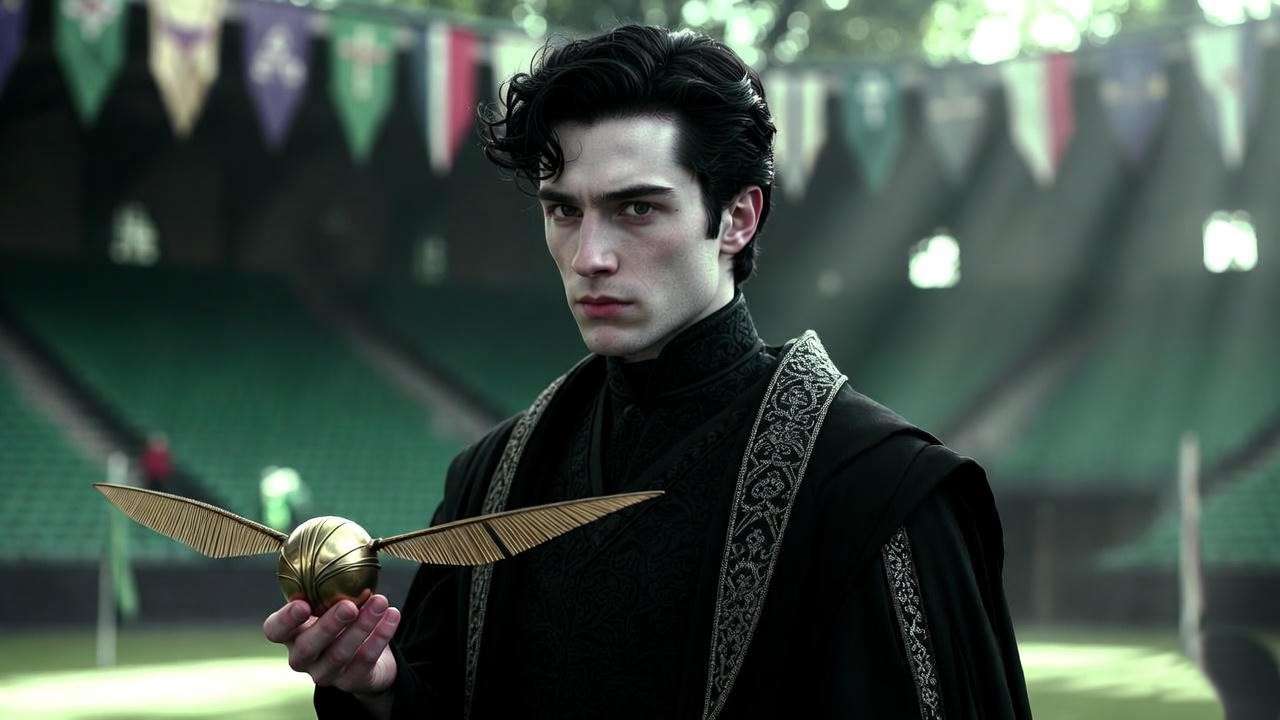 Regulus was invited to join Professor Horace Slughorn’s exclusive Slug Club, a group reserved for those with impressive talent, connections, or promising futures. This invitation speaks volumes about Regulus’s abilities and charm—he was clearly seen as a rising star among his peers.
Quidditch Star and Seeker
Regulus also excelled on the Quidditch pitch as Seeker for the Slytherin house team. A photograph discovered by Harry Potter in Order of the Phoenix shows a young Regulus in his green Quidditch robes, holding the Snitch with a confident smile. The image captures a boy who was talented, proud, and completely at ease in the world his family had prepared him for.
His skill as a Seeker—someone who must spot the smallest details amid chaos—foreshadows the sharp perception he would later demonstrate in uncovering Voldemort’s darkest secret.
Joining the Death Eaters: Loyalty to Voldemort
Becoming a Death Eater at Age 16
In the summer of 1977, shortly before or during his fifth or sixth year at Hogwarts, Regulus took the Dark Mark and joined Voldemort’s ranks. Sirius later recalled that his brother idolized the Dark Lord, collecting newspaper clippings about Voldemort’s rise to power and proudly displaying them in his bedroom at Grimmauld Place.
For Regulus, joining the Death Eaters was not just a rebellion against Sirius—it was a fulfillment of everything he had been taught to believe. The Black family had long supported the ideals of blood purity and wizarding supremacy, and Voldemort represented the ultimate expression of those values.
The Turning Point: Kreacher’s Ordeal
The catalyst for Regulus’s change of heart came not from ideology, but from loyalty and horror.
In 1979, Voldemort needed to test the defenses of his secret Horcrux cave on a remote island. He chose Kreacher, the Black family house-elf, because he believed the elf would be expendable. Kreacher was forced to drink the terrifying Drink of Despair, which induced hallucinations of one’s worst fears and excruciating pain. Voldemort left Kreacher to drown among the Inferi, believing he would die.
But house-elves possess unique magic. Kreacher was able to Disapparate back to his master’s home, arriving traumatized and half-mad. When he told Regulus what had happened, the young wizard was shaken to his core.
Kreacher’s suffering revealed Voldemort’s true nature: a master who would sacrifice even his most loyal servants without remorse. For Regulus, who had been raised to value loyalty and family, this betrayal was unforgivable.
The Defection: Discovering Voldemort’s Secret
Uncovering the Horcrux
Regulus had been a close enough follower to overhear Voldemort’s hints about his quest for immortality. From these fragments, he pieced together the truth: the locket was no ordinary object—it was a Horcrux, a fragment of Voldemort’s soul anchored to the living world.
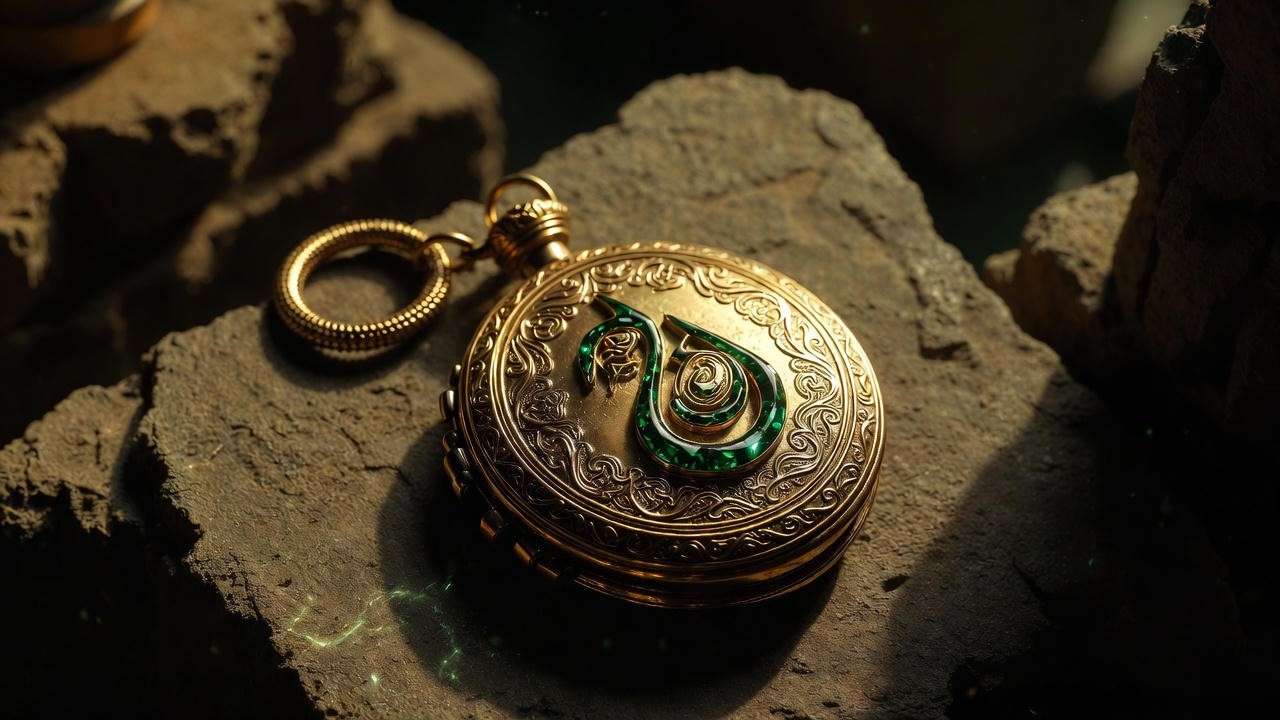 The realization that Voldemort had split his soul through murder and hidden pieces of it in objects struck Regulus as profoundly inhumane. The Dark Lord’s pursuit of immortality required the desecration of life itself—a violation of everything even the darkest pure-blood traditions held sacred.
Planning the Theft
Regulus decided to act alone. He could not risk exposing himself to other Death Eaters, nor could he confide in his parents, who remained loyal to Voldemort. Instead, he turned to the one being he trusted completely: Kreacher.
He ordered the elf to keep his plan secret and accompany him to the cave. Together, they would steal the Horcrux and destroy it.
Before leaving, Regulus prepared a fake locket identical to the original. Inside, he placed a note that would become one of the most iconic messages in the entire series:
“To the Dark Lord, I know I will be dead long before you read this but I want you to know that it was I who discovered your secret. I have stolen the real Horcrux and intend to destroy it as soon as I can. I face death in the hope that when you meet your match, you will be mortal once more. R.A.B.”
These words, written in Regulus’s own hand, represent one of the most powerful acts of defiance in the Harry Potter saga.
The Ultimate Sacrifice in the Horcrux Cave (1979)
The Mission with Kreacher
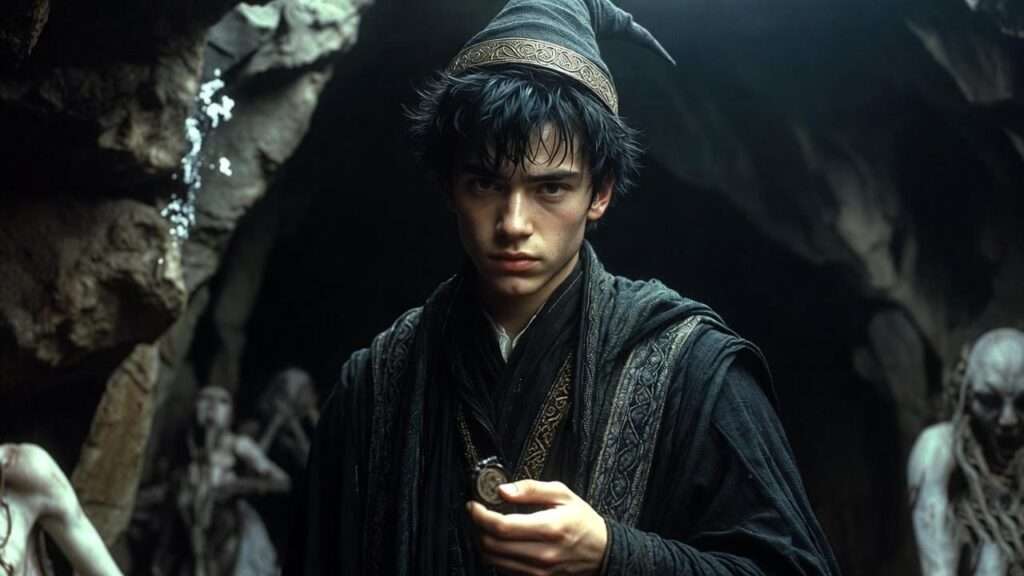
In late 1979, Regulus Arcturus Black and Kreacher Apparated to the desolate coastal cave where Voldemort had hidden the Slytherin locket Horcrux. The location was chosen for its natural defenses: a hidden entrance in a cliff face, accessible only by those who knew the exact spot and were willing to pay a blood price to enter.
 Regulus cut his arm and smeared blood on the rock wall, allowing the invisible door to open. Inside, they found the underground lake filled with Inferi—corpses reanimated to guard the island pedestal where the locket rested in a stone basin filled with the emerald-green Drink of Despair.
Knowing the potion would cause unbearable torment, Regulus insisted on drinking it himself. He commanded Kreacher to swap the lockets once he was unconscious, take the real Horcrux home, destroy it, and never reveal the secret to anyone—not even the rest of the Black family.
Death by Inferi
As Regulus forced down the potion, the effects were immediate and devastating. The Drink of Despair induced vivid, soul-crushing hallucinations of his worst fears: drowning in guilt, watching his family suffer, and facing the consequences of his earlier choices. Kreacher later described how his master begged for water, screamed in agony, and relived painful memories, yet never wavered from his orders.
Once the basin was empty, Kreacher retrieved the real locket and replaced it with the fake containing Regulus’s note. Weakened beyond measure, Regulus attempted to reach the water’s edge for a drink—only to disturb the Inferi lurking beneath the surface.
The corpses surged forward, dragging the eighteen-year-old wizard into the icy depths. In his final act of selflessness, Regulus ordered Kreacher to leave immediately and save himself. The house-elf Disapparated just as his master disappeared beneath the water, never to resurface.
Regulus Arcturus Black died alone in the dark, his sacrifice unknown to the wizarding world for nearly two decades.
Legacy and Revelation: Impact on the Wizarding War
The Fake Locket’s Journey
Kreacher returned to 12 Grimmauld Place clutching the real Horcrux, but despite every effort—fire, curses, even the elf’s own teeth—he could not destroy it. Overwhelmed by grief and loyalty, he hid the locket in his cupboard den among his treasured possessions.
Years later, during the cleanup of Grimmauld Place in Order of the Phoenix, Mundungus Fletcher stole numerous items from the house, including the locket. It eventually ended up in the hands of Dolores Umbridge, who wore it as a badge of her supposed pure-blood heritage.
Only in Deathly Hallows did Harry, Ron, and Hermione recover the Horcrux from Umbridge during their infiltration of the Ministry of Magic. They later destroyed it using Godric Gryffindor’s goblin-made sword, completing the mission Regulus had begun almost twenty years earlier.
Kreacher’s Tale and Harry’s Realization
The full story of Regulus’s heroism remained buried until Harry Potter, desperate for information about the remaining Horcruxes, confronted Kreacher in December 1997. Initially hostile, the elf softened when Harry showed genuine respect and returned Regulus’s treasured fake locket (the one Sirius had thrown away years before).
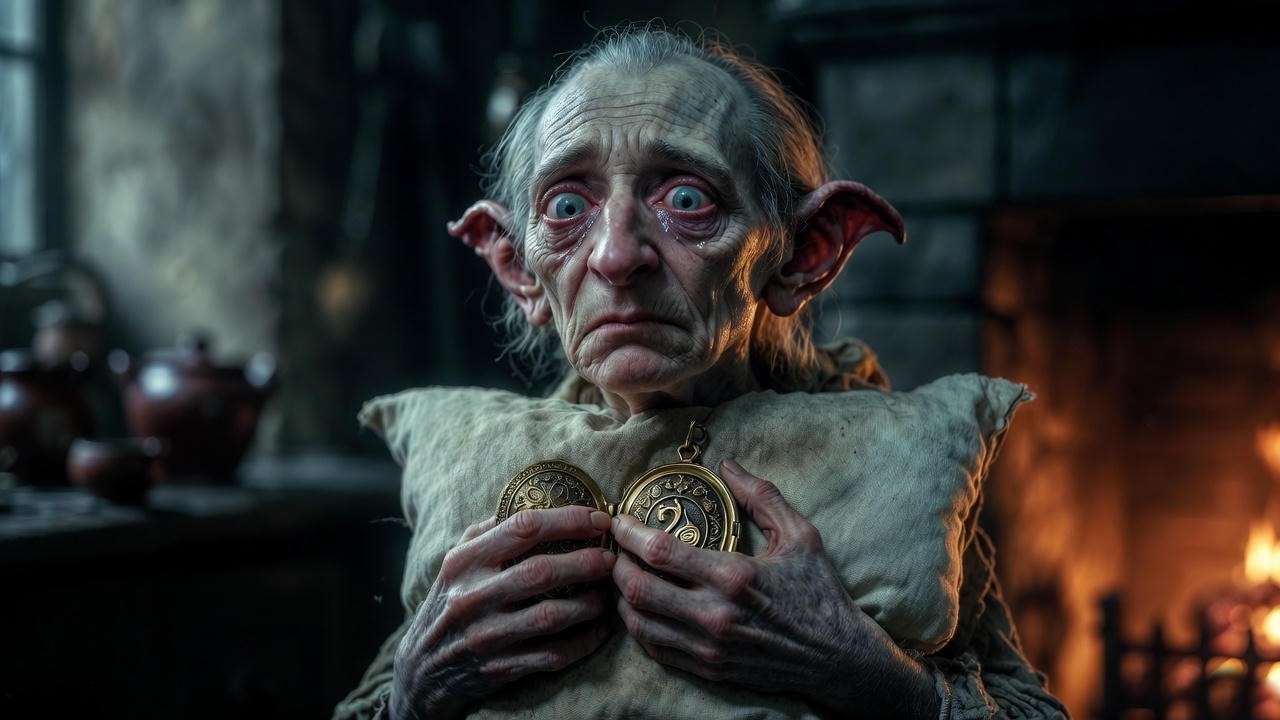 In Chapter 10 of Deathly Hallows, titled “Kreacher’s Tale,” the house-elf recounted the entire heartbreaking story. Harry, Ron, and Hermione listened in stunned silence as they learned that R.A.B. was not some unknown powerful wizard, but Sirius’s younger brother—a former Death Eater who had risked everything to undermine Voldemort.
This revelation not only gave Harry crucial insight into Voldemort’s arrogance (he never suspected a young follower could discover his secret), but also transformed Kreacher’s loyalty. Inspired by Harry’s recognition of his former master’s bravery, the elf led the house-elves of Hogwarts into battle during the final confrontation, shouting “Fight for Master Regulus!”
Why Regulus Remains Unsung
Voldemort, in his paranoia, likely assumed Regulus had attempted to desert and been killed on his orders—a convenient cover story that protected the Horcrux secret. The Black family, meanwhile, believed Regulus had died honorably on a mission for the Dark Lord. Walburga’s portrait continued to praise her younger son as the ideal pure-blood, oblivious to his true defiance.
No one outside Kreacher knew the truth until Harry uncovered it. Regulus received no Order of Merlin, no public memorial, no mention in the history books. His heroism was quiet, solitary, and ultimately anonymous—yet it was one of the earliest and most significant blows struck against Voldemort’s immortality.
Character Analysis: Redemption, Courage, and Complexity
Parallels with Sirius Black
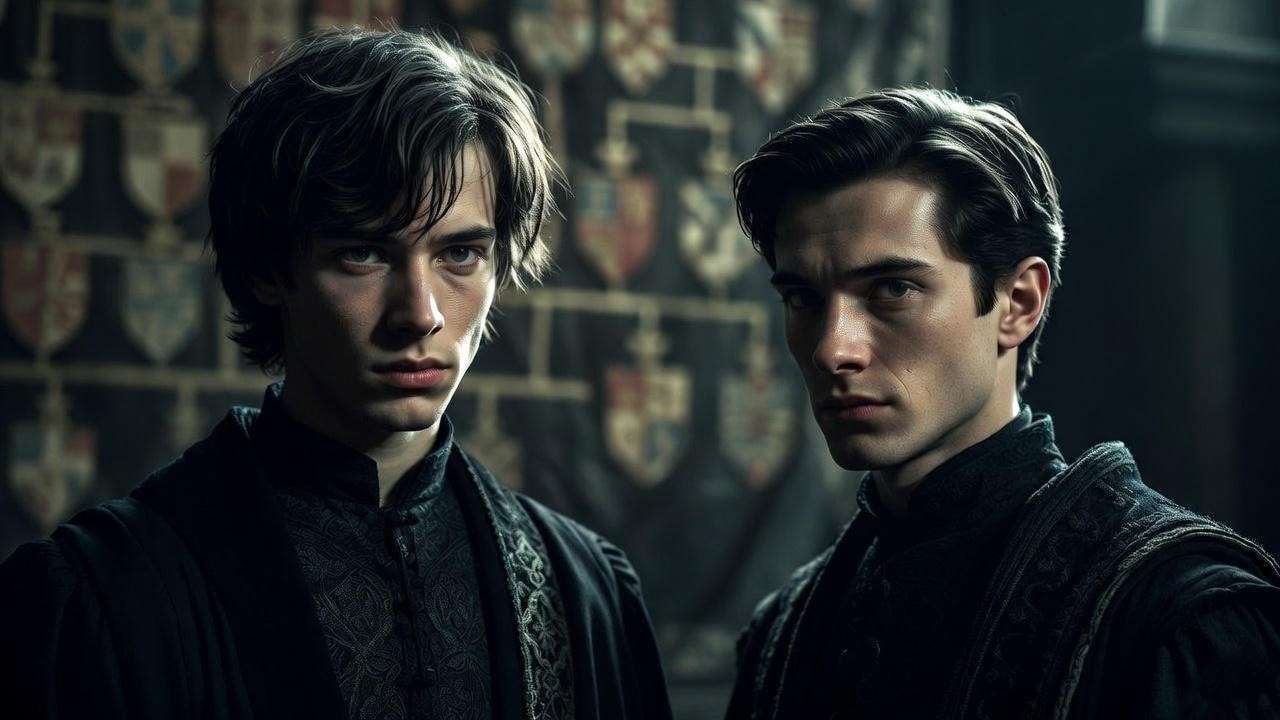
The Black brothers represent two sides of the same coin. Sirius rejected his family’s values early and fought openly against Voldemort as a member of the Order of the Phoenix. Regulus initially embraced those values, only to reject them later in a far more dangerous way—by betraying the Dark Lord from within.
Both brothers displayed extraordinary courage, but in different forms: Sirius’s was loud and defiant, Regulus’s silent and calculated. Sirius survived long enough to mentor Harry; Regulus did not. Yet both ultimately died fighting the same evil, proving that blood ties and shared bravery transcended ideology.
 Comparisons to Other Redeemed Characters
Regulus’s arc invites comparison to other complex figures in the series:
- Severus Snape: Both began as Death Eaters and defected, but Snape’s redemption was driven by personal love for Lily Potter and spanned decades. Regulus’s was triggered by loyalty to Kreacher and a moral rejection of soul-splitting, and it cost him his life immediately.
- Draco Malfoy: Draco wavered but never fully broke from Voldemort until the very end, and he survived the war. Regulus made a complete, irreversible choice with no hope of survival.
- Narcissa Malfoy: Like Narcissa, Regulus acted out of protective love (in his case, for Kreacher and perhaps the wider wizarding world), but his act was far more direct and fatal.
What sets Regulus apart is the purity and selflessness of his sacrifice. He sought no forgiveness, no survival, no glory—only to weaken the monster he had once followed.
Fan Theories and Deeper Insights
Over the years, fans have explored numerous layers of Regulus’s story:
- Gradual vs. Sudden Change: Some argue that Regulus’s disillusionment built slowly as he witnessed Death Eater atrocities. Others believe Kreacher’s ordeal was the sole, shattering trigger. J.K. Rowling has confirmed the latter in interviews, emphasizing how house-elf mistreatment revealed Voldemort’s true character.
- Symbolic Seeker: His role as Slytherin Seeker mirrors his later quest to “seek” and capture the Horcrux—a tiny, elusive object hidden in plain sight.
- Astrological Foreshadowing: Regulus is the brightest star in Leo, the lion—symbolizing hidden Gryffindor-like courage within a Slytherin. His middle name, Arcturus, connects him to protection and guardianship (the bear guardian), reflecting his protective act toward Kreacher and the wizarding world.
These layers make Regulus one of the richest supporting characters in the series, despite his limited page time.
Expert Insights: Why Regulus’s Story Resonates Today
As someone who has studied and written about Harry Potter lore for years, I believe Regulus Arcturus Black represents one of J.K. Rowling’s most powerful themes: choices define us more than our origins. Born into darkness, surrounded by prejudice, he still chose light—even when it meant certain death.
His story challenges stereotypes about Slytherin house, proving that ambition and cunning can serve noble ends. In an era where moral gray areas dominate storytelling, Regulus offers a rare example of unambiguous redemption achieved through sacrifice.
With the upcoming HBO Harry Potter series adaptation, there is hope that Regulus’s arc will receive expanded screen time. A deeper exploration of his internal conflict, his relationship with Kreacher, and the cave sequence could become one of the most emotionally devastating moments in the franchise.
FAQs About Regulus Arcturus Black
Who is R.A.B. in Harry Potter?
R.A.B. stands for Regulus Arcturus Black, Sirius Black’s younger brother and a former Death Eater who stole and attempted to destroy one of Voldemort’s Horcruxes.
Did Regulus Black Destroy a Horcrux?
Regulus successfully stole the Slytherin locket Horcrux and intended to destroy it, but he died before he could. His actions directly enabled Harry, Ron, and Hermione to locate and destroy it years later.
Why Did Regulus Turn Against Voldemort?
The primary trigger was Voldemort’s cruel treatment of Kreacher, whom Regulus cared for deeply. This revealed the Dark Lord’s willingness to discard even loyal followers, shattering Regulus’s illusions.
Is Regulus Black Related to Sirius?
Yes—Regulus was Sirius Black’s younger brother by about two years.
How Did Regulus Die?
He drank the Drink of Despair to access Voldemort’s Horcrux, then was dragged into an underground lake and drowned by Inferi in 1979, at age 18.
Regulus Arcturus Black’s brief life ended in darkness, but his final act illuminated a path toward Voldemort’s eventual defeat. He stole a Horcrux, faced unimaginable torment, and sacrificed everything—not for fame, not for forgiveness, but because it was right.
In a series filled with celebrated heroes, Regulus reminds us that true bravery often goes unseen. The quiet ones, the overlooked, the ones who act alone—they can change history just as profoundly.
Next time you reread Deathly Hallows and reach Kreacher’s Tale, pause and remember the young wizard who gave everything to make Harry’s victory possible. Regulus Arcturus Black may be unsung, but his courage echoes through the entire story.
What aspect of Regulus’s journey moves you the most? The bond with Kreacher? The defiant note? Or the sheer loneliness of his sacrifice?