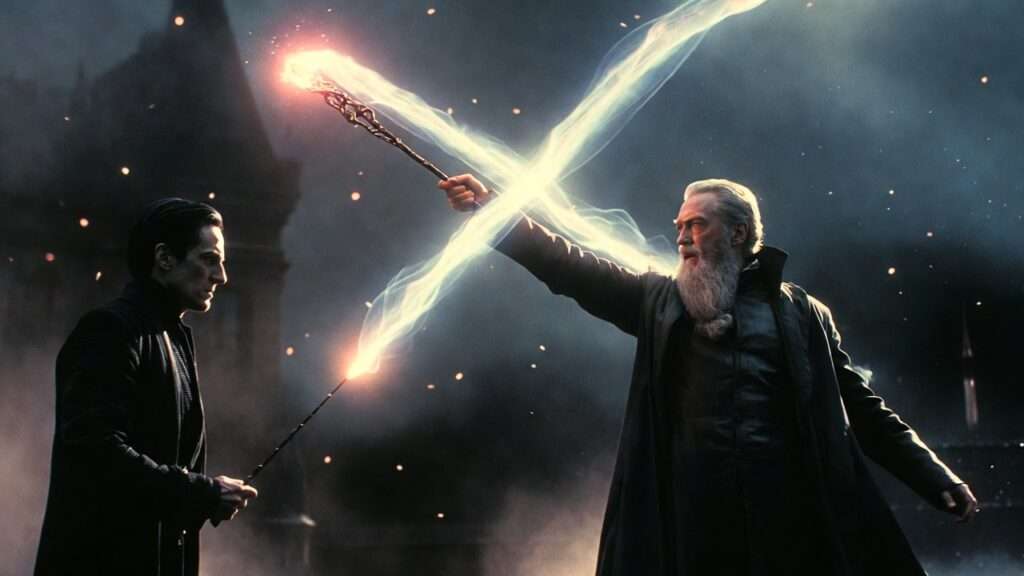
Imagine two of the most brilliant minds in wizarding history—once inseparable friends—standing face-to-face on a battlefield shrouded in the chaos of global war. One wields the legendary Elder Wand, said to be unbeatable, its power amplifying every spell to terrifying heights. The other relies on unmatched skill, deep knowledge of magic, and an unyielding sense of right and wrong. In 1945, Albus Dumbledore defeated Gellert Grindelwald in one of the most famous duels ever recorded, claiming the Elder Wand as its new master. How did Dumbledore get the Elder Wand despite facing an opponent armed with the supposed “wand of destiny”? The answer lies not in myth or raw power alone, but in the intricate rules of wand allegiance, personal history, and the triumph of character over ambition.
This pivotal moment didn’t just end the Global Wizarding War; it reshaped the future of the wizarding world, influencing everything from Dumbledore’s long tenure as Hogwarts Headmaster to the final showdown in Harry Potter and the Deathly Hallows. For fans revisiting the lore or puzzling over wand mechanics, this comprehensive guide draws directly from J.K. Rowling’s books—especially Harry Potter and the Deathly Hallows—to explain the full story, debunk common misconceptions, and explore why this event remains one of the series’ most profound turning points.
What Is the Elder Wand? Understanding the Wand of Destiny
The Elder Wand, also known as the Deathstick or the Wand of Destiny, stands as the most powerful wand in existence and one of the three Deathly Hallows. Its legend begins with The Tale of the Three Brothers, a children’s story in The Tales of Beedle the Bard. In the fable, Death crafts the Elder Wand for Antioch Peverell, the eldest brother, granting him unbeatable power in duels. Antioch soon boasts of his invincibility, only to be murdered in his sleep by a rival who steals the wand. This sets a grim pattern: the Elder Wand passes through blood and conquest, leaving a “bloody trail” across wizarding history.
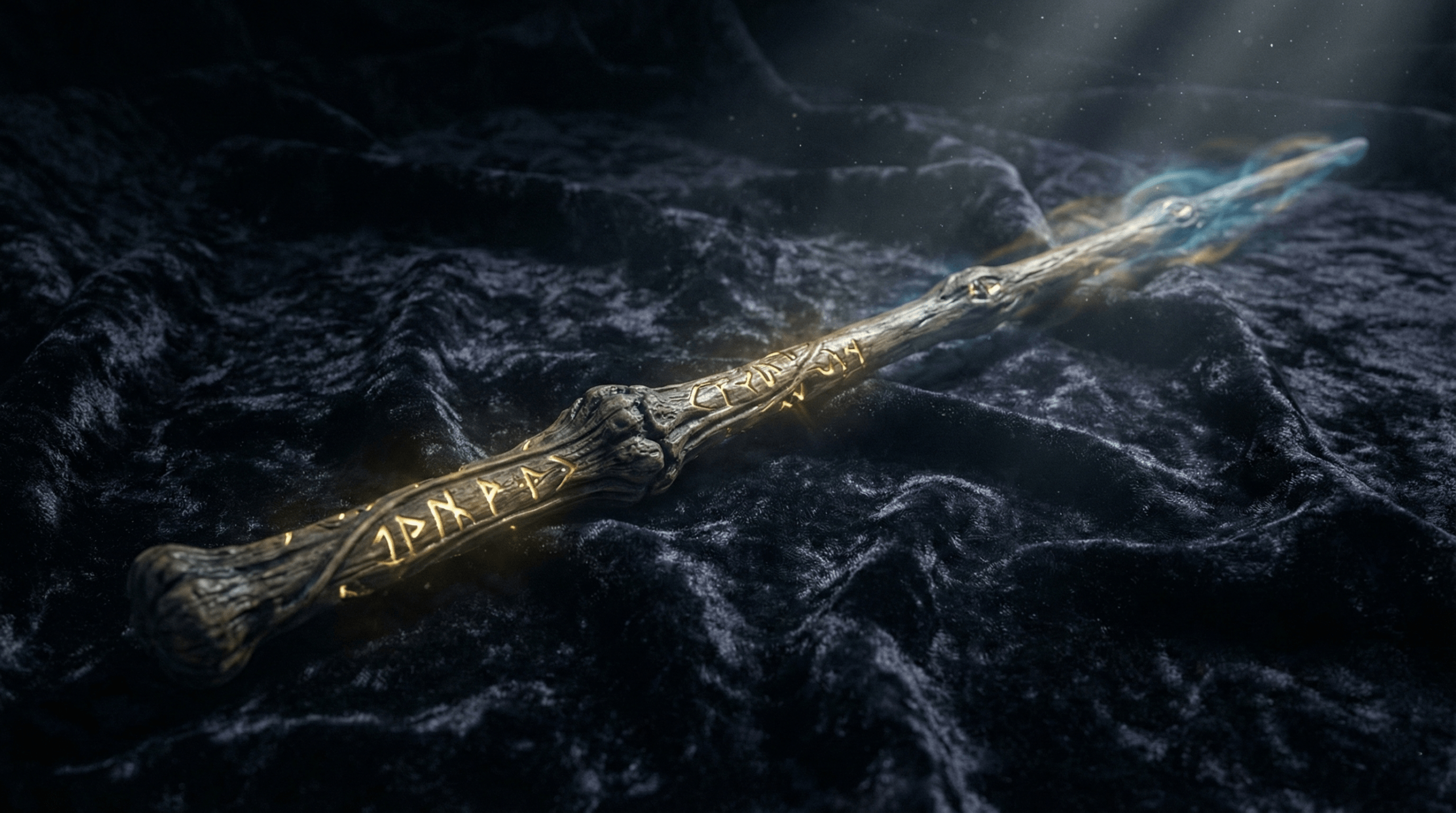 Albus Dumbledore, ever the skeptic of fairy tales, theorized that the wand wasn’t forged by Death at all. Instead, he believed Antioch Peverell crafted it himself around the 13th century, possibly using a Thestral tail hair core—a rare, mysterious ingredient tied to death and invisibility. Regardless of its origins, the wand’s true power lies in its ability to dramatically enhance its wielder’s spells, making them more forceful and precise in combat.
Yet the Elder Wand isn’t invincible. Its greatest strength is also its fatal flaw: allegiance. Unlike ordinary wands, which bond loyally with their owners, the Elder Wand transfers its loyalty to whoever defeats its previous master—often through disarming, overpowering, or killing. This mechanic explains the wand’s violent history and why it rarely stays with one wizard for long. Owners who seek it for domination meet swift ends, while those who wield it humbly (like Dumbledore) can harness its potential without succumbing to its curse.
Before Grindelwald, the wand passed through infamous hands: Emeric the Evil, Egbert the Egregious, Godelot, Hereward, Barnabas Deverill, and others. Each claimed it through violence, only to lose it the same way—proving that brute force and greed rarely lead to lasting mastery.
How Grindelwald Acquired the Elder Wand
Gellert Grindelwald’s rise began decades before his final confrontation with Dumbledore. As a charismatic and dangerously brilliant wizard, Grindelwald pursued the Deathly Hallows obsessively, believing they would allow him to dominate the non-magical world “for the greater good.” His fixation on the Elder Wand led him to Mykew Gregorovitch, the renowned wandmaker who once possessed it.
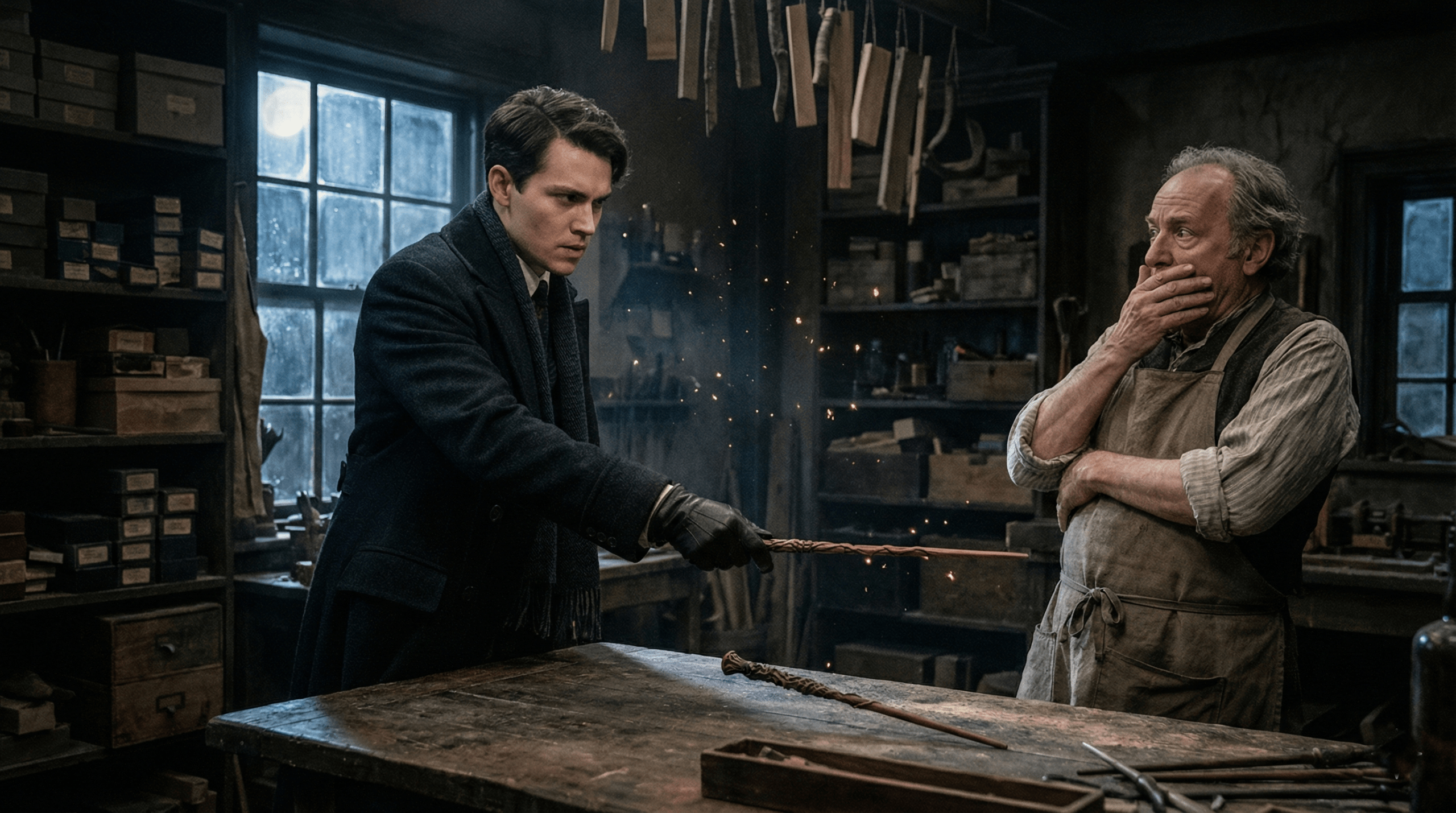 Gregorovitch had been searching for rare materials and openly boasted about owning the legendary wand, hoping to reverse-engineer its secrets. In a bold theft, young Grindelwald stunned Gregorovitch and claimed the Elder Wand. This act marked Grindelwald as its master, even without a formal duel—proving that defeat doesn’t always require combat. Possession through conquest or theft suffices if it overpowers the prior owner.
Armed with the Elder Wand, Grindelwald built an army and unleashed terror across Europe during the Global Wizarding War. His ideology twisted the greater good into justification for subjugating Muggles and opposing wizards alike. Yet he deliberately avoided Britain for years, wary of confronting Albus Dumbledore—a wizard he once considered his equal, or even “a shade more skillful.” Grindelwald’s fear stemmed not from the wand’s power (which he wielded), but from their shared history and Dumbledore’s superior understanding of magic’s deeper principles.
The Legendary 1945 Duel – How Dumbledore Won the Elder Wand
The duel between Albus Dumbledore and Gellert Grindelwald occurred in 1945, at the height of Grindelwald’s power. By then, the dark wizard’s reign had spread fear worldwide, but Dumbledore—reluctant to act earlier due to personal guilt over their youthful alliance—knew he was the only one capable of stopping him.
Their shared past added immense emotional weight. In the summer of 1899, teenage Albus and Gellert had bonded over intellectual pursuits and dreams of mastering the Deathly Hallows. Their friendship ended tragically in a three-way duel involving Aberforth Dumbledore, resulting in Ariana Dumbledore’s accidental death. Grindelwald fled, haunted by remorse, while Albus buried his guilt and devoted himself to teaching and protection.
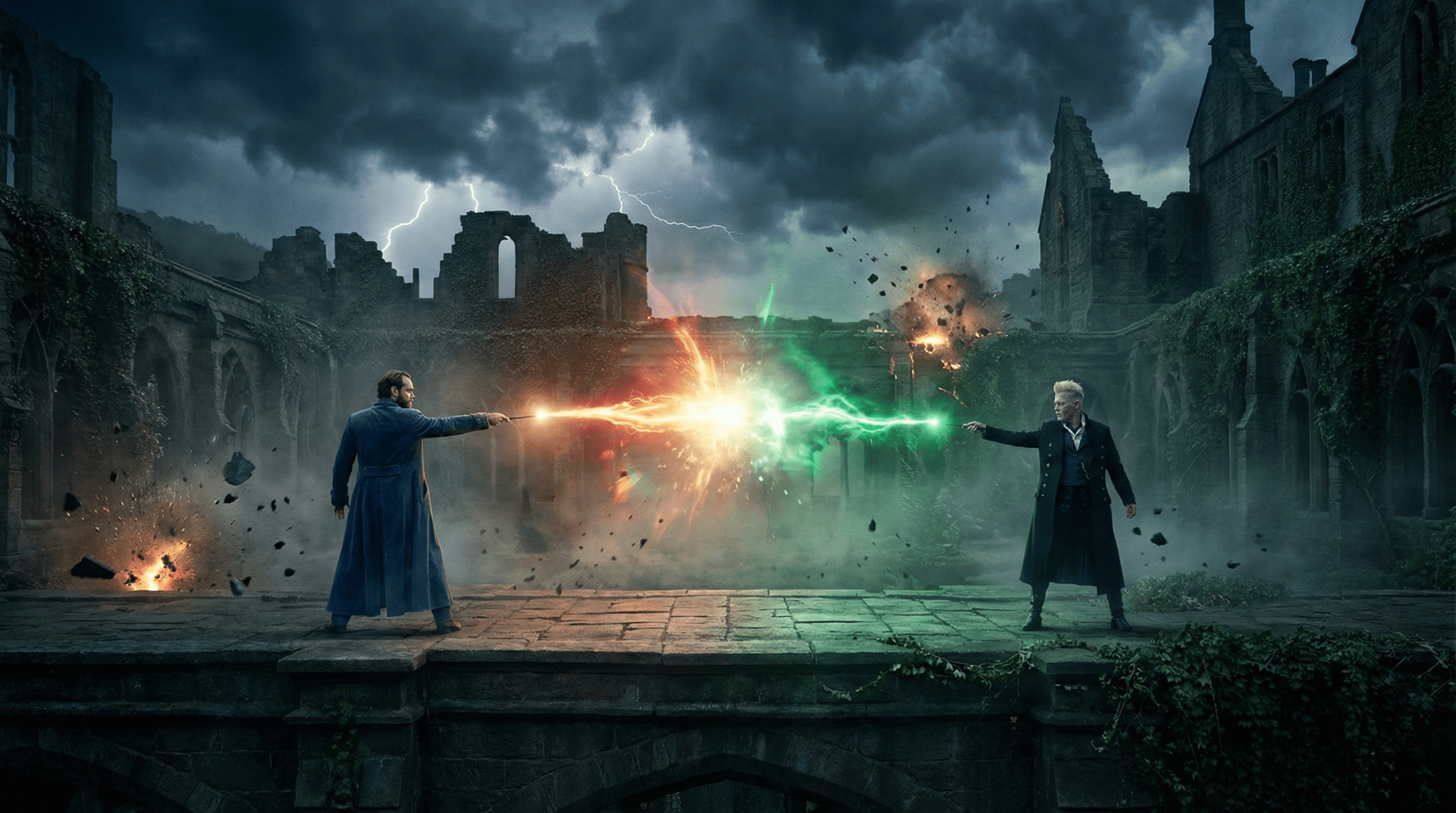 When they finally clashed in 1945, the confrontation wasn’t just wizard against wizard—it was ideology against conscience. Grindelwald, despite holding the Elder Wand, carried inner conflict and shame from betraying his former friend. Dumbledore, fueled by clarity and moral certainty, fought defensively to end the war and prevent further suffering.
Canon details from Harry Potter and the Deathly Hallows (Chapter 35, “King’s Cross”) reveal Dumbledore’s own words: he overpowered Grindelwald, causing the Elder Wand’s allegiance to shift. The wand recognized true defeat—not necessarily death—and transferred loyalty to the victor. Witnesses described the duel as unmatched in wizarding history, with spells clashing in spectacular displays of power.
Why did Dumbledore succeed against the “unbeatable” wand? Skill trumped myth. The Elder Wand amplifies ability but doesn’t override talent, strategy, or intent. Grindelwald’s hubris and lingering guilt weakened his focus, while Dumbledore’s humility, defensive prowess, and deeper magical insight prevailed. As Ollivander explains, wands choose the wizard—but the Elder Wand chooses strength in conquest.
Dumbledore’s Long Possession and Responsible Mastery (1945–1997)
After the duel, Dumbledore claimed the Elder Wand and used it sparingly. He rarely boasted of its power, employing it primarily for protection—fortifying Hogwarts, countering dark forces, and advancing the greater good without domination. In his words from Deathly Hallows: “I was fit to own the Elder Wand… because I took it, not for gain, but to save others from it.”
He kept its ownership secret to avoid attracting power-hungry seekers, aligning with his character of quiet strength over showmanship. For over fifty years, Dumbledore mastered the wand responsibly, breaking its cycle of bloodshed.
Dumbledore’s Long Possession and Responsible Mastery (1945–1997) (continued)
Dumbledore’s decision to keep the Elder Wand’s true nature under wraps was deliberate and wise. He understood its dangerous allure—wizards throughout history had killed, betrayed, and schemed for it. By concealing its location (hidden within his tomb after his death, as planned) and rarely demonstrating its full potential, he prevented it from becoming a magnet for dark ambition during one of the most turbulent periods in wizarding history.
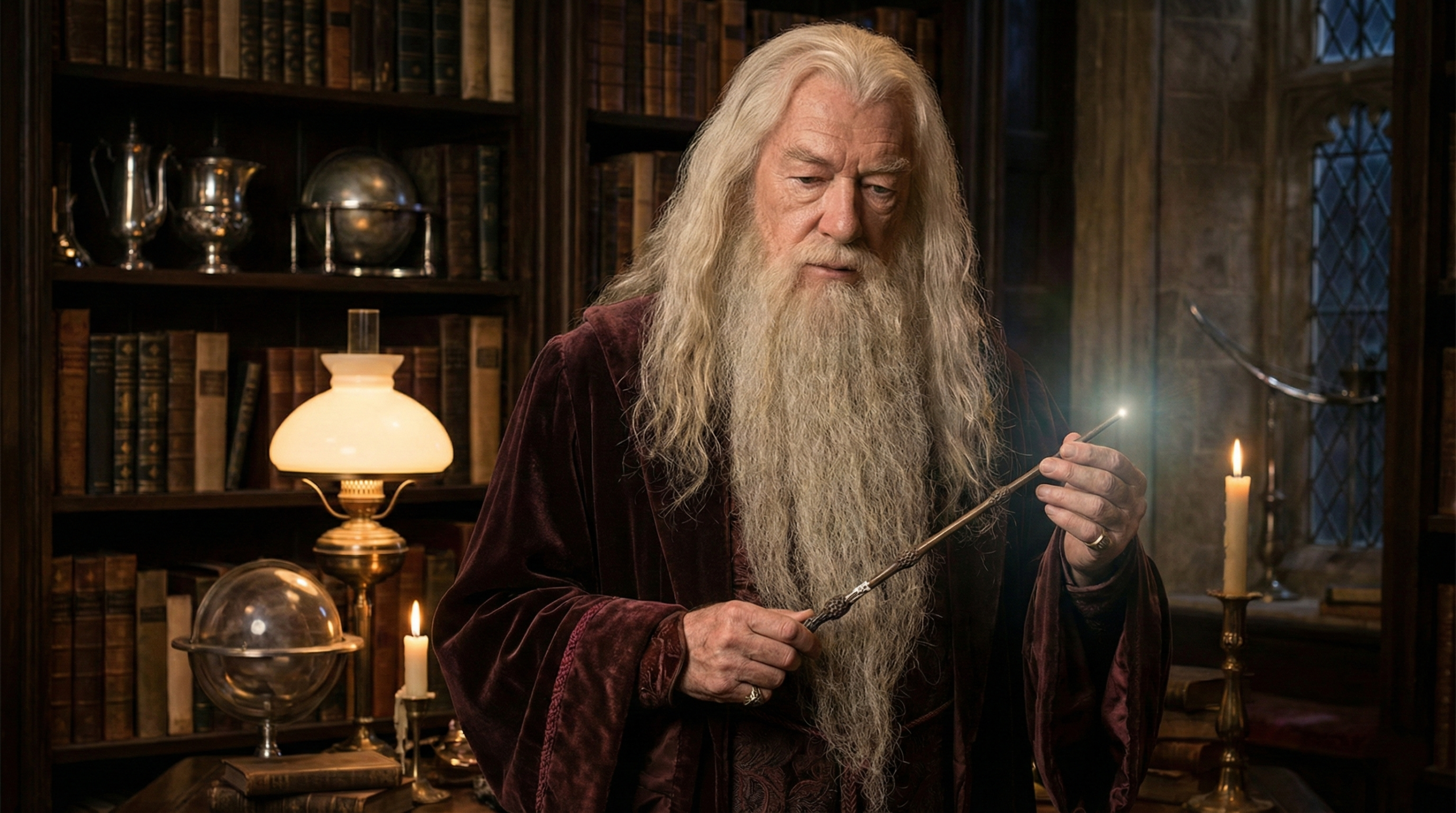 He did, however, use the wand when the situation demanded exceptional power. Examples include reinforcing the protective enchantments around Hogwarts, countering dark curses during Voldemort’s first rise, and performing feats of magic that ordinary wands could not achieve with the same finesse. Yet he always treated it as a tool for defense and protection rather than conquest. This mindset is what allowed him to remain its true master for so long—over fifty years—breaking the wand’s centuries-old pattern of short, violent ownerships.
In Harry Potter and the Deathly Hallows, Dumbledore confesses to Harry (in the liminal King’s Cross scene) the deeper reason for his restraint:
“I was fit to possess the Elder Wand, and not to boast of it, and not to kill with it. I was permitted to tame it because I took it in victory, not for gain, but to save others from it.”
This statement encapsulates Dumbledore’s philosophy: true mastery comes not from power itself, but from the intention and character behind it.
What Happened After Dumbledore? The Wand’s Fate
Dumbledore’s death in June 1997 marked the beginning of the Elder Wand’s most convoluted chain of allegiance shifts in the entire series.
Disarmament by Draco Malfoy (1997)
On the Astronomy Tower, Severus Snape killed Dumbledore under orders and the terms of an Unbreakable Vow. However, just moments earlier, Draco Malfoy had successfully disarmed Dumbledore using Expelliarmus. Although Draco did not kill him and never physically took the wand, the act of defeating Dumbledore in combat was enough. The Elder Wand’s allegiance silently transferred to Draco Malfoy.
This subtle but crucial detail—overlooked by almost everyone at the time—would prove decisive later.
Voldemort’s Miscalculation and Harry’s True Mastery
Lord Voldemort, obsessed with securing the Elder Wand’s power to defeat Harry Potter, assumed Snape had become its master by killing Dumbledore. To claim the wand, Voldemort murdered Snape in the Shrieking Shack during the Battle of Hogwarts (May 1998).
But the plan was fatally flawed.
Because Draco had disarmed Dumbledore first, Snape never truly won the wand’s allegiance. When Harry later overpowered Draco at Malfoy Manor (by wresting away Draco’s own wand), Harry unwittingly became the Elder Wand’s new master—even though he never touched the Elder Wand itself.
In the Forbidden Forest, when Voldemort used the Elder Wand against Harry, the wand refused to kill its true master. Instead, the Killing Curse rebounded, destroying Voldemort once and for all. The wand’s allegiance had followed the chain of magical defeat: Dumbledore → Draco → Harry.
Breaking the Cycle of Bloodshed
After the battle, Harry made a symbolic and powerful choice. Rather than keep the most powerful wand in existence, he used it one final time to repair his own broken holly-and-phoenix-feather wand (a wand that had chosen him long ago). He then planned to return the Elder Wand to Dumbledore’s tomb, intending for its power to die with him when he eventually passed away naturally—breaking the cycle of violence forever.
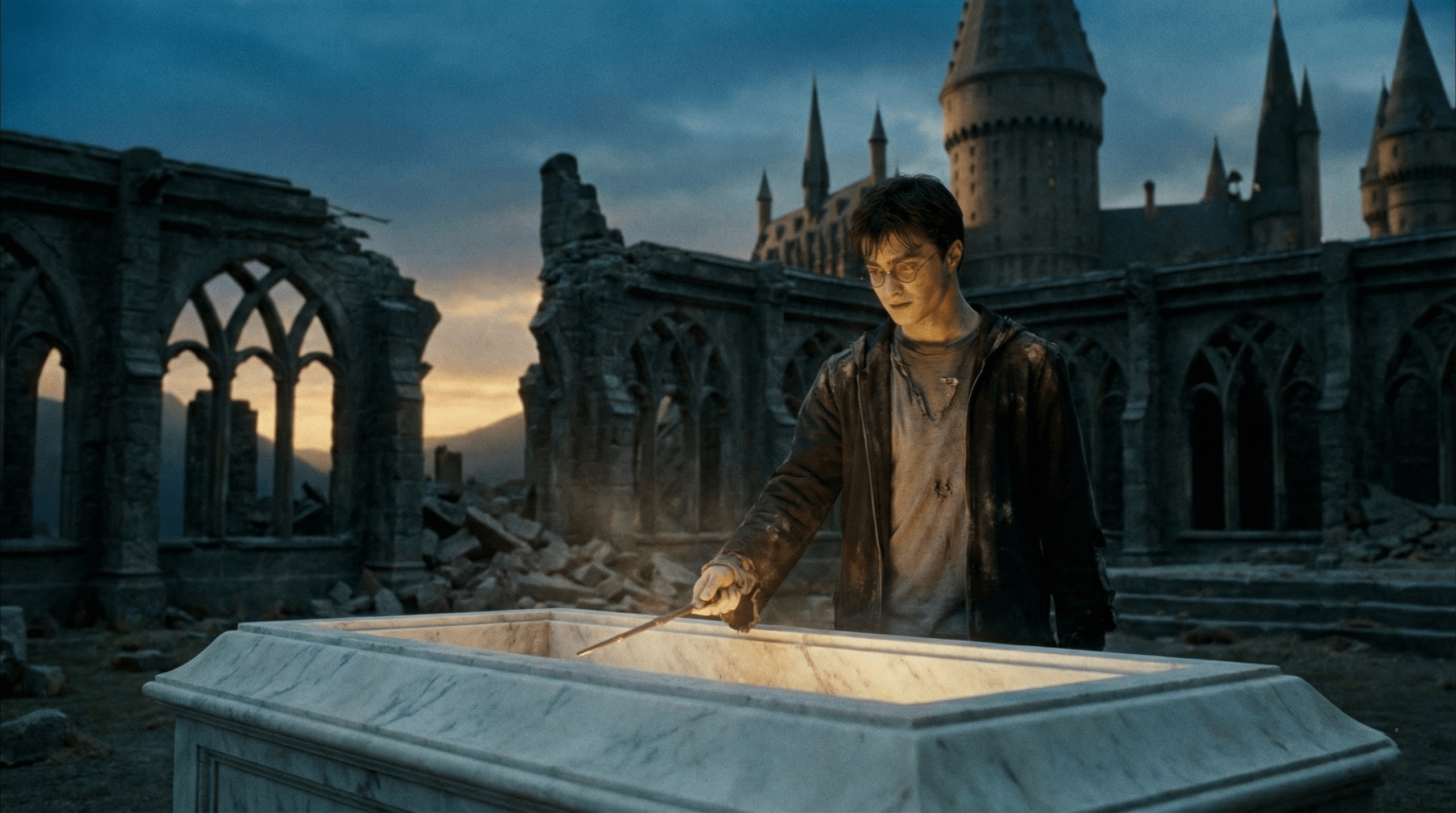 (Note: In the film adaptation, Harry snaps the wand and throws the pieces off the bridge, an alteration that has sparked endless debate among fans about whether it aligns with the books’ themes of choice and responsibility.)
Common Fan Questions and Debates About Dumbledore and the Elder Wand
Here are the questions most frequently asked by readers and viewers, answered directly from canon:
1. Did Grindelwald truly master the Elder Wand after stealing it from Gregorovich, or does theft not count? Theft does count if it overpowers the previous owner. Gregorovitch was stunned and defeated, so the allegiance transferred. However, Grindelwald never faced Dumbledore-level opposition until 1945, so his mastery remained unchallenged for decades.
2. Could Dumbledore have won without their personal history? Possibly—but unlikely. Their shared past gave Dumbledore psychological insight into Grindelwald’s weaknesses (guilt, inner conflict, fear of facing his old friend). Dumbledore’s superior dueling skill was decisive, but the emotional context amplified his advantage.
3. Why didn’t the Elder Wand make Grindelwald invincible during his reign? The wand enhances power but does not override skill gaps, strategy, or psychological factors. Grindelwald was already immensely talented; the wand made him terrifyingly effective, but it did not erase Dumbledore’s greater talent or moral clarity.
4. Did Fantastic Beasts change anything about how Dumbledore got the Elder Wand? No. The films show the blood pact and the growing tension between the two men, but the 1945 duel and its outcome remain unchanged from the books. The movies simply provide more backstory leading up to it.
5. Was Dumbledore’s plan always to “tame” the wand’s power? Yes. From the moment he claimed it, Dumbledore sought to limit its destructive potential. He accepted its power only to neutralize threats and ultimately planned for its mastery to end with him—preventing future bloodshed.
The story of how Dumbledore got the Elder Wand is far more than a wizarding history footnote. It reveals core truths about power, responsibility, and redemption that run throughout J.K. Rowling’s series:
- Skill and character outweigh raw power. The Elder Wand is only as good as the wizard who wields it.
- Allegiance follows defeat, not ownership. This rule creates the series’ most intricate plot twist.
- Humility triumphs over ambition. Dumbledore’s restraint contrasts sharply with Grindelwald’s and Voldemort’s greed.
- Personal history shapes destiny. The 1899 summer, Ariana’s death, and the 1945 duel are all threads in the same tapestry.
This single event—Dumbledore claiming the Elder Wand—ended one dark era, protected a generation, and set the stage for Harry Potter’s ultimate victory. It remains one of the most satisfying and philosophically rich moments in the entire Harry Potter saga.
What do you think—did Dumbledore truly deserve to master the Elder Wand, or was it simply the least-bad outcome in a dangerous chain of events? Revisit Deathly Hallows Chapter 35 (“King’s Cross”) for Dumbledore’s full explanation, and share your thoughts in the comments below!