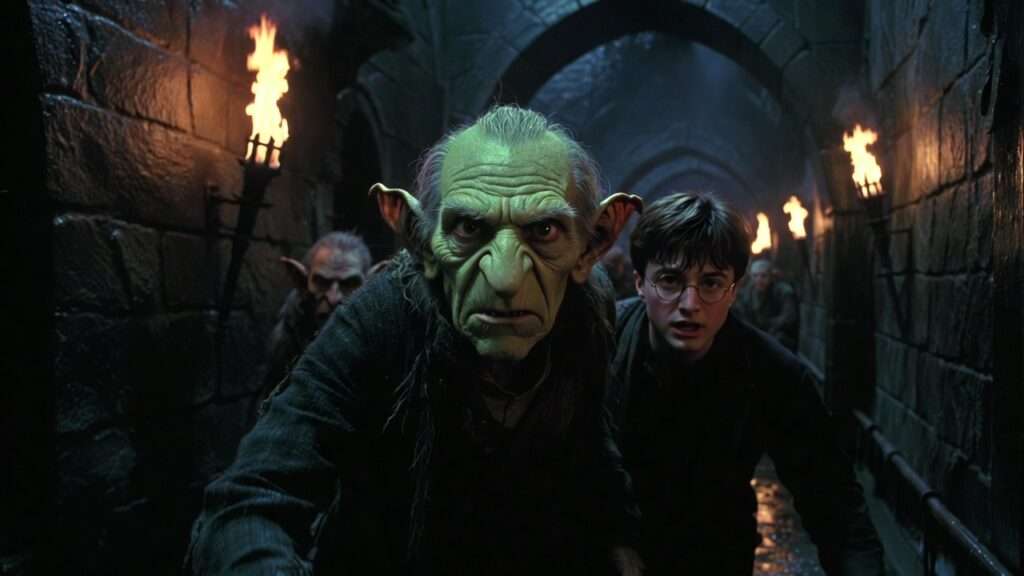
Imagine a small, sharp-featured goblin with long fingers and piercing black eyes leading an eleven-year-old boy through the twisting marble halls of Gringotts Wizarding Bank. He warns of ancient protections that would trap any thief for eternity, his voice laced with smug satisfaction. That goblin is Griphook—and years later, the same creature would help orchestrate one of the most daring heists in wizarding history, only to betray the very people he aided, sealing a tragic end amid the chaos of war. Harry Potter goblin Griphook remains one of the series’ most complex and divisive supporting characters: a guide turned ally turned betrayer whose actions reveal deep-seated tensions between wizards and goblins. Was he a greedy opportunist, a principled defender of his people’s rights, or a victim of systemic prejudice? This in-depth exploration uncovers Griphook’s full journey, drawing directly from J.K. Rowling’s canon, official Wizarding World insights, and careful analysis to provide the comprehensive understanding fans seek.
Griphook’s story isn’t just about one goblin—it’s a window into the often-overlooked undercurrents of the wizarding world, where non-human magical beings grapple with marginalization, ownership disputes, and historical grievances. By the end, you’ll see why his betrayal, while shocking, stems from centuries of mistrust, and why his contributions were essential to Harry’s ultimate victory.
Who Is Griphook? The Gringotts Goblin’s Origins and First Encounters
Griphook’s Introduction in Philosopher’s Stone
Griphook makes his debut in Harry Potter and the Philosopher’s Stone (or Sorcerer’s Stone in some editions) as the Gringotts goblin assigned to escort Harry Potter and Rubeus Hagrid to vaults 687 and 713. His first words to Harry set the tone: a curt explanation of the bank’s unbreakable security. “Like I said, you’ve got to be careful,” he warns, describing how intruders would be trapped forever if they tried to force entry. This early scene establishes Gringotts as a fortress of goblin ingenuity and wizard dependence—goblins manage the wealth, but wizards hold the power.
Physically, Griphook is described with pointed features, long fingers, and a voice that carries a sharp edge. In the films, Warwick Davis brings him to life with a distinctive, gravelly tone that amplifies his prickly demeanor. From the start, Griphook embodies the goblin stereotype: intelligent, fiercely protective of their domain, and openly disdainful of wizard entitlement.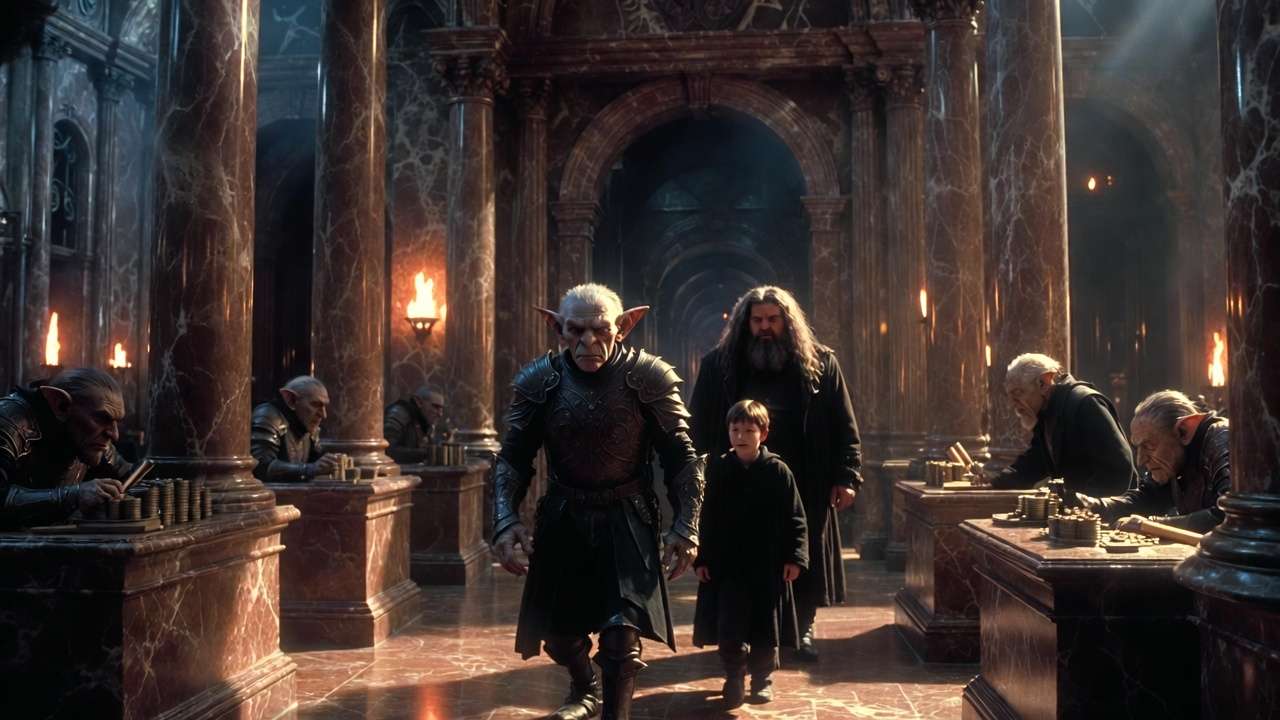
The Goblin Perspective: Culture, History, and Distrust of Wizards
To understand Griphook, one must grasp goblin culture and history. Goblins are highly intelligent magical beings renowned for metalwork, banking, and a unique form of magic that doesn’t rely on wands. Yet, the wizarding world denies them wand rights—a longstanding point of contention. As Griphook later explains in Deathly Hallows, “The right to carry a wand has long been contested between wizards and goblins… Wizards refuse to share the secrets of wandlore with other magical beings, they deny us the possibility of extending our powers!”
This stems from centuries of conflict, including multiple Goblin Rebellions documented in wizarding history texts (often glossed over or biased toward wizards). Goblins view goblin-made items—like armor and weapons—as belonging perpetually to their creators or descendants, not purchasers. The most famous example is the Sword of Gryffindor: forged by goblins, presented to Godric Gryffindor, but claimed by goblins as rightfully theirs after his death. Wizards see it as a gift; goblins see theft.
Griphook’s distrust isn’t personal—it’s cultural. He represents a people who built the wizarding economy but remain second-class citizens under Ministry oversight, forbidden from full autonomy or representation.
Griphook’s Personality and Traits
Griphook is intelligent, cunning, and unapologetically self-interested when it comes to goblin interests. He shows flashes of grudging respect—impressed by Harry’s kindness toward “lesser” creatures like Dobby—but never fully overcomes his prejudice against wizards. His humor is dark and sardonic; he grins nastily when describing Gringotts’ traps. In the films, Davis’ performance adds layers of bitterness and pride, making Griphook memorable despite limited screen time.
Griphook’s Role in the Second Wizarding War
On the Run – From Gringotts Employee to Fugitive
After Voldemort’s takeover of the Ministry in 1997, Gringotts falls under Death Eater control. Griphook refuses to serve the new regime, fleeing instead. He joins other fugitives, including Ted Tonks (Nymphadora’s father), Dirk Cresswell, and Dean Thomas. In Deathly Hallows, Griphook reveals he helped Ted escape pursuit, showing he’s not aligned with Voldemort—he’s simply anti-wizard oppression in general.
This period highlights Griphook’s principles: he won’t bow to tyranny, even if it means endangering himself.
Rescue from Malfoy Manor
Griphook’s path crosses Harry’s again at Malfoy Manor. Captured alongside Luna Lovegood, Ollivander, and others, he’s interrogated by Bellatrix Lestrange over the Sword of Gryffindor (which she believes is real). To end Hermione’s torture, Griphook boldly declares the sword a fake—”an excellent copy”—sparing her further pain. This act builds tentative trust with the trio after their rescue by Dobby. Harry notes Griphook’s reluctant admiration for Harry’s treatment of house-elves, hinting at potential alliance.
Yet suspicion lingers. Griphook remains aloof, expecting betrayal from wizards as history has taught him.
The Gringotts Break-In: Griphook’s Reluctant Alliance
Negotiating the Deal – The Sword of Gryffindor as Payment
The pivotal moment in Griphook’s arc occurs in the grim upstairs bedroom of Shell Cottage. Harry, Ron, and Hermione—desperate to destroy another Horcrux—realize they need Griphook’s help to infiltrate Gringotts and steal Helga Hufflepuff’s cup from Bellatrix Lestrange’s vault. Griphook, still recovering from his injuries at Malfoy Manor, listens with calculated interest.
The negotiation is tense and revealing. Griphook demands the Sword of Gryffindor in payment, claiming it as goblin property. Harry reluctantly agrees, but with a private caveat: he intends to delay handing it over until after the Horcrux is destroyed. This unspoken plan plants the seeds of betrayal. Griphook senses the deception, warning Harry, “Wizards have a habit of taking what isn’t theirs.”
This exchange underscores the core conflict: wizards see the Sword as a heroic artifact; goblins see it as stolen heritage. Griphook’s demand isn’t mere greed—it’s restitution.
 Inside Gringotts – The Heist Step-by-Step
The break-in sequence in Deathly Hallows is one of Rowling’s most thrilling set pieces, and Griphook is indispensable. Disguised via Polyjuice Potion (Hermione as Bellatrix, Harry and Ron as Ministry employees, and Griphook as a goblin), the group enters Gringotts under the watchful eyes of security goblins.
Griphook guides them through the labyrinthine tunnels, using his knowledge of security protocols:
- He directs Bogrod, the elderly goblin who manages high-security vaults, to open Vault 713’s inner chamber.
- He explains the Thief’s Downfall—a magical waterfall that washes away disguises and enchantments.
- He warns of the multiplying treasures that would trap anyone greedy enough to take more than their share.
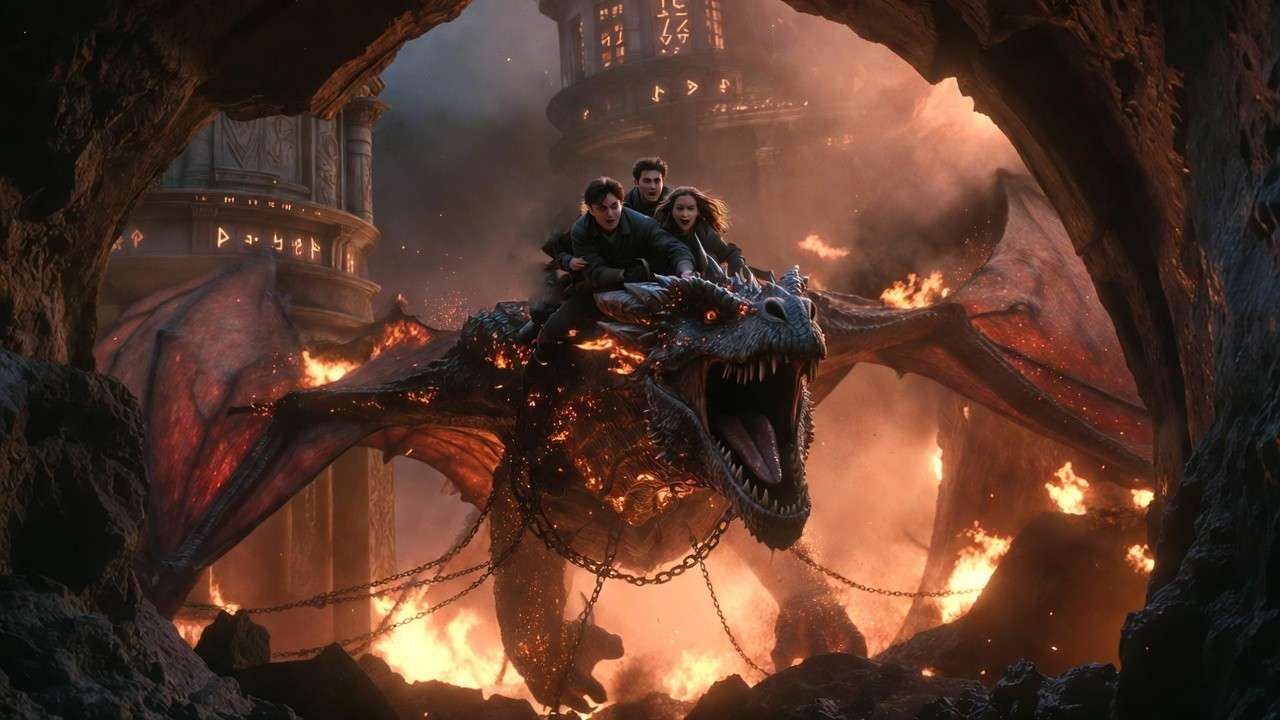
The tension peaks when the Polyjuice begins to wear off. Griphook remains calm, using goblin authority to push forward. Once inside the Lestrange vault, he identifies the cup among piles of multiplying gold. The dragon escape—riding the ancient Ukrainian Ironbelly out of the bank—is chaotic, but Griphook’s insider expertise makes the impossible possible.
Without Griphook, the heist would have failed before it began.
Key Challenges and Goblin Magic
Goblin magic differs from wizard magic in fundamental ways. They excel at protective enchantments, metal manipulation, and object permanence spells (the multiplying treasures being a prime example). Griphook navigates these effortlessly, revealing how much the wizarding world relies on goblin skill while denying them equality.
Rowling uses these details to subtly critique wizard supremacy. Griphook isn’t just a plot device—he’s a living reminder of the imbalance that fuels resentment.
Why Did Griphook Betray Harry, Ron, and Hermione?
The Moment of Betrayal – Taking the Sword and Sounding the Alarm
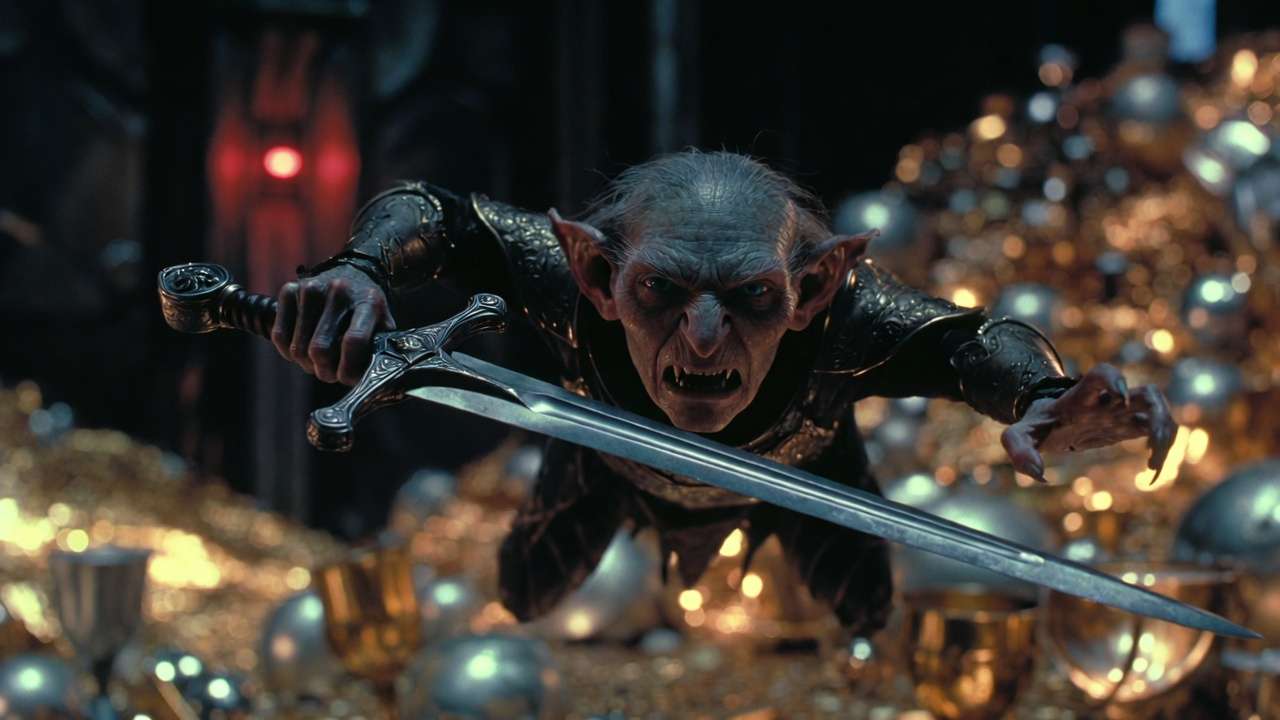
As the dragon ascends, Griphook seizes the Sword of Gryffindor from Harry’s grasp and leaps from the beast’s back into the chaos below. He shouts “Thieves!”—alerting every goblin in Gringotts. The alarm blares, security spells activate, and the trio is forced to flee on dragonback without the Sword.
This act shocks readers and characters alike. Harry feels the sting of betrayal keenly, having believed (perhaps naively) that their shared danger had forged trust.
 Griphook’s Motivations – Loyalty to Goblin Rights Over Personal Alliances
Griphook’s betrayal is not random or malicious in the Pettigrew sense. He fulfills his side of the bargain—he got them into the vault. But he never promised to let them leave with the Sword.
His reasoning is rooted in principle:
- He believes wizards will never voluntarily return goblin property.
- He sees the Sword as belonging to his people, forged by goblin hands and wrongfully claimed.
- In a world where goblins are barred from wand use and political power, reclaiming artifacts is one of the few ways to assert sovereignty.
Griphook tells Harry earlier: “The sword belongs to the goblins. It is our right to reclaim it.” His loyalty lies with his species, not with three young wizards fighting their own war.
Harry’s Role in the Mistrust – The Unspoken Plan
Harry’s internal monologue reveals his intention to keep the Sword until after destroying the cup. He rationalizes this as necessity, but to Griphook it confirms every stereotype of wizard deceit. The parallel is stark: just as wizards historically take without asking, Harry plans to withhold what was promised.
This mutual mistrust—born of history on Griphook’s side and pragmatism on Harry’s—makes the betrayal almost inevitable. It’s a tragic collision of perspectives rather than simple villainy.
Book vs. Film Differences in the Betrayal
The films streamline the betrayal for pacing. Griphook’s shout is more dramatic, and his fate is shown explicitly (more on that below). In the book, the moment is quieter but more morally ambiguous—Griphook acts swiftly and without gloating, simply reclaiming what he believes is his.
Griphook’s Tragic Fate and Aftermath
What Happened After the Betrayal?
After sounding the alarm, Griphook escapes with the Sword into the depths of Gringotts. Voldemort, learning of the breach, arrives in fury. He interrogates goblins about the theft, demanding to know which items were targeted.
Death in the Films vs. Ambiguous End in the Books
In the book Deathly Hallows, Griphook’s fate is not explicitly described. Harry later learns from a goblin at Hogwarts that “Gringotts has suffered greatly” and many goblins were killed in Voldemort’s rage. Griphook is presumed among them, though never confirmed.
The films take a clearer (and darker) route: Voldemort murders Griphook at Malfoy Manor with the Killing Curse after learning of the theft. This choice gives visual impact but removes some nuance—Griphook becomes another victim of Voldemort rather than a casualty of his own choices and the larger wizard-goblin conflict.
The Sword’s Return – Poetic Justice?
Ironically, the Sword returns to Hogwarts via the Sorting Hat, just as it did in Chamber of Secrets. It aids Neville in destroying Nagini, helping seal Voldemort’s defeat. Griphook’s theft ultimately fails—yet his actions indirectly enable the final victory by forcing Voldemort to expose another Horcrux vulnerability.
In Defence of Griphook – A Sympathetic Re-Examination
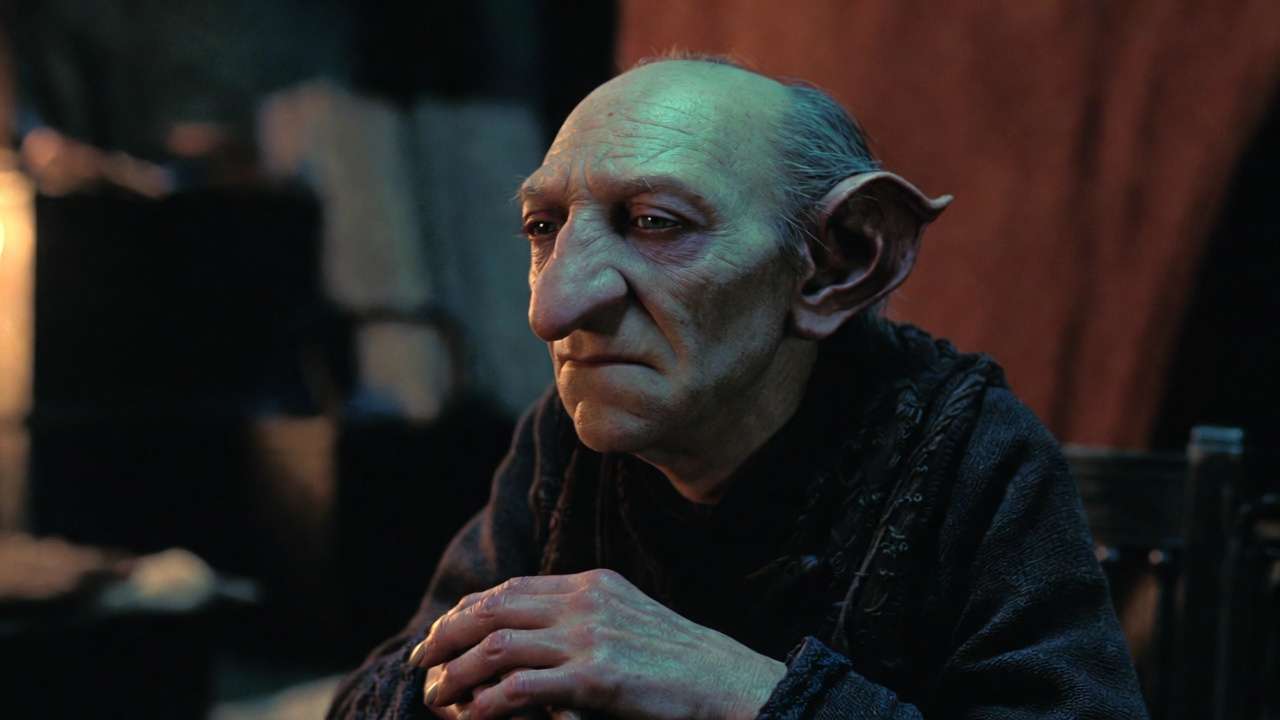
Too often, readers and viewers reduce Griphook to “the goblin who betrayed Harry.” This oversimplification ignores the deeper context of his actions and the systemic forces that shaped them. A fair reassessment reveals Griphook not as a straightforward antagonist, but as a complex figure caught between personal survival, cultural loyalty, and justified resentment.
 Griphook as a Victim of Systemic Injustice
The wizarding world’s treatment of goblins mirrors real-world histories of marginalised groups denied basic rights while their labour and expertise are exploited. Goblins:
- Created the financial backbone of wizarding society through Gringotts.
- Forged legendary weapons and armour (e.g., goblin-made armour is described as “impenetrable” and superior to wizard craftsmanship).
- Were repeatedly denied political representation and the right to bear wands.
Rowling herself has noted in interviews and on Pottermore (now Wizarding World) that goblins harbour deep grievances over wand legislation and ownership rights. Griphook articulates this eloquently: “Goblins are cleverer than wizards… Yet wizards treat us like vermin.” His bitterness is not irrational prejudice—it is a rational response to centuries of subjugation.
In this light, his demand for the Sword becomes an act of reclamation rather than greed. He is attempting to correct a historical wrong, even if the timing and method are destructive.
 Key Contributions to Harry’s Victory
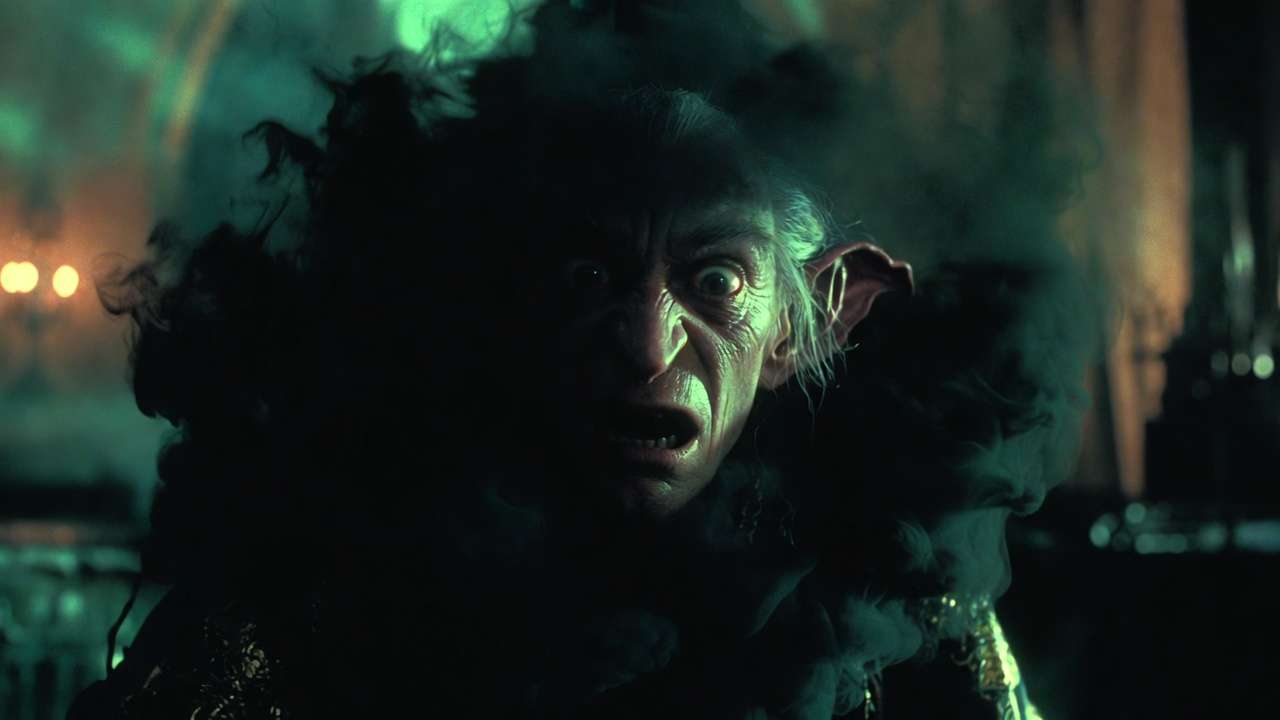
Despite the betrayal, Griphook’s involvement was indispensable to Voldemort’s downfall:
- He provided the only feasible way into Bellatrix’s vault.
- His knowledge of Gringotts security enabled the heist.
- By taking the Sword and triggering the alarm, he indirectly forced Voldemort to realise another Horcrux had been targeted—accelerating the Dark Lord’s paranoia and mistakes in the final hours.
Without Griphook, the cup Horcrux might never have been destroyed. In the grand calculus of the war, his actions—betrayal included—served the greater good, albeit unintentionally.
Lessons from Griphook’s Story
Griphook’s arc teaches several enduring lessons:
- Prejudice breeds mistrust on both sides. Wizards assume goblins are greedy; goblins assume wizards are thieves.
- Historical grievances do not vanish—they fester and influence present behaviour.
- True alliances require mutual respect and honesty. Harry’s hidden plan and Griphook’s inflexibility doomed their partnership from the start.
In many ways, Griphook embodies the cost of division in Rowling’s world—a reminder that victory over Voldemort required not just defeating dark magic, but confronting the inequalities that allowed such darkness to flourish.
Griphook in Popular Culture and Fan Discussions
Griphook remains a frequent topic in Harry Potter fan communities. On platforms such as Reddit (r/harrypotter), Tumblr, and TikTok, debates often centre on:
- “Was Griphook justified?” Many fans now argue yes, citing goblin history and Harry’s own moral compromises.
- Comparisons to other betrayers: Unlike Pettigrew (motivated by cowardice and ambition), Griphook’s motives are ideological.
- Memes and edits frequently portray him as an anti-hero or misunderstood revolutionary.
Warwick Davis’s performance has also elevated the character. Fans praise how he conveyed pride, pain, and defiance in limited screen time—particularly in the Gringotts sequences and the quiet moment when he declares the sword fake to save Hermione.
FAQs
Who played Griphook in the Harry Potter films? Warwick Davis portrayed Griphook in Harry Potter and the Deathly Hallows – Part 1 and Part 2. (Davis also played multiple other roles across the series, including Professor Flitwick.)
Did Griphook die in the books? His death is not explicitly shown or confirmed in the books. Harry is told that many goblins died after Voldemort’s rage over the Gringotts breach, and Griphook is presumed to be among them.
Why did Griphook want the Sword of Gryffindor? As a goblin-made artefact, goblins believe it belongs to them by right of creation. Griphook saw reclaiming it as correcting a centuries-old theft by wizards.
Was Griphook a villain or misunderstood? Most nuanced readings place him as misunderstood. His actions stem from loyalty to goblin rights and distrust of wizards rather than personal malice or greed. He is a product of systemic injustice more than an inherent antagonist.
How did Griphook help destroy a Horcrux? By enabling the trio to access Bellatrix Lestrange’s vault and steal Hufflepuff’s cup, he directly facilitated the destruction of one of Voldemort’s Horcruxes—even if he later betrayed them.
Harry Potter goblin Griphook begins as a minor functionary in a magical bank and ends as a pivotal, tragic figure whose choices ripple through the final battle. He is neither hero nor villain—he is a goblin trying to protect his people’s dignity in a world that has denied it for generations.
His betrayal stings because it exposes uncomfortable truths: trust is fragile when built on unequal power, and justice delayed becomes resentment that explodes at the worst possible moment. Yet without Griphook, Harry’s path to destroying the Horcruxes would have been far narrower.
In the end, Griphook’s story asks a haunting question: In a divided society, can understanding ever overcome history’s weight? Perhaps not fully—but the attempt, flawed as it was, helped bring down the greatest dark wizard of all time.