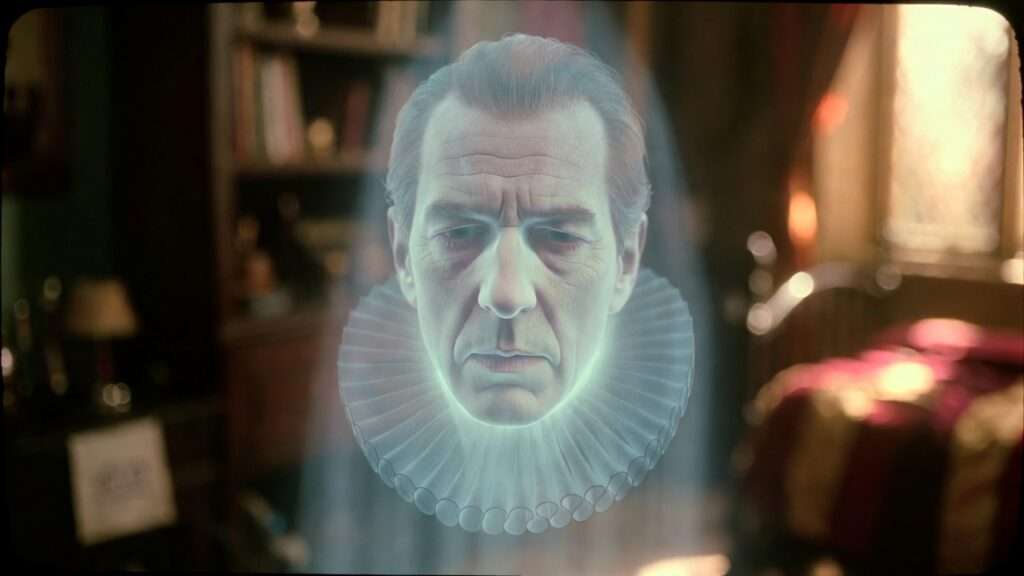
Imagine gliding through the stone corridors of Hogwarts on Halloween night, only to encounter a cheerful, translucent gentleman whose head dangles at an impossible angle, held on by nothing more than a thin strip of ghostly skin. He bows politely, introduces himself with impeccable manners, and wishes you a pleasant evening—all while his severed neck sways like a broken hinge. This is Harry Potter Nearly Headless Nick, Gryffindor House’s resident ghost and one of the most instantly recognizable supporting characters in J.K. Rowling’s wizarding world.
For millions of readers and film fans, Nearly Headless Nick is far more than comic relief. His story blends dark historical tragedy, subtle social commentary, and profound reflections on fear, death, and acceptance. Yet despite his frequent appearances across seven books and eight films, many details of his life (and afterlife) remain surprisingly underexplored.
In this comprehensive guide, we dive deep into Sir Nicholas de Mimsy-Porpington’s full biography: the noble wizard who served in royal courts, the catastrophic spell that led to his arrest, the gruesome 45-hack beheading that earned him his infamous nickname, the reasons he chose to become a ghost, his poignant rejection from the Headless Hunt, and the lasting lessons his 500+ years of existence offer about courage and identity.
Whether you’re rereading the series, preparing for a Hogwarts Legacy playthrough, or simply curious why a 15th-century knight ended up floating through Gryffindor common room with his head barely attached—this article delivers the most complete, canon-supported portrait of Nearly Headless Nick available anywhere.
Who Is Nearly Headless Nick? His Full Name and Identity
Nearly Headless Nick’s proper name is Sir Nicholas de Mimsy-Porpington. The elaborate title immediately signals his aristocratic background. Born in the late 15th century (most scholars place his birth around 1400–1410), he attended Hogwarts School of Witchcraft and Wizardry and was sorted into Gryffindor House—fitting for a man who valued chivalry, bravery, and honor.
After leaving school, Sir Nicholas pursued a career at court, serving as a wizard in the household of an English monarch (likely during the turbulent Wars of the Roses period or shortly after). Unlike many wizards who avoided Muggle society, he maintained friendly relations with non-magical nobles, even attending social events and offering discreet magical assistance.
This openness would ultimately prove fatal.
The Tragic Tale: How Nearly Headless Nick Died
The year was 1492. On October 31—coincidentally the date that would later become Halloween in the Muggle calendar—Sir Nicholas de Mimsy-Porpington faced execution by beheading.
The chain of events began with a seemingly minor favor. A Muggle lady-in-waiting named Lady Grieve complained of crooked teeth. In an attempt to help (and perhaps impress his courtly acquaintances), Sir Nicholas cast a cosmetic charm intended to straighten her smile. The spell misfired spectacularly: instead of perfect teeth, Lady Grieve sprouted a single tusk.
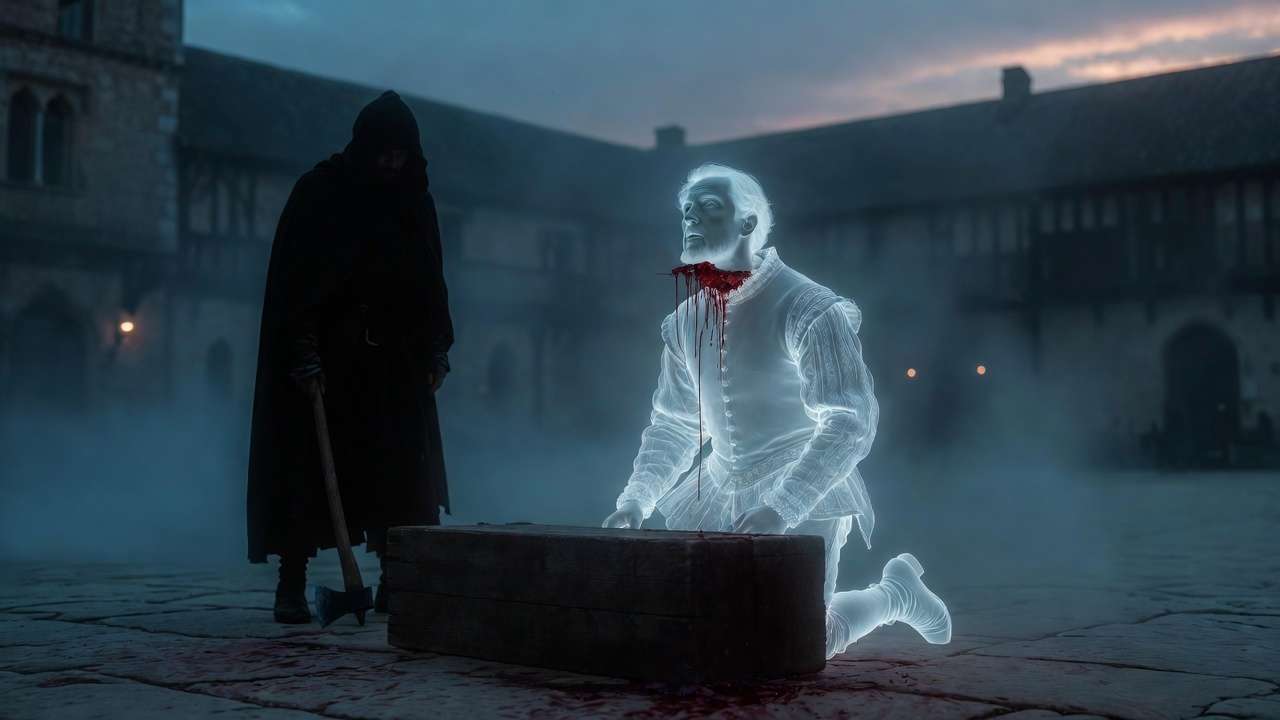 Whether the mishap was reported maliciously or simply witnessed by too many people is unclear, but the consequence was swift. Sir Nicholas was accused of performing dark magic or endangering Muggle lives through reckless spellwork. In an era when witchcraft trials were already simmering across Europe, the charge was enough to secure a death sentence.
On the appointed day, Sir Nicholas was taken to the execution block. What should have been a single, clean stroke became one of the most infamous botched beheadings in wizarding history.
The executioner’s axe was dull—its grindstone had been misplaced or deliberately neglected. It took 45 separate blows to finally sever Sir Nicholas’s head. Even then, the job was incomplete. A thin strip of skin and sinew remained, leaving his head dangling by the narrowest of threads.
Eyewitness accounts (canonically referenced in Harry Potter and the Chamber of Secrets) describe the horror: the axe rising and falling repeatedly while Sir Nicholas endured unimaginable pain before death finally claimed him. The irony is inescapable—a skilled wizard, capable of feats of magic far beyond Muggle comprehension, reduced to dying in the most primitive, brutal way possible.
It is this gruesome detail that gave rise to his enduring nickname: Nearly Headless Nick. The “nearly” is literal; his head has never fully detached, even in death.
Why He Became a Ghost: Fear of Death and Wizarding Afterlife Rules
In Harry Potter and the Order of the Phoenix, Nearly Headless Nick delivers one of the series’ most revealing conversations about death and the afterlife.
When Harry asks why some witches and wizards return as ghosts while others pass on to whatever lies beyond, Nick explains: “Wizards can leave an imprint of themselves upon the earth, to walk ghostfully… But very few choose that path. I was afraid… of death. I chose to stay.”
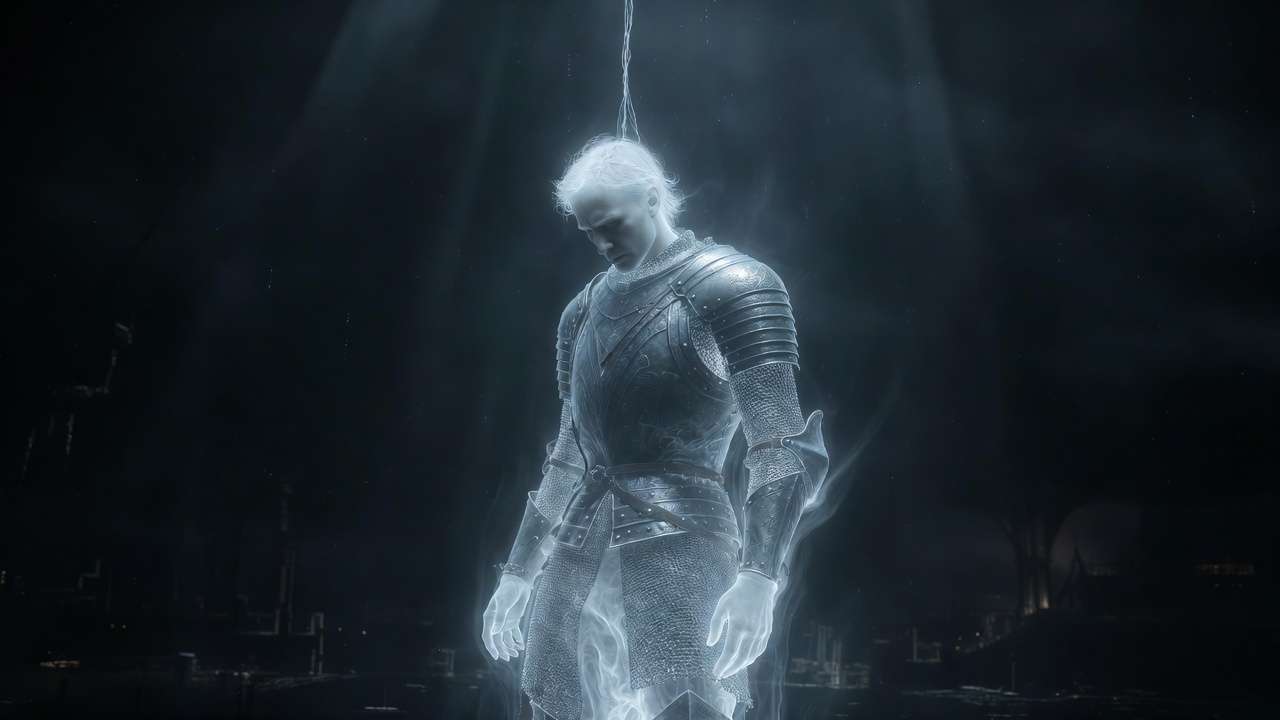 Sir Nicholas feared the unknown more than he feared continued half-existence. Rather than step through the veil, he elected to linger as a pale shadow of his former self—polite, helpful, and eternally trapped in the moment just before his head fully separated.
This choice stands in stark contrast to characters like James and Lily Potter, Remus Lupin, or Sirius Black, none of whom returned as ghosts despite violent deaths. Their willingness to accept mortality allowed them to move on. Nick’s lingering regret, therefore, is not merely personal embarrassment over a botched execution—it reflects a deeper, more universal fear.
Rowling uses Nick to explore one of the saga’s central philosophical questions: Is it braver to face death or to cling to life at any cost? Nearly Headless Nick chose the latter, and the price is five centuries of semi-existence, forever “nearly” something he can never quite become.
Life as Gryffindor’s House Ghost
For more than five centuries, Sir Nicholas de Mimsy-Porpington has served as the official house ghost of Gryffindor. In the wizarding world, house ghosts are more than mere decorations—they act as living (or rather, unliving) links to the house’s history, traditions, and values.
Nick takes this role seriously. He greets first-year students on their very first night in the common room, floating through the portrait hole with a dignified bow and a warm, if slightly eerie, welcome. He offers gentle guidance to homesick eleven-year-olds, shares tales of past Gryffindor triumphs, and occasionally dispenses fatherly advice to older students.
His interactions with Harry Potter are particularly memorable:
- In Harry Potter and the Philosopher’s Stone, he cheerfully points Harry toward the correct direction during the chaotic first-year arrival at Hogwarts.
- In Chamber of Secrets, he provides crucial (if indirect) insight into the nature of the basilisk by explaining how ghosts perceive death and injury.
- Most poignantly, in Order of the Phoenix, he has a quiet, heartfelt conversation with Harry about death after Sirius Black’s passing. Nick’s gentle explanation—“I am dead”—and his admission that he cannot truly help Harry move beyond grief underscore the limits of ghostly existence.
Despite his gruesome appearance, Nick remains unfailingly polite and chivalrous. He insists on being addressed by his full title, corrects mispronunciations of “Mimsy-Porpington” with good-natured patience, and never allows his perpetual near-decapitation to dampen his courtly demeanor.
He also maintains cordial relationships with the other Hogwarts house ghosts:
- The Fat Friar (Hufflepuff) – warm and forgiving.
- The Grey Lady (Ravenclaw) – reserved and melancholic.
- The Bloody Baron (Slytherin) – brooding and intimidating.
Nick’s easy camaraderie stands out; he is the only ghost who seems genuinely comfortable socializing across house lines, perhaps a remnant of his Muggle-friendly court days.
The Headless Hunt Rejection: A Lifelong (Afterlife) Sorrow
One of the most touching—and quietly heartbreaking—aspects of Nearly Headless Nick’s existence is his repeated rejection from the Headless Hunt.
The Headless Hunt is an exclusive society of ghosts who were fully decapitated. Led by the boisterous Sir Patrick Delaney-Podmore, its members engage in rowdy, headless-specific sports such as Head Polo (using their own heads as the ball) and Horseback Head-Juggling. It is, in short, the ghostly equivalent of an elite gentlemen’s club.
Sir Nicholas has applied to join on multiple occasions—most famously just before his five-hundredth Deathday. Each time, he is politely but firmly turned down.
The reason is brutally simple: his head is not completely detached.
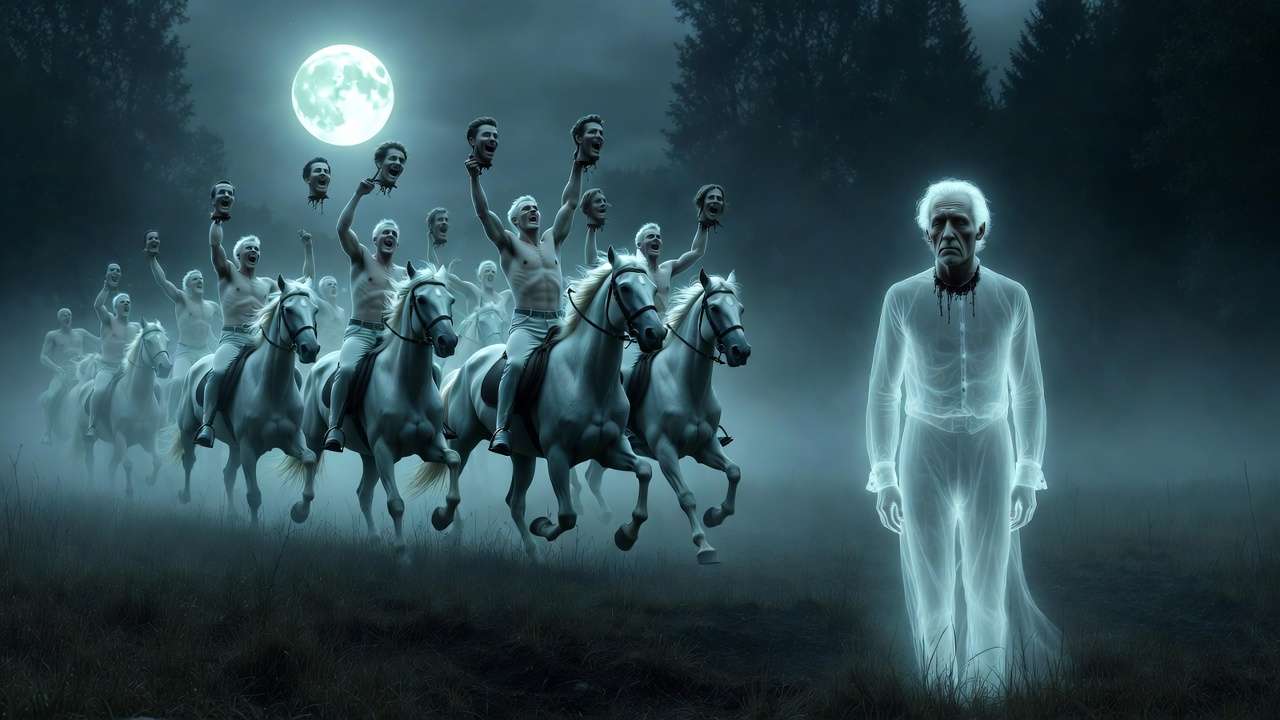 As Sir Patrick explains in Chamber of Secrets, “We just can’t have a head like yours in the Hunt. It’s just not… headless enough.” A mere half-inch of translucent skin keeps Nick forever on the outside looking in.
This rejection is more than a petty social snub. It symbolizes the lingering shame of his botched execution and the one thing he can never change about his death. Even in the afterlife, where physical form is already an illusion, Nick is defined—and limited—by the incompetence of a 15th-century axe-man.
The scene where he shows Harry the rejection letter is one of Rowling’s quiet masterstrokes: funny on the surface, yet quietly devastating beneath. It reveals a ghost who, after five hundred years, still yearns for acceptance among his peers.
The Five-Hundredth Deathday Party: A Memorable Celebration
In Harry Potter and the Chamber of Secrets, Harry, Ron, and Hermione become the first living people in centuries to attend a ghost’s Deathday party—Nearly Headless Nick’s five-hundredth, held on October 31 in the dungeons.
The event is everything one might expect from a gathering of the dead:
- Moldy, rotten food that only ghosts can “taste.”
- A musical performance on a saw that produces mournful, wailing notes.
- A vast, chilly dungeon decorated with black velvet hangings and thousands of black candles whose flames burn blue.
- Ghostly guests drifting through tables, complaining about the quality of the putrid offerings.
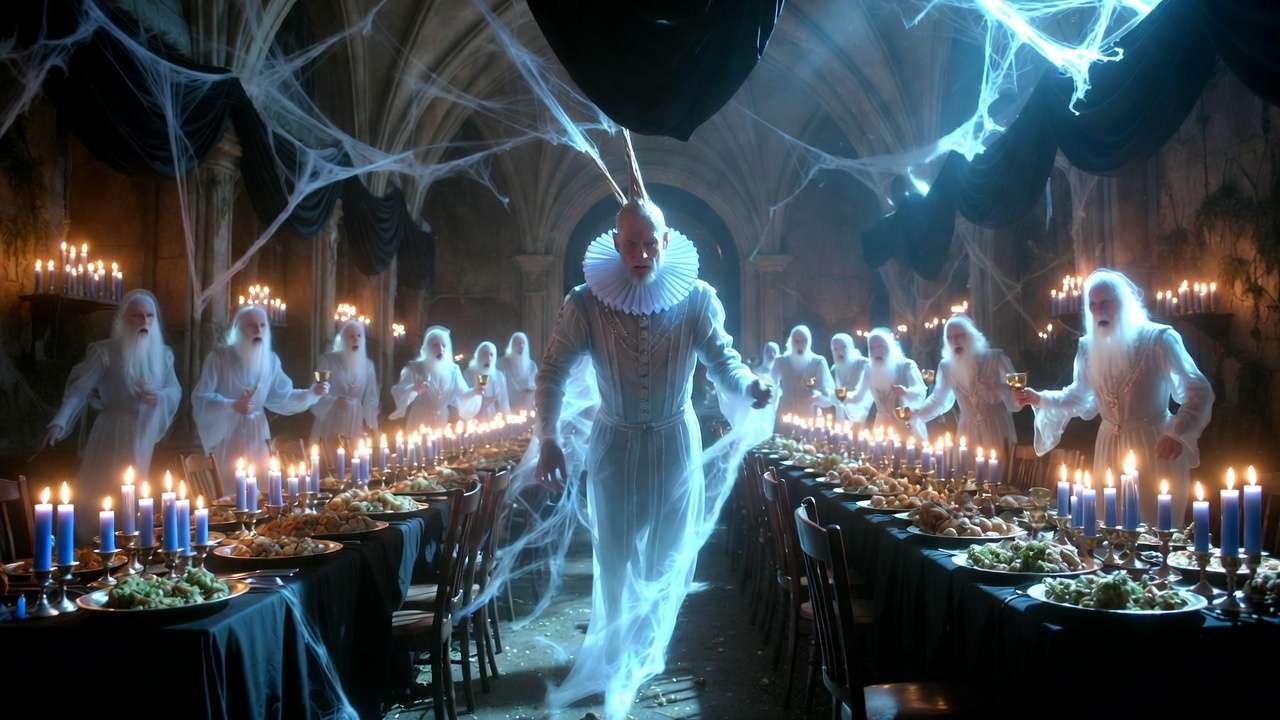 Nick himself is dressed in his finest ruff and tunic, head balanced as carefully as possible. Yet the party is strangely subdued. Ghosts do not age, but they do remember—and the passage of five hundred years weighs heavily on many of them.
The trio’s presence briefly livens the mood (Nick is genuinely touched that living friends attended), but the evening ends on a bittersweet note when the Headless Hunt rides noisily past the open door, laughing and playing games Nick can never join.
The Deathday party remains one of the series’ most atmospheric scenes, offering readers a rare glimpse into the melancholic, unchanging world of the dead.
Nearly Headless Nick in the Harry Potter Films and Adaptations
When Harry Potter and the Sorcerer’s Stone (2001) brought Hogwarts to life on the big screen, Nearly Headless Nick was portrayed by comedy legend John Cleese. The choice was inspired: Cleese’s impeccable comic timing and aristocratic delivery perfectly captured the ghost’s blend of old-world courtesy and absurd tragedy.
In both Sorcerer’s Stone and Chamber of Secrets, Cleese’s Nick appears with his head dramatically lolling to one side, held on by the thinnest translucent thread. The visual effect—achieved through careful practical makeup, CGI enhancements, and clever camera angles—makes the “nearly headless” condition instantly comprehensible even to viewers unfamiliar with the books.
Key film moments include:
- His warm, slightly pompous welcome to the Gryffindor first-years in the common room.
- The unforgettable scene in Chamber of Secrets where he dramatically reenacts his own beheading for Harry, complete with exaggerated sound effects and a flourish as his head swings forward.
- The five-hundredth Deathday Party sequence, filmed with a cold blue palette, drifting ghostly guests, and a haunting musical saw performance that remains one of the franchise’s most atmospheric set pieces.
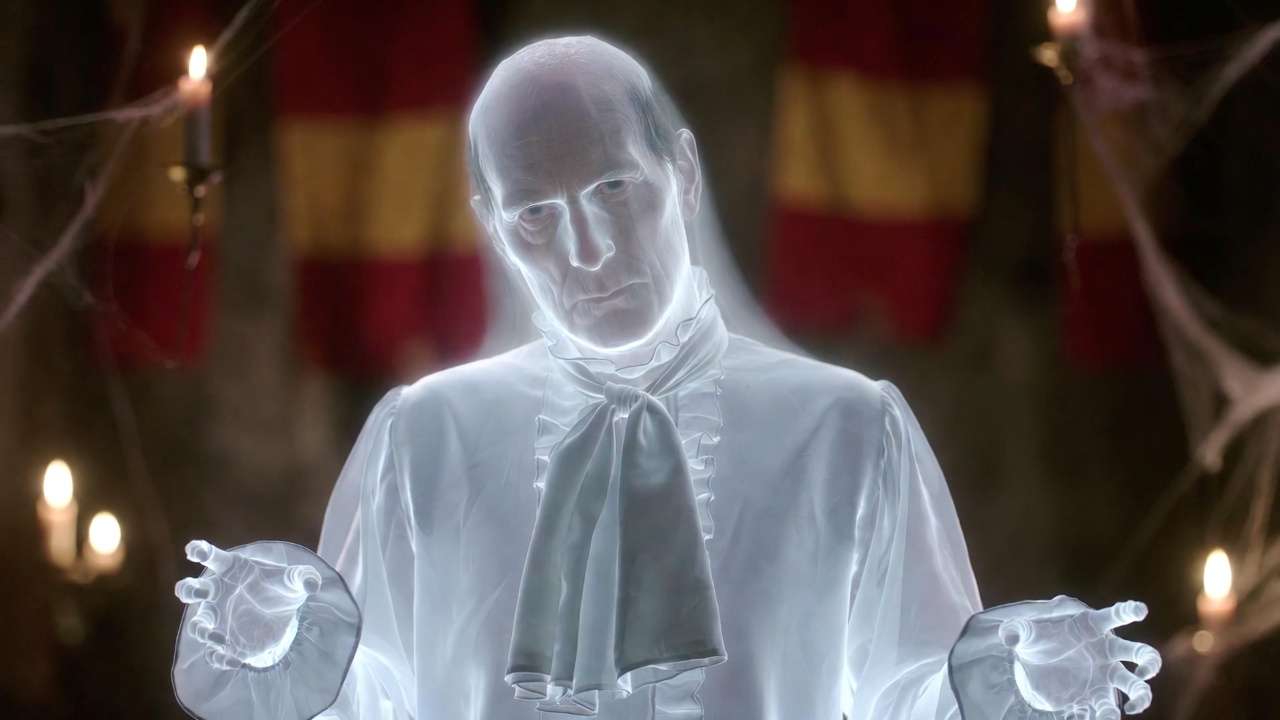 While the films necessarily condense Nick’s deeper philosophical moments (especially his Order of the Phoenix conversation about death and Sirius), Cleese infuses the character with warmth and gentle humor that made him instantly memorable to a new generation of fans.
In later films, Nick’s screen time diminishes as the story shifts toward darker themes, but his early appearances helped cement the visual identity of Hogwarts ghosts: translucent, floating, and carrying the weight of centuries in their expressions.
Beyond the main films, Nearly Headless Nick has appeared in various video games (Hogwarts Legacy includes Easter eggs referencing his Deathday and ghostly wanderings), theme-park attractions, and official Wizarding World merchandise. His distinctive silhouette—head tilted at an awkward angle—has become one of the most recognizable ghost designs in modern fantasy media.
Fun Facts, Trivia, and Lesser-Known Details
Nearly Headless Nick is packed with subtle details that reward close readers and longtime fans:
- Exact Death Date: October 31, 1492. This places his execution on what would later become Halloween, giving his annual Deathday Party a built-in seasonal connection.
- Historical Nod: His story echoes medieval legends such as Saint Denis of Paris, who was said to have carried his own severed head after martyrdom.
- Full Title Pronunciation: J.K. Rowling has confirmed it is pronounced “de MIM-zee POR-ping-ton,” though characters in the books frequently stumble over it—much to Nick’s polite chagrin.
- Reenactment Hobby: He occasionally entertains younger students by dramatically reenacting his beheading, complete with theatrical groans and head-swings.
- Ghostly Senses: Ghosts cannot taste living food but can “enjoy” rotten or moldy substances, which explains the putrid menu at his Deathday party.
- Hogwarts Legacy Connection: While Nick does not physically appear in the 2023 game, several collectibles and environmental storytelling elements reference his 1492 execution and Gryffindor ghost status.
These small touches illustrate how carefully Rowling wove historical, comedic, and emotional layers into even minor characters.
What Nearly Headless Nick Teaches Us About Courage and Acceptance
At first glance, Nearly Headless Nick appears to be comic relief—a floating punchline with a severed neck. Yet his story carries one of the series’ most poignant meditations on bravery, fear, and self-acceptance.
Gryffindor House prizes courage above all else. Nick embodies a different kind of bravery: the courage to keep going despite humiliation, rejection, and an eternity of being “almost” something. He faces daily reminders of his failure (the dangling head, the Headless Hunt rejections) and still greets every new generation of students with dignity and kindness.
His admission in Order of the Phoenix—“I was afraid… of death. I chose to stay”—is not presented as cowardice but as an honest human (or ghostly) choice. Rowling never condemns him for it. Instead, she lets his quiet resilience speak for itself.
Nick also models acceptance of what cannot be changed. He cannot join the Headless Hunt. He cannot fully die. He cannot erase the memory of forty-five axe blows. Yet he continues to find purpose: mentoring students, preserving house traditions, and maintaining friendships across the living and the dead.
In a series filled with characters who confront mortality head-on (Harry, Dumbledore, Lupin), Nearly Headless Nick reminds us that fear of death is not weakness—it is part of being alive. What matters is how we carry that fear forward, and whether we let it define us or whether we rise above it with grace and humor.
FAQs
How did Nearly Headless Nick die exactly? He was sentenced to beheading in 1492 after a teeth-straightening spell misfired on a Muggle lady-in-waiting. The executioner’s axe was dull, requiring 45 blows; his head remained attached by a thin strip of skin.
Why couldn’t he join the Headless Hunt? His head is not fully severed—only a half-inch of ghostly skin connects it—so he is not considered “properly” headless by the society’s standards.
What is Nearly Headless Nick’s real name? Sir Nicholas de Mimsy-Porpington.
When is Nearly Headless Nick’s Deathday? October 31, 1492—the date of his botched execution, which he has commemorated annually ever since.
Is Nearly Headless Nick in all Harry Potter books and movies? He appears in every book to some degree (most prominently in Philosopher’s Stone, Chamber of Secrets, and Order of the Phoenix) but has significant screen time only in the first two films.
Sir Nicholas de Mimsy-Porpington—court wizard, failed spell-caster, victim of the dullest axe in Tudor England, and Gryffindor’s steadfast house ghost—remains one of J.K. Rowling’s most quietly brilliant creations.
His story is simultaneously hilarious and heartbreaking: the nobleman reduced to a perpetual punchline, the brave man who feared the dark beyond, the outsider who still opens the door for every new Gryffindor. Through him, we see that even in a world of magic, some wounds never fully heal—and that’s okay.
Next time you walk through the Gryffindor common room in your mind (or in Hogwarts Legacy), pause when you see that familiar translucent figure with the awkwardly tilted head. Offer him a polite nod. Because behind the swinging neck and the courtly bow lies one of the most human characters in the entire wizarding world.
What is your favorite Nearly Headless Nick moment—from the books, films, or games? Share in the comments below—I’d love to hear your thoughts.