You can watch the full breakdown of the article in this YouTube video:
The original Harry Potter film franchise is an undeniable titan of modern cinema, grossing over $7.7 billion globally and defining an entire generation’s childhood much like Star Wars did for the generation prior. Yet, despite this monumental legacy, the upcoming HBO Harry Potter reboot has left the Wizarding World fandom deeply divided. Warner Bros. and HBO have made a massive, highly ambitious promise: to deliver a decade-long, big-budget television retelling of J.K. Rowling’s seven-book saga that stays far closer to the novels than the original films ever could.
While the prospect of giving every subplot, side character, and piece of Wizarding World lore the screen time it deserves is incredibly compelling, the production is already steeped in controversy. From debates over casting and writers to leaked set details, the internet is currently locked in a cultural tug-of-war between optimistic fans and those who fear the project is already doomed. This comprehensive guide explores the good, the bad, and the ugly of the upcoming HBO series, breaking down the highly anticipated green flags, the concerning red flags, and everything you need to know about a return to Hogwarts.
What is the HBO Harry Potter Reboot? (The Basics)
At its core, the new series is meant to be a full-scale television reboot that aims to faithfully adapt the beloved novels for a new generation. However, understanding the sheer scale of this project is essential to understanding why the stakes are so high.
A $1.2 Billion Decade-Long Commitment
Warner Bros. is treating this intellectual property as its most valuable asset, and the rumored financial backing reflects that. Online rumors suggest the series commands a staggering $1.2 billion budget, which would make it the most expensive television show ever made. To put that in perspective, Amazon’s The Rings of Power spent roughly $1 billion, and even the biggest seasons of Game of Thrones did not come close to this level of investment.
This massive budget is being spread across a planned 10-year release schedule, with the overarching goal of roughly adapting one book per season. If everything proceeds without major hiccups, the series finale wouldn’t air until around 2037. Early reports suggest that the first season, adapting The Philosopher’s Stone, could run between six and eight episodes, with each episode lasting approximately an hour.
 Room for Missing Book Details
The greatest advantage this television format holds over the original films is simply the gift of time. While the film adaptations were undeniably successful, they were fundamentally constrained by their medium, forced to compress massive, intricate novels into roughly two-and-a-half hours of screen time. For instance, the original Philosopher’s Stone film had only 152 minutes to tell the entire story. A six-to-eight-hour season provides exponentially more room for world-building.
This extended runtime finally provides the breathing room to include fan-favorite characters and storylines that were completely absent or dramatically shortened in the original films. Fans can likely expect to finally see characters like Peeves the Poltergeist, Winky the House Elf, Ludo Bagman, and Charlie Weasley. Furthermore, major narrative arcs that were heavily truncated—such as Hermione’s S.P.E.W. initiative, Neville Longbottom visiting his parents at St. Mungo’s Hospital, and the crucial exploration of Voldemort’s backstory through the Pensieve memories—can finally be given the narrative weight they possess in the novels. As the books grow significantly longer and more complex in later entries (like Goblet of Fire or Order of the Phoenix), the episode count could easily scale up to accommodate the increasingly dense storylines.
The “Green Flags”: Promising Updates and Set Leaks
Despite the loud online discourse, there are a surprisingly large number of positive indicators—or “green flags”—suggesting that the project is in very capable hands.
An Experienced, High-Caliber Production Team
From an industry perspective, Warner Bros. and HBO have successfully recruited top-tier, highly experienced talent to spearhead the series. The show is being led by Francesca Gardiner, who serves as both showrunner and executive producer. Gardiner brings a formidable résumé to the table, having previously worked as a writer and producer on critically acclaimed television projects like Succession, His Dark Materials, and Killing Eve.
Joining her is Mark Mylod, who will direct multiple episodes and also serve as an executive producer. Mylod has directed some of the most celebrated episodes of Succession and brings extensive experience helming high-profile, big-budget television across various genres, including Game of Thrones, The Last of Us, and Shameless. Furthermore, author J.K. Rowling has read the pilot script and publicly stated that the show will “more than live up to its expectations”.
Set Leaks Point to True Book Accuracy
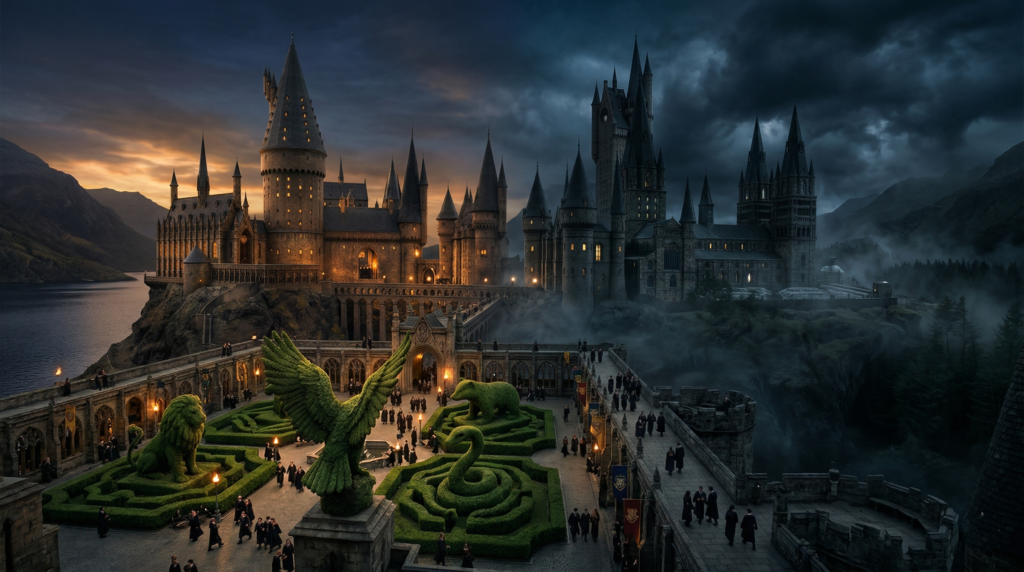
For hardcore fans, the most encouraging news has come from physical set leaks. Production is currently underway, with teams building an entire “mini-city” at Leavesden Studios—the same legendary location where much of the original film series was produced. Leaked photos reveal expanded versions of familiar Hogwarts locations, including grand new courtyards, walkways, and castle architecture that never appeared in the films.
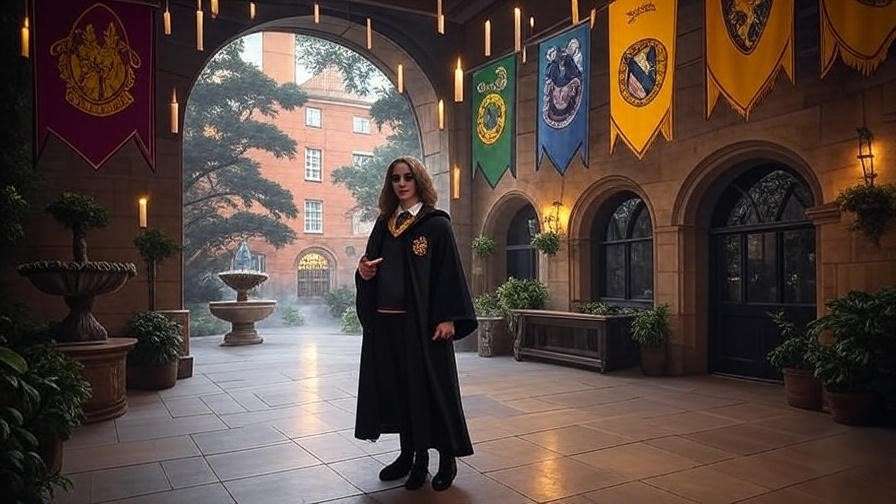
However, the most crucial leak involves a tiny, seemingly inconsequential detail: the courtyard hedges at Hogwarts. These hedges are shaped into the four house emblems: a lion for Gryffindor, a badger for Hufflepuff, a serpent for Slytherin, and crucially, an eagle for Ravenclaw.
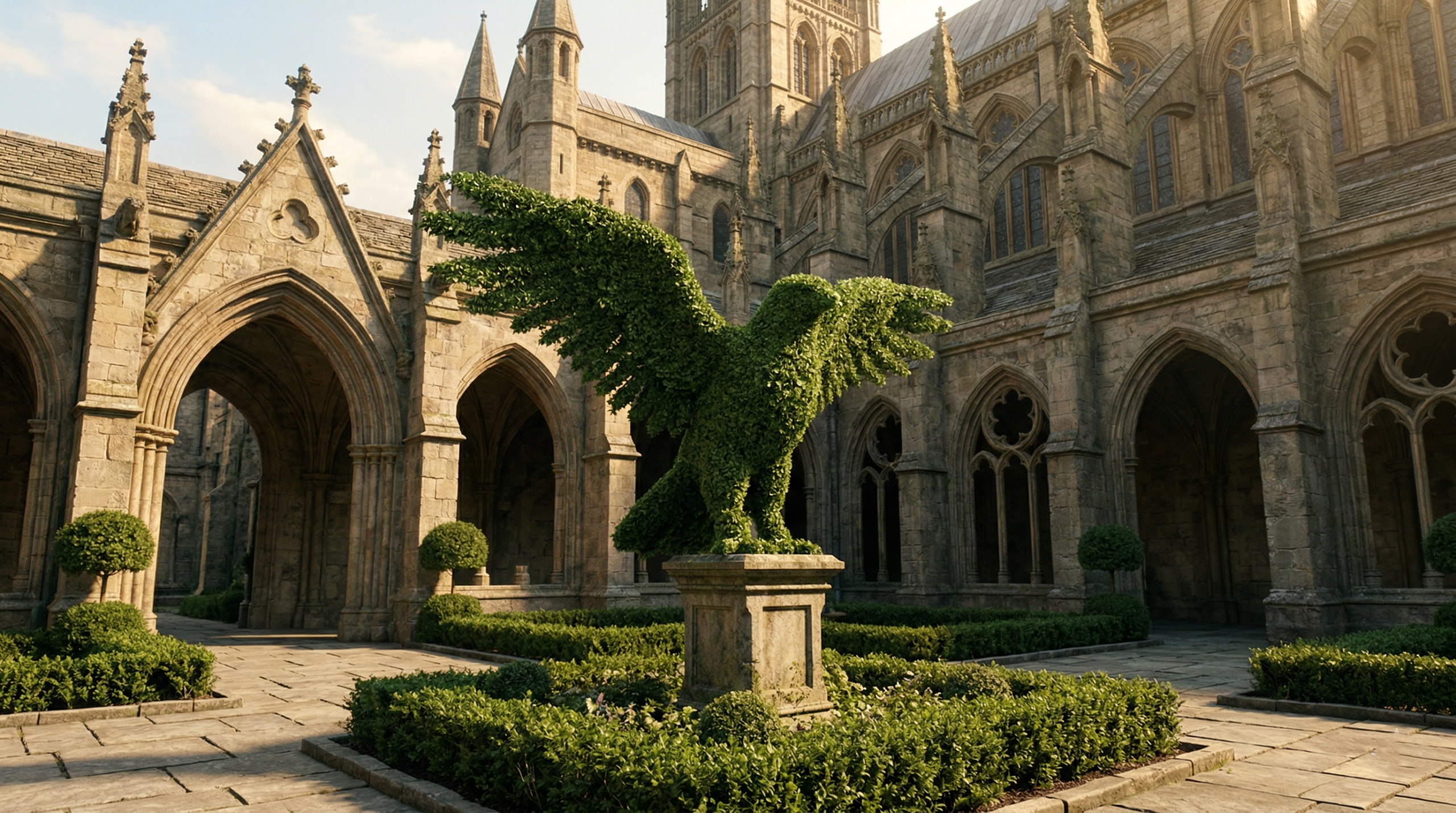 This is a massive signal that the showrunners are taking textual book accuracy incredibly seriously. In one of the most widely debated departures from the original text, the movie franchise famously changed the Ravenclaw mascot to a raven and altered the house colors to blue and silver. In the books, Ravenclaw is distinctly represented by an eagle, with the house colors being blue and bronze. The fact that the production team is actively restoring this specific detail suggests they are paying close attention to the source material.
Expanding Canon: Draco at Malfoy Manor
While the show is marketed as a faithful adaptation, there are hints that the writers plan to expand the narrative beyond Harry Potter’s strict, over-the-shoulder point of view. Actor Lox Pratt, who has been cast as Draco Malfoy, confirmed in an interview that the first season will feature scenes taking place at Malfoy Manor.
“You get to see all the teachers in their little rooms. You get to see Draco at home,” Pratt revealed, noting that showrunner Francesca Gardiner and director Mark Mylod have been vocal about showing audiences more of the broader Wizarding World.
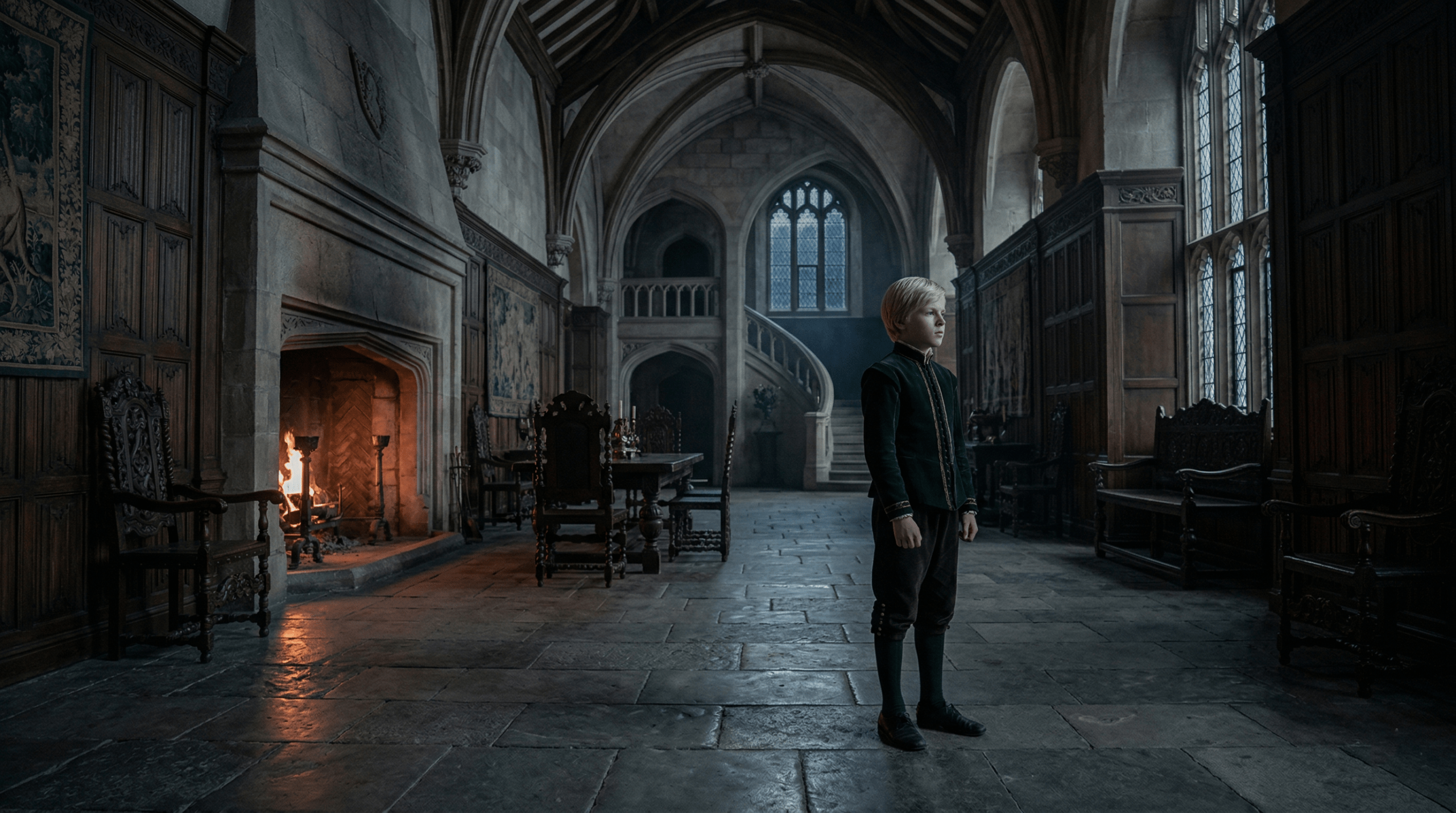 While some purists might worry about adding scenes not explicitly written in the novels, there is a vital distinction between contradicting canon and expanding upon it. Visualizing Draco’s home life early in the story doesn’t inherently alter the narrative; it simply brings to life elements that the books heavily implied but never directly depicted. If handled with care, this type of world-building could significantly enrich the television series.
The “Red Flags”: Controversies and Fan Concerns
Despite the undeniable excitement surrounding the expanded universe and immense budget, the HBO Harry Potter reboot is not without its controversies. In fact, a significant portion of the fandom remains highly skeptical, pointing to several recent production developments as major “red flags”.
The Writer Who Hasn’t Read the Books
Perhaps the most alarming news for hardcore Potterheads involves the writing staff. Recently, it was announced that television critic and podcaster Andy Greenwald would be joining the show’s writing team. The controversy ignited when Greenwald openly admitted on his podcast, The Watch, that he has never actually read the Harry Potter books.
Greenwald confessed that he only read the books to his older daughter until she “dusted” him by reading ahead on her own. Furthermore, he noted that the typical pleasures of adapting a beloved text are “probably not going to be for me” and expressed a desire to find “some other creative possibilites within this world”.
For a series whose entire marketing hook relies on being a “faithful adaptation” of J.K. Rowling’s original text, hiring a writer who is entirely unfamiliar with the source material is a jarring contradiction. Fans are understandably asking a simple question: How can a production faithfully adapt a complex, lore-heavy universe when members of the writing room haven’t read the books?. This has sparked fears that the show might devolve from a true adaptation into a loose “reinterpretation,” prioritizing new creative visions over the established narrative framework.
The Casting Debate: Book Accuracy vs. Reinterpretation
This fear of reinterpretation brings us to what is arguably the crux of the division within the fandom: the casting choices. Warner Bros. and HBO have repeatedly emphasized that this series will be exceptionally faithful to the source material. However, some casting decisions seem to completely contradict the physical descriptions provided in the novels.
 The most prominent example is the casting of Paapa Essiedu as Severus Snape. Essiedu is a phenomenally talented actor, but his casting is a significant departure from the book-accurate representation of the character.
Defenders of the new casting often point out that the original, beloved film cast wasn’t perfectly book-accurate either. Daniel Radcliffe didn’t have Harry’s famous green eyes, Emma Watson lacked Hermione’s bushy hair and large front teeth, and Rupert Grint wasn’t the tall, lanky Ron described by Rowling. However, there is a crucial difference: the original film franchise never aggressively marketed itself as a strict, faithful adaptation. They simply told the story their way. Because HBO has positioned this new series as the ultimate book-accurate retelling, fans are holding the network to a much higher standard.
Fortunately, it is worth noting that many other casting choices are receiving high praise. John Lithgow is slated to play Albus Dumbledore, Janet McTeer has been cast as a seemingly perfect Minerva McGonagall, and Nick Frost is stepping into the massive shoes of Rubeus Hagrid. Even the younger casting choices, such as Lox Pratt taking on the role of Draco Malfoy, appear to fit the classic roles quite well based on early insights.
Is 16 Years Too Soon for a Reboot? Beyond the writing and casting controversies, there is a lingering generational question: is it simply too soon to reboot Harry Potter?
For older Gen Z and millennial audiences, the answer often feels like a resounding yes. The final film, Harry Potter and the Deathly Hallows Part 2, was released in July 2011. By the time the new HBO series airs its pilot episode, roughly 16 years will have passed since the original movie franchise concluded. For those who grew up attending midnight book launches and theater premieres, actors like Daniel Radcliffe, Rupert Grint, and Emma Watson are the definitive versions of these characters. The performances of the original cast are so deeply embedded in the cultural identity of the franchise that replacing them feels premature.
However, from a studio perspective, the timeline makes perfect sense. An entirely new generation of children is discovering the Wizarding World through streaming platforms, theme parks, and hit video games like Hogwarts Legacy rather than midnight releases. Furthermore, because the HBO series is planned as a decade-long commitment, the overarching timeline looks vastly different. If the show successfully adapts one book per season without delays, the series finale won’t air until around 2037. By that point, the original films will be over a quarter of a century old, making a modern television retelling highly relevant for future audiences.
Will It Suffer the “Reboot Curse”?
When evaluating the intense online discourse surrounding this new series, it is impossible to ignore the broader context of modern Hollywood. Many fans are approaching the Harry Potter TV show with caution because they fear it will fall victim to the “reboot formula” that has plagued other major fantasy properties.
The pattern is a familiar one: a studio announces a reboot of a beloved franchise, promising it will be bigger, better, and more faithful than previous iterations. Then, as production begins, news of creative changes and non-traditional casting decisions leaks to the public. The fanbase begins to express concern that the project is straying from its promises, which inevitably leads to a massive, toxic “cultural tug-of-war” online. We have seen versions of this exact scenario play out with high-profile fantasy adaptations like Amazon’s The Rings of Power, The Wheel of Time, and Netflix’s The Witcher.
Because fans have been burned by unfaithful adaptations in the past, their guard is inherently up. They are fiercely protective of their childhood memories, and any perceived deviation from the source material is met with heavy scrutiny.
 The Verdict: Cautious Optimism for the Next Generation
So, is the upcoming HBO Harry Potter series destined for greatness, or is it a disaster waiting to happen?
The reality is that while there are certainly red flags—particularly regarding writers who haven’t read the source material—there are an incredibly “LARGE number of green flags” that cannot be ignored. The sheer scale of the rumored $1.2 billion budget, the hiring of a highly experienced production team from prestige shows like Succession, and the extended runtime all point toward a product of immense quality. The television format finally provides the breathing room this dense, magical narrative has always desperately needed.
It is crucial to remember that it is still very early days. The public has not yet seen any promotional footage, full casting announcements have not been finalized, and there is no official trailer to judge the final aesthetic. While it is entirely valid for fans to want this culturally significant property handled with the utmost care, the best approach right now is one of “cautious optimism”. If HBO can balance their fresh creative vision with a genuine respect for J.K. Rowling’s original text, this decade-long series could very well introduce the magic of Hogwarts to a brand-new generation in a spectacular way.
Frequently Asked Questions (FAQ)
How many seasons will the Harry Potter TV show have? The HBO series is planned as a decade-long television event. The current structural plan is to roughly dedicate one full season to each of J.K. Rowling’s seven books. If the production adheres to this schedule without major delays, the show will span approximately ten years, concluding around the year 2037.
What is the budget for the HBO Harry Potter series? Warner Bros. and HBO are investing heavily in the franchise. Online rumors and industry reports suggest the series boasts a staggering $1.2 billion budget spread across its 10-year lifespan. If accurate, this financial commitment makes it the most expensive television show ever produced, surpassing the budgets of massive hits like Game of Thrones and The Rings of Power.
Will the new show be more accurate to the books than the movies? HBO’s primary marketing promise is that the television series will be a “faithful adaptation” of the novels, offering the extended runtime needed to include characters and subplots the movies were forced to cut. Physical set leaks—such as restoring the Ravenclaw house mascot to a book-accurate eagle rather than a raven—strongly suggest a dedication to textual accuracy. However, some fans remain concerned that certain writing and casting choices may lean more toward reinterpretation than strict adaptation.
As the debate over the HBO Harry Potter reboot continues, it is completely understandable why fans are nervous about how such a culturally significant property will be handled. However, while there are undoubtedly some “red flags” surrounding the production, there is also an incredibly “LARGE number of green flags” that simply cannot be ignored. The series boasts an experienced production team, an enormous budget, and a television runtime that finally gives the complex story the breathing room it never had in the films. In theory, the show’s core goal of creating a faithful adaptation means its heart is in the right place.
Ultimately, it is important to remember that it is still very “EARLY DAYS” for this ambitious decade-long project. Fans currently lack promotional footage, full casting announcements, and an official trailer to properly judge the direction of the series. Because of this, the best approach right now is to “wait and see” while maintaining a sense of “CAUTIOUS optimism”. Until we return to Hogwarts, it is best to remember Albus Dumbledore’s wise words: “It does not do to dwell on dreams and forget to live”.