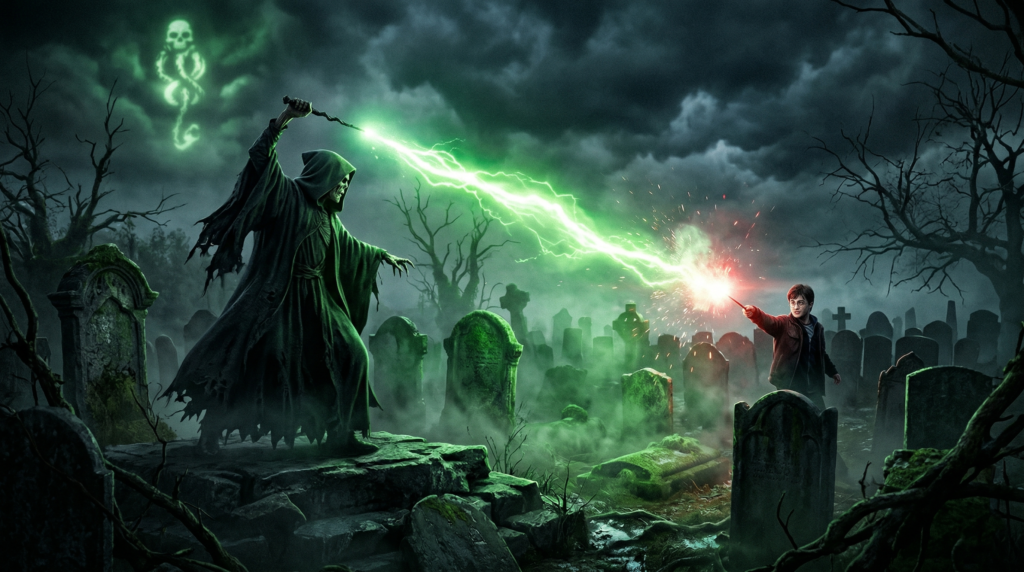
The night was silent over Godric’s Hollow — until it wasn’t. In a single, blinding flash of green light, the course of wizarding history changed forever. A dark lord stood over a infant’s crib, wand raised, and spoke two words that every Harry Potter fan knows by heart: “Avada Kedavra.” What followed was not the death he intended, but something far more extraordinary — a mystery that would take seven books, decades of wizarding history, and the power of a mother’s love to fully explain.
Harry Potter the killing curse is not simply one of the most iconic elements of J.K. Rowling’s wizarding world — it is the very axis around which the entire saga revolves. From the night Voldemort first targeted an infant in his crib to the final confrontation in the Great Hall of Hogwarts, Avada Kedavra casts its long, green shadow over every page of the series.
Whether you are a lifelong Potterhead revisiting the lore, a new fan curious about the deeper mechanics of wizarding magic, or a reader who simply wants to understand why the most feared spell in existence could not kill the Boy Who Lived — this guide is for you.
By the end of this article, you will know everything there is to know about the Killing Curse: its origins, its mechanics, its most pivotal moments in the series, and the profound magical truth that ultimately made it powerless against one extraordinary boy.
Let us begin.
What Is the Killing Curse in Harry Potter?
The Definition and Classification of Avada Kedavra
The Killing Curse, known by its incantation Avada Kedavra, is widely regarded as the most powerful and most feared spell in the entire Harry Potter universe. It belongs to a trio of spells collectively known as the Unforgivable Curses — dark magic so severe, so irreversible, and so morally absolute that the Ministry of Magic classified them as the highest possible magical offenses.
What makes the Killing Curse uniquely terrifying among all dark magic spells is its absolute finality. There is no healing charm, no antidote, and no counter-curse that can undo its effect. The moment it strikes a living being, death is instantaneous. The victim feels no pain — they simply cease. No mark is left on the body, no wound to examine, no mundane explanation to offer. As Auror Frank Bryce’s lifeless body demonstrated in Goblet of Fire, the Killing Curse leaves nothing behind but a corpse with a look of frozen terror.
It is the spell that orphaned Harry Potter. It is the spell that defined Voldemort. And it is, without question, the most consequential piece of magic in the entire series.
 The Incantation — What Does “Avada Kedavra” Mean?
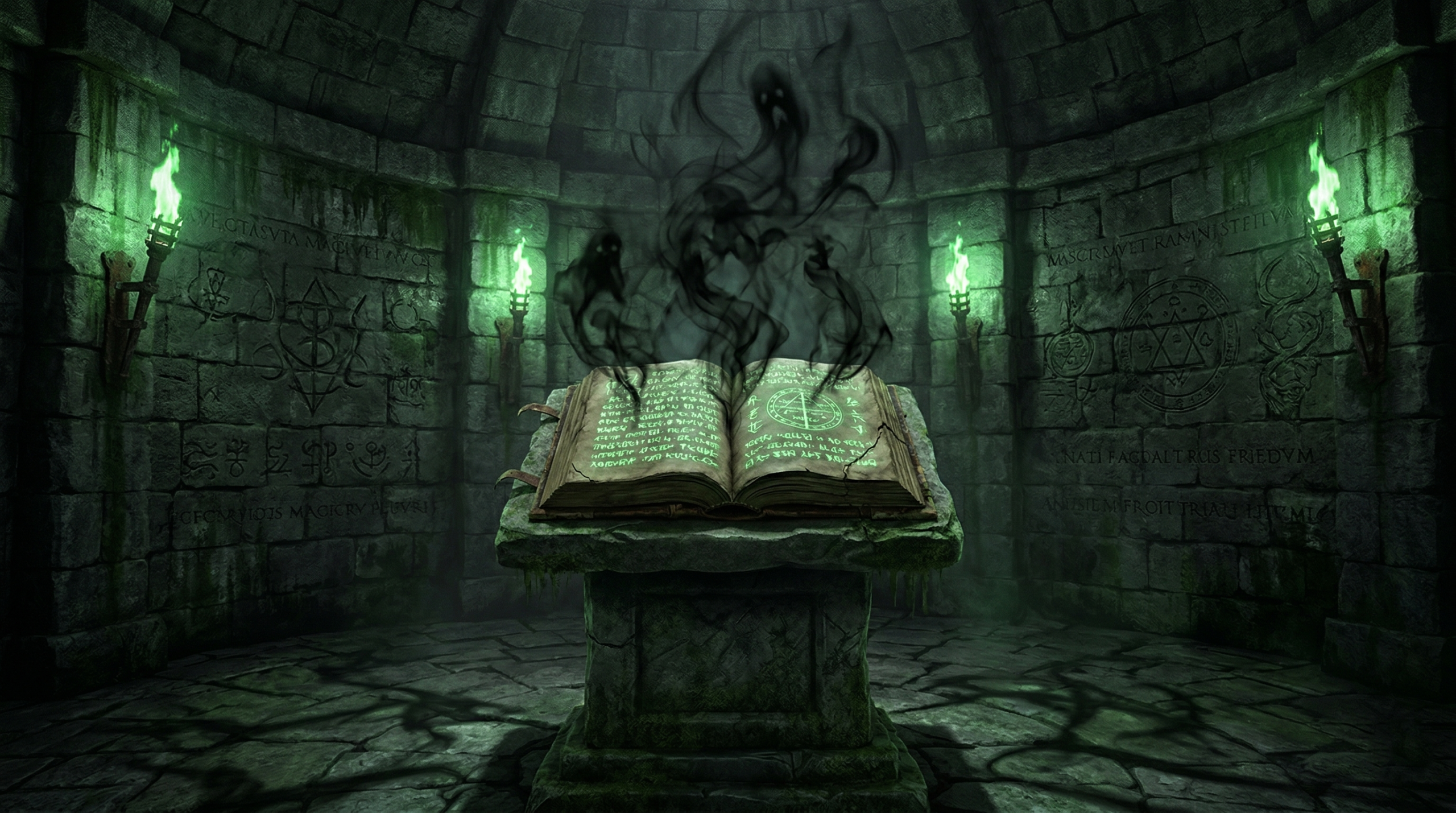
One of the most fascinating dimensions of the Killing Curse is the etymology of its incantation. J.K. Rowling has confirmed in interviews that Avada Kedavra is derived from the ancient Aramaic phrase “avada kedavra,” which roughly translates to “let the thing be destroyed” — a chillingly straightforward declaration of intent.
Perhaps even more intriguing is its linguistic connection to the Muggle world’s most famous magic word: “Abracadabra.” This is not coincidence. Rowling has explicitly stated that the word abracadabra originally meant “let the thing be destroyed” in ancient usage, and that she derived Avada Kedavra from this very root — deliberately blurring the boundary between Muggle folk magic and true wizarding dark arts.
This connection adds a haunting layer of irony: the word children chant gleefully at birthday parties and magic shows carries, buried within it, the linguistic skeleton of the deadliest spell ever conceived.
The Origins and History of the Killing Curse
Ancient Dark Magic — Where Did It Come From?
The Killing Curse did not originate with Lord Voldemort, though he became its most prolific and notorious practitioner. Avada Kedavra belongs to a much older tradition of dark magic — one that stretches back to the earliest, darkest chapters of wizarding history.
Dark wizards throughout the centuries practiced and refined lethal magic, and the Killing Curse represents the pinnacle — or rather, the nadir — of that tradition. It is the product of magic practiced in absolute moral darkness, refined over generations of practitioners who sought not power or transformation, but simple, efficient annihilation.
The spell predates the formal classification of Unforgivable Curses by centuries, used in secret by dark practitioners who understood that no shield, no ward, and no protective enchantment known to the wizarding world could stop it. It was this very indefensibility that eventually forced the Ministry’s hand.
How the Ministry of Magic Classified It as Unforgivable
In 1717, the British Ministry of Magic formally classified the three Unforgivable Curses — the Killing Curse, the Cruciatus Curse, and the Imperius Curse — as illegal under all ordinary circumstances. The use of any one of them on a fellow human being carried an automatic sentence to Azkaban prison — the most severe punishment the wizarding legal system could impose.
This classification was not merely symbolic. It represented the Ministry’s acknowledgment that these three spells occupied a moral category entirely apart from all other magic — dark or otherwise. Many harmful spells exist in the wizarding world, but these three were singled out because of the irreversible nature of their harm: permanent death, soul-shattering pain, and total subjugation of free will.
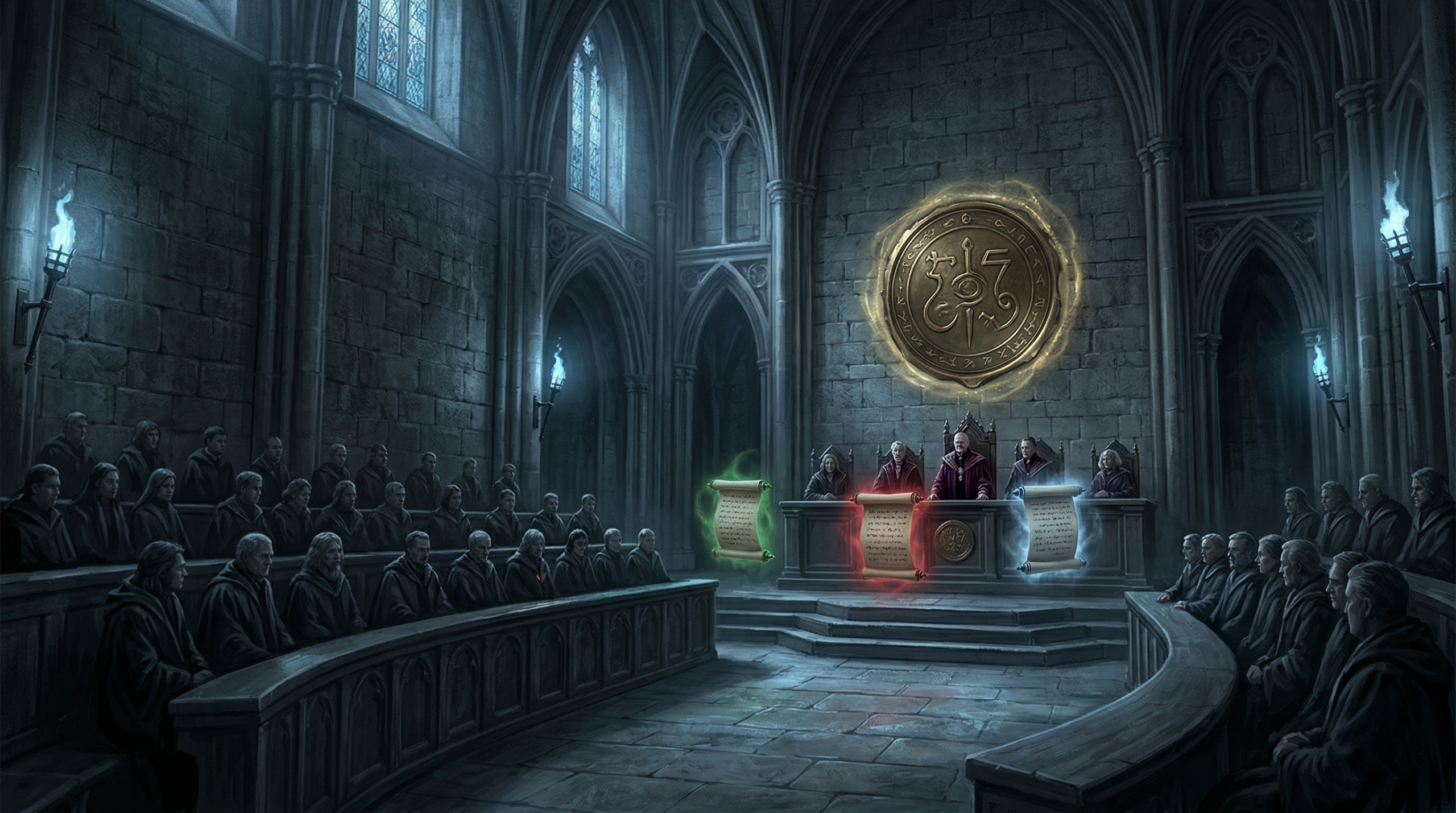 During the Second Wizarding War, Voldemort’s takeover of the Ministry resulted in a chilling reversal of this policy. With Death Eaters installed in positions of power, the Unforgivable Curses were not only legalized — they were actively encouraged against those who resisted the regime. The speed with which these protections were stripped away serves as one of the series’ most pointed commentaries on the fragility of institutional safeguards against authoritarian power.
How Does the Killing Curse Work?
The Mechanics — What Happens When It’s Cast?
The Killing Curse operates on a plane of magic that exists almost entirely outside the normal rules governing the wizarding world. Where most spells manipulate, transform, repel, or conjure — Avada Kedavra simply ends.
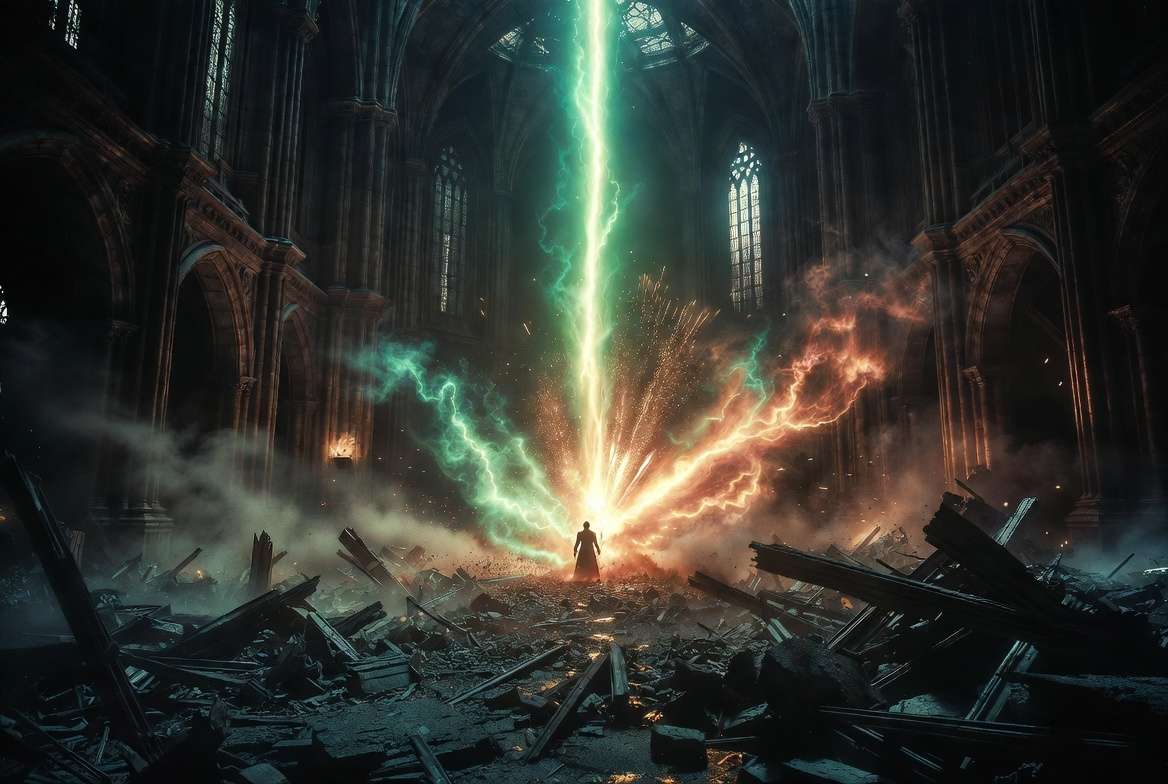
When successfully cast, the curse manifests as a flash of blinding green light accompanied by a distinctive rushing, roaring sound — described in the books as resembling “death itself” bearing down on the target. The moment it makes contact with a living being, life is extinguished instantaneously. There is no pain, no gradual decline, no opportunity for last words. Consciousness simply stops.
One of the most forensically significant details about the Killing Curse is what it does not leave behind. The body shows no wound, no burn, no bruising, no internal damage of any detectable kind. From a purely physical standpoint, a victim of Avada Kedavra appears to have died of no cause whatsoever — a detail that makes the curse both devastating and uniquely difficult to investigate by any Muggle or magical means.
What Does It Take to Cast Avada Kedavra?
This is one of the most important — and most frequently misunderstood — aspects of the Killing Curse. Avada Kedavra cannot be cast carelessly, accidentally, or halfheartedly. The spell demands genuine, conscious, and deliberate intent to kill from the caster.
This is not a technicality. It is a fundamental magical requirement baked into the very nature of the curse. In Harry Potter and the Half-Blood Prince, when Harry attempts to use an Unforgivable Curse against the fleeing Snape, the spell fails to produce its intended effect. Snape taunts him precisely because of this: “You need to mean them, Potter. Avada Kedavra has never been unleashed by gentle hands.”
The moral and psychological cost of this requirement is significant. To successfully cast the Killing Curse, a witch or wizard must, in a very real sense, surrender a piece of their own humanity — choosing, with full knowledge and full will, to end another person’s existence. It is widely theorized among Harry Potter lore scholars that repeatedly casting the Killing Curse contributes to the fragmentation of the caster’s soul — the same process that underlies the creation of Horcruxes.
The Signature Green Flash — Why Is It Green?
Few visual details in the Harry Potter series are as immediately iconic as the sickly green flash of the Killing Curse. But why green?
Rowling has not provided a single definitive canonical explanation, but the choice is deeply symbolic and almost certainly deliberate. In Western cultural tradition, green carries a complex array of associations: envy, poison, sickness, and corruption. It is the color of decay and of things that are alive beginning to die. The bilious, cold shade of green associated with Avada Kedavra stands in deliberate visual contrast to the warm, golden light associated with love magic and protective enchantments throughout the series.
The green of the Killing Curse also visually echoes the Dark Mark — Voldemort’s symbol cast into the sky above the homes of his victims — creating a consistent color grammar of death and dark power throughout the series. On a purely cinematic level, the choice proved inspired: the green flash is now one of the most recognizable visual signatures in modern fantasy filmmaking.
The Three Unforgivable Curses — Where Does the Killing Curse Rank?
Cruciatus Curse vs. Imperius Curse vs. Killing Curse
To fully appreciate the weight of the Killing Curse, it helps to understand its place within the broader framework of the Unforgivable Curses. All three are irreversible in their own ways, but they differ significantly in their nature and effect.
| Curse | Incantation | Effect | Nature of Harm |
|---|---|---|---|
| Killing Curse | Avada Kedavra | Instant death | Physical — permanent |
| Cruciatus Curse | Crucio | Unbearable pain | Psychological — potentially permanent |
| Imperius Curse | Imperio | Total mind control | Autonomy — reversible with effort |
The Cruciatus Curse inflicts agony so overwhelming that prolonged exposure — as suffered by Neville Longbottom’s parents, Frank and Alice — can permanently destroy a person’s sanity. The Imperius Curse reduces a person to a puppet, stripping them of free will entirely — though unusually strong-willed individuals, like Harry himself, can learn to resist it.
The Killing Curse, however, is unambiguously the most final of the three. Pain can be survived. Mind control can be fought or reversed. Death cannot be negotiated with. Among the many dark spells in J.K. Rowling’s wizarding world, Avada Kedavra stands alone in its absolute, irreversible authority over life itself.
Can the Killing Curse Be Blocked or Deflected?
This is the question at the heart of what makes the Killing Curse so terrifying — and the answer is almost entirely no.
Standard magical protections offer no defense. The Shield Charm (Protego) — one of the most versatile and widely taught defensive spells — cannot stop Avada Kedavra. Physical barriers can sometimes interrupt its path (Dumbledore famously conjured a marble statue to intercept the curse during his duel with Voldemort in the Ministry of Magic), but this is a workaround, not a true defense.
There are exactly two known forces in the Harry Potter universe capable of defeating the Killing Curse entirely: sacrificial love magic and the rules governing the Elder Wand’s allegiance. Both of these exceptions play central roles in Harry’s survival — and both will be explored in depth in the next section.
Why Did Harry Potter Survive the Killing Curse?
This is the core question of the entire Harry Potter series — and the answer is richer and more layered than most readers initially realize.
The Night It All Began — Godric’s Hollow, 1981
On the night of October 31, 1981, Lord Voldemort arrived at the home of James and Lily Potter in Godric’s Hollow, acting on information provided by the traitor Peter Pettigrew. His goal was singular: to kill the infant Harry Potter, whom a prophecy had identified as the one with the power to vanquish him.
James Potter died first — without his wand, buying his wife and son seconds with nothing but his body between them and the most powerful Dark wizard of the age. Lily was given a choice. Voldemort, at the request of Severus Snape who loved her, offered to spare her life if she stepped aside. She refused. She stood before her son’s crib and refused to move, refused to stop shielding him, and was killed for it.
Then Voldemort turned his wand on Harry. He spoke the incantation. The green light filled the room. And then — impossibly — it rebounded.
Lily Potter’s Sacrifice — The Magic of Ancient Protection
The reason the Killing Curse could not touch Harry in that moment is explained by Dumbledore with characteristic precision in The Philosopher’s Stone, and revisited with deeper nuance throughout the series.
When Lily Potter chose to die for her son — when she was offered a way out and refused it — she invoked one of the oldest and most powerful forces in magical existence: sacrificial protection born of love. This was not merely emotional sentiment elevated to metaphor. In the Harry Potter universe, love willingly sacrificed for another creates a tangible, ancient magical shield that dark magic — including the Killing Curse — cannot penetrate.
 The precise mechanics are rooted in a form of magic so old it predates most formal wizarding knowledge. Dumbledore describes it as a magic that Voldemort could not understand because he had never valued love or considered it worth studying. In one of the series’ most resonant thematic arguments, Rowling establishes that the greatest magical force in existence is not power, not knowledge, not even death — it is the voluntary sacrifice of one person’s life for another.
Lily’s protection transferred itself into Harry’s very skin and blood. As long as he could call home the place where her blood-protected relatives lived (the Dursleys’ house at Number Four, Privet Drive), that ancient protection remained active. Voldemort could not touch him — literally. In The Philosopher’s Stone, the Dark Lord inhabiting Professor Quirrell’s body blisters and burns the moment he touches Harry, precisely because of this enchantment.
The Rebounding Curse — What Actually Happened to Voldemort
When the Killing Curse struck the magical protection Lily’s sacrifice had woven around Harry, it rebounded with full force onto its caster. This is the event that shaped the entire Harry Potter series.
The rebounding curse struck Voldemort with his own death magic — but because Voldemort had already taken extraordinary precautions against death (having created multiple Horcruxes, objects in which he had stored fragments of his fractured soul), he did not die. Instead, his body was destroyed and his spirit was left as a barely-conscious, powerless wraith — unable to touch human beings, unable to perform magic, unable to truly live.
This is an important distinction that the series takes care to establish: Voldemort did not survive the Killing Curse through his own power. He survived in spite of it because he had already made himself, in a twisted sense, part-immortal through the darkest magic imaginable. The curse did what it always does — it worked. It simply had nowhere to finish the job.
There is a profound irony here that Rowling clearly intended. Voldemort’s obsessive fear of death led him to create the very failsafe that ensured his survival — but that survival was not life. It was a decade-long half-existence of suffering and powerlessness, the very opposite of the immortal dominance he had sought.
Why Harry Survived a Second Time — The Deathly Hallows
The second time Harry survives the Killing Curse is equally remarkable — and relies on an entirely different set of magical principles.
In Harry Potter and the Deathly Hallows, Harry learns that he himself is an unintentional Horcrux — that on the night Voldemort’s curse rebounded in Godric’s Hollow, a fragment of Voldemort’s soul attached itself to the only living thing in the room: the infant Harry. Harry has, unknowingly, carried a piece of Voldemort’s soul inside him for his entire life.
For Voldemort to truly die, all of his Horcruxes must be destroyed — including the one inside Harry. This means Harry must die.
Armed with this knowledge, Harry walks willingly into the Forbidden Forest to meet Voldemort — using the Resurrection Stone to call back the shades of those he has lost for courage, and carrying with him the acceptance of his own death. When Voldemort casts Avada Kedavra at Harry in the forest, two simultaneous magical events occur.
First, Voldemort’s curse destroys the Horcrux within Harry — the fragment of Voldemort’s soul — without killing Harry himself. The prevailing explanation, supported by Dumbledore’s conversation with Harry in the limbo-like King’s Cross vision, is that Lily’s sacrificial magic had once again created a protection — this time woven not by Lily, but by Harry himself, who had sacrificed himself willingly for the students and people of Hogwarts, just as Lily had once sacrificed herself for him.
Second — and this is where the rules of the Elder Wand become critical — Voldemort was using a wand whose true allegiance had already transferred to Harry. When Draco Malfoy disarmed Dumbledore at the top of the Astronomy Tower, the Elder Wand’s loyalty shifted to Draco. When Harry later overpowered Draco at Malfoy Manor, that allegiance transferred again — to Harry. A wand cannot be used to kill its true master. When Voldemort cast Avada Kedavra with the Elder Wand against Harry, the wand was, in effect, turning against its own wielder.
The Killing Curse in Key Moments Throughout the Series
Avada Kedavra appears at pivotal turning points across all seven books and eight films. Each use carries enormous narrative weight — not merely as a demonstration of dark power, but as a storytelling device that defines character, raises stakes, and drives the plot forward. Below are the most significant moments in which the Killing Curse shaped the course of the saga.
Most Memorable Uses of Avada Kedavra in the Books and Films
1. The Death of James and Lily Potter — Godric’s Hollow (1981) Though not depicted in real time until the later books and films, the murders of James and Lily Potter represent the foundational use of the Killing Curse in the entire series. Everything — Harry’s scar, Voldemort’s fall, the wizarding world’s decade of fragile peace — flows directly from this single night. It is the inciting incident not just of one story, but of an entire generation’s history.
2. The Death of Cedric Diggory — The Graveyard (Goblet of Fire) This is the moment the series irrevocably changed tone. Cedric Diggory’s murder at the command of Voldemort — “Kill the spare” — is delivered with such casual cruelty that it shocked an entire generation of readers. Cedric was young, innocent, and entirely unprepared. His death served a brutal narrative purpose: to establish that Voldemort’s return would not be softened or sanitized. The Killing Curse, from this point forward, was no longer an abstract threat from Harry’s past. It was present. It was real. And it could strike anyone.
3. The Death of Sirius Black — Department of Mysteries (Order of the Phoenix) This entry requires an important clarification, because it is one of the most widely misunderstood moments in the entire series. Sirius Black was not killed by the Killing Curse. He was struck by an unnamed red spell cast by Bellatrix Lestrange and fell backwards through the mysterious veiled archway in the Death Chamber — an archway understood to represent the boundary between life and death. The spell that hit him was almost certainly a Stunning Curse or a similar hex; what killed him, in effect, was passing through the veil. This distinction matters because it demonstrates that the Killing Curse is not the only path to death in the wizarding world — and because the misremembering of this scene is one of the most common misconceptions among even dedicated fans.
4. The Death of Albus Dumbledore — The Astronomy Tower (Half-Blood Prince) The most devastating use of Avada Kedavra in the entire series, and one of the most emotionally significant deaths in modern fantasy literature. When Severus Snape cast the Killing Curse at Dumbledore at the top of the Astronomy Tower, the wizarding world lost its greatest protector — or so it appeared. What is later revealed transforms this moment entirely: Dumbledore was already dying from a curse sustained when he destroyed Marvolo Gaunt’s ring. Snape’s act was not murder but mercy, carried out at Dumbledore’s own prior request, as part of a plan that stretched years into the future. The Killing Curse here is simultaneously an act of ultimate darkness and, in its full context, an expression of loyalty so absolute it defies easy moral categorization.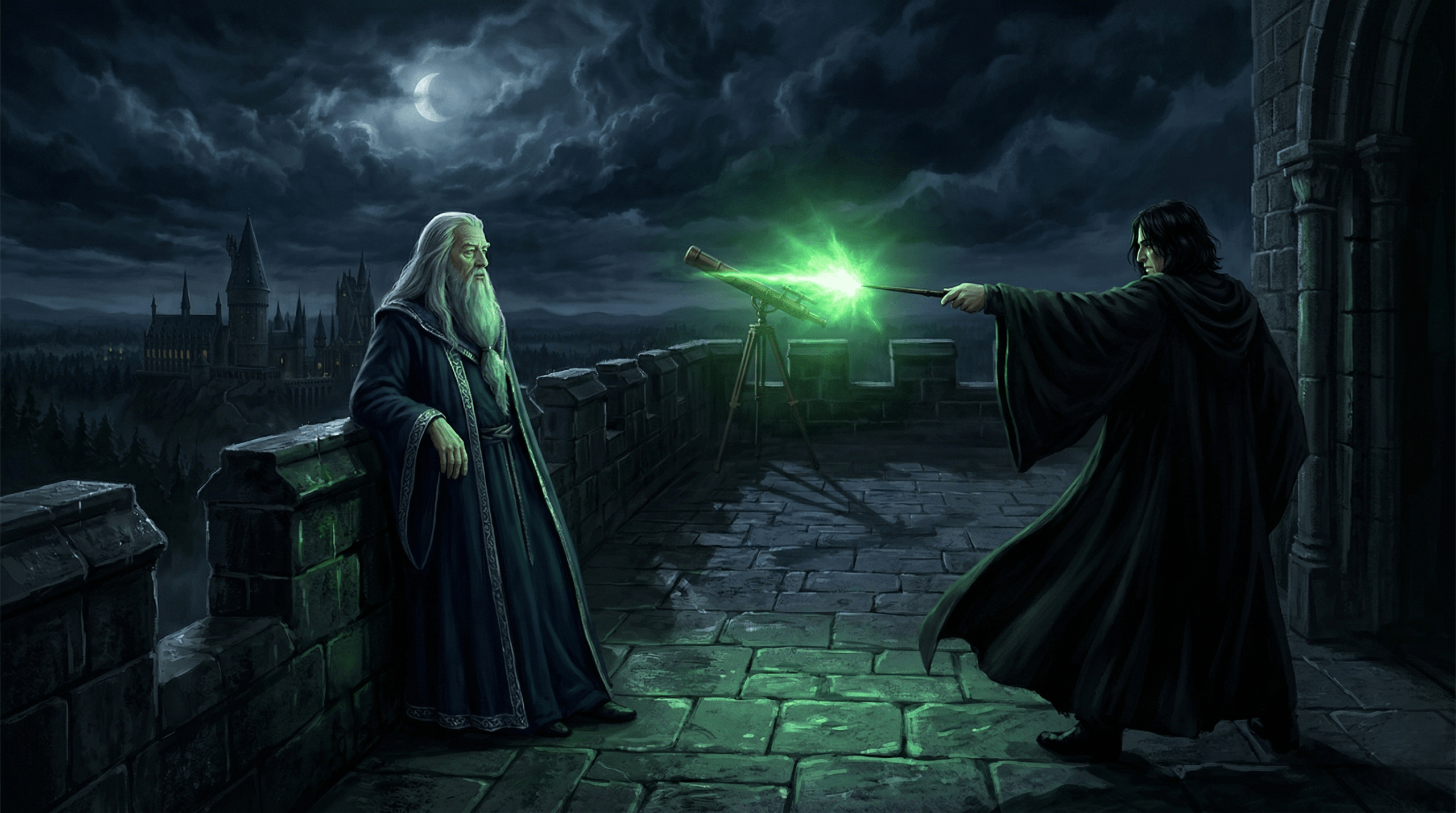
5. The Battle of Hogwarts — The Final Confrontation (Deathly Hallows) The series’ climactic use of Avada Kedavra brings the story full circle. Voldemort, standing in the Great Hall of Hogwarts, casts the Killing Curse at Harry one final time — and for the final time, it fails. The curse rebounds, and this time, with all of his Horcruxes destroyed and his soul left with no anchor to the living world, Voldemort dies. The boy who first survived the Killing Curse as an infant ends the threat of it forever as a young man — not through greater power, but through the same force that protected him from the beginning: love, sacrifice, and the magic Voldemort never bothered to understand.
 Who Cast the Killing Curse Most in the Series?
Among all characters in the Harry Potter universe, Lord Voldemort is by far the most prolific user of Avada Kedavra — both on-page and implied. His history of murder stretches back to his teenage years at the orphanage and extends through decades of dark reign. Death Eaters including Bellatrix Lestrange, Peter Pettigrew, and Antonin Dolohov are also confirmed users. Severus Snape cast it once — in the most morally complex single use of the curse in the entire series. Notably, Harry himself attempts the Killing Curse once, against the fleeing Snape in Half-Blood Prince, and fails — a failure that is, arguably, a testament to his fundamental decency.
Common Myths and Misconceptions About the Killing Curse
Despite being one of the most discussed elements of the Harry Potter universe, Avada Kedavra is surrounded by a surprising number of persistent myths and misconceptions — even among dedicated fans. Here, we set the record straight with canon-accurate explanations.
❌ Myth #1: “Any powerful wizard can block the Killing Curse with a Shield Charm.”
This is categorically false, and the series is explicit about it. Protego and all of its variants — including Protego Totalum and Protego Maxima — offer no protection against Avada Kedavra. The only things that can interrupt the curse’s path are physical objects (which absorb or deflect the spell without stopping it magically), sacrificial love protection, or the allegiance rules of the Elder Wand. No amount of skill, power, or magical talent can conjure a shield that stops it — as Dumbledore himself demonstrated by resorting to a conjured statue rather than a Shield Charm during his duel with Voldemort.
❌ Myth #2: “Sirius Black was killed by Avada Kedavra.”
As addressed in the previous section, this is incorrect. Sirius was struck by a red curse — not the green flash of Avada Kedavra — and it was his passage through the veil that ended his life, not the spell itself. This misconception is so widespread that it is frequently cited even in otherwise careful fan discussions, likely because the emotional impact of the scene overshadows close attention to the specific details.
❌ Myth #3: “The Killing Curse always destroys or damages the soul.”
This myth conflates the Killing Curse with the act of creating a Horcrux. The Killing Curse ends life — it does not inherently damage the soul of the victim. It is the act of murder that tears the killer’s soul, not the specific spell used to commit it. A witch or wizard could theoretically kill by other means and still experience the same spiritual damage. The Killing Curse is the method; the moral rupture comes from the intent and the act.
❌ Myth #4: “Harry Potter is permanently immune to the Killing Curse.”
Harry is not immune. He survived the Killing Curse on two specific occasions due to two specific sets of magical circumstances — Lily’s sacrificial protection in 1981, and the combination of his own sacrificial walk into death and the Elder Wand’s allegiance in 1998. Neither of these circumstances renders him universally invulnerable. Had Voldemort cast Avada Kedavra at Harry under different circumstances — without the Elder Wand, after Lily’s protection had expired — the outcome could have been very different.
❌ Myth #5: “Expelliarmus can counter the Killing Curse in a duel.”
This misreads the final duel between Harry and Voldemort. When Harry’s Expelliarmus appears to “defeat” Voldemort’s Avada Kedavra in their final confrontation, it is not because Expelliarmus is a counter-curse to the Killing Curse. It is because the Elder Wand refused to act against its true master. Harry would have been killed instantly had the wand’s allegiance not been his. The Disarming Charm has no inherent magical power to stop the Killing Curse.
What J.K. Rowling Has Said About the Killing Curse
Author Insights and Interviews
J.K. Rowling has spoken about Avada Kedavra and the Killing Curse in several interviews and through the official Wizarding World platform, offering insights that deepen and sometimes complicate the canonical understanding of the spell.
On the etymology of the incantation, Rowling has been consistent and clear: she derived Avada Kedavra from the ancient Aramaic root that also gave rise to abracadabra, and she intended the connection to be noticed. In her view, this linguistic bridge between Muggle folk magic and genuine wizarding dark arts reflects a broader truth about the Harry Potter universe — that the magical world and the Muggle world are far more intertwined, historically and culturally, than either side fully appreciates.
On the theme of death more broadly, Rowling has described the Harry Potter series as being, at its core, a story about death and the human response to mortality. She has pointed to her own experience of losing her mother to multiple sclerosis as a profound influence on how she wrote death into the series — not as an abstraction or a genre convention, but as a real, irreversible, devastating fact of existence. The Killing Curse, in this light, is not merely a dramatic device. It is Rowling’s most direct artistic engagement with the reality of death — its arbitrariness, its finality, and the question of what, if anything, can stand against it.
Rowling has also addressed the question of what makes the Killing Curse defeatable at all — and her answer returns, always, to love. In her view, Voldemort’s fatal miscalculation was not tactical or magical. It was philosophical. He dismissed love as a weakness, as a sentimental irrelevance beneath the notice of a serious practitioner of power. In doing so, he left himself entirely undefended against the one force that could undermine his most absolute weapon. The Killing Curse is unblockable — except by love. And love was the one thing Voldemort refused to account for.
Through Pottermore (now the Wizarding World platform), additional canonical details have been added over the years, reinforcing the understanding that the Unforgivable Curses represent a category of magic that is dark not merely because of its effects, but because of what it requires of the caster — a willing embrace of cruelty, subjugation, or death as ends in themselves.
Frequently Asked Questions (FAQ)
This section addresses the most commonly searched questions about Harry Potter and the Killing Curse, providing clear, canon-accurate answers optimized for search visibility.
Q1: What is the Killing Curse in Harry Potter?
The Killing Curse, cast with the incantation Avada Kedavra, is one of the three Unforgivable Curses in the Harry Potter universe. It causes instant death with no counter-curse, leaves no physical mark on the body, and manifests as a flash of green light. It is classified as the most severe of all dark magic spells and carries a mandatory life sentence in Azkaban for its use.
Q2: What does Avada Kedavra mean?
Avada Kedavra is derived from the ancient Aramaic phrase meaning roughly “let the thing be destroyed.” J.K. Rowling has confirmed this etymology and noted its connection to the Muggle magic word abracadabra, which shares the same linguistic root. The incantation is therefore a literal declaration of the caster’s intent — destruction, spoken aloud as a command.
Q3: Why did Harry Potter survive the Killing Curse twice?
Harry survived the Killing Curse on two separate occasions for two different reasons. The first time, in 1981, he was protected by the ancient magic created when his mother Lily sacrificed her life for him voluntarily — a sacrificial love enchantment that caused the curse to rebound onto Voldemort. The second time, in 1998, he survived because he had walked willingly to his own death for the sake of others (echoing Lily’s sacrifice), and because Voldemort was using the Elder Wand, whose allegiance had already transferred to Harry — making it unable to kill its true master.
Q4: Can the Killing Curse be blocked?
Not by any standard magical means. Shield Charms, including Protego in all its forms, offer no protection against Avada Kedavra. Physical objects can interrupt its path (as Dumbledore demonstrated using a conjured statue), but this does not neutralize the spell magically. The only true protections known in the series are sacrificial love magic and the unique rules governing the Elder Wand’s allegiance.
Q5: Who used the Killing Curse most in Harry Potter?
Lord Voldemort is by far the most prolific user of the Killing Curse throughout the series, with a confirmed history of murder dating back to his teenage years. Other significant users among the Death Eaters include Bellatrix Lestrange, Peter Pettigrew, and Severus Snape, who cast it once against Dumbledore as part of a pre-arranged plan. Harry Potter himself attempts the curse once, unsuccessfully, against Snape in Half-Blood Prince.
Q6: Is Avada Kedavra based on a real word or phrase?
Yes — partially. The incantation is derived from an ancient Aramaic phrase, and shares linguistic roots with the word abracadabra, which has been used in Muggle folk magic and stage magic for centuries. J.K. Rowling has confirmed this connection directly in interviews. The original phrase carried connotations of destruction and annihilation — meanings that Rowling preserved and amplified in the wizarding context.
Q7: Why is the Killing Curse green?
J.K. Rowling has not provided a single definitive canonical explanation for the green color, but the choice is almost certainly deliberate and symbolic. In Western cultural tradition, green is associated with poison, envy, decay, and corruption — a visual language of death and malevolence. The green of Avada Kedavra also echoes the color of the Dark Mark, Voldemort’s symbol of death and terror, creating a consistent visual grammar of dark power throughout the series. In the films, the color choice proved cinematically iconic, making the curse instantly recognizable across all media.
From the night a dark lord stood over a crib in Godric’s Hollow to the moment that same dark lord fell in the Great Hall of Hogwarts seventeen years later, the Killing Curse is woven into every thread of the Harry Potter story. It is the spell that started everything — and the spell whose ultimate failure ended it.
What makes Avada Kedavra such an enduring element of Harry Potter lore is not simply its power. Many fictional universes contain weapons of absolute destruction. What sets the Killing Curse apart is what it means within Rowling’s carefully constructed moral universe. It represents the endpoint of a particular philosophy — the belief that power is the only thing that matters, that love is weakness, that death is the worst thing that can happen to a person and therefore the greatest weapon one can wield.
Harry Potter, and the series that bears his name, exists to dismantle that philosophy entirely. The Killing Curse is unblockable, unstoppable, and absolute — except when it isn’t. The one force capable of defeating it is the one force Voldemort never took seriously: the willingness to die for someone else. Lily died for Harry. Harry died for Hogwarts. And in both cases, the Killing Curse — the most powerful weapon in the darkest wizard’s arsenal — was turned back by something it could not understand and could not overcome.
That is, ultimately, what the entire Harry Potter series is about. Not magic, not prophecy, not the mechanics of wands and spells and ancient enchantments — though all of these are delightful. It is about the fact that love, freely given and freely sacrificed, is the most powerful force in existence. Avada Kedavra, for all its terrible finality, could not prove otherwise.