Picture a quiet casting room somewhere in London in the year 2000. Hundreds of children have walked through that door — some coached, some confident, some with years of stage school training behind them. Then comes a boy who is none of those things. He is small, a little nervous, and entirely unaware that the next few minutes will change not just his life, but the lives of hundreds of millions of readers who have been waiting, with bated breath, to see their beloved hero brought to life on screen.
That boy was Daniel Radcliffe. And the story of Daniel Radcliffe in young age — who he was, how he was shaped, and what set him apart long before the world knew his name — is one of the most remarkable origin stories in modern cinema. This is not simply the tale of a lucky child who landed a famous role. This is the story of a quietly extraordinary young person whose childhood, character, and circumstances aligned in a way that made him the only possible choice to carry one of the greatest film franchises in history.
If you have ever wondered what Daniel Radcliffe was really like as a child, what his life looked like before Hogwarts, or how a shy boy from West London became the face of a generation — this article is your complete, definitive answer.
Who Is Daniel Radcliffe? A Brief Overview Before the Fame
Before the round glasses, before the lightning bolt scar, and before the red carpet premieres in London and New York, Daniel Jacob Radcliffe was simply a boy growing up in Fulham, a leafy borough in Southwest London.
Born on July 23, 1989, Daniel was the only child of Alan Radcliffe, a literary agent, and Marcia Gresham, a casting agent. That combination of parents — one deeply embedded in the world of literature, the other in the world of performance — created a household where storytelling was not a luxury but a daily language. Books were everywhere. Conversations about film and theater were common. Without ever being pushed toward the spotlight, Daniel was being quietly prepared for it.
He was cast in his first professional role at the age of 9, filmed Harry Potter and the Philosopher’s Stone at 11, and was introduced to the world at 12 when the film released in November 2001. Within those few short years, the entire trajectory of his life — and of popular culture itself — was permanently altered. But to understand how that happened, we have to go back even further.
Daniel Radcliffe in Young Age — His Childhood Before Harry Potter
Growing Up in a Creative London Household
Daniel Radcliffe’s childhood was, by most accounts, genuinely ordinary — and that ordinariness was, paradoxically, one of his greatest assets.
His father Alan worked in the literary world, managing authors and navigating the business of books. His mother Marcia had worked extensively in casting, giving her a nuanced, professional understanding of the entertainment industry. Neither parent was a celebrity. Neither came from wealth or fame. What they gave Daniel instead was something far more valuable: a stable, intellectually rich, grounded home environment.
Growing up in Fulham, Daniel attended local schools and lived the kind of childhood that many British children of his era would recognize — school runs, family dinners, weekend outings, and a deep, early love of reading. He was not enrolled in stage school. He was not entered into talent competitions. He was, in the truest sense of the word, a regular kid who happened to have an unusual gift for inhabiting other people’s emotions.
 What distinguished the Radcliffe household from an average family was the quality of conversation. Books were discussed seriously. Films were watched thoughtfully. Theater was appreciated not as entertainment but as art. Without formal instruction, Daniel absorbed an understanding of narrative, character, and human feeling that most trained actors spend years trying to develop.
Early Signs of a Natural Performer
Those who knew Daniel as a young child consistently describe a boy who was quiet, imaginative, and observant — three qualities that, in retrospect, are the precise foundation of great acting. He was not the loudest child in the room. He was not attention-seeking or performatively charming. But when he watched something — a film, a play, a piece of television — he did so with an intensity that was unusual for his age.
His early interest in acting was sparked, reportedly, not by ambition but by genuine emotional response. He was moved by stories. He was fascinated by how actors made him feel things. And at some point in his early childhood, he wanted to understand how that worked — from the inside.
There is another detail from Daniel’s young age that is crucial to understanding his character: he was diagnosed with dyspraxia, a developmental coordination disorder that affects motor skills, spatial awareness, and sometimes fine motor tasks like handwriting. For many children, this kind of diagnosis can become a source of shame or frustration. For Daniel, it became something else entirely — an early lesson in working harder than those around him, in finding alternative routes to the same destination, and in never allowing a limitation to define what he was capable of achieving.
His parents responded to the diagnosis with characteristic pragmatism. They did not catastrophize. They did not minimize. They helped Daniel understand his condition honestly and taught him that the answer to difficulty was not avoidance but disciplined, patient effort. That lesson, learned in childhood, would serve him throughout one of the most demanding professional childhoods in the history of British cinema.
His Very First Acting Role — Before Harry Potter
In 1999, when Daniel Radcliffe was just 9 years old, he was cast in the BBC television film adaptation of Charles Dickens’ David Copperfield. He played the young version of the titular character — a role that required emotional authenticity, period sensitivity, and the ability to hold the screen against significantly older, more experienced actors.
He did all three with a naturalness that stopped people in their tracks.
The production featured respected British actors throughout its cast, and young Daniel was surrounded by professionals who had decades of experience. Yet those who worked on the production noted something distinctive about the child in the young Copperfield role: he did not perform emotion. He simply felt it, and let the camera find it. There was no artifice. There was no theatrical overcooking of feeling. There was only a child being truthfully present in a scene — which is, as any acting teacher will tell you, the hardest thing in the world to teach and the rarest thing in the world to find.
It was this performance that would quietly but decisively set the next chapter of his life in motion.
 The Legendary Harry Potter Casting — A Story Worth Retelling
How the Search for Harry Potter Began
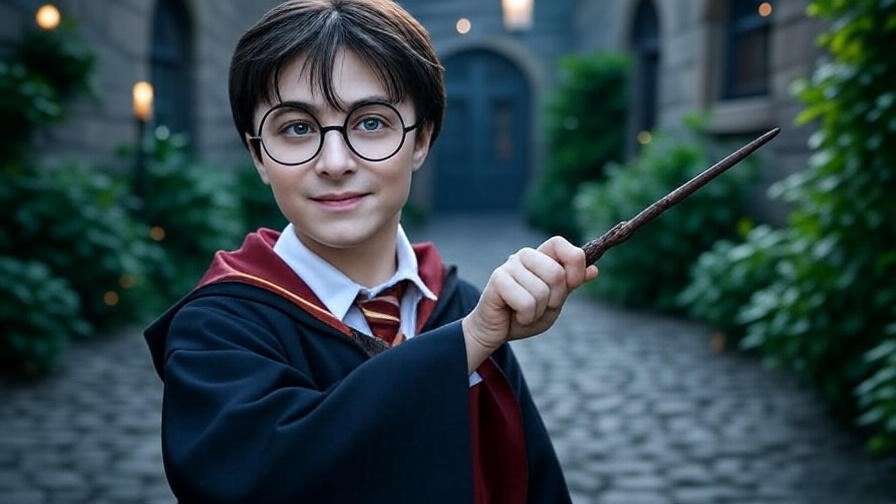
When Warner Bros. acquired the rights to J.K. Rowling’s Harry Potter and the Philosopher’s Stone in the late 1990s, they faced a challenge that had no real precedent in Hollywood history: they needed to find a child actor who could carry a franchise expected to span a decade, generate billions of dollars, and satisfy the fierce, protective love of hundreds of millions of readers worldwide.
J.K. Rowling had a very specific vision for Harry Potter. He was not to be a prodigy. He was not to be glamorous or obviously exceptional. He was, in Rowling’s own conception, a boy who was remarkable precisely because he did not know he was remarkable — someone ordinary enough to be believable as an overlooked, underestimated child, and extraordinary enough to make an audience believe in his destiny. Finding a child who could embody that contradiction was, by any measure, an extraordinary task.
The casting search was vast. Open calls were held. Thousands of children were seen. Stage schools submitted their most promising students. The pressure was enormous, because everyone involved understood that the wrong casting choice could unravel everything before a single frame was shot.
How Daniel Radcliffe Was Discovered
The key figures in the discovery of Daniel Radcliffe are producer David Heyman and casting director Janet Hirshenson. It was Heyman who, having seen the BBC David Copperfield production, became quietly convinced that the boy playing young Copperfield was someone worth watching more closely.
Daniel did not come through an open audition. He was not submitted by a stage school or a pushy agent. The approach came through a personal, private channel — a conversation with Daniel’s father, Alan, who was known to Heyman through professional circles. And here, the story takes a turn that reveals something deeply important about the Radcliffe family.
Alan Radcliffe was reluctant. Not dismissive, not uninterested — but genuinely cautious about what it would mean to put his son forward for a role of this magnitude. He and Marcia were protective parents who had watched the entertainment industry from the inside and understood its pressures, its distortions, and its capacity to damage young people who were not properly shielded from its demands. Saying yes to a screen test for Harry Potter was not, in their minds, a straightforward decision.
Ultimately, they agreed to a private screen test — not a cattle call, but a carefully arranged meeting where Daniel could simply be seen. And when he was seen, the decision became, by most accounts, quite simple.
The Moment He Was Chosen
Director Chris Columbus, tasked with helming the first two Harry Potter films, has spoken in interviews about the moment he watched Daniel Radcliffe’s screen test. The quality he described was not technical skill, not charisma in the conventional Hollywood sense, but something more fundamental: an essential truthfulness. When Daniel was on screen, you believed him. Not because he was performing convincingly, but because he did not appear to be performing at all.
J.K. Rowling, who maintained significant creative involvement in the early casting decisions, gave her approval. The combination of Rowling’s endorsement, Columbus’s instinct, and Heyman’s conviction made the decision unanimous. Daniel Radcliffe — shy, dyspraxic, non-stage-schooled, the son of cautious parents who had almost said no — was cast as Harry Potter.
He was 10 years old.
 On Set at Age 11 — What Filming Harry Potter Was Really Like for Young Daniel
The Physical and Emotional Demands of the Role
When principal photography began on Harry Potter and the Philosopher’s Stone, Daniel Radcliffe was 11 years old. The filming schedule was demanding by any professional standard — long shooting days, complex technical setups, elaborate physical sequences, and the constant requirement to deliver emotionally true performances under conditions that would challenge seasoned adult actors.
As a child actor, Daniel was subject to strict regulations governing working hours, mandatory rest periods, and on-set education. Between scenes, he attended lessons with an on-set tutor, ensuring that his formal schooling continued throughout production. This was not a minor logistical footnote — it meant that Daniel was, in effect, living two full-time lives simultaneously: that of a student and that of a lead actor in one of the most ambitious productions in British film history.
What struck crew members consistently was not merely that Daniel managed this dual existence, but that he did so without complaint and without drama. He arrived prepared. He knew his lines. He was present, focused, and professional in a way that had nothing to do with being trained to perform professionalism and everything to do with having been raised to take his responsibilities seriously.
His Chemistry with Emma Watson and Rupert Grint
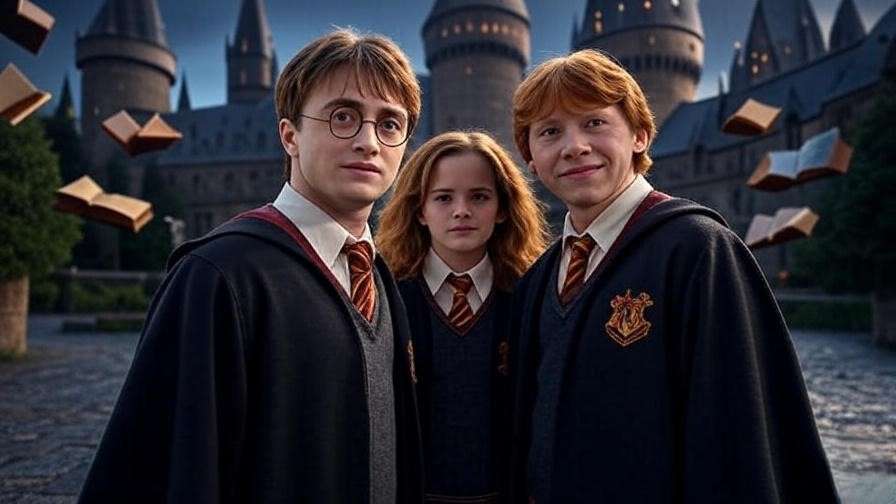
One of the most important and least technically explicable elements of the Harry Potter films is the chemistry between Daniel Radcliffe, Emma Watson (Hermione Granger), and Rupert Grint (Ron Weasley). On paper, three child actors being cast together and asked to convincingly portray a decade-long friendship is an enormous gamble. In practice, it turned out to be one of the great fortuitous accidents of modern cinema.
By multiple accounts from cast, crew, and the actors themselves, the three children genuinely liked each other immediately. There was no rivalry, no territorial behavior, no competition for screen time or adult attention. What formed between them in the earliest days of production was something authentic — a real friendship between three children navigating an extraordinary shared experience — and that authenticity is precisely what audiences around the world responded to when they watched the films.
For Daniel specifically, having Rupert and Emma beside him was a source of genuine psychological stability. The role of Harry Potter could have been an isolating experience — the pressure of the central character, the weight of audience expectation, the sheer volume of screen time required. The presence of two friends who understood exactly what he was going through, without any explanation needed, made the burden fundamentally lighter.
Mentors Who Shaped the Young Actor
Perhaps the most quietly significant aspect of Daniel Radcliffe’s young age experience on the Harry Potter sets was the quality of the adult actors who surrounded him and the degree to which they took their responsibility toward him seriously.
Dame Maggie Smith, who played Professor McGonagall, brought to set a standard of precision and commitment that was itself an education for any young actor watching her work. Richard Harris, in his final film roles as Dumbledore, embodied a dignity and warmth that extended beyond his character and into his interactions with the younger cast members.
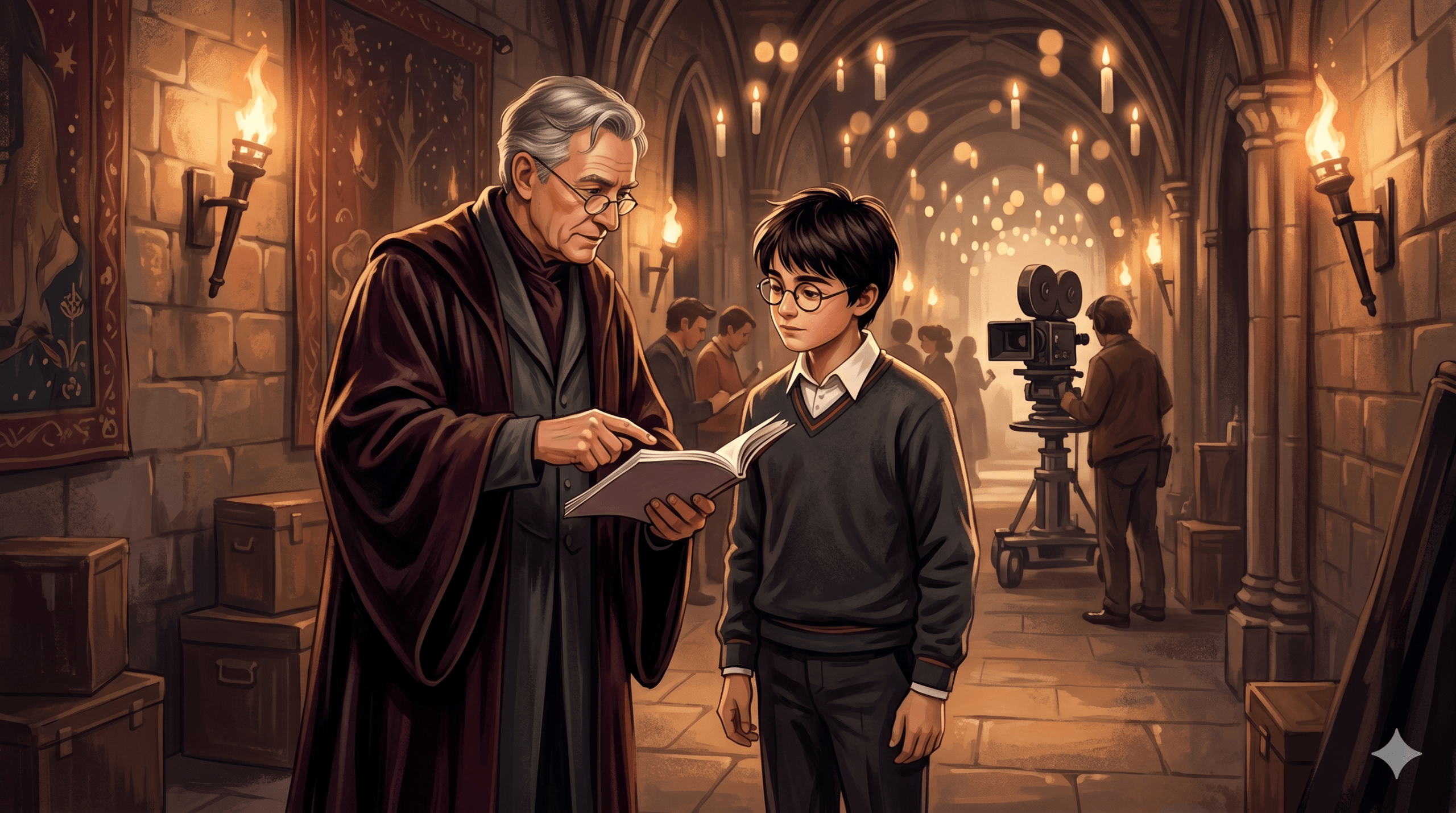
But it is Alan Rickman — Professor Severus Snape — whose mentorship of young Daniel has become one of the most moving footnotes in the entire HP story. Rickman, a towering figure of British stage and screen, made a deliberate and private decision to support Daniel throughout the long years of production. He wrote Daniel personal notes. He offered guidance that was specific, honest, and kind. He treated the young actor not as a child to be managed but as a fellow professional to be respected and developed.
After Rickman’s death in January 2016, Daniel spoke publicly about what that relationship had meant to him — how Rickman’s quiet, consistent belief in him had been a genuinely formative force during some of his most challenging years on set. It is a testament to both men: to Rickman’s extraordinary generosity, and to the young Daniel’s capacity to receive and internalize that generosity in a way that made him better.
 Growing Up in Public — The Psychological Reality of Fame at a Young Age
The Loss of a “Normal” Childhood
There is a particular kind of loss that comes with being famous before you are old enough to fully understand what fame means. It is not the loss of material comfort — child stars, by definition, do not lack for professional opportunity or financial security. It is something quieter and, in many ways, more profound: the loss of anonymity, of the freedom to be ordinary, to make mistakes without an audience, to grow up without the world watching and forming opinions about who you are and who you are becoming.
Daniel Radcliffe has spoken about this with a candor and self-awareness that is itself a testament to the quality of the upbringing his parents provided. He has acknowledged, in various interviews over the years, that there were milestones of normal adolescent life that he simply did not get to experience in the way his peers did. School friendships were complicated by the asymmetry of his public profile. Social situations carried a layer of complexity that other teenagers did not have to navigate. Going to a shop, attending a public event, or simply existing in a public space required a level of security awareness and logistical management that no child should have to think about.
His parents responded to these realities with a consistent and deliberate philosophy: wherever possible, normalize. They maintained the family home in London rather than relocating to a more insular, industry-adjacent environment. They kept Daniel enrolled in a regular school for as long as was practically feasible. They surrounded him with friends and family relationships that predated his fame and were therefore untainted by it. They were, by every available account, fiercely and successfully committed to ensuring that their son retained a coherent, grounded sense of self throughout the most disorienting period of his young life.
How Fame Affected His Identity and Mental Health
As the Harry Potter series progressed and Daniel moved from childhood into adolescence, the psychological pressures of his situation became more complex. The early years of the franchise — when he was simply a child doing an extraordinary job — gave way to a middle period in which questions of identity, self-worth, and personal authenticity became more urgent and more difficult to resolve.
Daniel has spoken honestly and publicly about the fact that he went through a period in his mid-teenage years when he struggled significantly. He has described using alcohol as a coping mechanism during some of this period — a confession he has made not for dramatic effect but with the specific intention of being honest about the realities of growing up under extraordinary public pressure. The gap between “Daniel Radcliffe,” the global celebrity, and Daniel Radcliffe, the ordinary teenager trying to understand who he was and what he valued, was a real and sometimes painful one to inhabit.
What is striking about Daniel’s account of this period is not the struggle itself — which is, given the circumstances, entirely understandable — but the clarity and self-possession with which he has discussed it in adulthood. He does not present himself as a victim. He does not blame the industry, his parents, or the franchise. He describes a young person navigating genuinely difficult circumstances with imperfect tools, gradually developing better ones, and emerging on the other side with a more honest and secure sense of himself. That narrative arc — from difficulty to self-knowledge to stability — is one of the most genuinely admirable aspects of who Daniel Radcliffe has become as an adult.
The Support Systems That Kept Him Grounded
Throughout the most turbulent years of his public adolescence, several support systems consistently provided Daniel with the stability he needed to keep moving forward.
First and most fundamentally, there were his parents. Alan and Marcia Radcliffe had made deliberate decisions at every stage of Daniel’s career to prioritize his wellbeing over his professional advancement. They managed his public commitments carefully, maintained clear boundaries around his private life, and ensured that he always had a domestic environment to return to that was warm, structured, and entirely separate from the machinery of fame.
Second, there were his friendships outside the industry — relationships with people who had known him before Harry Potter and who related to him as Daniel, not as a celebrity. These friendships, modest and unglamorous by Hollywood standards, were psychologically irreplaceable. They offered him access to a version of himself that the public gaze could not reach or distort.
Third, there was the work itself. For Daniel, acting was never purely a professional obligation — it was a genuine passion and a source of real, grounding purpose. The discipline of preparing for a role, the focus required to deliver a performance, the collaborative relationships formed on set — these were not escapes from his difficulties but authentic engagements with something he genuinely loved. In this sense, the work was simultaneously the source of his pressures and one of his most reliable remedies for them.
Key Personality Traits Daniel Radcliffe Showed Even in Young Age
One of the most revealing ways to understand the adult Daniel Radcliffe is to look at the personality traits that those who knew him in his youngest years consistently identified. These were not traits he developed in response to fame — they were present before fame arrived, and they are precisely what allowed him to survive and ultimately flourish under its weight.
Intellectual Curiosity was perhaps the most fundamental of these traits. Daniel was, from his earliest years, a voracious and genuinely engaged reader. He did not read because he was told to — he read because ideas excited him and stories fed something essential in his nature. This intellectual hunger shaped not just his personal development but his approach to acting, which he has consistently described in terms of understanding a character’s inner world rather than simply executing their external behavior.
Emotional Intelligence set him apart on screen from the very beginning. The quality that David Heyman noticed in David Copperfield, and that Chris Columbus confirmed in screen tests, was not technical — it was emotional. Daniel had an unusual ability, even as a very young child, to access and express genuine feeling in a way that was neither manufactured nor controlled, but simply and powerfully true. This is the rarest of all acting gifts, and it was present in him before he had a single acting lesson.
Humility was a trait noted by virtually everyone who worked with him during the Harry Potter years. Despite occupying the central role in one of the most lucrative film franchises in history, Daniel consistently behaved on set as a member of an ensemble rather than as a star. He was interested in other people’s work. He was genuinely curious about the craft of his more experienced colleagues. He did not require special treatment, did not create a hierarchical distance between himself and crew members, and did not allow the extraordinary nature of his professional circumstances to translate into an inflated sense of his own importance.
Resilience was forged early, through the experience of managing dyspraxia, and reinforced continuously through the demands of a professional life that began when most children are still primarily concerned with playground friendships and school sports. Daniel developed, from a young age, a practical and unsentimental relationship with difficulty — an understanding that obstacles were not signals to stop but invitations to find a different route forward.
Humor was, and remains, one of his most distinctive personal qualities. Those who worked with him during the HP years consistently describe a child and young teenager who was genuinely, naturally funny — not performatively amusing, but possessed of a quick, self-deprecating, observational wit that made him easy to be around and helped dissipate the tension that the weight of his professional responsibilities might otherwise have created.
Work Ethic was the practical expression of all these other traits combined. Daniel was, by universal agreement among HP directors, producers, and crew, always the most prepared person on set. He knew not just his own lines but the lines of those around him. He understood his scenes in their full dramatic context. He came to work ready to work — and he maintained that standard across a decade of filming, from age 11 to age 21.
What Made Daniel Radcliffe Different From Other Child Actors?
The history of Hollywood and of British cinema is filled with stories of talented child actors who burned brightly and then, in various ways and for various reasons, failed to sustain their early promise into adult careers. The pressures of early fame, the distortions of an industry that is not designed with the welfare of young people as its primary concern, and the fundamental difficulty of navigating the transition from child performer to adult artist have, collectively, derailed many careers that began with extraordinary promise.
Daniel Radcliffe is a conspicuous and instructive exception to this pattern. Understanding why he escaped the trajectory that has claimed so many of his peers requires looking honestly at the specific combination of factors that made his situation different.
The most important of these factors was, without question, the quality of his parenting. Alan and Marcia Radcliffe approached their son’s career with a level of thoughtfulness, protectiveness, and long-term perspective that is genuinely unusual in the context of the entertainment industry. They did not treat his professional success as the primary goal to be optimized — they treated his development as a full human being as the primary goal, and managed his career accordingly. This meant saying no to opportunities that might have been professionally advantageous but personally costly. It meant maintaining structures and boundaries that prioritized his wellbeing over his public profile. It meant ensuring that he always had access to a version of his life that was not defined by or dependent upon his fame.
The second distinguishing factor was Daniel’s own intellectual and emotional self-awareness. Many child actors who struggle in later years do so in part because they have been encouraged, from a young age, to define themselves entirely through their professional identity. Daniel, partly by nature and partly through the influence of his parents, never did this. He was always interested in ideas, in books, in the world beyond the set. He was always, in some fundamental sense, more than Harry Potter — and he knew it, even when the world around him seemed to disagree.
The third factor was the specific nature of the Harry Potter experience itself. Unlike many child acting roles, which are brief and then over, the HP franchise gave Daniel a decade of continuous, structured professional development. He learned, year by year and film by film, under the guidance of successive skilled directors and in the company of some of the finest actors in British cinema. By the time the franchise concluded, he had accumulated an education in the craft of acting that no drama school could have replicated.
Legacy of Daniel Radcliffe’s Young Years on His Career Today
When Harry Potter and the Deathly Hallows — Part 2 was released in 2011, Daniel Radcliffe was 21 years old. He had spent a decade of his life, from age 11 to age 21, playing a single character in front of a global audience. The question everyone was asking, both publicly and within the industry, was the same: what happens now?
The answer, in retrospect, tells us everything we need to know about the foundations laid during his young age. Rather than retreating into the safety of franchise-adjacent roles or the commercial comfort of mainstream blockbusters, Daniel made a series of deliberately unconventional choices that were clearly designed to demonstrate the full range of what he was capable of as an artist.
He appeared in The Woman in Black (2012), a genuinely atmospheric horror film that required him to carry a largely solo narrative with almost no dialogue. He starred in the Broadway and West End production of How to Succeed in Business Without Really Trying, demonstrating a facility for musical theater that surprised audiences who had known him only as Harry. He took the lead role in Kill Your Darlings (2013), a challenging biographical drama about the Beat Generation poets. He delivered one of the most genuinely strange and critically admired performances of his generation in Swiss Army Man (2016), a film that required a level of physical commitment and fearlessness that most established stars would have declined.
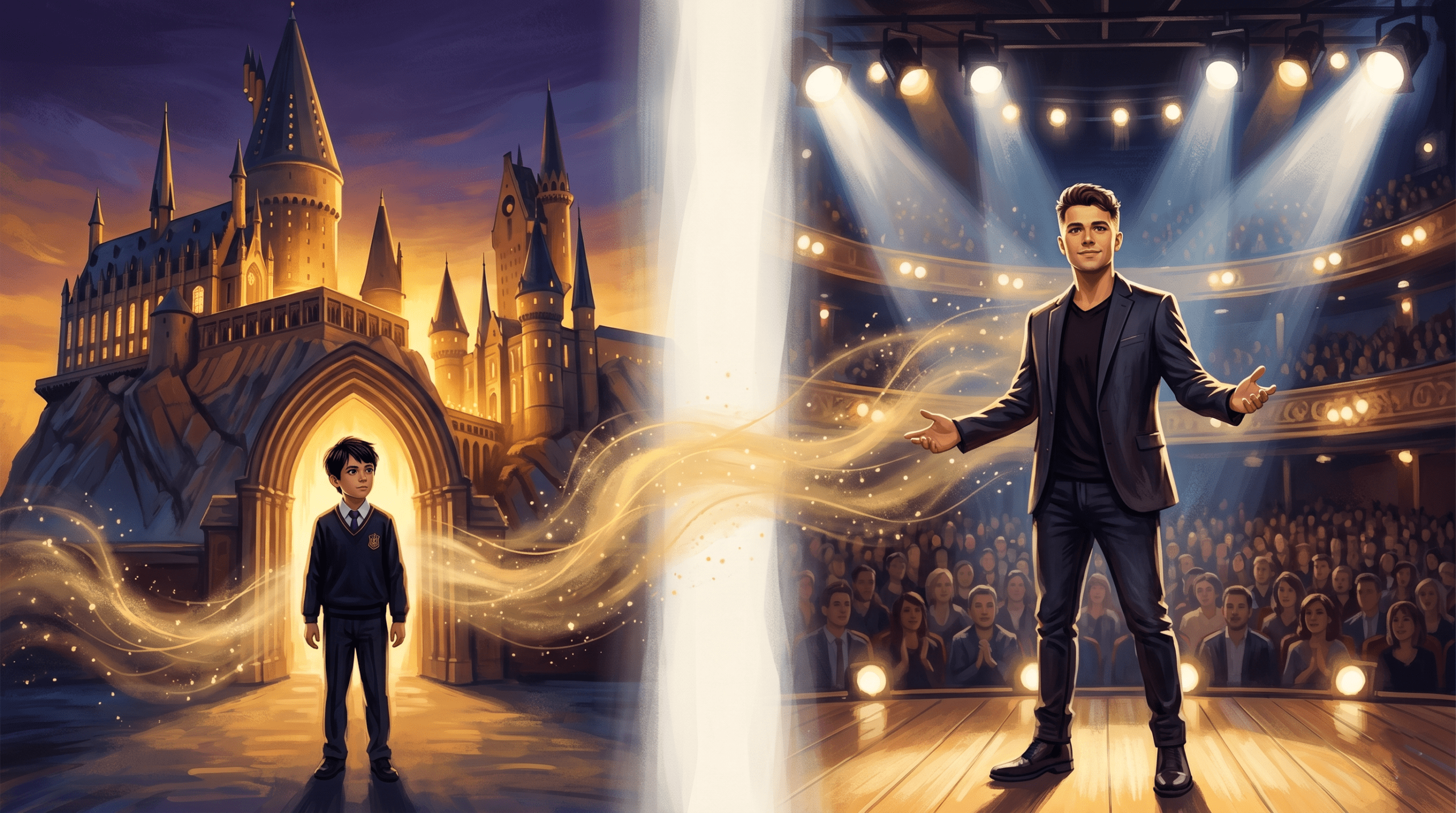 Each of these choices reflected something that had been present in Daniel Radcliffe since his young age: a genuine love of the craft for its own sake, a willingness to prioritize artistic interest over commercial safety, and an absolute refusal to be defined or limited by the role that had made him famous.
Most recently, his acclaimed portrayal of “Weird Al” Yankovic in Weird: The Al Yankovic Story (2022) demonstrated once again that the qualities identified in that London casting room in 2000 — authenticity, commitment, emotional intelligence, and a disarming lack of ego — remain as fully intact in the adult actor as they were in the child.
The shy 11-year-old boy who walked into a casting room and changed cinema history did not do so by accident. He did so because of who he already was — because of the childhood he had been given, the character he had developed, the values he had absorbed, and the gift he had been born with and carefully, quietly, over many years, learned to use.
Frequently Asked Questions (FAQ)
Q1: How old was Daniel Radcliffe when he first started acting?
Daniel Radcliffe began his professional acting career at the age of 9, when he was cast as young David Copperfield in the BBC television film adaptation of Charles Dickens’ classic novel in 1999. This early role was instrumental in bringing him to the attention of the Harry Potter production team and demonstrated, at an extremely young age, his distinctive ability to deliver emotionally authentic performances.
Q2: How old was Daniel Radcliffe when he was cast as Harry Potter?
Daniel Radcliffe was 10 years old when he was officially cast as Harry Potter, and 11 years old when principal photography began on Harry Potter and the Philosopher’s Stone. He was 12 when the film was released to the public in November 2001.
Q3: Did Daniel Radcliffe have any formal acting training before Harry Potter?
No. One of the most remarkable aspects of Daniel Radcliffe’s early career is that he had no formal stage school training prior to being cast as Harry Potter. He was not enrolled in a performing arts school, had not completed professional acting courses, and had not come through the conventional pipeline that produces most British child performers. His talent was, in the truest sense, innate — recognized and developed through professional experience rather than formal instruction.
Q4: Was Daniel Radcliffe really a shy child in real life?
By multiple accounts — including his own — Daniel was naturally introverted and quiet as a child, though he possessed an inner imaginative life of considerable intensity. He was not the kind of child who sought attention or dominated social situations. His affinity for performance came not from a desire to be seen but from a genuine love of storytelling and a fascination with the emotional mechanics of great acting.
Q5: How did Daniel Radcliffe’s parents influence his early acting career?
Daniel’s parents, Alan and Marcia Radcliffe, exercised a protective and deliberate influence over his early career that many industry observers credit as essential to his long-term wellbeing and professional success. They were initially reluctant to allow him to audition for Harry Potter, carefully managed the boundaries between his professional and personal life, maintained a stable home environment throughout the years of filming, and consistently prioritized his development as a human being over his advancement as a celebrity.
Q6: How did Daniel Radcliffe handle the psychological pressures of childhood fame?
Daniel has spoken candidly in various interviews about the genuine difficulties of growing up under extraordinary public scrutiny. He has acknowledged a period of personal struggle during his mid-teenage years and has discussed these experiences with honesty and self-awareness. The support of his parents, his friendships outside the industry, and his genuine passion for acting all served as stabilizing forces during the most challenging periods. His ability to discuss these experiences openly and without self-pity is widely regarded as a reflection of the psychological groundedness that his upbringing provided.
Return, for a moment, to that casting room in London in the year 2000. A nervous boy walks in. He is not the most polished child in the process. He has not been to stage school. He has a coordination disorder that makes certain physical tasks more difficult than they should be. His parents almost did not let him come. He is, in every conventional sense, an unlikely candidate to become one of the most recognized faces on the planet.
And yet.
The story of Daniel Radcliffe in young age is ultimately a story about the things that cannot be taught or manufactured or optimized: the quality of genuine feeling, the courage of honest self-expression, the steadiness that comes from being truly and unconditionally loved during the years when character is formed. Daniel Radcliffe became Harry Potter not because he was the most technically accomplished child actor available, but because he was, in some deep and irreducible way, the most real.
The foundation laid in those early years — by his parents, by his own character, by the extraordinary experiences of the HP set, and by the mentors who recognized his gift and helped him develop it — has proven, over more than two decades of professional life, to be genuinely unshakeable. The shy boy from Fulham did not just survive the extraordinary circumstances of his young age. He was shaped by them into something rare: an artist who is still growing, still surprising, and still, in every performance, unmistakably and entirely himself.
That is Daniel Radcliffe’s truest legacy. Not the films, not the franchise, not the fame — but the living proof that the right childhood, even the most unconventional one, can produce something extraordinary.