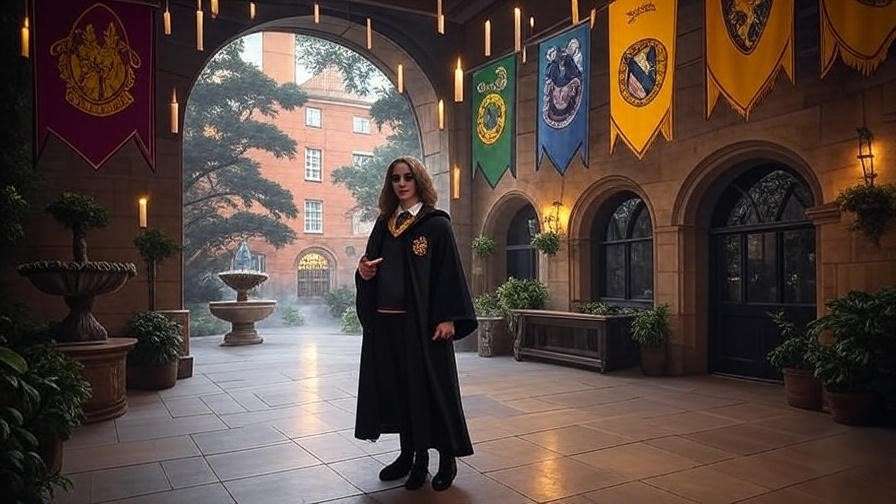
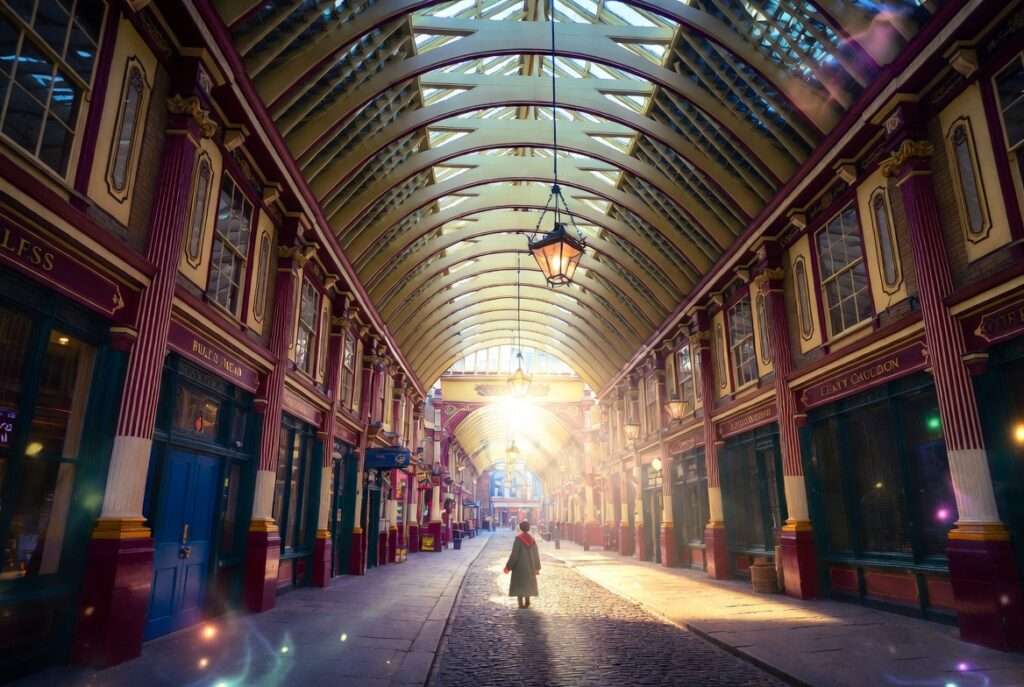
Imagine stepping out of the bustling streets of modern London and into a Victorian wonderland of ornate iron arches, colorful painted ceilings, and cobblestone pathways that instantly transport you into the heart of the Wizarding World. For millions of Harry Potter fans worldwide, this is exactly what happens at Leadenhall Market Harry Potter location — one of the most magical and accessible real-world filming sites from the beloved film series.
In Harry Potter and the Philosopher’s Stone, Leadenhall Market comes alive as Harry walks with Hagrid along what feels like the approach to Diagon Alley, leading to the famous blue door of the Leaky Cauldron. This stunning covered market in the City of London doesn’t just appear in the background — it captures the perfect blend of historic charm and hidden magic that defines J.K. Rowling’s universe.
Whether you’re planning your first Harry Potter pilgrimage to London, seeking the exact Leaky Cauldron entrance, or simply wanting to experience the atmospheric streets that inspired Diagon Alley, this comprehensive guide delivers everything you need. As a long-time explorer of Wizarding World locations and London’s hidden history, I’ve compiled the most detailed, up-to-date resource available — far beyond basic tourist lists.
The Harry Potter Connection – How Leadenhall Market Became Part of the Wizarding World
Leadenhall Market’s role in the Harry Potter films goes deeper than many casual fans realize. While the grand Diagon Alley street set was ultimately built at Warner Bros. Studio, the production team chose Leadenhall Market for key exterior scenes in the first movie because of its unparalleled Victorian grandeur and covered walkways that perfectly evoked a sense of stepping into a magical realm hidden within the Muggle world.
Scenes Filmed at Leadenhall Market
The most iconic sequence shows Hagrid and a wide-eyed Harry walking through the market’s impressive covered pathways. These shots represent Charing Cross Road in the film, building anticipation as they head toward the Leaky Cauldron. The atmospheric lighting, towering arches, and bustling yet contained environment made it an ideal stand-in for the magical shopping district.
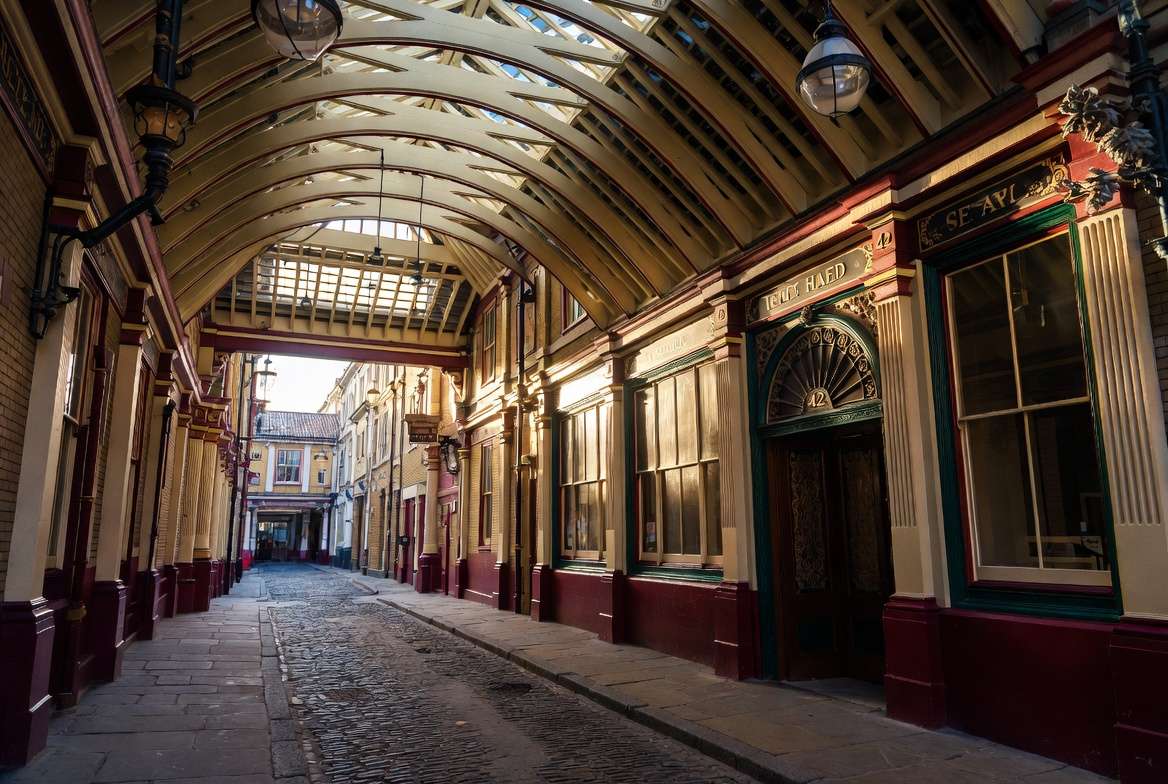
The standout moment for many fans is the entrance to the Leaky Cauldron itself. This was filmed at 42 Bull’s Head Passage, a small alleyway within the market. In the movie, the door appears painted black with the pub’s signage. In reality, it’s a simple doorway leading to what is now an optician’s shop. The contrast between the film’s magical transformation and today’s everyday business creates a wonderful “Muggle vs. Wizard” experience for visitors.
These scenes were shot in 2000-2001 during production of Harry Potter and the Philosopher’s Stone. The market’s architecture provided the perfect foundation for the visual effects team to layer in the wizarding elements that fans fell in love with.
Leadenhall Market vs. Warner Bros. Studio Diagon Alley Set
Many visitors wonder why the full Diagon Alley wasn’t filmed here. The answer lies in practicality. Leadenhall Market offered authentic historical atmosphere for exterior walking shots, but the studio allowed for complete control over the intricate shop fronts, moving signs, and magical details required for close-up scenes.
The market’s real-world Victorian design heavily influenced the set designers. The ornate ironwork, painted details, and sense of layered history directly inspired the whimsical, slightly chaotic feel of Diagon Alley. Visiting Leadenhall Market Harry Potter location gives you a genuine connection to the source material that the studio tour alone cannot provide.
Appearances in Other Harry Potter Films
While Leadenhall Market is most strongly associated with the first film, eagle-eyed fans may spot subtle influences or brief returns in later movies. However, the Leaky Cauldron’s exterior moved to Borough Market for Prisoner of Azkaban to achieve a darker, more atmospheric tone as the series matured. This evolution shows how location choices reflected the storytelling shifts across the eight films.
A Brief History of Leadenhall Market – From Roman Times to Victorian Icon
Understanding the market’s deep history enhances the magic of your visit. Far from being just a film set, Leadenhall Market represents over 2,000 years of London’s commercial heart.
Ancient Roots (Roman Forum to Medieval Poultry Market)
The site sits directly over the remains of Roman Londinium’s basilica and forum — the administrative and commercial center of Roman Britain. While you won’t see visible Roman ruins today, the market’s location in the City of London places it at the crossroads of ancient trade routes that have existed for millennia.
By the 14th century, a poultry market had been established here. The name “Leadenhall” likely derives from a lead-roofed hall built on the site. In 1411, the famous Lord Mayor Dick Whittington donated the market to the City of London Corporation, which still oversees it today. For centuries, it served primarily as a wholesale meat and poultry market.
The 1881 Victorian Transformation
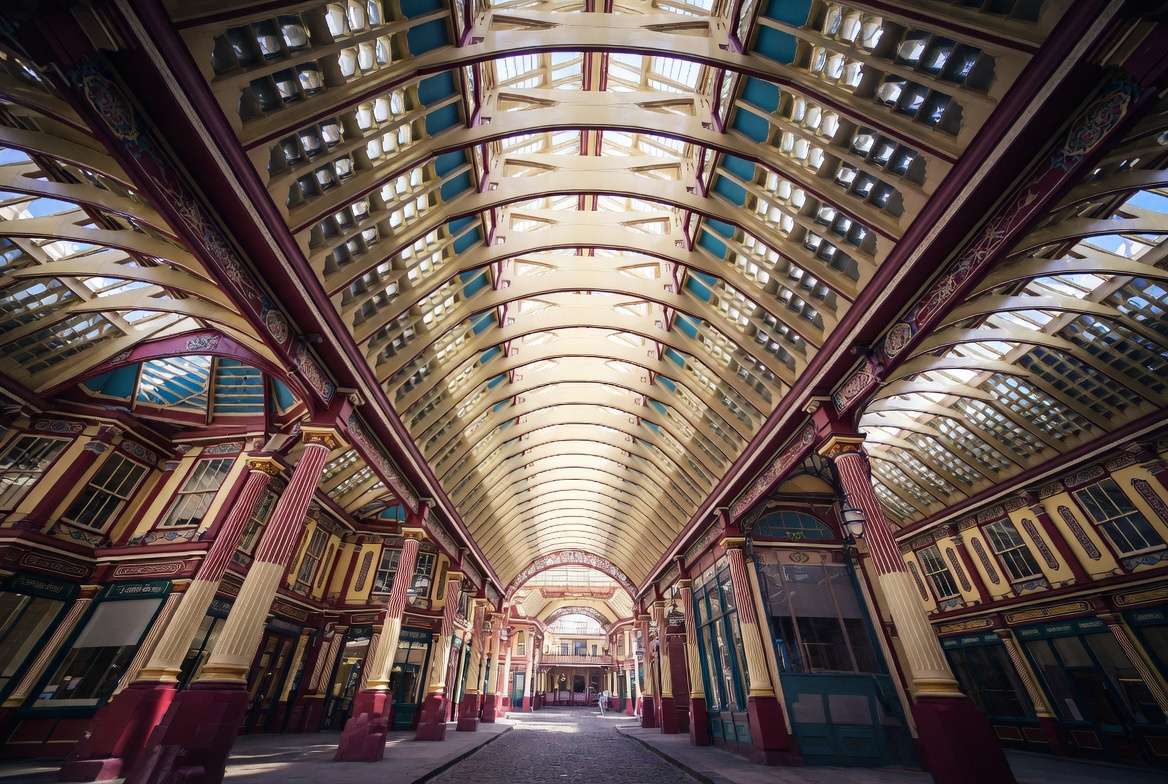
The market we see today is the magnificent creation of architect Sir Horace Jones, who also designed Tower Bridge, Smithfield Market, and Billingsgate Market. Completed in 1881 at significant cost, the new structure replaced earlier stone buildings with a stunning iron-and-glass roof system that floods the space with natural light.
Key architectural features include:
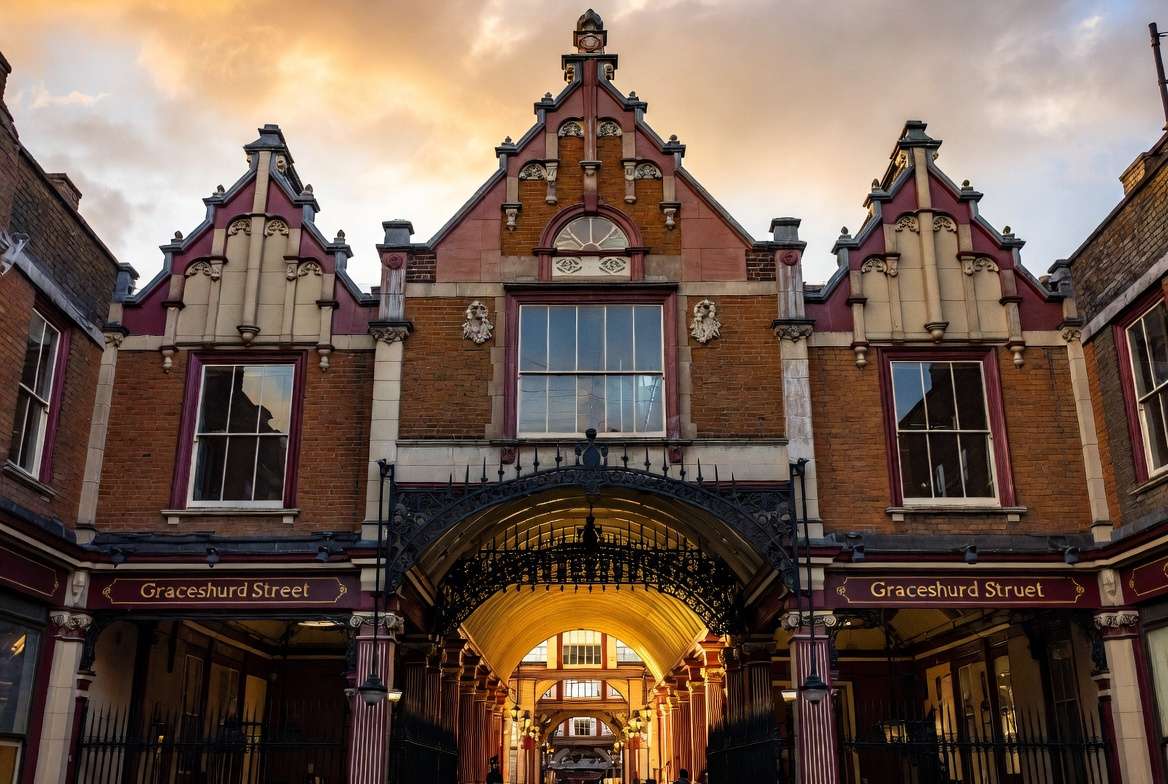
- The grand Gracechurch Street entrance with its Dutch-style gables
- The central octagonal dome with intricate painted details
- Colorful decorative schemes in green, maroon, and cream
- Traditional cobblestone flooring that adds to the historic feel
- Ornate dragon motifs symbolizing the City of London
The market received Grade II listed status in 1972, protecting its architectural heritage for future generations.
 Leadenhall Market Through the Centuries
The market has survived the Great Fire of London, world wars, and major urban redevelopment while maintaining its role as a trading hub. Today, it has evolved from a wholesale meat market into an upscale destination featuring boutique shops, restaurants, and pubs — all while preserving its Victorian soul.
This rich timeline makes Leadenhall Market Harry Potter location feel even more authentic. The layers of history mirror the depth of the Wizarding World itself — ancient foundations supporting visible wonder.
Exploring Leadenhall Market Today – What Harry Potter Fans Will Love
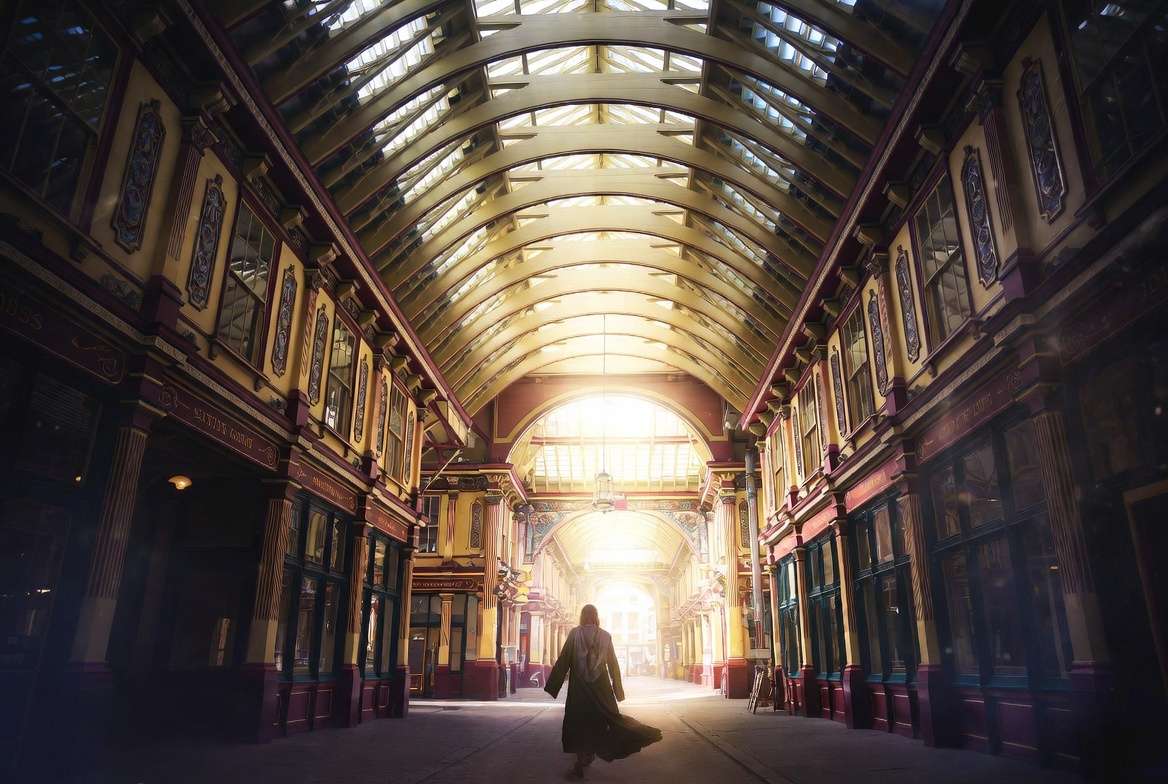
Stepping into Leadenhall Market today feels like walking onto a living film set. The grand Victorian architecture, with its soaring glass and iron roof, creates an enchanting atmosphere that perfectly captures the spirit of Diagon Alley without any need for CGI. This is where the magic of the Harry Potter films meets real London history in the most delightful way.
Must-See Architectural and Atmospheric Highlights
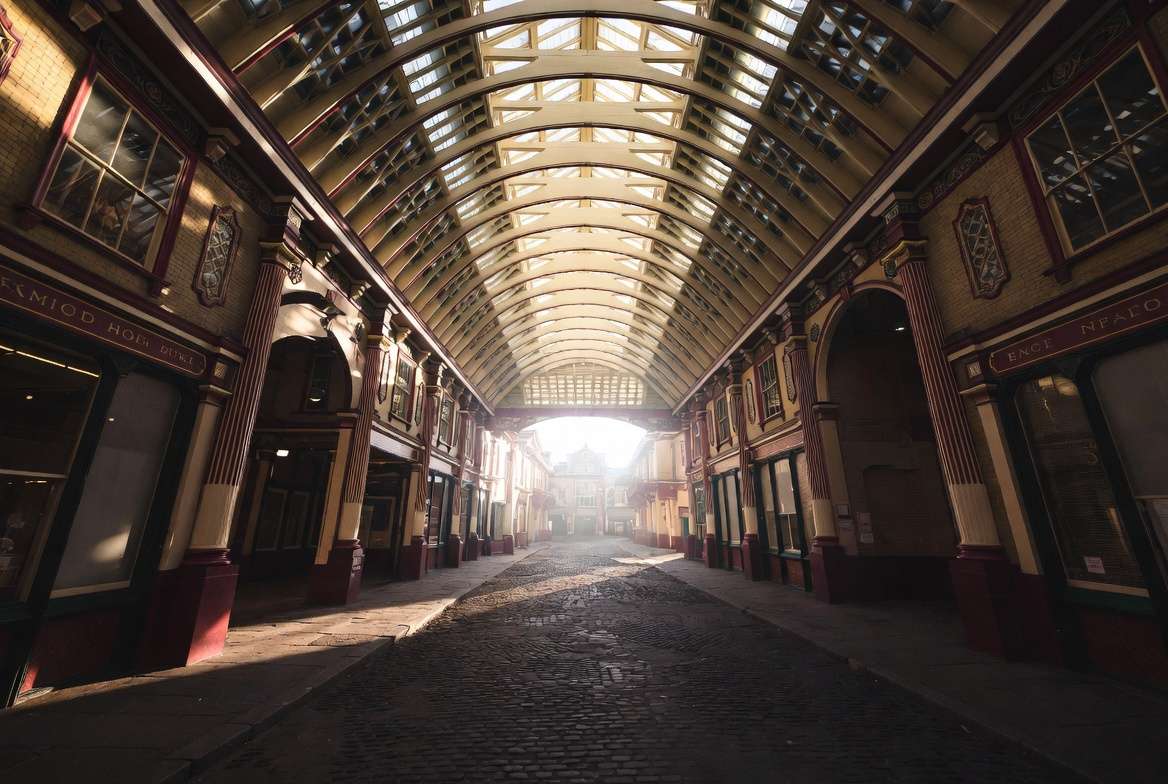
The market spans a surprisingly large area with multiple covered walkways radiating from the central courtyard. The most photogenic features include the intricate wrought-iron framework painted in rich greens and creams, the colorful heraldic shields, and the beautiful painted ceiling panels that add warmth even on cloudy London days.
For Harry Potter enthusiasts, the best spots evoke the sense of wonder Harry felt on his first trip to the wizarding shopping street. The covered passages create natural “portals” between areas, mirroring the hidden entrances so common in the books. The soft natural light filtering through the glass roof gives everything a slightly ethereal quality — perfect for that magical feel.
 Exact Filming Location Guide
To fully experience the Leadenhall Market Harry Potter location, follow this step-by-step route:
- Enter from Gracechurch Street — this is the grand main entrance where many wide establishing shots were filmed.
- Walk through the main arcade, imagining Hagrid’s large frame striding beside young Harry.
- Turn into Bull’s Head Passage on your right (look for the small alley near the center). Here you’ll find number 42 — the exact site of the Leaky Cauldron’s blue door in Philosopher’s Stone.
Today, the doorway leads to an optician’s shop called “Vision Express.” Many fans take the classic “knocking on the door” photo or stand where Harry would have entered. While the magical pub is long gone, the location still holds tremendous charm.
The cobblestones underfoot are original, and the surrounding storefronts maintain the same proportions seen in the film. Side-by-side comparisons of film stills and current photos reveal how remarkably well-preserved the location remains.
 Shopping, Dining, and Hidden Gems
While you won’t find Ollivanders or Flourish and Blotts, Leadenhall Market offers excellent shopping and dining options that enhance the visit:
- The Lamb Tavern: A traditional pub with a beautiful upstairs dining room — ideal for a post-exploration meal. Many visitors enjoy fish and chips or a Sunday roast here.
- Boutique shops selling unique gifts, jewelry, and fashion — perfect for finding special souvenirs.
- Coffee shops and casual eateries where you can rest and absorb the atmosphere.
During the Christmas season, the market transforms with stunning decorations, fairy lights, and a giant tree, making it feel even more like a scene from the Wizarding World.
Practical Visitor Guide – Planning Your Trip to Leadenhall Market
Getting There and Best Times to Visit
Leadenhall Market is conveniently located in the City of London. The nearest London Underground stations are:
- Monument (District and Circle lines)
- Bank (Central, Northern, Waterloo & City, and DLR lines)
- Liverpool Street (for overground connections)
From Monument station, it’s just a 5-minute walk. The market is open daily, but shop and restaurant hours vary. For the best Harry Potter experience:
- Visit early morning (8-10 AM) for fewer crowds and better lighting.
- Weekdays are preferable to weekends.
- Golden hour (late afternoon) offers beautiful photography opportunities as light streams through the roof.
 How Long to Spend There + Combined Itineraries
Plan to spend 1-2 hours at Leadenhall Market itself. This gives you plenty of time for photos, exploring every passage, and enjoying a meal.
For a fuller Harry Potter London walking tour, combine it with:
- Borough Market (the later Leaky Cauldron location)
- Millennium Bridge (featured in Half-Blood Prince)
- St. Paul’s Cathedral (visible in several films)
- The Shard area for modern contrast
This creates a memorable half-day itinerary that connects multiple filming locations.
Accessibility, Costs, and Pro Tips
Entry to Leadenhall Market is completely free. The market is largely accessible for wheelchair users and families with pushchairs, though some smaller passages have cobblestones that can be uneven.
Expert tips from years of visiting Wizarding World locations:
- Bring a portable phone charger — you’ll take hundreds of photos.
- Download offline maps as mobile signal can be spotty in covered areas.
- Visit during shoulder seasons (March-May or September-November) for the best balance of weather and crowds.
- Read the relevant chapter from Philosopher’s Stone while sitting in the market — it enhances the experience dramatically.
Beyond the Movies – Why Leadenhall Market Is Worth Visiting Even Without Harry Potter
Leadenhall Market stands as one of London’s architectural treasures regardless of any film connection. Its Grade II listed status protects a masterpiece of Victorian engineering that showcases Britain’s industrial heritage at its finest.
Food lovers particularly appreciate the high-quality restaurants and the market’s evolution into a gourmet destination. History enthusiasts value its 2,000-year timeline, while architecture fans admire the work of Sir Horace Jones.
This dual appeal makes it an excellent location to share with non-Harry Potter fans in your travel group. Everyone finds something to love here.
Expert Tips for the Ultimate Harry Potter Experience at Leadenhall Market
To make your visit truly special:
- Reenact the Hagrid and Harry walk while listening to the Philosopher’s Stone audiobook.
- Bring a toy wand for fun “magic” photos (respect other visitors and shop owners).
- Look for small details like dragon motifs on the architecture — they feel very “Hogwarts.”
- Join or create your own Harry Potter walking tour — several excellent ones start or pass through Leadenhall Market.
Avoid common mistakes such as expecting active film production or wizard shops. Embrace it as a beautiful bridge between fiction and reality.
 Nearby Harry Potter Locations to Complete Your London Pilgrimage
Leadenhall Market serves as an excellent starting point for a comprehensive Harry Potter London adventure:
- King’s Cross Station (Platform 9¾) — 15 minutes by Tube
- Warner Bros. Studio Tour (full Diagon Alley set) — book well in advance
- Glenfinnan Viaduct (if planning Scotland extension)
- Oxford for Christ Church College and other university scenes
Creating a multi-day itinerary around these sites helps fans get the most value from their trip.
FAQ
Was Leadenhall Market used as Diagon Alley? It served as a key filming location for approach scenes and the Leaky Cauldron exterior in the first film, heavily influencing the overall aesthetic.
Where exactly is the Leaky Cauldron door? At 42 Bull’s Head Passage inside Leadenhall Market — now an optician.
Is it free to visit? Yes, completely free to explore at any time.
Best time to go for Harry Potter fans? Early weekday mornings for the best photos and immersive experience.
How does it compare to the books? While the books describe Diagon Alley differently, the market perfectly captures the sense of wonder and hidden magic within the Muggle world.
Leadenhall Market Harry Potter location remains one of the most rewarding and accessible destinations for fans wanting to step into the Wizarding World. Its combination of genuine historical beauty, authentic filming heritage, and living atmosphere creates an experience that no studio tour can fully replicate.
Whether you’re a first-time visitor planning your London Harry Potter trip or a returning fan seeking deeper connections, this market delivers magic in its purest form — hidden in plain sight within one of the world’s greatest cities.
The next time you find yourself in London, take the short walk from Monument station and let the Victorian arches transport you. The same wonder that Harry felt is waiting — you only need to know where to look.