
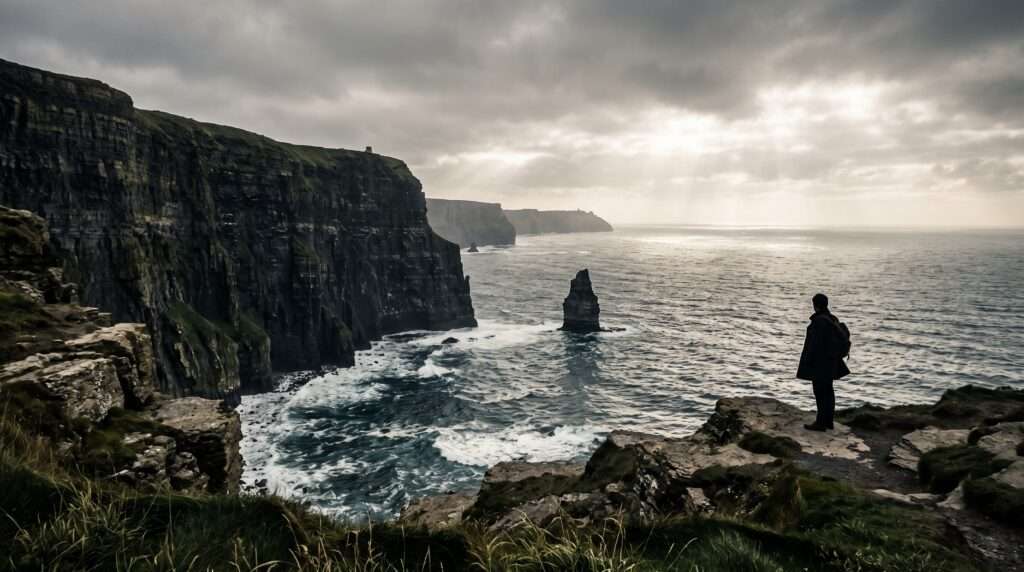
Picture the scene: crashing, turbulent grey waves battering against violently jagged coastal rocks, salt spray thick in the frigid air, and an imposing, terrifyingly sheer cliff face rising out of the sea to meet a stormy sky. This is where Dumbledore and Harry Potter arrive in their desperate, dark quest to destroy a piece of Lord Voldemort’s soul. While Scotland rightfully claims the lion’s share of the credit for the sprawling vistas surrounding Hogwarts School of Witchcraft and Wizardry, it is the dramatic coastlines of the Emerald Isle that host arguably the most pivotal, heart-stopping scene in the entire cinematic franchise.
If you are a Potterhead planning a trip, searching for the true Ireland Harry Potter Locations can be a confusing endeavor. The internet is riddled with misinformation, often blurring the lines between actual Warner Bros. filming sets and places that simply look like they belong in the wizarding world.
Consider this your ultimate, definitive, and no-nonsense guide. We are going to separate movie magic from geographical reality. We will detail exactly how to find the real filming spots used in Harry Potter and the Half-Blood Prince, reveal the ultimate cinematic illusion that stitched two different Irish counties together, and guide you through the best “Hogwarts lookalikes” to flesh out your ultimate magical road trip.
The REAL Ireland Harry Potter Locations (Movie Magic Fact vs. Fiction)
When director David Yates was at the helm of Harry Potter and the Half-Blood Prince, he needed a location that felt foreboding, ancient, and undeniably hostile. He needed the exterior of the Horcrux Cave. The production team realized that a soundstage could not capture the raw, untamed violence of the Atlantic Ocean, nor the sheer scale required to make two powerful wizards look entirely vulnerable.
To achieve this, the filmmakers turned to the rugged western coast of Ireland, utilizing a brilliant blend of real-world Irish geography and subtle CGI.
1. The Cliffs of Moher, County Clare (The Imposing Cliff Face)
The Scene:
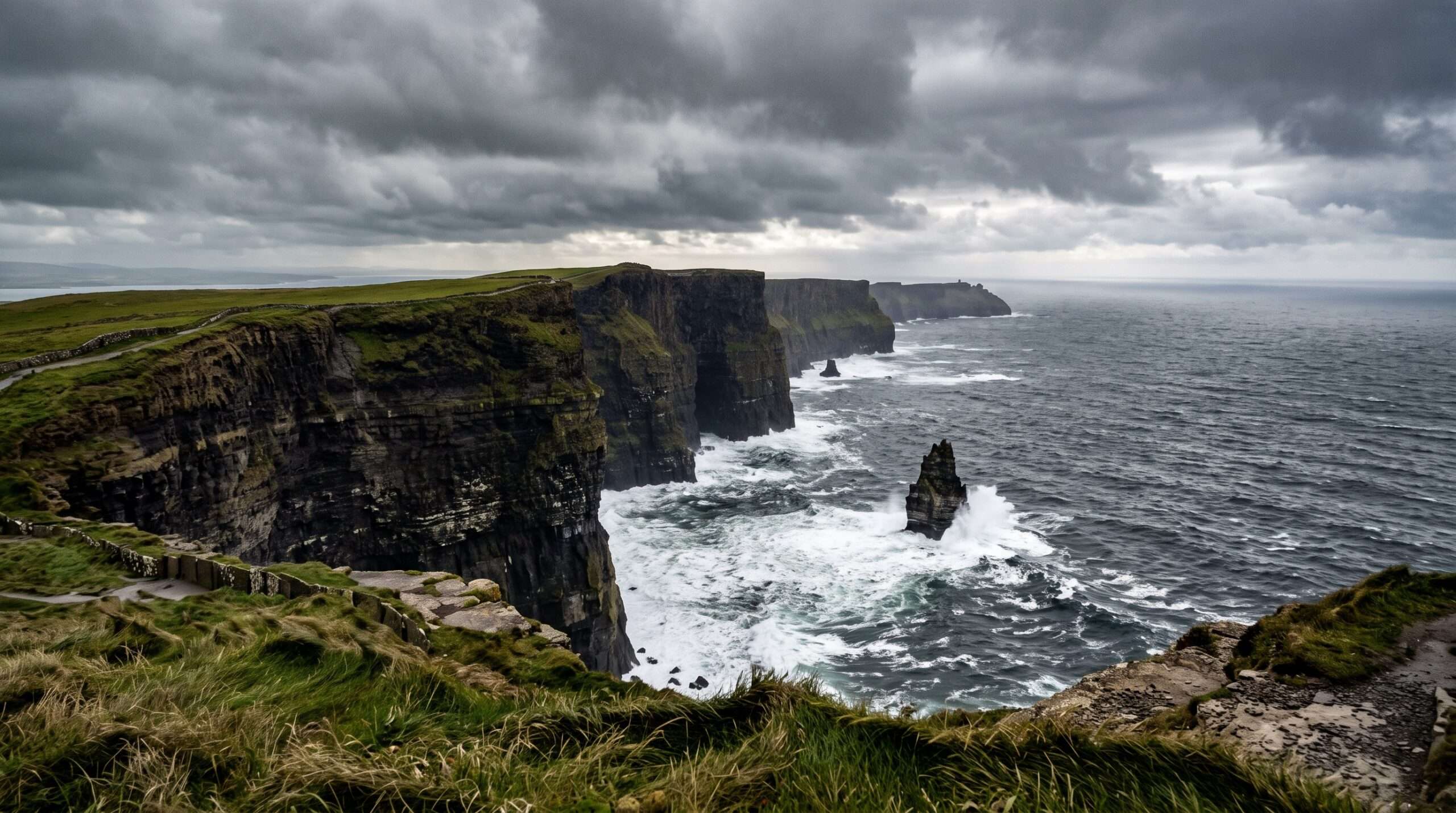
When Harry and Dumbledore Apparate away from the Astronomy Tower and arrive at a raging sea, the monumental, dark cliffs towering above them are none other than the Cliffs of Moher in County Clare. The sweeping, cinematic wide shot showcases the staggering 700-foot drop of the shale and sandstone cliffs, plunging vertically into the swirling Atlantic below.
Expert Insight:
The location scouts for Warner Bros. visited the Cliffs of Moher in 2007, battling intense winds to map out the perfect angle. Because the scene represents one of the darkest turning points in the entire series—the moment Dumbledore forces Harry to feed him the Drink of Despair—the environment had to reflect that encroaching darkness. The sheer verticality of the Cliffs of Moher provided the perfect, terrifyingly beautiful backdrop.
How to Visit & Photography Tips:
Visiting the Cliffs of Moher is a rite of passage for any traveler in Ireland, but Potter fans should approach it with a specific game plan.
-
Logistics: The Cliffs are located on the Wild Atlantic Way, about a 90-minute drive from Galway or a 3-hour drive from Dublin.
-
The “Dumbledore Angle”: To get the best view of the cliff face featured in the movie, you will want to head toward O’Brien’s Tower (the highest point) and look south toward Hags Head.
-
Timing: To avoid the massive throngs of tourist buses and to capture that moody, cinematic lighting, plan your visit for late afternoon or early evening. A sunset visit not only provides spectacular lighting but also allows for a much more atmospheric, isolated experience.
-
Safety Warning: The winds on the west coast can be incredibly fierce. Always stay behind the official paved pathways and retaining walls. No photo—magical or otherwise—is worth risking the unstable edges of a 700-foot drop.
 2. Lemon Rock, County Kerry (The Apparition Rock)
The Scene:
While the Cliffs of Moher provide the towering backdrop, Dumbledore and Harry actually stand on a jagged, isolated rock being lashed by waves before entering the cave. That specific rock is Lemon Rock.
The Cinematic Secret:
Here is where the movie magic truly comes into play. If you visit the Cliffs of Moher expecting to look down and see the rock Harry and Dumbledore stood on, you will be deeply confused. In reality, Lemon Rock and the Cliffs of Moher are located hours apart!
The filmmakers shot plates of Lemon Rock down in County Kerry, and then digitally stitched that footage against the backdrop of the Cliffs of Moher in County Clare.
How to See It:
Lemon Rock is a small, uninhabited islet that is part of the famous Skellig Islands archipelago. While it often plays second fiddle to Skellig Michael (the towering island famous for its ancient monastic settlement and its starring role as Ahch-To in the recent Star Wars trilogy), Lemon Rock is the true pilgrimage site for Potterheads.
-
Logistics: You cannot physically step foot onto Lemon Rock, as it is a protected, treacherous bird sanctuary. However, you can book a boat tour departing from the small fishing village of Portmagee in County Kerry.
-
The Experience: An eco-tour around the Skelligs will sail you right past Lemon Rock. Seeing the jagged, inhospitable stone jutting out of the Atlantic swells will instantly transport you into the shoes of the Boy Who Lived.
“Hogwarts in Ireland”: The Most Magical Lookalike Locations
While the western coast hosts the official filming sets, the Republic of Ireland and Northern Ireland are overflowing with rich, Gothic architecture, dark academia aesthetics, and ancient forests that feel as though they were ripped straight from the pages of J.K. Rowling’s books. If you want to expand your trip, these “lookalike” locations are mandatory stops.
3. The Long Room at Trinity College, Dublin (The Restricted Section)
The Vibe:
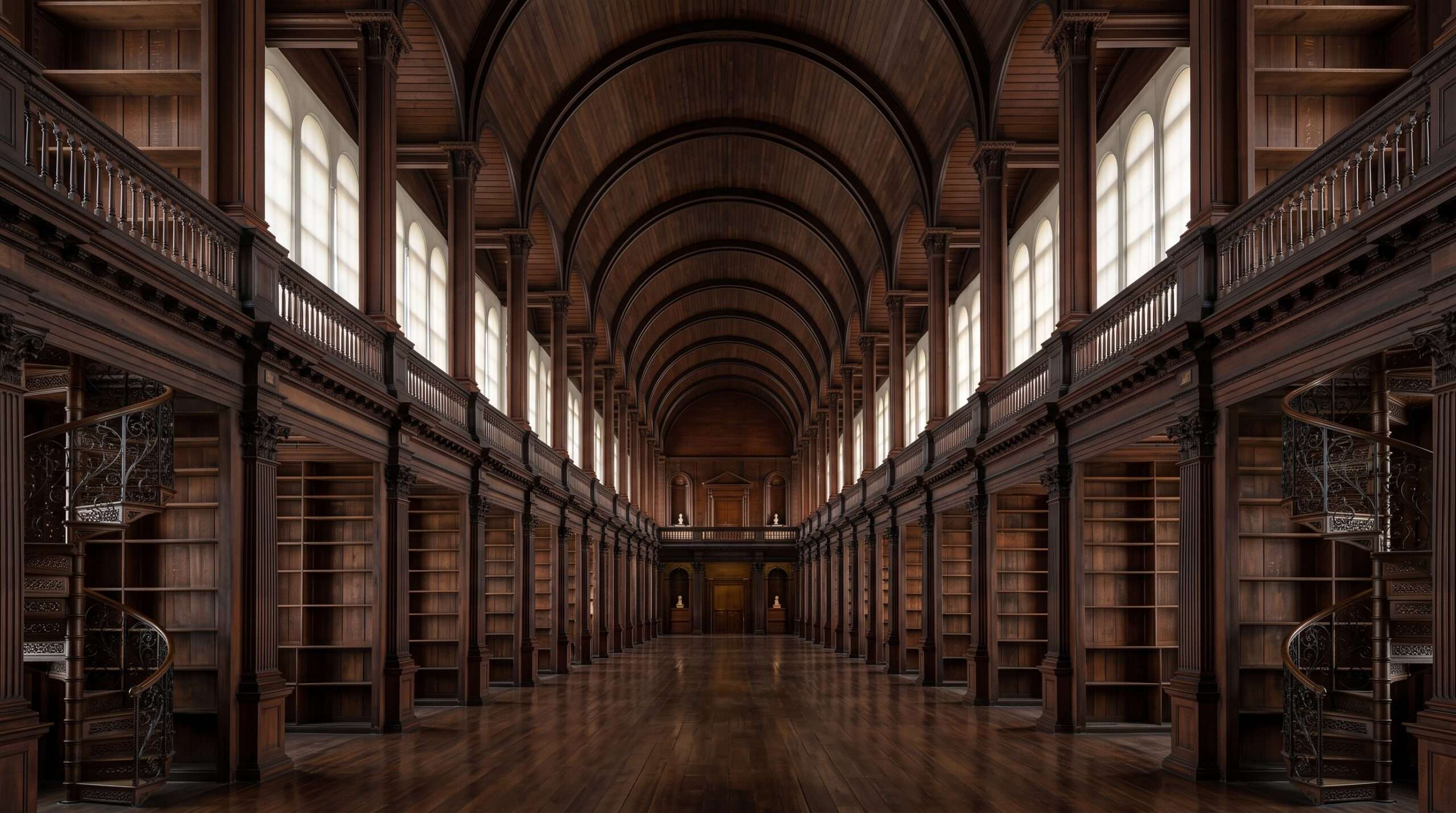
Stepping into the Long Room in the Old Library of Trinity College is like walking directly into the Restricted Section of the Hogwarts Library, or the grand archives of the Jedi Temple. With its towering, floor-to-ceiling dark oak shelves, sliding ladders, and spiral staircases, the barrel-vaulted ceiling houses hundreds of thousands of the oldest books in the world.
Crucial 2026 Travel Update:
As a discerning traveler, it is vital to know that Trinity College is currently amidst a massive, €90 million restoration project spanning from 2022 to roughly 2030. To preserve the ancient texts from environmental damage, over 200,000 books have been carefully cataloged and moved into temporary climate-controlled storage. While the Long Room is currently devoid of its usual literary occupants, the sheer architectural majesty of the wooden arches is still a sight to behold, and the Book of Kells exhibition remains open. Still, temper your expectations if you were hoping for overflowing bookshelves.
 4. Marsh’s Library, Dublin (The Hidden Gem)
The Vibe:
Since Trinity College is undergoing major renovations, your ultimate alternative is just a short walk away. Tucked behind St. Patrick’s Cathedral is Marsh’s Library, Ireland’s oldest public library, remaining largely unchanged since it opened in 1707.
The Magic:
Marsh’s Library is a hidden gem that practically radiates magical energy. The library is famous for its three ancient “cages”—wire enclosures where readers were historically locked inside to read rare, valuable books so they couldn’t steal them. Walking among the dark oak bookcases and ancient leather-bound tomes feels exactly like serving a tense detention with Madam Pince, the notoriously strict Hogwarts librarian. It is atmospheric, delightfully dusty, and deeply historic.
5. Christ Church Cathedral Crypt, Dublin (The Slytherin Dungeons)
The Vibe:
If you want to feel as though you are sneaking down to the Slytherin Common Room or attending a Potions class taught by Severus Snape, head to the Crypt at Christ Church Cathedral in Dublin.
The Magic:
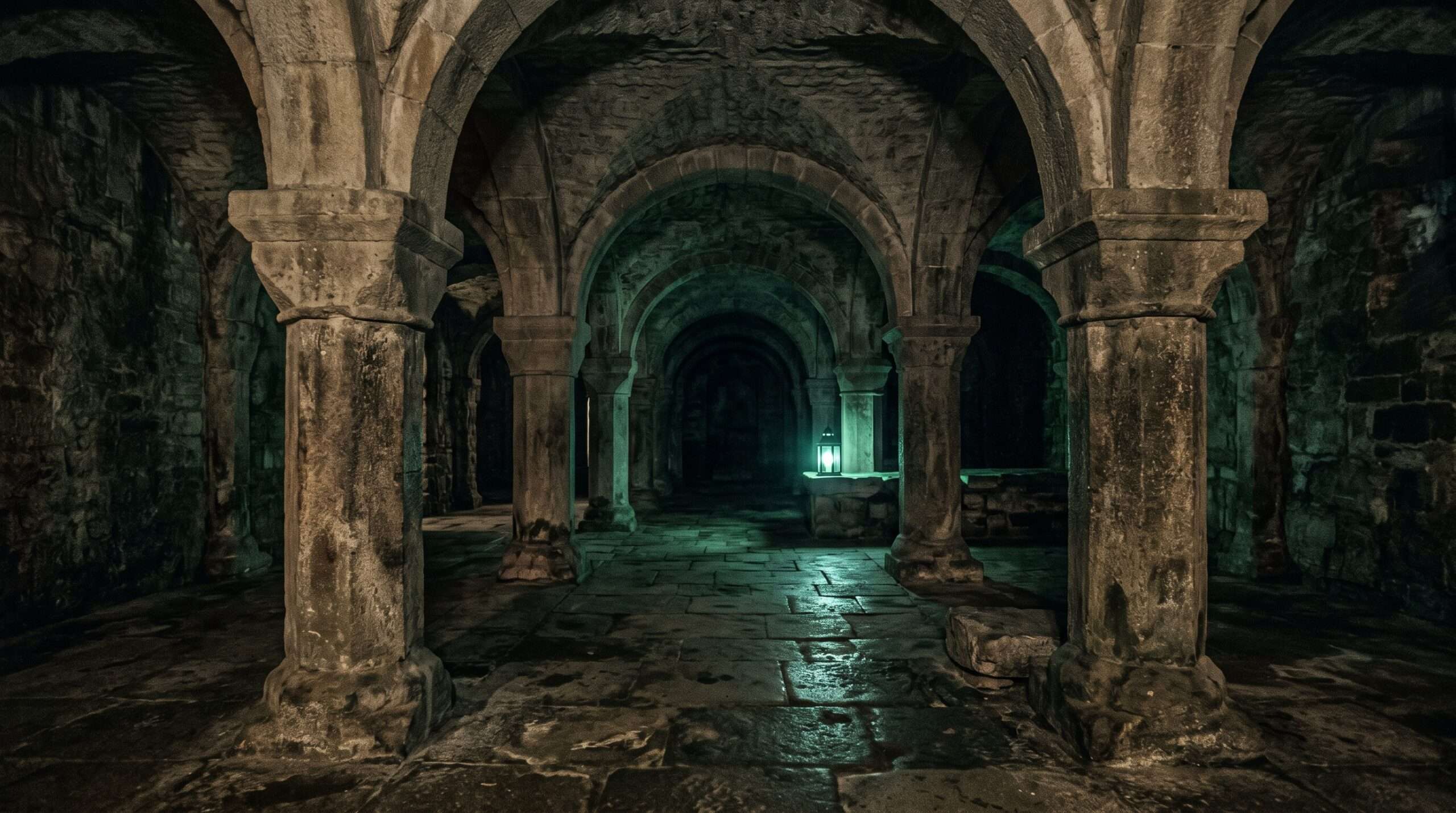
Dating back to the 12th century, this is the largest cathedral crypt in Ireland. The cavernous, rough-hewn stone arches and labyrinthine passageways are steeped in shadows and history. The crypt even houses fascinating oddities, including the mummified remains of a cat and a rat found stuck in the organ pipes in the 1860s—a bizarre historical detail that feels like a forgotten plot point from the wizarding world.
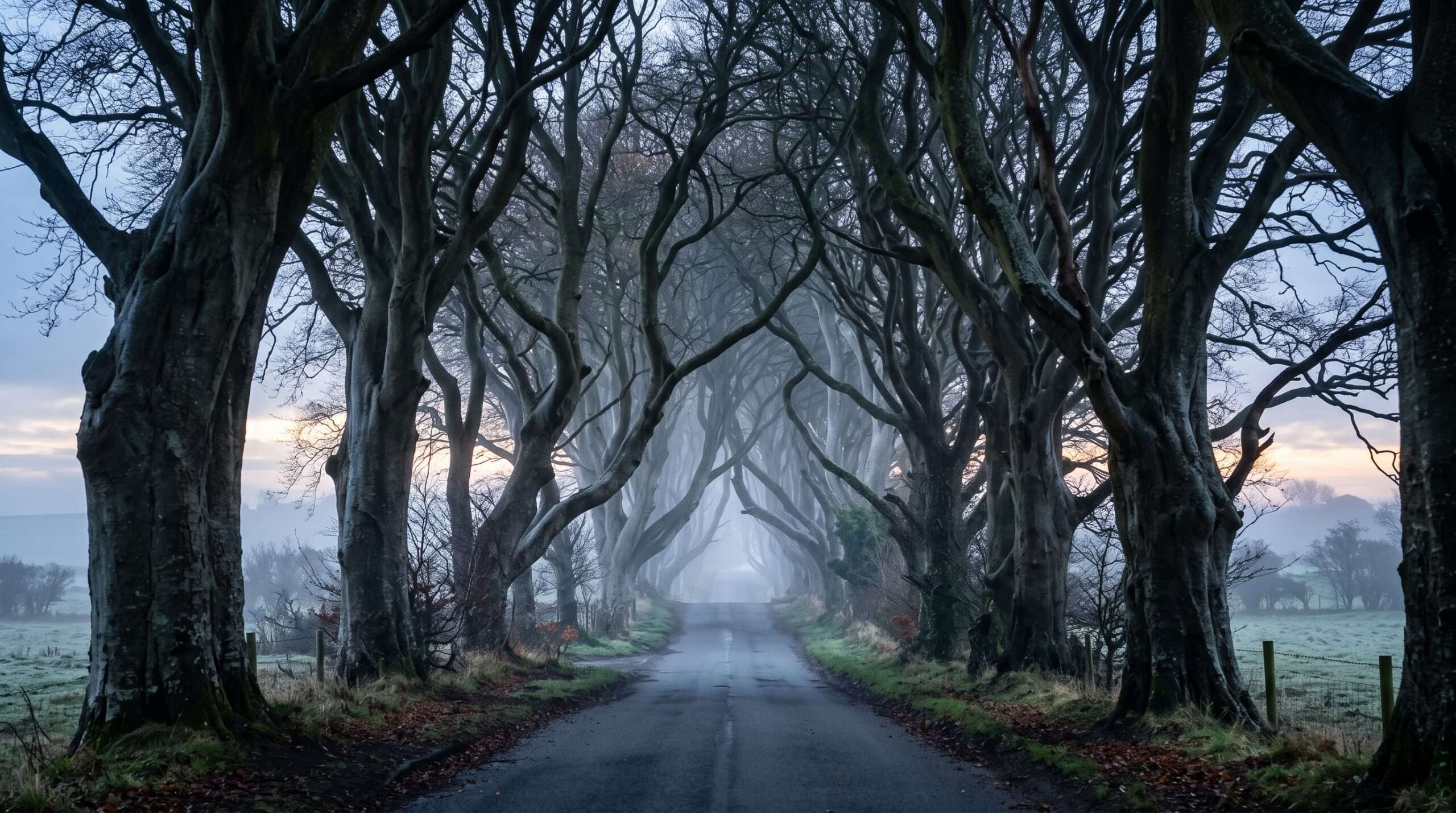
 6. The Dark Hedges, Northern Ireland (The Forbidden Forest)
The Vibe:
While this location found global fame as the “Kingsroad” in HBO’s Game of Thrones, any fantasy fan driving through Northern Ireland must stop at the Dark Hedges in County Antrim.
The Magic:
Planted in the 18th century by the Stuart family, this avenue of twisting, intertwining beech trees creates a sinister, shadowy tunnel over the road. Particularly on a misty morning or as dusk falls, the gnarled branches reaching out like skeletal fingers perfectly encapsulate the terrifying, ancient vibe of the Forbidden Forest surrounding the Hogwarts grounds.
 The Ultimate Potterhead Road Trip Itinerary
To make the most of your magical Irish adventure, you need a logical route that connects the dark academia of Dublin with the cinematic reality of the Atlantic coast. Here is a streamlined, three-day driving itinerary.
Day 1: A Magical Dublin Start
Begin your journey in the capital city. Start the morning exploring the ancient oak cages of Marsh’s Library, followed by a walk through the historic grounds of Trinity College. In the afternoon, descend into the shadows of the Christ Church Cathedral Crypt. As evening approaches, cap off your day at a wizard-themed experience like The Cauldron Dublin, where you can don a robe, wield a magic wand, and brew your own molecular mixology “potions” (cocktails or mocktails).
Day 2: The Wild Atlantic Way
Rent a car and head west. The drive from Dublin to County Clare takes roughly three hours. Spend the afternoon exploring the unique limestone landscape of the Burren before heading to the Cliffs of Moher. Time your arrival for the late afternoon. As the sun begins to lower, watch the crashing waves and find the perfect vantage point near O’Brien’s Tower to envision the perilous journey of the Half-Blood Prince. Spend the night in a cozy nearby coastal village like Doolin, famous for its traditional Irish music.
Day 3: The Skellig Ring
Drive south from Clare into County Kerry, taking the scenic ferry across the Shannon Estuary to save time. Navigate your way to the Skellig Ring and the fishing village of Portmagee. Board your pre-booked boat tour (weather permitting) to sail out into the volatile Atlantic. As you pass the jagged, unmistakable silhouette of Lemon Rock, you will have completed your cinematic pilgrimage.
Essential Tips for Your Magical Journey
Pack Like a Wizard (Weather Advice)
The west coast of Ireland is notorious for its rapid, unpredictable weather changes. It can be sunny, pouring rain, and gale-force winds all within a single hour. The coastal areas where the films were shot are incredibly exposed.
-
Layers are key: Bring thermal base layers, a thick fleece, and a high-quality windproof and waterproof outer shell.
-
Footwear: Sturdy, waterproof hiking boots are an absolute must. The pathways around the Cliffs of Moher and the docks in Portmagee can be slippery and muddy. Leave the Hogwarts school shoes at home.
Booking in Advance
-
Cliffs of Moher: During the peak summer months (June through August), the visitor center and parking lots reach capacity early in the day. Book your tickets online in advance to guarantee entry and secure a cheaper rate.
-
Skellig Boat Tours: The boats departing Portmagee are small, strictly regulated by the government for conservation purposes, and highly dependent on sea conditions. They sell out months in advance. Book your eco-tour well ahead of your trip, and build flexibility into your itinerary in case the boat is grounded due to high sea swells.
The Magic Awaits
While the official Ireland Harry Potter Locations might be few in number, they more than make up for it in sheer cinematic scale, geological drama, and untamed natural beauty. Tracing the footsteps of the Half-Blood Prince along the Wild Atlantic Way offers a travel experience that transcends simple fandom—it introduces you to the rugged heart of the Irish coastline. Whether you are gazing down the precipice of the Cliffs of Moher or wandering the ancient, dusty aisles of Marsh’s Library, the magic in Ireland is very, very real.
Be sure to pack your warmest cloaks, practice your apparition (or just rent a reliable car), and prepare for an unforgettable adventure.
Bonus Guide: Live Like a Wizard in a Real Irish Castle
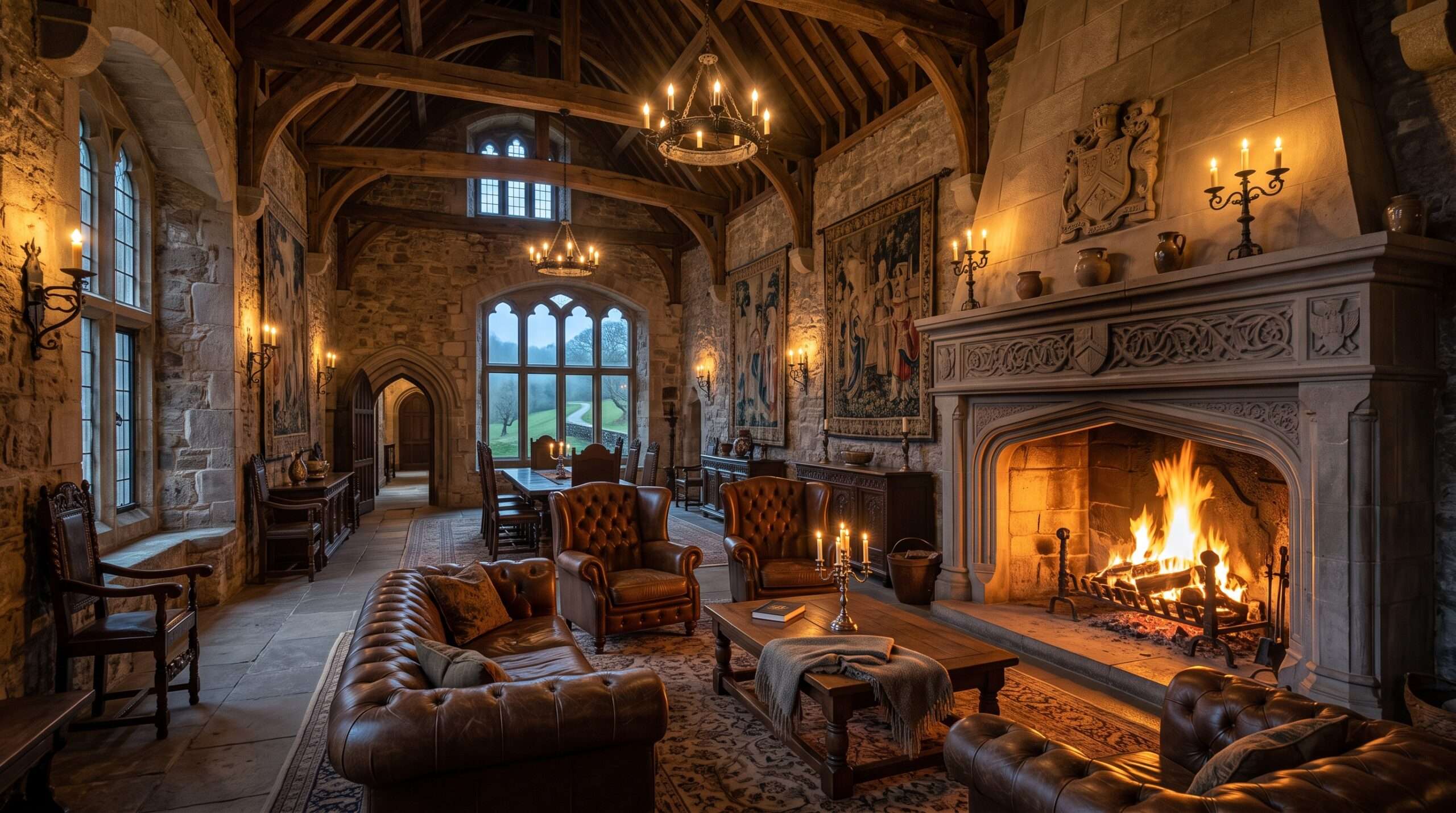
No skyscraper guide to Ireland Harry Potter Locations would be complete without addressing the ultimate Potterhead fantasy: sleeping in a castle that feels just like Hogwarts. Since you cannot actually spend the night in the real Hogwarts filming locations in the UK (as they are working universities, cathedrals, and heritage sites), Ireland steps up to offer the next best thing.
Ireland is globally renowned for its luxury castle hotels. If you want to wake up in a four-poster bed, walk down grand stone corridors flanked by suits of armor, and eat breakfast in a wood-paneled Great Hall, you must add one of these spectacular castle stays to your itinerary.
 Ashford Castle, County Mayo
If you have the galleons to spare, Ashford Castle is the premier luxury castle experience in Ireland. Dating back to 1228, this sprawling estate sits on the shores of Lough Corrib. With its towering turrets, secret stone staircases, and roaring fireplaces, the atmosphere is pure Gryffindor common room. You can even participate in a falconry walk through the ancient surrounding forests—the closest you will get to Care of Magical Creatures class in the real world.
Dromoland Castle, County Clare
Strategically located just a short drive from the Cliffs of Moher, Dromoland Castle is the perfect overnight base for your Horcrux Cave expedition. The ancestral home of the O’Briens of Thomond (whose lineage dates back to the High King of Ireland, Brian Boru), Dromoland offers sweeping manicured grounds that feel remarkably like the Hogwarts courtyards.
Ballygally Castle, Northern Ireland
If your itinerary takes you up north to see the Dark Hedges, consider a stay at Ballygally Castle. Perched on the scenic Antrim coast, it is famous for being one of the most haunted hotels in Ireland. For fans of the ghostly residents of Hogwarts—like Nearly Headless Nick or the Grey Lady—booking a night in Ballygally’s legendary “Ghost Room” adds a thrilling, supernatural edge to your road trip.
The Lore Connection: Ireland in the Harry Potter Universe
While the physical filming locations in Ireland are restricted to the dramatic coastlines of Clare and Kerry, the country holds a massive, celebrated place within the written lore of the wizarding world. If you want to impress the locals (and your fellow Potterheads) during your travels, brush up on these deep-cut Irish lore connections:
The 1994 Quidditch World Cup
Every true fan remembers the chaotic and thrilling opening of Harry Potter and the Goblet of Fire, where Harry attends the Quidditch World Cup. The grand final was a historic match between Bulgaria (led by the legendary Seeker Viktor Krum) and the Irish National Quidditch Team. Ireland famously won the match 170 to 160, despite Krum catching the Golden Snitch—proving that the Irish Chasers were the best in the world. As you travel through Ireland, imagine the green, white, and gold rosettes raining down from the sky!
The Kenmare Kestrels
When you drive the Skellig Ring in County Kerry to see Lemon Rock, you are actually in the heartland of one of the most famous Quidditch teams in the British and Irish Quidditch League: the Kenmare Kestrels. Hailing from the real-life vibrant town of Kenmare in County Kerry, the team’s leprechaun mascots are famous worldwide. Be sure to stop in Kenmare for a pint of Guinness (or a butterbeer equivalent) and toast to the Kestrels.
The Ballycastle Bats
If you journey to Northern Ireland, you are entering the territory of the Ballycastle Bats. Based in the coastal town of Ballycastle (very close to the Dark Hedges), this team is the second most successful team in the League’s history, having won the championship twenty-seven times.
Advanced Photography Tips for the Horcrux Cave Scene
To truly capture the cinematic majesty of the Ireland Harry Potter Locations, you need more than just a quick smartphone snap. Recreating the visual tone of the Half-Blood Prince requires a bit of photographic planning.
1. Compress the Distance with a Telephoto Lens
Cinematographer Bruno Delbonnel gave the Half-Blood Prince its distinct, moody, and intimidating look. To recreate the imposing scale of the Cliffs of Moher as seen in the film, avoid ultra-wide-angle lenses. Wide angles push the background away, making the cliffs look smaller. Instead, use a telephoto lens (e.g., 70-200mm) and shoot from a distance. This “compresses” the background, making the jagged cliff faces look towering and intensely close, mimicking the movie’s terrifying perspective.
2. Embrace the “Dark Arts” Color Grading
The sixth Harry Potter film is famous (and sometimes criticized) for its heavy, desaturated, greenish-grey color palette. It visually represents the dark magic gripping the wizarding world. When editing your photos of the cliffs or the Skellig Islands, cool down your white balance. Pull back the vibrant saturations of the greens and blues, and increase the contrast and clarity to highlight the harsh textures of the rock and the raging sea.
3. Weatherproof Your Gear
The Atlantic sea spray and sudden Irish downpours are no joke. The salt in the air is highly corrosive to camera electronics. Always keep a rain sleeve or a simple plastic bag over your camera body, use a UV filter to protect your lens glass from sea salt, and carry plenty of microfiber cloths to wipe down your equipment immediately after getting your shot.
Frequently Asked Questions
Was Hogwarts filmed in Ireland?
No, Hogwarts School of Witchcraft and Wizardry was not officially filmed in Ireland. The interior and exterior shots of the school were primarily filmed across various locations in England (like Alnwick Castle and Gloucester Cathedral) and Scotland (such as the Glenfinnan Viaduct and the Scottish Highlands). Ireland was exclusively used for the dramatic coastal exterior of the Horcrux cave.
Can you go inside the Horcrux Cave at the Cliffs of Moher?
No, because the interior of the cave does not exist in nature. While the spectacular cliffs and the crashing waves are real, the cavernous interior featuring the subterranean lake, the crystal island, and the terrifying army of Inferi was built entirely on a massive, water-filled soundstage at Warner Bros. Studios Leavesden in London.
Are there any Harry Potter themed cafes in Ireland?
Yes. While unaffiliated with Warner Bros., venues like The Cauldron in Dublin offer highly immersive, wizard-themed potion-making classes. You are given a cloak, a functional magic wand that interacts with the environment, and a cauldron to brew your own smoking, bubbling beverages.
Tracing the footsteps of the Half-Blood Prince along the Wild Atlantic Way offers a travel experience that transcends simple fandom—it introduces you to the rugged, untamed heart of the Irish coastline. From gazing down the perilous precipice of the Cliffs of Moher to wandering the ancient, dusty aisles of Marsh’s Library, the magic in Ireland is very, very real.
By combining the cinematic reality of the filming locations with the dark academia vibes of Dublin and the luxury of an Irish castle stay, you can create a skyscraper-level itinerary that leaves no stone unturned. Be sure to pack your warmest cloaks, practice your apparition (or just rent a reliable car), and prepare for an unforgettable adventure into the wizarding world.
For more magical travel inspiration, check out our comprehensive guide on the ultimate Harry Potter Filming Locations in Scotland next!