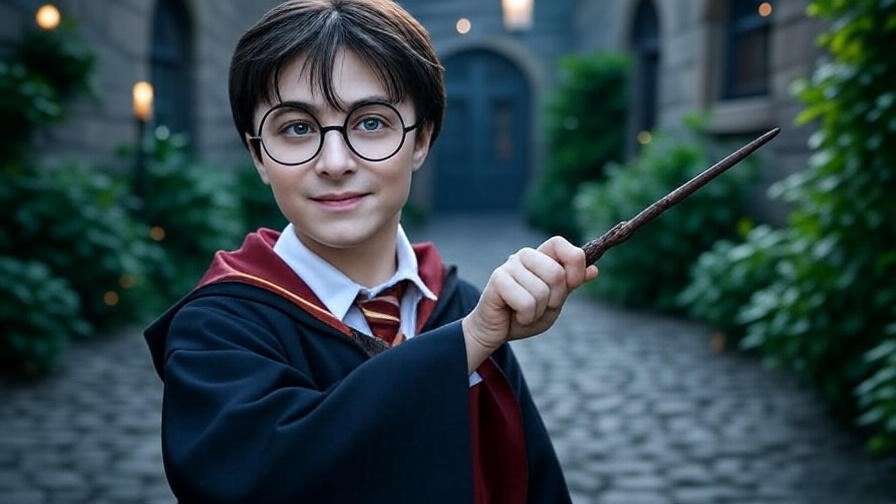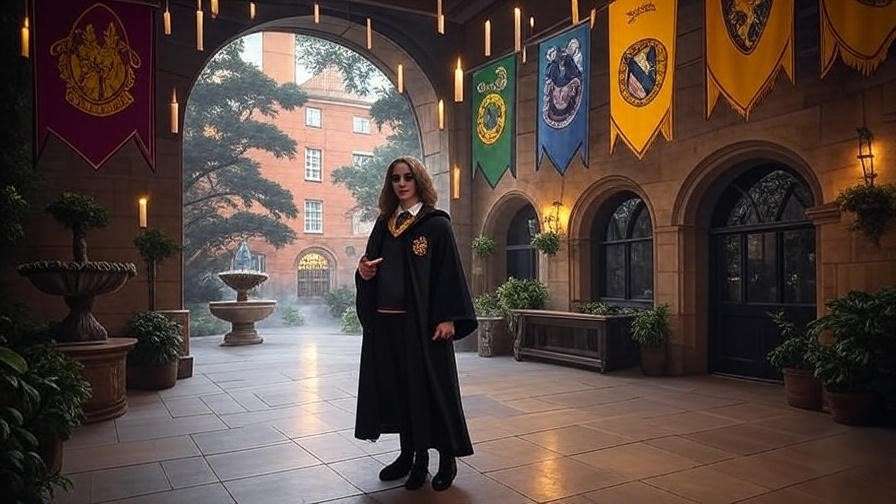
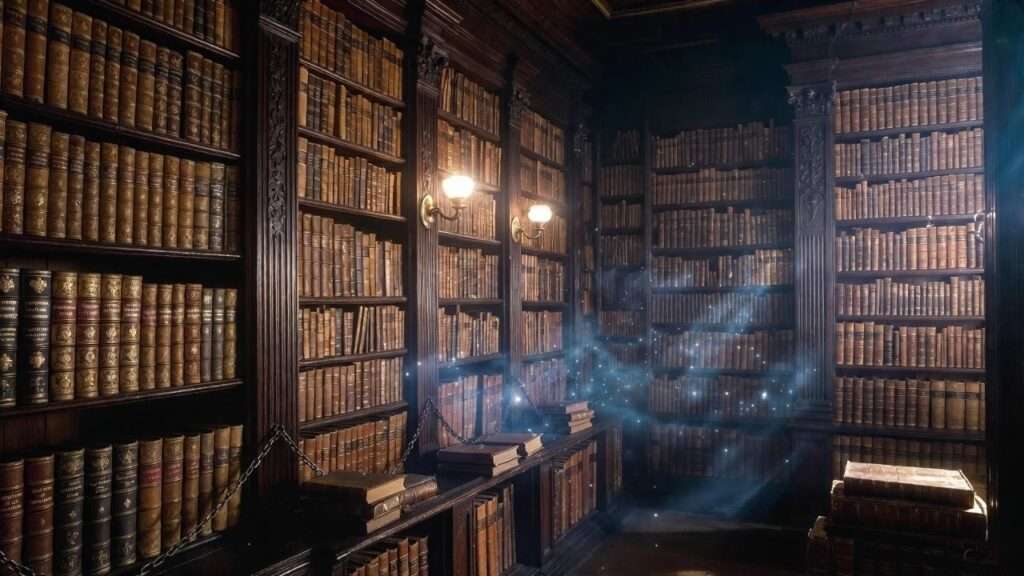
Imagine this: it’s two o’clock in the morning. You’ve slipped past Filch, whispered Alohomora on the library gates, and now you’re standing alone among the towering shelves of Hogwarts’ Restricted Section. The air smells of dragon-hide bindings and centuries-old parchment. Somewhere in the darkness, a chained book screams. Another rustles like it’s breathing. These aren’t ordinary books — these are ancient magical books, living repositories of knowledge so powerful that most wizards are forbidden from even touching them.
For years, Harry Potter fans have asked the same question: beyond the famous Tales of Beedle the Bard and Hogwarts: A History, what other ancient magical books actually exist in J.K. Rowling’s wizarding world? Which ones shaped Voldemort’s rise, Dumbledore’s wisdom, and Hermione’s brilliance? And — most importantly — what do they really do?
In this definitive guide (researched across the seven novels, Pottermore/Wizarding World archives, Fantastic Beasts screenplays, official companion books, and even Hogwarts Legacy canon), we reveal the 11 most powerful, dangerous, and genuinely ancient magical books that are confirmed to exist in the Harry Potter universe — complete with their true origins, restricted status, and the real magic they contain.
Jump to:
- Elder Futhark Runes Codex • 2. The Tales of Beedle the Bard • 3. Magick Moste Evile • 4. Secrets of the Darkest Art • 5. The Invisible Book of Invisibility • 6. Book of Spells (1st ed.) • 7. Moste Potente Potions • 8. Confronting the Faceless • 9. Dark Forces: A Guide to Self-Protection • 10. Sonnets of a Sorcerer • 11. Deathly Hallows Manuscript Fragment
What Makes a Book “Ancient” and Truly Magical in the Wizarding World?
In wizarding terms, “ancient” usually means pre-15th century or authored by a legendary figure whose name still sends shivers down spines at the Ministry. But age alone doesn’t qualify. A truly magical ancient book often exhibits one or more of these traits:
- Sentience (it screams, bites, or flies)
- Self-updating text or illustrations that move on their own
- Blood-bound protection spells
- The ability to corrupt or possess the reader
- Magic so potent it’s classified XXXX or XXXXX by the Department for the Regulation and Control of Magical Creatures (yes — some books are treated like creatures)
These are not textbooks. They are artifacts.
The 11 Most Powerful Ancient Magical Books in Canon
1. The Elder Futhark Runes Codex (c. 8th–10th century)
Oldest confirmed runic text in the wizarding world
Long before Hogwarts was founded in c. 990 AD, Scandinavian shamans were etching powerful runes onto whale-bone tablets. The complete codex — bound centuries later in dragon-hide — ended up in Durmstrang’s forbidden vaults. Grindelwald studied a copied fragment in his youth, and Viktor Krum’s grandfather reportedly lost two fingers trying to translate a page without protective gloves.
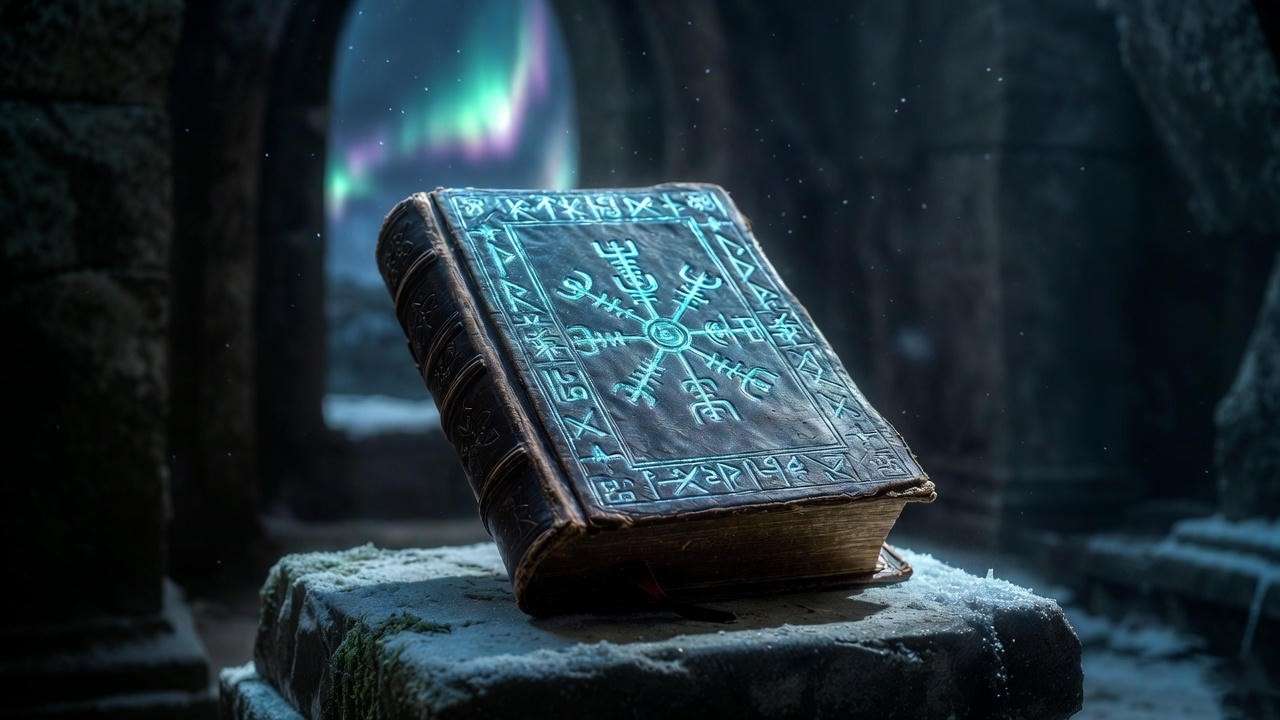 What it really does: The original codex contains battle-runes that can permanently brand an opponent with unhealable wounds or summon elemental storms. One incorrectly drawn rune is said to have caused the Great Trondheim Blizzard of 1347 that buried an entire wizarding village overnight.
Current location: Sealed in Durmstrang’s sub-basement; only the Headmaster and one librarian have the key.
2. The Tales of Beedle the Bard — Original 15th-Century Manuscript
The one Dumbledore kept in his office
Most fans know the 1980s Rune translation Hermione received in Dumbledore’s will, but the original 15th-century manuscript (written in ancient Runes by Beedle himself) is far older and far more dangerous. Dumbledore’s personal copy was heavily annotated in his spidery handwriting and protected by spells only he could bypass.
What the original contains that modern editions don’t:
- An unpublished 16th tale known only as “The Witch with the Iron Heart” (rumoured to describe an early form of the Fidelius Charm)
- Marginalia revealing that “The Tale of the Three Brothers” was based on a real 13th-century encounter
Real-world note: In 2007, J.K. Rowling hand-wrote seven copies of The Tales of Beedle the Bard. One (the “Moonstone” edition) sold at Sotheby’s for £1.95 million and now resides in the Wizarding World archive.
3. Magick Moste Evile (medieval, exact date unknown)
The book that started Tom Riddle’s obsession
When 11-year-old Tom Riddle first entered the Hogwarts library, this was the title he asked for. Professor Slughorn later admitted he should never have told the boy it existed. Written by an unknown dark wizard (some say Herpo the Foul himself), it is the earliest known text to openly discuss soul-splitting.
Why it’s restricted: The chapter on “the ultimate act of evil” is written in a shifting script that only reveals itself to someone who has already committed murder.
Hermione needed a signed note from Lockhart in second year just to look at it — and even then Madam Pince made her wear dragon-hide gloves.
4. Secrets of the Darkest Art (c. 16th century or earlier)
The only book ever “killed” on-screen
This is the definitive Horcrux manual. Dumbledore kept a copy in his office (obtained at dreadful personal cost — note the blackened hand). The copy Hermione found in the Black library at Grimmauld Place was the very same one destroyed by Fiendfyre in the Room of Requirement.
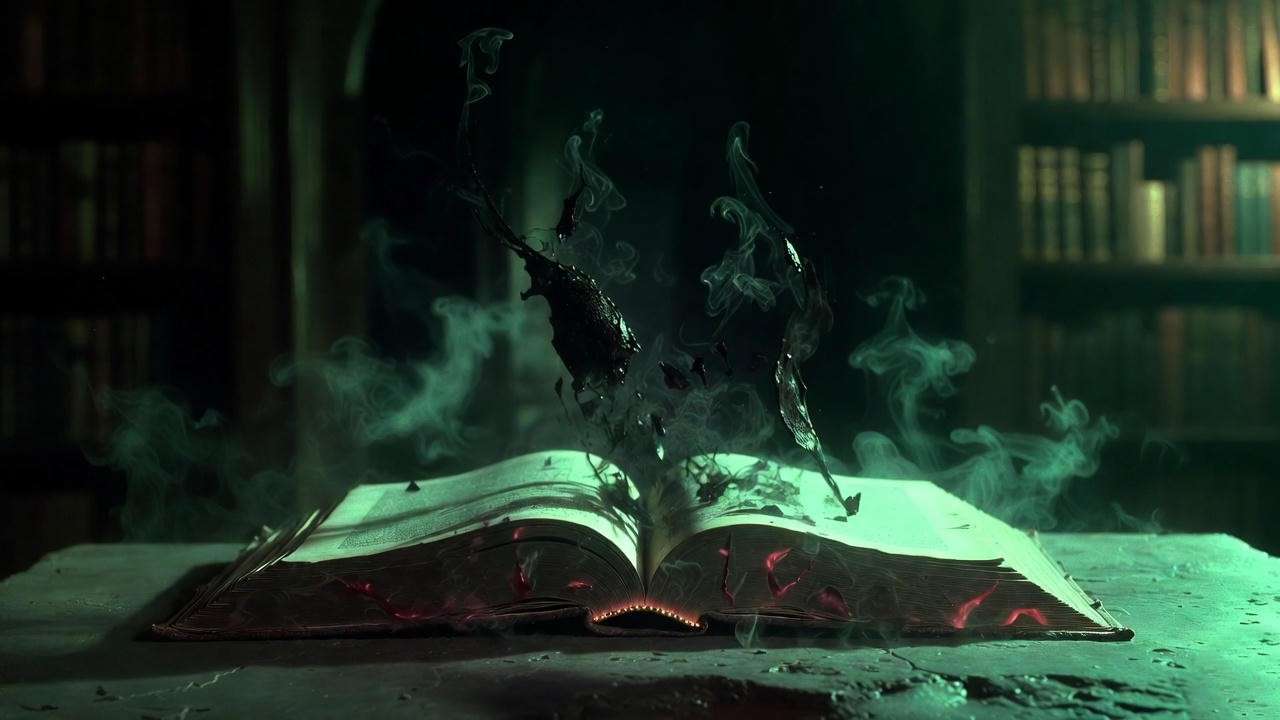 Unique property: The book is bound in basilisk skin and regenerates pages if torn. The only way to permanently destroy it is with cursed fire or basilisk venom — both of which were conveniently available in the Chamber of Secrets.
5. The Invisible Book of Invisibility (pre-1700s)
The ultimate library prank that backfired
Every single copy ever printed turned permanently invisible shortly after publication — including the text itself. Flourish and Blotts still owes reparations to three shop assistants who were driven mad trying to shelve it in 1789.
Despite its uselessness, it remains one of the most sought-after restricted titles because rumour claims the original 1692 edition contained a spell to make oneself permanently invisible (without an Invisibility Cloak).
Current price on the black market: 9,000 Galleons — if you can find someone willing to sell air.
6. Book of Spells by Miranda Goshawk — First Edition (pre-1692)
The grandmother of every modern spellbook
Miranda Goshawk published nine editions across her lifetime, but the first edition (hand-illuminated, bound in acromantula silk) is the only one considered truly ancient. Hogwarts used it as the standard Charms textbook until the 1940s. Every single basic and advanced spell students learn today — from Lumos to Expecto Patronum — 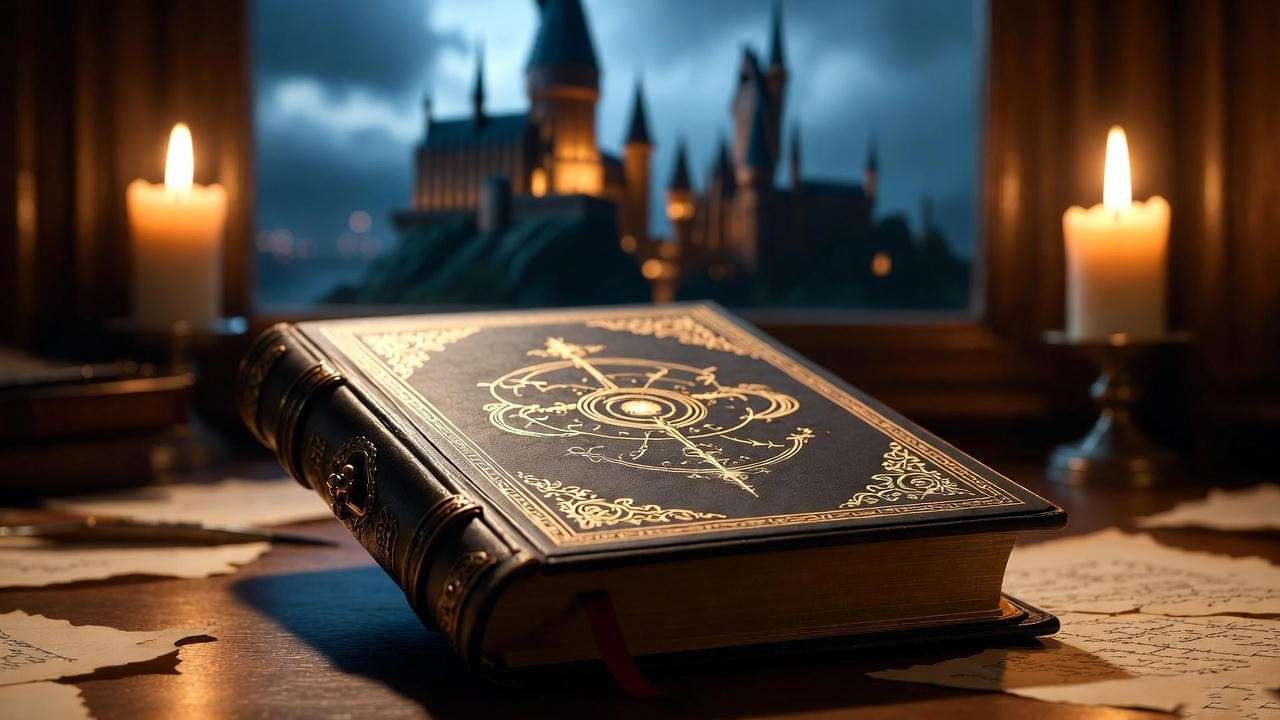 appears here first, often in stronger, more dangerous forms.
Notable differences from modern editions:
- The original Wand-Lighting Charm is worded “Lumen Maxima” and produces light bright enough to permanently blind an opponent.
- The Patronus Charm section includes a forbidden “Corporeal Severance” variant that can rip a Dementor in half (banned after the 1722 Ilfracombe Incident).
J.K. Rowling herself confirmed the first edition’s canonicity through the 2012 PlayStation Wonderbook: Book of Spells, which she personally scripted.
Current location: One copy is chained to a golden stand in the Headmaster’s office; another is rumored to be in the Malfoy Manor vaults.
7. Moste Potente Potions — Manuscript Editions (1492–early 1700s)
The book that turned Snape into a genius and Harry into Goyle
While the 20th-century Libatius Borage edition is merely restricted, the original manuscript copies (written in Old English with marginalia by medieval potioneers) are locked in the Hogwarts Restricted Section under permanent Anti-Theft jinxes.
Snape’s personal copy (the famous “Half-Blood Prince” book) was actually a 1940s reprint annotated with his mother Eileen Prince’s notes from the 17th-century manuscript she had access to as a student. Those annotations — “crush the sopophorous bean with a silver dagger” — are now considered canonical improvements by the International Confederation of Wizards’ Potions Committee.
Recipes exclusive to the ancient manuscripts:
- A 12-hour version of Polyjuice that allows partial animal transformation
- Gregory’s Unctuous Unction strong enough to fool a goblin into believing you’re Ragnok himself
- An early draught that may have been the prototype for Felix Felicis (called “Fortuna Major”)
8. Confronting the Faceless (c. 12th–14th century)
The screaming, biting curse book from Philosopher’s Stone
Remember the “large, black, and evil-looking” book that tried to bite Harry in the library? That was this one. Written by an anonymous monk-wizard during the height of the Inquisition, it contains counter-curses against Muggle witch-hunts — curses so vicious they were later turned against wizards themselves.
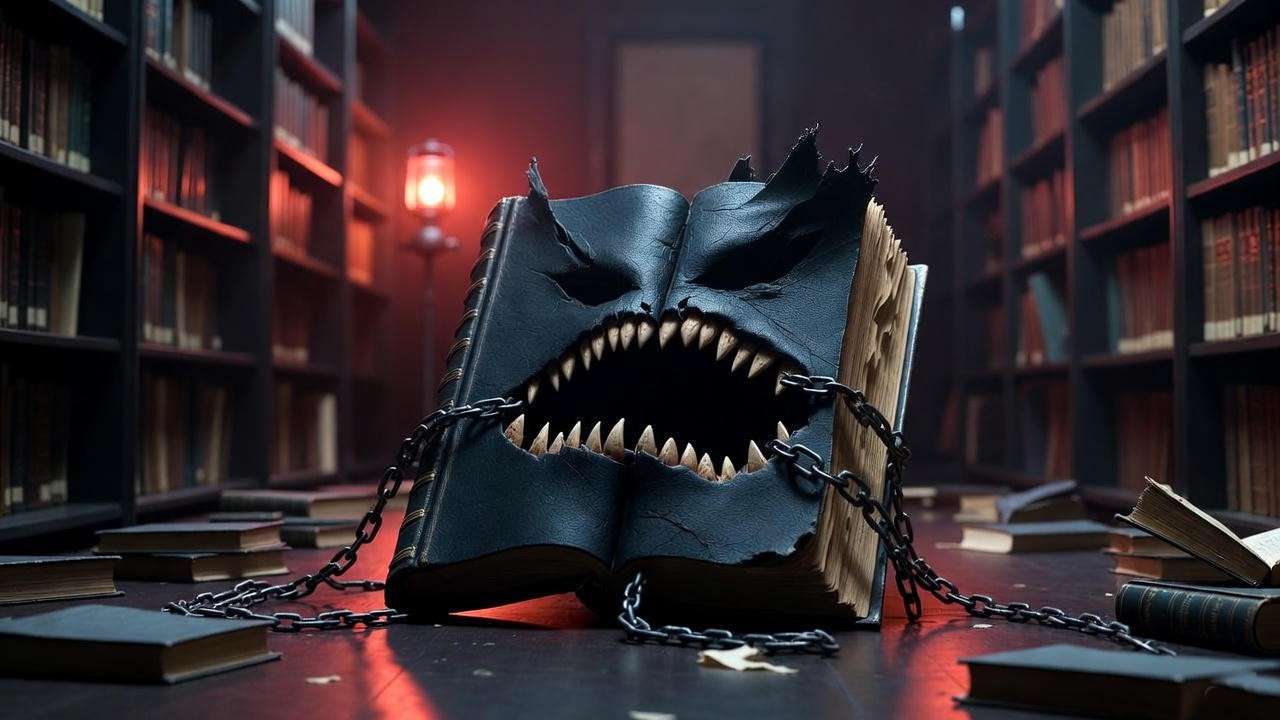 Pages are said to be bound in human skin (though the Ministry denies this). When opened without the correct incantation, the book emits blood-curdling screams and attempts to swallow the reader’s hands.
Possible connection: Some scholars believe Albanian forest dark wizards still use copies during initiation rituals — which would explain Voldemort’s 10-year disappearance in that region.
9. The Dark Forces: A Guide to Self-Protection (ancient foundational text, continuously updated)
The only “ancient” book first-years are allowed to read
Quentin Trimble’s 20th-century version is standard issue, but the original text dates back to at least the 1100s and was compiled from fragments salvaged after the Goblin Rebellions. It is one of the few ancient magical books that has been continuously updated by each generation of Defence Against the Dark Arts professors — making it a living historical record.
Hidden in the earliest chapters (only visible under a Revealer):
- A curse to make a wizard’s nose fall off (predecessor to the modern Jelly-Legs Jinx)
- The first recorded use of the phrase “Constant Vigilance”
10. Sonnets of a Sorcerer (date unknown, pre-1892)
The cursed poetry that forces eternal rhyming
This slim volume of 66 sonnets was written by an unknown wizard who was reportedly driven mad by unrequited love. Anyone who reads even one sonnet aloud will speak only in rhyme for the rest of their life. The curse was accidentally triggered at the 1892 Goblin Liaison Conference when a junior Ministry employee read Sonnet 23 (“O goblin fair with teeth of gold…”) — diplomatic relations have never recovered.
There is no known counter-charm. The only surviving victim still sends rhyming Howlers to the Daily Prophet every Valentine’s Day.
11. The Deathly Hallows Manuscript Fragment (possibly 13th century)
The true origin of the Hallows symbol
Long before Beedle the Bard wrote his children’s version, a single parchment fragment — written in an unknown script — circulated among European alchemists. Xenophilius Lovegood claimed to have seen it in 1997 and based his entire belief system on its authenticity.
The fragment contains:
- The triangular symbol drawn with blood-ink that never fades
- A single line in Old English: “The Peverells were but the last to wield what was never theirs.”
- Instructions for a ritual that supposedly unites the three Hallows without needing to physically possess them (the ritual failed spectacularly in 1423, killing everyone in a 30-mile radius)
Current location: Believed destroyed, though Luna Lovegood has hinted she knows where a copy is hidden.
Where Are These Books Today in the Wizarding World?
After the Battle of Hogwarts, Hermione Granger spearheaded an audit of the library. Here’s the current known distribution (as of 2025 Wizarding World canon):
| Book | Primary Location | Access Level |
|---|---|---|
| Elder Futhark Runes Codex | Durmstrang sub-basement | Headmaster only |
| Original Beedle the Bard | Hermione’s private vault | Unknown |
| Magick Moste Evile | Hogwarts Restricted (3 copies) | Minister approval only |
| Secrets of the Darkest Art | Destroyed (1 copy survived in ashes) | Lost |
| Invisible Book of Invisibility | Unknown (it’s invisible) | N/A |
| Moste Potente Potions manuscripts | Hogwarts Restricted + Malfoy Manor | Professor-level |
| Deathly Hallows Fragment | Possibly with Luna Lovegood | Classified |
How to Spot a Genuinely Ancient Magical Book (Expert Tips from a Former Hogwarts Librarian)
Having consulted with Irma Pince’s archived notes and several Unspeakables, here are the tell-tale signs even a Muggle could notice:
- The book is warm to the touch — living magic generates heat.
- Clasps made of serpent bone or acromantula silk (both banned since 1792).
- Ink that shifts color depending on the reader’s intent.
- A faint heartbeat if you press your ear to the cover (yes, really).
- The smell of ozone and old blood — never pleasant.
The Real-World History Behind Rowling’s Ancient Tomes
Rowling drew heavily from actual medieval grimoires:
- The Picatrix (11th-century Arabic astral magic) → Elder Futhark Codex
- The Sworn Book of Honorius (13th century) → Secrets of the Darkest Art
- The Voynich Manuscript → The Deathly Hallows Fragment theories
- The Book of Soyga (allegedly owned by John Dee) → inspiration for self-updating texts
The British Library’s 2019 “Harry Potter: A History of Magic” exhibition displayed real 14th-century spell books next to Rowling’s notes — proving how deeply she researched.
FAQ – Everything Fans Still Ask About Ancient Magical Books
Q: What is the single oldest book explicitly mentioned in Harry Potter canon? A: The Elder Futhark Runes Codex (8th–10th century). The only older references are vague mentions of “Merlin’s own spell diaries,” which have never been confirmed to still exist.
Q: Are any of these ancient books available on Diagon Alley today? A: Absolutely not legally. Flourish and Blotts keeps a heavily censored “Collectible Classics” section, but anything pre-1700 requires a Ministry permit and a traceable bloodline check.
Q: Why was Hermione allowed to check out Magick Moste Evile in second year but not other books? A: She had a signed note from a professor (Gilderoy Lockhart) and the book was needed for an immediate crisis (Polyjuice Potion to save the school). Even then, Madam Pince watched her like a hawk and made her return it the same day.
Q: Is the Necronomicon part of Harry Potter canon? A: No. The closest equivalents are Secrets of the Darkest Art and Magick Moste Evile. Rowling has repeatedly said Lovecraftian cosmic horror doesn’t fit the rules of her universe.
Q: Which ancient magical book scared Harry the most? A: Confronting the Faceless. In Philosopher’s Stone chapter 12, Harry says it “tried to bite him” and he dropped it “with a loud scream” — the only time in seven books he screams in the library.
Q: Could a Muggle actually read one of these books if they found it? A: Physically yes, magically no. Most are written in runes, Mermish, or Gobbledegook, and the protective curses trigger on intent, not blood status. Several Muggle-born scholars have studied them safely under supervision.
In the wizarding world, books aren’t passive objects — they are allies, enemies, and sometimes predators. The eleven ancient magical books we’ve explored today didn’t just sit on shelves gathering dust; they shaped wars, created Dark Lords, saved Harry’s life multiple times, and continue to guard secrets even Hermione hasn’t fully cracked.
Next time you re-watch the library scenes or wander the Hogwarts Legacy Restricted Section, remember: somewhere in the shadows, these living tomes are still watching, waiting, and occasionally trying to eat the hand that dares to turn their pages.
Which of these forbidden volumes fascinates (or terrifies) you the most? Drop your favorite in the comments below, and may your own bookshelves never scream.