Imagine finishing a thrilling rewatch of the Harry Potter film series, feeling the magic of Hogwarts and the epic battles against Voldemort, only to pick up Harry Potter and the Philosopher’s Stone (or Sorcerer’s Stone in some editions) and discover an entirely richer, more layered world. Harry’s eyes aren’t just a detail—they’re green like his mother’s, symbolizing his unbreakable connection to Lily. Entire characters like Peeves the Poltergeist wreak havoc through the castle, house-elf rights spark heated debates, and pivotal moments carry deeper emotional weight through internal thoughts and subplots. The biggest differences between Harry Potter books and films aren’t just minor tweaks; they reshape character development, themes of prejudice, grief, and moral complexity, and even the series’ ending in ways that continue to spark debates among fans two decades later.
As a longtime Potterhead who has read the books multiple times and analyzed every adaptation—from Chris Columbus’s faithful early films to David Yates’s darker later entries—this guide dives deep into the most significant changes. We’ll explore why the filmmakers made them (time constraints, visual storytelling, practical limitations), what was altered or omitted, and why it matters for the story, characters, and the wizarding world’s themes. Whether you’re a book purist frustrated by simplifications, a movie fan curious about the source material, or someone rediscovering the series, understanding these adaptations enhances both experiences and highlights why J.K. Rowling’s novels remain the definitive canon.
Why Adaptations Change Books – The Real Reasons Behind the Differences
Adapting a 700+ page novel into a 2-2.5 hour film is inherently challenging. The Harry Potter books total over 1 million words across seven volumes, while the eight films run about 1,173 minutes combined. Directors and screenwriters (primarily Steve Kloves, with input from Rowling) had to prioritize pacing, visual spectacle, and broad appeal for global audiences.
Key factors included:
- Runtime limitations — Later books like Order of the Phoenix (over 870 pages) were condensed heavily, cutting subplots to maintain momentum.
- Medium differences — Books excel at internal monologue, foreshadowing, and world-building exposition; films rely on visuals, dialogue, and action to convey emotion.
- Practical constraints — Actor ages (e.g., Alan Rickman was in his 50s playing a 30-something Snape), allergies (Daniel Radcliffe couldn’t wear green contacts), and budget (elaborate creature effects or large ensemble scenes).
- Creative vision — Alfonso Cuarón’s stylistic Prisoner of Azkaban shifted tone toward maturity, while Yates emphasized darker, more cinematic battles.
- Rowling’s involvement — She served as consultant and approved major changes but allowed flexibility for cinematic flow.
These decisions sometimes streamlined the narrative but often sacrificed depth in themes like racism (blood purity, house-elf enslavement), trauma, and redemption. Now, let’s examine the most impactful changes.
Major Character Changes and Omissions
The films’ casting was iconic, but physical and personality shifts altered perceptions.
Physical Descriptions and Casting Choices
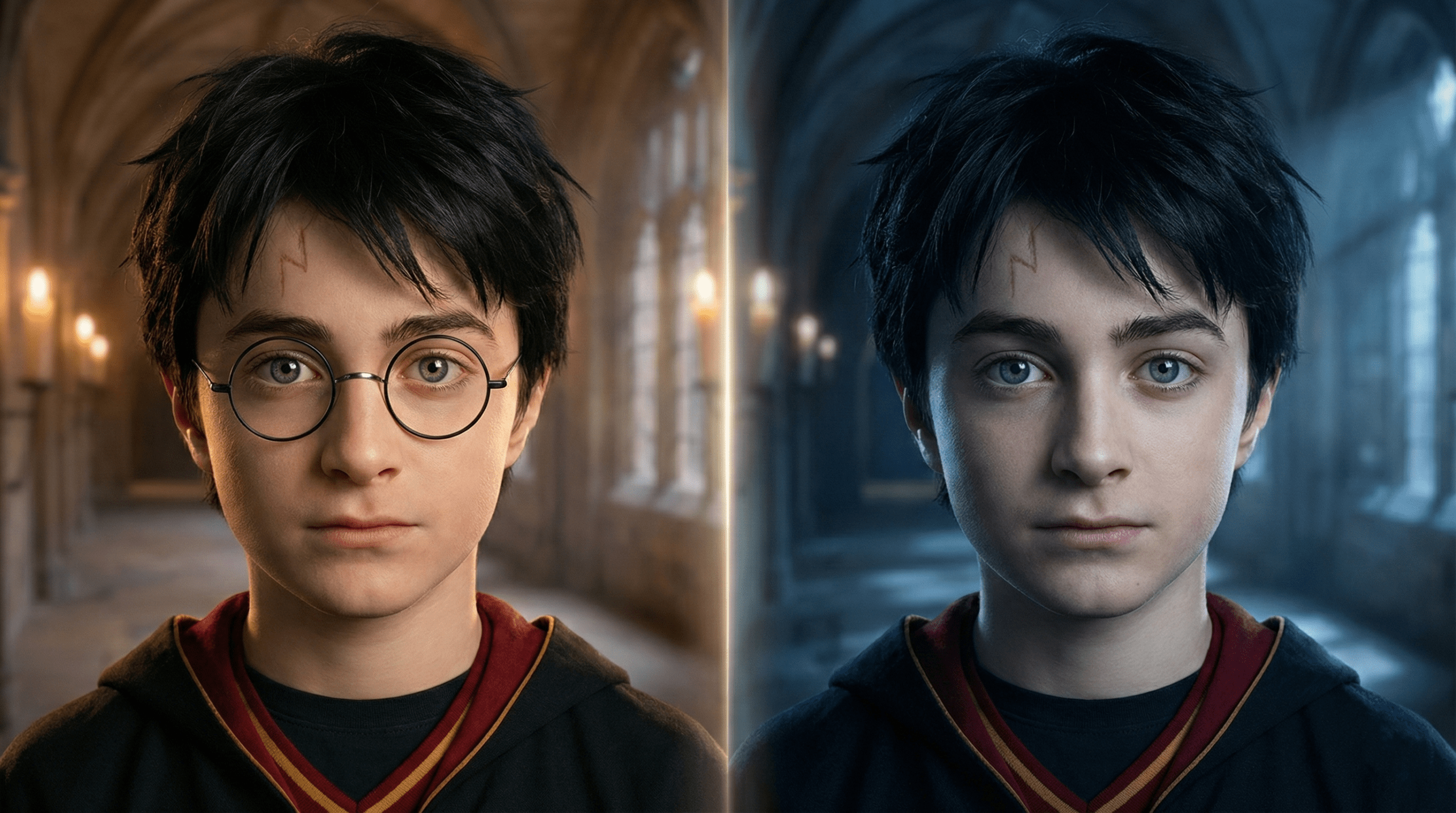
Harry’s green eyes—mirroring Lily’s and symbolizing love’s protective power—were changed because Radcliffe was allergic to colored contacts. This weakened the emotional payoff in Snape’s “Always” scene and Lily’s sacrifice.
Snape’s age was a major mismatch: Book Snape is 31 in Philosopher’s Stone, but Rickman (55 at filming) brought gravitas that many fans argue improved the character. The Marauders (James, Sirius, Lupin, Pettigrew) appeared middle-aged in flashbacks, reducing the tragedy of their young deaths.
Other details: Ron’s gangly build and freckles, Hermione’s bushy hair and large front teeth (fixed magically in the books), and Ginny’s vibrant personality were toned down.
 Key Characters Cut Entirely or Reduced
Peeves the Poltergeist, a chaotic poltergeist causing mischief throughout Hogwarts (especially in Order of the Phoenix and Deathly Hallows), was filmed but cut entirely for pacing. His absence removed comic relief and battlefield chaos.
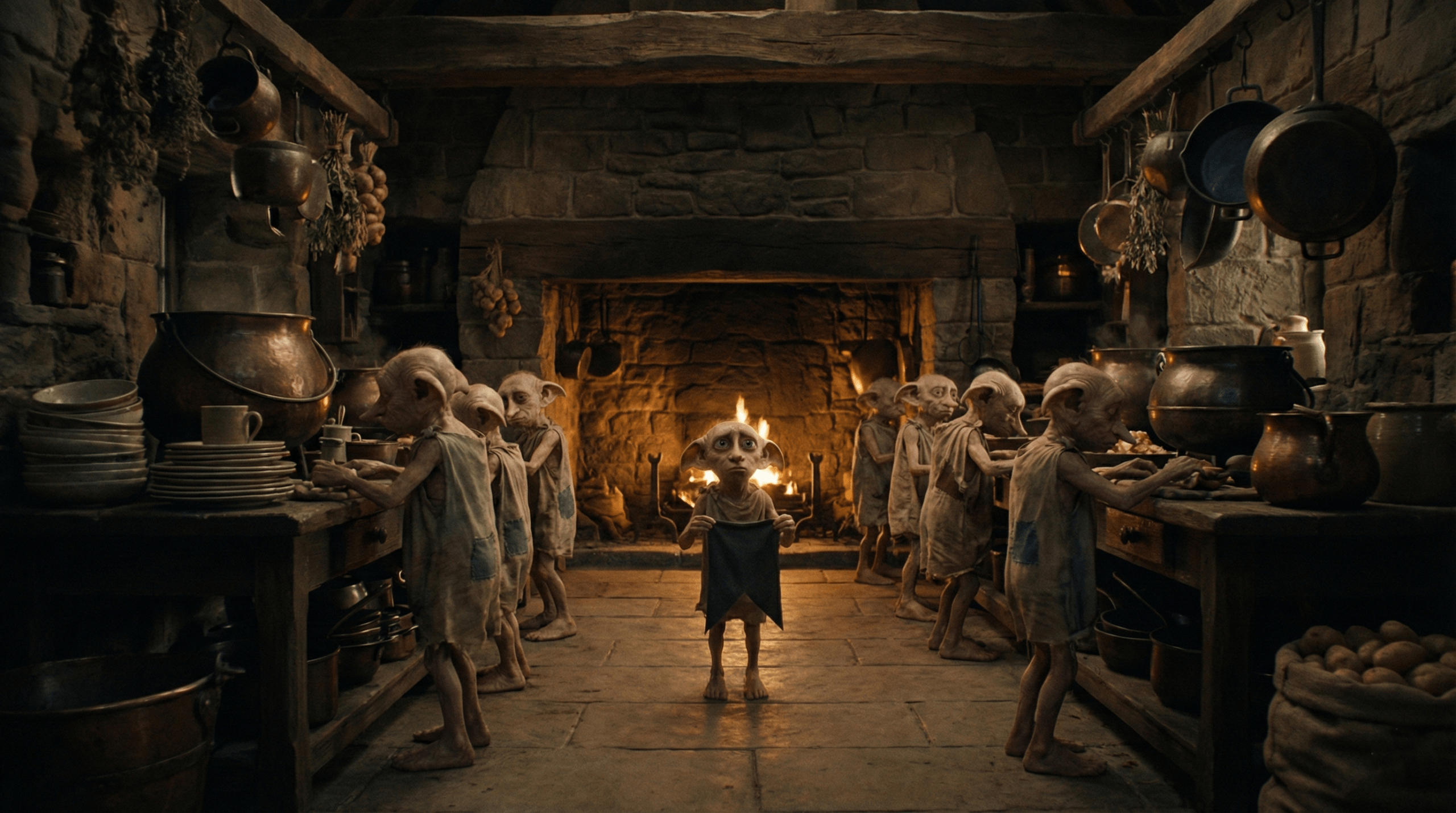
Winky the house-elf, Charlie Weasley (the dragon-taming brother), and Teddy Lupin (Remus and Tonks’s son, symbolizing hope post-war) vanished, diminishing family dynamics and house-elf lore.
S.P.E.W. (Society for the Promotion of Elfish Welfare), Hermione’s passionate activism against elf enslavement, was omitted, reducing her growth from rule-follower to advocate and diluting themes of prejudice.
 Altered Character Arcs and Relationships
Ron’s heroism often shifted to Hermione (e.g., he destroys the locket Horcrux in the books; she does in the film), affecting perceptions of his bravery and intelligence.
Ginny’s fiery, witty personality was underplayed; her Quidditch prowess and romance with Harry felt rushed.
Dumbledore appeared more aloof and less warm/funny than in the books, partly due to Richard Harris’s passing and Michael Gambon’s interpretation.
Plot and Scene Differences by Book/Film
Here we break down the most significant alterations chronologically.
Harry Potter and the Philosopher’s Stone / Sorcerer’s Stone
The most faithful adaptation, but omissions included detailed obstacles in the final challenges (e.g., fuller potion logic puzzle) and Harry’s first meeting with Draco on the train.
Why it matters: Minor changes preserved wonder, but set a precedent for streamlining.
Harry Potter and the Chamber of Secrets
The Basilisk chase became an extended action sequence (Harry climbing statues), unlike the book’s quicker fight. Dobby’s arc was shortened, and house-elf elements reduced.
Tom Riddle was calmer; Ginny’s possession details glossed over.
Harry Potter and the Prisoner of Azkaban
Praised for artistry, but cut Marauders’ full backstory depth and Hermione’s Time-Turner stress. Ron protected Harry from werewolf Lupin in the book; Hermione did in the film.
Why it matters: Shifted trio balance, emphasizing Hermione.
Harry Potter and the Goblet of Fire
Massive cuts: Quidditch World Cup riot details, full SPEW subplot, house-elf lore. Durmstrang/Beauxbatons became single-gender schools. Voldemort’s ritual backstory simplified.
The Yule Ball drama was heightened, but character moments lost.
Harry Potter and the Order of the Phoenix
The longest book suffered most: Ministry battle details, prophecy explanation, Umbridge’s full cruelty toned down. Kreacher’s role and Grawp omitted.
Why it matters: Diluted themes of government corruption and rebellion.
Harry Potter and the Half-Blood Prince
Slughorn’s memories altered; Dumbledore/Draco tension reduced. Ginny/Harry romance simplified—no intense jealousy scene.
Harry Potter and the Deathly Hallows (Parts 1 & 2)
Godric’s Hollow visit changed. The Elder Wand’s fate: Book Harry repairs his wand, returns it to Dumbledore’s tomb (breaking its power chain); film Harry snaps it (risky, as loyalty could shift).
Voldemort’s death: Ash disintegration vs. body collapse. Battle omissions: Many deaths (Fred’s reaction), moments like house-elves’ role.
Why it matters: Altered themes of mastery, sacrifice, and closure.
 World-Building and Lore Elements Lost in Translation
One of the most frequent criticisms from book readers is how much of the wizarding world’s richness—its rules, history, culture, and societal issues—was simplified or removed to keep the films moving at a cinematic pace.
Magical Concepts Simplified or Removed
- House points and the House Cup system — In the books, points are awarded and deducted constantly, building tension and school pride. The films largely abandon this after the first movie, making house rivalries feel less organic.
- Animagi registration and training — The complex process McGonagall describes is barely touched upon, reducing the wonder of James, Sirius, and Pettigrew becoming unregistered Animagi.
- Horcrux creation details — The books explain the full horror of murder splitting the soul; the films gloss over this, making Voldemort’s immortality quest feel more like generic dark magic.
- The full mechanics of the Time-Turner — Hermione’s exhaustion and the strict Ministry rules are downplayed, turning a dangerous, regulated device into a convenient plot tool.
- Portkeys, Floo Network rules, and apparition restrictions — Many travel methods and their limitations (age restrictions, splinching risks) are simplified or ignored.
These cuts make the magic feel less structured and believable, which is part of what gives the books their immersive depth.
Themes Diluted or Softened
The Harry Potter series is celebrated for tackling heavy topics through a children’s/YA lens: prejudice, slavery, grief, corruption, propaganda, and moral grayness. The films, while emotionally powerful in places, often softened these edges:
- Racism and blood purity — The word “Mudblood” is used, but the systemic discrimination against Muggle-borns, the house-elf plight, and the pure-blood supremacy ideology receive far less screen time and emotional weight.
- House-elf enslavement — Without S.P.E.W. or Winky’s tragic arc, Hermione’s growth as an activist is lost, and the theme of complicit societies accepting injustice is weakened.
- Grief and trauma — Harry’s internal struggle with loss (especially Sirius and Dumbledore) is conveyed mostly through brooding looks rather than pages of introspection.
- Moral ambiguity — Snape’s full redemption arc relies on memories showing his childhood love for Lily and lifelong guilt; the films condense this, making his “Always” moment powerful but less earned for some viewers.
- Government corruption — The Ministry’s descent into authoritarianism under Umbridge and Scrimgeour feels rushed, reducing the books’ sharp political commentary.
These thematic losses are among the most cited reasons why many fans consider the books superior in emotional and intellectual depth.
 Changes That Actually Improved the Story (A Balanced View)
Not every change was a downgrade. The films brought strengths the books couldn’t replicate:
- Visual spectacle and pacing — The Basilisk battle in Chamber of Secrets, the dragon chase in Goblet of Fire, the Department of Mysteries fight in Order of the Phoenix, and the Battle of Hogwarts sequences are far more cinematic and thrilling than their prose counterparts.
- Emotional beats amplified through acting — Alan Rickman’s Snape delivers lines like “Always” with heartbreaking intensity that the page alone can’t match. Emma Watson, Rupert Grint, and Daniel Radcliffe grew into their roles, giving the trio genuine chemistry.
- Streamlined subplots for clarity — Cutting SPEW and some minor characters prevented the later films from feeling bloated.
- Stronger visual symbolism — The doe Patronus, the silver doe in the forest, and the destruction of the locket Horcrux are hauntingly beautiful on screen.
- Certain romantic moments — The Harry/Ginny kiss in the Room of Requirement feels earned and passionate; the Ron/Hermione kiss during the battle is a crowd-pleasing payoff.
Many casual viewers and even some dedicated fans argue that the films improved the pacing of the action-heavy later books and gave iconic performances that elevated the material.
 Why These Differences Still Matter Today
More than 15 years after the final film, the biggest differences between Harry Potter books and films continue to fuel discussions, fan fiction, essays, TikTok debates, and Reddit threads. They highlight:
- Canon consistency — The books remain the authoritative source. Details like Harry’s repaired wand, the true fate of the Elder Wand, and the full epilogue children’s names matter to purists.
- Adaptation philosophy — The films prioritized accessibility and spectacle for a massive audience; the upcoming HBO Max series (announced as a more faithful decade-long adaptation) promises to restore many omitted elements.
- Fandom identity — Being a “book person” vs. “movie person” has become a lighthearted but real divide. Understanding the changes helps bridge that gap.
- Cultural legacy — The series shaped an entire generation. Recognizing what was lost (and gained) deepens appreciation for both mediums.
If you’ve only seen the films, picking up the books will reveal a more intricate, morally complex world. If you’ve only read the books, revisiting the movies showcases breathtaking visuals and performances that still hold up.
Frequently Asked Questions
Which Harry Potter movie is most different from its book? Order of the Phoenix is widely regarded as the most condensed, losing huge chunks of the Ministry battle, prophecy explanation, Umbridge’s cruelty, and subplots involving Kreacher and Grawp.
Why didn’t they include Peeves? Director Alfonso Cuarón filmed Peeves (played by Rik Mayall), but the scenes were cut for pacing. Later directors never reintroduced him.
Will the new Harry Potter HBO series fix these differences? The upcoming series is being positioned as a more faithful, season-per-book adaptation with room for subplots, deeper character moments, and omitted lore—potentially addressing many fan complaints.
Are the books always better than the movies? Not universally. Many fans prefer the films’ pacing and visuals for repeat viewings, while the books excel in depth and complexity. It depends on what you value most.
The biggest differences between Harry Potter books and films boil down to an unavoidable truth: no adaptation can capture every page of a million-word saga without compromise. The movies sacrificed depth in character backstories, world-building rules, social themes, and certain emotional nuances to deliver a visually stunning, emotionally resonant blockbuster experience. In doing so, they introduced new generations to Hogwarts while occasionally simplifying or altering what made the books so beloved.
Yet both versions shine in their own way. The novels offer unparalleled richness, internal conflict, and thematic weight. The films provide spectacle, unforgettable performances, and moments of pure cinematic magic.
The best approach? Enjoy them together. Read the books to understand the full story—then watch the films to see that story come alive in ways words alone never could.
Which difference surprised you the most? Have you spotted any changes we missed? Drop a comment below—I’d love to hear your thoughts, Potterhead.