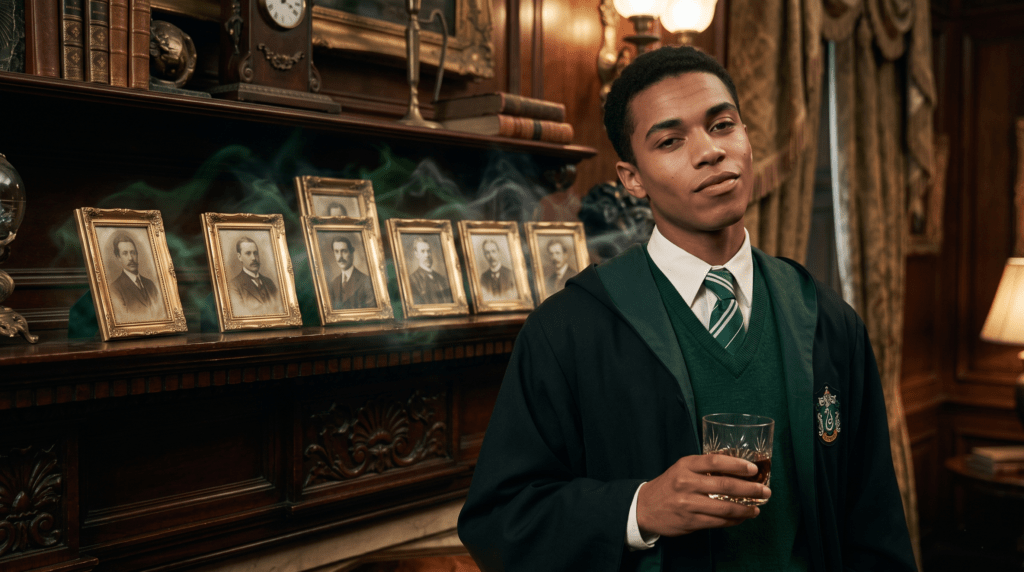
If you only ever watched the films, you might remember a sudden, jarring shift in the Slytherin dynamic during the sixth installment. Out of nowhere, standing shoulder-to-shoulder with Draco Malfoy aboard the Hogwarts Express, was a tall, sharply dressed student who radiated quiet arrogance. He wasn’t Crabbe, and he wasn’t Goyle. To the casual viewer, he was a total mystery. But for readers of the books, the arrival of Blaise Zabini from Harry Potter on the silver screen was the long-awaited introduction of one of the wizarding world’s most fascinating, morally ambiguous, and notoriously wealthy characters.
While the movies utilized him primarily as a background placeholder—and later, out of behind-the-scenes necessity, as a replacement for Vincent Crabbe—the canon lore paints a vastly different picture. Blaise Zabini is not just another Slytherin lackey. He is the heir to a dark, blood-soaked family fortune, a student who views even the Death Eaters with aristocratic disdain, and a character whose very existence challenges our understanding of Hogwarts house dynamics.
This comprehensive deep-dive explores the untold story of Blaise Zabini, unearthing the dark prestige of his family history, the critical differences between the books and the cinematic adaptations, and the profound reasons why his character matters to the broader Harry Potter universe.
Who is Blaise Zabini from Harry Potter? The Canon Basics
To truly understand Blaise, we have to look past the heavily condensed narrative of the films. In the rich tapestry of J.K. Rowling’s original texts, Blaise is a character defined by exclusivity, prejudice, and a chilling sense of self-preservation.
A Slytherin Enigma in the Background
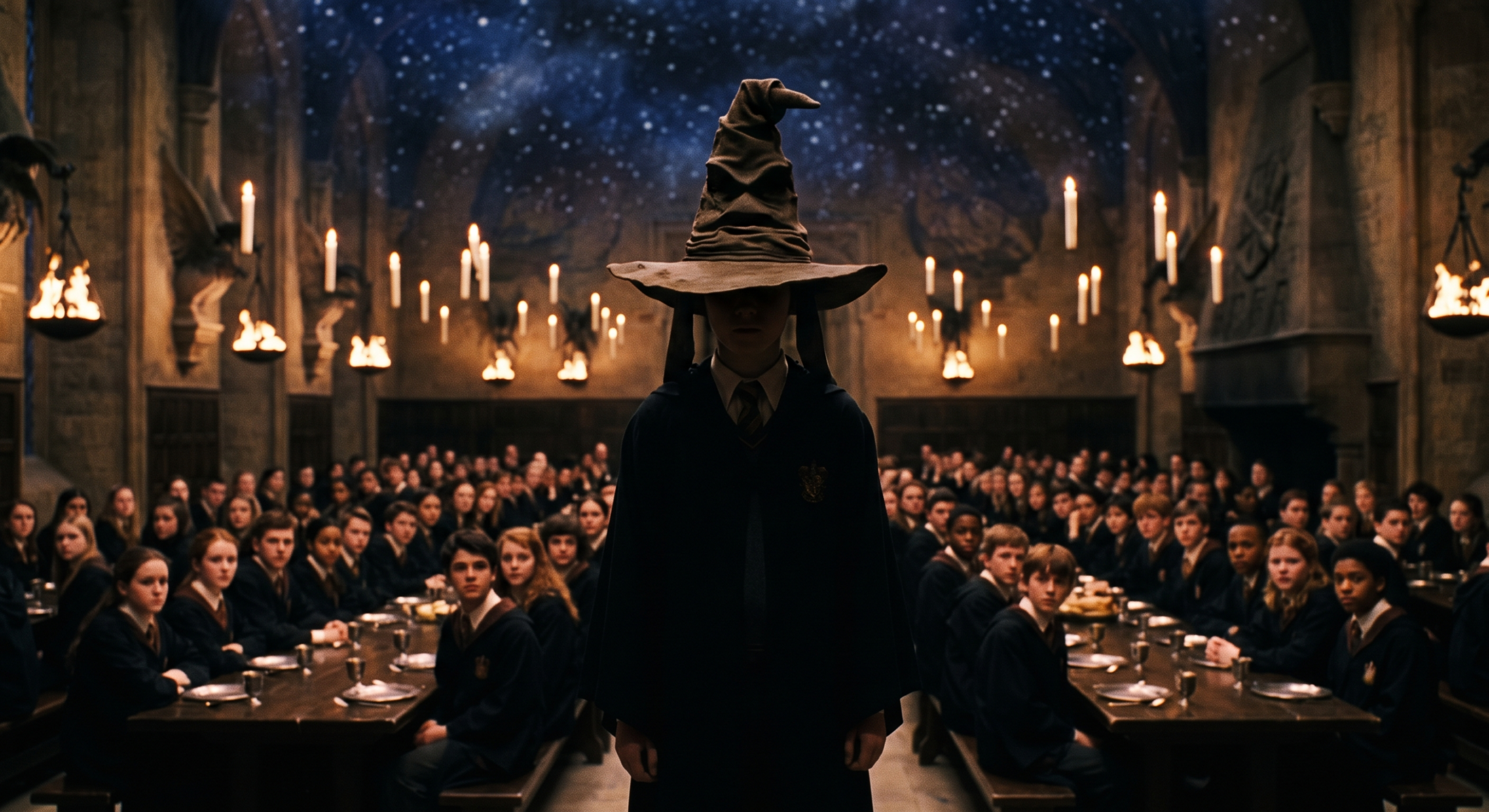
Blaise Zabini’s timeline in the wizarding world parallels the golden trio. He was sorted into Slytherin House in 1991, the exact same year as Harry Potter, Hermione Granger, Ron Weasley, and Draco Malfoy. In the first book, Harry Potter and the Sorcerer’s Stone, his name is famously the very last one called during the Sorting Ceremony. The Sorting Hat barely touches his head before declaring him a Slytherin.
Despite being present for the entirety of Harry’s time at Hogwarts, Blaise operates almost entirely in the shadows for the first five years. He is described physically in the books as a tall boy with dark skin, high cheekbones, and long, slanting eyes. His demeanor is perpetually bored and profoundly arrogant. Unlike Draco Malfoy, who loudly broadcasts his bigotry and desperation for power, Blaise’s prejudice is quiet, internalized, and rooted in an extreme sense of superiority. He doesn’t need to bully younger students to feel powerful; he already believes everyone around him is inherently beneath his notice.
The Great Pre-2005 Identity Mystery
For the deeply entrenched Harry Potter fandom, Blaise Zabini is the subject of one of the most famous pieces of early internet lore. Because he is merely mentioned by name in the first book and then practically vanishes from the narrative until the sixth, his gender remained a mystery for over a decade.
The name “Blaise” can be gender-neutral. Before the 2005 release of Harry Potter and the Half-Blood Prince, J.K. Rowling had not explicitly confirmed whether Blaise was a boy or a girl. This ambiguity led to years of wildly differing interpretations in fan communities. Early fanfiction writers frequently portrayed Blaise as a beautiful, cunning Slytherin girl, often positioning her as a rival to Pansy Parkinson or a romantic interest for Draco Malfoy. International translations of the early books even struggled with this, sometimes using feminine pronouns when referencing his sorting.
It wasn’t until Harry boarded the Hogwarts Express in his sixth year and peered into a compartment containing “a tall black boy with high cheekbones” that the fandom finally received canonical confirmation of his identity.
 The Darkest Lore: Blaise Zabini’s Mother and the Seven Husbands
If there is one aspect of Blaise’s background that perfectly captures the prestige television drama aesthetic—a story of immense wealth, high society, and suspected murder—it is the saga of the Zabini matriarch. This is the ultimate piece of lore that the movies entirely ignored, yet it defines everything about who Blaise is.
A Legacy of Mysterious Deaths and Mounds of Gold
During the inaugural meeting of the Slug Club on the Hogwarts Express, Professor Horace Slughorn interrogates his hand-picked selection of elite students. When he turns his attention to Blaise, the readers are treated to one of the darkest, most tantalizing background details in the entire franchise.
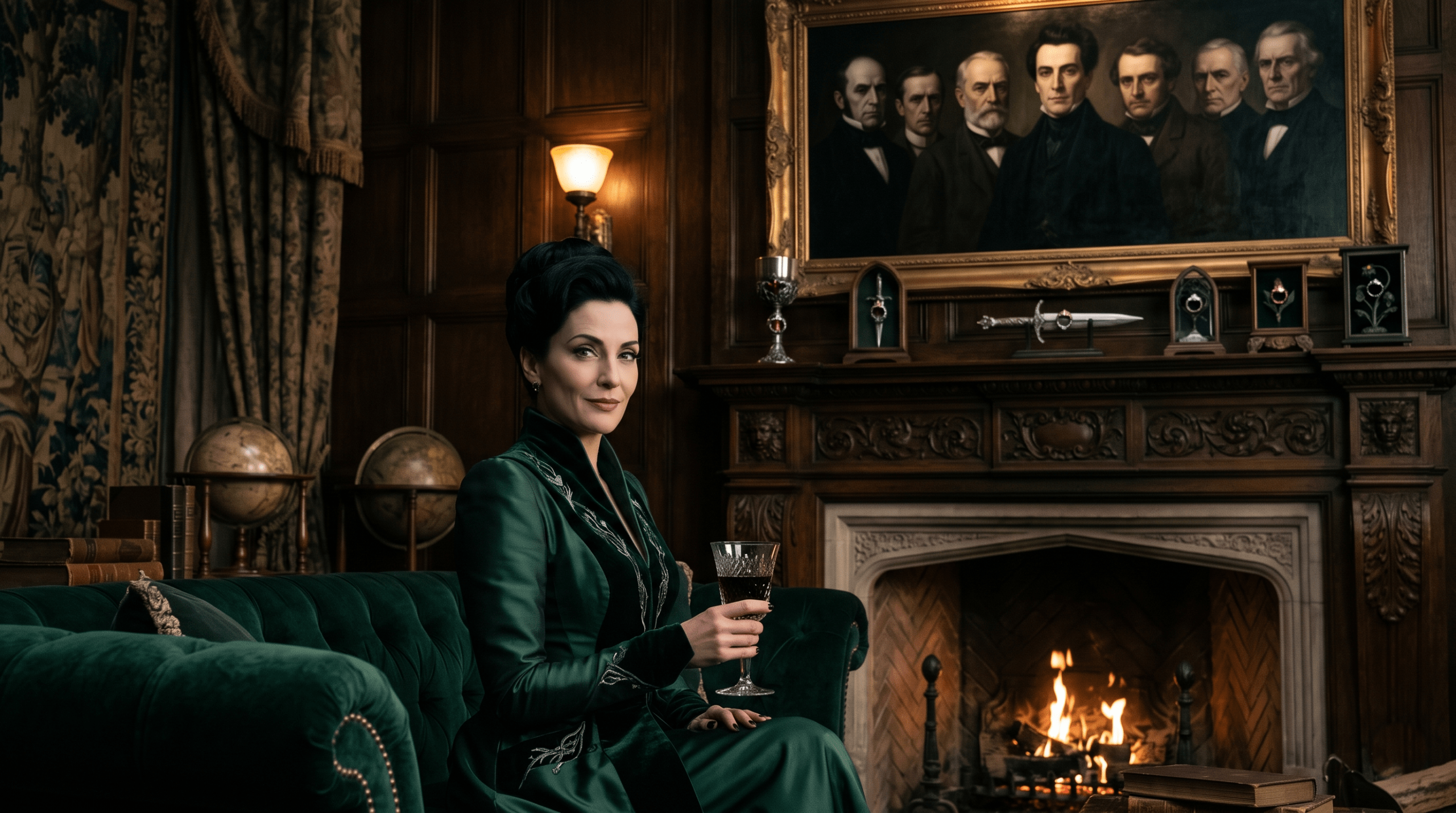
Blaise’s mother is described as a famously beautiful witch who has been widowed no fewer than seven times. Each of these seven husbands was incredibly wealthy in their own right, and every single one of them died under highly suspicious, unexplained circumstances. Following each tragic death, Mrs. Zabini inherited their vast fortunes, amassing “mounds of wizard gold” and making the Zabini family unimaginably rich.
 The Black Widow of the Wizarding World
The implications of Mrs. Zabini’s marital history add a layer of gothic thriller intrigue to the Harry Potter universe. The text heavily implies—without ever explicitly stating—that she murdered her husbands for their money.
How did a witch manage to purportedly assassinate seven different wealthy wizards without ever being sent to Azkaban? This suggests a level of cunning, magical prowess, and social manipulation that rivals the most dangerous dark wizards of the age. Was she using untraceable poisons? Dark curses disguised as natural ailments? The fact that she evaded the scrutiny of the Ministry of Magic and the Auror office speaks volumes about the corruption and influence of pureblood high society.
This staggering wealth and the dark reputation of his mother explain Blaise’s insufferable arrogance. He grew up in manors paid for with blood money, raised by a woman who treated human life as a transactional stepping stone to greater power. For Blaise, the petty schoolyard squabbles of Hogwarts—and even the ideological fanaticism of the Death Eaters—must seem entirely pedestrian compared to the lethal pragmatism of his own mother.
Blaise Zabini: Book vs. Movie Differences Explained
The translation from page to screen often requires sacrifices, and Blaise Zabini’s character arc was significantly altered. For fans seeking the true narrative intent behind the character, understanding these differences is crucial.
The Slug Club Dynamics
In the cinematic version of The Half-Blood Prince, Blaise is seen attending Horace Slughorn’s exclusive dinner parties, looking dapper and exchanging knowing glances with other elite students. However, the film strips away his dialogue and his biting wit.
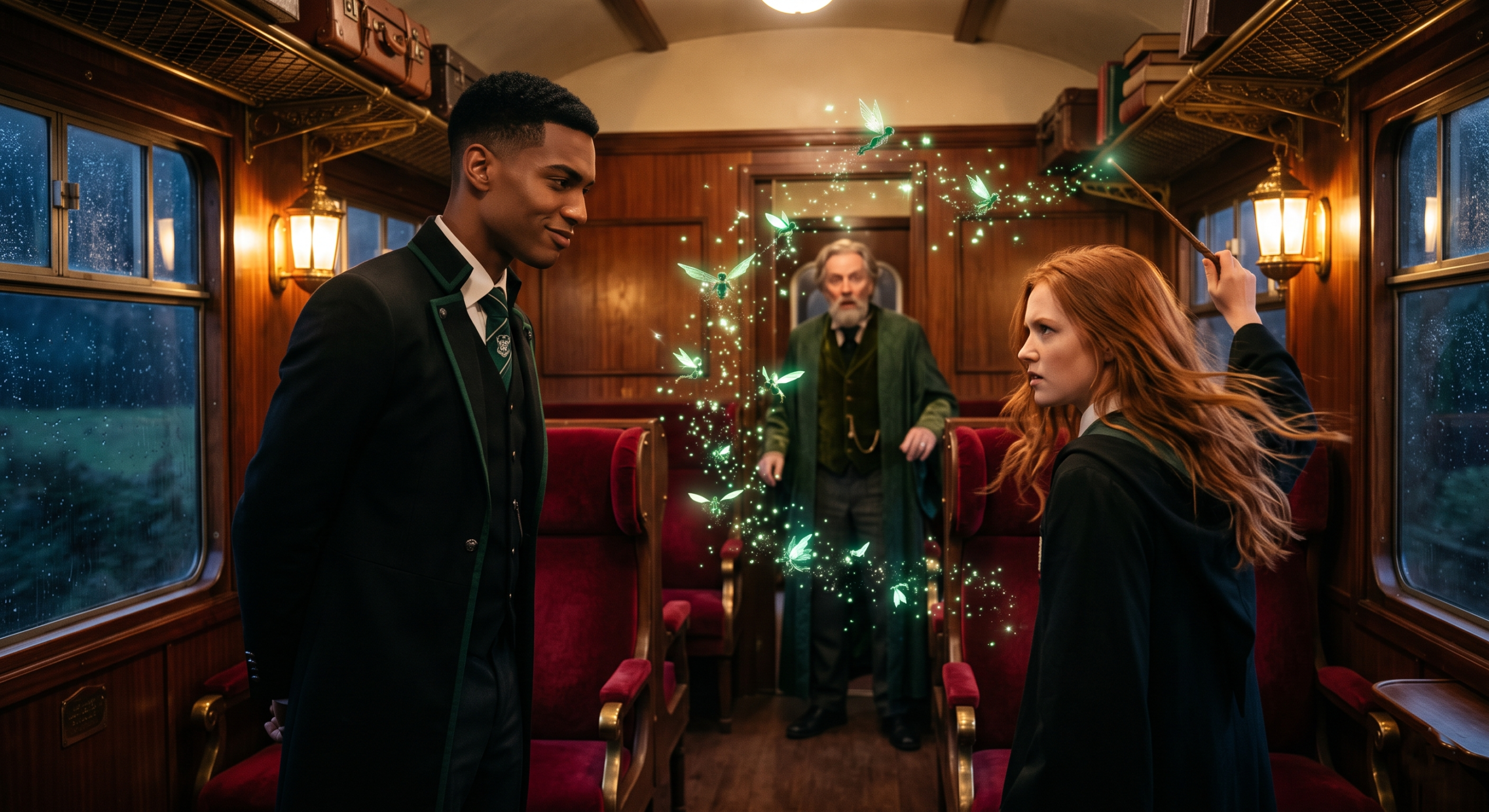
In the book, the initial Slug Club meeting on the train is a masterclass in tension. Blaise is unapologetically rude. When Slughorn asks about his mother, Blaise is smug. More importantly, when Ginny Weasley casts a flawless Bat-Bogey Hex on Zacharias Smith, Blaise openly sneers at her. This prompts Ginny to snap back, mocking his vanity. The book establishes Blaise as a vocal, active participant in Slytherin’s social hierarchy, a boy who considers even other purebloods to be unworthy of his time if they don’t meet his exacting aesthetic and financial standards.
 The Room of Requirement & The Fiendfyre Incident
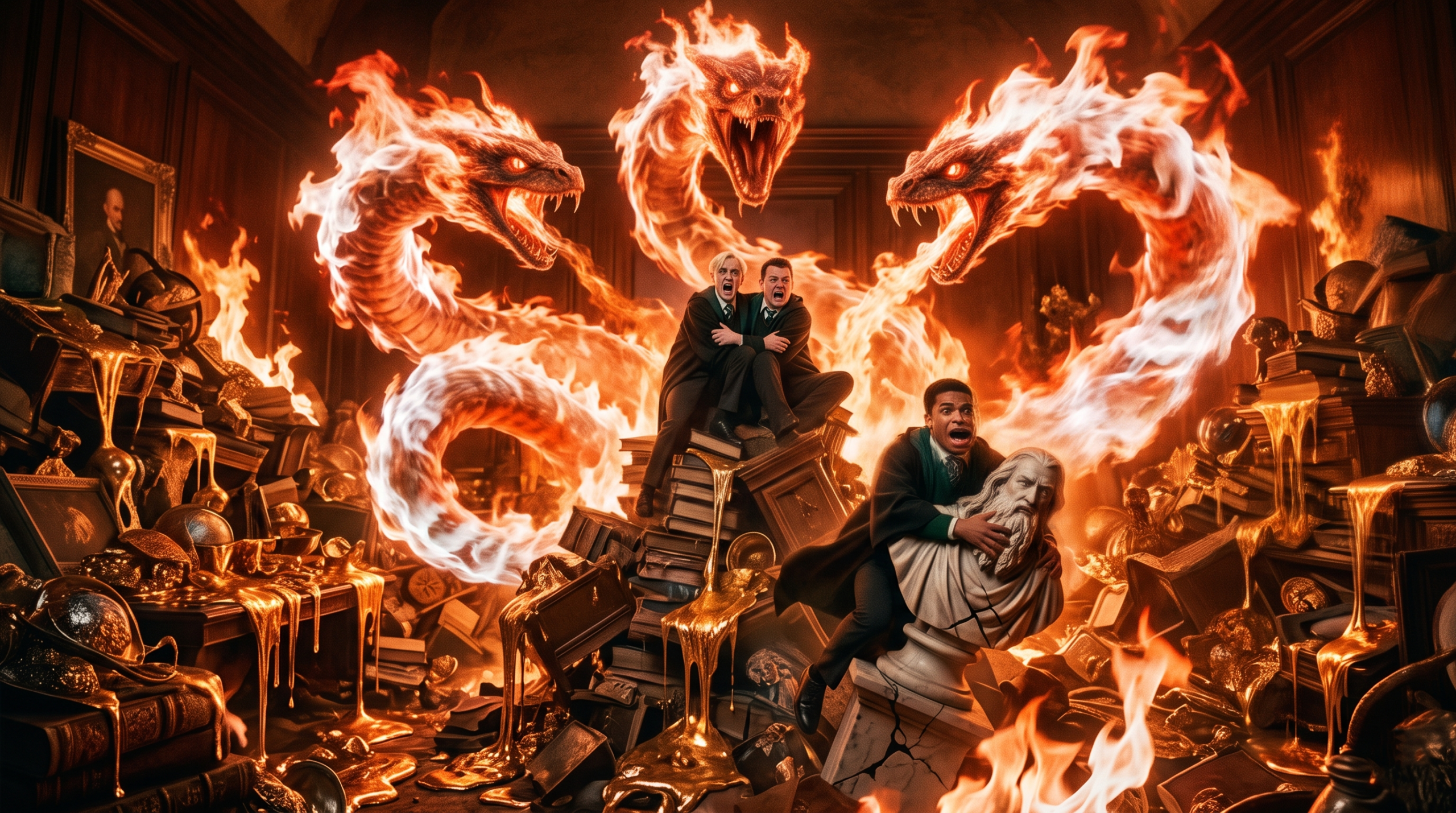
The most jarring change for movie-only fans occurs during the climax of the series in Harry Potter and the Deathly Hallows: Part 2. When Harry, Ron, and Hermione infiltrate the Room of Requirement to find Rowena Ravenclaw’s lost diadem, they are confronted by Draco Malfoy and his cronies.
In the book, Malfoy is flanked by his lifelong bodyguards, Vincent Crabbe and Gregory Goyle. It is Crabbe who rebels against Malfoy, unleashes the uncontrollable, cursed Fiendfyre, and ultimately dies in the blaze.
However, in the film adaptation, Crabbe is entirely absent. Instead, Draco is accompanied by Goyle and Blaise Zabini. It is Goyle who casts the Fiendfyre and perishes, while Malfoy and Blaise are narrowly rescued from the inferno by Harry and Ron on broomsticks.
Why the change? This was a real-world production necessity. Jamie Waylett, the actor who portrayed Vincent Crabbe, faced serious legal troubles and was subsequently dropped from the franchise before filming began on the final installments. The filmmakers needed another established Slytherin to fill the physical space beside Malfoy. Actor Louis Cordice, who had been introduced as Blaise in the sixth film, was elevated to the role. While this gave Blaise more screen time, it completely contradicted his established canon personality; the literary Blaise would never have risked his life as a mere henchman for Draco Malfoy.
 Snobbery vs. True Evil: Blaise’s Moral Alignment
This leads to the most critical distinction regarding Blaise’s character: his moral alignment. In the movies, standing alongside Draco in the Room of Requirement paints Blaise as a de facto Death Eater, a willing foot soldier for Lord Voldemort.
The canon reality is far more nuanced. Blaise Zabini was deeply prejudiced. He harbored intense blood-purist views and openly expressed disgust at the idea of associating with Muggle-borns or “blood traitors” like the Weasleys. However, he was not a Death Eater. In fact, Blaise expressed a surprising amount of disdain for Voldemort’s followers.
During the train ride in the sixth book, when Malfoy hints that he has been given a dark mission by the Dark Lord, Blaise looks profoundly unimpressed. He views the Death Eaters as crude, fanatical, and beneath his elite social standing. Blaise operates on a spectrum of self-serving snobbery rather than ideological zealotry. He doesn’t want to conquer the Muggle world; he simply wants to remain in his opulent, untroubled bubble of immense privilege.
The Hidden Meaning Behind Blaise’s Character
J.K. Rowling rarely introduced characters in the later books without a specific narrative purpose. Blaise Zabini was not just a name drawn from a hat; he was strategically deployed to expand the thematic depth of the wizarding world.
The Perfect Foil to Draco Malfoy
For five books, Draco Malfoy was the undisputed king of Slytherin House. He was the wealthiest, the most arrogant, and the most connected. Blaise’s sudden prominence shatters that illusion.
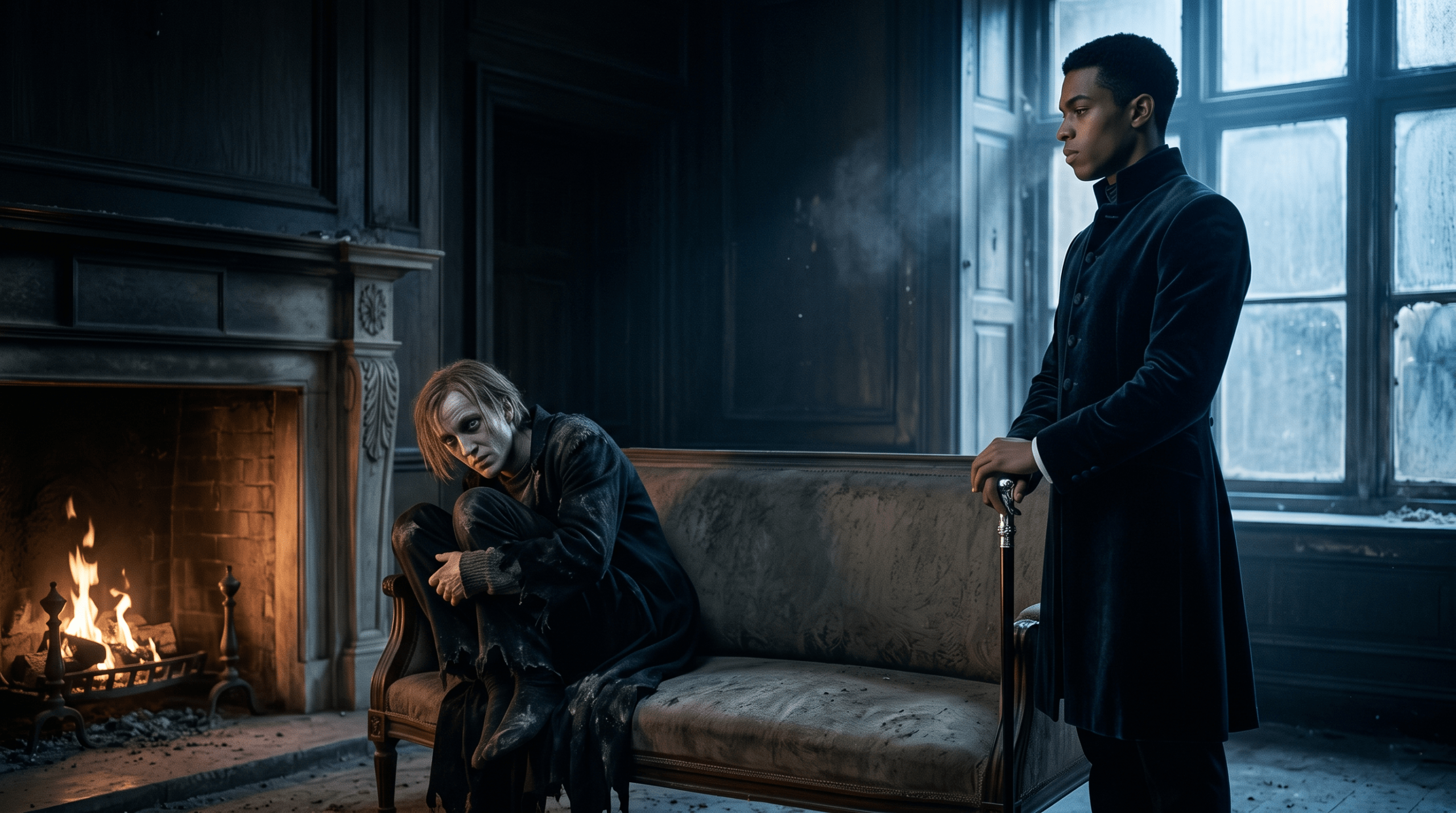
Blaise serves as the perfect narrative foil to Draco. While Draco’s family wealth and status are slowly being stripped away by Voldemort’s occupation of Malfoy Manor—reducing Draco to a terrified, abused pawn—Blaise remains entirely secure. Blaise’s wealth (via the Black Widow mother) is independent of dark politics. He looks at Draco’s unraveling mental state not with sympathy, but with detached amusement and superiority. Blaise represents what Draco used to be, highlighting just how far the Malfoy family has fallen from grace by tying their fortunes to a madman.
 Expanding the Slytherin Aesthetic
Furthermore, Blaise adds a crucial layer of aristocratic prestige to Slytherin House. Up until his introduction, Slytherin was heavily associated with brutish thugs (Marcus Flint, Crabbe, Goyle) or sniveling sycophants (Pansy Parkinson). Blaise introduces a sleek, cinematic, high-society element to the house. He represents the silent, wealthy elite of the wizarding world—the types who wear tailored robes, attend exclusive galas, and watch wars from the safety of their heavily warded, ancestral estates. He proves that not all Slytherins are dark wizards; some are just spectacularly selfish socialites.
What Happened to Blaise Zabini After the Battle of Hogwarts?
One of the most frequent search queries regarding this character is his ultimate fate. What happens to the heir of the Zabini fortune after the fall of Lord Voldemort?
Because he is a secondary character, canonical texts and subsequent interviews with the author offer no definitive answer. However, by analyzing his established behavioral patterns, we can piece together a highly probable outcome.
Blaise was absent from the Battle of Hogwarts in the books. While other Slytherins fled, joined the Death Eaters, or, in rare cases, returned to fight against Voldemort, it is almost certain that Blaise chose the path of ultimate self-preservation. Given his mother’s track record of surviving (and profiting from) catastrophic situations, the Zabini family likely retreated to an offshore estate, completely avoiding the conflict.
In the post-war era, while families like the Malfoys faced severe legal repercussions, Ministry tribunals, and social disgrace, Blaise would have emerged entirely unscathed. Having never taken the Dark Mark, he could easily slide right back into high society, maintaining his vast wealth and continuing the elite, untouchable legacy of the Zabini name.
Frequently Asked Questions (FAQs) About Blaise Zabini
To round out our deep dive, let’s address some of the most common questions fans have about this elusive Slytherin.
Was Blaise Zabini a Death Eater?
No. While he held strong pureblood supremacist views and openly despised Muggle-borns, Blaise never took the Dark Mark. He considered Voldemort’s followers to be fanatical and beneath his social standing, preferring to remain safely detached from the war.
Who did Blaise Zabini marry?
There is no canonical information regarding Blaise Zabini’s spouse. However, within the robust Harry Potter fanfiction community, he is frequently paired with other pureblood elites, most notably Daphne Greengrass or Pansy Parkinson, fitting his preference for high-status relationships.
Why did Blaise replace Crabbe in the Deathly Hallows movie?
Actor Jamie Waylett, who played Vincent Crabbe, was arrested and convicted of criminal charges prior to the filming of the final two movies. Warner Bros. removed him from the franchise, and the filmmakers opted to elevate Louis Cordice (Blaise Zabini) to fill the gap in Draco Malfoy’s trio during the Room of Requirement scene.
Who plays Blaise Zabini in the Harry Potter movies?
British actor Louis Cordice portrays Blaise Zabini in Harry Potter and the Half-Blood Prince, Harry Potter and the Deathly Hallows: Part 1, and Part 2.
What is Blaise Zabini’s Patronus?
Like most characters who do not possess a pure, joyful memory or the necessity to fight Dementors, Blaise’s Patronus is never revealed in canon. Given his aloof and solitary nature, fans often theorize his Patronus would be something elegant and predatory, like a black panther or a striking serpent.
The character of Blaise Zabini from Harry Potter is the ultimate testament to the hidden depths of J.K. Rowling’s world-building. He is far more than a background extra in a movie or a convenient replacement for a fired actor. Through Blaise, we are given a window into the darkest, most prestigious corners of pureblood society—a world of inherited blood money, suspicious widows, and a breed of Slytherin cunning that relies on absolute neutrality rather than dark magic.
While the movies stripped away his dialogue and his autonomy, the canonical Blaise Zabini remains one of the franchise’s most compelling anti-heroes: a boy who walked through a magical war completely untouched, wrapped in expensive robes and paid for by the tragic accidents of seven very unlucky men.