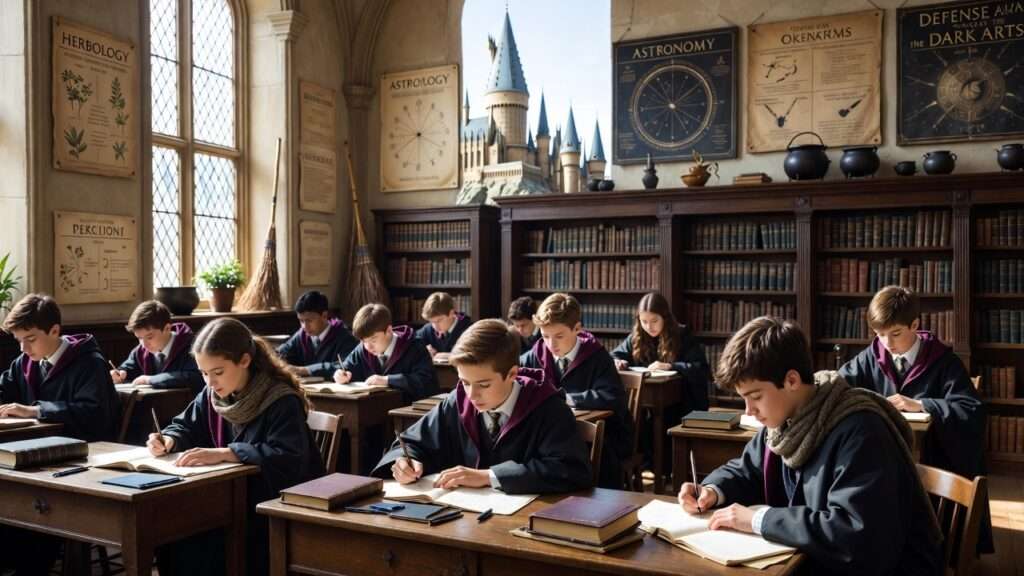
Imagine receiving your Hogwarts letter at age 11, stepping onto the Hogwarts Express, and finally arriving at the castle—only to wonder: what magical classes await? The class of Hogwarts encompasses a rich, multifaceted curriculum that turns ordinary children into skilled witches and wizards. From core subjects like Transfiguration and Charms to thrilling electives such as Care of Magical Creatures, the Hogwarts timetable shapes every student’s journey through the wizarding world.
This definitive guide explores every subject taught at Hogwarts School of Witchcraft and Wizardry, drawing directly from J.K. Rowling’s books, official Wizarding World insights, and canonical details. Whether you’re a longtime fan revisiting the series, a newcomer curious about the magical education system, or someone debating which Hogwarts classes you’d excel in, this comprehensive resource covers the full list of classes, their progression by year, professors, key lessons, and real-world usefulness. No other article compiles this level of depth—from OWL and NEWT requirements to expert rankings and fan-favorite moments.
The Core Curriculum – The Seven Mandatory Subjects Every Student Takes
Every Hogwarts student begins with seven compulsory subjects from Year 1 through at least Year 5 (up to Ordinary Wizarding Level exams, or OWLs). These foundational classes build essential magical skills and are required for a well-rounded wizarding education.
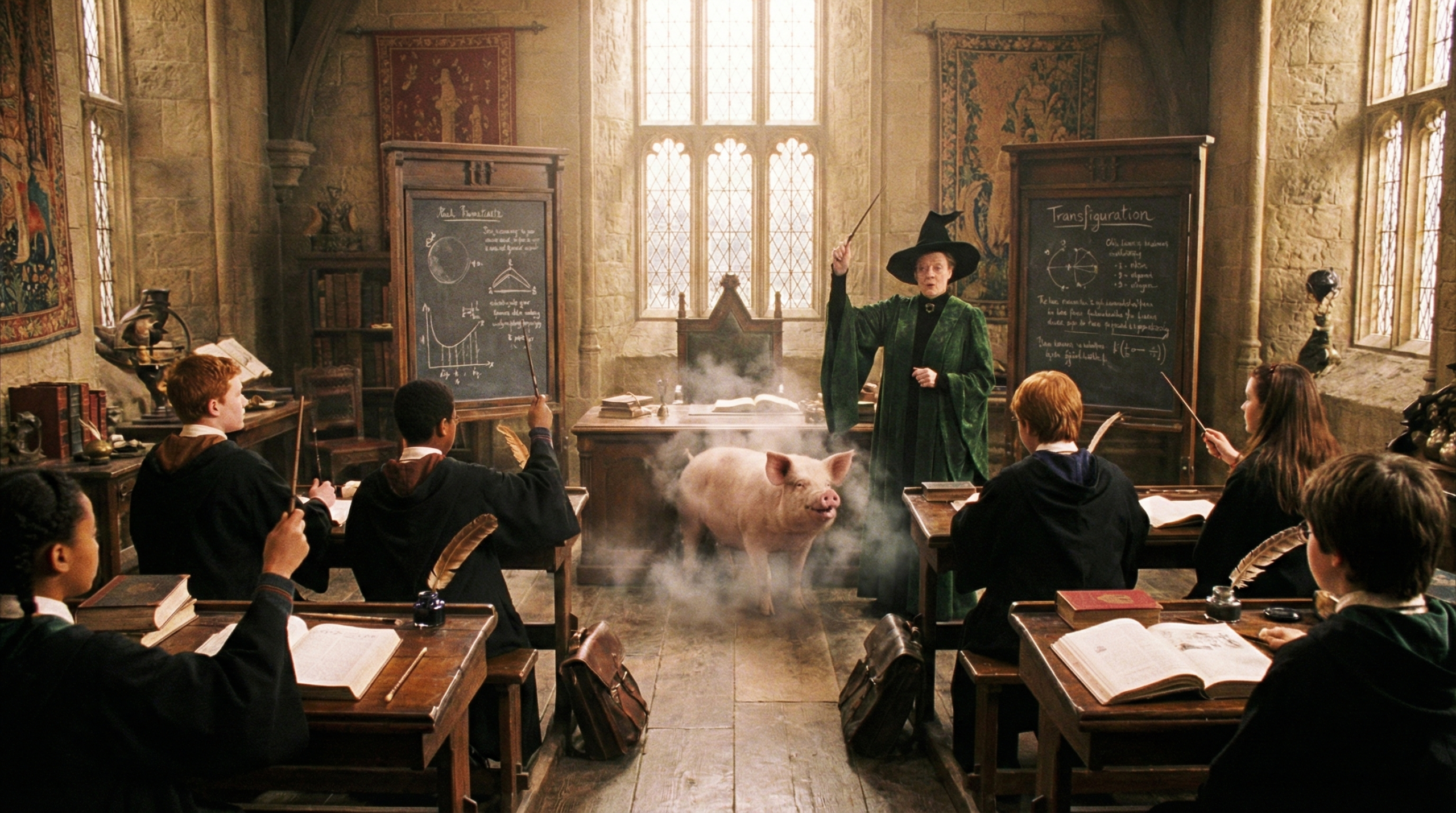
Transfiguration Taught primarily by the strict yet brilliant Professor Minerva McGonagall, Transfiguration involves changing the form and appearance of objects, animals, and—even at advanced levels—humans. First-years start with simple transformations, like turning a match into a needle, while NEWT-level students tackle complex human transfiguration. Key moments include McGonagall’s dramatic cat-to-human reveal in Harry Potter and the Philosopher’s Stone and the high-stakes OWL practicals. This subject demands precision and logic, making it one of the most challenging but rewarding core classes—essential for careers requiring advanced spellwork.
 Charms Led by the cheerful, part-goblin Professor Filius Flitwick, Charms focuses on imbuing objects with temporary properties or actions through spells. Students learn classics like Wingardium Leviosa (levitation) in Year 1, progressing to Cheering Charms, Summoning Charms, and protective enchantments. Often praised as the most practical subject, Charms powers everyday wizarding life—from lighting fires to unlocking doors. Flitwick’s enthusiastic teaching style makes lessons lively and noisy, and many fans consider it the foundation of versatile magic.
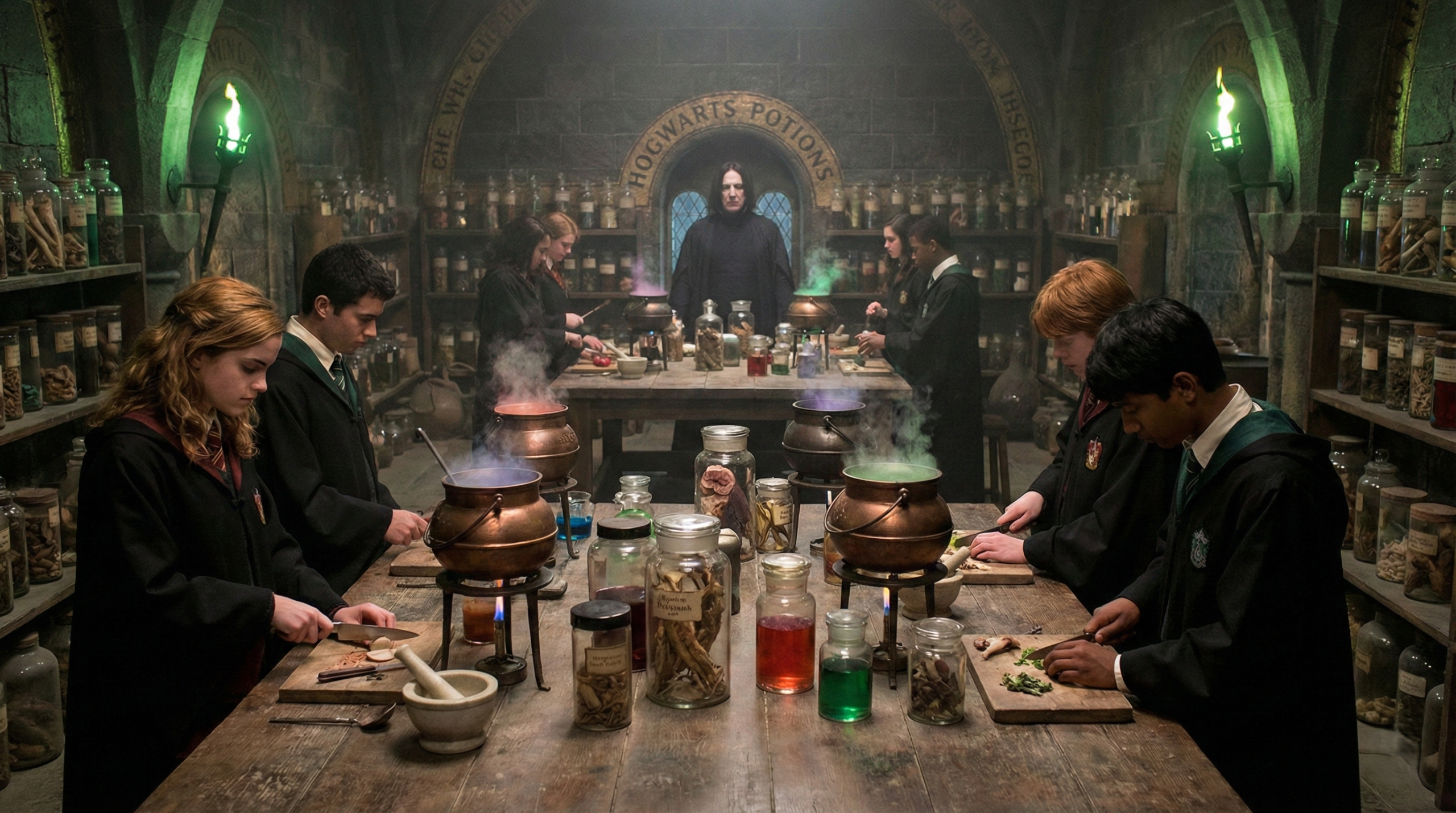
 Potions The domain of the formidable Professor Severus Snape (until Year 6, when Horace Slughorn returns), Potions teaches the art and science of brewing magical mixtures. Early lessons cover simple remedies, while advanced years include complex brews like Polyjuice Potion and the Draught of Living Death. Snape’s biased grading and emphasis on exact measurements make it notoriously difficult—only a handful of students per year achieve top OWL marks. Despite the challenges, Potions offers immense practical value for healing, enhancement, and even combat.
 Defence Against the Dark Arts This ever-changing class, cursed by Voldemort so no teacher lasts more than a year, covers counter-curses, protective spells, and combating dark creatures. Iconic instructors include Remus Lupin (teaching boggarts and werewolves), Alastor “Mad-Eye” Moody (constant vigilance!), and Dolores Umbridge (theory-only under Ministry interference). Despite the instability, it’s one of the most exciting and useful subjects—vital for real-world threats, as seen in battles against Death Eaters.
Herbology Professor Pomona Sprout oversees this greenhouse-based subject, teaching the care, properties, and uses of magical plants and fungi. Students handle dangerous species like Mandrakes (whose cries can kill) and Devil’s Snare, using tools like dragon-hide gloves and earmuffs. Herbology pairs closely with Potions (many ingredients come from plants) and proves crucial for healing and defense—Neville Longbottom later excels as a professor in this field.
History of Magic Taught monotonously by the ghostly Professor Cuthbert Binns, this class covers wizarding history: Goblin Rebellions, witch hunts, and the International Statute of Wizarding Secrecy. Despite Binns’ droning delivery making it the most boring subject (students often fall asleep), it provides essential lore for understanding the wizarding world’s conflicts and culture.
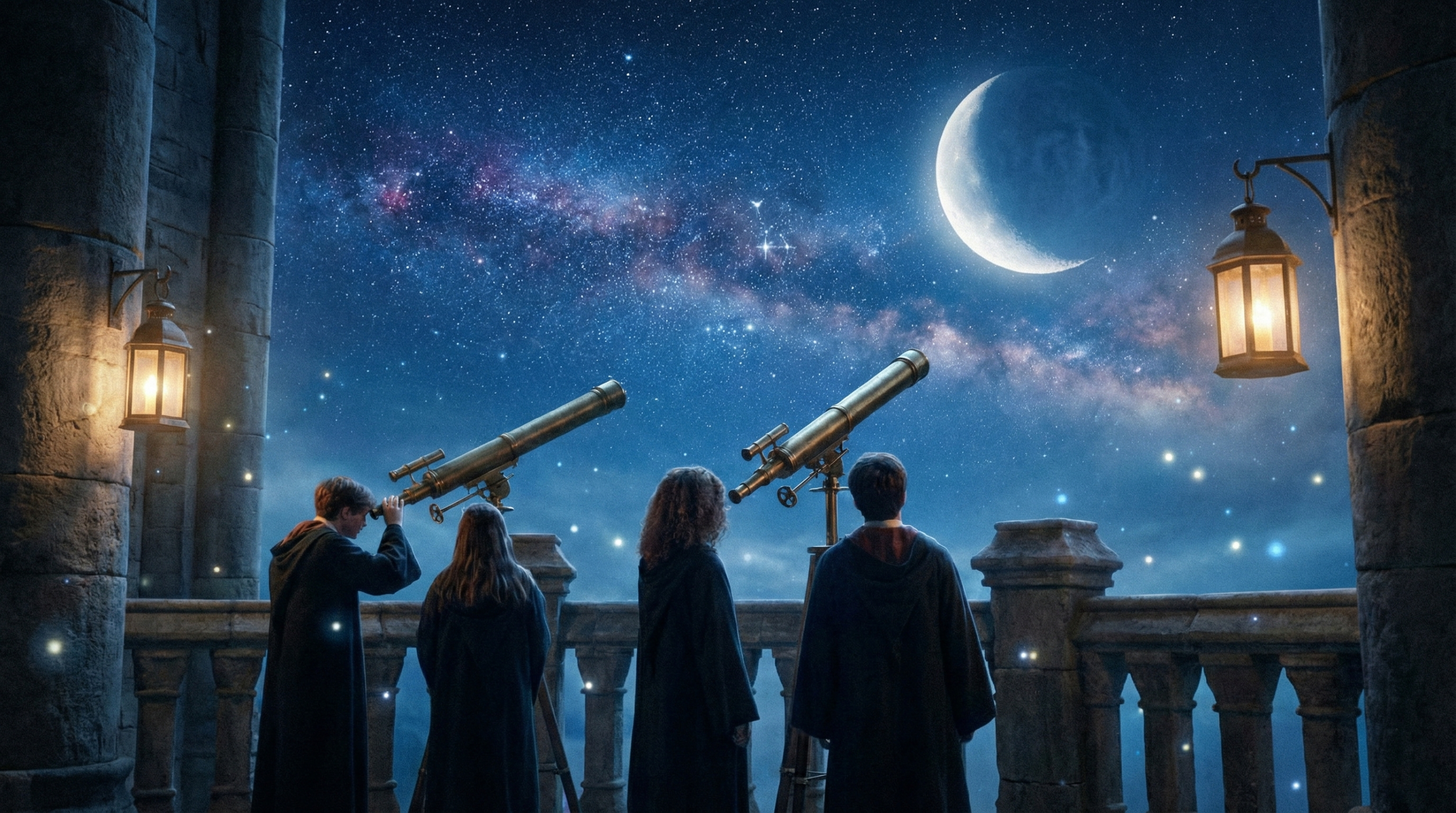
Astronomy Late-night lessons in the Astronomy Tower, under Professor Aurora Sinistra, involve charting stars, planets, and constellations using telescopes. Students study lunar phases and celestial events, with practical observations under the night sky. While less action-packed, it offers precision-based knowledge with parallels to Muggle astronomy.
 Flying Lessons (First-Year Special) Compulsory only in Year 1, Madam Rolanda Hooch teaches broomstick basics: mounting, hovering, and simple maneuvers. Iconic moments include Harry’s natural talent during tryouts and Neville’s unfortunate fall. This foundational skill opens doors to Quidditch and general broom travel.
Elective Subjects – Choices That Shape Your Hogwarts Path (From Year 3)
At the end of Year 2, students select at least two electives, allowing specialization.
Arithmancy Hermione’s favorite, taught by Professor Septima Vector—this magical numerology involves number properties and predictions. It requires heavy memorization but appeals to logical minds.
Study of Ancient Runes Professor Bathsheda Babbling leads translation of ancient magical scripts—useful for deciphering old texts, artifacts, and spells.
Divination The dramatic Professor Sybill Trelawney (later joined by centaur Firenze) explores tea leaves, crystal balls, and palmistry. Often mocked for vagueness, it occasionally yields true prophecies.
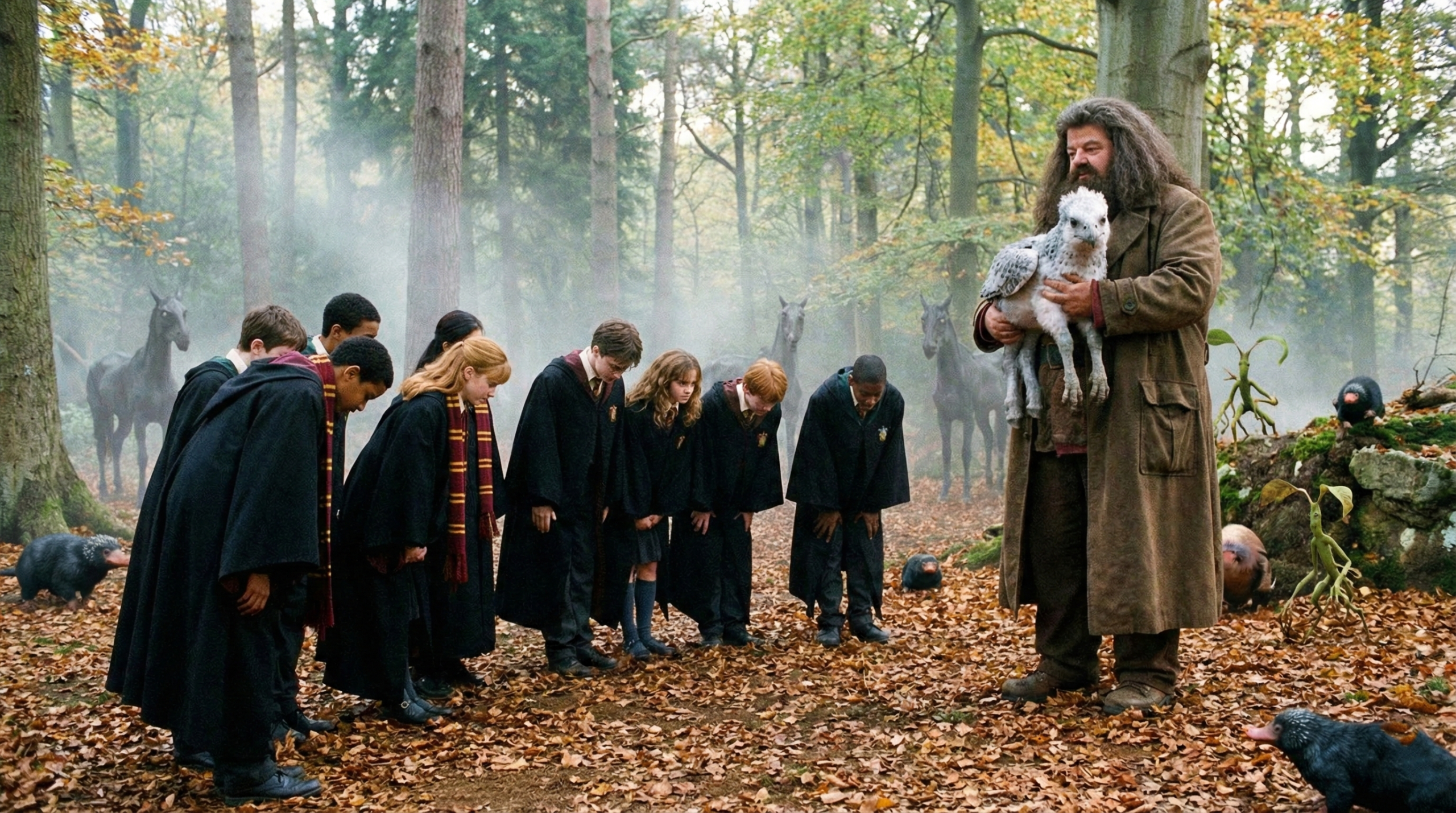
Care of Magical Creatures Rubeus Hagrid’s class introduces beasts like hippogriffs, Thestrals, and Blast-Ended Skrewts. Practical and hands-on, it’s rewarding for animal lovers despite occasional dangers.
 Muggle Studies This explores non-magical life from a wizarding perspective—temporarily core during Voldemort’s regime.
Advanced and Rare Subjects (NEWT Level and Beyond)
Once students achieve strong OWL results at the end of Year 5, they can continue only the subjects in which they earned at least an “Exceeds Expectations” (E) or “Outstanding” (O) grade into NEWT-level study during Years 6 and 7. These advanced classes are far more specialized and demanding, preparing students for specific wizarding careers.
Alchemy Rarely offered, Alchemy appears only when there is sufficient demand and a qualified instructor. It is an extremely advanced subject focused on the transmutation of substances, the creation of the Philosopher’s Stone, and the pursuit of eternal life or gold. Nicolas Flamel, the famous alchemist, is the most notable historical figure associated with the subject. Few students ever take it, making it one of the most exclusive classes at Hogwarts.
Apparition Not a full subject but a short, intensive twelve-lesson course offered in the second term of Year 6. A Ministry of Magic Apparition Instructor (such as Wilkie Twycross in Harry Potter and the Half-Blood Prince) teaches students the Three Ds: Destination, Determination, and Deliberation. Successful students earn an Apparition licence at age 17 (the legal minimum in Britain). The course is optional but highly practical—Apparition is a common mode of travel for adult wizards.
Other occasional or unofficial classes include extracurricular activities such as the Frog Choir (led by Professor Flitwick) and the short-lived Ghoul Studies (a joke subject mentioned in passing). During the 1997–1998 school year under Death Eater control, Muggle Studies became compulsory and was taught with a strongly anti-Muggle bias by Alecto Carrow.
How the Hogwarts Curriculum Progresses By Year
Hogwarts education follows a clear, structured progression that mirrors the British O-level/GCSE and A-level system, adapted to the magical world.
- Years 1–2: All students follow the same seven core subjects plus compulsory Flying lessons (Year 1 only). The focus is on foundational spell-casting, basic theory, and safety.
- Years 3–5: Students choose two or more electives at the end of Year 2. All subjects continue toward OWL examinations at the end of Year 5. OWLs consist of written theory papers and practical demonstrations; results determine NEWT eligibility.
- Years 6–7: Students drop to only the subjects they wish to pursue at NEWT level (typically 3–5 subjects). NEWTs are even more rigorous, serving as the final qualifications for most wizarding professions (e.g., Auror training requires “Outstanding” in Defence Against the Dark Arts, Potions, and Transfiguration).
This system allows personalization while maintaining a broad base of knowledge—exactly what a young witch or wizard needs before entering the wider wizarding world.
Ranking Every Hogwarts Subject – From Most Useful to Least (Expert Opinion)
Ranking Hogwarts classes is subjective, but we can evaluate them based on four key criteria:
- Practical usefulness in everyday wizarding life and emergencies
- Applicability in combat and defence (especially relevant during Voldemort’s return)
- Excitement and engagement level
- Long-term career value and canonical outcomes
Here is the ranked list:
- Charms – The Swiss Army knife of magic. From simple household spells to advanced protective enchantments, Charms appears in nearly every situation.
- Defence Against the Dark Arts – Essential for survival against dark forces. Its versatility in duelling and countering curses makes it indispensable.
- Transfiguration – The most difficult but most powerful subject. Turning objects into animals or vice versa offers unmatched tactical options.
- Potions – Invaluable for healing, enhancement, disguise (Polyjuice), and poison. Snape’s and Slughorn’s students frequently save the day with clever brewing.
- Herbology – Underrated but critical. Many potion ingredients and defensive plants come from this class; Neville’s mastery proves its worth.
- Care of Magical Creatures – Practical for beast-related careers (e.g., dragon-keeping, magizoology) and survival in the wild.
- Arithmancy / Ancient Runes – Highly useful for curse-breaking, ancient magic research, and Gringotts work.
- Astronomy – Niche but occasionally relevant (e.g., lunar effects on werewolves).
- Divination – Inconsistent results; true Seers are rare. Most predictions are vague or self-fulfilling.
- History of Magic – Important for context and avoiding past mistakes, but rarely used in daily life.
- Muggle Studies – Valuable for Muggle-born integration and Ministry roles, but not essential for most wizards.
This ranking reflects both canonical events and fan consensus across decades of discussion.
Notable Professors and Their Impact on Classes
The quality of teaching dramatically influences how much students enjoy—and learn from—a subject.
- Minerva McGonagall (Transfiguration) → Strict, fair, brilliant. Her high standards produce top Aurors and Ministry officials.
- Filius Flitwick (Charms) → Enthusiastic and supportive; his classroom is consistently one of the happiest.
- Severus Snape (Potions / DADA) → Genius-level skill marred by cruelty and favouritism. Many talented students (e.g., Harry) suffered unnecessarily.
- Remus Lupin (Defence Against the Dark Arts) → Widely regarded as the best DADA teacher in living memory—practical, kind, and effective.
- Rubeus Hagrid (Care of Magical Creatures) → Passionate but dangerously optimistic about creature safety.
A great professor can turn even a “boring” subject into a lifelong passion.
Tips for Fans: Which Hogwarts Classes Would You Excel In?
Try this quick personality-based guide:
- Love precision and logic? → Transfiguration or Arithmancy
- Enjoy helping others and quick thinking? → Charms or Defence Against the Dark Arts
- Detail-oriented and patient? → Potions or Herbology
- Animal lover with a brave streak? → Care of Magical Creatures
- Imaginative and intuitive? → Divination (though results may vary!)
Many fans discover their “best” subjects align with their Hogwarts house traits—Ravenclaws often shine in Runes and Arithmancy, Gryffindors in DADA and Charms, etc.
FAQs About the Class of Hogwarts
What are the 7 core classes at Hogwarts? Transfiguration, Charms, Potions, Defence Against the Dark Arts, Herbology, History of Magic, and Astronomy.
How many electives can you take? At least two from Year 3 onward; there is no strict maximum, though most students take two or three.
Why does Defence Against the Dark Arts have a new teacher every year? Voldemort cursed the position after Dumbledore refused to hire him, ensuring no teacher lasts longer than one year.
Are there any subjects only for older students? Yes—NEWT-level classes (Years 6–7) and the Apparition course (Year 6) are restricted to qualified older students.
Which Hogwarts class is the hardest? Transfiguration is widely considered the most difficult due to its complexity and need for perfect concentration.
Did Hermione really take every class possible? Yes—in Year 3 she used a Time-Turner to attend multiple overlapping classes, including all electives.
Is Flying still taught after Year 1? No, it becomes optional and is usually replaced by Quidditch team training for those interested.
The class of Hogwarts is far more than a timetable—it’s the magical backbone that transforms young witches and wizards into capable adults ready to face the world (and its dangers). From the precision of Transfiguration to the wonder of Care of Magical Creatures, each subject contributes uniquely to the wizarding education experience.
Which Hogwarts class would you most want to master—or which one would you dread? Drop your thoughts in the comments below, and don’t forget to explore our other in-depth Harry Potter guides for more magical deep dives.