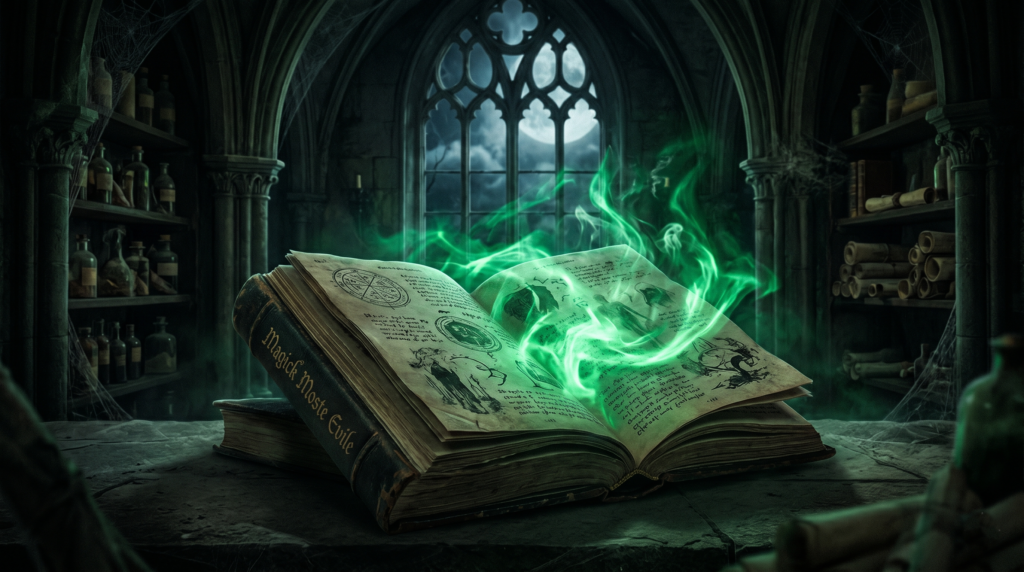
A blinding flash of neon green light. A rushing sound like an invisible, roaring wind. A lifeless body hitting the floor without a single mark on it. For fans of the Wizarding World, nothing evokes pure, visceral terror quite like the Death Spell of Harry Potter. Known officially by its incantation, Avada Kedavra, it is the signature weapon of Lord Voldemort and his most loyal Death Eaters.
But what actually happens when those two words are spoken? Why is it considered the absolute peak of Dark Magic, and more importantly, what are the intricate rules governing how a one-year-old boy managed to survive it?
If you have ever found yourself questioning the magical mechanics, the legal loopholes, or the deep history of the Killing Curse, you are in the right place. This definitive guide bypasses the surface-level trivia to explore the canonical lore, the biological and magical theories, and the chilling history of the most feared incantation in the Harry Potter universe.
What is the Death Spell in Harry Potter? (The Basics)
To understand the sheer horror of Avada Kedavra, we must first examine its most basic properties. The Killing Curse is a spell designed with a single, undeniable purpose: to extinguish biological life instantaneously.
Incantation, Visuals, and Auditory Signatures
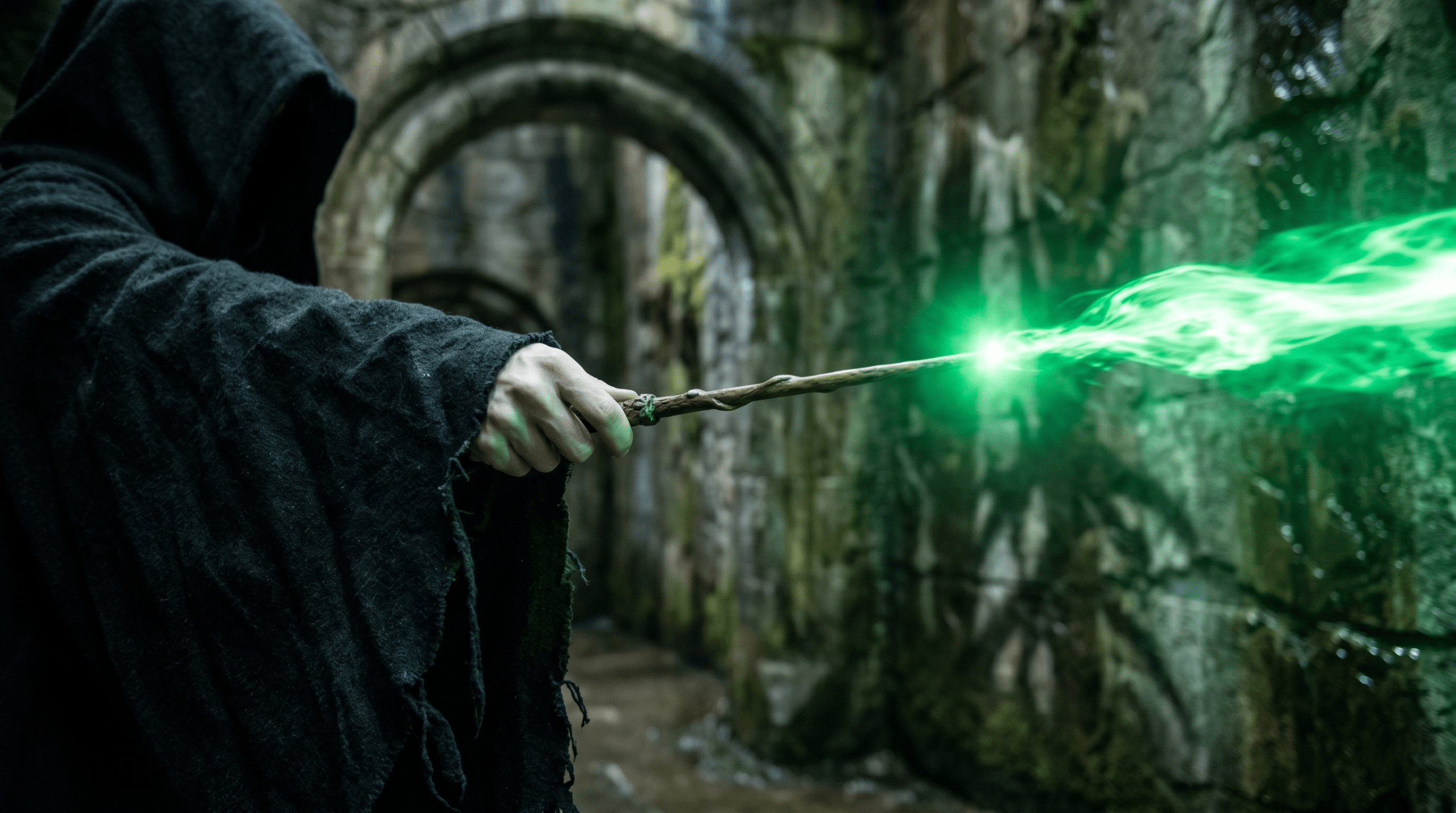
When a dark wizard casts the spell, it is typically accompanied by a specific set of sensory identifiers:
-
The Incantation: Avada Kedavra (pronounced ah-VAH-dah keh-DAV-rah).
-
The Wand Movement: A swift, sharp motion, canonically described as mimicking the shape of a lightning bolt.
-
The Visual: A blinding, intense jet of emerald green light that illuminates the surrounding area.
-
The Sound: A rushing, roaring noise, often compared to the sound of death swooping down on its victim.
 The Ultimate Consequence
Unlike Muggle weapons or even other dangerous magical spells, the Killing Curse leaves absolutely no physical trace of trauma. There are no lacerations, no internal bleeding, and no signs of asphyxiation. When struck, the victim simply ceases to live.
Lore Note: This lack of physical evidence notoriously baffled Muggle authorities. When the Riddle family was murdered by Tom Riddle (the future Lord Voldemort) in 1943, the Muggle coroner’s report stated that the family was in perfectly good health, save for the fact that they were all dead. The Muggle authorities ultimately blamed the groundskeeper, Frank Bryce, because they could not comprehend a murder weapon that left no mark.
The Real-World Etymology: Where Did J.K. Rowling Get “Avada Kedavra”?
The genius behind the wizarding world’s nomenclature is often found in its real-world historical and linguistic roots. The Death Spell is no exception. While many spells in Harry Potter are derived from Latin (e.g., Lumos from the Latin word for light, Expelliarmus from the Latin to drive out weapons), Avada Kedavra has a much older and distinctly different origin.
The Aramaic Roots
J.K. Rowling has publicly stated that the incantation is derived from an ancient Aramaic phrase. In Aramaic, the original phrase translates roughly to “Let the thing be destroyed.”
The Twist on “Abracadabra”
In the Muggle world, “Abracadabra” is a cliché word used by stage magicians pulling rabbits out of hats. However, historically, it was used as an ancient healing charm. Muggles and early mystics would write the word on amulets to ward off lethal diseases like malaria, essentially commanding the illness to be destroyed.
Rowling took this ancient concept of destroying sickness and twisted it into something deeply sinister. In the hands of Dark wizards, the “thing” being destroyed was no longer a disease—it was human life itself.
The Dark History: When Was the Curse Invented?
Magic in the Harry Potter universe evolved over centuries, much like Muggle technology. The Killing Curse was not always illegal, nor was it always exclusively associated with Lord Voldemort.
Early Medieval Origins
The spell was originally created by Dark witches and wizards during the early Middle Ages. In these times, magical dueling was brutal and largely unregulated. The curse was engineered specifically to be the ultimate dueling weapon because of one terrifying feature: it cannot be blocked by standard magical shields. While spells like the Shield Charm (Protego) can deflect jinxes, hexes, and standard curses, the Killing Curse shatters straight through them.
The 1717 Decree and the Ministry of Magic
For centuries, the use of the spell, while frowned upon by moral society, remained legally ambiguous. This changed dramatically in the year 1717.
As the Ministry of Magic established stricter governance over the British magical community, the newly formed Department of Magical Law Enforcement classified Avada Kedavra—alongside the Cruciatus Curse (Crucio) and the Imperius Curse (Imperio)—as one of the three Unforgivable Curses.
The law was absolute: the use of any of these three curses on a fellow human being carried an automatic, non-negotiable life sentence in Azkaban prison. The only historical exception to this law occurred during the First Wizarding War, when Bartemius Crouch Sr. temporarily legalized the Unforgivable Curses for Aurors to use against Death Eaters in a desperate bid to match their ruthlessness.
How Does Avada Kedavra Actually Kill? The Mechanics of the Curse
Understanding the lore requires looking past the green light to ask a highly debated question in the fandom: How does a spell with no physical impact cause instantaneous death?
The Requirement of True Malice (“You Have to Mean It”)
The most critical mechanic of the Killing Curse is that it cannot be cast by accident, nor can it be cast simply by saying the words. It requires immense magical skill and, more importantly, a profound, sociopathic desire to commit murder.
In Harry Potter and the Goblet of Fire, Barty Crouch Jr. (disguised as Mad-Eye Moody) explains this to the fourth-year students. He tells them that the entire class could point their wands at him and say the incantation, and he wouldn’t get so much as a nosebleed. To cast Avada Kedavra, the wizard must genuinely want to extinguish the victim’s life, devoid of any mercy or hesitation. This is why Harry Potter, despite his immense power and righteous anger, relies on disarming (Expelliarmus) rather than lethal force.
The Severing of the Soul
Because there is no biological trauma, magical theorists within the canon imply that the curse targets the soul rather than the body. The spell forcefully and violently evicts the soul from the physical vessel. Once the soul is severed, the biological functions of the body (the heartbeat, brain activity, and respiration) simply shut off simultaneously.
Environmental Impact
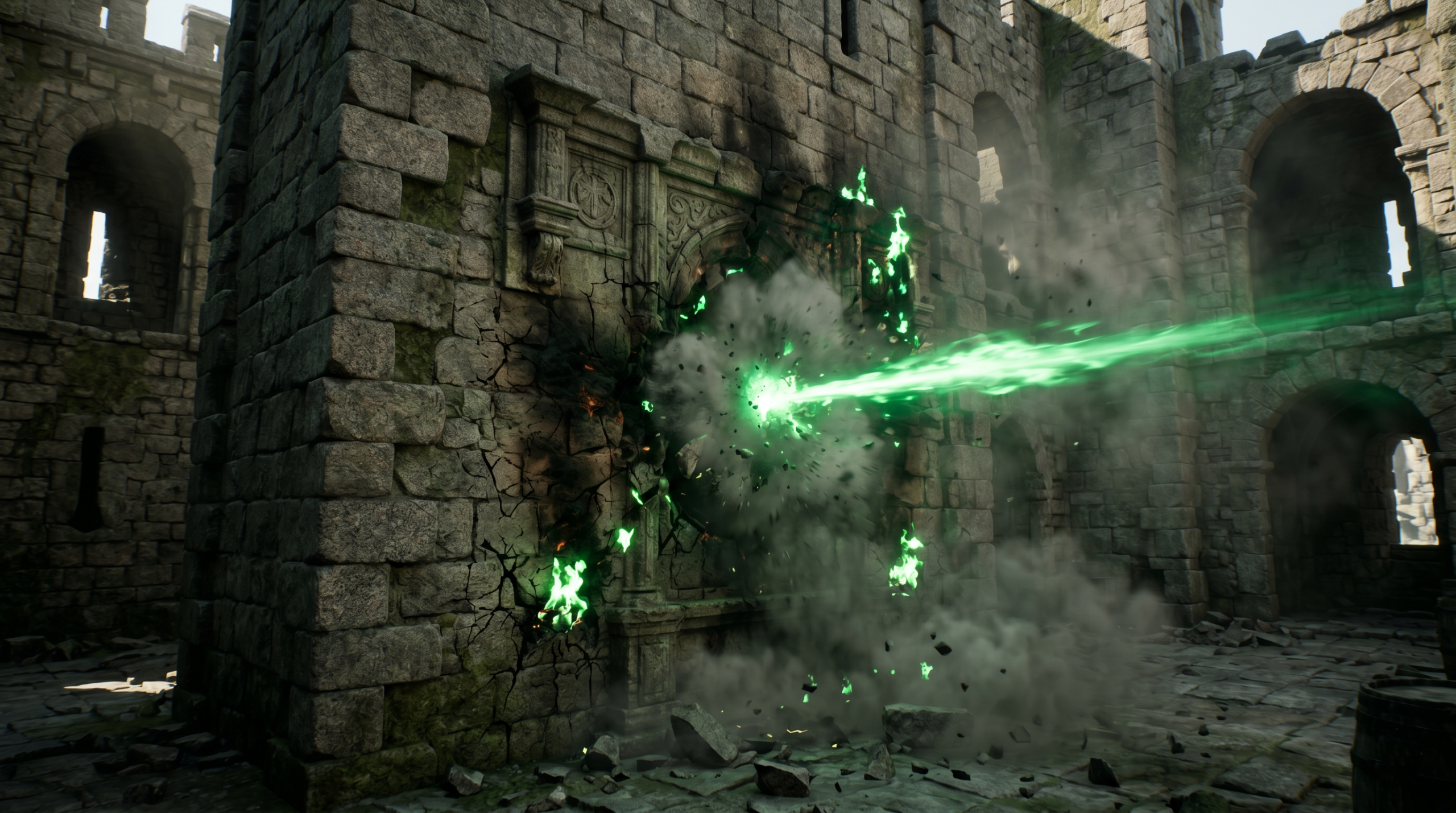
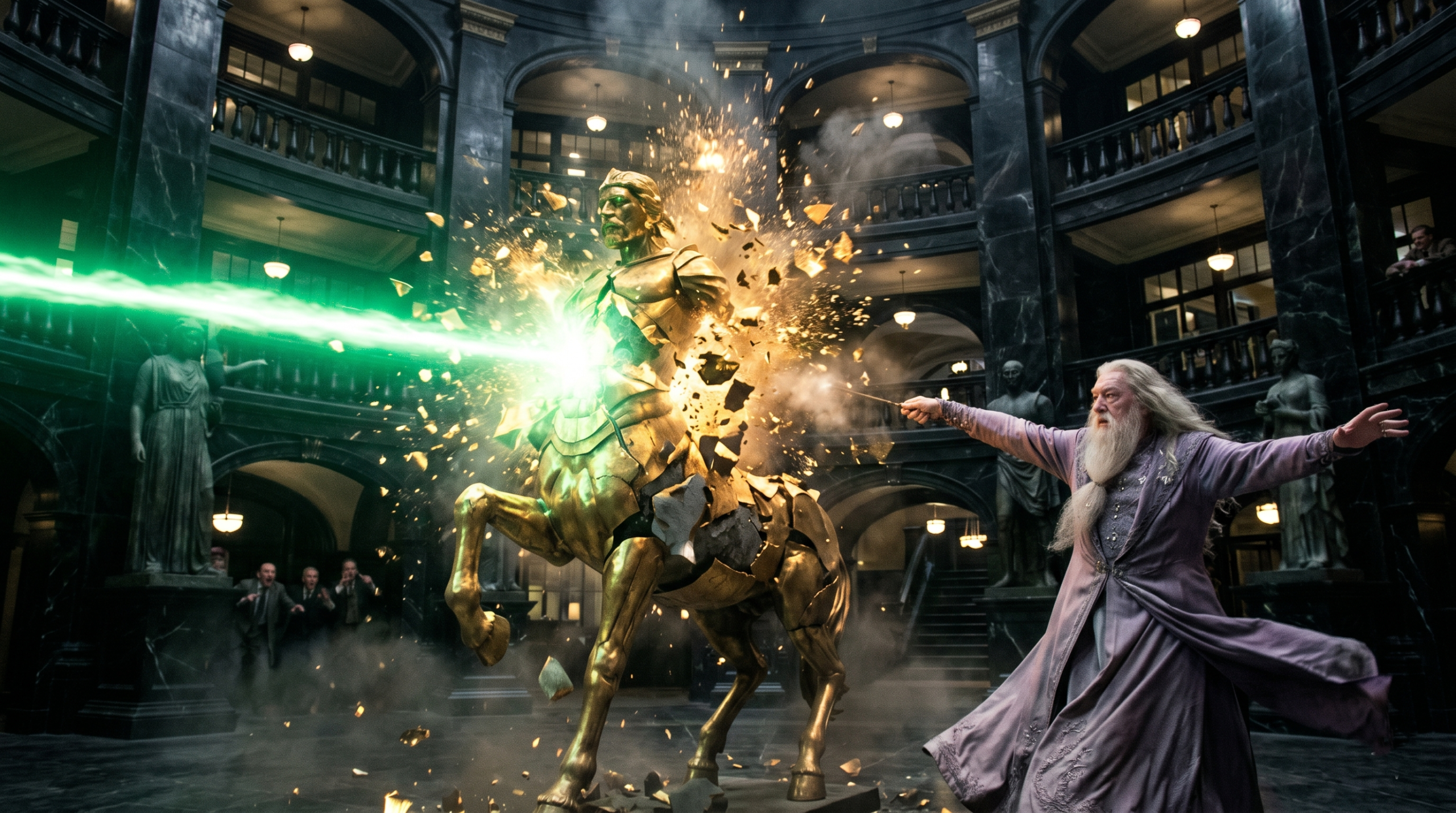
What happens when the ultimate death spell misses its target? While it is fatal to organic life, its interaction with inanimate objects is highly volatile. When a Killing Curse strikes a wall, a tree, or a statue, it typically results in a minor explosion, often accompanied by green fire. During the duel between Voldemort and Albus Dumbledore in the Ministry of Magic Atrium, Voldemort’s missed curses are shown obliterating the stone statues Dumbledore uses for defense.
 How to Survive the Death Spell: Rules, Loopholes, and Exceptions
For centuries, magical education taught one absolute truth regarding the Killing Curse: there is no counter-curse, and it cannot be blocked. However, the legacy of the “Boy Who Lived” proved that while the spell is inherently lethal, the deep, ancient magic of the Wizarding World contains loopholes.
To fully understand the Death Spell of Harry Potter, we must examine the incredibly rare circumstances under which a witch or wizard can survive it.
Sacrificial Protection (The Lily Potter Exception)
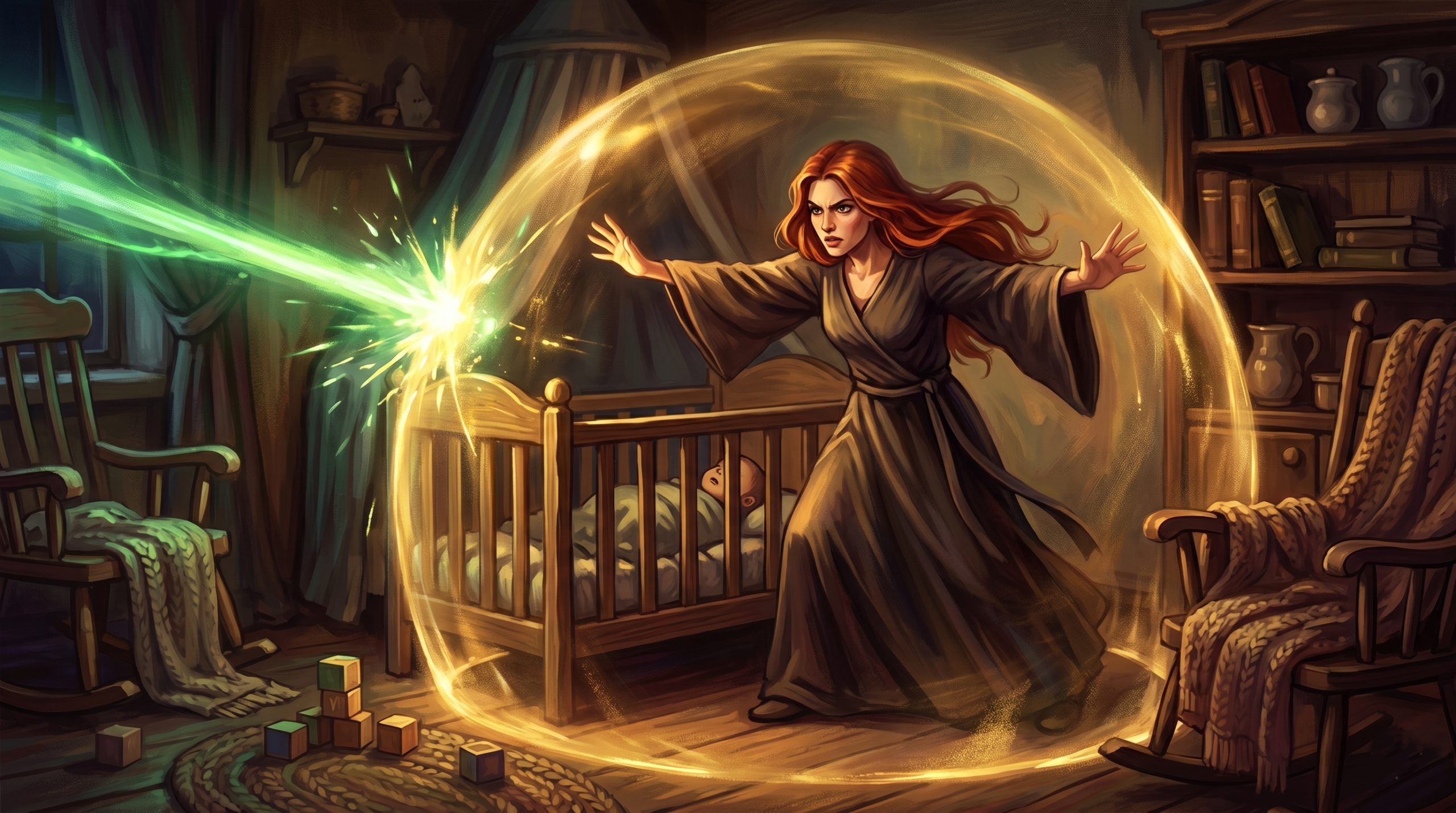
The most famous exception to the Killing Curse’s lethality occurred on Halloween night in 1981 at Godric’s Hollow. When Lord Voldemort attempted to murder baby Harry, the curse rebounded, reducing the Dark Lord to a mere shadow. This was not due to Harry’s innate magical power, but rather an ancient branch of magic triggered by his mother, Lily Potter.
For Sacrificial Protection to work, specific criteria must be met: the victim must be given a genuine choice to live, but actively choose to die to shield another. Because Voldemort offered Lily the chance to step aside (at Severus Snape’s request), her refusal and subsequent death forged an unbreakable, blood-based magical shield over Harry. When Voldemort cast Avada Kedavra at the infant, this ancient magic acted as an impenetrable mirror, reflecting the curse back at its caster.
 Priori Incantatem (The Twin Cores Phenomenon)
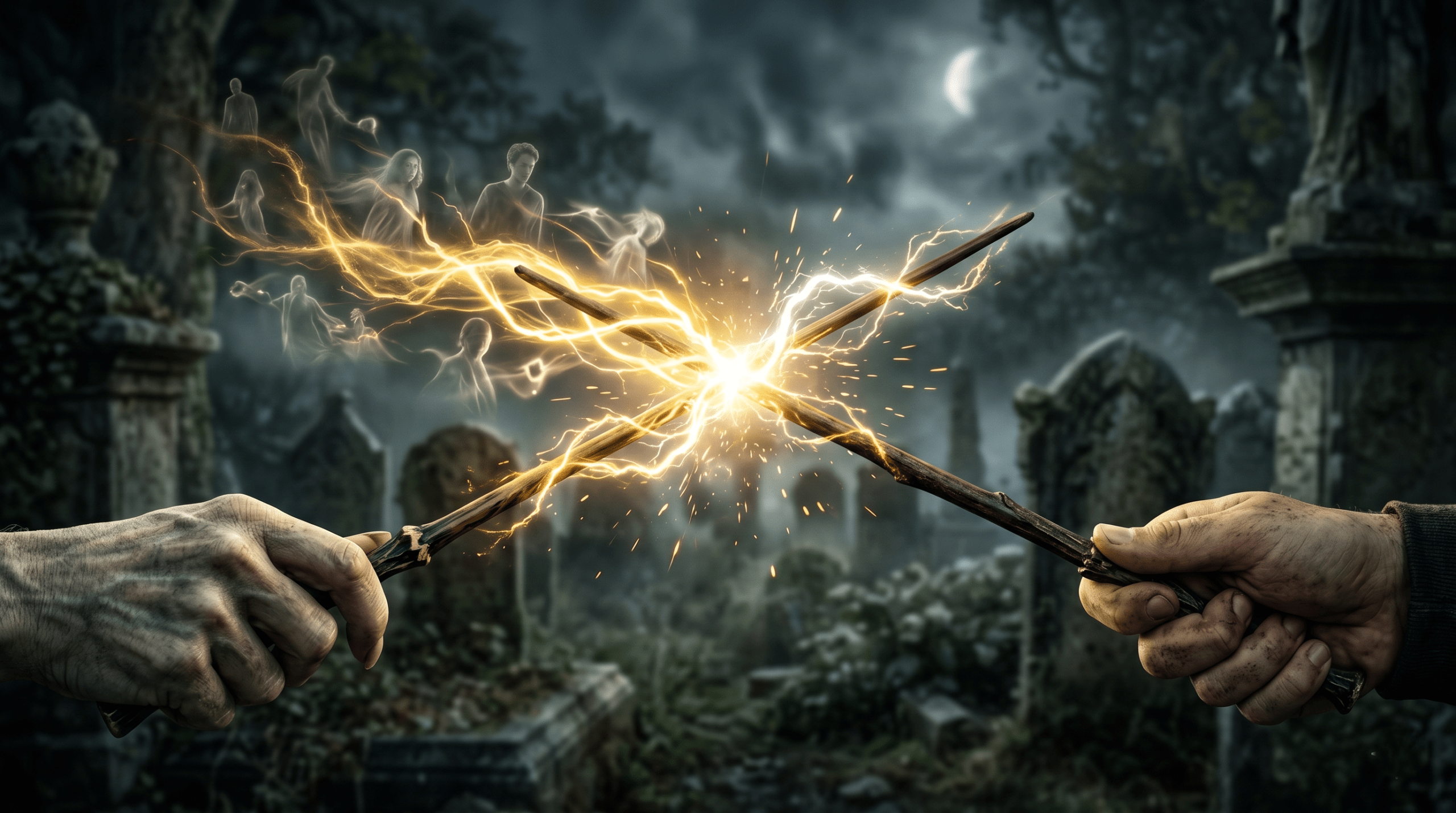
During the climax of Harry Potter and the Goblet of Fire, Harry and Voldemort’s spells collide in the Little Hangleton graveyard. The Killing Curse meets Harry’s Disarming Charm (Expelliarmus), locking the wands together in a golden thread.
This phenomenon, known as Priori Incantatem, occurs because both Harry’s wand and Voldemort’s wand share a magical core—a tail feather from the exact same phoenix (Dumbledore’s bird, Fawkes). Wandlore dictates that brother wands will not battle each other properly. If forced, they will lock, and the weaker wizard’s wand will be forced to regurgitate “echoes” of its most recently cast spells. This unique wand-lore loophole gave Harry the crucial seconds he needed to break the connection and escape the Death Spell.
 Horcruxes (Anchoring the Soul)
What happens to the caster when a Killing Curse rebounds? In 1981, Voldemort’s physical body was obliterated by his own reflected curse. Under normal circumstances, he should have died instantly. However, Voldemort survived through the darkest of magical artifacts: Horcruxes.
By committing previous murders, Voldemort had intentionally fragmented his soul and hidden those pieces within objects (such as Tom Riddle’s Diary and Slytherin’s Locket). These soul-fragments acted as anchors, tethering his primary soul to the physical realm even after his body was destroyed by the rebounding Death Spell.
Lore Note: The Forbidden Forest Survival. When Voldemort cast the Killing Curse on Harry again in the Forbidden Forest years later, Harry survived a second time. This was because Voldemort had used Harry’s blood to resurrect his own body, inadvertently tethering Lily Potter’s sacrificial protection to himself. While Voldemort lived, Harry could not be killed by him. The curse only destroyed the fragment of Voldemort’s own soul that had been accidentally attached to Harry years prior.
Physical Deflection and Dodging
While standard magical shields like Protego will shatter under the force of the Killing Curse, solid physical matter can intercept it. During the legendary duel between Albus Dumbledore and Voldemort in the Ministry of Magic, Dumbledore animates solid gold statues to step into the path of the green light. The statues absorb the hit, exploding into pieces, but successfully shielding Dumbledore. Alternatively, because the spell relies on aiming a jet of light, a wizard with quick enough reflexes can simply dive out of the way.
 The Legal Paradox: Why is Avada Kedavra “Unforgivable” Compared to Other Spells?
A common debate among Harry Potter fans is the legality of certain spells. For instance, the Blasting Curse (Confringo) or the Severing Charm (Diffindo) can easily be used to kill someone if aimed at a vital organ or cast with enough force. So, why are these spells perfectly legal to learn at Hogwarts, while Avada Kedavra earns an automatic life sentence in Azkaban?
The answer lies in magical law’s focus on Intent and Utility.
Spells like Diffindo are designed for everyday utility—cutting fabric, trimming plants, or opening packages. Even dangerous spells like Incendio (creating fire) have obvious practical applications. The Killing Curse has zero alternative utility. You cannot use it to cut wood or defend yourself non-lethally. Because the spell requires absolute, unadulterated malice and the pure desire to end a life to even function, casting it is undeniable proof of premeditated murder. In the eyes of the Ministry of Magic, the act of successfully casting the spell is its own guilty verdict.
The Most Infamous Uses of the Death Spell in Wizarding History
To trace the impact of the Killing Curse is to trace the darkest moments in wizarding history. The spell has acted as the catalyst for the major narrative turning points in the Harry Potter saga.
-
The Riddle Family (1943): A sixteen-year-old Tom Riddle traveled to Little Hangleton and used his uncle’s wand to murder his Muggle father and grandparents. This cold-blooded act severed his soul, allowing him to create his first Horcrux (the Peverell ring).
-
James and Lily Potter (1981): The night Lord Voldemort entered Godric’s Hollow, he struck down James Potter before moving upstairs to murder Lily. This event ended the First Wizarding War and birthed the legend of the Boy Who Lived.
-
Cedric Diggory (1995): “Kill the spare.” Peter Pettigrew, using Voldemort’s wand, murdered the Hogwarts champion in the graveyard. This tragic death signaled the official return of Lord Voldemort and the beginning of the Second Wizarding War.
-
Albus Dumbledore (1997): In a shocking twist atop the Astronomy Tower, Severus Snape cast the Killing Curse on the Hogwarts Headmaster. It was later revealed that this was a mercy killing, orchestrated by Dumbledore himself to save Draco Malfoy’s soul and solidify Snape’s cover as a double agent.
Frequently Asked Questions (FAQs) About the Killing Curse
Can a Shield Charm (Protego) stop Avada Kedavra?
No. The Killing Curse is entirely unblockable by conventional magical shields. If a wizard casts Protego against it, the green light will blow right through the magical barrier and kill the caster. Only physical barriers or ancient sacrificial magic can stop it.
Does Avada Kedavra cause physical pain?
No. Unlike the Cruciatus Curse, which is designed to inflict maximum agony, the Killing Curse is instantaneous and completely painless. It severs the soul from the body so quickly that the victim does not have time to register pain, as confirmed by Sirius Black, who described dying as being “quicker and easier than falling asleep.”
Why did Harry survive the Killing Curse the second time in the forest?
In Goblet of Fire, Voldemort used Harry’s blood to resurrect his own body. By doing so, Voldemort took Lily Potter’s sacrificial protection into his own veins. As long as Voldemort remained alive, his body acted as a tether that kept Harry anchored to life.
Did anyone besides Death Eaters use the Killing Curse?
Yes. During the height of the First Wizarding War, the Head of the Department of Magical Law Enforcement, Barty Crouch Sr., passed an emergency edict allowing Aurors (dark wizard catchers) to use the Unforgivable Curses against suspected Death Eaters. Additionally, Severus Snape—acting on the side of the Order of the Phoenix—used it to euthanize Albus Dumbledore.
The Death Spell of Harry Potter is far more than just a flash of green light and a dramatic incantation. It is a deeply complex piece of magical lore that perfectly encapsulates the themes of J.K. Rowling’s universe: the stark divide between love and malice, the preservation of the soul, and the horrifying lengths to which individuals will go for power. Avada Kedavra remains the ultimate symbol of Dark Magic because it demands the caster completely strip away their own humanity to extinguish the life of another.
Whether you are a seasoned wandlore enthusiast or a new reader just stepping into the halls of Hogwarts, understanding the mechanics behind this Unforgivable Curse brings a new layer of depth to every duel in the series.
If you found this deep dive into the Killing Curse fascinating, be sure to explore our other Wizarding World lore guides, and let us know in the comments: which magical duel in the series do you think is the most intense?