The Harry Potter franchise is an undisputed titan of modern cinema. Over the course of ten years and eight blockbuster films, the Wizarding World redefined the fantasy genre, revolutionized visual effects, and captured the hearts of an entire generation. It generated billions of dollars at the global box office and launched the careers of its young stars. Yet, despite its monumental cultural footprint and undeniable technical brilliance, its relationship with the Academy Awards remains famously complicated. If you are looking back at the magic of the cinematic Wizarding World, you might find yourself asking: Did Harry Potter win any Oscars?
It is one of the most frequently asked questions by fans and cinephiles alike, and the answer reveals a fascinating story about Hollywood politics, genre bias, and unfortunate timing. The Academy of Motion Picture Arts and Sciences is often scrutinized for its choices, but the complete shutting out of the boy wizard remains one of the most glaring snubs in modern film history.
In this comprehensive guide, we will break down the complete history of Harry Potter at the Academy Awards. We will explore the twelve nominations the original films received, analyze the legendary cinematic competition that stood in their way, unpack the Academy’s historical biases against fantasy blockbusters, and celebrate the one spin-off film that finally broke the curse.
Did Harry Potter Win any Oscars? The Short Answer
No, none of the eight original Harry Potter films won an Academy Award. Despite earning a total of 12 Oscar nominations across multiple technical categories between 2001 and 2011, the core cinematic franchise walked away empty-handed every single time. However, the Wizarding World franchise did eventually win an Oscar in 2017 when the spin-off prequel, Fantastic Beasts and Where to Find Them, took home the award for Best Costume Design.
 A Look at Harry Potter’s 12 Oscar Nominations
To say the Academy completely ignored the Harry Potter films would be inaccurate. Earning an Academy Award nomination is a massive achievement in its own right, signaling that the voting branches recognize the elite craftsmanship behind a production. Across a decade of filmmaking, the franchise accumulated an impressive 12 nominations, largely concentrated in technical and aesthetic categories.
The films were powerhouses of production design, visual effects, and musical composition, heavily relying on the finest artisans in the British film industry to bring J.K. Rowling’s magical universe to life.
Which Harry Potter Movies Were Nominated?
Below is a complete breakdown of the Oscar nominations earned by the original eight films, showcasing exactly where the Academy felt the franchise excelled.
| Film Release | Movie Title | Oscar Nominations Received |
| 2001 | Harry Potter and the Sorcerer’s Stone | Best Art Direction, Best Costume Design, Best Original Score |
| 2004 | Harry Potter and the Prisoner of Azkaban | Best Original Score, Best Visual Effects |
| 2005 | Harry Potter and the Goblet of Fire | Best Art Direction |
| 2009 | Harry Potter and the Half-Blood Prince | Best Cinematography |
| 2010 | Harry Potter and the Deathly Hallows – Part 1 | Best Art Direction, Best Visual Effects |
| 2011 | Harry Potter and the Deathly Hallows – Part 2 | Best Art Direction, Best Makeup, Best Visual Effects |
The first film, The Sorcerer’s Stone, came out of the gate strong. The legendary John Williams secured a Best Original Score nomination for crafting “Hedwig’s Theme”—a piece of music that is now as recognizable globally as the Star Wars or James Bond themes. Meanwhile, the incredibly detailed sets of Hogwarts and the whimsical robes of the wizarding community rightfully earned nods for Art Direction and Costume Design.
Similarly, the grand finale, Deathly Hallows – Part 2, received three nominations, serving as a cumulative acknowledgment of the franchise’s decade-long growth in visual effects and makeup artistry—specifically the terrifying, serpentine prosthetics used to bring Lord Voldemort to life.
The Two Movies the Academy Ignored Completely
Interestingly, in the middle of the franchise’s run, the Academy turned a blind eye entirely. Two films received zero Oscar nominations:
-
Harry Potter and the Order of the Phoenix (2007)
The Chamber of Secrets featured the incredible practical animatronics of the Basilisk and the groundbreaking CGI realization of Dobby the House Elf, yet it was completely shut out of the Best Visual Effects category. The Order of the Phoenix, directed by David Yates, introduced a more mature, gritty visual tone to the series and featured the spectacular, glass-shattering duel between Voldemort and Dumbledore at the Ministry of Magic. Despite this incredible sequence, the visual effects branch of the Academy opted to nominate films like The Golden Compass and Transformers instead.
Why Didn’t Harry Potter Win an Oscar? The Surprising Reasons
Understanding why a franchise that defined a decade of cinema failed to secure a single golden statue requires a deep dive into the context of the film industry during the 2000s. The Academy Awards do not happen in a vacuum; they are heavily influenced by cultural trends, the specific competition of any given year, and the inherent biases of the voting body.
The “Lord of the Rings” Factor
Perhaps the single biggest obstacle in Harry Potter’s path to Oscar glory was timing. The Boy Who Lived had the misfortune of sharing the silver screen with Peter Jackson’s masterful adaptation of J.R.R. Tolkien’s The Lord of the Rings.
The two massive fantasy franchises launched in the exact same year (2001). While Harry Potter was viewed as a charming, faithful adaptation of a beloved children’s book, The Lord of the Rings was immediately hailed as a cinematic triumph—a sprawling, adult-oriented fantasy epic that pushed the absolute boundaries of filmmaking.
When The Sorcerer’s Stone was nominated for Best Art Direction, Best Costume Design, and Best Original Score, it lost all three to The Lord of the Rings: The Fellowship of the Ring. Peter Jackson’s Middle-earth dominated the fantasy genre at the Oscars, ultimately culminating in The Return of the King sweeping the 2004 Oscars with a historic 11 wins, including Best Picture. By the time the Lord of the Rings trilogy concluded, the Academy seemed to feel it had sufficiently rewarded the fantasy genre, leaving the middle chapters of Harry Potter to suffer from genre fatigue among voters.
 Stiff Competition in Technical Categories
Even after The Lord of the Rings concluded, Harry Potter continually ran into cinematic juggernauts in the technical categories. The franchise was nominated during a period of rapid, historic advancement in CGI and visual effects, meaning they were competing against some of the most visually groundbreaking films ever made.
Consider the years the later films were nominated. The Prisoner of Azkaban (2004) lost Best Visual Effects to Sam Raimi’s Spider-Man 2. The Deathly Hallows – Part 1 (2010) lost to Christopher Nolan’s mind-bending thriller Inception. Most tragically, the epic conclusion, The Deathly Hallows – Part 2 (2011), lost its visual effects bid to Martin Scorsese’s Hugo. The competition was incredibly fierce, and Harry Potter repeatedly found itself acting as the runner-up to standalone cinematic achievements.
The Academy’s Bias Against “Kids’ Movies” and Commercial Blockbusters
There is a long-standing, well-documented bias within the Academy of Motion Picture Arts and Sciences against films perceived as “children’s media” or overly commercial blockbusters. For decades, the Academy has favored historical dramas, biopics, and character-driven independent films over massive studio tentpoles.
Daniel Radcliffe, the star of the franchise, openly discussed this bias in a 2012 interview following the final film’s Oscar shutout. He expressed his frustration, noting that despite the immense effort, craftsmanship, and dramatic weight of the final films, the Academy still viewed them merely as commercial kids’ movies. Radcliffe suggested that the Academy tends to reward commercial success only when it comes from specific, highly venerated directors like Martin Scorsese, while somewhat looking down their noses at populist franchise fare.
No Acting Nods Despite a Legendary British Cast
Perhaps the most baffling aspect of the franchise’s history with the Academy Awards is the complete absence of acting nominations. From the very beginning, the producers made a strict rule: only British and Irish actors would be cast. This decision inadvertently assembled what is arguably the greatest ensemble of classically trained, theatrical powerhouse actors ever seen in a single film franchise.
Yet, not a single performance across eight films was recognized by the Academy.
The most frequently cited oversight by critics and fans alike is Alan Rickman’s masterful, decade-spanning portrayal of Severus Snape. Rickman’s deeply layered performance required him to play the ultimate antagonist while subtly laying the groundwork for a heartbreaking redemption arc. His delivery of the revelation in The Deathly Hallows – Part 2 is widely considered one of the finest moments in modern cinema. Many industry insiders believed Rickman was a lock for a Best Supporting Actor nomination in 2012, making his snub one of the most controversial in recent memory.
Other extraordinary performances that the Academy voters overlooked include Ralph Fiennes for his terrifying, theatrical transformation into Lord Voldemort, and Imelda Staunton, whose chillingly cheerful portrayal of the dictatorial Dolores Umbridge in The Order of the Phoenix created one of the most universally despised and critically acclaimed villains in movie history.
 Breaking the Curse: The First Wizarding World Oscar Win
After a 15-year drought, the cinematic Wizarding World finally claimed its golden statue. However, the victory did not belong to Harry, Ron, or Hermione.
In 2016, Warner Bros. successfully launched a new era for the franchise with the prequel spin-off, Fantastic Beasts and Where to Find Them. Set in 1920s New York, the film shifted the visual palette away from the medieval gothic architecture of Hogwarts and into the jazz-age, roaring twenties of the American magical community.
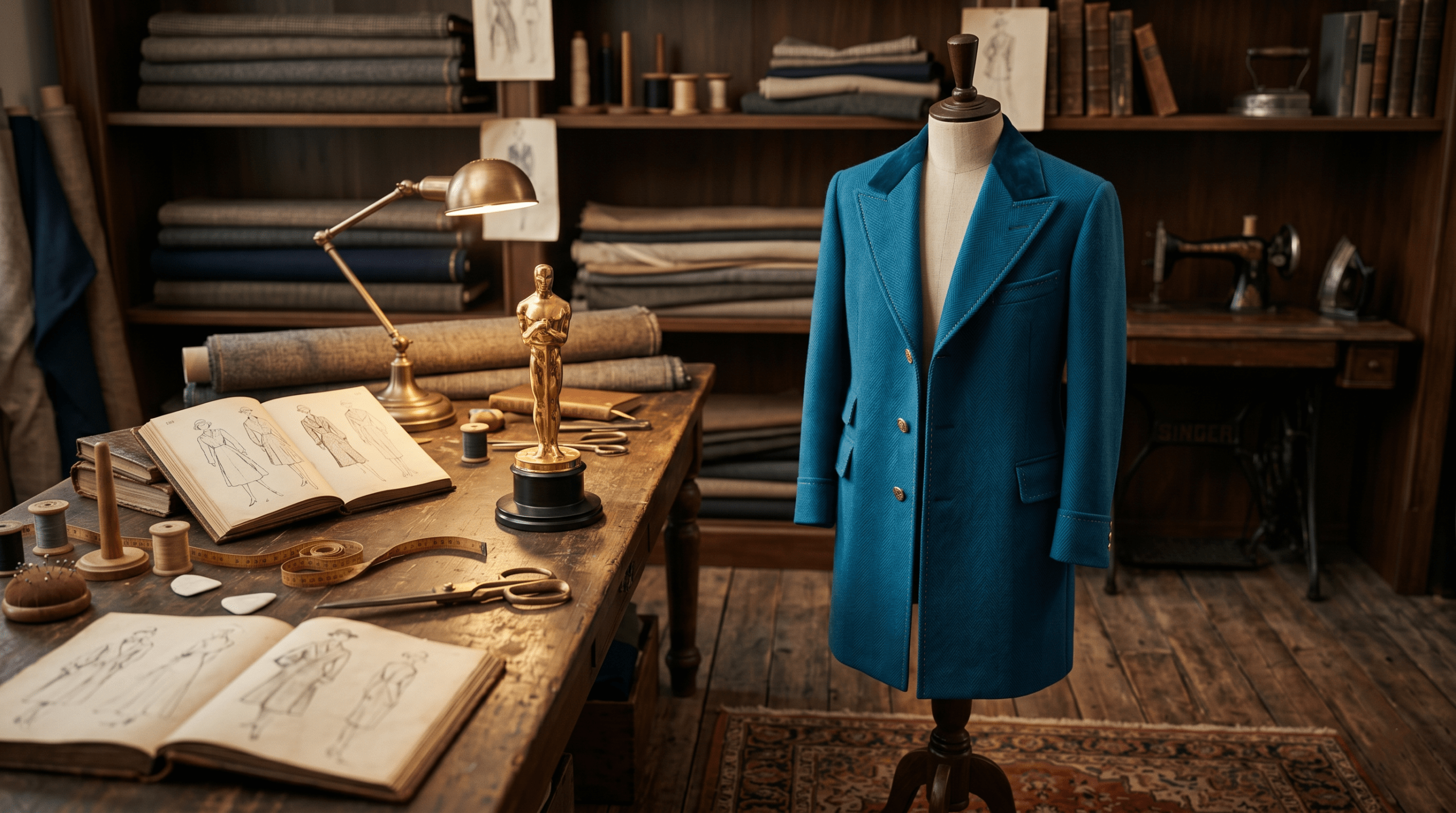
At the 89th Academy Awards in 2017, the franchise finally broke the curse. Legendary costume designer Colleen Atwood won the Academy Award for Best Costume Design.
Why did this film succeed where the previous eight failed? The answer lies in the Academy’s well-documented love for historical period pieces. Atwood’s exquisite tailoring—from Newt Scamander’s iconic teal overcoat to the flapper-inspired dresses of the Goldstein sisters—blended 1920s historical accuracy with subtle, magical whimsy. This victory finally provided J.K. Rowling’s expanding on-screen universe with the ultimate Hollywood validation, proving that the Academy was willing to reward the franchise under the right cinematic conditions.
 Harry Potter Actors Who Have Won Oscars (For Other Films)
While the Academy voters may not have recognized the actors for their work involving wands and broomsticks, the cast list is essentially a directory of British cinema royalty. Many of the franchise’s adult stars already possessed, or would eventually go on to win, highly coveted Oscars for other spectacular performances.
For fans of the series, here is a look at the Oscar pedigree of the Hogwarts faculty and beyond:
-
Maggie Smith (Professor McGonagall): A true legend of the screen, Dame Maggie Smith holds two Oscars: Best Actress for The Prime of Miss Jean Brodie (1969) and Best Supporting Actress for California Suite (1978).
-
Emma Thompson (Professor Trelawney): The eccentric Divination teacher is also a two-time winner. She won Best Actress for Howards End (1992) and uniquely won Best Adapted Screenplay for Sense and Sensibility (1995).
-
Gary Oldman (Sirius Black): The beloved godfather finally took home the Best Actor Oscar for his astonishing transformation into Winston Churchill in Darkest Hour (2017).
-
Jim Broadbent (Professor Slughorn): Broadbent won Best Supporting Actor for his emotional role in the biographical drama Iris (2001).
-
Eddie Redmayne (Newt Scamander): Before he was wrangling magical creatures in the spin-off series, Redmayne won Best Actor for his brilliant portrayal of Stephen Hawking in The Theory of Everything (2014).
-
Kenneth Branagh (Gilderoy Lockhart): The famously vain Defense Against the Dark Arts teacher recently won his first Oscar for Best Original Screenplay for his deeply personal film Belfast (2021).
Why the Academy Snubs Don’t Diminish the Magic
While exploring the question, “Did Harry Potter win any Oscars?” often leads to a story of missed opportunities, the lack of Academy recognition does absolutely nothing to diminish the franchise’s towering legacy.
First and foremost, it is crucial to note that the British film industry absolutely recognized the monumental achievement of the series. At the 2011 BAFTA Awards (the British equivalent of the Oscars), the franchise was honored with the prestigious Outstanding British Contribution to Cinema Award. Author J.K. Rowling and producer David Heyman accepted the award alongside the core cast, celebrating a decade of providing employment and global showcase opportunities for British filmmakers.
Beyond awards, the true legacy of Harry Potter is measured in its enduring cultural impact. The films grossed over $7.7 billion worldwide, spawned incredibly successful theme parks globally, and revolutionized how Hollywood approaches multi-film adaptations. A golden statue is a wonderful accolade, but the loyalty of a fanbase that continues to pass these films down from generation to generation is a far rarer, and arguably more valuable, achievement.
 Fast Facts: Harry Potter and the Academy Awards
To summarize the complex history between the Boy Who Lived and the Academy, here are the most frequently asked questions regarding the franchise’s award history.
Q: Did Alan Rickman win an Oscar for Severus Snape?
A: No. In fact, in one of the most infamous oversights in Academy history, Alan Rickman was never nominated for an Oscar for any role throughout his entire, illustrious career, let alone for his iconic portrayal of Severus Snape.
Q: Did John Williams win an Oscar for the Harry Potter theme?
A: No. The legendary composer John Williams was nominated for Best Original Score for The Sorcerer’s Stone and The Prisoner of Azkaban, but he did not win either time. However, his creation of “Hedwig’s Theme” remains one of the most famous musical motifs in film history.
Q: Which Harry Potter movie has the most Oscar nominations?
A: There is a tie for the most nominations. Both Harry Potter and the Sorcerer’s Stone (2001) and Harry Potter and the Deathly Hallows – Part 2 (2011) received three Oscar nominations each.
Q: Did Emma Watson, Daniel Radcliffe, or Rupert Grint ever get nominated?
A: No. The core golden trio of Daniel Radcliffe, Emma Watson, and Rupert Grint were never nominated for Academy Awards for their roles in the franchise, nor have they received Oscar nominations for their subsequent projects to date.
So, did Harry Potter win any Oscars? The original eight films famously went zero for twelve, repeatedly blocked by genre titans like The Lord of the Rings and technical marvels like Inception and Hugo. It took the fashion-forward, period-piece setting of Fantastic Beasts and Where to Find Them to finally break the fifteen-year curse and bring an Academy Award to the Wizarding World.
Yet, as we look back on the incredible sets, the breathtaking scores, and the masterful performances of British cinema’s finest actors, it becomes clear that the franchise didn’t need an Oscar to cement its place in history. The magic of Harry Potter has outlasted the prestige of a single awards season, remaining a timeless cinematic triumph.
What do you think? Which Harry Potter movie or actor do you believe was most unjustly robbed of an Oscar? Was it Alan Rickman in The Deathly Hallows, or the incredible visual effects team behind The Prisoner of Azkaban? Let us know your thoughts in the comments below!