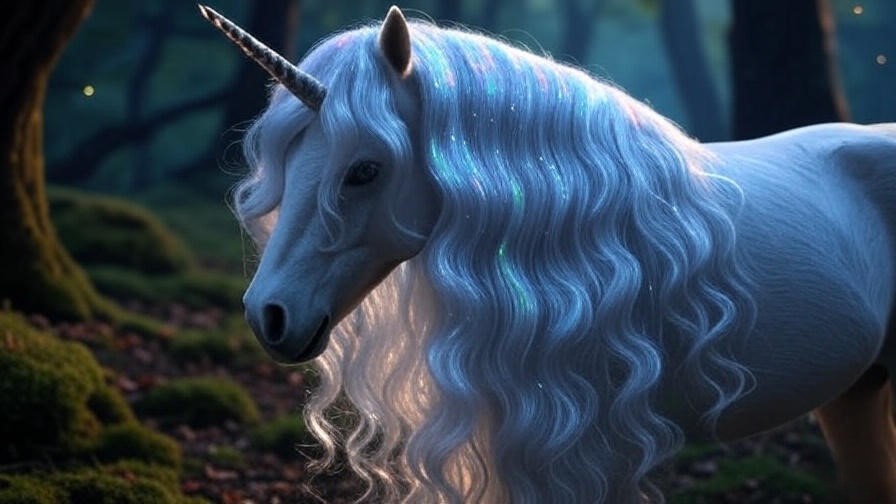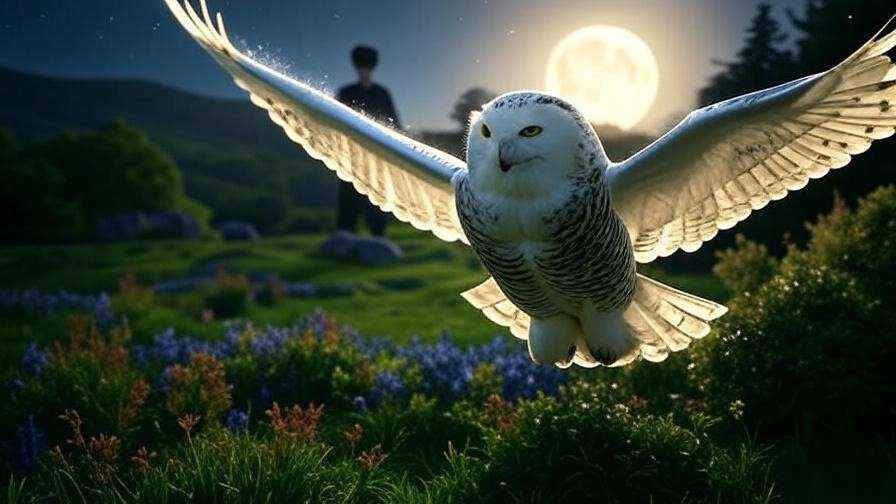
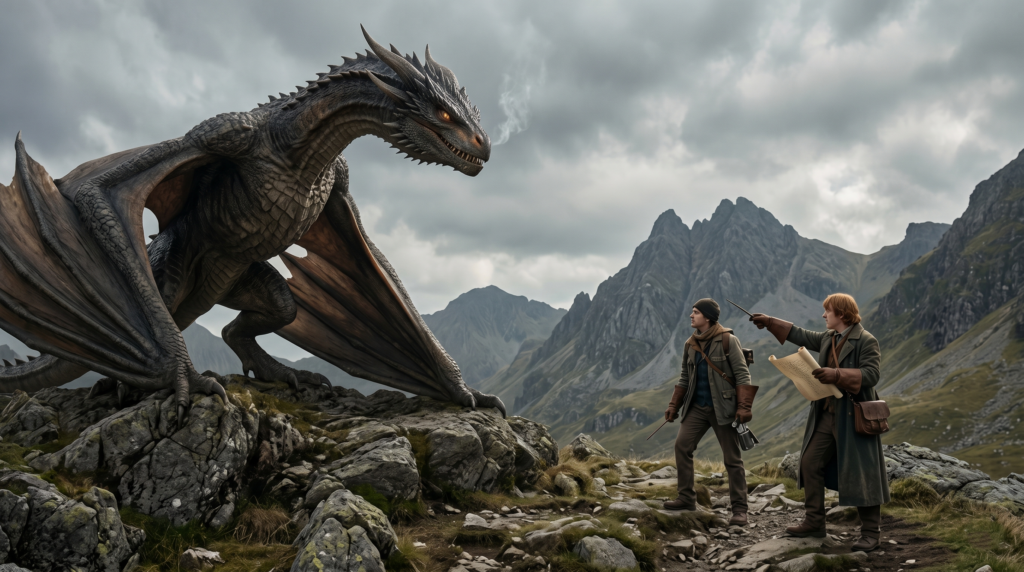
Picture the sweeping, cinematic skies of traditional fantasy: Daenerys Targaryen commanding the fearsome Drogon with a single High Valyrian word, or Eragon soaring seamlessly through the clouds with Saphira. In these universes, dragons are majestic companions, bound by magic and blood to their human counterparts. Now, contrast that with the wizarding world. When we finally see our heroes take to the skies on a dragon, it is not an act of triumphant mastery. Instead, Harry, Ron, and Hermione are desperately clinging to the scales of a blind, tortured, half-starved Ukrainian Ironbelly, smashing their way out of the subterranean vaults of Gringotts Wizarding Bank.
This stark contrast often leaves fans wondering about the mechanics of magizoology in J.K. Rowling’s universe. Are there any true Dragon Riders in Harry Potter? Here at Harry Potter Insider, we constantly delve into the hidden mechanics of the wizarding world, and this is one of the most fiercely debated topics in the fandom.
The short answer is no; true dragon riders do not exist in this canon. However, the why is far more fascinating than the simple lack of them. In the Harry Potter universe, dragons are not pets, magical familiars, or bonded mounts. They are apex predators—ancient, volatile, and classified by the Ministry of Magic as utterly untamable. In this comprehensive guide, we will break down the myth versus the reality of dragon riding, explore the deep magical lore that makes these beasts so resistant to wizards, and analyze the closest moments we get to a true dragon rider in the series.
The Myth vs. Reality of “Dragon Riders” in Harry Potter
To understand why wizards don’t ride dragons, we first have to define what a “dragon rider” actually is within the broader context of fantasy literature.
Typically, a dragon rider shares a profound, often telepathic or magical bond with their dragon. The dragon willingly submits to the rider, and the two operate as a unified front in battle or travel. They communicate, they protect one another, and there is a mutual respect.
In the wizarding world, this concept is purely a myth. The reality is that dragons are viewed as terrifying forces of nature. A wizard on the back of a dragon is not a rider; they are an incredibly lucky survivor who is moments away from being incinerated or thrown off. The magical creatures in Harry Potter operate on a spectrum of intelligence and docility. While creatures like Hippogriffs demand respect and can be flown, and Thestrals are gentle enough to carry students to Hogwarts, dragons possess a wild, chaotic magic that fundamentally rejects human subjugation.
“Dragons are among the most difficult to hide, let alone domesticate. Females are generally larger and more aggressive than males, though neither should be approached by any but highly skilled and trained wizards.”
— Newt Scamander, Fantastic Beasts and Where to Find Them
This quote from the wizarding world’s preeminent Magizoologist perfectly encapsulates the canonical stance: you do not approach a dragon with the intent to bond; you approach it with the intent to survive the encounter.
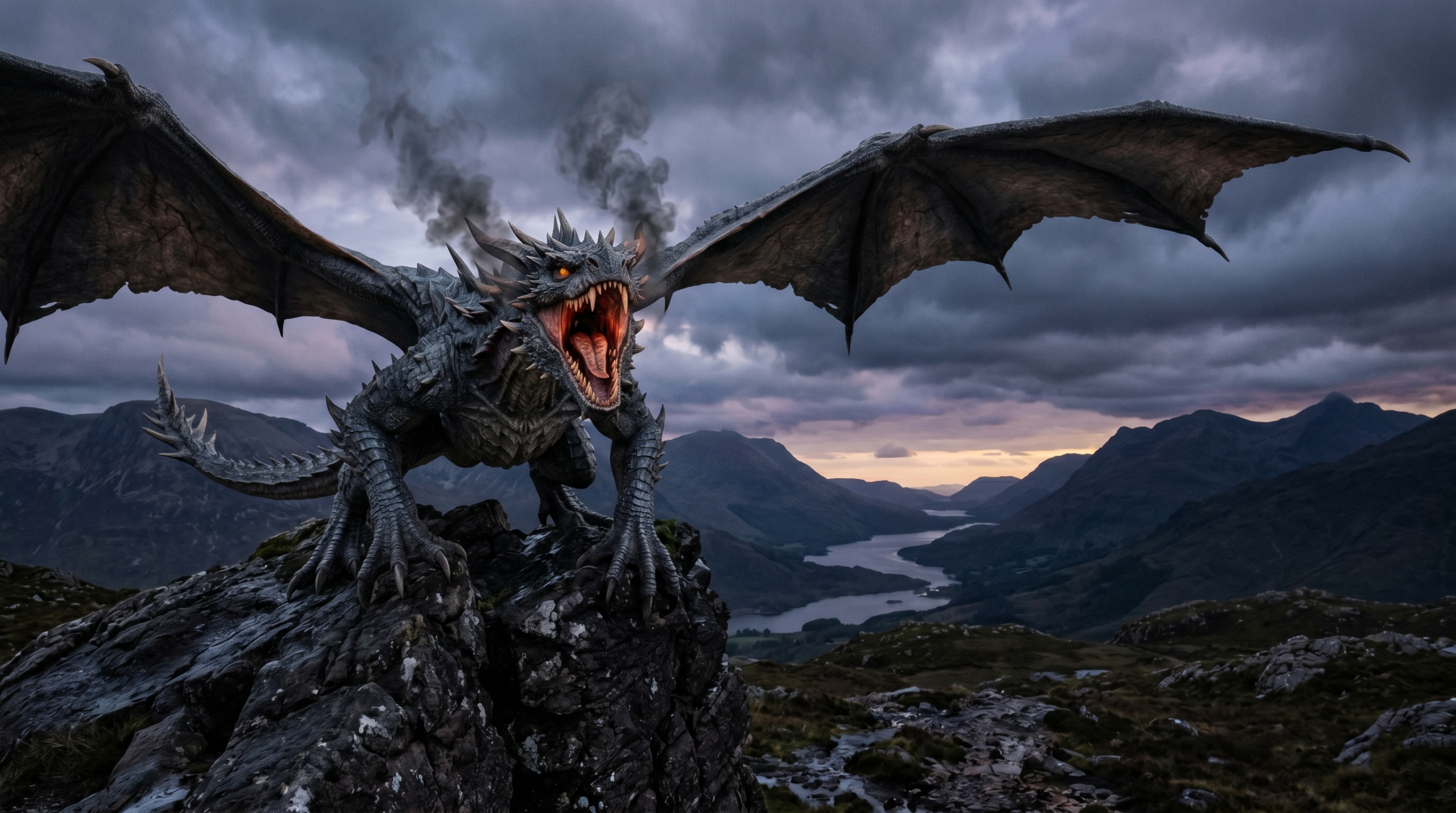 Why Wizards Can’t Tame Dragons: The Magical Lore
The inability to tame a dragon is not for lack of trying. Throughout magical history, wizards have undoubtedly attempted to harness the power of these beasts. However, several deeply ingrained biological and legal factors make it impossible.
The Ministry of Magic Classification (XXXXX)
The Department for the Regulation and Control of Magical Creatures is the governing body responsible for the safety of both wizards and magical beasts. Within this department, the Beast Division assigns danger levels to all known creatures. Dragons are universally classified as XXXXX.
This classification is the highest possible danger rating. It translates explicitly to: Known wizard killer / impossible to train or domesticate. Other creatures sharing this terrifying classification include the Acromantula (giant spiders like Aragog), the Basilisk, and the Nundu (a giant leopard whose breath causes fatal disease). The Ministry does not hand out this classification lightly. It is an acknowledgment that dragons lack the temperament, the biological inclination, or the necessary subservience to ever be trained as mounts.
 Magical Resistance and Dragon Hide
One of the primary reasons a wizard cannot simply “spell” a dragon into submission is the creature’s inherent magical resistance. Dragon hide, blood, heartstrings, and horns are imbued with ancient, incredibly potent magic. This makes dragon parts highly sought after for wand cores (as favored by Mr. Ollivander) and protective clothing.
However, this same magical potency acts as an impenetrable shield against standard spells. You cannot simply cast the Imperius Curse (Imperio) on a dragon to control its mind. You cannot easily Stun them. During the events of Harry Potter and the Goblet of Fire, prior to the First Task of the Triwizard Tournament, it took half a dozen trained Dragonologists casting the Stunning Spell (Stupefy) simultaneously just to subdue a single dragon, and even then, the spells had to hit the creature at the exact same moment to breach its magical defenses. If a wizard cannot reliably penetrate a dragon’s hide with a spell, establishing a magical bond of control is entirely out of the question.
The Cruelty of “Taming” Attempts
Because magical bonding is impossible, the only way wizards have historically managed to “control” dragons is through severe physical and psychological abuse.
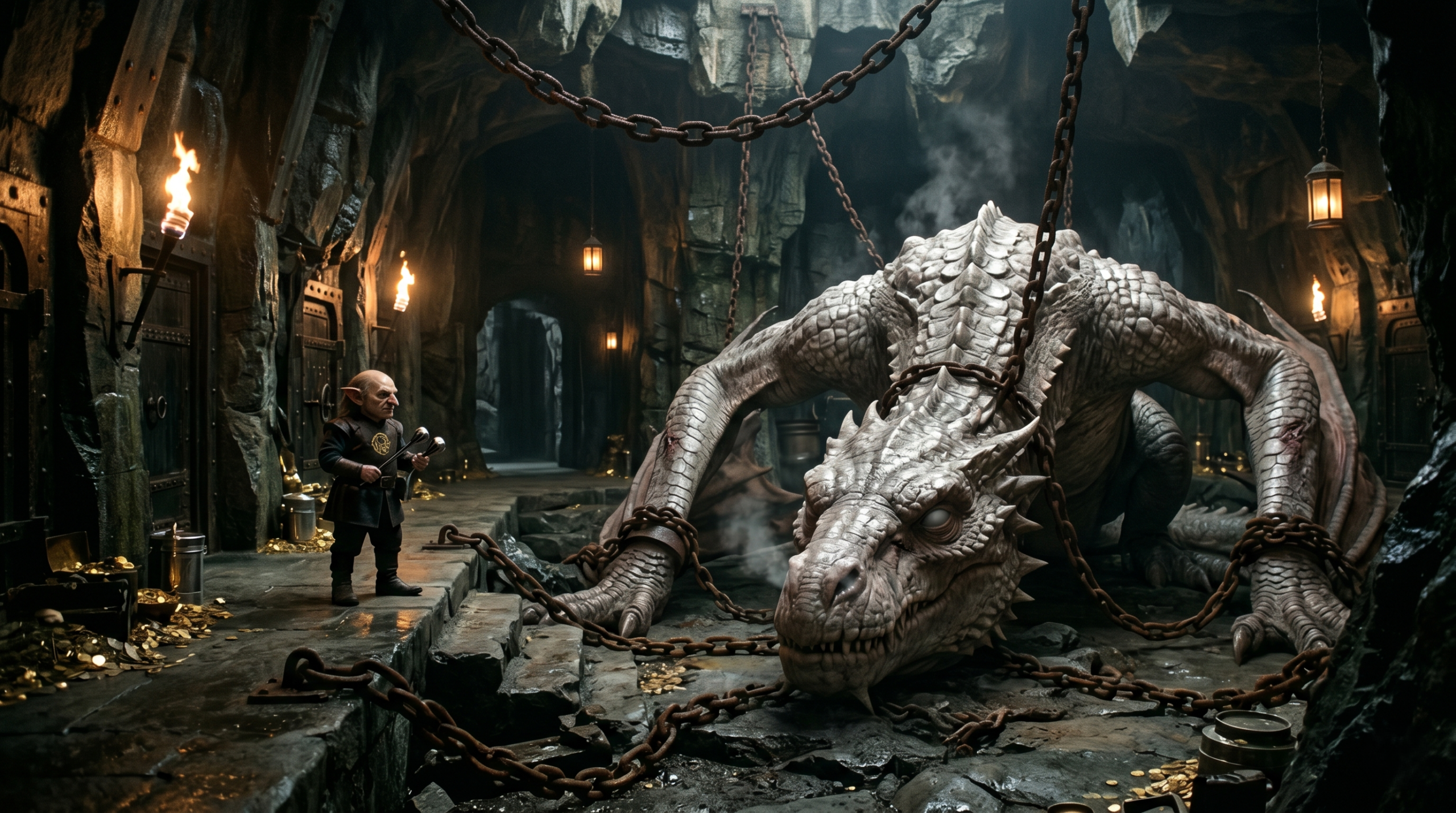
The most prominent example of this is the Gringotts guard dragon. To keep the Ukrainian Ironbelly subservient, the goblins and wizards at Gringotts utilized classical conditioning rooted in pain. They used Clankers—small metal instruments that made a loud, ringing noise. Whenever the Clankers were shaken, the dragon would retreat in fear, conditioned to expect that the noise would be followed by searing pain from hot swords.
This is not riding; this is subjugation through torture. It highlights a darker theme in the wizarding world regarding the exploitation of magical creatures and firmly closes the door on the romanticized idea of a noble wizard flying off into the sunset on a willing dragon.
The Closest We Get: Notable “Riding” Events in Canon
While true riders don’t exist, our protagonists do find themselves airborne on dragons under extreme circumstances. Let’s break down the canonical events that often confuse casual viewers into thinking dragon riding is a common wizarding practice.
The Gringotts Breakout (The Ukrainian Ironbelly)
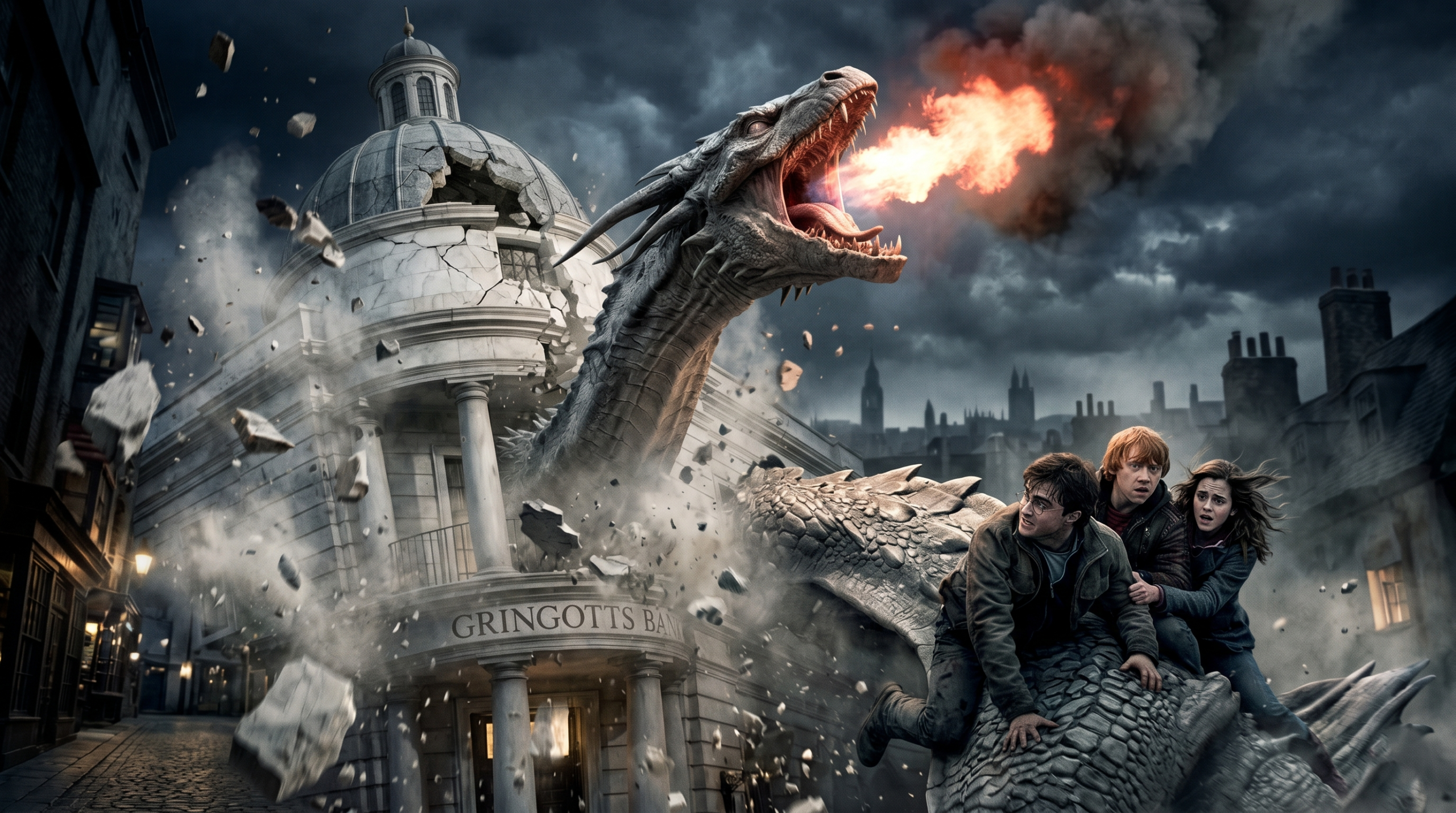
The most famous instance of “dragon riding” in the series occurs in Harry Potter and the Deathly Hallows. In their hunt for Helga Hufflepuff’s cup (one of Lord Voldemort’s Horcruxes), Harry, Ron, and Hermione become trapped in the deepest vaults of Gringotts. With their cover blown and security closing in, their only means of escape is to release the captive Ukrainian Ironbelly.
Hermione severs the dragon’s chains using the Relashio spell, and the trio clambers onto its massive, scarred back. When the dragon realizes it is free, it blasts its way up through the cavernous tunnels and the marble floor of the bank, taking flight into the London sky.
It is crucial to note that the trio had absolutely zero control over the beast. They were merely hitchhikers clinging to its scales for dear life. They could not steer it, land it, or communicate with it. When the dragon finally flew low over a lake, the trio had to hurl themselves off its back into the freezing water before it noticed they were there and decided to turn them into a mid-flight snack.
 The Triwizard Tournament (The First Task)
While not a case of riding a dragon, Harry’s encounter with the Hungarian Horntail in The Goblet of Fire is the most iconic aerial dragon duel in the series. The Hungarian Horntail is considered the most vicious of all dragon breeds, armed with a spiked tail and a staggering breathing range for its fire.
Harry did not attempt to tame the beast; he used his Firebolt broomstick to outmaneuver it. This scene reinforces the vast power gap between a wizard and a dragon. Harry’s strategy relied entirely on his exceptional skills as a Seeker to avoid the dragon, proving that evasion, not domination, is the only viable tactic when facing one of these creatures in the air.
Hogwarts Legacy & Expanded Canon
With the expansion of the wizarding world through games like Hogwarts Legacy and the Fantastic Beasts film series, fans have seen more dragon interactions. In Hogwarts Legacy, players encounter poachers capturing dragons and partake in high-stakes rescue missions. However, the game strictly adheres to canon lore: players can ride Hippogriffs, Thestrals, and broomsticks, but they cannot unlock a dragon as a flying mount. The dragons remain wild entities that must be released into their natural habitats.
Similarly, in Fantastic Beasts, Newt Scamander works diligently to protect dragons (such as the Ukrainian Ironbelly he worked with on the Eastern Front during WWI), but he uses his expertise to keep them safe from humans, not to use them for transportation.
Dragonologists: The True Masters of Dragons
If dragon riders are a myth, who are the wizards that actually interact with these massive beasts on a daily basis? Enter the Dragonologists.
Who Are Dragonologists?
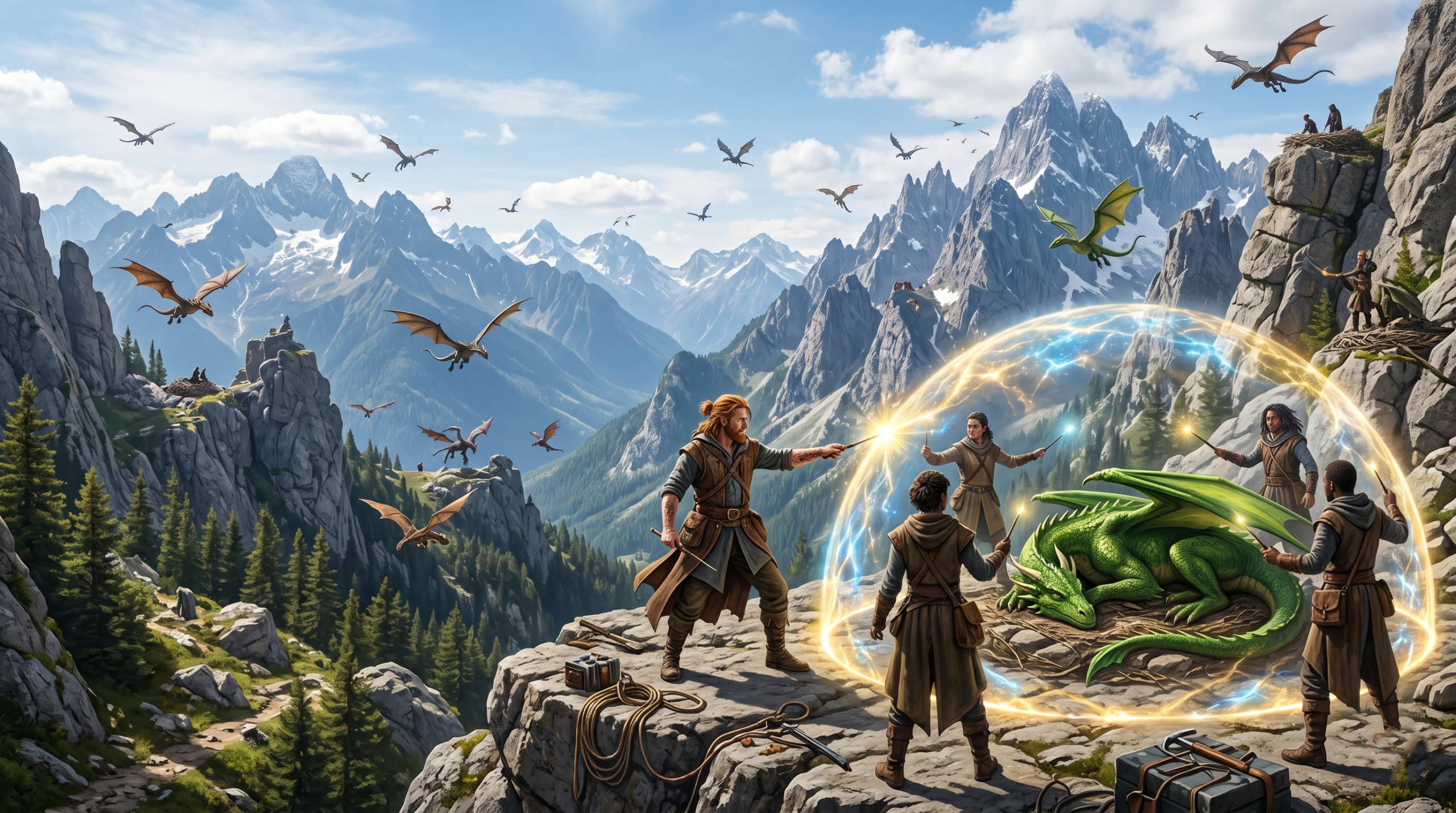
A Dragonologist is a specialized Magizoologist who dedicates their life to the study, care, and protection of the various dragon breeds across the globe. This is not a glamorous job of soaring through the clouds. It is grueling, highly dangerous, and physically demanding work. Dragonologists operate out of remote, heavily warded reservations—such as the famous Romanian Dragon Sanctuary—where they observe the beasts in their natural habitats, monitor breeding populations, and intervene only when a dragon threatens to breach the International Statute of Wizarding Secrecy.
They are heavily armed with magical knowledge, constantly casting protective enchantments, and working in coordinated teams. A single Dragonologist would never attempt to subdue a dragon alone; doing so is practically a death sentence.
 The Charlie Weasley Factor
The most prominent Dragonologist in the Harry Potter series is, of course, Charlie Weasley. Charlie serves as the perfect antithesis to the traditional fantasy “dragon rider.” When we first meet Charlie in the books, he is described as having hands covered in thick calluses and blistering burns—the physical toll of working proximity to XXXXX-class creatures.
Charlie’s relationship with dragons is built on a foundation of profound respect and healthy fear. He does not view them as pets to be commanded. During the Triwizard Tournament, Charlie is brought in to handle the nesting mothers used in the First Task. His role is to ensure the dragons are safely transported and contained, not to ride them into the arena. Charlie represents the pinnacle of human-dragon interaction in J.K. Rowling’s universe: stewardship rather than subjugation.
The Illegality of Dragon Breeding
To further prevent wizards from attempting to domesticate or ride dragons, the Ministry of Magic established strict legal frameworks. The most notable of these is the Warlock’s Convention of 1709, which explicitly outlawed dragon breeding within Great Britain.
The necessity of this law is perfectly illustrated during Harry Potter and the Sorcerer’s Stone. Rubeus Hagrid, a man with a notorious blind spot for terrifying monsters, illegally acquires a dragon egg from a disguised Quirinus Quirrell. When the egg hatches, Hagrid attempts to raise the Norwegian Ridgeback—which he names Norbert (later discovered to be a female, Norberta)—in his wooden hut. Within weeks, the infant dragon becomes entirely unmanageable, viciously biting Ron Weasley and threatening to burn Hagrid’s home to the ground.
Hagrid’s disastrous attempt to act as a surrogate mother to a dragon proves exactly why the Warlock’s Convention of 1709 exists. If a half-giant with an immense natural affinity for magical creatures cannot tame an infant Ridgeback, the idea of a fully grown wizard saddling an adult dragon is utterly preposterous.
What If? Alternative Scenarios (Engaging the Fandom)
Part of the joy of diving deep into Harry Potter lore is exploring the hypothetical boundaries of magic. We know that in the canonical timeline, dragons cannot be tamed. But what if the timeline or the rules of magic were slightly altered? Exploring these alternative theories allows us to see just how a wizard might achieve the impossible.
What if a Wizard Could Bond with a Dragon?
If we theorize an alternative scenario where a wizard successfully bonds with a dragon, standard charms and hexes would not be enough. The wizard would likely need to possess a mastery of obscure, ancient magic—perhaps similar to the emotional resonance seen in Hogwarts Legacy.
Alternatively, a master Legilimens (someone capable of navigating the layers of a mind, like Voldemort or Queenie Goldstein) might be able to project their consciousness into the mind of a dragon. However, because a dragon’s mind is driven by primal instinct and ferocious territoriality, attempting Legilimency on an adult Hungarian Horntail would likely fracture the wizard’s own mind before any bond could be formed. It would require a wizard of unparalleled mental fortitude to establish a symbiotic, rather than parasitic, connection.
The Patronus Connection
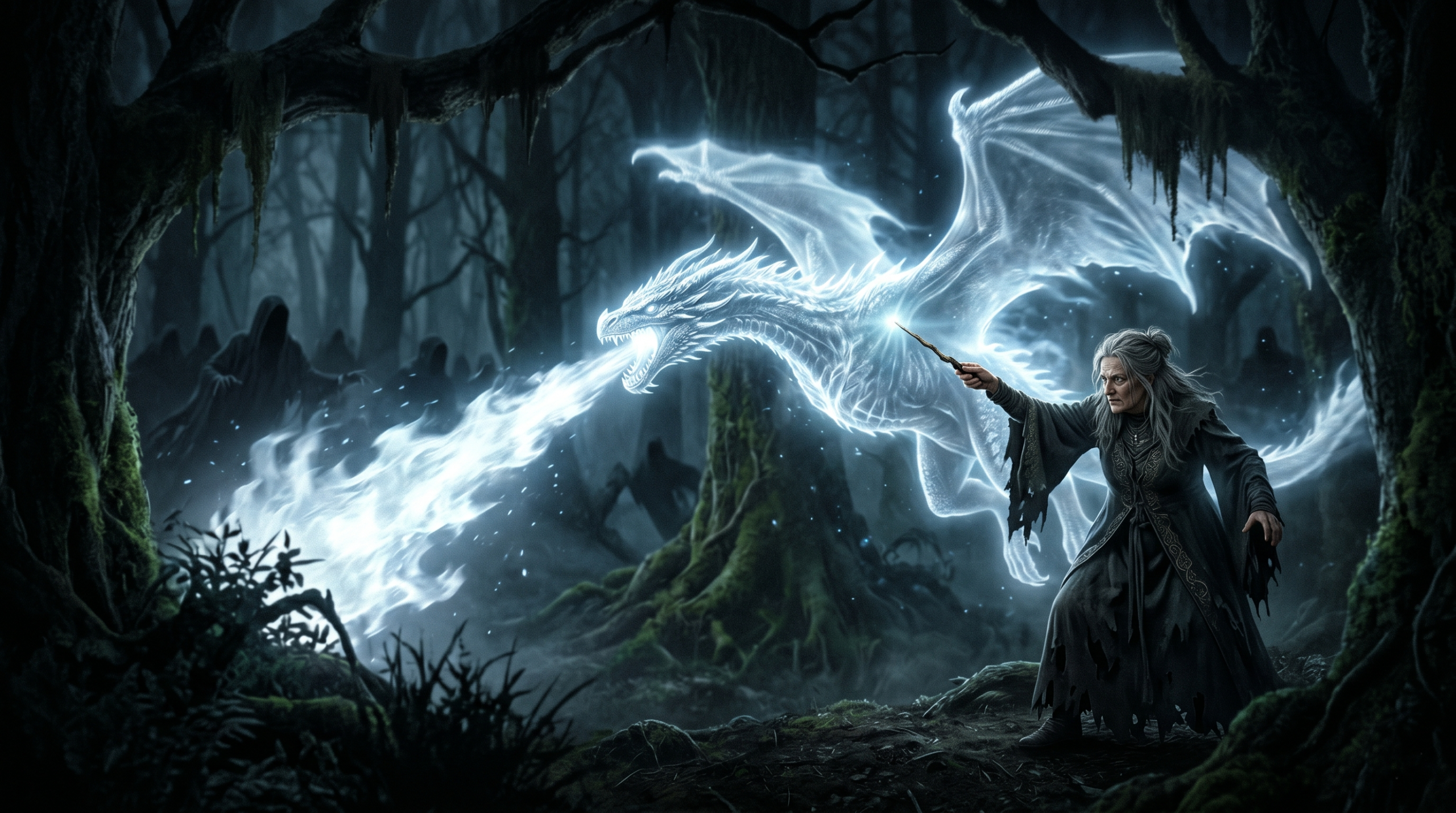
While a physical wizard cannot ride a dragon, a wizard’s soul can occasionally reflect one. The Patronus Charm is a projection of positive energy and deep emotional resonance. While most Patronuses take the form of common animals (stags, otters, dogs), magical creature Patronuses are incredibly rare.
According to wizarding lore, a Dragon Patronus is one of the rarest forms a witch or wizard can cast. If a wizard casts a Dragon Patronus, it signifies a fierce, untamable inner spirit and a fiercely protective nature. It is the closest a wizard can get to truly aligning their spirit with a dragon—wielding the creature’s immense, fiery power purely as a guardian of light against the Dementors, without ever having to risk being burned alive.
 Frequently Asked Questions (FAQ)
Did anyone ever ride a dragon in Harry Potter?
In the canon series, no one has ever ridden a dragon as a bonded mount. The closest instance was when Harry Potter, Ron Weasley, and Hermione Granger escaped Gringotts by clinging to the back of a blind Ukrainian Ironbelly, but they had absolutely no control over the beast and were merely using it to flee.
What is the strongest dragon in Harry Potter?
The Ukrainian Ironbelly is canonically the largest and physically strongest dragon breed in the wizarding world, capable of crushing dwellings and carrying immense weight. However, the Hungarian Horntail is widely considered the most dangerous and aggressive breed.
Why did Hagrid have to give up Norbert the dragon?
Hagrid had to give up Norbert (a Norwegian Ridgeback) because breeding and keeping dragons was strictly outlawed by the Warlock’s Convention of 1709. Additionally, the dragon was growing incredibly fast, becoming highly aggressive, and posed a severe threat to the safety of the Hogwarts students and Hagrid’s wooden hut.
Are there dragons in Hogwarts Legacy you can ride?
No. While players can interact with dragons, rescue them from poachers, and witness their immense power during specific quests, dragons cannot be unlocked as flying mounts in Hogwarts Legacy. Players must rely on broomsticks, Hippogriffs, and Thestrals for aerial travel.
Can you use the Imperius Curse to control a dragon?
While never explicitly shown failing in the books, a dragon’s natural magical resistance (derived from its thick hide and innate ancient magic) makes it highly improbable that a single wizard could successfully hold an adult dragon under the Imperius Curse for any functional length of time.
Ultimately, the absence of Dragon Riders in Harry Potter is not a missing piece of lore; it is a deliberate, brilliant world-building choice. By keeping dragons completely wild, unyielding, and dangerous, the wizarding world maintains a sense of awe and terror regarding the natural magical world. Dragons are a stark reminder to wizardkind that despite their wands, potions, and complex societies, there are ancient forces of magic that simply refuse to be conquered.
From the terrifying XXXXX Ministry classification and the impenetrable dragon hide, to the tragic subjugation of the Gringotts guard and the grueling work of Dragonologists like Charlie Weasley, dragons remain the undisputed, untamable monarchs of the magical skies.
We want to hear from you! If you could risk your life to study just one of the 10 known dragon breeds in the Wizarding World at the Romanian sanctuary, which would it be? The venomous Peruvian Vipertooth or the massive Ukrainian Ironbelly? Let us know in the comments below!
For more deep dives into magizoology, be sure to check out our complete guide to Hagrid’s Most Dangerous Pets and our breakdown of the Warlock’s Convention of 1709.