When analyzing the cultural impact of the wizarding world’s cinematic adaptations, a common debate inevitably surfaces among the fandom: the delicate balance between visual spectacle and narrative depth. Of all the installments, the transition from page to screen in the Harry Potter 6 films era—specifically the highly anticipated Harry Potter and the Half-Blood Prince—remains the most heavily scrutinized by lore enthusiasts. Released in 2009, David Yates’s adaptation was visually breathtaking, relying heavily on a desaturated, moody cinematic palette mixed with a surprisingly comedic, romance-heavy tone.
However, while the film spent ample runtime focusing on teenage hormones, Quidditch tryouts, and love potions at Hogwarts, it sacrificed the most vital element of J.K. Rowling’s original story: the true, terrifying origin of Lord Voldemort.
For movie-only fans, Voldemort’s motivations and the mechanics of his Horcruxes in the final films can sometimes feel a bit disjointed. It leads many to ponder what if the filmmakers had committed to the darker, more psychological thriller aspect of the book? This article serves as your “Missing Pensieve.” We are going to restore the crucial scenes, subplots, and character deep-dives that didn’t make the 153-minute runtime, proving why the sixth book is fundamentally a detective story rather than just another year at school.
II. The Pensieve Gap: Why the Memories Mattered
To understand the magnitude of what was lost in the adaptation, we must first look at the literary purpose of Albus Dumbledore’s Pensieve. In the novel, Harry’s private lessons with the Headmaster are not merely about learning new spells; they are deep dives into criminal psychology. Dumbledore spends the year meticulously showing Harry the life of Tom Marvolo Riddle, gathering memories from various witches, wizards, and magical creatures to understand exactly how a half-blood orphan became the most dangerous Dark Wizard in history.
The movie version severely truncates this journey. We are given only two significant memories: Dumbledore’s initial meeting with a young Tom at Wool’s Orphanage, and Professor Horace Slughorn’s tampered (and eventually untampered) memory regarding the creation of Horcruxes.
While these two scenes are undeniably important, omitting the rest creates a massive narrative gap. The missing memories were not just flavorful world-building; they were the literal blueprints for the Horcrux hunt. They explained Voldemort’s obsession with Hogwarts founders’ artifacts, his vanity, and his specific magical triggers. Without them, Harry’s quest in the Deathly Hallows feels far more reliant on luck and guesswork than the calculated, informed mission it was meant to be.
III. The House of Gaunt: The Missing Origin Story
Perhaps the most glaring and frustrating omission for dedicated fans was the complete erasure of the Gaunt family. In the book, Dumbledore shows Harry a memory belonging to Bob Ogden, an employee of the Department of Magical Law Enforcement. Through this memory, we are transported to a filthy, dilapidated shack near Little Hangleton, introducing us to Voldemort’s maternal family: Marvolo Gaunt and his two children, Morfin and Merope.
The Bloodline and the Ring
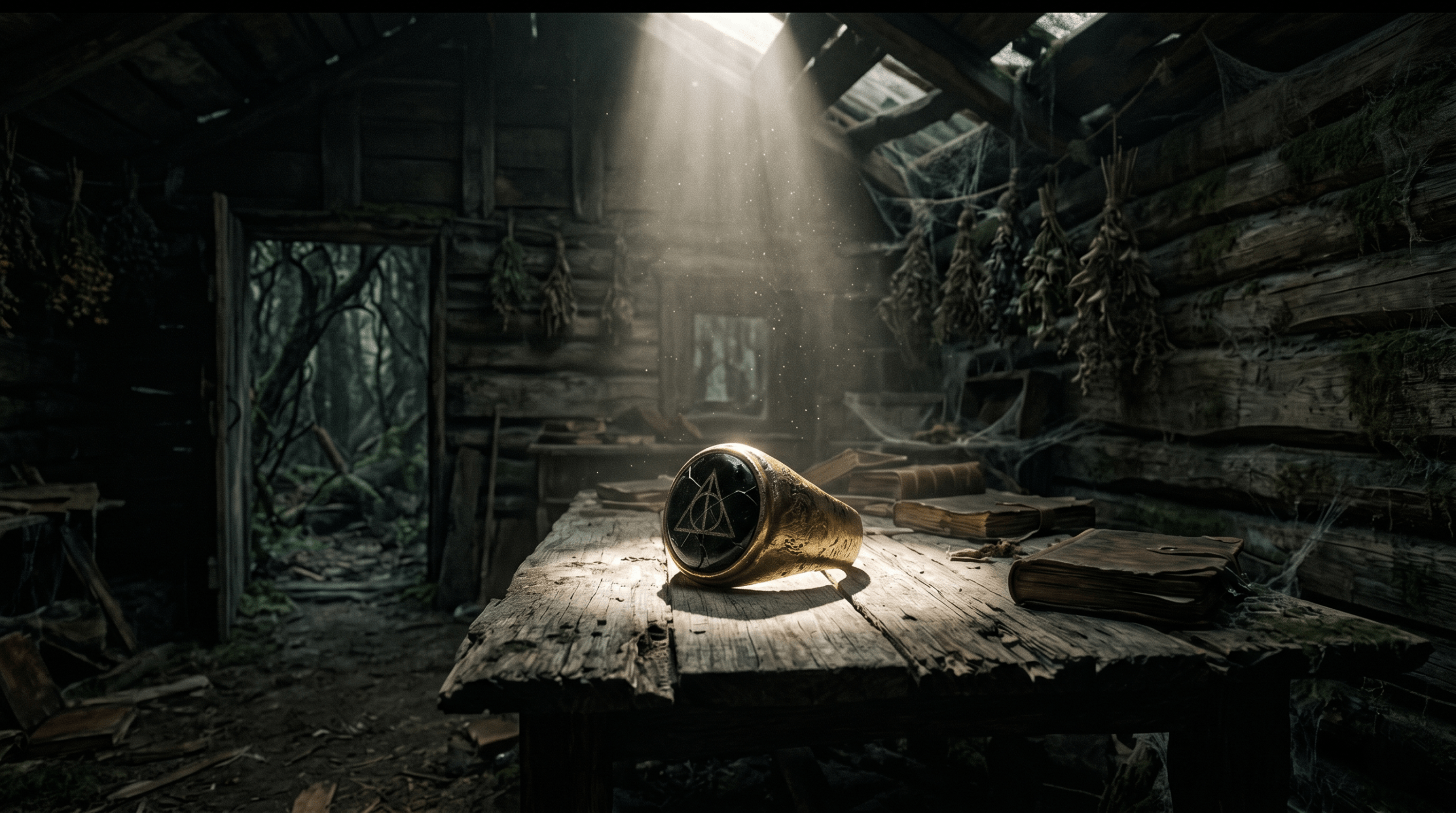
The Gaunts are pure-blood supremacists descended directly from Salazar Slytherin, but they are far from the wealthy, aristocratic Malfoys. They are deeply impoverished, inbred, and violent, clinging to their ancestry as their only source of pride. Marvolo proudly displays two family heirlooms: a heavy gold locket bearing Slytherin’s mark, and a black-stoned ring bearing the Peverell coat of arms.
Seeing the ring in its original setting is a vital piece of foreshadowing. It explains why Voldemort later turned it into a Horcrux, and it introduces the Resurrection Stone long before the Deathly Hallows brings the Tale of the Three Brothers to the forefront.
 The Tragic Tale of Merope Gaunt
More importantly, this memory explores the tragic origin of Voldemort’s parents. Merope Gaunt, abused by her father and brother, is described as utterly defeated and magically stunted. She develops an obsessive infatuation with a wealthy Muggle in the village, Tom Riddle Senior.
The book heavily implies that Merope used a powerful Love Potion to ensnare Riddle. Once she became pregnant, she stopped administering the potion, perhaps hoping he had genuinely fallen in love with her or would stay for the child. Instead, he fled immediately. Merope later died in childbirth at the orphanage. This backstory is critical to Voldemort’s characterization. As Dumbledore points out, because Tom Riddle was conceived under the effects of a coercive Love Potion rather than true love, he is fundamentally incapable of understanding or feeling love himself. Leaving this out of the film made Voldemort feel like a standard, “born evil” cinematic villain, rather than a deeply complex product of generational trauma and broken magic.
IV. The Murder of Hepzibah Smith: The Origin of the Cup and Locket
Another critical memory omitted from the screen is the story of Hepzibah Smith, an elderly, wealthy witch who claimed descent from Helga Hufflepuff. Following his graduation from Hogwarts, Tom Riddle shocked his professors by taking a low-level retail job at Borgin and Burkes in Knockturn Alley. However, this job gave him access to the wizarding world’s most elite artifact collectors.
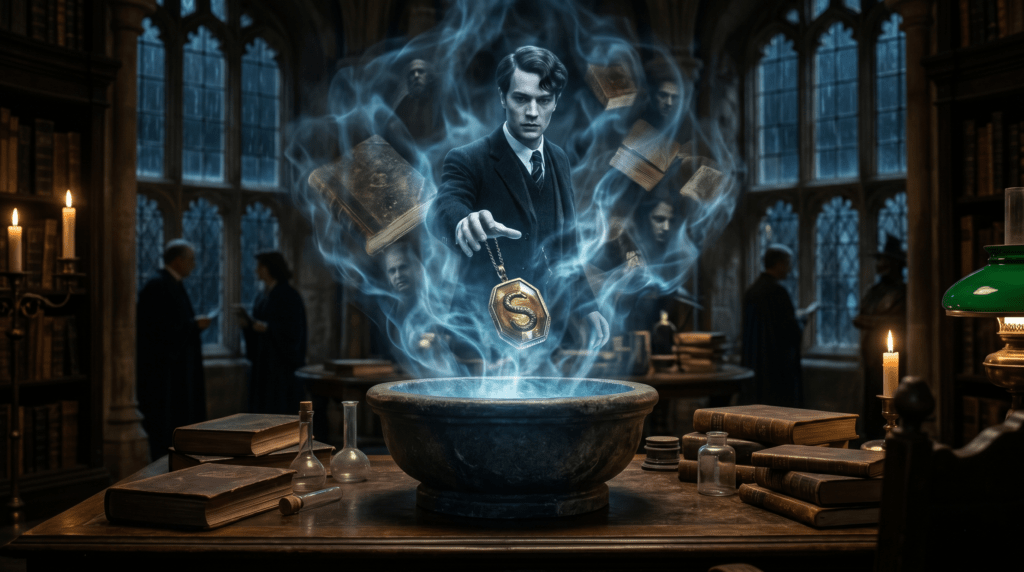
In a memory provided by a house-elf named Hokey, Harry witnesses a handsome, charming, and highly manipulative adult Tom Riddle visiting Hepzibah. Smitten by the young man, she makes a fatal error: she shows him her two most prized possessions—Helga Hufflepuff’s Cup and Salazar Slytherin’s heavy gold Locket (which she had purchased from Borgin and Burkes after a desperate, pregnant Merope Gaunt sold it for a pittance).
Within days, Hepzibah is found dead, her house-elf is framed for the murder (via false memory charms planted by Riddle), and the artifacts are gone.
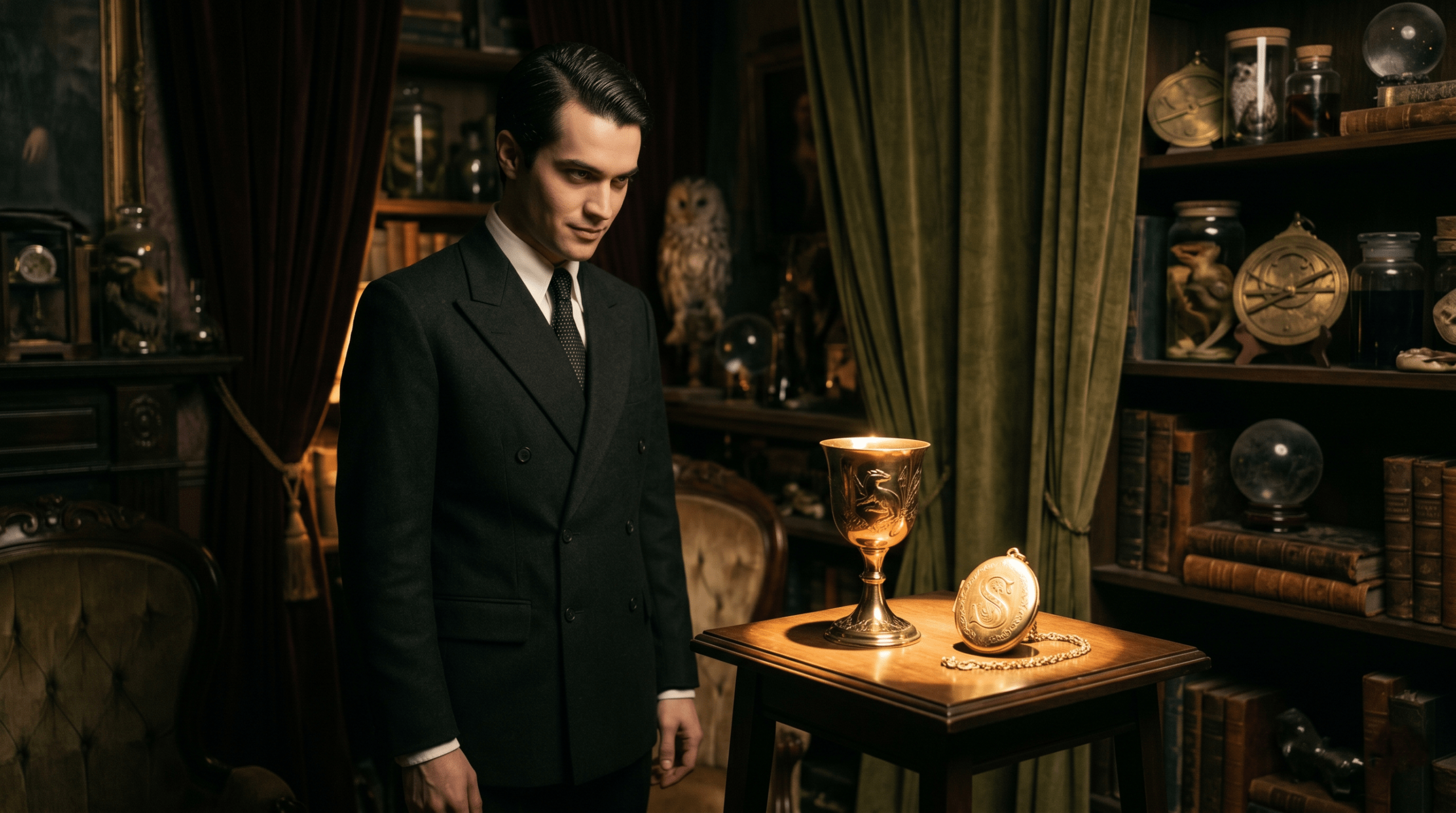 The Transformation of Tom Riddle
This omission hurts the film series on two fronts. First, it leaves movie audiences completely in the dark about what Hufflepuff’s Cup looks like or why it matters, which forces the Deathly Hallows Part 2 film to scramble and explain it during the Gringotts bank heist. Second, it robs the audience of seeing Riddle’s physical transition. In the Hepzibah memory, Riddle’s eyes briefly flash scarlet—the first sign that his soul is tearing and his humanity is slipping away as he prepares to create more Horcruxes.
V. The Job Interview: Voldemort’s Return to Hogwarts
Another crucial memory that bridges a massive plot hole in the cinematic universe takes place a decade after the murder of Hepzibah Smith. Lord Voldemort, now heavily disfigured, his face pale and snake-like, returns to Hogwarts under the guise of requesting a teaching position. He sits across from Albus Dumbledore, who has recently been appointed Headmaster, and asks to teach Defense Against the Dark Arts.
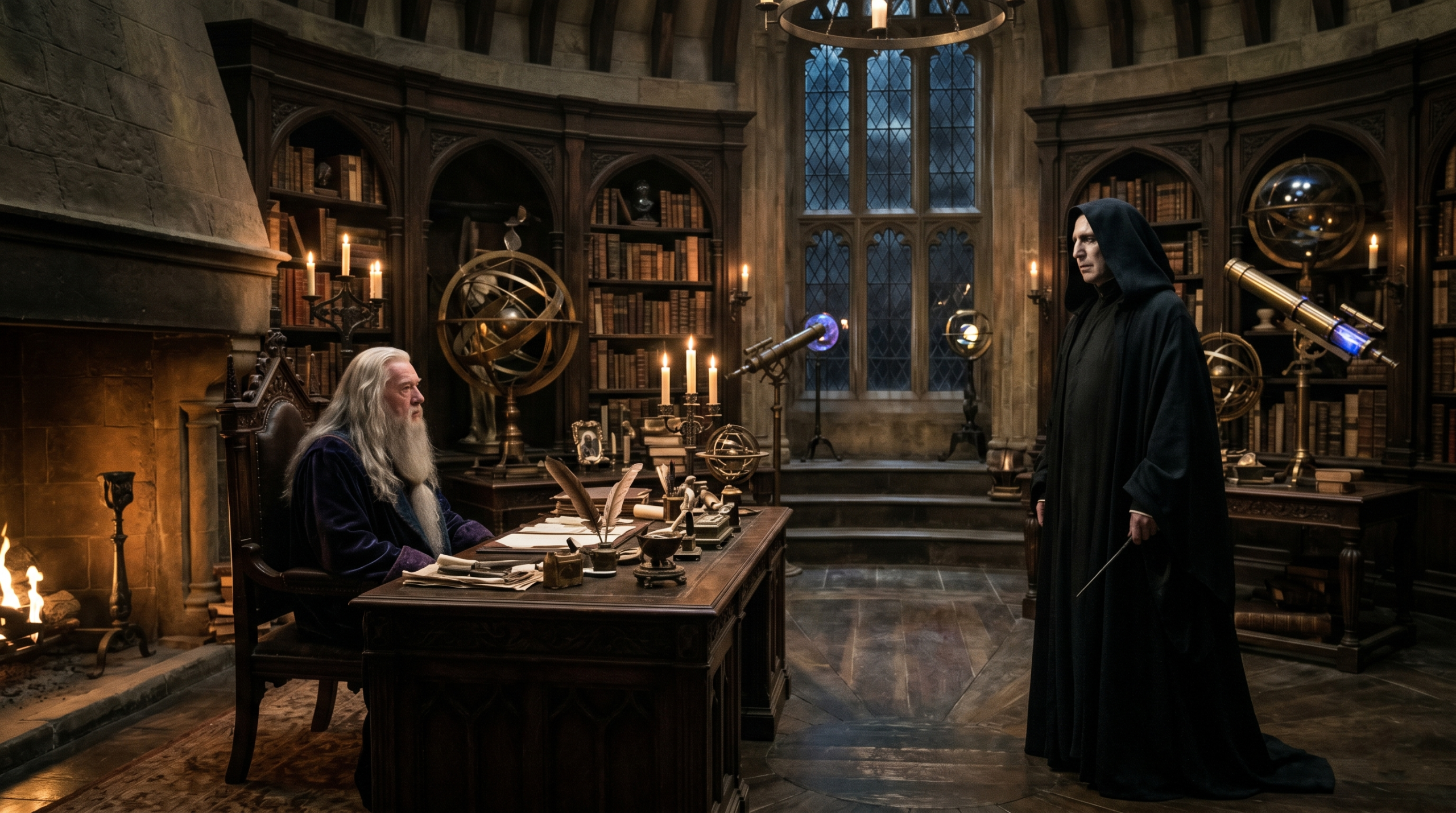 The Curse on the DADA Position
Dumbledore, fully aware of Voldemort’s Death Eaters waiting down in Hogsmeade, sees through the charade and denies him the job. What the film leaves out is the immediate consequence of this rejection: Voldemort places a powerful jinx on the Defense Against the Dark Arts position. From that day forward, no professor lasts more than a single school year. This vital piece of lore explains the constant revolving door of teachers—Quirrell, Lockhart, Lupin, Moody (Crouch Jr.), Umbridge, and Snape—that defines the structure of the entire series.
The Hidden Agenda
Furthermore, Voldemort didn’t actually want to teach. His true motive for returning to the castle was to secretly hide one of his newly created Horcruxes: Rowena Ravenclaw’s Diadem. He slipped into the Room of Requirement during this visit to stash the artifact. Because the movie ignores this memory, Harry’s sudden realization of where the Diadem is located in The Deathly Hallows Part 2 feels incredibly rushed. In the text, the breadcrumbs were laid out meticulously.
VI. Character Deconstruction: What the Movie Changed
Beyond the pensieve memories, the sixth film took massive liberties with core character arcs, altering the emotional resonance of the story to fit a more traditional Hollywood mold.
The “Ginny Problem”
No character suffered more from cinematic adaptation than Ginny Weasley. In the novel, Ginny is fiercely independent, deeply funny, highly popular, and a formidable witch known for her devastating Bat-Bogey Hex. Her relationship with Harry develops naturally out of shared trauma, mutual respect, and her vibrant personality pulling him out of his dark moods.
The movie, however, reduces her to a quiet, awkward background character. The organic, fiery chemistry of the books is replaced with incredibly stilted interactions—most notoriously, the scene where she kneels to tie Harry’s shoelace, or the awkward feeding of a mince pie. By removing Ginny’s agency and wit, the film fundamentally changes why Harry falls for her, leaving many viewers confused about their romance.
The Half-Blood Prince Identity
The movie is titled The Half-Blood Prince, yet the mystery surrounding the titular character feels almost like an afterthought. In the text, Hermione Granger spends the entire year obsessively digging through library records to discover who owned the annotated potions book. She uncovers the lineage of Eileen Prince, a pure-blood witch who married a Muggle named Tobias Snape.
When Severus Snape finally reveals, “I am the Half-Blood Prince,” it is the culmination of a year-long investigation into blood purity and identity. In the film, Snape’s reveal happens abruptly during the escape from the Astronomy Tower, with little to no setup as to why he adopted that moniker.
The Dumbledore and Harry Dynamic
In J.K. Rowling’s text, Dumbledore spends his final year intentionally training Harry to be a leader. He treats Harry as an equal, sharing classified information and equipping him for a war he knows he won’t survive. The film softens this dynamic, painting Dumbledore more as a distant, whimsical grandfather figure, which lessens the devastating blow of his death and the heavy mantle of leadership Harry is forced to inherit.
VII. The Battle of the Astronomy Tower: The “Missing” War
The climax of the sixth book is a heart-pounding, chaotic skirmish. While Harry and Dumbledore are retrieving the fake locket from the cave, Draco Malfoy successfully smuggles a small army of Death Eaters into Hogwarts via the Vanishing Cabinet.
The Order vs. The Death Eaters
In the novel, members of the Order of the Phoenix (including Remus Lupin, Nymphadora Tonks, and Bill Weasley) and Dumbledore’s Army (armed with Felix Felicis, the liquid luck potion) engage in a brutal, full-scale battle against the invading Dark wizards through the corridors of Hogwarts. It is during this battle that Bill Weasley is savagely attacked by the werewolf Fenrir Greyback, permanently scarring him.
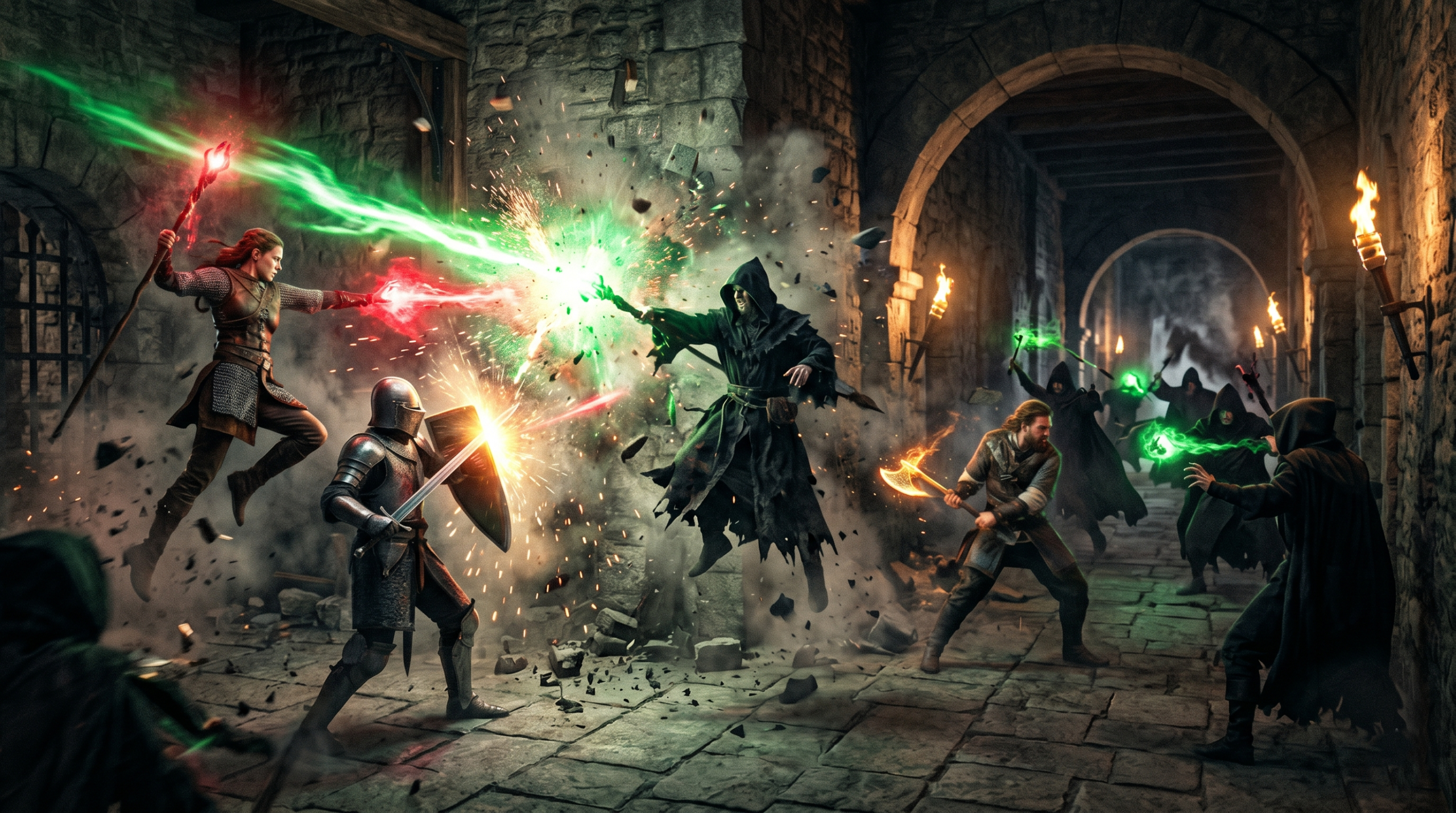 Why It Was Cut
Director David Yates explicitly chose to cut this battle from the film, reasoning that it would be too repetitive to feature a battle at Hogwarts in film six, only to do it again on a massive scale in film eight (Deathly Hallows Part 2). While understandable from a cinematic pacing perspective, the omission stripped the finale of its urgency. Without the raging battle downstairs, the Death Eaters’ escape from the castle feels too easy, and the immediate danger to the students is heavily minimized.
VIII. The White Tomb: A Funeral Denied
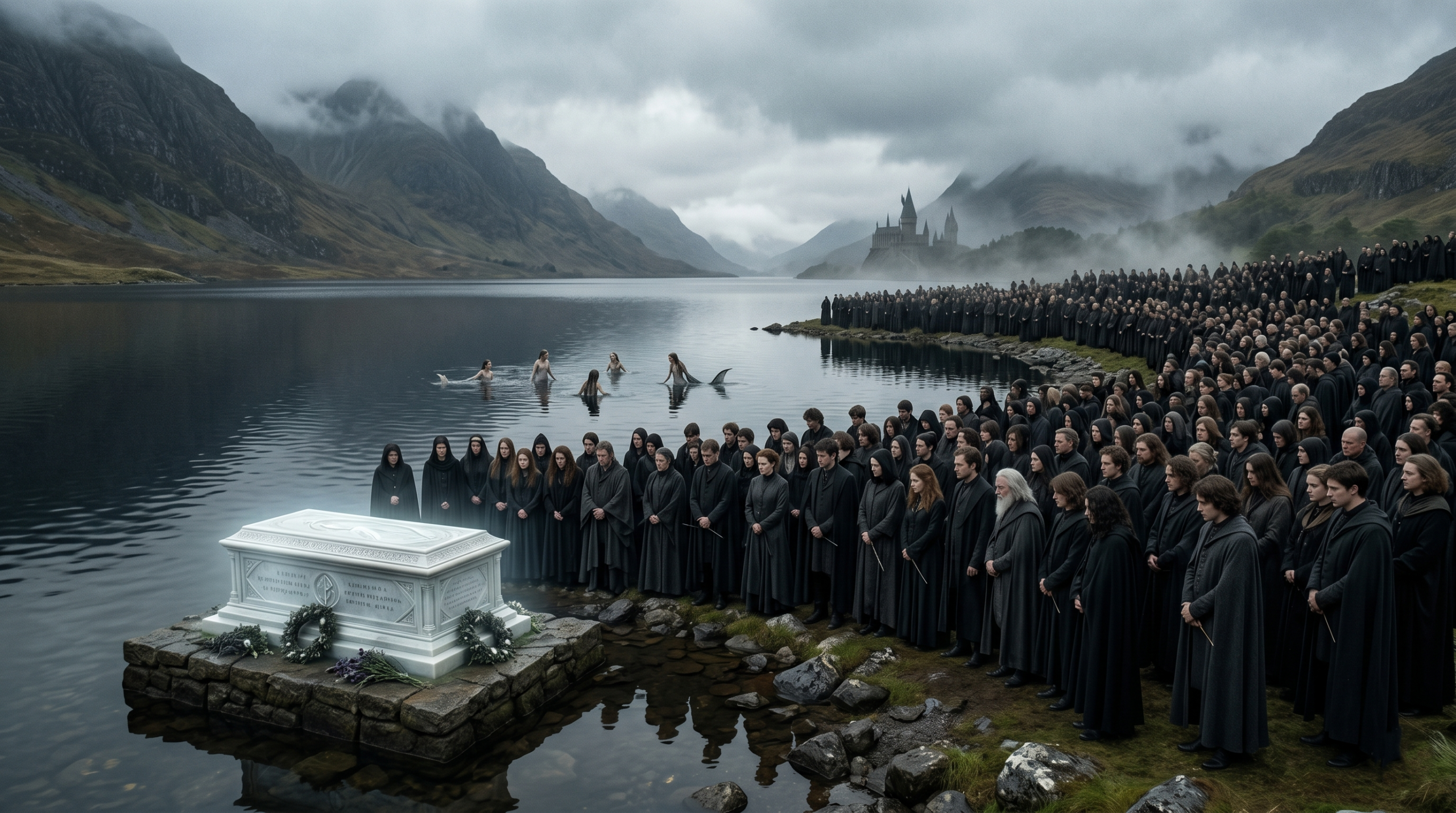
Perhaps the most heartbreaking exclusion in the entire Harry Potter 6 film is the omission of Albus Dumbledore’s funeral. The book dedicates an entire, beautifully written chapter (“The White Tomb”) to laying the Headmaster to rest.
The Ultimate Gathering
It is the only moment in the series where the entirety of the magical world comes together in a ceasefire. Ministry of Magic officials, Hogwarts students, ghosts, centaurs from the Forbidden Forest, and even the merpeople from the Black Lake all gather on the Hogwarts grounds to pay their respects to the greatest wizard of the age.
The Emotional Closure
This scene serves as the necessary “closing of the doors” for Harry’s childhood. As he watches the white marble tomb seal, Harry makes the definitive, mature decision that he will not return to Hogwarts for his seventh year. He officially breaks up with Ginny Weasley to protect her from Voldemort, accepting his destiny as the Chosen One.
The film replaces this grand, emotional farewell with a somber, albeit visually striking, scene of the students and faculty raising their illuminated wands into the sky to banish the Dark Mark. While moving, it lacks the profound, world-shifting finality of the White Tomb.
 IX. Comparison Table: Book vs. Film (Harry Potter 6)
To clearly illustrate the sheer volume of lore left on the cutting room floor, here is a breakdown of the major differences:
| Narrative Feature | The Novel: The Half-Blood Prince | The Film Adaptation (2009) |
| Voldemort’s Memories | Six highly detailed memories exploring his lineage, employment, and crimes. | Two memories (Wool’s Orphanage and Slughorn’s modified/real memory). |
| The Gaunt Family | Deeply explored; crucial for understanding the Resurrection Stone ring. | Completely omitted from the cinematic universe. |
| Hepzibah Smith & Artifacts | Explains the origin and theft of Hufflepuff’s Cup and Slytherin’s Locket. | Entirely skipped, leaving future movie plots unanchored. |
| Ginny Weasley | Outspoken, powerful, and central to the social dynamic of Gryffindor. | Muted, awkward, and given limited dialogue. |
| Hogwarts Climax | A massive battle between the Order of the Phoenix, D.A., and Death Eaters. | Bellatrix Lestrange breaks some glass in the Great Hall; no real skirmish. |
| Dumbledore’s Funeral | A massive, magical state funeral featuring magical creatures and Ministry officials. | Replaced by the “Wand Raising” scene at the base of the Astronomy Tower. |
X. Expert Analysis: How the Omissions Changed the Finale
From a storytelling and SEO perspective, analyzing these missing elements provides immense value because it explains the structural weaknesses of the final two films. When the Harry Potter 6 films team decided to pivot away from Voldemort’s backstory in favor of teenage romantic comedy, they placed an immense burden on the Deathly Hallows movies.
Because we never saw the memories of Hepzibah Smith or the DADA job interview, Harry’s hunt for the Horcruxes in the movies lacks the deductive reasoning present in the books. In the films, Harry simply “hears” Horcruxes like a radar. In the books, he knows exactly what he is looking for because Dumbledore took the time to show him Voldemort’s psychological attachment to Hogwarts founders’ objects. By skipping the lore, the film franchise sacrificed narrative logic for runtime, forever altering the fandom’s perception of the Horcrux hunt.
XI. FAQ: Common Questions About the Harry Potter 6 Films
Why did Harry Potter 6 change so much from the book?
The filmmakers opted to focus on the emotional and romantic coming-of-age aspects of the characters to provide a lighter contrast before the bleak, war-torn tone of the final two Deathly Hallows films. Pacing and runtime constraints also forced them to cut the complex, memory-heavy subplot of Voldemort’s origins.
Who is the Half-Blood Prince and why is he called that?
Severus Snape is the Half-Blood Prince. The title is a combination of his blood status (he is a half-blood, born to a pure-blood witch and a Muggle father) and his mother’s maiden name, Eileen Prince.
Which memories of Voldemort were in the book but not the movie?
The film omitted the Gaunt family memory (showing his mother, Merope), the memory of Tom Riddle framing his uncle Morfin for the murder of the Riddle family, the memory of Hepzibah Smith (showing the theft of the cup and locket), and the memory of Riddle returning to Hogwarts to ask for a teaching job.
Does Harry Potter return to Hogwarts in the 6th movie?
Yes, the entirety of the 6th movie takes place during Harry’s sixth year at Hogwarts School of Witchcraft and Wizardry. However, at the end of the film, he vows not to return for his seventh year, choosing instead to hunt Horcruxes.
The legacy of the Harry Potter 6 films era is undeniably complicated. As a piece of cinema, The Half-Blood Prince is beautifully shot, featuring stellar performances—particularly from Jim Broadbent as Horace Slughorn, Tom Felton as a terrified Draco Malfoy, and Michael Gambon in his most nuanced turn as Dumbledore. It captures the atmosphere of a “calm before the storm” perfectly.
However, as an adaptation, it left behind the darkest, most compelling lore J.K. Rowling ever penned. For fans who feel a disconnect when watching the final cinematic battle, the solution is simple: return to the text. The sixth book is a masterclass in suspense, mystery, and character psychology. By understanding the crucial memories of Tom Riddle, the tragic reality of the Gaunt family, and the heavy burden placed upon a sixteen-year-old Harry, you unlock the true, terrifying heart of the Harry Potter franchise.
What is the one scene from the Half-Blood Prince book you wish had made it into the movie? The battle in the corridors, or the funeral of the greatest wizard of the age? Let us know in the comments below!