
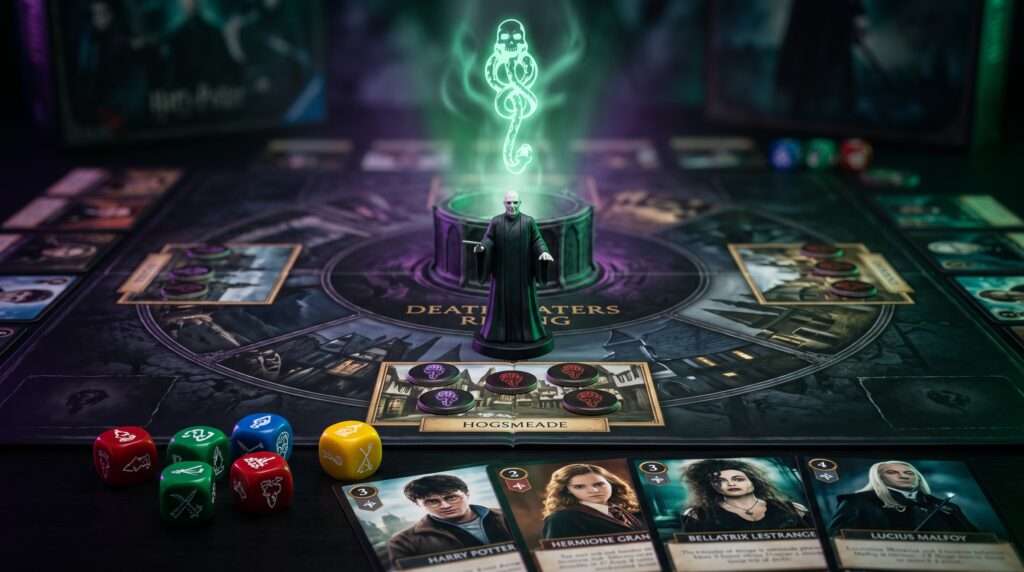
The atmosphere is dark. He-Who-Must-Not-Be-Named has returned, and the Wizarding World is in immediate peril. If you are looking for a tabletop experience that perfectly captures the mounting tension and high stakes of the Order of the Phoenix, you have likely encountered Harry Potter Death Eaters Rising. However, this notoriously challenging cooperative dice game is not for the faint of heart. Many players find themselves quickly overrun by dark forces, leaving them frustrated and wondering if the game is fundamentally unbeatable.
This comprehensive guide serves as your definitive resource. Whether you are trying to decide if this USAopoly (The Op) release deserves a spot on your gaming shelf, or you desperately need advanced tactics to mitigate bad dice rolls and finally defeat Lord Voldemort, this article has you covered. We will break down the mechanics, evaluate the gameplay experience, and provide the ultimate skyscraper strategy guide to ensure your next return to the Wizarding World ends in victory.
What is Harry Potter Death Eaters Rising?
Before diving into advanced tactics, it is crucial to understand the foundation of the game. For players discovering this title for the first time, here is a breakdown of what you are getting into.
The Basics at a Glance
-
Player Count: 2 to 4 players (with strong potential for a solo variant).
-
Play Time: Approximately 45 to 60 minutes.
-
Publisher: The Op (USAopoly).
-
Genre: Cooperative, Dice Allocation, Engine Building.
-
Target Audience: Fans of the Harry Potter franchise and tabletop gamers looking for a challenging, push-your-luck experience.
 The “Rising” Game System Explained
If you are an avid board gamer, the mechanics of this game might feel familiar. It utilizes the highly successful “Rising” system, pioneered by the critically acclaimed Thanos Rising: Avengers Infinity War and later seen in Star Wars: Dark Side Rising.
At its core, this is a cooperative dice-allocation and engine-building game. Players do not fight against each other; instead, they team up against the board itself. You start with a small, underpowered team and a handful of basic dice. By strategically deploying those dice, you recruit iconic witches and wizards to your cause, expanding your pool of dice and unlocking powerful unique abilities. It is a race against time: you must build an engine strong enough to defeat the Death Eaters before Voldemort’s corruption overtakes the pivotal locations of the Wizarding World.
Unboxing the Magic: Components & Quality
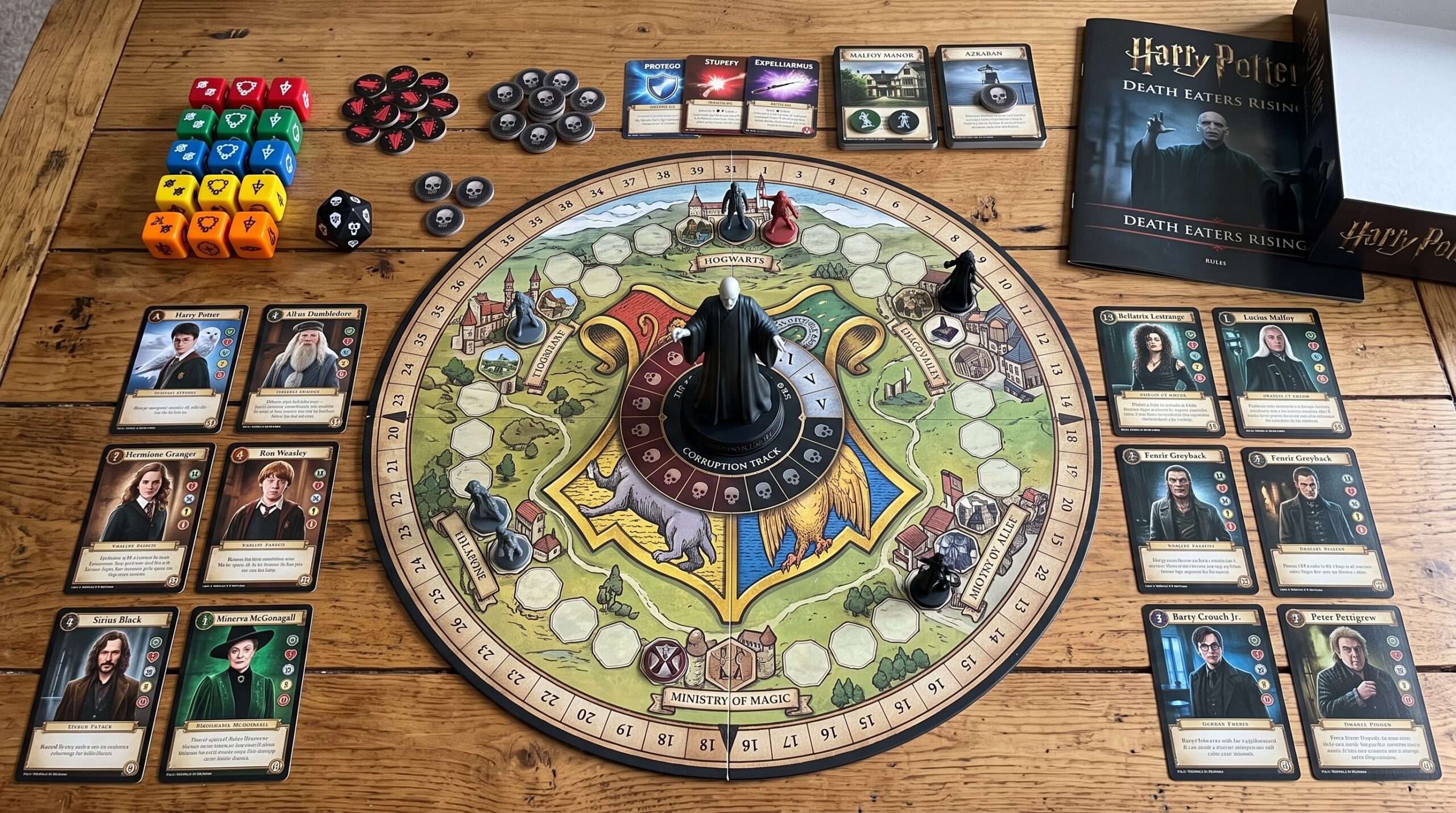
One of the immediate standout features of this game is its table presence. The components are designed with a premium, editorial-style aesthetic that looks fantastic when fully set up.
-
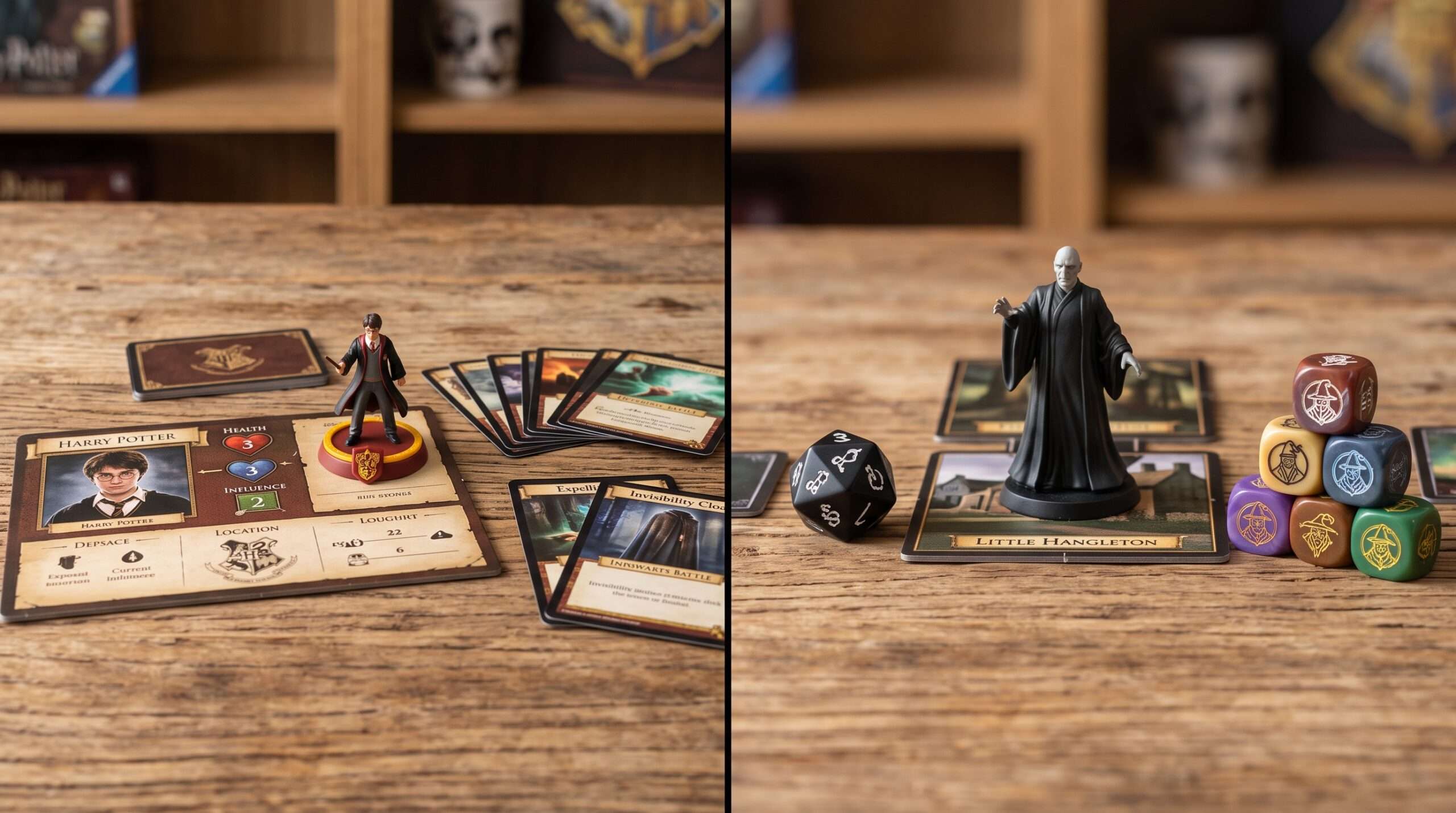
The Voldemort Centerpiece: The game board is dominated by a large, highly detailed, 3D custom sculpt of Lord Voldemort. He physically rotates to face different sections of the board, acting as a constant, imposing threat to the players.
-
Custom Wizard Dice: The game features brilliantly colored, engraved custom dice representing different magical attributes: Loyalty (Red), Friendship (Green), Knowledge (Blue), and Bravery (Yellow).
-
Cards and Tokens: The character cards feature high-contrast, cinematic imagery directly from the films, specifically focusing on the dark, mature tone of the fifth movie onward. The spell tokens and damage counters are thick, durable cardboard designed to withstand repeated play.
How to Play: Core Mechanics & Rules Summary
Understanding the rules is the first step to mastering the game. The mechanics are relatively straightforward to learn but punishingly difficult to master. Here is a streamlined summary of how a turn unfolds.
Setting Up Your Team
At the beginning of the game, players must choose one of three distinct Affiliations:
-
Dumbledore’s Army: Focuses heavily on resilience and teamwork.
-
Order of the Phoenix: Specializes in direct combat and mitigating damage.
-
Hogwarts: Excels at knowledge, healing, and resource management.
Once you choose an Affiliation, you select your starting Wizard. You might step into the shoes of Harry Potter, Hermione Granger, Albus Dumbledore, Minerva McGonagall, Sirius Black, or Nymphadora Tonks. Your starting character determines the specific pool of dice you begin the game with and grants you a unique passive or active ability.
 The Phases of a Turn
Every player’s turn follows a strict, tense sequence of phases.
1. The Travel Phase
The board is divided into three key locations: The Ministry of Magic, Diagon Alley, and Hogsmeade. At the start of your turn, you must choose one of these locations to travel to. This dictates which Wizards you can recruit and which Death Eaters you can attack this round.
2. The Voldemort Roll
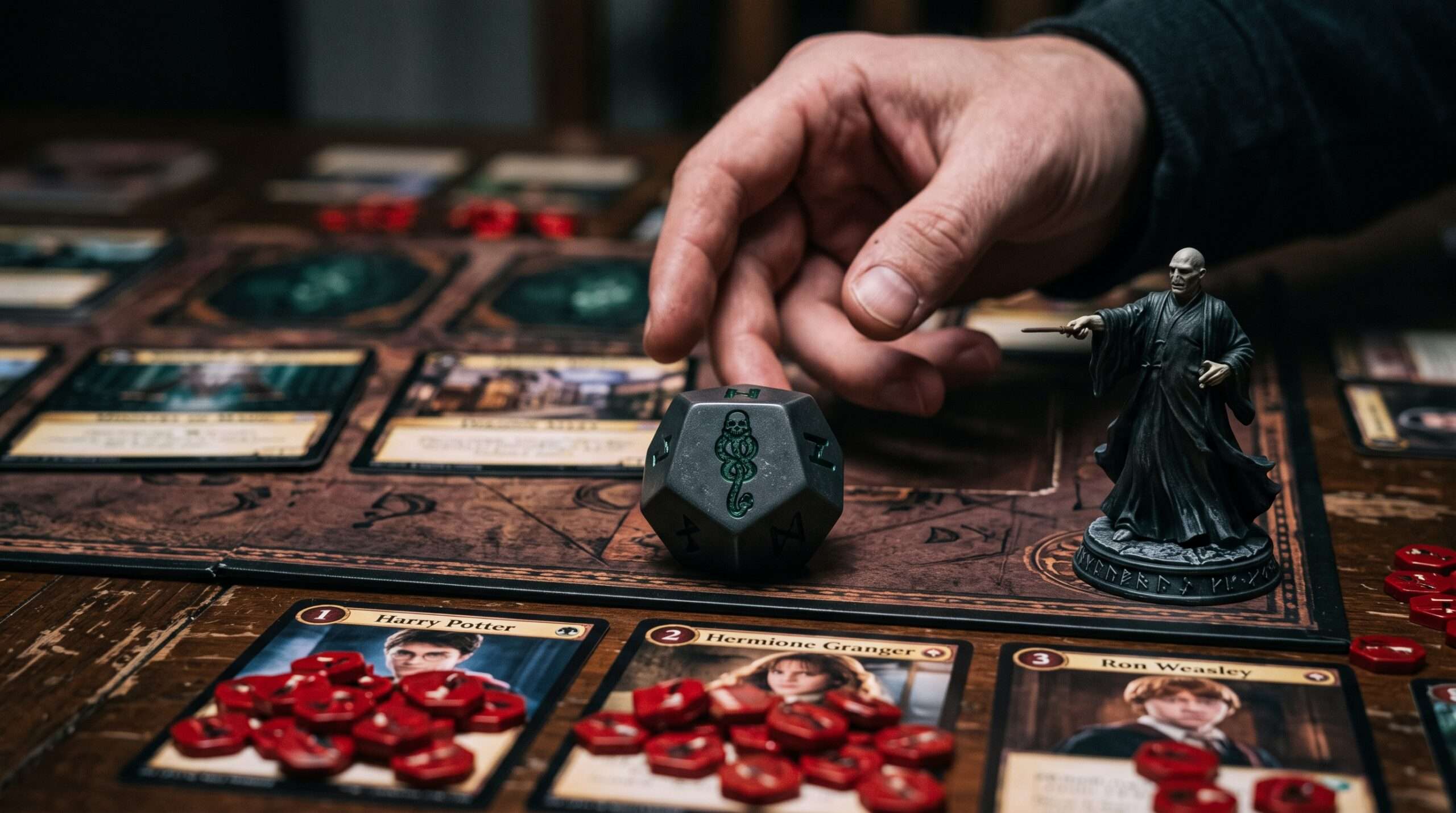
This is where the game earns its reputation for difficulty. Before you get to do anything heroic, you must roll the 8-sided Voldemort die. This die determines Voldemort’s actions:
-
Left or Right: The Voldemort figure physically rotates to a new location.
-
The Dark Mark: Triggers the devastating abilities of all active Death Eaters currently on the board.
Wherever Voldemort is facing, he corrupts the location and deals damage to every hero present. If he rotates to your location, your team takes a massive hit before you even roll your own dice.
3. The Wizard Dice Phase
This is the core puzzle of the game. You roll your pool of custom Wizard dice, hoping to match the symbols required to either recruit a new ally or damage a Death Eater in your location.
-
The Push-Your-Luck Element: After your first roll, you must assign at least one die to a card. If you cannot assign a die, you must forfeit one die entirely. You then reroll the remaining dice. This creates a thrilling, agonizing decision space where a single bad roll can stall your entire turn.
Recruiting vs. Attacking
During your dice phase, you face a constant dilemma. Do you use your rolled symbols to recruit a new Wizard to your team (thereby adding their special ability and extra dice to your future turns)? Or do you use those symbols to attack a Death Eater, preventing them from dealing further damage to the board? Balancing the need to build your engine with the urgent necessity of crowd control is the ultimate test of your strategic planning.
Winning & Losing Conditions
The game is heavily stacked against the players, with multiple ways to lose and only one narrow path to victory.
-
How You Lose: The forces of darkness win if too many wizards are defeated and placed in the hospital wing, if one single player has their entire team wiped out, if four place cards become fully corrupted, or if one entire main Location (like Diagon Alley) falls completely to darkness.
-
How You Win: You must survive the onslaught long enough to work your way through the villain deck until the Lord Voldemort card is drawn. Once he appears, you must deal him 5 damage to win the game—but he cannot be damaged until you have first defeated at least 5 of his Death Eaters.
Our Honest Review: Is Death Eaters Rising Worth Buying?
When evaluating tabletop games based on major intellectual properties, the critical question is always whether the gameplay holds up on its own or if it merely relies on nostalgia. In the case of Harry Potter Death Eaters Rising, the answer is a resounding affirmation of its gameplay loop, albeit with a few caveats that buyers must understand before bringing it to game night.
 Gameplay Experience & The Difficulty Curve
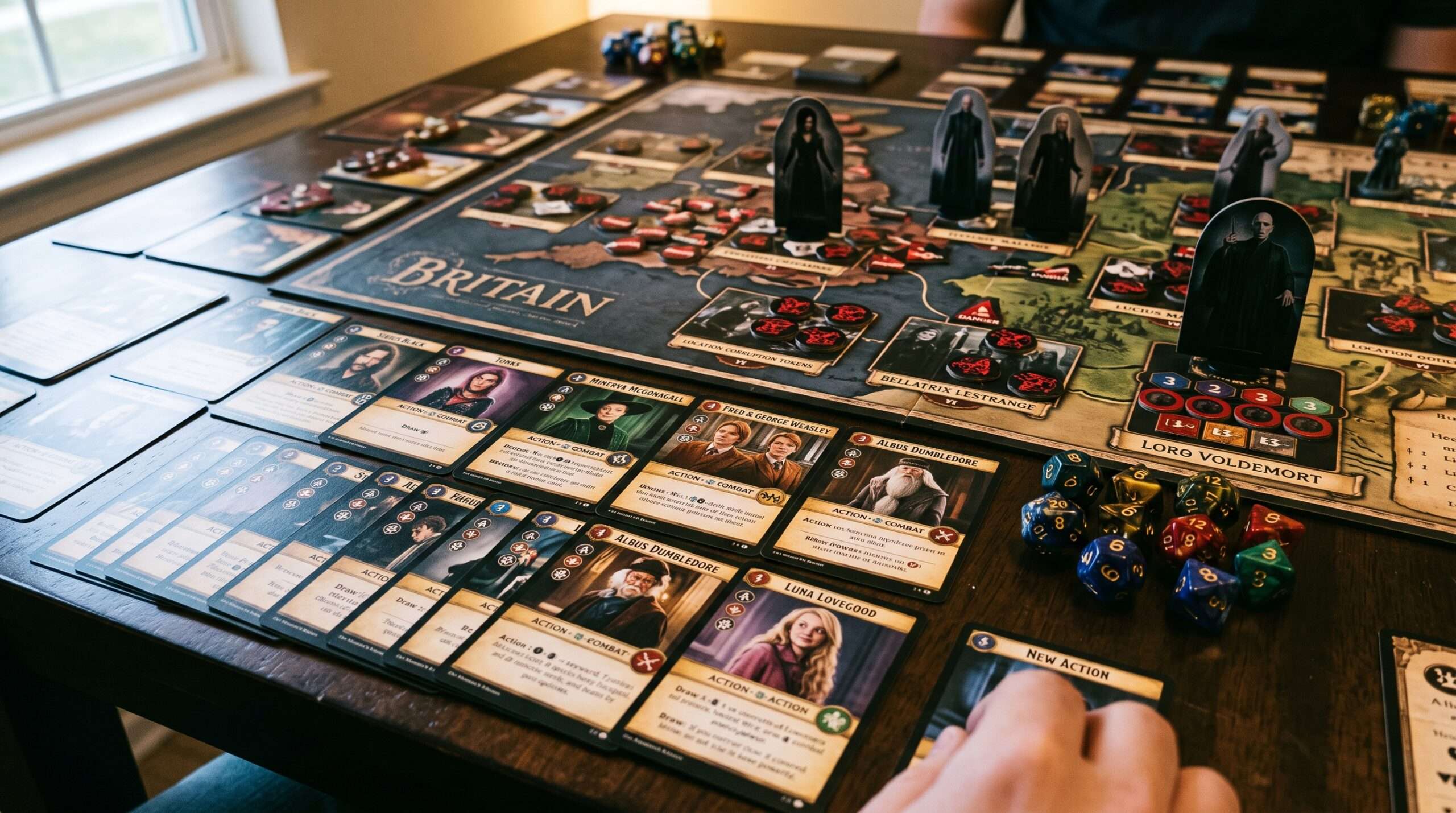
Let’s address the Hippogriff in the room: this game is brutally difficult. Because the core mechanic revolves around dice rolling, there is an inherent level of RNG (random number generation). If you roll poorly, or if the Voldemort die consistently lands on the Dark Mark in the early rounds, you can experience a devastating “snowball effect.”
The game demands that you fail a few times to understand the rhythm of its engine-building mechanics. Early on, you will feel entirely outmatched by the villains. However, as you recruit more Wizards and your dice pool expands from a meager handful to a satisfying, clattering handful of custom dice, the power fantasy kicks in. Pulling off a massive combo where one character’s ability triggers another’s, allowing you to banish a major Death Eater at the last possible second, provides an adrenaline rush that few cooperative board games can match.
Theme Integration
Thematically, the designers nailed the desperate, bleak atmosphere of the later films. You genuinely feel like a small band of resistance fighters constantly putting out fires. The character abilities make thematic sense—Hermione excels at Knowledge (blue dice), while members of the Order of the Phoenix are geared toward combat and Bravery (yellow dice). The physical presence of the Voldemort figure spinning around the board forces players to constantly watch their backs, perfectly simulating the pervasive fear the Dark Lord commands.
The Verdict: Who Should Play This?
Harry Potter Death Eaters Rising is highly recommended for:
-
Fans of Cooperative Strategy: If your gaming group enjoys titles like Pandemic but wants something with more dice-chucking excitement.
-
Players Who Don’t Mind RNG: You must be comfortable with the fact that, sometimes, the dice will simply not go your way.
-
Dedicated Potterheads: The cinematic artwork, high-quality components, and deep roster of characters make it a fantastic collector’s piece and a highly engaging thematic experience.
It is not recommended for players who suffer from “analysis paralysis” or those who despise luck-based mechanics in their tabletop games.
The Ultimate Strategy Guide for Death Eaters Rising
If you have already purchased the game and find yourself consistently losing to Voldemort’s forces, you are not alone. Beating this game requires shifting your mindset from purely rolling dice to active risk management and engine optimization. Here is the ultimate skyscraper strategy guide to turning the tide of the wizarding war.
 Picking the Perfect Affiliation Synergy
Your first crucial decision happens during setup. Do not pick your starting Wizards purely based on your favorite characters; you must build a balanced team. The game features four distinct dice colors, and you need access to all of them to reliably defeat high-tier Death Eaters.
-
The Golden Rule of Team Building: Ensure your team’s starting affiliations cover a diverse spread of dice. If everyone plays Hogwarts characters, you will have an abundance of Knowledge (blue) but severely lack the combat power (red/yellow) needed to actually deal damage.
-
The Support Anchor: Always have one player prioritize healing and corruption removal. Characters who can remove corruption tokens from locations are incredibly valuable in the late game when the board is overwhelmed.
Target Prioritization: Which Death Eaters to Banish First
Not all villains are created equal. Some Death Eaters are mere nuisances, while others will single-handedly cost you the game if left unchecked.
-
Priority Target 1: Lucius Malfoy. Lucius acts as a healer for the dark forces. If he is on the board, he removes damage from other Death Eaters when activated. Banishing him immediately is non-negotiable.
-
Priority Target 2: Bellatrix Lestrange. She deals catastrophic area-of-effect damage. If the Dark Mark is rolled while she is present, your team will find themselves in the hospital wing incredibly fast.
-
Ignore the Small Fry (Temporarily): Don’t waste early dice rolls trying to defeat low-tier villains that only do 1 damage. Focus your early turns purely on recruiting powerful Wizards. You cannot win a war of attrition with your starting dice pool.
Mastering Dice Mitigation (The Secret to Winning)
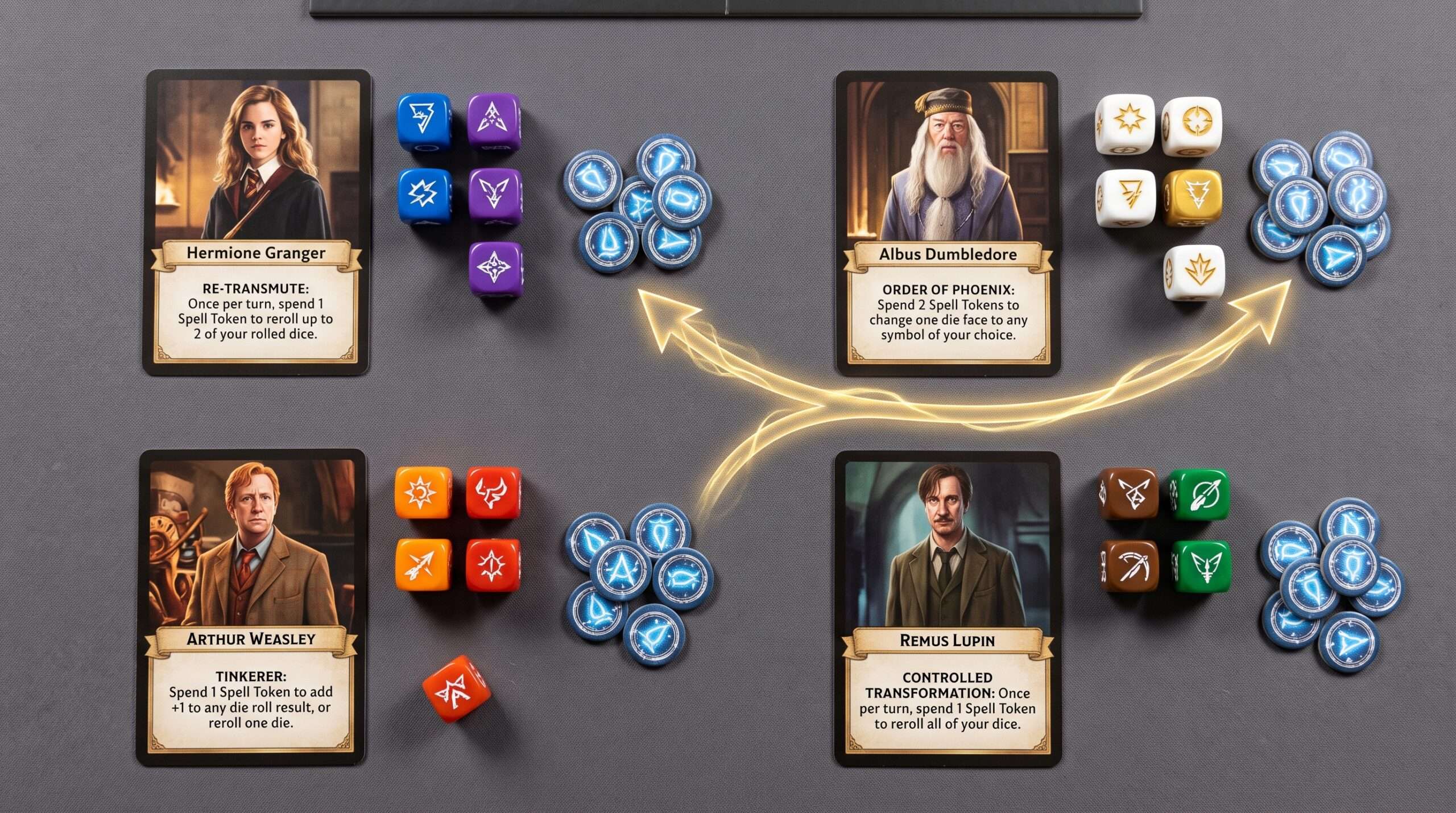
Relying entirely on luck is a guaranteed loss. The true skill in Death Eaters Rising is dice mitigation—the ability to change or reroll your results.
-
Farm Spell Tokens: Spell tokens are the most underutilized resource by beginners. These tokens allow you to add specific symbols to your roll without needing the die face to match. In the early game, if you have leftover dice that cannot be assigned to a character or villain, always assign them to gather Spell Tokens. Stockpile these for the late game; they will be the difference between defeating Voldemort or losing.
-
Recruit Rerollers: Prioritize recruiting Wizards whose abilities explicitly state, “You may reroll one die” or “Change a die to [Symbol].” Characters that offer guaranteed symbol generation are the backbone of a winning engine.
Managing Corruption and Location Defense
The Voldemort die is punishing. If you all group up in one location (like the Ministry of Magic), a single bad roll from the Voldemort die will damage your entire party.
-
Spread Out: Try to keep your players distributed across the three locations. This ensures that when Voldemort attacks, only one player takes the brunt of the damage, rather than the whole team getting wiped out simultaneously.
-
Tactical Retreats: If Diagon Alley is one corruption token away from being destroyed, stop traveling there unless absolutely necessary. Losing a location removes vital recruiting options and accelerates your loss condition.
Preparing for the Final Showdown
You cannot damage Lord Voldemort until you have defeated at least 5 Death Eaters, and he won’t appear until you draw his card from the villain deck.
-
The Engine Threshold: By the time Voldemort appears, every player should have a roster of at least 4-5 recruited Wizards and a healthy stockpile of Spell Tokens.
-
Coordinated Strikes: Voldemort requires massive amounts of damage to defeat. When he finally hits the board, players need to communicate and focus all their offensive dice on him, ignoring the remaining Death Eaters unless they pose an immediate threat of triggering a loss condition.
 Frequently Asked Questions (FAQ)
To round out your understanding of the game and help you make informed decisions, here are answers to the most common questions regarding the game.
How does Death Eaters Rising compare to Harry Potter: Hogwarts Battle?
While both are cooperative Harry Potter board games, they play very differently. Hogwarts Battle is a pure deck-building card game where your power comes from the cards you shuffle into your hand. Death Eaters Rising is a dice-allocation game. It is generally considered more visually imposing on the table due to the 3D figure and custom dice, but it relies slightly more on luck (RNG) than Hogwarts Battle.
Can you play Death Eaters Rising solo?
Yes! While the box states 2-4 players, the cooperative nature of the game makes it perfectly suited for true solo play. A single player can simply control two different Affiliations, taking alternating turns. In fact, many players prefer the solo variant as it allows for complete strategic control over synergy and engine building without alpha-gamer interference.
Is the game too scary or difficult for younger kids?
The box recommends ages 11 and up, which is highly accurate. The imagery is drawn from the darker, later films, and the difficulty level is high. Younger children might become frustrated by the constant damage their characters take and the complex resource management required to win. It is best suited for older kids, teens, and adults.
Are there any expansions for Death Eaters Rising?
As of right now, there are no official expansions explicitly released for Harry Potter Death Eaters Rising. The game is a self-contained experience. However, the publisher, The Op, has a history of expanding similar games (like Thanos Rising), so future expansions are always a possibility.
Harry Potter Death Eaters Rising successfully translates the grim, high-stakes battles of the Wizarding World into a tactile, engaging tabletop experience. Its premium components and demanding gameplay make it a standout title for fans of the franchise and cooperative board games alike. While the steep difficulty curve and reliance on dice rolling will test your patience, overcoming those odds and finally dealing that fatal blow to Lord Voldemort is a wildly satisfying victory.
By focusing on dice mitigation, prioritizing the right targets, and communicating effectively with your team, you can master the mechanics and save the Wizarding World.
Have you managed to defeat the Dark Lord yet? Let us know in the comments below which starting Wizard you think is the strongest, or tell us about your most frustrating loss to the Voldemort die!