Last updated: November 23, 2026 | Reading time: about 12 minutes
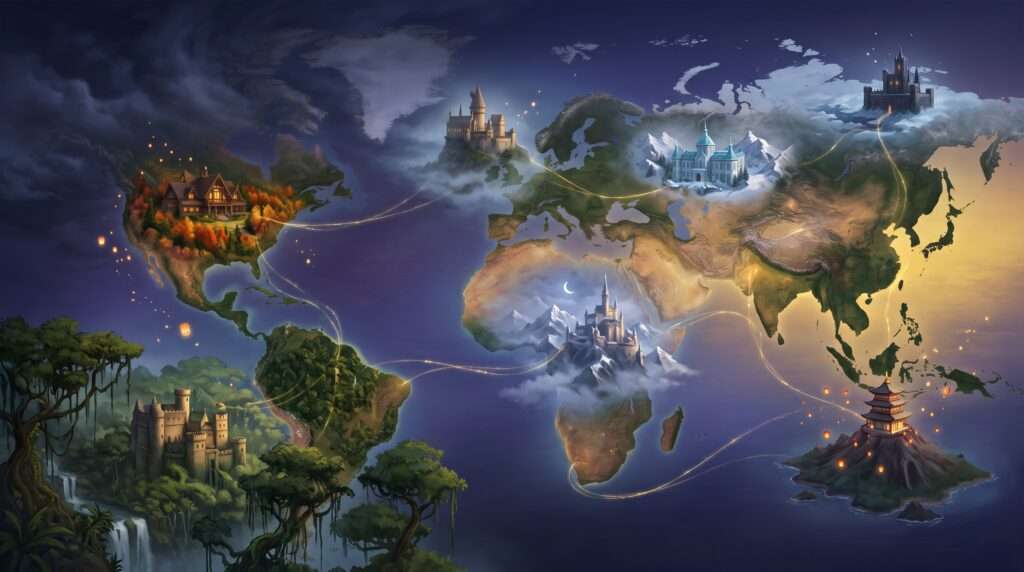
Ask most fans to name the Harry Potter wizarding schools and you’ll hear the same three answers: Hogwarts, Beauxbatons, and Durmstrang. But the magical world is much bigger than the Triwizard trio. There is a school hidden in the Amazon rainforest, another in the Mountains of the Moon in Uganda, and one on a volcanic island in the Pacific.
Information about these schools is scattered across the seven novels, the films, the Fantastic Beasts series, and J.K. Rowling’s writing on Pottermore (now the Wizarding World website). That makes it hard to know what is firmly established and what is fan speculation.
This guide brings it all together. You’ll get a quick-reference table, a look at how magical education works, and a deep dive into each of the seven magic schools. Every detail is labeled by source as (Books), (Films), or (Rowling’s writing), so you can tell canon from interpretation.
In this guide:
- Quick reference table of all 7 schools
- How wizarding schools work in the Harry Potter universe
- Hogwarts, Beauxbatons, Durmstrang, Ilvermorny, Castelobruxo, Mahoutokoro, and Uagadou
- Are there more than 7 wizarding schools?
- Comparing the schools
- Frequently asked questions
Quick Reference: All 7 Harry Potter Wizarding Schools at a Glance
| School | Location | Region | Known For |
|---|---|---|---|
| Hogwarts | Scottish Highlands | Europe | Four Houses, Harry’s school |
| Beauxbatons | France | Europe | Elegance, Madame Maxime |
| Durmstrang | Far northern Europe | Europe | Dark Arts reputation, Viktor Krum |
| Ilvermorny | Mount Greylock, Massachusetts | North America | Four Houses, founded by Isolt Sayre |
| Castelobruxo | Amazon rainforest, Brazil | South America | Magical flora and fauna |
| Mahoutokoro | Minami Iwo Jima, Japan | Asia | Island setting, color-changing robes |
| Uagadou | Mountains of the Moon, Uganda | Africa | Largest school, wandless magic |
How Wizarding Schools Work in the Harry Potter Universe
Before looking at each school, it helps to understand why the wizarding world has so many.
Why the wizarding world has multiple schools
Magical education is organized largely by region. Each school reflects the culture, geography, and magical traditions of the area it serves. The International Statute of Secrecy also means every school must stay hidden from non-magical people (Muggles).
Hogwarts appears as a ruin to Muggles, with enchantments warning them away (Books). Durmstrang’s location is a closely guarded secret (Books). Castelobruxo is concealed deep in the rainforest (Rowling’s writing). Hiding in plain sight, or far from civilization, is a shared theme.
The International Confederation of Wizards
The International Confederation of Wizards is the body that coordinates cooperation between magical communities worldwide. Dumbledore holds the title of Supreme Mugwump of the Confederation, as his Chocolate Frog card in Philosopher’s Stone reveals (Books).
International cooperation is what makes events like the Triwizard Tournament possible. It brought Hogwarts, Beauxbatons, and Durmstrang together in 1994, the year of Goblet of Fire (Books).
How students are selected
At Hogwarts, children with magical ability receive an acceptance letter by owl around their eleventh birthday (Books). Muggle-born students get a personal visit from a member of staff to explain the magical world, as when Professor McGonagall visits Hermione’s family (Books).
For the other schools, canon is thinner. One notable detail comes from Rowling’s writing: Mahoutokoro admits students as young as seven, which is much earlier than Hogwarts. Where the details aren’t established, this guide says so rather than filling gaps with guesswork.
Hogwarts School of Witchcraft and Wizardry
Hogwarts is the most detailed school in the entire series, since we see it through Harry’s eyes for seven years. It is also the reason so many fans assume it is the “default” wizarding school.
Location and history
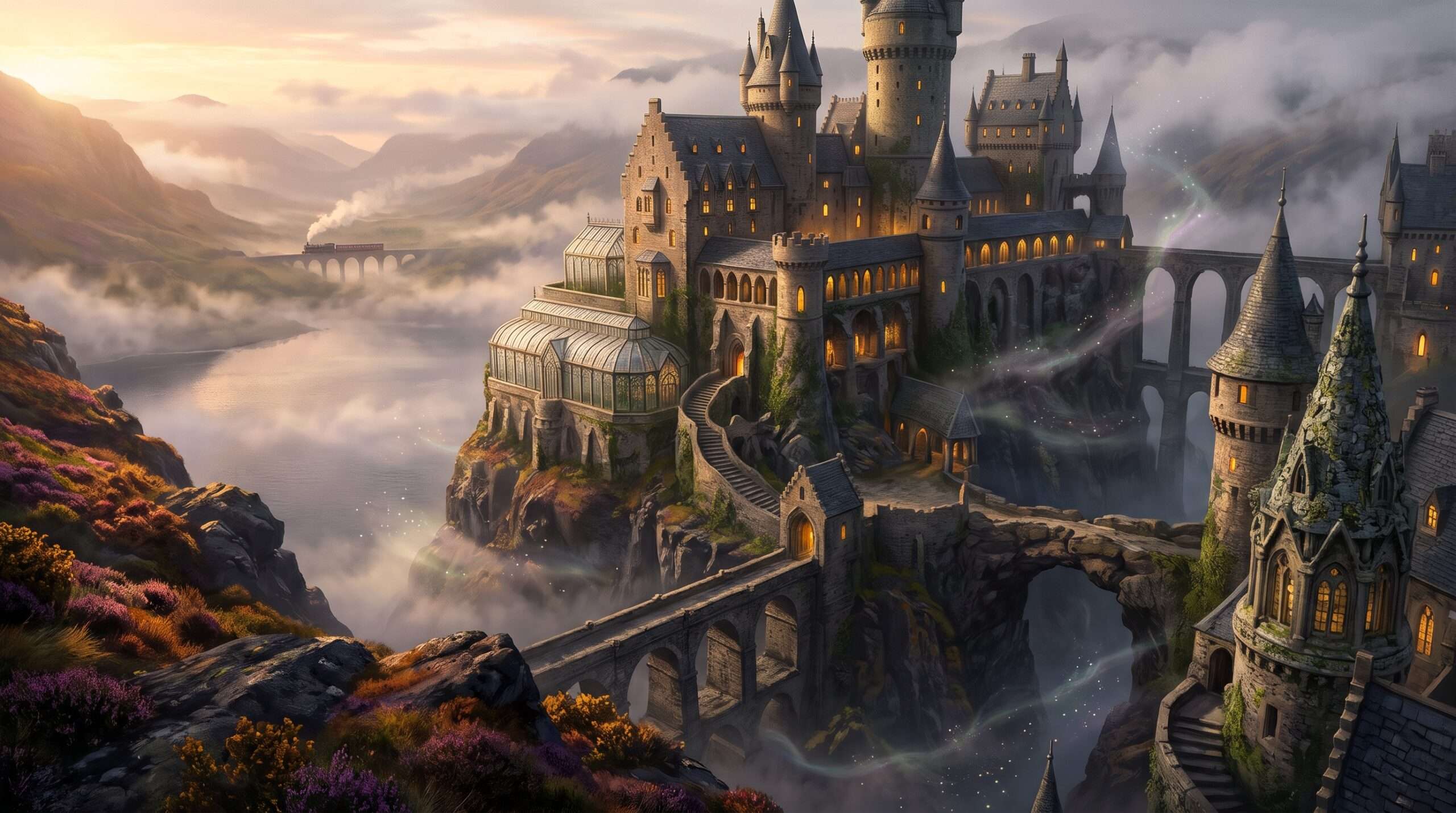
Hogwarts stands somewhere in the Scottish Highlands, hidden from Muggles by enchantments (Books and Rowling’s writing). It was founded over a thousand years ago by four of the greatest witches and wizards of the age: Godric Gryffindor, Helga Hufflepuff, Rowena Ravenclaw, and Salazar Slytherin (Books).
Students travel there on the Hogwarts Express from Platform 9¾ at King’s Cross Station in London (Books). They attend for seven years, from age eleven to seventeen or eighteen, and sit their O.W.L.s in fifth year and N.E.W.T.s in seventh (Books).
 The four Houses
Each founder valued different qualities, and the Sorting Hat places students according to them:
- Gryffindor: courage, daring, and chivalry
- Hufflepuff: loyalty, patience, and hard work
- Ravenclaw: wit, learning, and creativity
- Slytherin: ambition, cunning, and resourcefulness
Houses compete for the House Cup throughout the year, and they function as a student’s “family” within the castle (Books).
Curriculum and key subjects
First-years study Transfiguration, Charms, Potions, Herbology, Astronomy, History of Magic, and Defence Against the Dark Arts, along with flying lessons (Books). From third year, students choose electives such as Divination, Care of Magical Creatures, Arithmancy, Ancient Runes, and Muggle Studies (Books).
What makes Hogwarts unique
Moving staircases, talking portraits, ghosts in every house, the Forbidden Forest, and the Room of Requirement give the school a character no other wizarding school matches in canon. The Sorting Hat, a sentient hat that decides each student’s House, is also one of the series’ most iconic ideas.
Expert insight: Hogwarts feels like the wizarding school only because the books are written from Harry’s point of view. In-universe, it is one of several great schools, and a student in Brazil or Uganda would have a completely different idea of what magical education looks like. Keeping this in mind makes the wider wizarding world far more interesting.
Beauxbatons Academy of Magic
Beauxbatons is the French wizarding school, and it first appears in Goblet of Fire when its delegation arrives for the Triwizard Tournament.
Location and architecture
Beauxbatons is in France and is commonly placed in the Pyrenees mountains. That placement is widely accepted by fans, but treat it as an interpretation rather than a firmly stated fact. The books never describe the school itself, only its delegation’s arrival at Hogwarts.
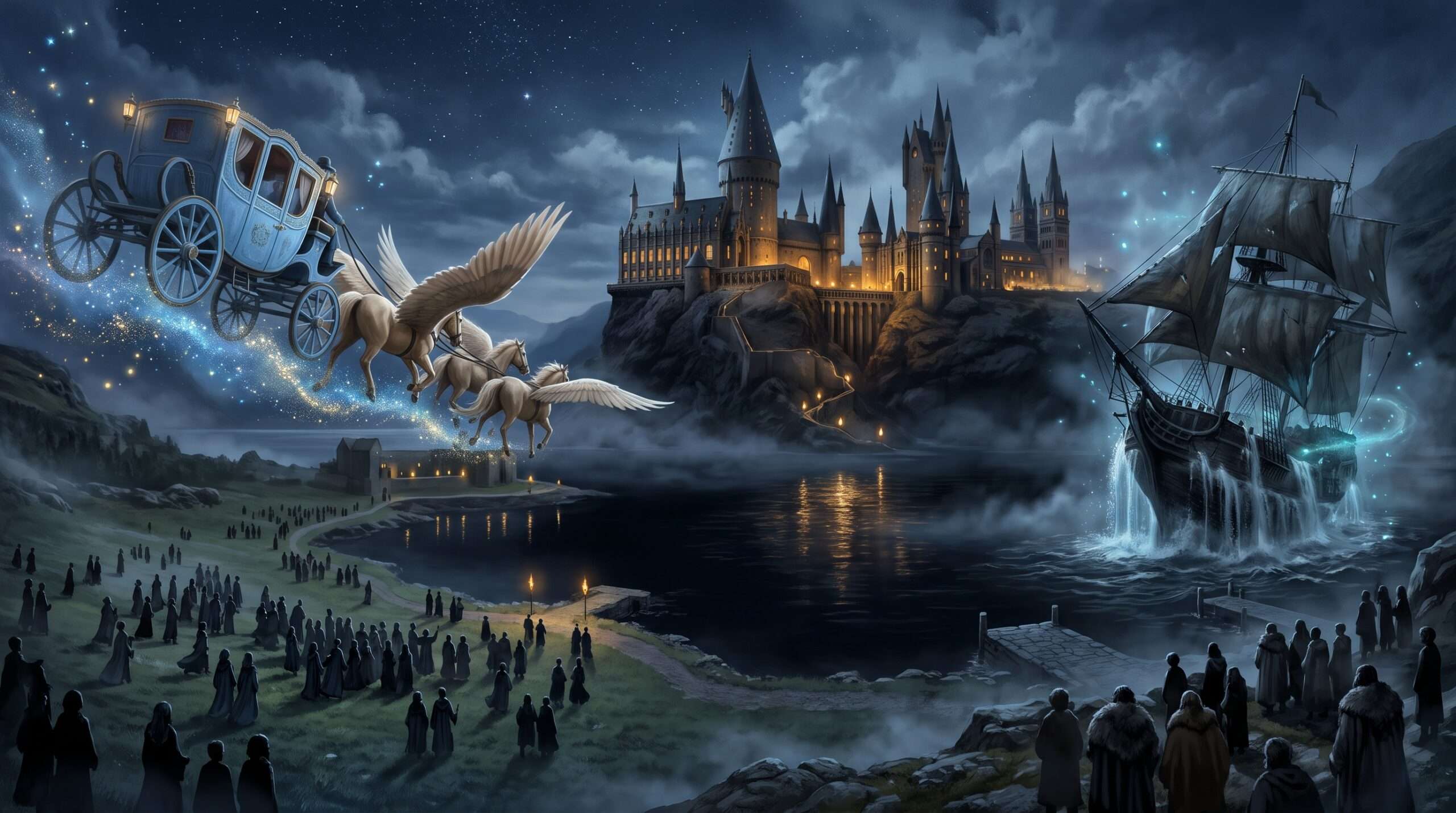
In the novel, the delegation arrives in a giant powder-blue carriage pulled by enormous winged horses (Books). The students wear silk robes, and they struggle noticeably with the Scottish cold (Books).
Culture and reputation
Beauxbatons is led by Madame Olympe Maxime, a headmistress who is also half-giant, a detail she and Hagrid initially hide from each other (Books). Its Triwizard champion is Fleur Delacour, who shows that Beauxbatons students are as capable and determined as those from any other school (Books).
The school carries a reputation for elegance and refinement, though the books reveal little about its day-to-day teaching. That limited canon is why Beauxbatons is better understood through its people than its classrooms.
Beauxbatons vs Hogwarts
The two schools feel quite different in atmosphere. Hogwarts is defined by its rough-hewn, ancient castle and its House rivalries. Beauxbatons is defined, in fans’ eyes, by grace and polish. Fleur’s initial disdain for Hogwarts and her eventual warmth toward its students suggest that the differences are mostly cultural, not a matter of ability.
Durmstrang Institute
Durmstrang is the most mysterious of the three European schools, and its secrecy is a big part of its identity.
The mystery of its location
The books only establish that Durmstrang is somewhere in the far north of Europe. Fans often guess at Scandinavia, but no country is confirmed (Books). Its location is guarded so closely that even Viktor Krum refuses to reveal where it is (Books).
The delegation arrives at Hogwarts on a ship that rises from the depths of the Black Lake, and the students wear heavy fur cloaks over their robes (Books).
 The Dark Arts reputation
Durmstrang is widely thought to teach the Dark Arts, and characters in the books refer to this reputation. It’s worth separating what is stated from what is assumed. Headmaster Igor Karkaroff is revealed to be a former Death Eater (Books). Later material from Rowling suggests Durmstrang is also selective about who it admits, reportedly not accepting Muggle-born students (Rowling’s writing). Beyond this, “Dark Arts school” is mostly a reputation built from characters’ opinions, not a detailed curriculum.
Notable alumni
- Viktor Krum: the Bulgarian Quidditch star who becomes Durmstrang’s Triwizard champion (Books)
- Igor Karkaroff: the headmaster and former Death Eater (Books)
- Gellert Grindelwald: the dark wizard who attended Durmstrang before being expelled (Films and Rowling’s writing)
Why the school stays secretive
Secrecy protects Durmstrang from outsiders and reinforces its image as a harsh, exclusive institution. This contrasts sharply with Hogwarts, where students actively explore a visible, welcoming castle.
Ilvermorny School of Witchcraft and Wizardry
Ilvermorny is the North American school, and its story is one of the best-developed backstories in the extended wizarding world. It comes from J.K. Rowling’s writing, and the Fantastic Beasts films show the American wizarding community it serves (Rowling’s writing and Films).
Founding story
Ilvermorny was founded in the 17th century by Isolt Sayre, an Irish witch who crossed the Atlantic to escape danger in her homeland (Rowling’s writing). She was a descendant of Salazar Slytherin, a detail that surprises many fans. Together with her husband, James Steward, a non-magical man (a “No-Maj” in American terms), she built a school in the New World.
The couple’s welcoming approach shaped the school’s identity. Ilvermorny was built as a place open to young witches and wizards of all backgrounds, in contrast to the pure-blood politics that drive so much conflict in Britain (Rowling’s writing).
The four Ilvermorny Houses
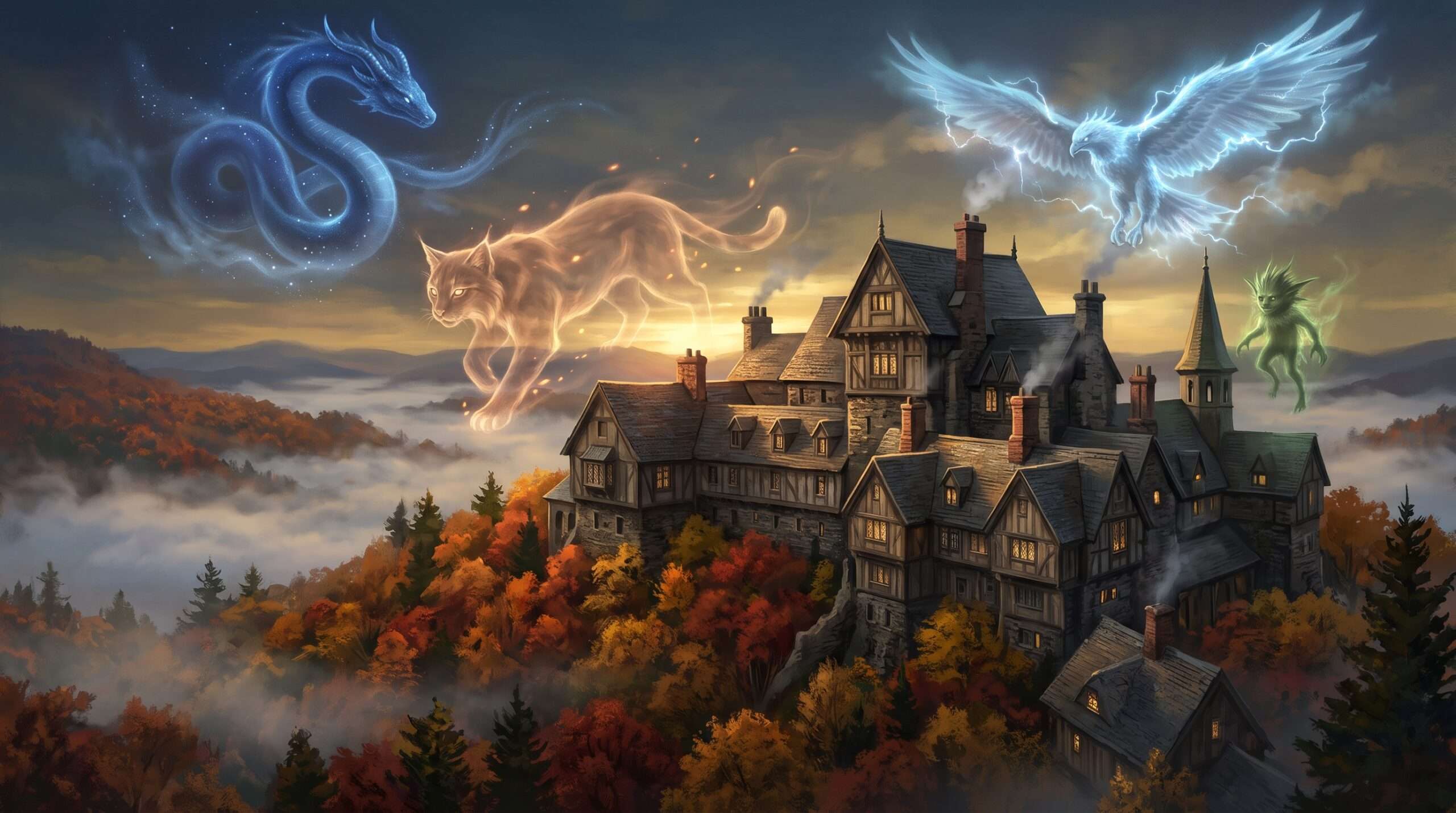
Ilvermorny has four Houses, but they work differently from Hogwarts’ Houses. Each is named for a magical creature and linked to a part of a person:
- Horned Serpent: the mind, favored by scholars
- Wampus: the body, linked to warriors
- Thunderbird: the soul, linked to adventurers and those drawn to the natural world
- Pukwudgie: the heart, associated with healers
Where Hogwarts Houses are defined by personality traits, Ilvermorny Houses are about what a student draws on most: intellect, physical strength, spirit, or compassion (Rowling’s writing).
 Location
The school sits on Mount Greylock in western Massachusetts (Rowling’s writing). Like other wizarding schools, it is hidden from non-magical people by enchantments.
How it connects to Fantastic Beasts
The Fantastic Beasts films are set in 1920s New York, where the Magical Congress of the United States of America (MACUSA) governs American wizards (Films). Rowling has said that characters like the Goldstein sisters belong to this American wizarding tradition, which gives Ilvermorny real narrative weight beyond a single fact on a list. If you want to understand how American magical culture differs from British magical culture, Ilvermorny is the place to start.
Castelobruxo: The Brazilian School in the Amazon
Castelobruxo is South America’s best-known wizarding school. Its name blends Portuguese words meaning “castle” and “witch/wizard,” which fits its Brazilian setting.
Location and setting
Castelobruxo is hidden in the Amazon rainforest in Brazil, concealed from non-magical people (Rowling’s writing). This remote location is part of the school’s character and a good example of how geography shapes magical education.
Magical botany and creatures
The rainforest is one of the most biodiverse places on Earth, and Rowling’s description of Castelobruxo reflects this. The school is associated with strong teaching in Herbology and the study of magical creatures (Rowling’s writing). It is easy to see why: a school surrounded by rainforest has a living classroom outside its walls.
What we know and don’t know
Canon about Castelobruxo is limited. We know its location and its general reputation, but not much about its Houses, staff, or daily routines. Fan sources often fill in these gaps, so treat details beyond Rowling’s own writing as fan interpretation.
Mahoutokoro: Japan’s Wizarding School
Mahoutokoro serves Japanese wizards, and it is one of the most unusual schools in the series because of where it is and when its students start.
The island location
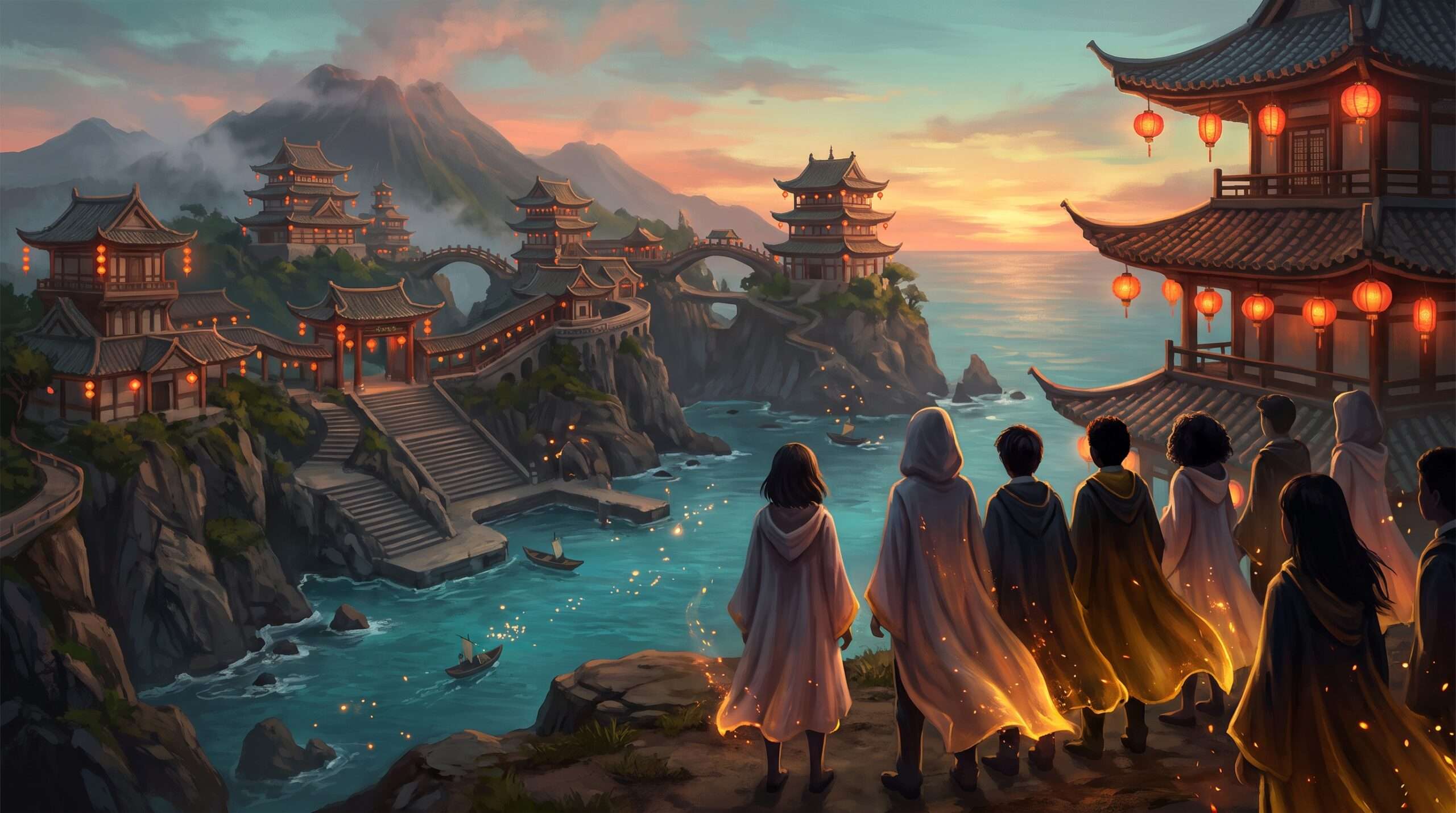
Mahoutokoro is located on Minami Iwo Jima, a remote volcanic island south of mainland Japan (Rowling’s writing). The island setting makes it one of the most isolated schools in the wizarding world.
The robe tradition
Mahoutokoro is known for its enchanted robes, which are said to change color as a student’s magical ability develops (Rowling’s writing). It is a striking idea: a visible, personal record of progress worn by every student.
 Student age and admission
Mahoutokoro admits children at the age of seven, four years earlier than Hogwarts (Rowling’s writing). That early start suggests a very different educational philosophy, with magical training beginning in early childhood rather than at the start of adolescence.
Uagadou: Africa’s Largest Wizarding School
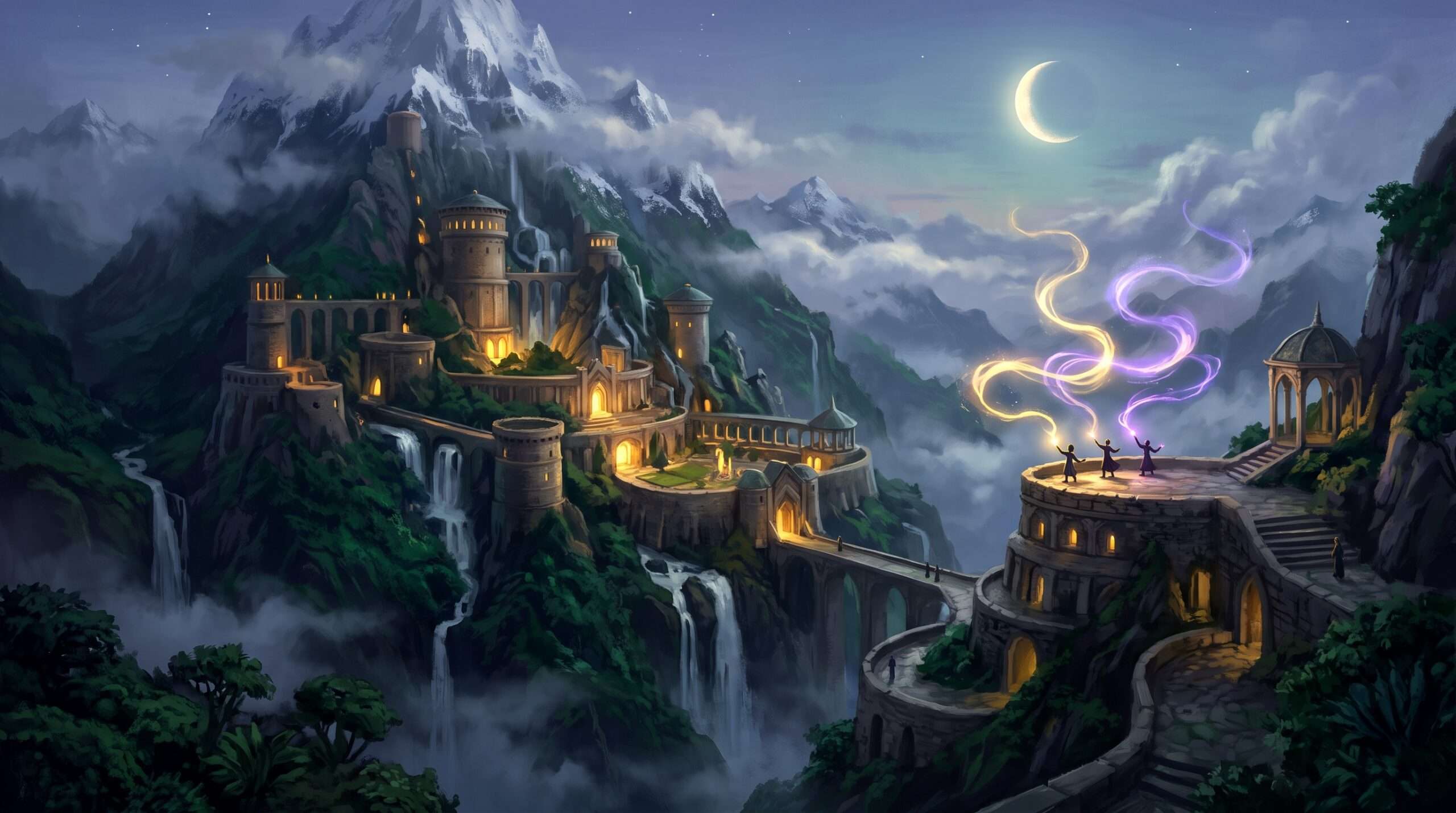
Uagadou is the African wizarding school, and Rowling has described it as the largest in the world. It is also one of the least detailed in canon, which makes it worth approaching carefully.
Location
Uagadou is located in the Mountains of the Moon, a range on the border of Uganda and the Democratic Republic of the Congo (Rowling’s writing). The school draws students from across the African continent.
Reputation for wandless magic
Uagadou is known for its approach to magic without wands (Rowling’s writing). In Rowling’s account, wand use is a largely European tradition, and African magical communities developed different methods. This is one of the clearest signals in canon that the wizarding world is not defined by a single magical tradition.
 Why Uagadou matters
Uagadou represents the African magical tradition in the Harry Potter universe, and its size shows that the wizarding world is far from Eurocentric. The caution here is the same as with Castelobruxo: the official material is brief. Fans have written a great deal about Uagadou, but much of it goes beyond what Rowling has actually published.
Are There More Than 7 Wizarding Schools?
Yes. Rowling has said there are eleven great wizarding schools in the world, and canon names only seven of them in meaningful detail (Rowling’s writing). This article covers seven because they are the ones with enough official information to describe responsibly.
The 7 schools described in detail vs. the 11 total
The four remaining schools have received little official attention, and some fan lists name specific schools for them. We have chosen not to include guesses. If you see an article claiming to describe all eleven in detail, check whether its sources are official or fan-made.
Other schools mentioned in canon
Some sources mention a Russian school called Koldovstoretz, and you may see it in other lists. Official coverage is limited, so check the current Wizarding World website for the latest information.
[Author note: verify the Koldovstoretz reference and any other additional school names against current official Wizarding World sources before publishing.]
The wizarding world also keeps growing. New books, films, and official material may add detail, and this article will be updated when they do.
Comparing the Schools: Key Differences
Hogwarts vs Beauxbatons vs Durmstrang
The three European schools meet in Goblet of Fire, and they are easy to tell apart:
- Hogwarts: a welcoming, rough-hewn castle with a strong House identity
- Beauxbatons: an image of elegance and refinement
- Durmstrang: secretive, exclusive, and linked with the Dark Arts
House systems compared
Both Hogwarts and Ilvermorny have four Houses, but they work on different principles. Hogwarts sorts students by character traits, such as courage or ambition. Ilvermorny’s Houses are tied to aspects of the self: mind, body, soul, and heart.
Schools by region and magical tradition
| Region | Schools | What it shows |
|---|---|---|
| Europe | Hogwarts, Beauxbatons, Durmstrang | Strong rivalries and the Triwizard tradition |
| North America | Ilvermorny | An inclusive tradition shaped by immigration |
| South America | Castelobruxo | Magic shaped by the rainforest |
| Asia | Mahoutokoro | Early admission and an island setting |
| Africa | Uagadou | Wandless magic and the largest student body |
Which school would you attend?
Each school suits a different kind of student. If you love plants and wildlife, Castelobruxo sounds ideal. If you want to be challenged intellectually, the Horned Serpent House at Ilvermorny might be your match. If you prefer tradition, Hogwarts is the obvious pick. Tell us in the comments which school you would choose.
Frequently Asked Questions
How many wizarding schools are there in Harry Potter?
Rowling has said there are eleven great wizarding schools in the world. Seven of them are covered in detail in official material: Hogwarts, Beauxbatons, Durmstrang, Ilvermorny, Castelobruxo, Mahoutokoro, and Uagadou.
Which is the oldest wizarding school?
Canon does not clearly establish which school is oldest. Hogwarts was founded more than a thousand years ago, but there is no official ranking of all the schools by age.
Where is Durmstrang located?
Only that it is in the far north of Europe. The books keep the exact location secret, and fans often guess Scandinavia without confirmation.
Is Ilvermorny better than Hogwarts?
Canon does not rank the schools. They are different in history, traditions, and culture, and each reflects the community it serves.
Can students transfer between wizarding schools?
Canon does not describe a formal transfer system. The Triwizard Tournament is the only time the books show students from different schools mixing.
Which wizarding schools are in the books and which only in additional material?
The seven novels name only Hogwarts, Beauxbatons, and Durmstrang. Ilvermorny, Castelobruxo, Mahoutokoro, and Uagadou come from Rowling’s later writing, and Ilvermorny also appears in the context of the Fantastic Beasts films.
Is there a wizarding school in Africa, Asia, or South America?
Yes. Uagadou is in Africa, Mahoutokoro is in Asia, and Castelobruxo is in South America.
The wizarding world is a global community, and Hogwarts is just one chapter of it. From the Amazon rainforest to the Mountains of the Moon, each school reflects its own landscape and magical tradition.
Which school surprised you most? Tell us in the comments, and if you want to keep exploring, see our guides to the Hogwarts Houses, the Triwizard Tournament, and the Fantastic Beasts timeline.