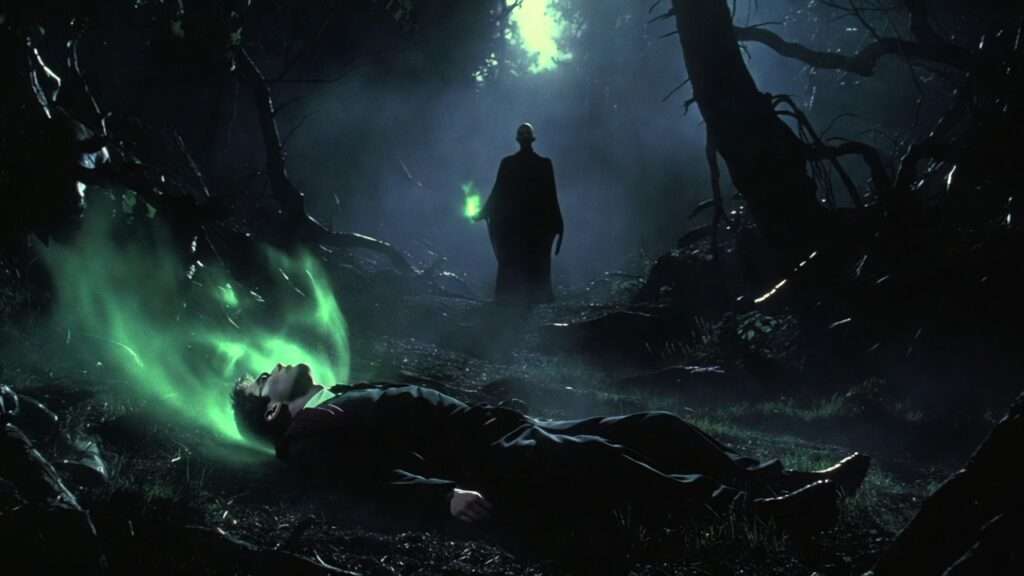
In the shadowy depths of the Forbidden Forest, under a moonlit sky thick with dread, Harry Potter walked straight toward death. He had dropped the Resurrection Stone, whispered goodbye to the spectral echoes of his parents, Sirius, and Lupin, and faced Lord Voldemort with no wand raised in defense. The green flash of Avada Kedavra lit the night. Harry fell. To the watching Death Eaters and to Voldemort himself, the Boy Who Lived was finally dead.
Yet moments later—after a surreal encounter in a place that looked remarkably like King’s Cross station—Harry opened his eyes, breathed again, and returned to the world of the living. How did Harry Potter come back to life? This question has puzzled fans since Harry Potter and the Deathly Hallows was published in 2007. The moment isn’t a traditional resurrection like the Inferi or even the echoes summoned by the Stone. Harry never fully dies in the conventional sense. Instead, his survival is the culmination of years of intricate magical protections, Voldemort’s own catastrophic errors, sacrificial love, and Harry’s deliberate choice.
As longtime students of the Harry Potter series—having dissected every chapter, pored over J.K. Rowling’s interviews, and cross-referenced canon details—this article pulls back the curtain on one of the saga’s most profound plot twists. We’ll trace the mechanics step by step using direct quotes from the books, Rowling’s post-publication clarifications, and thematic analysis. By the end, the confusion surrounding Harry’s “death” and return will dissolve into clear understanding, revealing why this sequence stands as one of Rowling’s greatest triumphs of plotting and symbolism.
The Setup – Why Harry Had to “Die” in the First Place
To grasp how Harry survived, we must first understand why he needed to face death at all. The prophecy delivered by Sybill Trelawney set the stage: “The one with the power to vanquish the Dark Lord approaches… born to those who have thrice defied him, born as the seventh month dies… and the Dark Lord will mark him as his equal, but he will have power the Dark Lord knows not… and either must die at the hand of the other for neither can live while the other survives.”
But the prophecy alone doesn’t require Harry’s literal death. The true necessity stems from Harry’s status as an accidental Horcrux.
Harry as an Unintentional Horcrux
When Voldemort attacked the Potters in Godric’s Hollow on October 31, 1981, his Killing Curse rebounded due to Lily Potter’s sacrificial protection, destroying his body and splintering his already fractured soul further. A fragment of that soul—unintended and unstable—latched onto the only living thing left in the room: baby Harry.
As Dumbledore explains in The Deathly Hallows (Chapter 35, “King’s Cross”): “A part of Voldemort’s soul lusted to escape… and it managed to attach itself to the only living thing in that room.” Harry carried this parasitic piece for seventeen years, explaining his Parseltongue ability, the connection through his scar, and the visions of Voldemort’s thoughts.
For Voldemort to be truly mortal again, every Horcrux—including the unintentional one inside Harry—had to be destroyed. Harry realized this after Snape’s memories revealed the truth. To defeat Voldemort, Harry had to let Voldemort destroy the fragment within him.
The Prophecy and the Necessary Sacrifice
Harry’s willing walk into the Forest echoes Lily’s sacrifice but on a grander scale. By choosing death to protect his friends at Hogwarts, Harry extends Lily’s ancient magic. As Dumbledore notes earlier in the series, true sacrifice creates powerful protections rooted in love—the one force Voldemort never understood.
The Critical Mistake – Voldemort Uses Harry’s Blood
Voldemort’s hubris in Goblet of Fire sets the stage for Harry’s survival.
The Ritual in Goblet of Fire
In Little Hangleton graveyard, Peter Pettigrew uses Harry’s blood in the potion to restore Voldemort’s body: “Blood of the enemy… forcibly taken… flesh of the servant… bone of the father…”
Dumbledore later reveals the consequence in “King’s Cross”: “He took your blood believing it would strengthen him. He took into his body a tiny part of the enchantment your mother laid upon you when she died for you. His body keeps her sacrifice alive, and while the enchantment survives, so do you and so does Voldemort’s one last hope for himself.”
Lily’s love-based protection, once residing only in Harry, now flows in Voldemort’s veins too. This creates an unintended tether: Voldemort anchors Harry to life as long as Voldemort himself lives.
How This Created an Anchor to Life
The blood connection means the Killing Curse cannot sever Harry’s soul from his body completely. It destroys only the foreign fragment (the Horcrux), while Harry’s own soul—protected and tethered—remains intact. Rowling confirmed this in interviews: Voldemort inadvertently made himself Harry’s lifeline.
Common misconception: Some believe Harry “dies” and is resurrected. Canon clarifies he enters a limbo state; his body is incapacitated, but his soul never crosses fully into death.
The Forbidden Forest Confrontation – What Really Happened
The night of May 2, 1998, in the Forbidden Forest, marks the single most misunderstood sequence in the entire Harry Potter series. Harry does not die and then come back to life in the traditional sense. Instead, a precise chain of magical events allows his soul to remain tethered to his body even as Voldemort’s curse strikes.
Harry’s Choice and Willing Sacrifice
After viewing Snape’s memories in the Pensieve, Harry understands he must die to destroy the Horcrux inside him. He does not flee. He does not fight. He walks calmly to Voldemort, deliberately dropping the Resurrection Stone into the undergrowth as he passes the spot where the Marauders once stood together.
This act is loaded with symbolism. By discarding the Stone—the object that allows the living to summon the dead—Harry rejects the temptation to cling to life through unnatural means. He accepts mortality fully, mirroring the philosophy Dumbledore later articulates: the true master of death is the one who greets Death as an old friend.
As Harry steps into the clearing, he thinks, “I open at the close,” the inscription on the Snitch he once caught. He opens himself to death willingly, for the sake of everyone he loves.
The Killing Curse Hits – But Only One Soul Dies
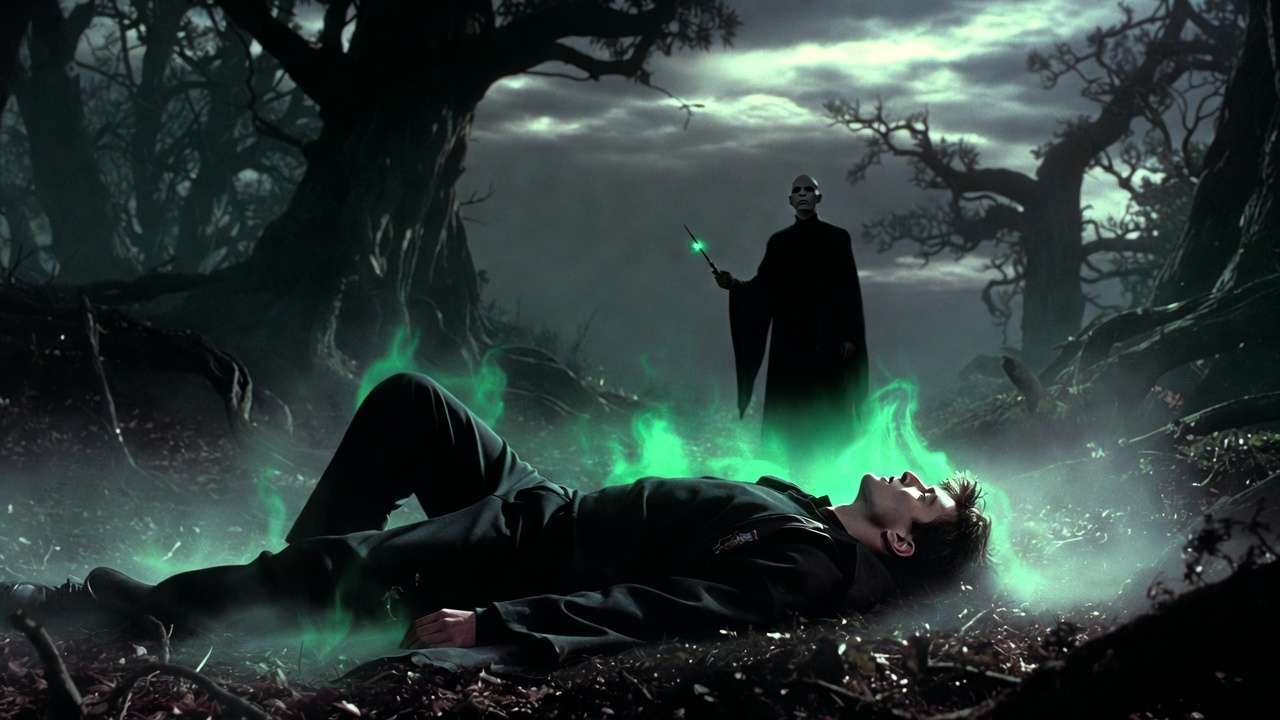
Voldemort raises the Elder Wand and cries, “Avada Kedavra!”
Green light. A rushing sound. Harry collapses.
But the curse does not kill Harry’s soul. It annihilates the parasitic fragment of Voldemort’s soul that has resided in Harry since 1981. The Horcrux is destroyed exactly as Harry intended.
Why does Harry’s own soul survive? Two interlocking reasons:
- Lily’s sacrificial protection, now residing in both Harry and Voldemort because of the blood ritual in Goblet of Fire. Voldemort’s own body keeps the enchantment alive, creating an unintended link. As Dumbledore explains in the limbo scene: “Your blood in his veins, Lily’s protection inside both of you.”
- Harry’s willing sacrifice. By choosing death to protect others, Harry activates the same ancient magic Lily used. This time, the protection is not limited to one person—it blankets everyone fighting at Hogwarts.
The curse therefore severs only the intruder (the Horcrux). Harry’s body is knocked unconscious and appears dead, but his soul remains anchored.
 Debunking Popular Myths
- Myth 1: The Resurrection Stone saved him No. Harry deliberately left the Stone behind before the curse hit. It played no role in his survival.
- Myth 2: Being Master of Death made him immortal The Tale of the Three Brothers teaches the opposite. The true master of death accepts mortality rather than running from it. Harry becomes master by mastering fear of death, not by becoming unkillable.
- Myth 3: Harry truly died and was resurrected Canon never states Harry’s heart stops or his soul departs permanently. He enters a liminal state. His body is stunned; his consciousness travels to a place of decision. Rowling has described it as “a kind of limbo” rather than death.
King’s Cross – The Limbo Between Life and Death
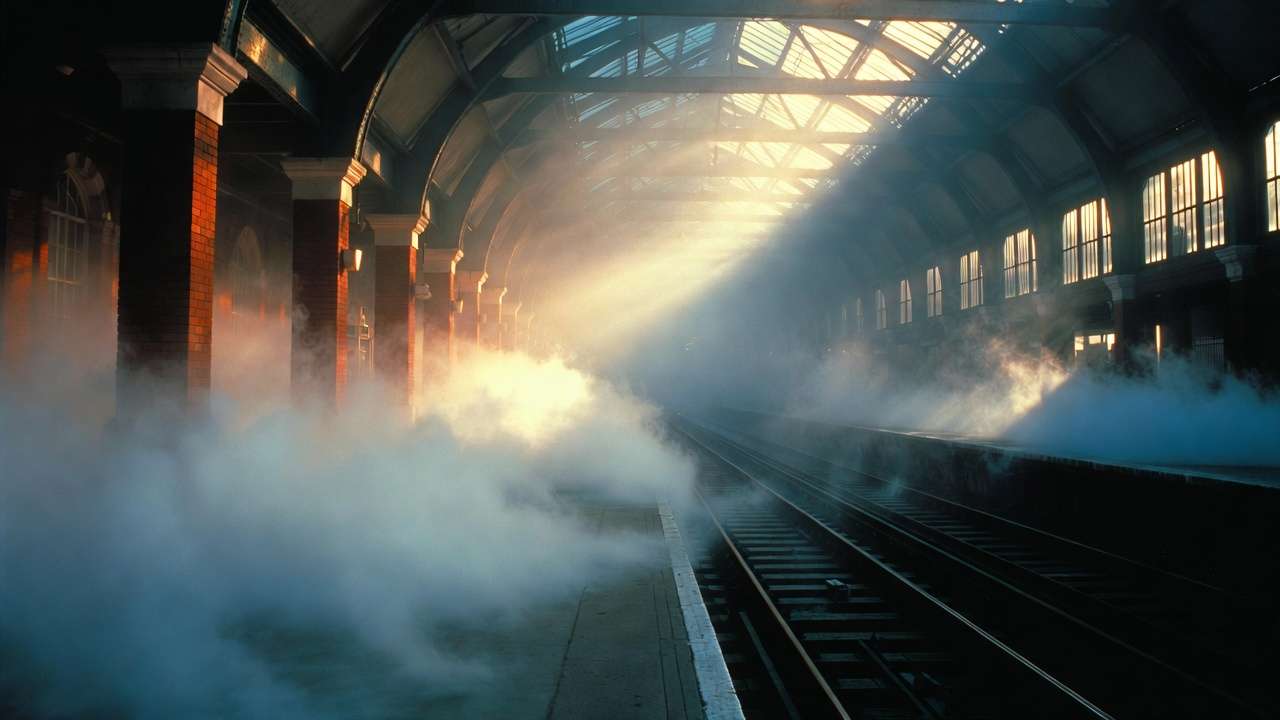
When Harry “wakes,” he finds himself naked on the floor of what appears to be King’s Cross station—clean, quiet, and strangely peaceful. This is not literal afterlife; it is a representation constructed by Harry’s mind and soul in the borderland between life and death.
What King’s Cross Represents Symbolically
King’s Cross has been Harry’s gateway to the wizarding world since age eleven. It is the liminal space where Muggle and magical realities meet. In this moment of metaphysical transition, Harry’s subconscious chooses the most familiar threshold to process what has just happened.
The white mist, the silence, the absence of pain—all suggest a place of clarity and choice, not punishment or reward.
 Meeting Dumbledore – Guidance from Beyond
Dumbledore appears young, healthy, and radiant—exactly as Harry remembers him at his strongest. This is not the “real” Dumbledore (who is dead), but a manifestation drawn from Harry’s memories and understanding, given shape by the magic of the moment.
Dumbledore patiently explains the mechanics:
- The piece of Voldemort’s soul was destroyed.
- Harry’s own soul is intact.
- Because Voldemort used Harry’s blood, Voldemort tethered Harry to life.
- Harry now has the choice to return or to “go on.”
Dumbledore says: “You are the true master of death, because the true master does not seek to run away from Death. He accepts that he must die, and understands that there are far, far worse things in the living world than dying.”
The Maimed Child – Voldemort’s Mangled Soul
Beneath a bench lies a small, naked, maimed creature—whimpering, flayed, pitiful. Harry instinctively wants to help it, but Dumbledore gently stops him.
Rowling later confirmed this creature represents the final, irreparable fragment of Voldemort’s soul—damaged beyond healing by the repeated act of creating Horcruxes. Harry cannot save it because Voldemort destroyed his own capacity for redemption long ago.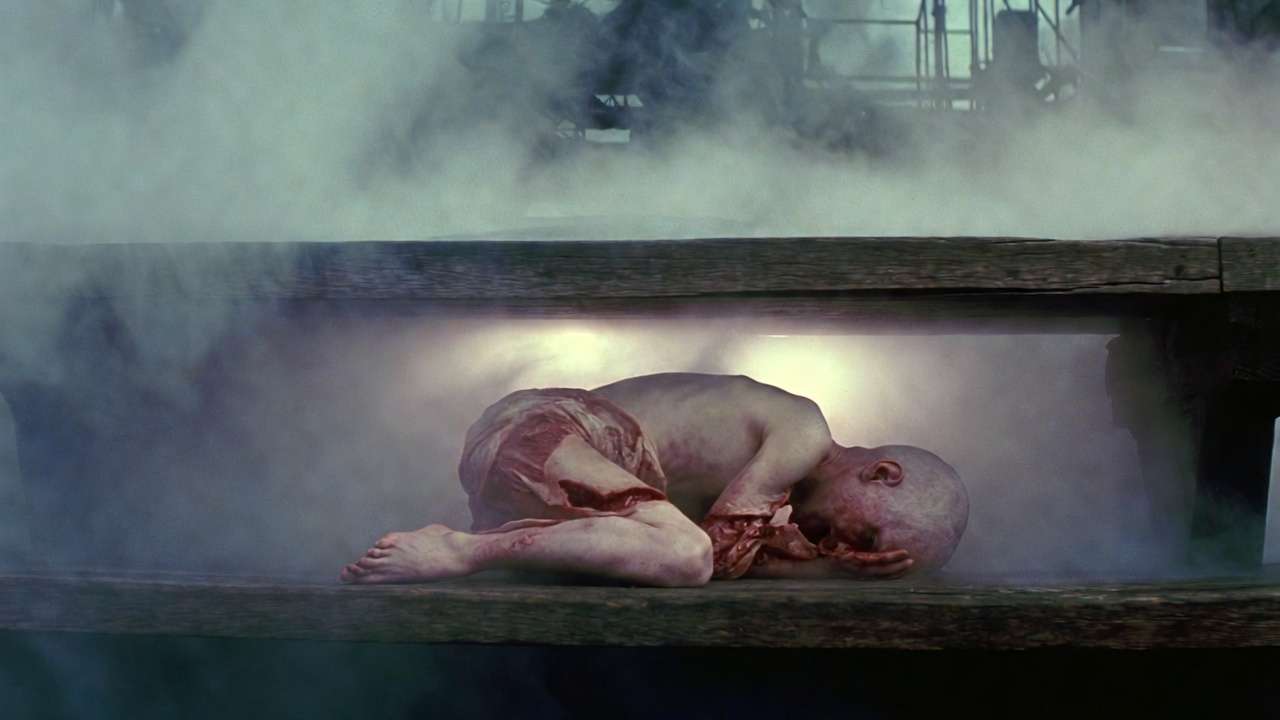
The Choice – Harry Decides to Return
Harry asks, “Is this real? Or has this been happening inside my head?”
Dumbledore smiles: “Of course it is happening inside your head, Harry, but why on earth should that mean that it is not real?”
Harry chooses to return—not out of fear of death, but because the fight is not finished and people still need him. He tells Dumbledore, “I’ve got to go back, haven’t I?”
Dumbledore confirms: “Oh, that’s up to you.”
Harry closes his eyes, wills himself back—and wakes in the forest.
The Aftermath – Harry Returns and the Final Defeat
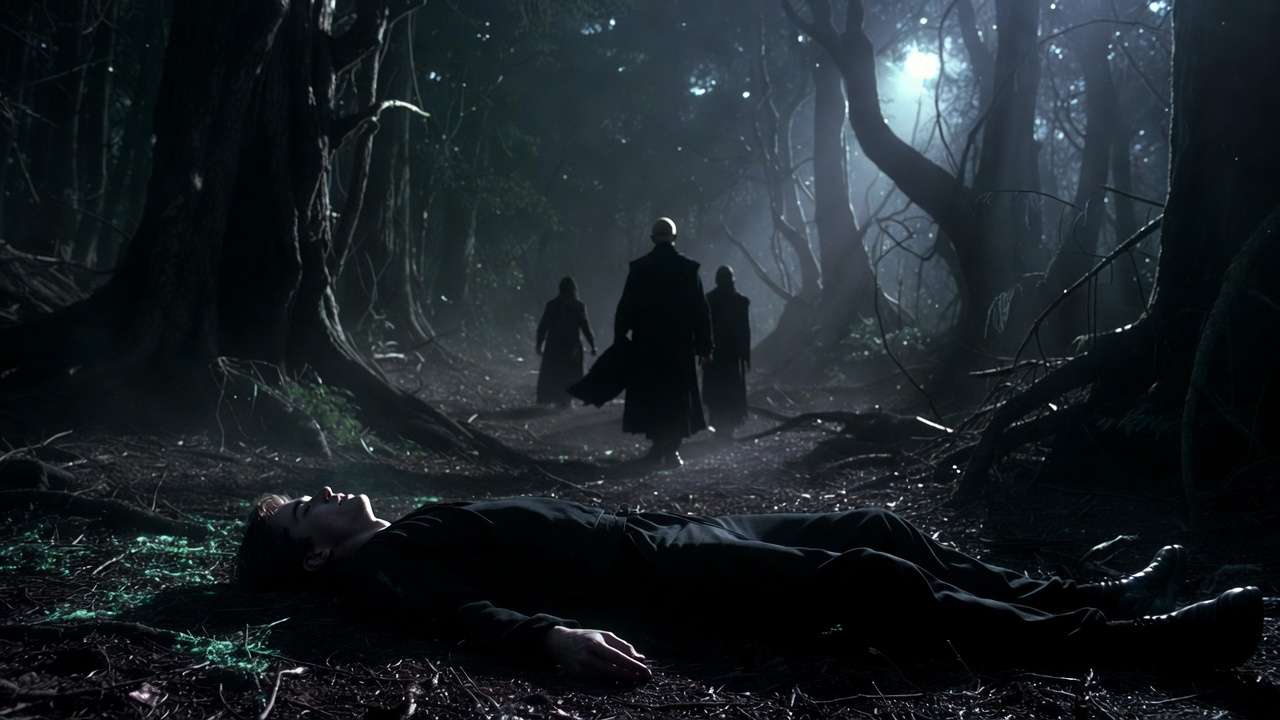
Harry’s eyes snap open in the cool night air of the Forbidden Forest. Pain floods back—every bruise, every ache—but he is alive. He hears Voldemort’s triumphant voice ordering Narcissa Malfoy to check if he is dead. In one of the series’ most tense and brilliant moments, Harry lies motionless while Narcissa, desperate to find her son Draco, leans close and whispers, “Is Draco alive? Is he in the castle?”
Harry breathes, “Yes.”
Narcissa lies to Voldemort, declaring Harry dead. The procession carries him back to the castle as a trophy.
Waking in the Forest – Pretending to Be Dead
Harry’s feigned death is not just survival instinct; it is strategic. By allowing Voldemort to believe he has won, Harry buys time. Voldemort’s arrogance—parading the “corpse” of his greatest enemy—prevents immediate further attacks and lets Harry witness the battlefield.
Under the Invisibility Cloak (which he had summoned silently), Harry moves unseen among the crowd, gathering information and protecting those he can.
 The Protective Enchantment Expands
Harry’s willing sacrifice in the Forest activates the same protective magic Lily used sixteen years earlier, but on a vastly larger scale. As Dumbledore explains in the limbo scene: “Your brave decision to come here… has placed a protective enchantment over this place… while you live, while you survive, Voldemort cannot possess the castle.”
Everyone fighting for Hogwarts is now shielded from Voldemort’s direct Killing Curse in the same way Harry once was. This explains why Voldemort’s subsequent curses fail to kill as cleanly as before—love’s ancient magic has been invoked again, this time by Harry’s conscious choice.
The Elder Wand’s True Allegiance
The final piece falls into place during the duel in the Great Hall. Voldemort believes the Elder Wand belongs to him because he killed Snape. But wand allegiance follows different rules.
Draco Malfoy disarmed Dumbledore at the top of the Astronomy Tower in Half-Blood Prince. Harry later disarms Draco at Malfoy Manor in Deathly Hallows. Thus, the Elder Wand’s allegiance transfers to Harry—without Harry ever physically possessing the wand until the very end.
When Voldemort casts his final “Avada Kedavra,” the Elder Wand refuses to kill its true master. Instead, the curse rebounds, and Voldemort meets the fate he so feared.
Themes and Deeper Meaning – Why This Moment Matters
Harry’s “death” and return form the emotional and philosophical heart of the entire series.
Voldemort’s entire life is defined by his terror of death. He splits his soul, seeks Horcruxes, pursues the Hallows—all to achieve immortality. In contrast, Harry repeatedly chooses love, friendship, and sacrifice over personal survival.
- Lily dies to save her son.
- Dumbledore accepts his own death to protect others and guide Harry.
- Harry walks willingly to his apparent death to destroy the last Horcrux and protect his friends.
Rowling weaves the Tale of the Three Brothers throughout the final book. The brother who seeks power (the Elder Wand) dies violently. The brother who seeks to conquer death (the Resurrection Stone) wastes away in grief. The brother who humbly accepts death (the Invisibility Cloak) lives a long, peaceful life and greets Death as a friend.
Harry embodies the third brother. By accepting death—by walking into the Forest without fear—he masters it. Not through immortality, but through courage and love.
This moment also completes the arc of the series’ central theme: love is more powerful than any dark magic. Voldemort never understood love, and that blindness destroys him. Harry’s survival is proof that love endures even beyond the grave.
 Frequently Asked Questions (FAQ)
Did Harry really die and come back to life? No. Harry never fully dies. The Killing Curse destroys only the Horcrux fragment inside him. His own soul remains tethered to his body by Voldemort’s use of his blood and by his own sacrificial protection. He enters a limbo state of choice, then returns.
Why didn’t the Resurrection Stone play a role in his survival? Harry deliberately dropped the Stone before facing Voldemort. He rejects the idea of clinging to the dead or cheating death. The Stone’s role is emotional—allowing Harry to draw strength from his loved ones one last time—not mechanical.
Was the King’s Cross scene real or just in Harry’s head? It is both. Dumbledore tells Harry, “Of course it is happening inside your head, Harry, but why on earth should that mean that it is not real?” The scene is a metaphysical representation created by Harry’s mind and soul in the borderland between life and death, using familiar symbols to process the experience.
How does the movie version differ from the book? The films simplify the explanation. The King’s Cross scene is shorter, the blood tether is barely mentioned, and Dumbledore’s dialogue is condensed. The maimed child is omitted entirely, reducing the horror of Voldemort’s soul-damage. The book provides far more philosophical depth.
What did J.K. Rowling say about it? In interviews and on Pottermore (now WizardingWorld.com), Rowling has repeatedly clarified: Harry survives because Voldemort used his blood (carrying Lily’s protection), because the Horcrux was destroyed instead of Harry’s soul, and because Harry chose to return. She has called it “a limbo, not death,” and emphasized that Harry is never truly resurrected—only the Horcrux dies.
Harry Potter comes back from the brink not through luck, divine intervention, or a hidden immortality spell, but through a precise convergence of magic, choice, and consequence:
- Voldemort’s use of Harry’s blood creates an anchor to life.
- Harry’s willing sacrifice destroys the Horcrux and extends protective magic over Hogwarts.
- In the liminal space of King’s Cross, Harry chooses to return—not out of fear, but out of duty and love.
- The Elder Wand’s allegiance seals Voldemort’s defeat.
This sequence is Rowling at her finest: intricate plotting, profound symbolism, and emotional payoff. It rewards careful readers who have followed the clues across seven books.
If this explanation has deepened your appreciation of the series—or finally answered that nagging question that kept you up after your first read—revisit Chapter 35, “King’s Cross,” and feel the full weight of Harry’s courage. What do you think is the most powerful moment in the entire series? Share your thoughts in the comments below, and explore more deep dives into the wizarding world right here on the blog.