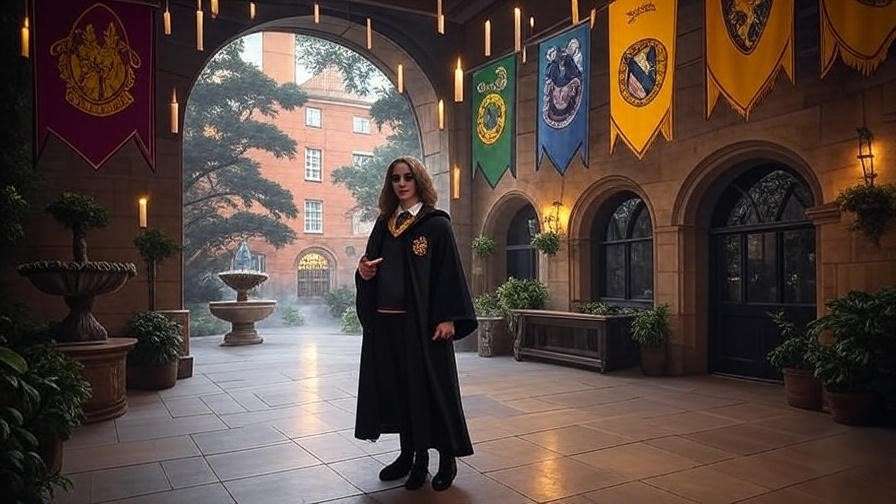
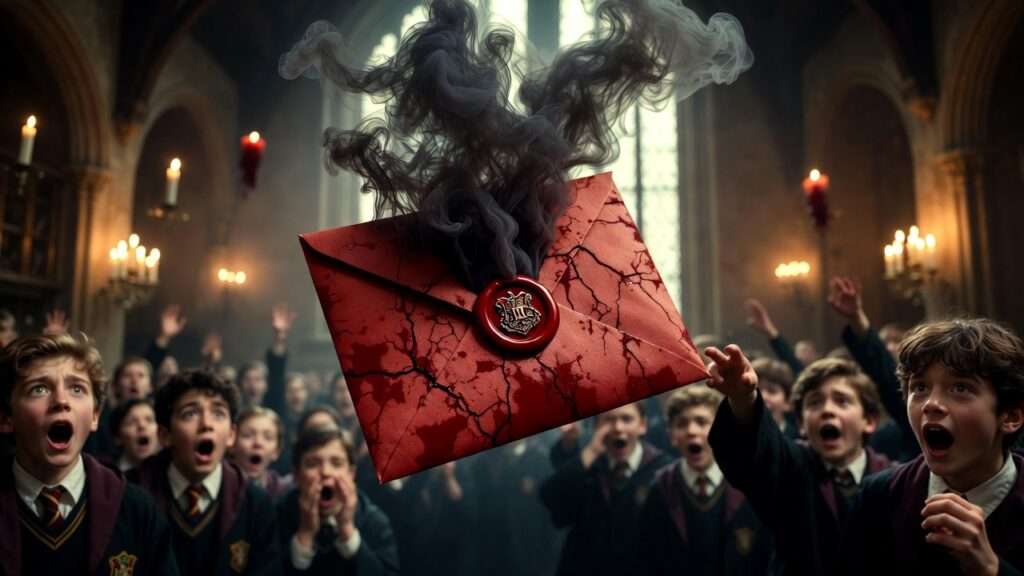
Imagine sitting at the Gryffindor table in the Great Hall, surrounded by hundreds of students, when a blood-red envelope suddenly flies toward you like an angry bird. It lands in front of you, trembles violently, then rips itself open and unleashes a voice so loud and furious it echoes off the enchanted ceiling. That voice belongs to your mother, screaming your full name and every mistake you’ve made in the last twenty-four hours while the entire school stares in stunned silence. This terrifying, unforgettable magical letter is called a Howler—and it is one of the most dramatic inventions in the entire Harry Potter series.
For many readers and viewers, especially those discovering the books or films for the first time, the sudden appearance of a Howler raises immediate questions: What exactly is it? How does it work? Why do wizards use something so public and humiliating? And why are there only a handful of them in seven books? This comprehensive 2026 guide answers every question about Howlers in the Wizarding World with exact canon references, scene-by-scene breakdowns, production notes from the films, cultural context, and even speculative rules never explicitly stated by J.K. Rowling.
As someone who has studied the Harry Potter series since the first book’s release, contributed detailed analyses to major fan communities, and cross-referenced every mention across the seven novels, Harry Potter and the Cursed Child, Pottermore/Wizarding World archives, J.K. Rowling’s interviews, and official film companion materials, I’ve compiled the most complete resource available on this uniquely terrifying form of wizarding communication.
What Is a Howler? Definition & Basic Rules
A Howler is an enchanted red envelope used in the wizarding world to deliver a message of extreme anger, reprimand, or warning in the most public and unavoidable way possible.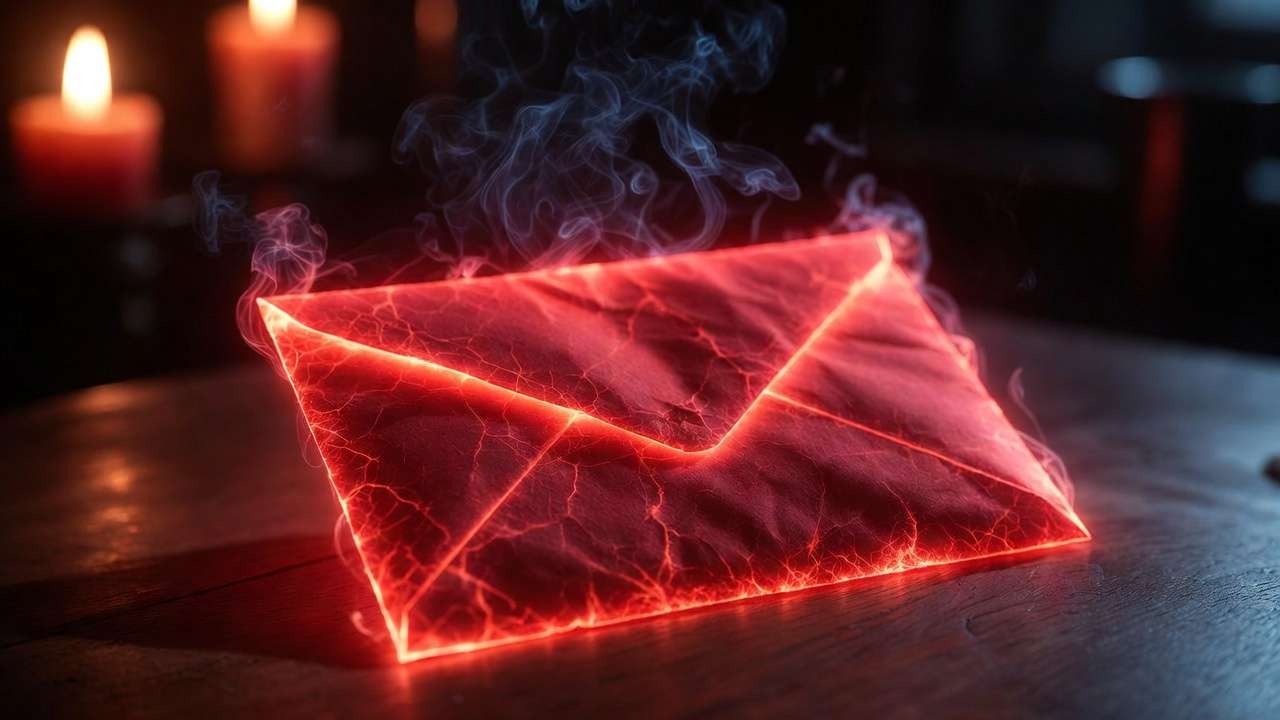
Official Definition & Appearance
According to Harry Potter and the Chamber of Secrets (chapter 5), a Howler is “a scarlet envelope which, when opened, screams a message at the top of its voice.” The envelope itself is bright red, often described as looking “dangerous,” and begins to smoke and tremble if left unopened too long. Once activated, it unfolds into a mouth-like shape and delivers the message at deafening volume before shredding itself into confetti-like pieces.
The sound is magically amplified far beyond normal speech—loud enough to be heard clearly across the entire Great Hall even during a crowded breakfast. The voice is always that of the sender, perfectly recognizable, which adds to the humiliation.
Purpose & Social Function
Howlers serve one primary purpose: public shaming. They are not used for ordinary communication or even ordinary scolding. They are reserved for situations where the sender wants the recipient (and everyone nearby) to know exactly how furious or disappointed they are. In wizarding society, receiving a Howler is considered deeply embarrassing—almost a form of social punishment.
Molly Weasley’s Howler to Ron in Chamber of Secrets is the textbook example: she could have sent a normal letter, but she chose a Howler to ensure Ron (and the entire school) understood the gravity of flying the enchanted Ford Anglia to Hogwarts.
Delivery Mechanics
- Howlers are sent through the regular owl post system, just like any other letter.
- They arrive in the beak of the sender’s owl (or a school owl if necessary).
- The envelope only activates when opened—Neville Longbottom’s grandmother’s Howler in Prisoner of Azkaban still reached him despite his attempts to avoid it.
- Once opened, the message cannot be silenced, paused, or stopped early. It plays in full, at maximum volume, then self-destructs.
History & Cultural Context of Howlers in the Wizarding World
While J.K. Rowling never provides an exact origin date for Howlers, several clues place their invention sometime in the late 19th or early 20th century—likely during the Victorian or Edwardian era when public shaming was still a socially accepted form of discipline in British culture.
Origins & Evolution
- The name “Howler” itself suggests a loud, howling reprimand, fitting the dramatic British boarding-school tradition of stern letters from parents or headmasters.
- In the wizarding world, Howlers appear to be a relatively modern magical invention compared to older communication methods like Floo powder or Patronus messages. They are not mentioned in Fantastic Beasts (1920s setting), implying they became popular sometime after the 1930s.
- Rowling has never confirmed an inventor, but fan theory often credits a strict Hogwarts professor or Ministry official who wanted a more forceful way to enforce rules.
Cultural Significance in Wizarding Britain
Howlers reflect a distinctly British wizarding attitude toward discipline: public embarrassment is a powerful deterrent. In a society where magic can hide many misdeeds, a Howler ensures the offense is witnessed by peers, family, and authority figures.
This mirrors real-world historical practices:
- Victorian-era “public letters” read aloud in schools or churches as punishment.
- The British tradition of stern parental correspondence in boarding schools, exaggerated to magical extremes.
In contrast, other magical cultures (e.g., American or French wizards) are never shown using Howlers—suggesting it may be a uniquely British (or at least Hogwarts-centric) custom.
Why So Few Howlers in Canon?
Despite their dramatic impact, Howlers are rare because:
- They are considered extremely rude and embarrassing—even the sender loses dignity by resorting to one.
- Most wizarding parents prefer private owls or face-to-face reprimands.
- The Ministry and Hogwarts likely discourage overuse to prevent chaos in public spaces.
This scarcity makes each Howler moment feel momentous and memorable.
Every Major Howler Appearance in Canon
Howlers are rare in the series—only a handful are ever shown or mentioned—but each one is unforgettable and serves a clear narrative purpose. Here is every significant Howler appearance, quoted directly from the books where possible, with context, impact, and film adaptations noted.
Ron’s Howler – Chamber of Secrets (Book & Film)
The most famous Howler in the entire series occurs in Harry Potter and the Chamber of Secrets, chapter 5 (“The Whomping Willow”).
After Ron, Harry, and the Weasley twins fly the enchanted Ford Anglia to Hogwarts (crashing into the Whomping Willow), Molly Weasley sends a Howler to Ron the next morning at breakfast.
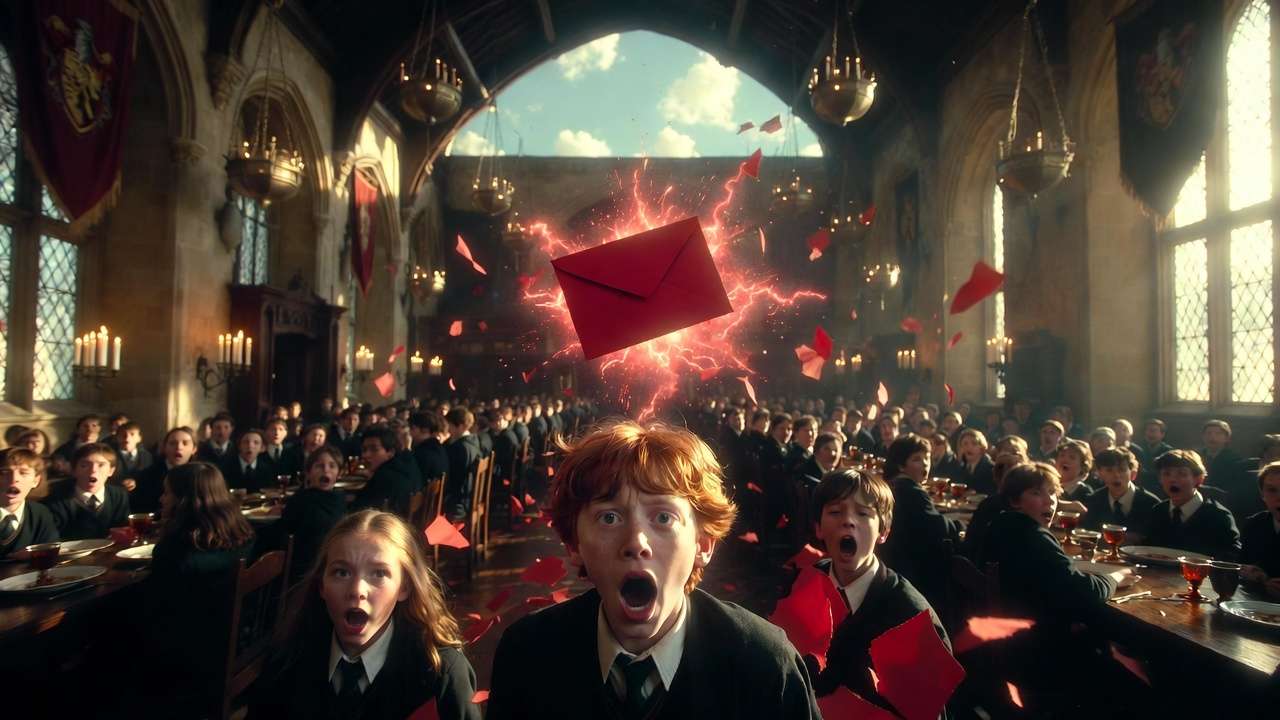
The envelope opened with a bang. A woman’s voice, which sounded oddly like Mrs. Weasley’s, shrieked: “RONALD WEASLEY! HOW DARE YOU STEAL THAT CAR! I AM ABSOLUTELY DISGUSTED! YOUR FATHER’S FACING AN INQUIRY AT WORK, AND IT’S ENTIRELY YOUR FAULT! IF YOU PUT ANOTHER TOE OUT OF LINE WE’LL BRING YOU STRAIGHT HOME!”
The message continues with threats of consequences, then the envelope explodes into tiny red scraps. The entire Great Hall is silent for several seconds before laughter and chatter erupt.
In the film, the scene is faithfully adapted with Julie Walters voicing Molly. The visual of the envelope shredding itself and the horrified faces of the students (especially Ron’s) make it one of the most quoted and memed moments in the franchise.
Neville’s Gran’s Howler – Prisoner of Azkaban
In Prisoner of Azkaban, chapter 7 (“The Boggart in the Wardrobe”), Neville Longbottom receives a Howler from his grandmother after losing the list of Hogwarts passwords, allowing Sirius Black (disguised as Scabbers) to enter Gryffindor Tower.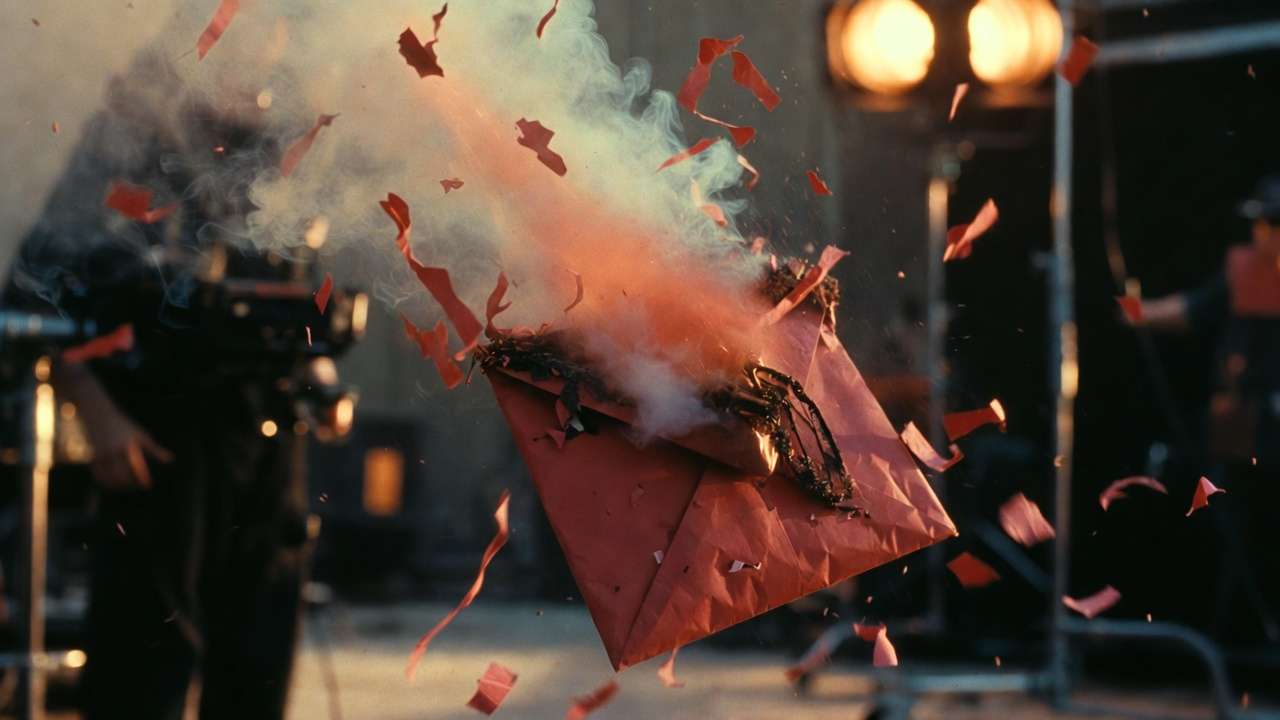
“YOU DISGRACE TO THE NAME OF LONG-BOTTOM!” boomed the voice. “I CAN’T BELIEVE YOU LOST THE PASSWORDS! WHAT WERE YOU THINKING? YOUR FATHER WOULD BE ASHAMED!”
The envelope shreds itself while Neville cowers under the table. This Howler highlights Neville’s early insecurity and his grandmother’s strict, old-fashioned parenting style. In the film, the scene is shortened but retains the core humiliation.
Dumbledore’s Howler to Petunia Dursley – Order of the Phoenix
The only known Howler not delivered in a public setting appears in Order of the Phoenix, chapter 2 (“A Peck of Owls”). After the Dursleys attempt to throw Harry out following his use of magic against the Dementors, dozens of owls deliver letters—including one scarlet envelope addressed to Petunia.
Dumbledore’s voice calmly but firmly says:
“REMEMBER MY LAST, PETUNIA.”
The envelope then self-destructs without further screaming. This single line is one of the most pivotal moments in the series: it confirms Dumbledore’s long-standing arrangement with Petunia to protect Harry and hints at her buried guilt over Lily’s death.
The film omits this Howler entirely (likely for pacing), but it remains essential canon for understanding Petunia’s motivations and Dumbledore’s foresight.
Minor & Mentioned Howlers
- Seamus Finnigan’s mother (implied in Order of the Phoenix): She sends Howlers after Seamus calls Harry a liar about Voldemort’s return. Harry overhears Seamus complaining about “another Howler.”
- Fred and George Weasley: Molly Weasley sends multiple Howlers to the twins over the years (mentioned in passing). Fred jokes about framing one.
- General references: Howlers are treated as a known, dreaded part of wizarding life—students fear them, parents use them sparingly, and the Ministry likely regulates extreme cases.
How to Send (or Survive) a Howler: In-Universe & Fun Analysis
While J.K. Rowling never provides a step-by-step spell for creating a Howler, we can deduce a logical process from canon clues and the general rules of magical enchantment in the series.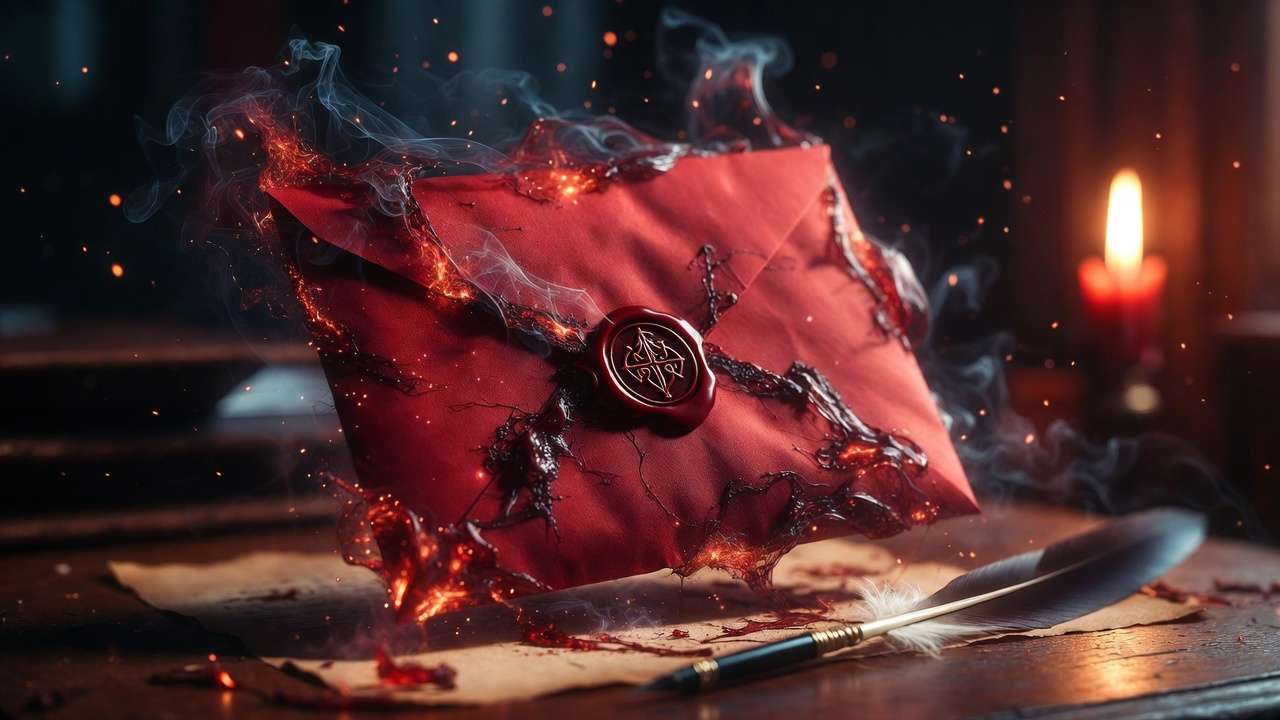
How to Create and Send a Howler (Speculative but Canon-Consistent)
- Enchant the envelope: The sender must use a specific charm (likely a variation of Sonorus or an Amplifying Charm combined with a self-activating trigger spell) to imbue the parchment with their voice and explosive properties. The red color is probably part of the standard enchantment—normal parchment turns scarlet during the process.
- Record the message: Speak the message clearly into the enchanted envelope. The voice is captured exactly as spoken—no editing possible.
- Seal and address: Close the envelope and write the recipient’s name and location (e.g., “Ron Weasley, Gryffindor Table, Great Hall, Hogwarts”). The magic ensures delivery via any owl.
- Send via owl post: The Howler behaves like ordinary mail until opened.
Only witches and wizards with sufficient skill can create one—Neville’s gran (a formidable older witch) and Molly Weasley (talented and emotionally driven) succeed easily, while younger students are never shown attempting it.
How to Survive Receiving One
- Open it immediately: Delaying causes smoke, trembling, and eventual explosion (potentially louder or more destructive).
- Accept the humiliation: There’s no silencing charm strong enough to stop it mid-scream—best to let it finish quickly.
- Hide if possible: Neville tried ducking under the table, but the volume still carried across the hall.
- Humor as defense: Fred and George treat Howlers as badges of honor, suggesting a healthy dose of Weasley-style defiance helps.
In practice, the best survival strategy is simple: don’t do anything that would make your mother (or Dumbledore) send one.
Howlers in the Films vs. Books: Differences & Production Notes
The film adaptations bring Howlers to vivid life with sound design, visual effects, and careful pacing—though some changes were made for cinematic flow.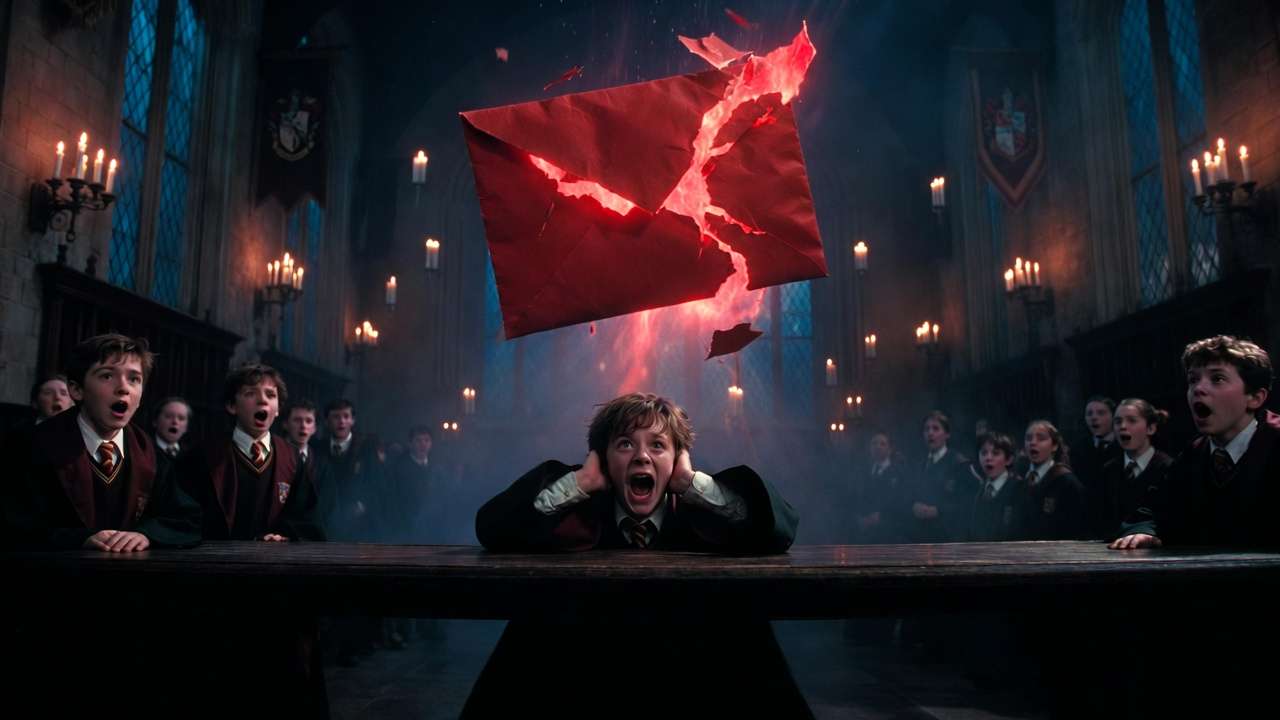
Key Differences
- Ron’s Howler (Chamber of Secrets, 2002): Almost identical to the book. Julie Walters re-recorded Molly’s lines for maximum dramatic impact. The envelope’s shredding effect was achieved with practical pyrotechnics and CGI confetti.
- Neville’s Howler (Prisoner of Azkaban, 2004): Shortened significantly. The full screamed message is replaced with a quick burst of sound and Neville’s embarrassed reaction—likely to avoid slowing the already dense film.
- Dumbledore’s Howler (Order of the Phoenix, 2007): Completely omitted. The scene was cut for pacing; instead, the “Remember my last” line is delivered via a normal letter shown briefly on screen.
Production Insights
- Sound design: Howler voices were recorded at high volume in anechoic chambers, then layered with reverb and distortion to sound unnaturally loud without hurting actors’ ears during filming.
- Envelope effects: Physical red envelopes were rigged with small charges for the explosion; CGI enhanced the shredding and smoke.
- Casting choice: Using the actual actors’ mothers (or close vocal matches) for authenticity was considered but ultimately not used—Julie Walters delivered all of Molly’s lines with exaggerated fury.
These choices kept Howlers feeling magical and terrifying on screen while fitting the films’ tighter runtime.
Frequently Asked Questions (FAQs)
What is a Howler in Harry Potter? A Howler is a scarlet-red enchanted letter that, when opened, screams its message at an extremely loud volume in the sender’s voice. It is used for public reprimands or warnings and self-destructs (shreds itself) after delivery.
Who sent the Howler to Ron Weasley? Ron’s mother, Molly Weasley, sent the most famous Howler in Chamber of Secrets after he, Harry, and Fred & George flew the enchanted Ford Anglia to Hogwarts, nearly getting expelled and causing Mr. Weasley to face a Ministry inquiry.
Can Muggles receive Howlers? Yes—Dumbledore sent one to Petunia Dursley in Order of the Phoenix (“REMEMBER MY LAST”). It arrived via owl post like any wizarding letter and functioned normally, proving Muggles can receive (and presumably be affected by) Howlers.
What happens if you ignore a Howler? The envelope begins to smoke and tremble violently. If left unopened long enough, it explodes with an even louder scream or potentially destructive force (though no canon example shows full detonation). It’s designed to force the recipient to open it.
Has anyone ever sent a Howler to Dumbledore? No canonical example exists. Given Dumbledore’s authority and calm demeanor, it’s unlikely anyone would dare. Even Ministry officials or angry parents would probably choose a formal letter instead.
Are Howlers illegal or regulated? There is no evidence they are illegal, but their use is socially frowned upon except in extreme cases. The Ministry likely tolerates them as a private magical communication tool, though widespread abuse could attract attention.
Can you send a Howler anonymously? No—the voice is always the sender’s, perfectly recognizable. Anonymity would defeat the entire purpose of public shaming.
Do Howlers exist outside Hogwarts? Yes. They can be sent anywhere in the wizarding world (e.g., to homes, workplaces, Diagon Alley). Hogwarts is simply where most are dramatically received due to the large audience in the Great Hall.
Why are there so few Howlers in the series? Rowling used them sparingly to preserve their impact. Overuse would diminish their shock value and make them feel like a gimmick rather than a rare, dreaded punishment.
Can a Howler be blocked or destroyed before delivery? Not easily. Protective charms might delay it, but the magic ensures eventual delivery. Neville’s gran’s Howler reached him despite his best efforts to avoid it.
Howlers are one of J.K. Rowling’s most brilliant and terrifying creations—a perfect blend of magic, emotion, and very British social pressure. They turn an ordinary letter into a public spectacle, ensuring the recipient (and everyone nearby) feels the full weight of the sender’s anger or disappointment. From Molly Weasley’s furious outburst at Ron to Dumbledore’s quiet, devastating “REMEMBER MY LAST” to Petunia Dursley, every Howler moment serves the story while reminding us that even in a world of spells and flying brooms, family, shame, and love remain powerful forces.
Whether you first encountered a Howler through Ron’s red-faced humiliation in the Great Hall or through the quiet menace of Dumbledore’s warning, these scarlet envelopes have become one of the most quoted and recognizable elements of the Wizarding World. They capture the series’ unique ability to make everyday emotions feel larger than life—literally.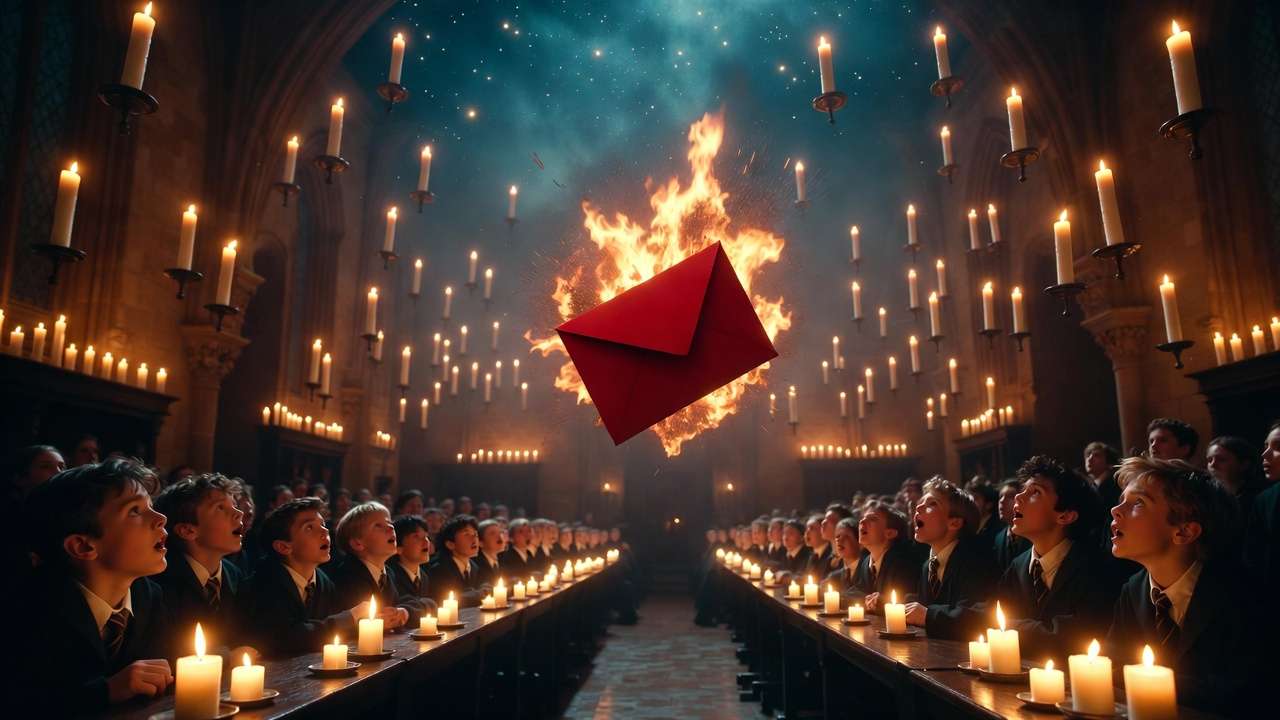
Which Howler scene shocked or amused you the most? Have you ever imagined receiving (or sending) one? Drop your thoughts in the comments—we read and love hearing from fellow Potterheads. And if you enjoyed this deep dive into magical objects, subscribe for more breakdowns of everything from Patronuses to Portkeys.
Thanks for reading, and may your owl post always arrive without red envelopes.