
Imagine a creature so powerful that it can stare down death itself, burst into flames at the moment of greatest weakness, and rise again more magnificent than before — all while singing a melody that can pierce the darkest soul and kindle unbreakable hope.
That creature is the phoenix, and in the wizarding world of Harry Potter, no single phoenix captures the imagination quite like Fawkes, Albus Dumbledore’s loyal companion. The phoenix of Harry Potter is far more than a beautiful magical bird; it is a living symbol of renewal, loyalty, sacrifice, and the ultimate triumph over darkness.
Whether you’re rereading the series for the tenth time, introducing a new generation to the books, or simply fascinated by the deeper mythology J.K. Rowling wove into her masterpiece, understanding the phoenix — its extraordinary powers, profound symbolism, and pivotal role through Fawkes — unlocks one of the richest layers of the entire Harry Potter saga.
In this in-depth guide, we’ll explore everything you need to know about the phoenix of Harry Potter: from its mythical origins and near-godlike abilities to the heart-wrenching moments that defined Fawkes’ journey, and the timeless lessons the creature teaches about life, death, and resilience.
Let’s step into the flame.
What Is a Phoenix in the Harry Potter Universe?
In J.K. Rowling’s wizarding world, the phoenix is classified as a XXXX creature by the Ministry of Magic — a designation reserved for beasts of “extreme danger” that are nevertheless capable of being domesticated by skilled witches and wizards.
Physically, the phoenix is breathtaking. It is roughly swan-sized, with brilliant scarlet feathers that shimmer like living fire and a long golden tail that trails behind like molten sunlight. Its beak and talons gleam gold, and its eyes are bright and intelligent, carrying an ancient wisdom that seems to see straight into your soul.
According to Fantastic Beasts and Where to Find Them, phoenixes inhabit high mountain peaks in remote parts of the world. They are gentle herbivores, feeding primarily on herbs, and are notoriously difficult to domesticate — a fact that makes Fawkes’ long bond with Albus Dumbledore all the more extraordinary.
Rowling drew inspiration from phoenix mythology across cultures:
- The ancient Egyptian Bennu, a solar bird associated with creation and rebirth
- The Chinese Fenghuang, symbol of virtue, grace, and harmony
- The Hindu Garuda, the mighty eagle-like mount of Vishnu
- Even European alchemical traditions, where the phoenix represented the philosopher’s stone and the cycle of transformation
Yet Rowling made the creature distinctly her own, giving the phoenix unique magical properties that serve both plot and profound thematic purposes throughout the seven books.
The Extraordinary Powers of the Phoenix
What truly sets the phoenix apart in the Harry Potter universe is not just its beauty — it is the sheer scope of its magical abilities, many of which border on the miraculous.
Rebirth and Immortality
The most iconic power of the phoenix is its ability to undergo Burning Day. When a phoenix grows old or feels its time has come, it bursts spontaneously into flames, consuming itself entirely. From the pile of ashes rises a new chick, weak at first, but quickly growing into a fully mature phoenix once more.
This cycle strongly suggests that phoenixes are functionally immortal — they do not die of old age in the conventional sense. Even more astonishing, they appear immune to many forms of fatal magic. Fawkes survives a direct hit from the Killing Curse (Avada Kedavra) in Harry Potter and the Order of the Phoenix, merely exploding into flame and reappearing moments later, unharmed.
Canon also strongly implies phoenixes are immune to the deadly gaze of a basilisk — a power that proves crucial in the second book.
Healing Tears
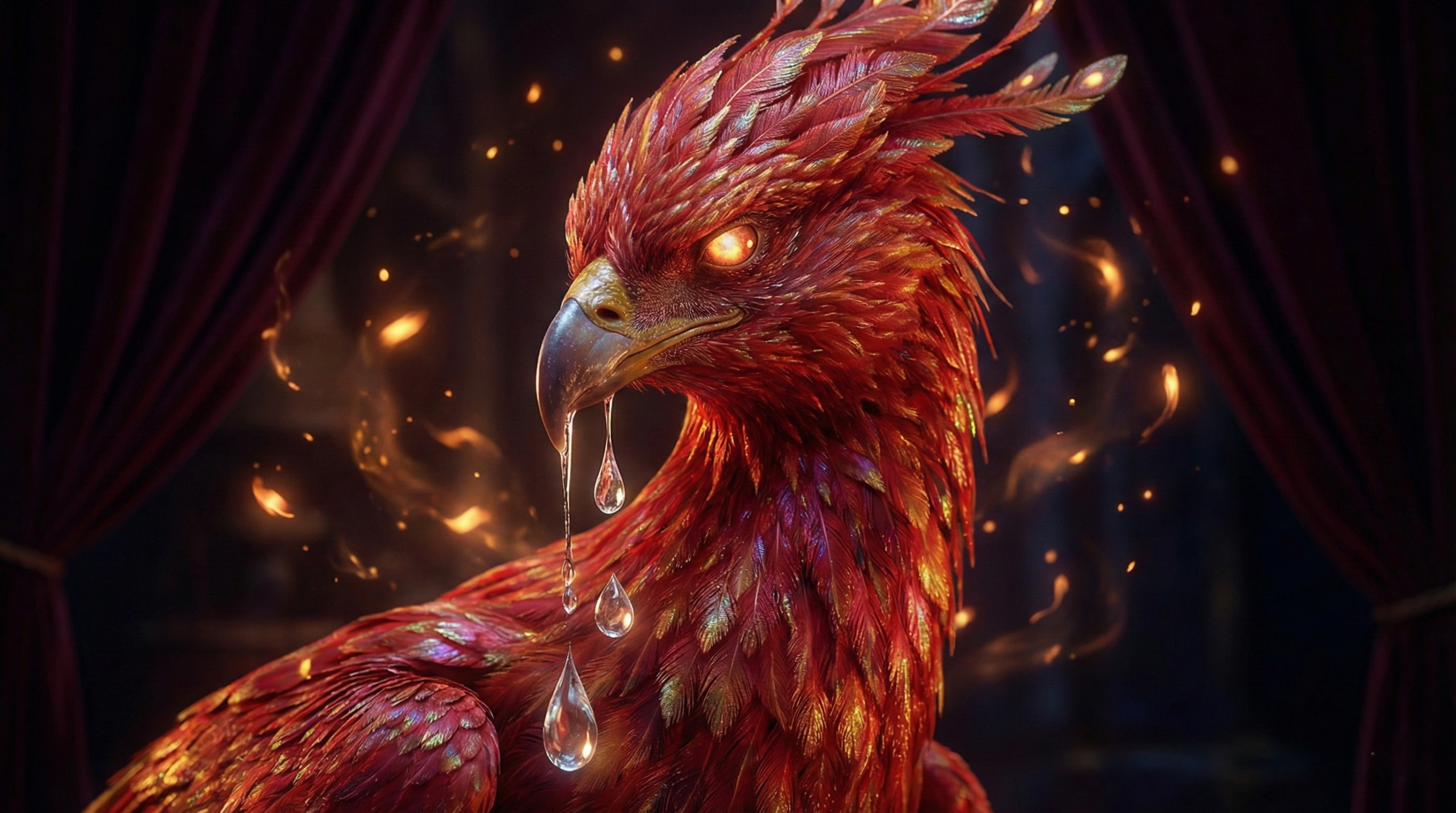
Perhaps the most emotionally resonant ability of the phoenix is its healing tears.
Phoenix tears are the only known antidote to basilisk venom, one of the most lethal poisons in the wizarding world. When Harry lies dying in the Chamber of Secrets after being bitten by Tom Riddle’s basilisk, Fawkes weeps onto the wound. The tears not only neutralize the venom but restore Harry’s strength and vitality within moments.
Unlike unicorn blood, which grants cursed life at terrible moral cost, phoenix tears heal without any negative consequence to the giver or receiver. This purity makes the gift one of the most selfless acts of magic in the entire series.
 The Magical Song of the Phoenix
Few moments in the Harry Potter books are more haunting than hearing the phoenix song.
The melody of a phoenix is described as soul-touching, capable of lifting the spirits of those who are good-hearted while instilling terror in those with dark intentions. The song is most powerful in moments of grief and loss, as demonstrated in the unforgettable Phoenix Lament Fawkes sings after Dumbledore’s death in Half-Blood Prince — a sound so sorrowful that it seems to express the entire wizarding world’s mourning.
The song also has practical effects: it gave Harry courage when he faced Tom Riddle in the Chamber, and it bolstered the resolve of the Order members during the darkest days of the Second Wizarding War.
Apparition, Super Strength, and Additional Powers
Phoenixes possess a unique form of flame-based Apparition that allows them to disappear and reappear in bursts of fire, bypassing even powerful anti-Apparition wards. This ability enables Fawkes to rescue Harry, Ron, Ginny, and Gilderoy Lockhart from the collapsing Chamber of Secrets, and later to whisk Dumbledore away from the Ministry battle.
Despite their delicate appearance, phoenixes possess immense physical strength — Fawkes is able to carry several people at once without apparent strain.
Additional lesser-known abilities include:
- The production of healing pellets containing phoenix flints
- The ability to understand and communicate in a complex language of squawks
- The rarity of their feathers being used as wand cores — an honor bestowed on only a handful of wands, including Harry’s and Voldemort’s
Fawkes: Dumbledore’s Legendary Companion
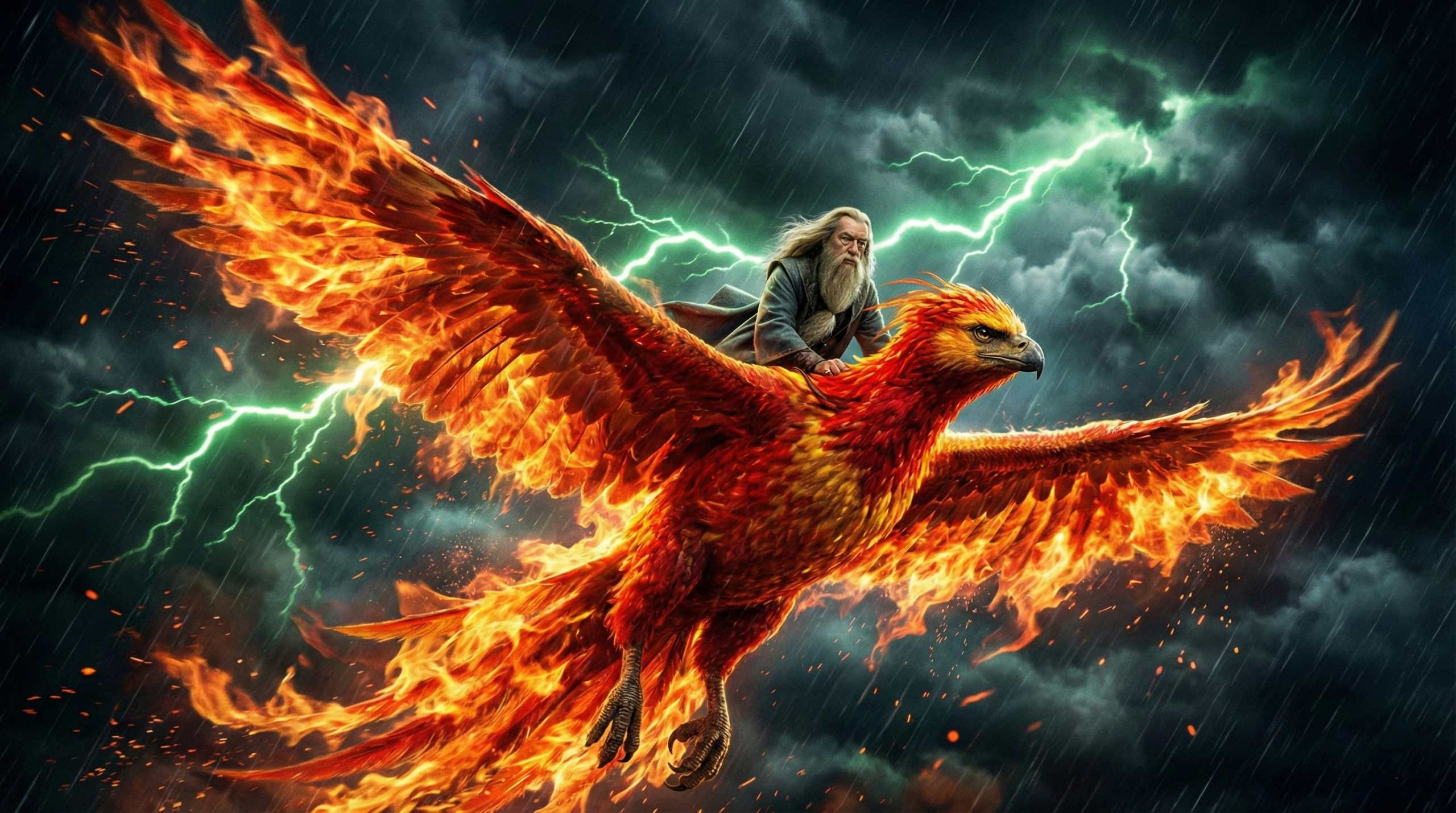
While the phoenix as a species is rare and extraordinary, Fawkes stands alone as the most famous — and arguably the most important — individual phoenix in the entire Harry Potter series. His bond with Albus Dumbledore spanned decades, and his actions repeatedly turned the tide in the fight against Lord Voldemort.
Fawkes had been with Dumbledore for at least 59 years by the time of Chamber of Secrets (1992–1993), making him one of the longest-serving magical companions in the wizarding world. Unlike many creatures who serve out of fear, obligation, or training, Fawkes’ loyalty to Dumbledore was absolute, voluntary, and deeply emotional — a bond that mirrored the phoenix’s own nature as a creature that chooses to help only the pure of heart.
 Key Appearances and Heroic Moments
Fawkes’ most dramatic and memorable interventions occur across three books, each time saving lives and demonstrating why the phoenix is considered one of the most powerful magical beings.
In Harry Potter and the Chamber of Secrets When Harry faces Tom Riddle and the basilisk in the Chamber beneath Hogwarts, all seems lost. Harry has been bitten, the venom is spreading, and Ginny is dying. It is Fawkes who arrives at the critical moment:
- He drops the Sorting Hat at Harry’s feet, from which the Sword of Gryffindor emerges — the weapon needed to slay the basilisk.
- Fawkes blinds the basilisk with his talons, protecting Harry from its deadly gaze.
- Most crucially, he weeps healing tears onto Harry’s wound, reversing the basilisk venom and saving his life.
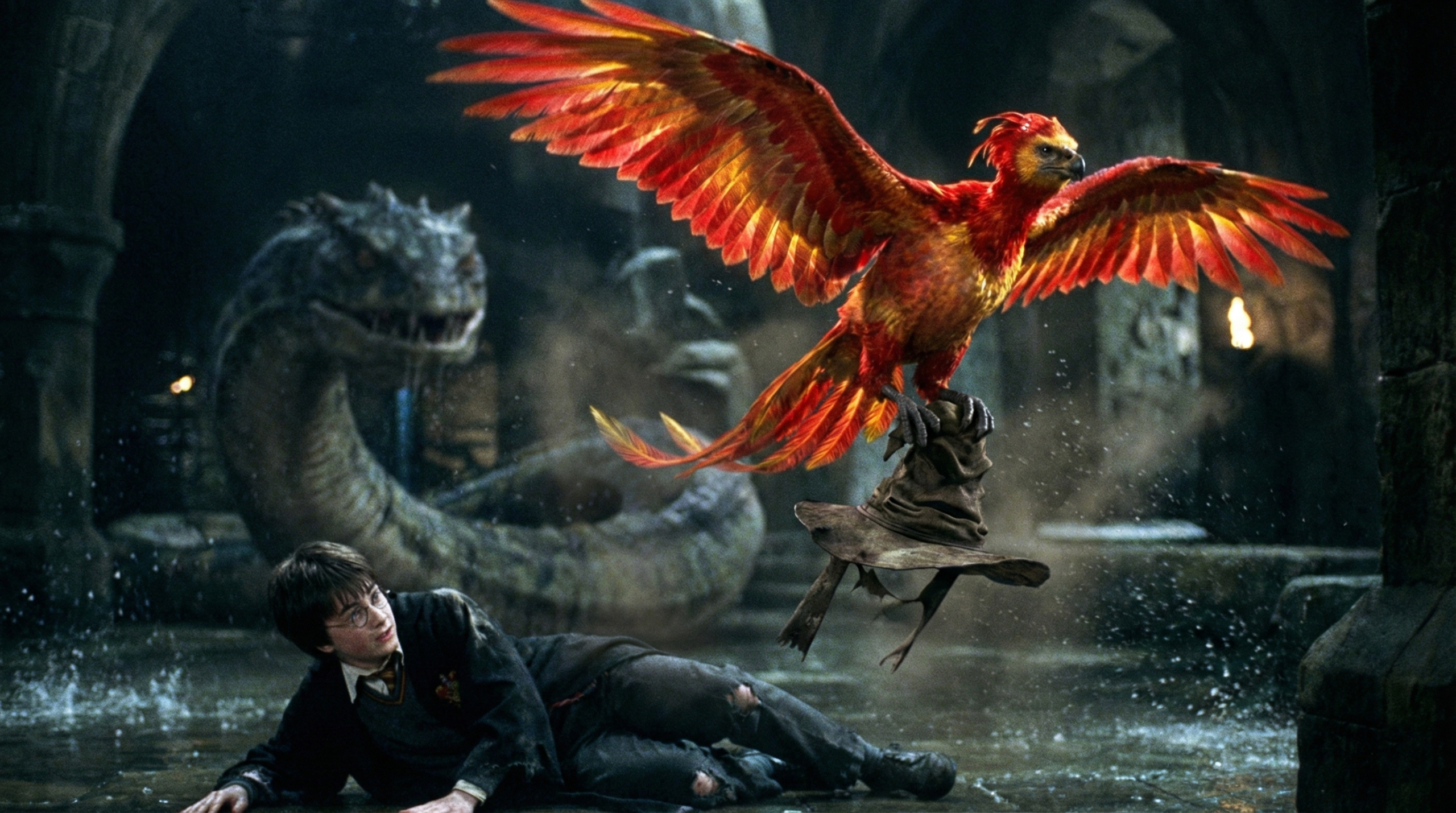 This single sequence cements Fawkes as a literal deus ex machina — yet one that feels earned because of the phoenix’s moral alignment and its connection to Dumbledore’s trust in Harry.
In Harry Potter and the Order of the Phoenix During the climactic battle in the Department of Mysteries, Dumbledore duels Voldemort himself. When Voldemort attempts to possess Harry, Dumbledore summons Fawkes. The phoenix swallows a Killing Curse intended for Dumbledore, exploding into flame — only to reappear instants later, perfectly unharmed. Fawkes then carries Dumbledore away in a burst of fire, escaping the Ministry’s anti-Apparition charms and saving both himself and his master.
This moment showcases not only Fawkes’ immortality and teleportation, but also his willingness to sacrifice himself (however temporarily) for Dumbledore.
In Harry Potter and the Half-Blood Prince Fawkes’ most heartbreaking appearance comes after Dumbledore’s death at the top of the Astronomy Tower. As the school mourns, Fawkes perches on the tower and sings the Phoenix Lament — a melody so sorrowful that it seems to carry the grief of the entire wizarding community.
After the funeral, Fawkes disappears from Hogwarts forever. Many fans interpret this as the phoenix choosing to leave a place that no longer holds his beloved companion. It is a quiet, poignant end to his arc, emphasizing that phoenixes are not pets — they are free, sentient beings who stay only where they choose.
Connection to Harry: Twin Wand Cores and Shared Destiny
One of the most fascinating aspects of Fawkes is his indirect link to Harry through wandlore. Both Harry’s wand and Voldemort’s wand contain feathers from Fawkes as their cores. This twin-core relationship causes Priori Incantatem during their duel in Goblet of Fire, forcing the wands to regurgitate echoes of past spells — including the ghostly forms of Harry’s parents, Cedric Diggory, Bertha Jorkins, and Frank Bryce.
This phenomenon is not mere coincidence; it is a powerful narrative signal that Harry and Voldemort are bound together, yet Fawkes’ feather — a symbol of light, renewal, and goodness — ultimately favors Harry. The phoenix’s essence refuses to fully serve darkness.
The Deep Symbolism of the Phoenix in Harry Potter
Beyond its dazzling magical abilities, the phoenix serves as one of the most powerful and recurring symbols throughout J.K. Rowling’s series — a living embodiment of themes that lie at the very heart of the story: renewal, hope, loyalty, sacrifice, and the idea that death is never truly the end.
 Renewal and Hope in the Face of Despair
The phoenix’s most obvious symbolic meaning is rebirth and resurrection. In a series filled with death, loss, and the constant shadow of war, Fawkes repeatedly appears at the darkest moments — when Harry is dying, when Dumbledore faces Voldemort, when the entire school mourns. Each time, the phoenix rises again, reminding readers that even the most devastating endings can lead to new beginnings.
This motif is especially poignant in the later books, as the Second Wizarding War escalates. The phoenix becomes a quiet counterpoint to Voldemort’s obsession with conquering death through Horcruxes and immortality at any cost. While Voldemort seeks to cheat death through dark, unnatural means, the phoenix accepts death as part of a natural, beautiful cycle — and emerges stronger.
Loyalty and Moral Alignment
Phoenixes are portrayed as creatures that instinctively choose the side of good. They will not serve those with evil intentions. Fawkes’ unwavering devotion to Dumbledore — and by extension to Harry — underscores one of the series’ central truths: true power comes not from domination, but from love, trust, and loyalty.
This is why Fawkes refuses to remain at Hogwarts after Dumbledore’s death. He is not bound by contracts or magic; he stays because he chooses to. When the person he loves is gone, he leaves — a heartbreaking but profoundly respectful act.
The Phoenix and Dumbledore’s Legacy
Albus Dumbledore himself is deeply tied to phoenix symbolism. His full name — Albus Percival Wulfric Brian Dumbledore — contains layers of meaning, but the phoenix is most visibly reflected in:
- His Patronus taking the form of a phoenix (confirmed by J.K. Rowling)
- The name of the resistance organization he founded: The Order of the Phoenix
- His personal philosophy that “to the well-organized mind, death is but the next great adventure”
Fawkes, therefore, becomes an extension of Dumbledore’s values — a living testament that goodness, wisdom, and hope can endure even the darkest times.
In many ways, the phoenix teaches the same lesson Dumbledore tries to impart to Harry throughout the series: that love, sacrifice, and the courage to start again are stronger than fear, hatred, or even death itself.
Phoenixes in the Broader Wizarding World
While Fawkes is the only named, fully characterized phoenix in the main series, the creature appears in several other corners of the wizarding world:
- Wand cores: Phoenix feather cores are among the rarest and most powerful. Ollivander notes that they “take the longest to reveal their true potential” and can show great range and versatility — qualities mirrored in both Harry’s and Voldemort’s wands.
- Fantastic Beasts references: Newt Scamander describes phoenixes as incredibly difficult to domesticate and notes their preference for high, inaccessible places.
- Cultural mentions: Phoenixes occasionally appear on Chocolate Frog cards, as Quidditch mascots (the Tutshill Tornadoes once had phoenix imagery), and in wizarding folklore.
Interestingly, the film adaptations gave Fawkes a more eagle-like, majestic appearance compared to the slightly scruffier, hoatzin-inspired look of the book illustrations — a change many fans still debate to this day.
Fun Facts and Lesser-Known Details About Fawkes and Phoenixes
Here are some fascinating tidbits that even longtime fans may not know:
- Phoenixes lay only one egg at a time, and the egg hatches only when the parent chooses.
- A phoenix can accelerate its Burning Day if it wishes, effectively choosing when to renew itself.
- J.K. Rowling has stated in interviews that the phoenix is one of her favorite magical creatures because of its hopeful, uplifting nature.
- Fawkes is almost certainly male (though phoenixes in general are not strongly gendered in canon).
- The only known phoenix feather wand cores in the series come from Fawkes — making him extraordinarily influential in wandlore despite his gentle demeanor.
- In early drafts, Fawkes was originally going to be a different creature; Rowling changed it to a phoenix to better fit the themes of rebirth and hope.
 FAQ: Common Questions About the Phoenix of Harry Potter
Why did Fawkes leave Hogwarts after Dumbledore died? Most fans believe Fawkes left because his bond was with Dumbledore personally, not the school. Phoenixes are free creatures who choose where they belong — when his person was gone, so was his reason to stay.
Can a phoenix actually die? Canon strongly suggests no. They can be killed by extreme means (though we never see it), but they do not die of old age — they simply renew themselves indefinitely.
What makes phoenix feather wands so special? They are rare, powerful, and selective. They take the longest to bond with an owner and tend to produce the widest range of magic — but only for those the phoenix would approve of.
Is Fawkes the only phoenix in the Harry Potter series? He is the only one we meet as a named, individual character. Others may exist in the wild, but none play a significant role.
Can phoenix tears heal any injury? They are the only known cure for basilisk venom, but we don’t see them used for other injuries. Their healing power seems tied to their purity and moral alignment.
Did Fawkes ever appear in Fantastic Beasts? No — though the era is right for him to have existed, he is not mentioned.
After journeying through the fiery rebirths, the tearful healings, the soul-stirring songs, and the quiet, devastating departures, one truth emerges clearly: the phoenix of Harry Potter is far more than a magical creature or a convenient plot device. Fawkes — and the phoenix as a species — stands as one of J.K. Rowling’s most perfect creations, a living metaphor woven so seamlessly into the fabric of the story that it becomes impossible to imagine the series without it.
At its core, the phoenix represents everything Voldemort could never understand and everything Harry ultimately learns to embrace:
- That true strength is found in renewal, not in avoiding death
- That loyalty freely given is infinitely more powerful than loyalty compelled
- That even in the deepest darkness, hope can rise again — often from the very ashes of despair
Fawkes never speaks a word Harry can understand, yet his actions speak volumes. He arrives when needed most, gives everything he has without hesitation, and leaves when his purpose is fulfilled — a quiet, dignified reminder that some of the greatest heroes do not seek glory or recognition.
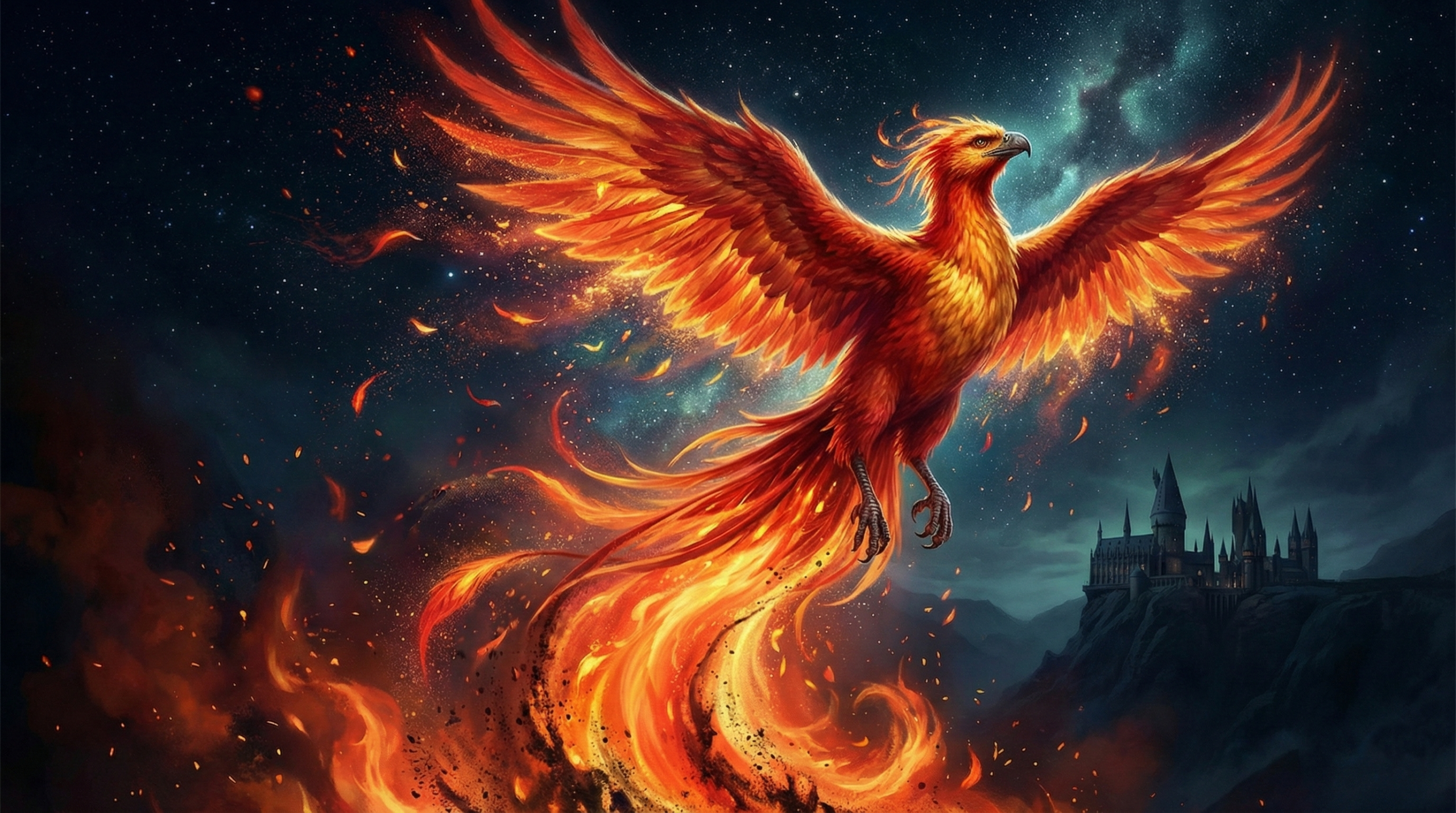 As the Harry Potter series draws to its close, the image of Fawkes flying away into the distance after Dumbledore’s funeral lingers in the minds of millions of readers. It is a bittersweet but ultimately uplifting ending for a creature who has given so much. The phoenix does not stay to mourn forever; it moves forward, renewed, ready for whatever comes next — just as Harry, Ron, Hermione, and the entire wizarding world must do.
In the end, the phoenix of Harry Potter teaches us one of the most important lessons the books have to offer: Death is not the end. It is simply another beginning — and from every ending, something beautiful and powerful can rise again.
Thank you for joining me on this deep dive into one of the wizarding world’s most majestic and meaningful creatures.
Which Fawkes moment touches you the most? Was it his dramatic arrival in the Chamber of Secrets, his selfless act during the Ministry battle, or the heartbreaking Phoenix Lament on the Astronomy Tower?
Share your favorite memory of Fawkes or the phoenix in the comments below — I’d love to hear which part of his story resonates most with you.
Until next time, may your own Burning Days always lead to brighter rebirths. 🪶✨