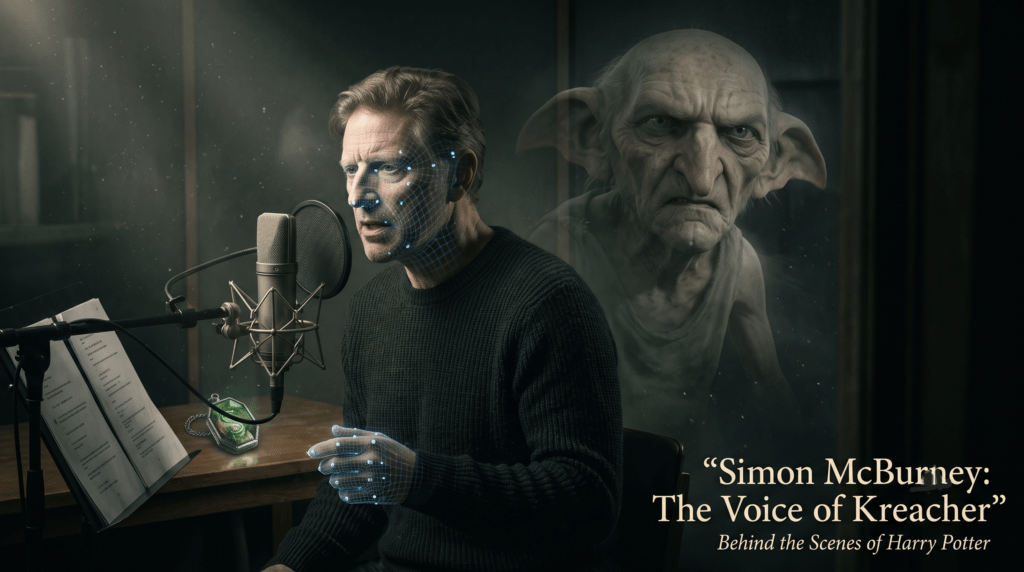
Step into the shadowy, dust-coated halls of 12 Grimmauld Place. If you listen closely, you can almost hear the raspy, bitter muttering of a creature deeply bound to the ancient, pure-blood House of Black. Kreacher the house-elf is one of the franchise’s most complex figures, yet the brilliant mind behind his later on-screen presence often goes unnoticed. When fans search for the Simon Mcburney form Harry Potter took to bring its darkest house-elf to life, they are uncovering one of the most fascinating behind-the-scenes transitions in cinematic history.
This deep dive explores how an acclaimed British theater legend stepped into an established, beloved film series to deliver a masterclass in vocal performance. We will unravel the intricate balance of voice acting and CGI required to render Kreacher, the tragic lore of Regulus Arcturus Black, and why this specific character arc remains one of the most profoundly underrated elements in Harry Potter and the Deathly Hallows – Part 1.
Unmasking the Actor Behind the House-Elf
In big-budget fantasy cinema, the actors hidden behind layers of prosthetics or digital rendering frequently miss out on the mainstream recognition afforded to live-action stars. Yet, the emotional weight of a fully CGI character rests entirely on the shoulders—or rather, the vocal cords—of these performers.
Stepping into the Wizarding World
When Harry Potter and the Deathly Hallows – Part 1 premiered in 2010, audiences were thrust back into the grim reality of a wizarding world at war. A crucial part of Harry, Ron, and Hermione’s journey required returning to the headquarters of the Order of the Phoenix, which meant confronting Kreacher.
Simon McBurney, a highly respected English actor, writer, and theatrical director, was brought in to voice the character. Unlike live-action casting, stepping into a voice role for a CGI creature requires a unique set of skills. The actor must project an entire spectrum of emotion—from deep-seated prejudice and resentment to eventual sorrow and loyalty—using nothing but a microphone in a recording booth. McBurney had to match the physical pacing and energy of a digital model he couldn’t control, grounding the fantastical creature in genuine, gritty realism.
 Succeeding Timothy Bateson
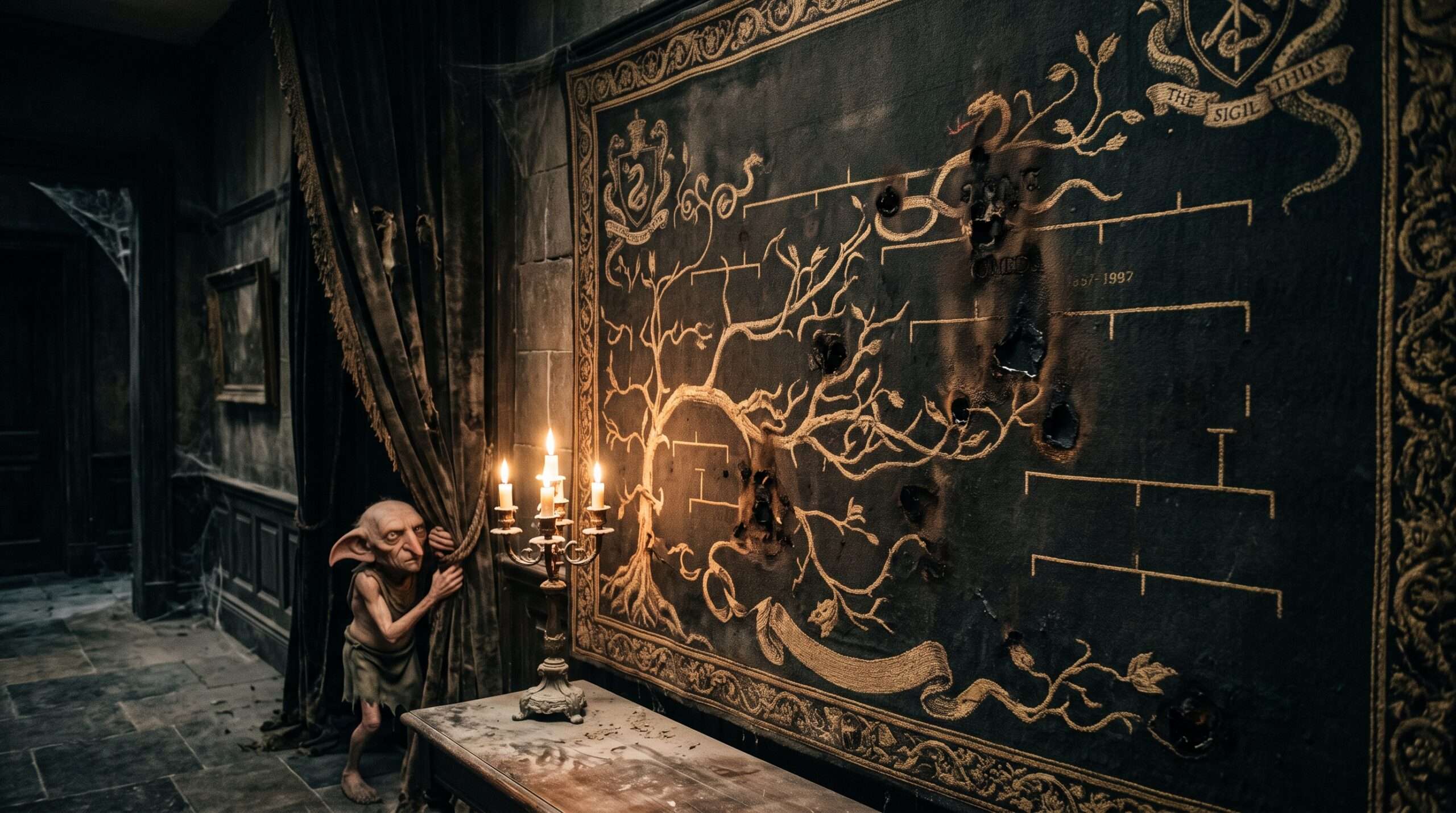
To truly understand McBurney’s contribution, it is essential to look at the history of the character’s portrayal. Simon McBurney was not the first actor to voice Kreacher. In Harry Potter and the Order of the Phoenix (2007), the hostile house-elf was voiced by veteran actor Timothy Bateson. Bateson perfectly established Kreacher’s crotchety, venomous persona, capturing the essence of an elf driven mad by isolation and dark magic.
Tragically, Timothy Bateson passed away in 2009 at the age of 83. With the final films approaching production, director David Yates and the casting team faced a significant challenge. They needed an actor who could honor the distinct, gravelly foundation Bateson had laid down, while simultaneously expanding the character’s emotional range for his highly pivotal scenes in Deathly Hallows. McBurney’s casting was a triumph; he managed to maintain audio continuity for the audience while injecting a new, heartbreaking vulnerability into the role.
Industry Insight: The transition between Bateson and McBurney is widely considered by audio engineers and casting directors as one of the most seamless and respectful recasts in modern franchise history.
Bringing a CGI Elf to Life: Voice Acting vs. Physicality
Creating a believable non-human character is a highly collaborative dance between the voice actor’s performance and the visual effects (VFX) department’s digital artistry.
Finding Kreacher’s Voice
How do you voice a creature that is centuries old, indoctrinated with pure-blood supremacy, and tragically bound to a crumbling legacy? McBurney understood that Kreacher’s voice needed to sound physically painful to produce—like grinding stones or dry parchment. Every mutter, grumble, and reluctant sigh had to reflect decades of neglect.
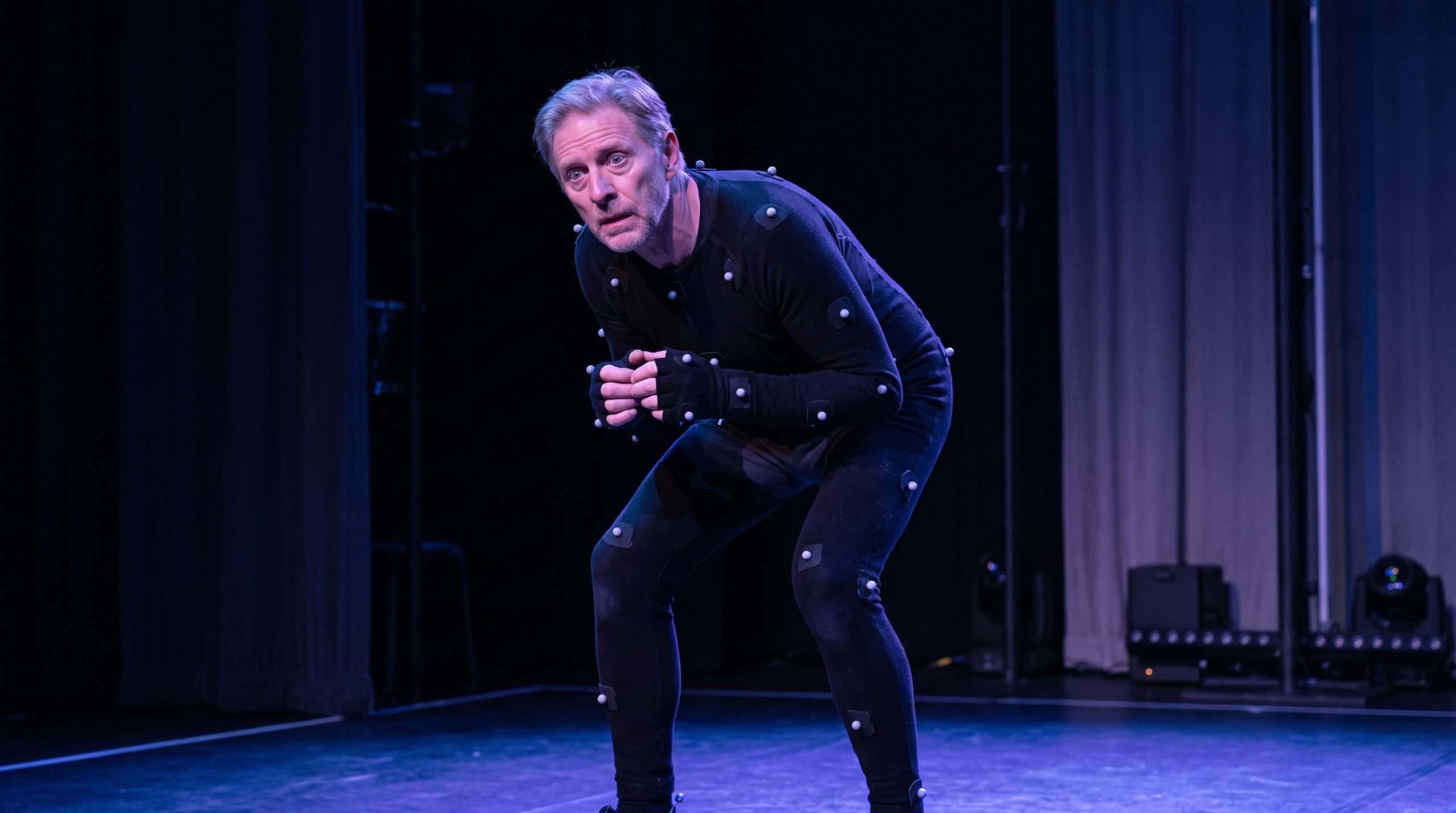
McBurney utilized a technique heavily rooted in his extensive theatrical background with Complicité (the acclaimed theatre company he co-founded). He didn’t just read lines; he embodied the physical restriction of the elf. By tightening his vocal cords and dropping into a harsh, guttural register, McBurney delivered a performance that felt viscerally real. His vocal choices informed the animators, dictating how Kreacher’s throat would move, how his breath would hitch, and how his posture would slump.
 The Visual Form of Kreacher
When discussing the physical rendering of the elf, the visual effects teams (including Framestore and Double Negative) had to ensure that the CGI form matched the intensity of McBurney’s audio track. Kreacher’s design—featuring a bulbous, snout-like nose, heavily bloodshot eyes, and leathery, sagging skin—was inherently unapproachable.
Unlike Dobby, whose large eyes and soft voice were designed to evoke immediate sympathy, Kreacher was designed to be repulsive. This visual form made McBurney’s job exceptionally difficult. He had to bridge the gap between the character’s hideous exterior and the deeply wounded soul trapped inside. The animators used McBurney’s nuanced vocal deliveries to map the micro-expressions on Kreacher’s face, ensuring that when the elf finally breaks down, the digital tears and trembling lips feel entirely authentic to the human performance driving them.
Kreacher’s Transformation in Deathly Hallows – Part 1
Kreacher’s narrative arc is arguably one of the most dramatically satisfying in the entire series. When we first meet him, he is violently opposed to the “blood traitors” occupying his beloved mistress’s home. However, the true test of McBurney’s performance comes during the interrogation scene at Grimmauld Place.
Harry, desperate for information about the horcrux locket, commands Kreacher to explain what happened to Mundungus Fletcher. McBurney expertly navigates the character’s volatile shifts—from spitting defiance to absolute, terrified subservience. As the trio presses him for details, the audience witnesses the cracking of the elf’s hardened shell.
The true catalyst for this cracking, however, lies buried in the dark history of the Black family. McBurney’s vocal delivery during this sequence transitions from venomous hatred to a heartbreaking, wavering sorrow as Kreacher is forced to recount the darkest chapter of his long life. It is a subtle but profound shift in tone that signals to the audience that this character is not merely a villainous servant, but a deeply traumatized victim of the First Wizarding War.
Why Kreacher Matters: The Deep Lore of the House of Black
For casual moviegoers, Kreacher might seem like a minor obstacle. But for dedicated fans, he represents one of J.K. Rowling’s most powerful themes: that how a wizard treats those beneath them reveals their true character. To fully appreciate Simon McBurney’s contribution to the franchise, one must delve into the untold story of his beloved master, Regulus Arcturus Black (R.A.B.).
The Locket and the Cave
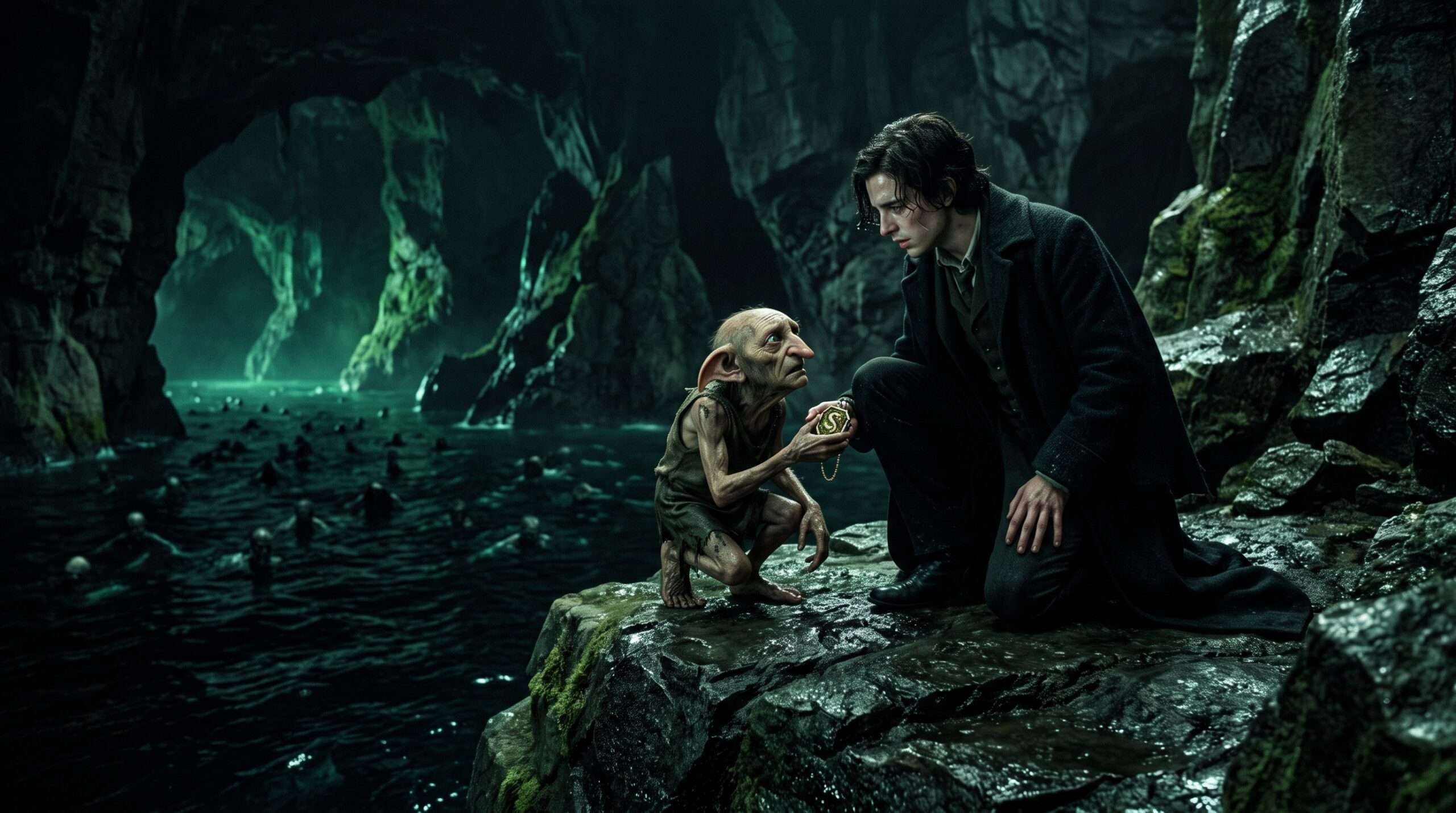
While the film adaptation streamlines the narrative, the book lore surrounding Kreacher and Regulus Black is vital to understanding the elf’s psychology. Years before the events of Deathly Hallows, a young Regulus—Sirius Black’s brother—offered Kreacher to Lord Voldemort for a secret task. Voldemort took the elf to a seaside cave, forced him to drink the agonizing Emerald Potion to hide Slytherin’s locket (a horcrux), and left him to die at the hands of the Inferi.
Kreacher survived only because house-elf magic operates differently than wizarding magic, allowing him to apparate back to Regulus. Horrified by the Dark Lord’s cruelty toward his loyal servant, Regulus defected from the Death Eaters. He subsequently sacrificed himself in that same cave, ordering Kreacher to swap the real horcrux with a fake one and destroy the original.
When McBurney voices Kreacher recounting the theft of the locket by Mundungus Fletcher, the actor is channeling decades of profound grief and perceived failure. Kreacher could not fulfill his master’s dying wish, and McBurney’s raspy, tear-choked delivery of this realization is nothing short of devastating. He infuses a digital creature with the palpable weight of survivor’s guilt.
 The Turning Point at Grimmauld Place
The emotional climax of Kreacher’s arc arrives when Harry Potter makes a remarkably empathetic choice. Realizing the elf’s immense suffering, Harry gives Kreacher the fake locket—the very object Regulus died for—as a token of respect.
In this moment, Simon McBurney completely shifts the character’s vocal paradigm. The aggressive, guttural sneer dissolves. When Kreacher accepts the locket, McBurney’s voice softens into an awe-struck, trembling whisper. It is a brilliant display of voice acting that instantly realigns the audience’s empathy. By acknowledging Kreacher’s pain and honoring his loyalty to Regulus, Harry wins the elf’s absolute devotion. When Kreacher subsequently captures Mundungus and prepares a steak-and-kidney pie for the trio, it isn’t out of magical servitude; it is out of genuine, hard-won respect.
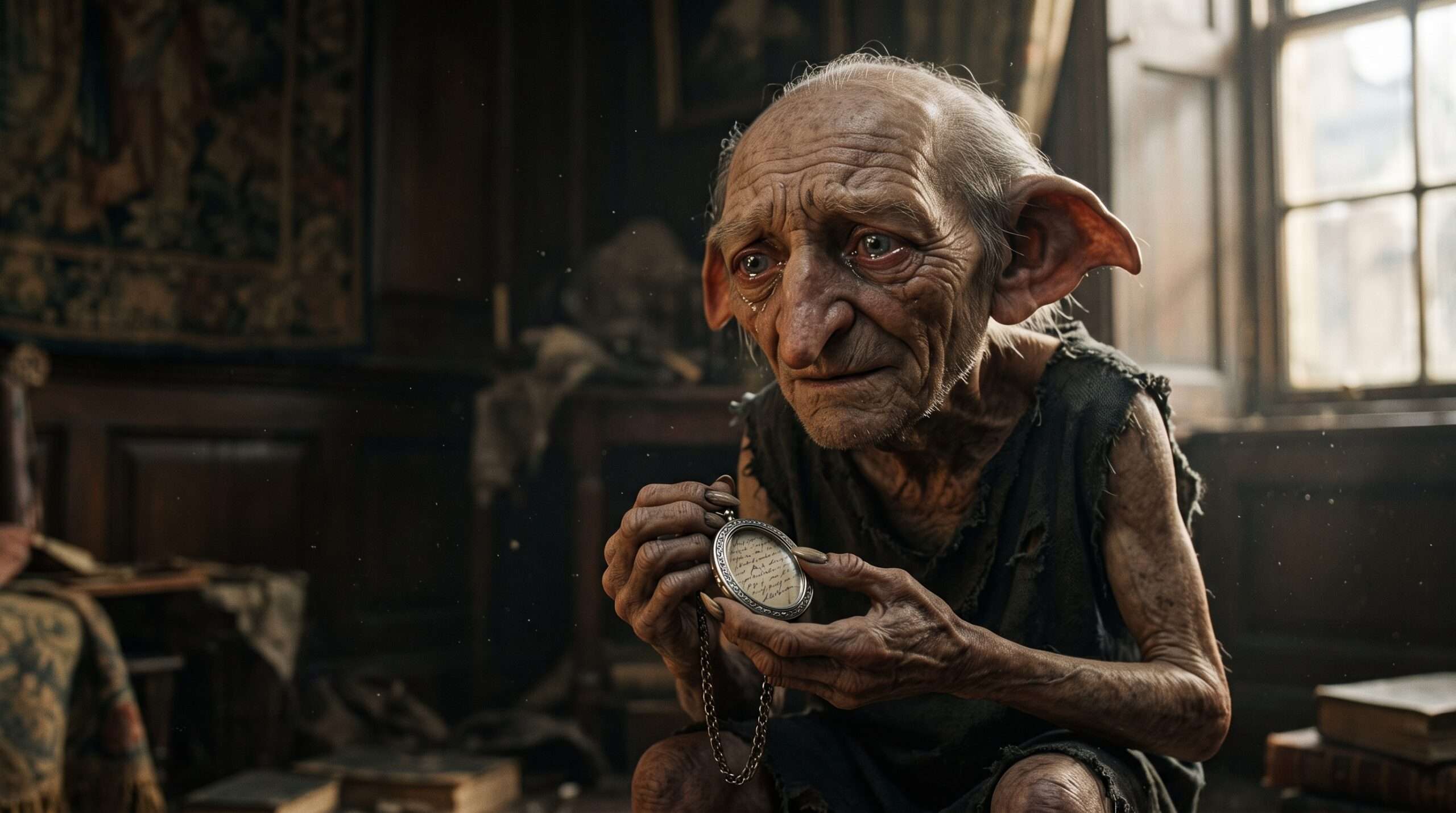
A Master of Stage and Screen
To understand why Simon McBurney was the perfect choice to elevate this CGI character, one must look at his broader career. He is not merely a voice actor; he is a visionary of physical theater and a highly sought-after character actor in Hollywood.
The Genius of Complicité
McBurney is the co-founder and artistic director of Complicité (formerly Théâtre de Complicité), one of the most innovative and critically acclaimed theatre companies in the world. Founded in 1983, the company is renowned for its highly physical, avant-garde approach to storytelling.
Why does this matter for a voice role in Harry Potter? Because physical theater demands that an actor understand exactly how movement, posture, and spatial awareness inform human (or non-human) emotion. McBurney didn’t just read Kreacher’s lines; his extensive background in physical expression allowed him to intuitively understand how a creature with a hunched spine, years of physical abuse, and deep-seated bitterness would breathe and speak. The animators at Framestore were given an incredibly rich audio tapestry that inherently contained the physical posture of the character. This level of artistic synergy is what elevates Kreacher from a cartoonish sidekick to a living, breathing entity.
 Other Notable Hollywood Roles
While his face may not be visible in the Wizarding World, mainstream audiences have undoubtedly seen Simon McBurney on screen. His ability to seamlessly blend into complex, often morally ambiguous roles has made him a favorite among top-tier directors.
You may recognize him as:
-
Atlee in Mission: Impossible – Rogue Nation (2015): Playing the pragmatic and calculating Director of MI6.
-
Maurice Grosse in The Conjuring 2 (2016): Portraying the real-life paranormal investigator with deep empathy.
-
Oliver Lacon in Tinker Tailor Soldier Spy (2011): Delivering a nuanced performance in the tense, slow-burn espionage thriller.
-
Runyan in Carnival Row (2019–2023): Showcasing his ability to thrive in intricate fantasy world-building.
In every role, McBurney brings a meticulous, intellectual weight. Bringing that same pedigree to a character as seemingly grotesque as Kreacher is a testament to the high caliber of talent the Harry Potter casting directors insisted upon, right up to the final films.
Frequently Asked Questions (FAQs)
To provide a complete picture of this behind-the-scenes magic, let’s address some of the most common questions fans have regarding the character’s cinematic journey.
Did Simon McBurney physically play Kreacher in Harry Potter?
No, Simon McBurney did not physically play Kreacher on set. The character was a fully CGI (Computer-Generated Imagery) creation. During filming, stand-ins or physical reference markers were used for the live-action actors (like Daniel Radcliffe, Rupert Grint, and Emma Watson) to interact with. McBurney provided the essential voice acting during post-production, and his vocal nuances were used by the animation team to inform the character’s digital facial expressions and emotional delivery.
Why did Kreacher’s voice change in the Harry Potter movies?
Kreacher’s voice changed between the films due to a real-world tragedy. In Harry Potter and the Order of the Phoenix, the character was voiced by esteemed actor Timothy Bateson. Sadly, Bateson passed away in 2009 before production began on the final films. The casting directors brought in Simon McBurney to take over the role for Harry Potter and the Deathly Hallows – Part 1. McBurney carefully honored Bateson’s original tone while expanding the character’s emotional depth for his critical scenes.
What happened to Kreacher after Deathly Hallows?
While the films leave his fate somewhat open, the book canon provides a definitive, satisfying conclusion to Kreacher’s story. During the Battle of Hogwarts, Kreacher led the house-elves of the castle into battle against the Death Eaters, famously shouting, “Fight! Fight for my master, the defender of the house-elves! Fight the Dark Lord, in the name of brave Regulus!” Author J.K. Rowling later confirmed that Kreacher survived the wizarding war and lived out the rest of his days peacefully, dying at a very old age.
When we examine the cinematic legacy of the Wizarding World, it is easy to focus on the spectacular wand duels, the sweeping John Williams and Alexandre Desplat scores, or the heroic trio at the center of the story. Yet, the true magic of these films often lies in the margins, brought to life by master craftsmen working diligently behind the scenes.
The Simon Mcburney form Harry Potter fans witnessed on screen was a masterclass in collaboration. It required a brilliant script adapting complex lore, a team of world-class animators pushing the boundaries of CGI, and an actor willing to dig into the darkest, most painful corners of a digital creature’s soul. McBurney took an inherited role—a character designed to be ugly and detestable—and transformed him into a profound symbol of redemption and the enduring power of kindness.
The next time you rewatch Deathly Hallows – Part 1, pay close attention to the scenes inside 12 Grimmauld Place. Close your eyes and simply listen to the texture, the pain, and the eventual reverence in Kreacher’s voice. That is the artistry of Simon McBurney, a hidden gem within the cinematic Wizarding World.
What is your favorite Kreacher moment from the books or the movies? Did you notice the voice actor change when the final films were released? Let us know in the comments below!