Imagine a world where speaking a single name aloud could bring armed hunters to your doorstep within seconds. A world where your bloodline determined your freedom, and where strangers could drag you away from your family simply because of who your parents were. This was the wizarding world under Voldemort’s second reign of terror — and at the heart of that terror were the Snatchers.
In the Harry Potter universe, Snatchers represent one of the darkest and most chilling instruments of Voldemort’s regime. Unlike the elite Death Eaters who served out of loyalty or fear, or the Ministry officials who enforced policy with a bureaucratic face, Snatchers were something altogether more unsettling: ordinary people who chose to hunt other human beings for money.
This article is your complete, expert guide to understanding the Snatchers in Harry Potter — who they were, how they operated, why they were created, and what made them one of the most psychologically terrifying forces in the entire series. Whether you’re a casual fan curious after rewatching Deathly Hallows or a deep-lore enthusiast building your knowledge of Voldemort’s dark infrastructure, you’ll find everything you need right here.
What Were Snatchers in Harry Potter?
The Official Definition and Origin of Snatchers
Snatchers are first introduced in Harry Potter and the Deathly Hallows, the seventh and final book in J.K. Rowling’s series. They emerge as a direct consequence of Voldemort’s takeover of the Ministry of Magic — a political coup that occurred largely behind the scenes and was completed by the time Harry, Ron, and Hermione had abandoned their plan to return to Hogwarts.
In the simplest terms, Snatchers were mercenary witch and wizard bounty hunters operating under the authority of Voldemort’s puppet Ministry. Their primary mission was to capture Muggle-borns, blood traitors, and other “Undesirables” who had been designated as enemies of the new regime. Unlike Death Eaters, they were not inducted into Voldemort’s inner circle. Unlike Ministry Aurors, they carried no formal badge of law enforcement integrity. They existed in a deliberately constructed grey zone — enforcers with just enough official cover to act with impunity, but disposable enough that Voldemort’s inner circle could distance themselves if needed.
The creation of the Snatchers as a concept is a masterstroke of dark political worldbuilding on Rowling’s part. They did not arise from ideology alone — they arose from opportunity. When a government becomes monstrous, there will always be those willing to profit from that monstrousness. Snatchers were those people.
 How Snatchers Fit Into Voldemort’s Larger Power Structure
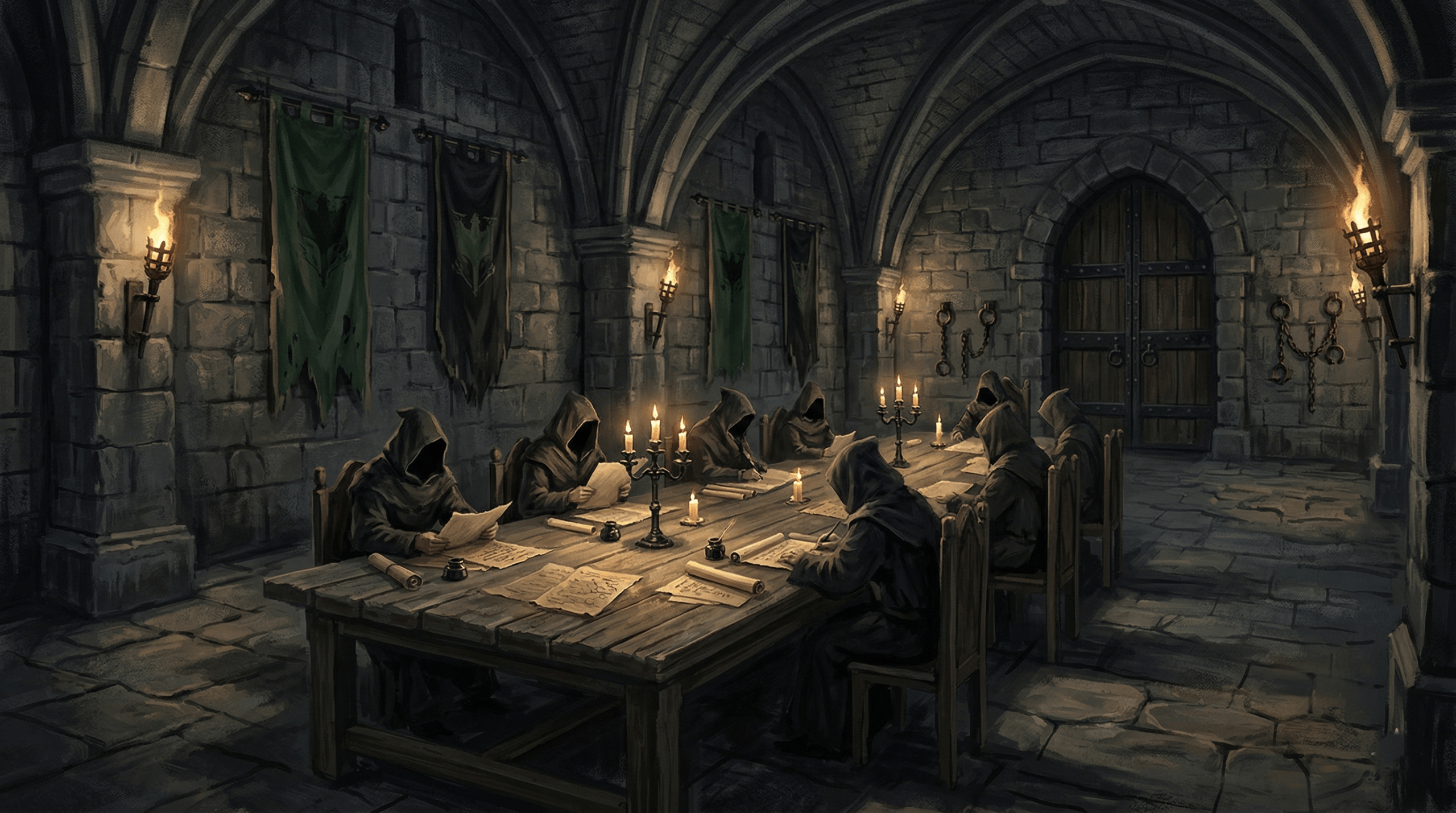
To fully appreciate the role of the Snatchers, it helps to understand where they sat within the broader hierarchy of Voldemort’s regime:
| Level | Group | Role |
|---|---|---|
| 1 (Top) | Lord Voldemort | Supreme authority |
| 2 | Inner Circle Death Eaters | Commanders, enforcers of ideology |
| 3 | Controlled Ministry of Magic | Bureaucratic legitimacy and legal cover |
| 4 | Snatchers | Street-level hunters and bounty collectors |
| 5 | General wizarding public | Subjects living under fear and surveillance |
This structure was deliberate. Voldemort needed his Death Eaters for strategic operations, infiltration, and high-profile missions. He needed the Ministry to maintain the appearance of governance. But he also needed a force that could sweep the streets, the forests, and the rural countryside — rounding up targets that the Ministry could then process through the Muggle-Born Registration Commission. Snatchers filled that gap perfectly.
They were, in essence, the regime’s hunting dogs.
Why Did Voldemort Create the Snatchers?
The Muggle-Born Registration Commission and Its Enforcers
The Muggle-Born Registration Commission was one of the most chilling institutions Voldemort established after seizing control of the Ministry. Publicly framed as an investigation into how Muggle-borns had “stolen” their magic from “real” wizards, the Commission was in reality a persecution apparatus — a mechanism for stripping Muggle-borns of their wands, their rights, and ultimately their freedom.
But a commission needs enforcers. The regular Auror office, even under corrupt leadership, could not be entirely relied upon to hunt down every Muggle-born witch and wizard in Britain. Many Aurors had families, consciences, or professional boundaries that made them imperfect tools for mass persecution. Snatchers had none of those complications.
By creating a class of bounty hunters incentivized purely by financial reward, Voldemort solved several problems simultaneously:
- He created a vast, scalable enforcement network without having to formally expand the Ministry payroll
- He gave ordinary wizards with violent or greedy tendencies a legal outlet for their worst impulses
- He distributed the moral culpability of persecution across hundreds of individuals, making it harder to hold any single institution accountable
- He created a climate of fear so pervasive that even those not being actively hunted would feel the psychological weight of surveillance
Bounty Hunting in the Wizarding World
The financial mechanics of the Snatcher system are important to understand because they explain why it was so effective and so difficult to combat. Snatchers were paid per successful capture and delivery of designated targets to the Ministry or to Voldemort’s forces directly.
The most famous bounty in wizarding history during this period was, of course, the price on Harry Potter’s head: 200,000 Galleons. To put that in context, a single Galleon was worth roughly five British pounds in Rowling’s fictional economy — making Harry’s bounty the equivalent of approximately one million pounds sterling. For a struggling or greedy witch or wizard, the temptation was enormous.
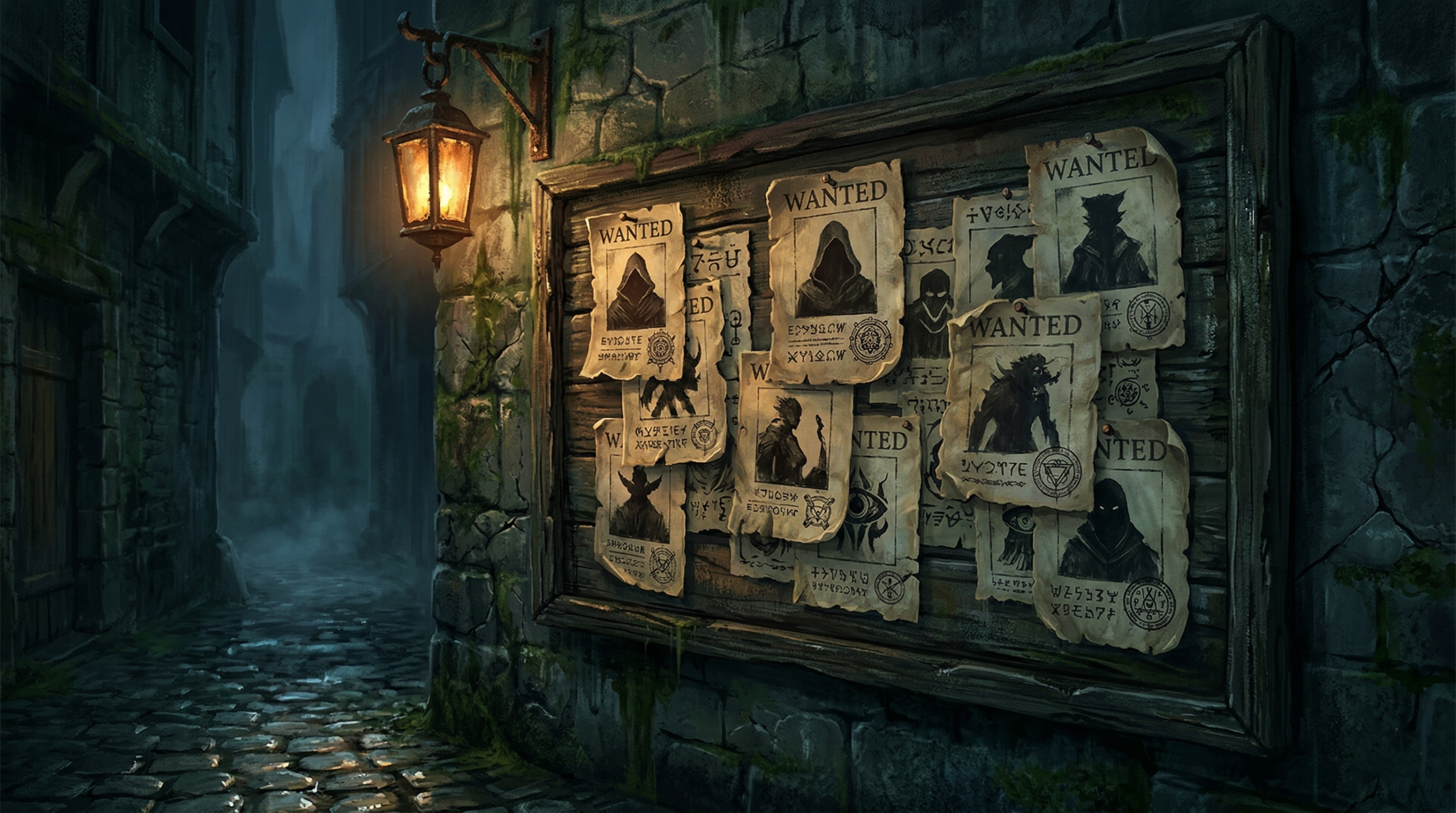 But Harry was far from the only target. Hermione Granger, as a Muggle-born, was subject to capture under the Registration Commission’s authority. Ron Weasley, as a “blood traitor” from a family known to oppose Voldemort, was also designated as an Undesirable. The system was designed to cast a wide net, ensuring that Snatchers had a large pool of targets and thus a constant financial incentive to keep hunting.
This bounty system also had a deeply insidious social effect: it turned neighbor against neighbor. Any witch or wizard, however law-abiding, might be tempted to report a Muggle-born colleague or even a former friend if the reward was large enough. Voldemort’s regime didn’t just use Snatchers to hunt people — it used the existence of Snatchers to corrode the social trust that had held the wizarding community together for generations.
Who Were the Snatchers? Profiles and Characteristics
Named Snatchers — Fenrir Greyback
Of all the Snatchers introduced in the Harry Potter series, none is more terrifying than Fenrir Greyback. A werewolf of particularly savage disposition, Greyback was not a Snatcher in the conventional mercenary sense — he participated in the regime’s hunting operations out of a combination of ideological alignment with Voldemort’s goals and personal bloodlust.
Greyback’s backstory, as revealed across the later books, is one of deliberate monstrosity. He had a particular obsession with infecting children with lycanthropy, viewing it as a form of recruitment into what he saw as a coming werewolf revolution. Voldemort exploited this obsession cynically — promising Greyback victims in exchange for his services, while never genuinely intending to elevate werewolves within his new order.
As a Snatcher, Greyback served a dual purpose. He was a genuinely effective hunter with enhanced tracking abilities courtesy of his werewolf nature. But he also functioned as a psychological weapon. The mere association of Snatchers with Fenrir Greyback — a figure known to attack children, to infect victims deliberately, to revel in violence even in his human form — ensured that the threat of capture carried a dimension of visceral horror that no amount of bureaucratic framing could disguise.
His most significant moment in the Snatcher context comes in Deathly Hallows, when his group captures Harry, Ron, and Hermione in the Forest of Dean after Harry accidentally triggers the Taboo curse by speaking Voldemort’s name. The scene is one of the most tense in the entire series — the trio, already exhausted and emotionally strained from months on the run, suddenly face the very real prospect of being delivered to Voldemort himself. Greyback’s presence in that scene transforms what might have been a procedural capture into something far more frightening.
Scabior — The Snatcher With a Face
While Fenrir Greyback was established earlier in the series, the film adaptations of Deathly Hallows introduced audiences to another memorable Snatcher: Scabior, played with scene-stealing menace by Nick Moran.
Scabior does not appear as a named character in the original novels — he is a creation of the film’s screenwriters and production team, developed to give the Snatchers a more personalized, dramatically engaging face. And the decision paid off considerably. Scabior is cunning, darkly witty, and utterly ruthless — a character who seems to genuinely enjoy his work in a way that makes him deeply unsettling.
His interactions with Hermione during the forest capture sequence are particularly well-crafted. He recognizes her intelligence and doesn’t underestimate her, which makes him feel like a more credible threat than a simple brute would. He also has a kind of roguish quality that makes his cruelty all the more disturbing — here is someone who could have been charming, who could have used his cleverness for something constructive, and who has instead chosen to hunt human beings for gold.
For many film viewers, Scabior is the face of the Snatchers, and his portrayal significantly shaped how the general Harry Potter fanbase understands what Snatchers were as a group.
The Rank-and-File Snatchers
Beyond Greyback and Scabior, the Snatchers as depicted in both the books and films are largely anonymous — and that anonymity is itself a crucial part of their horror.
In the books, Rowling describes them as a rough, opportunistic group: wizards of varying backgrounds united by greed and a willingness to participate in persecution. They are not uniformly evil in a cartoonish sense — some are simply desperate, some are cowardly opportunists who have decided that being on the winning side is more important than being on the right side, and some are genuinely cruel individuals who have finally found an environment that rewards their worst impulses.
This deliberate lack of memorable individuality among the rank-and-file Snatchers mirrors the way real historical atrocities are perpetuated — not primarily by a small number of ideological fanatics, but by large numbers of ordinary people making small, incremental choices to participate in systems of harm.
How Did Snatchers Operate? Their Methods and Tactics
Tracking and Identifying Targets
The Snatchers’ most powerful tactical tool was one that Voldemort himself created: the Taboo curse on his own name.
In Deathly Hallows, it is revealed that Voldemort had placed a powerful curse on the utterance of his name — “Voldemort” — such that speaking it aloud would instantly trigger a magical alert, pinpointing the speaker’s location. This was a stroke of dark genius. Because Voldemort knew that the members of the Order of the Phoenix and those sympathetic to Harry’s cause were the most likely people to use his name (having been encouraged to do so by Dumbledore as a way of resisting fear), the Taboo functioned as a self-selecting trap: the bravest and most principled members of the resistance were the ones most likely to trigger it.
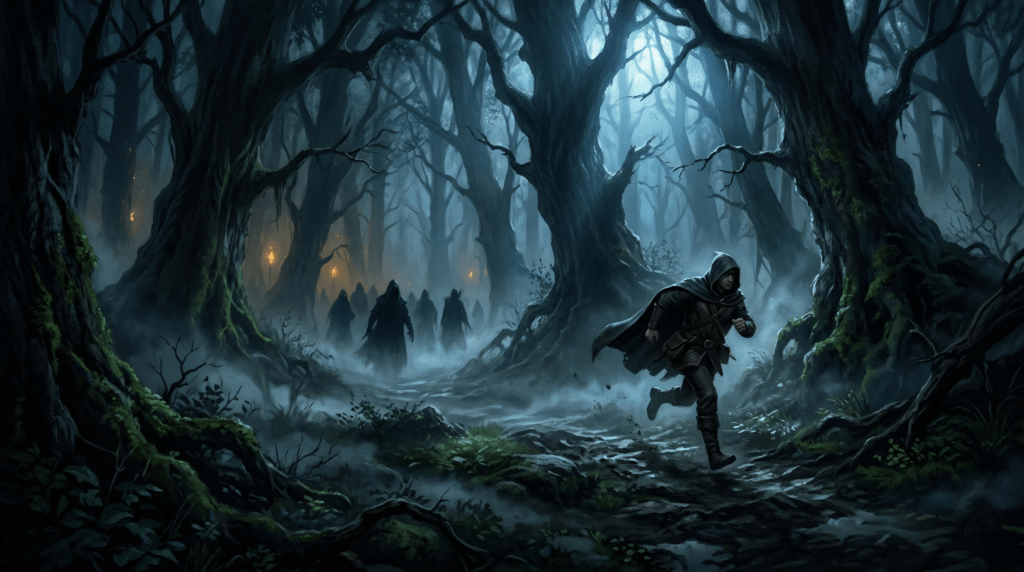
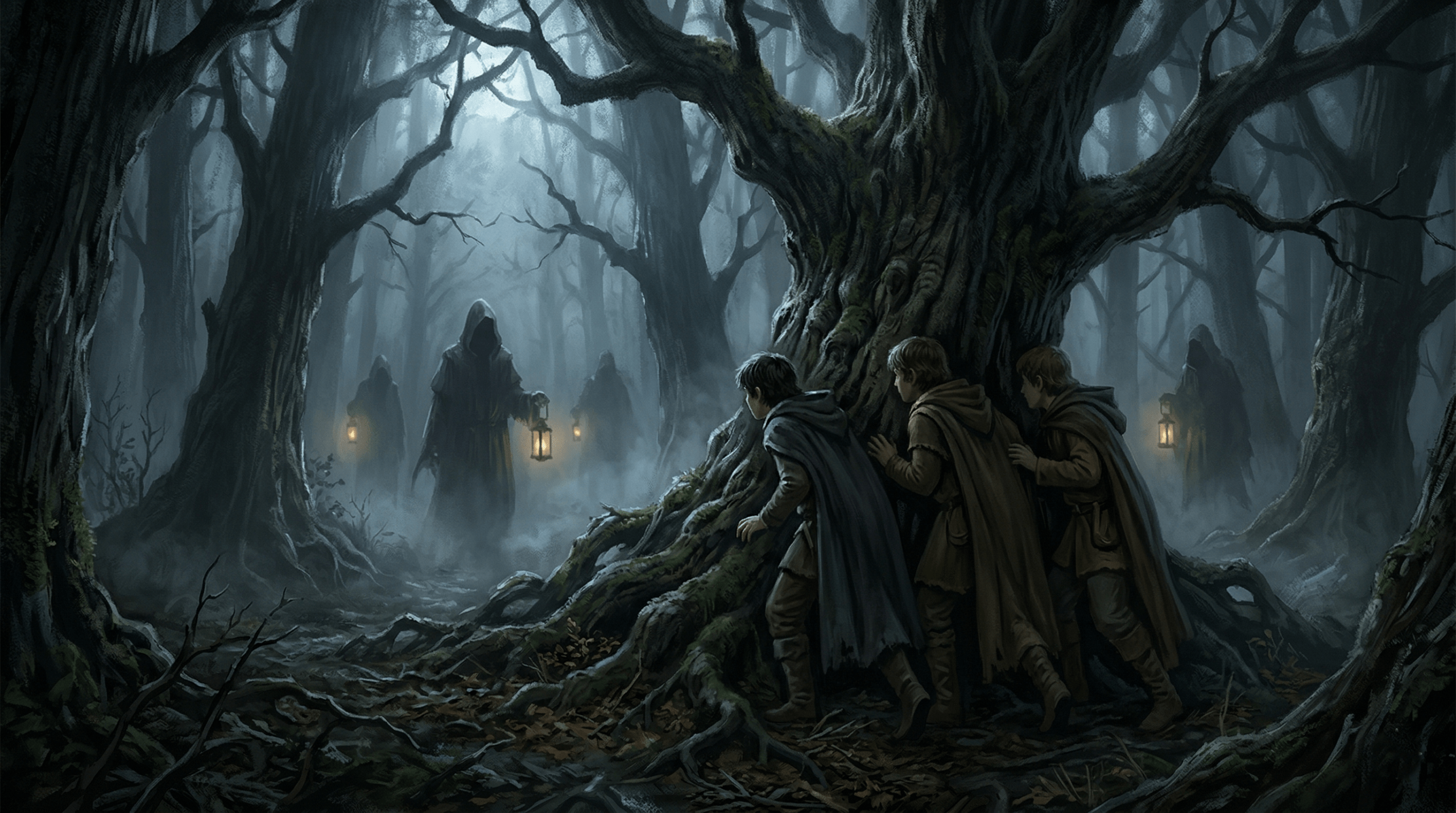
The consequences of this are felt directly when Harry accidentally speaks Voldemort’s name during a particularly fraught conversation with Ron and Hermione, and within seconds, a group of Snatchers is closing in on their position in the Forest of Dean. The speed of the response — from utterance to arrival in what appears to be minutes — underscores just how tightly the surveillance net had been drawn.
Beyond the Taboo, Snatchers also relied on more conventional intelligence-gathering: informant networks, observation of known Muggle-born communities, and the monitoring of magical activity in areas where fugitives might be sheltering. The regime’s control of the Ministry gave them access to records of registered witches and wizards, making it relatively straightforward to identify who should have been accounted for and who had gone underground.
The Hunt for Muggle-Borns and “Undesirables”
The operational procedure for a Snatcher capture, as pieced together from the text and film depictions, followed a relatively consistent pattern. Once a target was identified or located, a Snatcher group — typically operating in teams of three to six individuals — would move to surround and subdue them using disarming and binding spells. Resistance was met with force, and there is clear textual evidence that Snatchers were not above using Unforgivable Curses or serious physical violence to subdue captives.
Captured individuals were then transported — bound, often blindfolded or disorientated — to a holding location or directly to Ministry facilities for processing through the Muggle-Born Registration Commission. High-value targets, such as known members of the Order of the Phoenix or — most significantly — Harry Potter himself, would be delivered not to the Ministry but directly to Voldemort or his senior Death Eater lieutenants.
The treatment of captives during transport appears to have been deliberately dehumanizing. This was both practically convenient — a frightened, humiliated captive is harder to organize resistance — and ideologically consistent with a regime that had spent years propagandizing about the lesser status of Muggle-borns and blood traitors.
 Key Canon Moments — Snatchers in Action
The Forest of Dean Capture The most dramatically significant Snatcher scene in the series occurs in Deathly Hallows when Harry accidentally says “Voldemort” and triggers the Taboo. The arrival of Greyback’s Snatcher group in the forest is sudden and terrifying — the trio’s months of careful evasion undone in an instant by a single word. The scene is masterfully constructed to convey the helplessness of the hunted: all their preparation, all their magical skill, rendered momentarily irrelevant by a system designed specifically to catch them.
Malfoy Manor The capture’s aftermath — delivery to Malfoy Manor — raises the stakes to their highest point in the entire novel. At Malfoy Manor, the Snatchers’ role transitions from active hunters to incidental players in a much larger drama. The decision by Draco Malfoy to hesitate in identifying Harry, and the subsequent chaos leading to Dobby’s intervention and death, turns what should have been the regime’s greatest triumph into one of its most significant failures. The Snatchers, having done their job, become largely irrelevant once the senior Death Eaters take over — a reminder of their disposable status within the hierarchy.
The Battle of Hogwarts Snatchers also appear during the final Battle of Hogwarts, fighting on Voldemort’s side as part of the broader forces assembled against the defenders of the school. Their presence here underscores the fact that the Snatcher system was not merely a policing mechanism but a paramilitary one — these were armed combatants willing to engage in open warfare, not merely bounty hunters.
Why Were the Snatchers So Terrifying? A Deeper Analysis
They Represented Everyday Evil
The Death Eaters, for all their menace, are in many ways a classically constructed villain group. They have uniforms (dark robes, masks), a charismatic and supernaturally powerful leader, and a clearly articulated ideology of pure-blood supremacy. They are, in the tradition of great fantasy villains, legible. You know who they are. You know what they stand for. You can identify them.
Snatchers offer no such clarity — and that is precisely what makes them so much more disturbing on a psychological level.
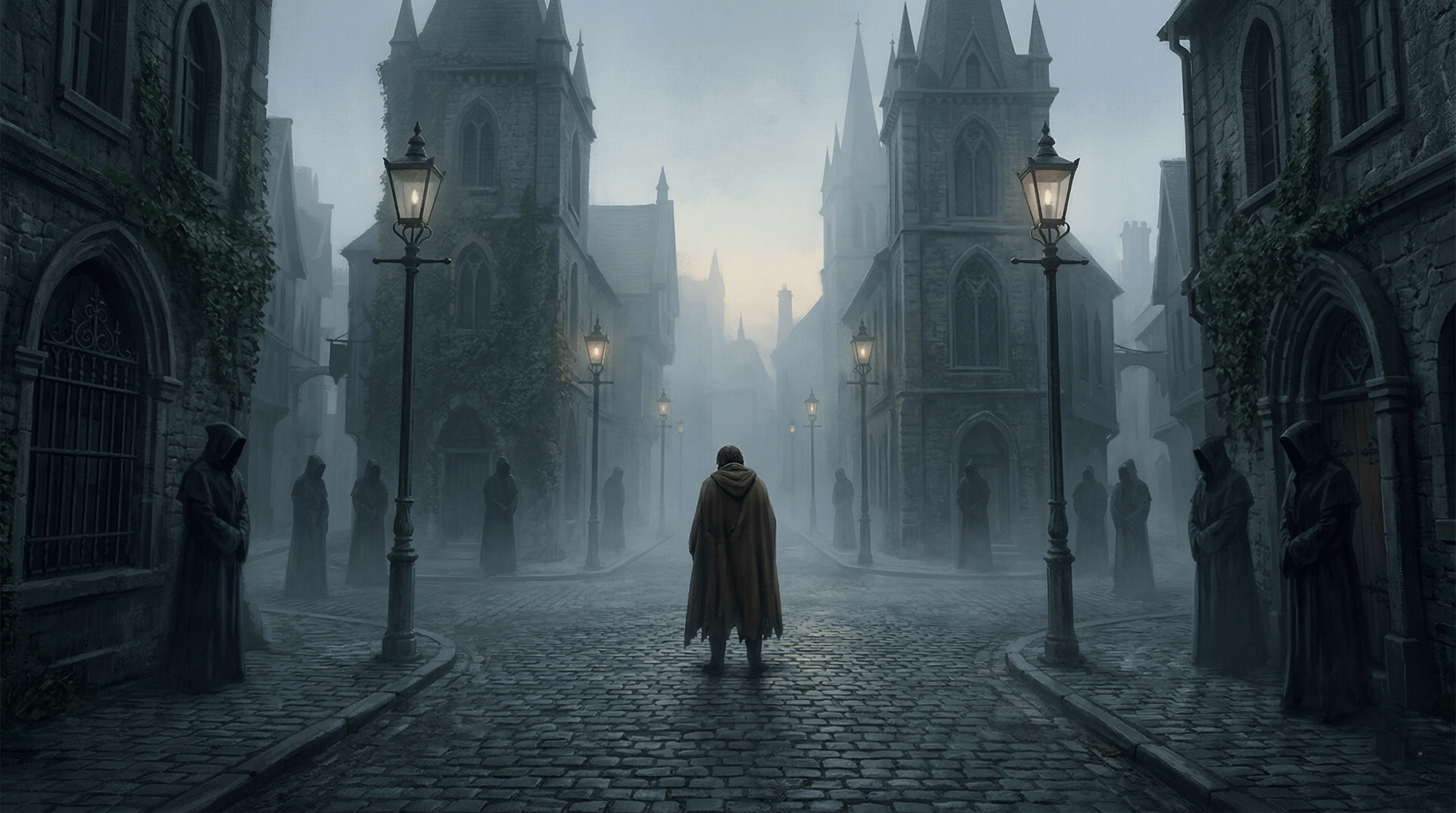 A Snatcher could be anyone. They did not wear the Dark Mark. They had no initiation ritual, no test of loyalty, no special uniform that set them apart from ordinary wizarding society. They were witches and wizards who had looked at a regime built on persecution and had decided, with apparent casualness, that there was money to be made from it. They were participants in atrocity not out of passionate belief but out of mundane self-interest — and history tells us, repeatedly, that this is actually how most atrocities are sustained.
Hannah Arendt’s famous concept of the “banality of evil” — developed in her coverage of the trial of Nazi war criminal Adolf Eichmann — describes precisely this phenomenon: the way that monstrous systems are perpetuated not primarily by monsters, but by ordinary people performing ordinary functions within an extraordinary apparatus of harm. Rowling, whether consciously invoking this concept or arriving at it through her own historical research and moral imagination, captures it with remarkable precision in the Snatcher system.
The rank-and-file Snatcher who drags a Muggle-born family out of their home for a bounty payment is not, in the conventional sense, a fanatic. He may go home afterward and be kind to his children. He may have friends he genuinely cares about. He has simply made a moral choice — perhaps barely experienced as a choice at all — to treat certain categories of people as less than fully human because the government told him he could and paid him to do so. That ordinariness is far more frightening than any Dark Mark.
The Psychological Terror of Being Hunted
To understand why Snatchers were so effective as instruments of terror, it is necessary to consider the experience of those being hunted — particularly the Muggle-born witches and wizards who were the regime’s primary targets.
For a Muggle-born witch or wizard in Voldemort’s Britain, daily existence became an exercise in paranoia. The question was never simply “are Snatchers looking for me?” but rather “who around me might report me to the Snatchers?” Every interaction with another witch or wizard carried a potential threat. Former colleagues, neighbors, even distant family members who had accepted the new regime’s framing of Muggle-borns as criminals — any of them might send a tip to the nearest Snatcher group for a fraction of the reward.
This erosion of social trust is one of the most psychologically devastating tools any authoritarian regime can deploy. When you cannot trust your community, you become isolated. When you are isolated, you are far easier to capture. The Snatcher system was thus self-reinforcing: the more it operated, the more it destroyed the communal bonds that might have enabled effective resistance, and the more isolated its targets became.
Rowling makes this lived experience concrete through the character of Ted Tonks — Nymphadora Tonks’s Muggle-born father — who is forced to flee his home and live as a fugitive rather than submit to the Registration Commission. His eventual capture and death at the hands of Snatchers is reported in passing during Harry’s radio-listening sessions with Potterwatch, and the casualness of that report — just one more name in a growing list — is itself a devastating narrative choice. Ted Tonks was a good man. He died because a system had been constructed to hunt people like him, and ordinary people had chosen to participate in that system for money.
No Safe Haven — The Reach of the Snatchers
One of the defining features of life under Voldemort’s regime, as conveyed through the Deathly Hallows narrative, is the systematic destruction of safe spaces. The places that had previously represented security, community, and magical belonging were, one by one, either corrupted or rendered inaccessible.
Diagon Alley, once a bustling hub of wizarding commerce and community, became a place of fear and dark propaganda. Hogsmeade, the beloved village adjacent to Hogwarts, was placed under tight surveillance. Hogwarts itself was transformed from a place of learning and wonder into something closer to an institution of ideological indoctrination, with the Carrow siblings inflicting punishment and fear on students.
And beyond the settled spaces, the wilderness — traditionally a place of freedom and escape — was patrolled by Snatchers. The forest in which Harry, Ron, and Hermione spend much of Deathly Hallows living in an enchanted tent is not safe. The roads are not safe. The sky is not safe. Everywhere, the possibility of a Snatcher encounter looms.
This deliberate elimination of sanctuary is one of the key ways Rowling conveys the totality of Voldemort’s ambition. He does not merely want to control the institutions of wizarding society — he wants to colonize the imagination of its inhabitants, to make them feel that there is nowhere to run and no one to trust. Snatchers are the physical embodiment of that ambition: they are the reason that “nowhere is safe” is not merely a rhetorical flourish but a lived reality for the characters we follow.
Snatchers in the Books vs. the Films — Key Differences
What the Books Tell Us
In J.K. Rowling’s original text, Snatchers are introduced with a kind of matter-of-fact horror that is characteristic of her writing in the later volumes of the series. There is no lengthy exposition about who they are or how the system works — Harry, Ron, and Hermione learn about Snatchers the same way they learn about most of the new regime’s mechanisms: through radio broadcasts, overheard conversations, and terrifying direct experience.
The textual descriptions of Snatchers emphasize their rough, mercenary quality. They are physically imposing, poorly groomed, and casually brutal — men who have found their natural habitat in a world that rewards cruelty. Rowling does not romanticize them or give them complex inner lives in the text. They are, deliberately, opaque — defined almost entirely by their function rather than their psychology. This opacity is itself a narrative choice: these are not people the reader is meant to understand deeply, because their victims never had the luxury of understanding them deeply either.
The Taboo sequence and subsequent capture in the Forest of Dean is handled in the book with considerable tension and economy. The speed of the Snatchers’ arrival, the efficient brutality of their methods, and the grim humor with which they discuss Harry’s potential bounty value all combine to create a deeply unsettling scene that effectively communicates just how thoroughly the regime has weaponized ordinary human greed.
What the Films Added or Changed
The film adaptations, directed by David Yates and with Steve Kloves adapting the screenplay, made several significant decisions in their portrayal of the Snatchers that meaningfully shaped the wider audience’s understanding of them.
The most consequential of these decisions was the creation of Scabior as a named, individualized character. In giving the Snatchers a recognizable face and a distinct personality, the films accomplished something that the books deliberately chose not to do: they made the Snatcher experience more emotionally immediate for a visual audience that needed a human focal point. Nick Moran’s performance brought a dark charisma to the role that elevated the forest capture sequence from a tense set piece into a genuinely memorable confrontation.
The films also leaned into the visual horror of the Snatcher aesthetic more explicitly than the books. The appearance of Snatcher groups — rough-looking, heavily armed, moving through the landscape with the casual confidence of men who know the law is on their side — creates a strong visual vocabulary for the occupation that the books convey through atmosphere and prose but which the films needed to establish through production design and performance.
Fan reception of the film’s Snatcher portrayal has generally been positive, with many viewers regarding Scabior as one of the more memorable additions the films made to the source material. Book purists have occasionally noted that the individualization of Snatchers through characters like Scabior slightly undermines the more disturbing “anonymous evil” quality that Rowling built into them on the page — but most fans accept the adaptation choice as a reasonable one given the demands of the medium.
The Legacy of the Snatchers in Harry Potter Lore
What Happened to the Snatchers After Voldemort’s Defeat?
The defeat of Voldemort at the Battle of Hogwarts brought his regime to an abrupt end, but the question of what happened to those who had served that regime — particularly its more peripheral elements like Snatchers — is one that the canon addresses only partially.
For senior Death Eaters, the post-war period involved Ministry trials closely paralleling the real-world model of the Nuremberg Trials — a process Rowling has confirmed was a conscious parallel in her worldbuilding. Characters like Lucius Malfoy faced serious legal consequences, mitigated in some cases by cooperation with post-war authorities.
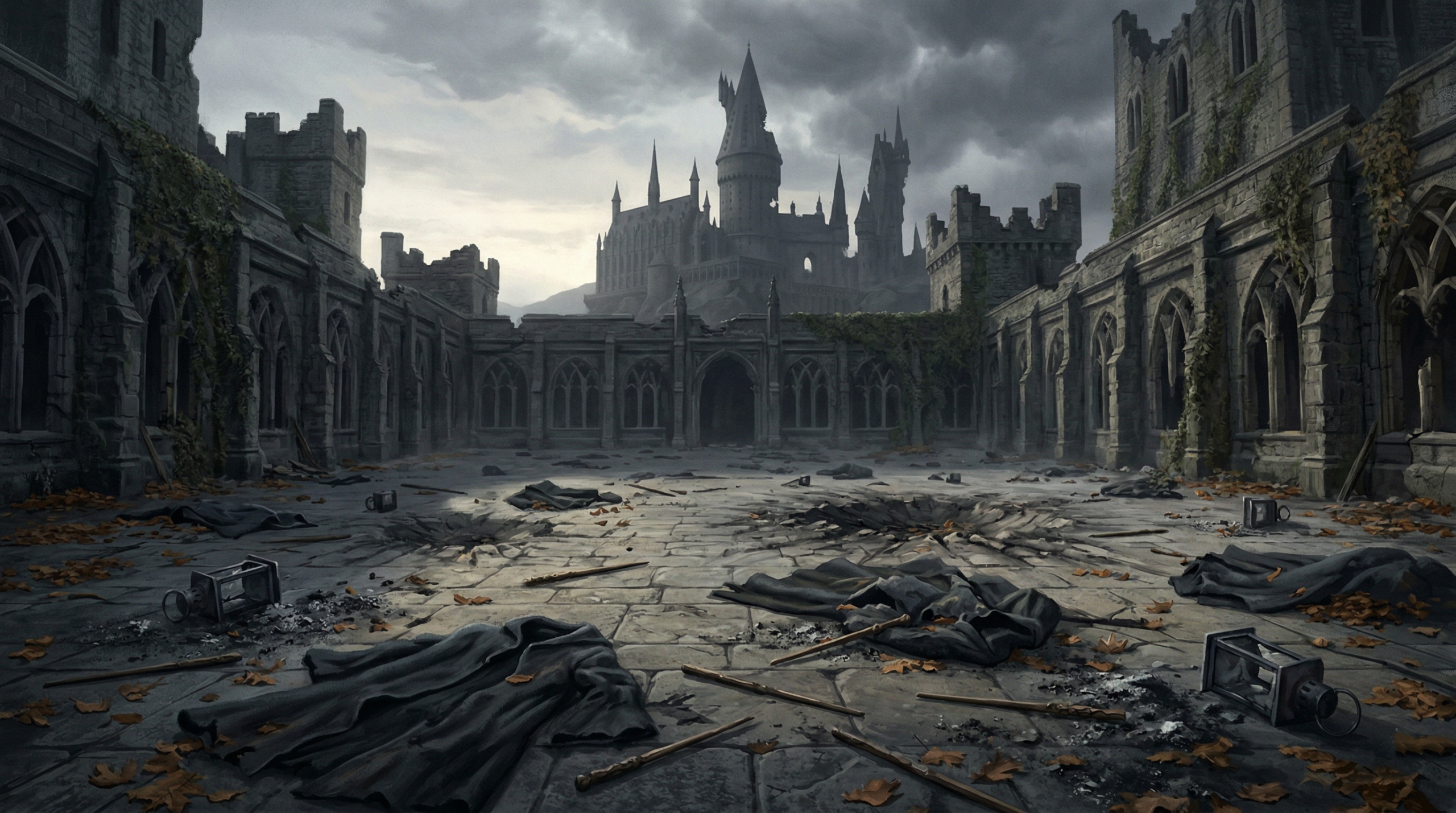 For Snatchers, the situation was likely more complex. As a group defined by financial opportunism rather than formal ideological membership, Snatchers occupied a murky legal grey area. Some had undoubtedly committed serious crimes — assault, wrongful imprisonment, and in some cases murder — that would have been prosecutable under any restored legal system. Others may have argued, with some legal plausibility, that they had been operating within the framework of a recognized (if illegitimate) government and that their actions, however morally reprehensible, had been technically legal under the regime in which they occurred.
This is precisely the kind of difficult post-conflict legal and moral reckoning that Rowling gestures toward in her post-canon writing and interviews without fully resolving — and it is, again, a remarkably sophisticated engagement with how real societies process collaboration with authoritarian regimes.
Why the Snatchers Still Matter to Harry Potter Fans
Decades after the publication of Deathly Hallows, the Snatchers continue to occupy a significant place in Harry Potter fan discussions — and not merely as a plot mechanism or a source of dramatic tension. They matter because they represent something that the series handles with unusual honesty and maturity for what is nominally a children’s fantasy series: the human capacity to participate in evil without ideological conviction.
The Death Eaters are compelling villains, but they belong to a familiar narrative tradition. The Snatchers are something less comfortable and more instructive. They are a reminder that persecution does not require passionate haters in large numbers — it only requires indifferent participants in sufficient numbers. They are a reminder that systems of oppression are sustained not primarily by their architects but by the countless ordinary people who choose, in small and large ways, to cooperate with them.
For young readers encountering these ideas for the first time through Rowling’s narrative, Snatchers serve as an introduction to one of the most important moral lessons history has to offer. For adult readers, they resonate with an uncomfortable recognition: this is how it actually works. This is how it has always worked.
In that sense, the Snatchers are not merely a feature of wizarding world lore. They are a mirror.
Frequently Asked Questions About Snatchers in Harry Potter
Q1: Were Snatchers the same as Death Eaters?
No. Snatchers and Death Eaters were distinct groups within Voldemort’s power structure. Death Eaters were formally inducted followers of Voldemort, typically bearing the Dark Mark and operating as his most trusted and ideologically committed lieutenants. Snatchers, by contrast, were mercenary bounty hunters — witches and wizards who worked for financial reward rather than ideological devotion. While some Snatchers may have shared Death Eater sympathies, the two groups were organizationally separate, with Snatchers occupying a lower and more disposable position in the regime’s hierarchy.
Q2: Who was the leader of the Snatchers?
There was no single, formally designated leader of all Snatchers. They operated in independent groups, each with its own informal leader. The most prominent Snatcher in terms of canon significance is Fenrir Greyback, who led the group that captured Harry, Ron, and Hermione in the Forest of Dean. In the film adaptations, Scabior is presented as a significant Snatcher figure, though he is not identified as an overall commander.
Q3: How much was Harry Potter’s bounty worth to Snatchers?
Harry Potter carried a bounty of 200,000 Galleons — the largest bounty placed on any individual during Voldemort’s regime. Given that one Galleon is approximately equivalent to five British pounds in the series’ economic framework, this represented an extraordinary sum: roughly one million pounds sterling. The size of the bounty reflected both Harry’s status as Voldemort’s primary target and the regime’s desperation to capture him.
Q4: Did any Snatchers appear in Hogwarts Legacy or other HP media?
Hogwarts Legacy, set in the 1800s, predates the establishment of the Snatcher system by nearly a century, so Snatchers do not appear in that game. As of the time of writing, Snatchers have not featured prominently in other Harry Potter media beyond the core novels and their film adaptations. However, given the expanding Wizarding World content universe, future projects set during or after the events of Deathly Hallows could potentially revisit the Snatcher concept.
Q5: What spells or methods did Snatchers use most often?
Snatchers primarily relied on binding and disarming spells to subdue captives — the same basic toolkit used throughout the series for magical combat and restraint. There is evidence in the text that some Snatchers were willing to use Unforgivable Curses, particularly the Cruciatus Curse, to coerce information or punish resistance. Their methods were defined more by pragmatic brutality than by any particular magical sophistication.
Q6: Could a pure-blood wizard be targeted by Snatchers?
Yes. While Muggle-borns were the primary targets of the Snatcher-enforced Registration Commission, the regime also designated “blood traitors” — pure-blood or half-blood wizards deemed insufficiently loyal to Voldemort’s cause — as Undesirables subject to capture. Ron Weasley, a pure-blood, was classified as a blood traitor and carried a bounty. Members of the Order of the Phoenix, regardless of blood status, were also priority targets. The Snatcher system was fundamentally about political loyalty and ideological compliance, not purely about blood purity, even if blood purity was its stated ideological justification.
The Snatchers in Harry Potter are terrifying not because they are supernatural, not because they wield extraordinary dark magic, and not because they answer to the most powerful dark wizard in history. They are terrifying because they are recognizably human — driven by greed, enabled by cowardice, and sustained by a system specifically designed to make cruelty profitable and persecution legitimate.
In creating the Snatchers, J.K. Rowling gave young readers something more valuable than a new category of villain. She gave them a framework for understanding how real evil operates in the real world — not as a parade of cackling monsters in dark robes, but as a network of ordinary people making ordinary choices to participate in extraordinary harm.
The trio’s time on the run from Snatchers is not merely an exciting adventure subplot. It is a carefully constructed immersion in what it feels like to be hunted by your own society — to discover that the world you thought was fundamentally safe has been quietly reorganized around your destruction. That experience, rendered with empathy and unflinching honesty, is part of what elevates Deathly Hallows from a satisfying conclusion to a great work of moral literature.
Understanding the Snatchers means understanding the full scope of what Voldemort actually built — not just a magical dictatorship of dramatic evil, but a mundane, bureaucratized, financially incentivized system of oppression that implicated not just its architects but its entire society in its crimes.
And understanding that is, in the end, the whole point.