“You’re a wizard, Harry.”
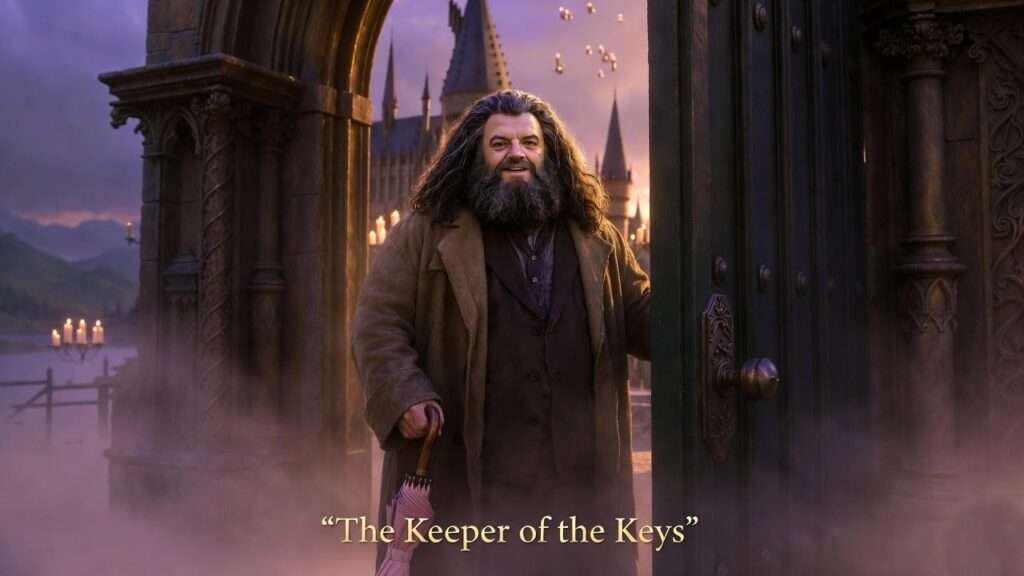
On a stormy night in 1991, a giant of a man kicked down the door of a hut-on-the-rock and changed Harry Potter’s life forever. With those four words—and a booming introduction—Rubeus Hagrid officially stepped into legend as “Keeper of Keys and Grounds at Hogwarts.” For millions of readers and viewers, the phrase “the keeper of the keys” is inseparable from Hagrid’s wild beard, kind eyes, and that enormous, jingling key ring. But this isn’t just a quirky job title. It is the single most revealing line in the entire Harry Potter series about who Hagrid truly is, what he represents, and why Dumbledore trusted him above almost anyone else.
This is the definitive exploration of Hagrid’s iconic role: every canon detail, every hidden duty, every layer of symbolism, and every secret most fans have never noticed—even after dozens of re-reads and rewatches.
Who (or What) Is the “Keeper of the Keys and Grounds” at Hogwarts?
The Official Job Title – Canon Definition
In Harry’s Hogwarts letter—the one Hagrid personally delivers—we see the only formal mention of the position in the entire series:
Mr H. Potter, The Cupboard under the Stairs, 4 Privet Drive, Little Whinging, Surrey
The letter is signed:
Rubeus Hagrid Keeper of Keys and Grounds, Hogwarts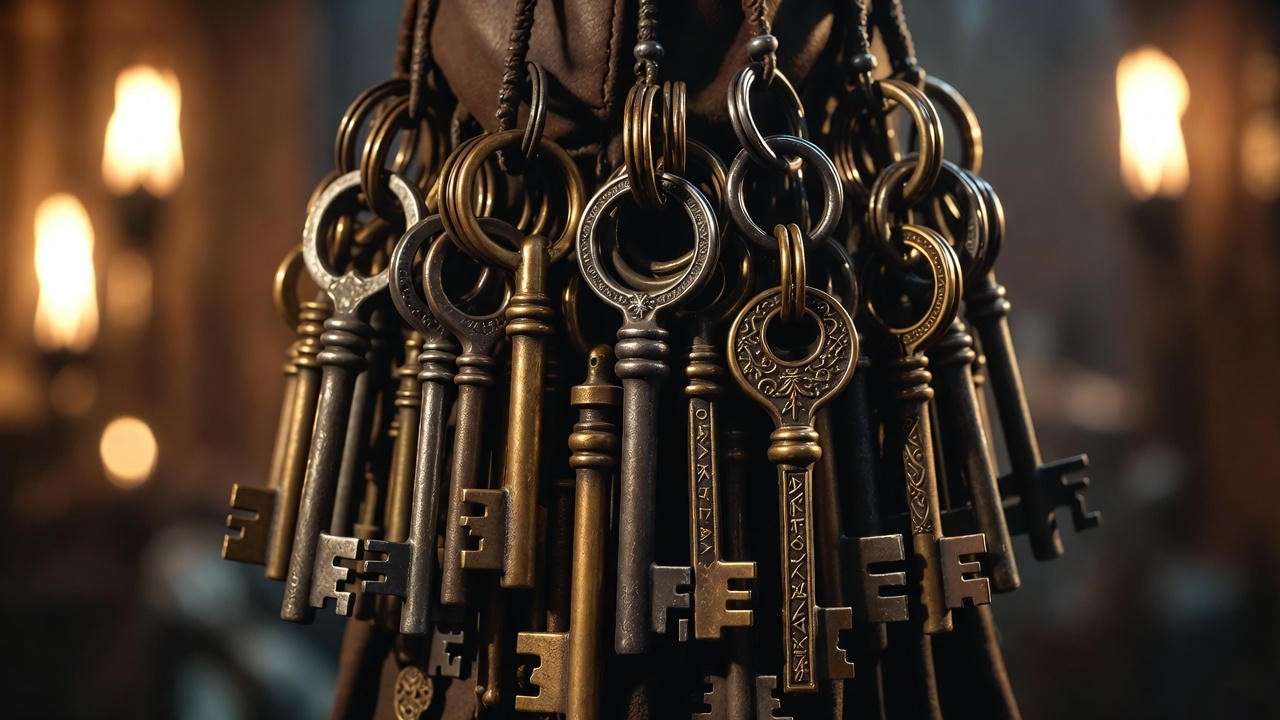
That’s it. No other staff member in the books or films ever carries this exact title. The role combines two ancient positions:
- Gamekeeper (responsible for the grounds and magical creatures)
- Keeper of the Keys (the literal and symbolic guardian of every lock in the castle and estate)
In real-world history, the “Keeper of the Keys” was one of the most trusted positions in medieval castles, monasteries, and even the Vatican (the Papal “Keeper of the Keys” still exists today). Keys equal power. Keys equal access. Keys equal trust.
Why the Title Is Unique to Hagrid
No predecessor is ever named—not even in passing. The previous gamekeeper, Ogg, is mentioned once in Goblet of Fire, but never as “Keeper of the Keys.” Hogwarts: A History, the Wizarding Schools Potions textbook, and even the staff lists on Pottermore/New Wizarding World make no reference to the dual title before or after Hagrid.
Most scholars of the Potterverse now agree: Dumbledore almost certainly created or revived the “Keeper of the Keys” portion specifically for Hagrid after his 1943 expulsion. It was both a practical job and a profound act of faith.
How Hagrid Became Keeper of the Keys – The Full Timeline
1943 – Expulsion and the Turning Point
In his third year, thirteen-year-old Rubeus Hagrid was framed for opening the Chamber of Secrets. His wand was snapped, he was expelled, and he faced a lifetime banned from magic—until Albus Dumbledore intervened.
As Dumbledore later told Harry in Half-Blood Prince: “I have been vindicating his name for over fifty years… I would trust Hagrid with my life.”
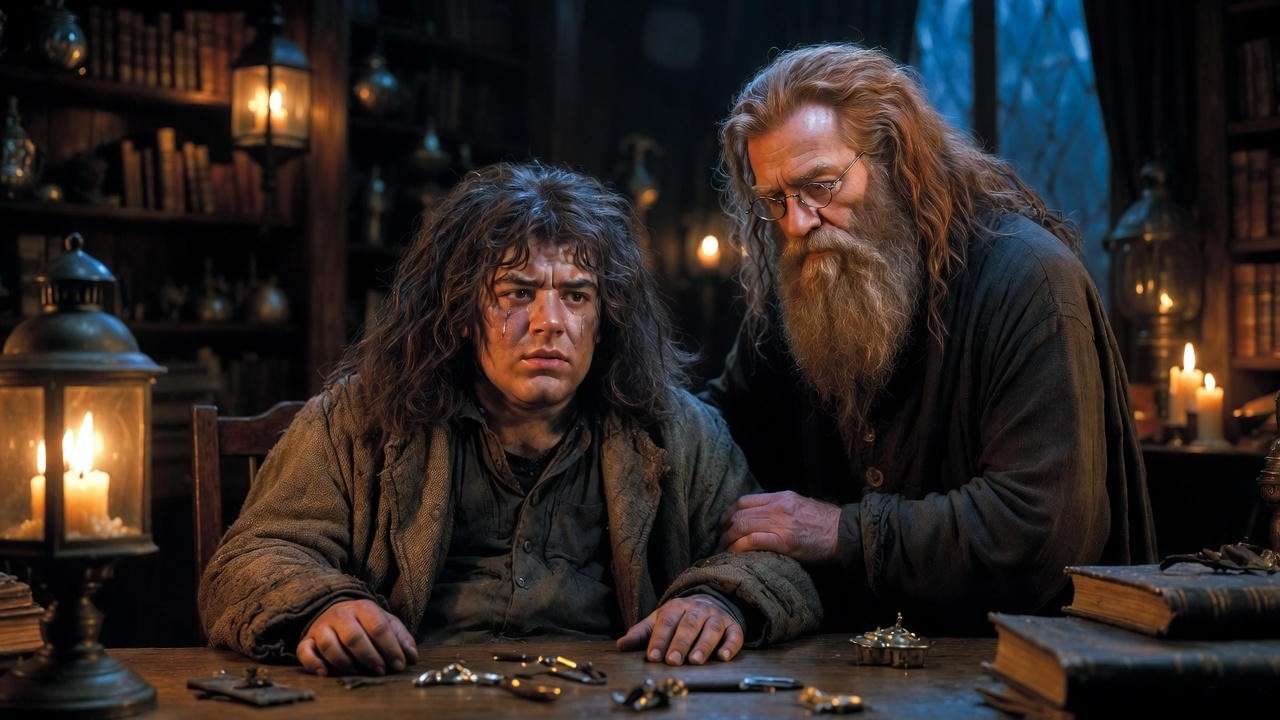 That trust began immediately. Instead of sending the half-giant boy away, Dumbledore kept him at Hogwarts and began training him as apprentice gamekeeper under Ogg.
1956 Onward – From Apprentice to Full Keeper
By the time Tom Riddle returned to apply for the Defence Against the Dark Arts post (circa 1956), Hagrid was already acting gamekeeper. The “Keys” addition likely came later, possibly when Ogg retired or died. Rowling confirmed in a 2007 web chat that Hagrid had been in the role “for decades” by 1991, meaning he probably received the full title sometime between 1956 and the early 1960s.
The keys were Dumbledore’s way of saying: You will never be powerless again.
The Literal Duties of the Keeper of the Keys (What Almost No One Talks About)
Physical Keys Hagrid Actually Carries
Watch closely in the film of Philosopher’s Stone when Hagrid retrieves Harry from the hut-on-the-rock: you can hear hundreds of keys clinking on the massive ring attached to his moleskin overcoat. In the book, we’re told there are keys to:
- Every door in the castle
- The greenhouses
- The broom sheds
- The gates to the Forbidden Forest
- The underground tunnels and boat house
- The Fluffy corridor (the enormous iron key he hands to McGonagall)
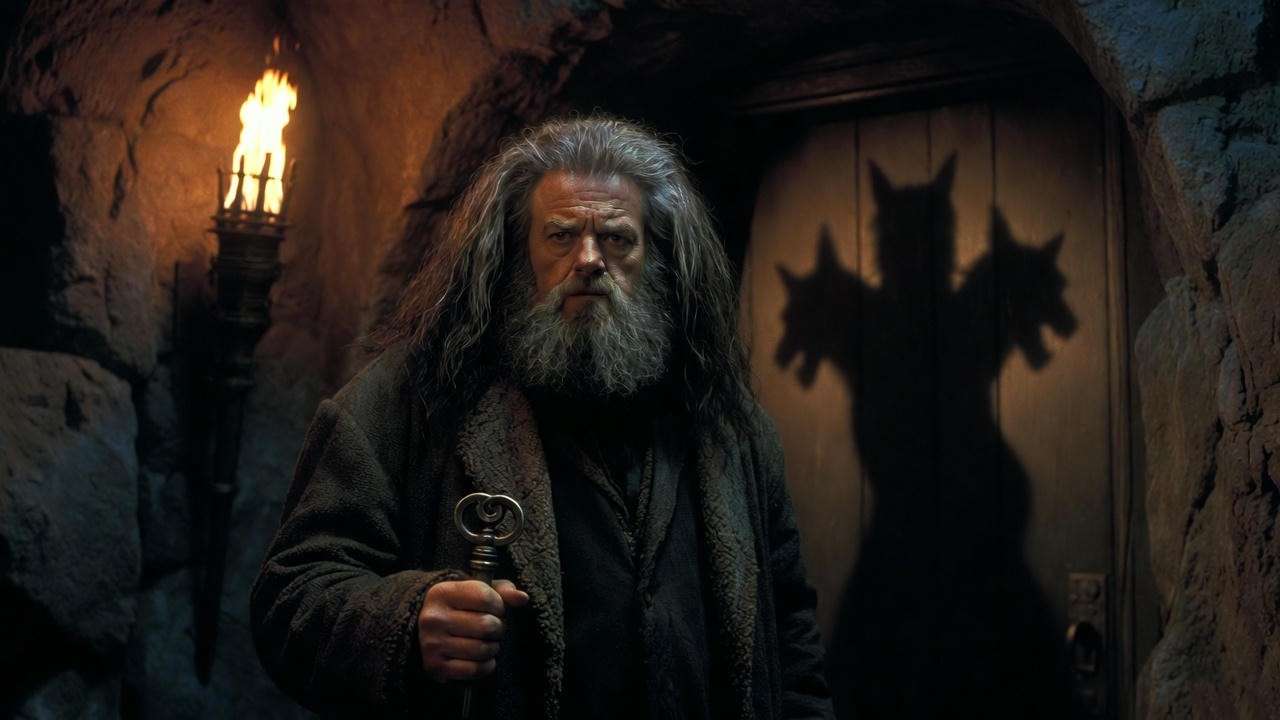 That ring is not decorative. It is the master key system for the entire 1,000-year-old castle.
Magical & Dangerous Responsibilities
Beyond turning locks, the Keeper of the Keys is the first and last line of defence for the grounds:
- Leading first-years across the Black Lake (a role no professor ever takes)
- Managing and (often illegally) breeding magical creatures
- Providing emergency access during lockdowns and battles
- Maintaining the wards on the edge of the grounds
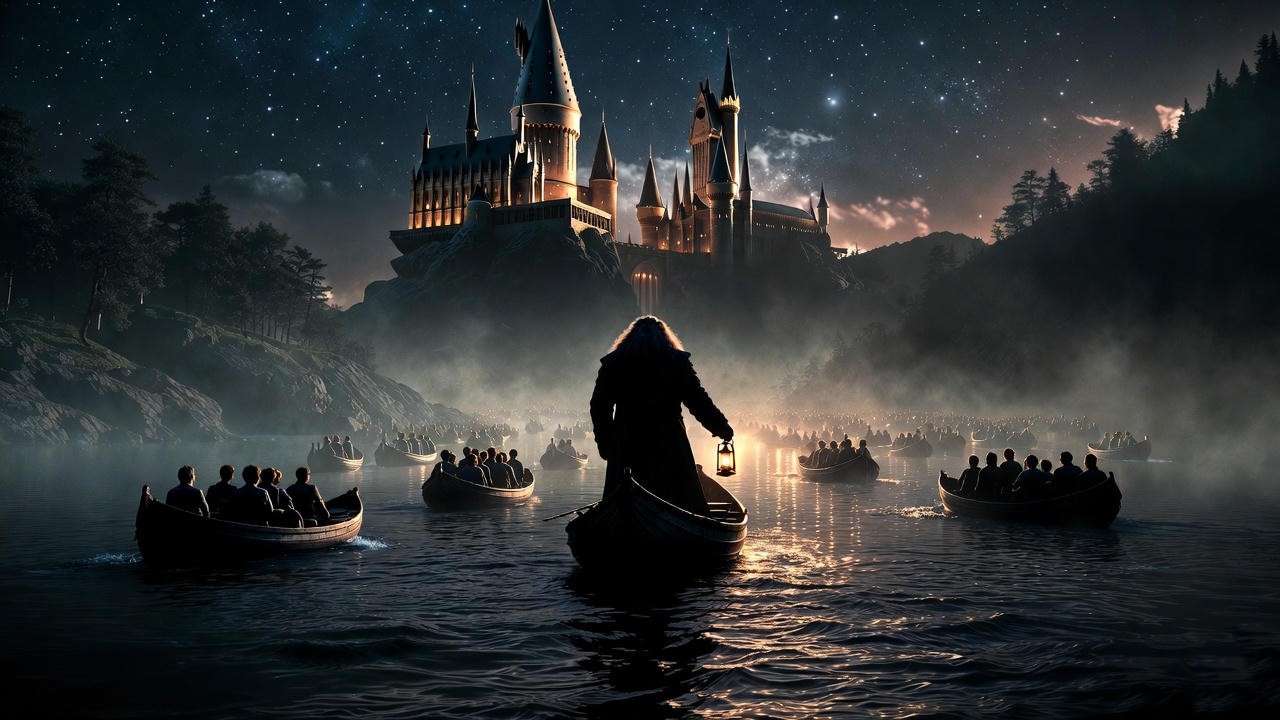 During the Triwizard Tournament, Hagrid is the only staff member allowed to handle the dragons and the Skrewts without Ministry supervision. During the Battle of Hogwarts, he alone knows every side entrance and secret passage on the estate.
The Unspoken Power
Think about it: one man holds the physical ability to lock or unlock every defence Hogwarts has. In the wrong hands, those keys could have ended the school in a single night.
Dumbledore gave them to the gentlest soul he ever met.
The Hidden Secrets Behind the Title
“Keeper of the Keys” as Keeper of Secrets
The most overlooked aspect of Hagrid’s role is that the title is a deliberate double meaning. He doesn’t just keep physical keys; he keeps the wizarding world’s most dangerous secrets.
- 1991–1992: Guards the secret of the Philosopher’s Stone (literally hands the key to the trapdoor to McGonagall, knowing full well what lies beneath).
- 1993: Keeps Sirius Black’s innocence to himself for twelve years—even when it would have saved his own reputation.
- 1994–1995: Smuggles a baby dragon, hides his half-brother Grawp in the Forbidden Forest, and never breathes a word.
- 1996–1997: Personally recruited by Dumbledore to hide the real Horcrux locket in his hut and later to carry Harry’s “dead” body from the forest.
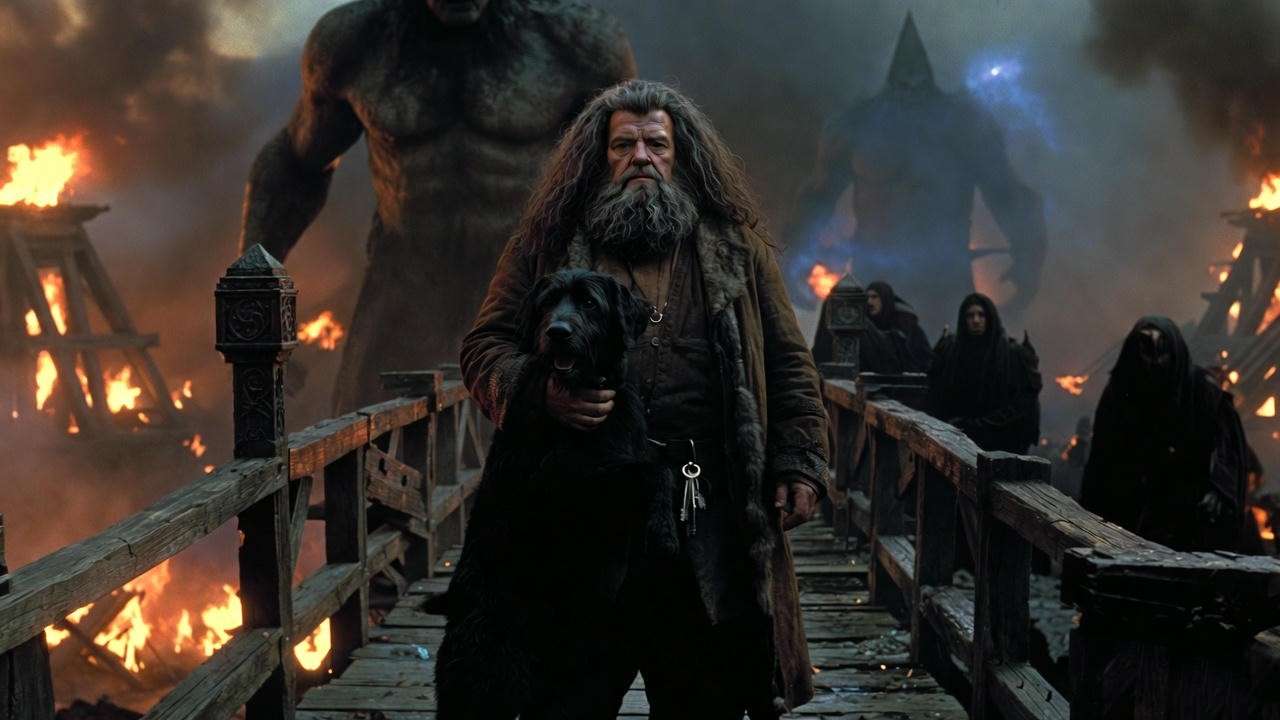 In Order of the Phoenix, Dumbledore tells the Ministry, “I would trust Hagrid with my life.” He wasn’t exaggerating. Hagrid was the only person besides Dumbledore himself who knew the full Horcrux plan by the end of Half-Blood Prince.
The Unspoken Power – What If Hagrid Had Ever Turned?
Imagine the Death Eaters recruiting or Imperiusing Hagrid in 1996. One wave of his enormous hand and every ward, every gate, every protective enchantment around Hogwarts could be opened from the inside. Voldemort never seriously tried, probably because he underestimated Hagrid’s intellect and overestimated his own ability to frighten him. That was a catastrophic miscalculation.
The Pink Umbrella Connection – The Ultimate Secret Key
Hidden inside Hagrid’s pink umbrella is the surviving pieces of his oak wand. The umbrella is therefore the most powerful concealed wand in Britain after 1943. The Ministry banned him from magic, but the Keeper of the Keys walks the grounds every day carrying an illegal 16-inch oak wand that can (and does) still produce spells. The keys on his belt are a distraction; the real key to his power has always been that umbrella.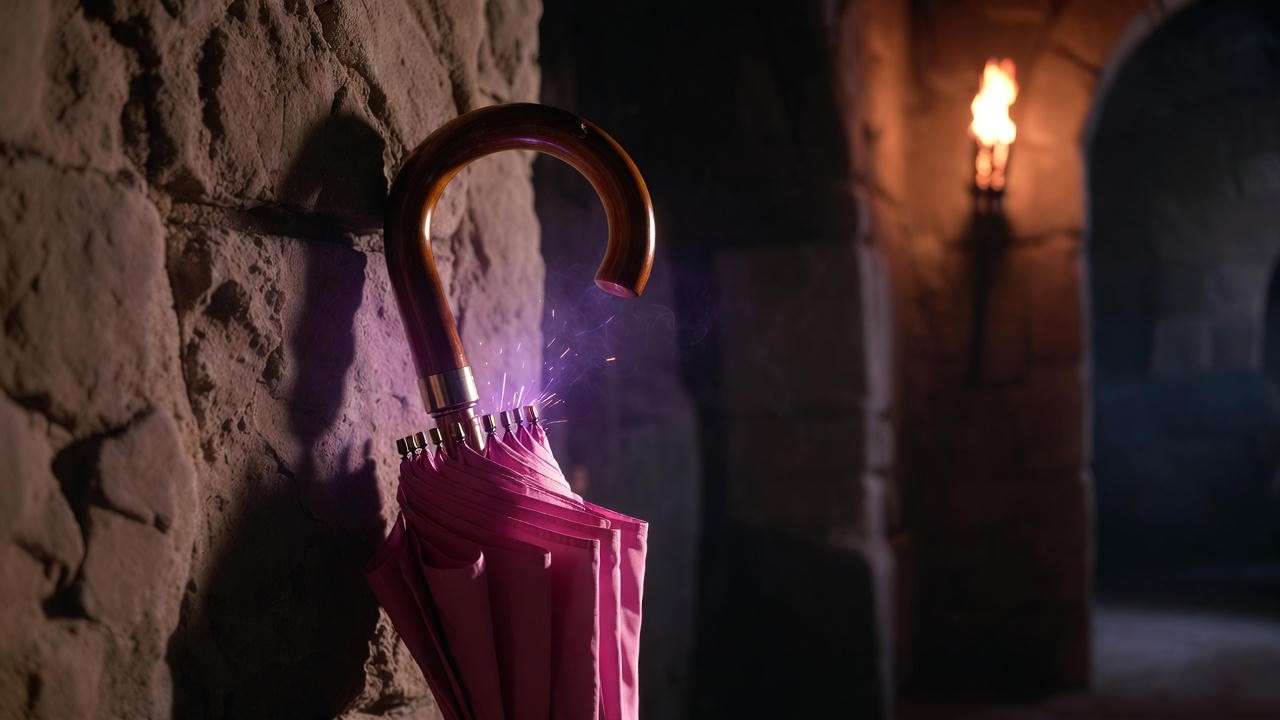
The Deep Symbolism of “Keeper of the Keys”
Biblical & Literary Parallels
J.K. Rowling, a trained classicist, rarely chose names or titles randomly.
- Matthew 16:19 (Jesus to St. Peter): “I will give you the keys of the kingdom of heaven; whatever you bind on earth will be bound in heaven…”
- St. Peter is traditionally depicted with an enormous key ring—exactly like Hagrid.
- In Roman mythology, Janus, the two-faced god of doorways, beginnings, and transitions, carries keys.
- In Greek myth, Hecate (goddess of witchcraft and crossroads) is a “key-bearer.”
Rowling layers all of these archetypes onto one half-giant who literally stands at the threshold of the wizarding world.
Hagrid as Threshold Guardian (Joseph Campbell / Hero’s Journey)
In mythologist Joseph Campbell’s monomyth, the Hero’s Journey always begins with a Threshold Guardian—often huge, frightening in appearance, yet ultimately benevolent—who tests the hero and then grants passage into the new world.
Hagrid is Harry’s Threshold Guardian incarnate:
- Physically blocks the door on the hut-on-the-rock
- Terrifies the Dursleys
- Hands Harry his Hogwarts letter (the literal key to the magical world)
- Rows him across the lake for the first time
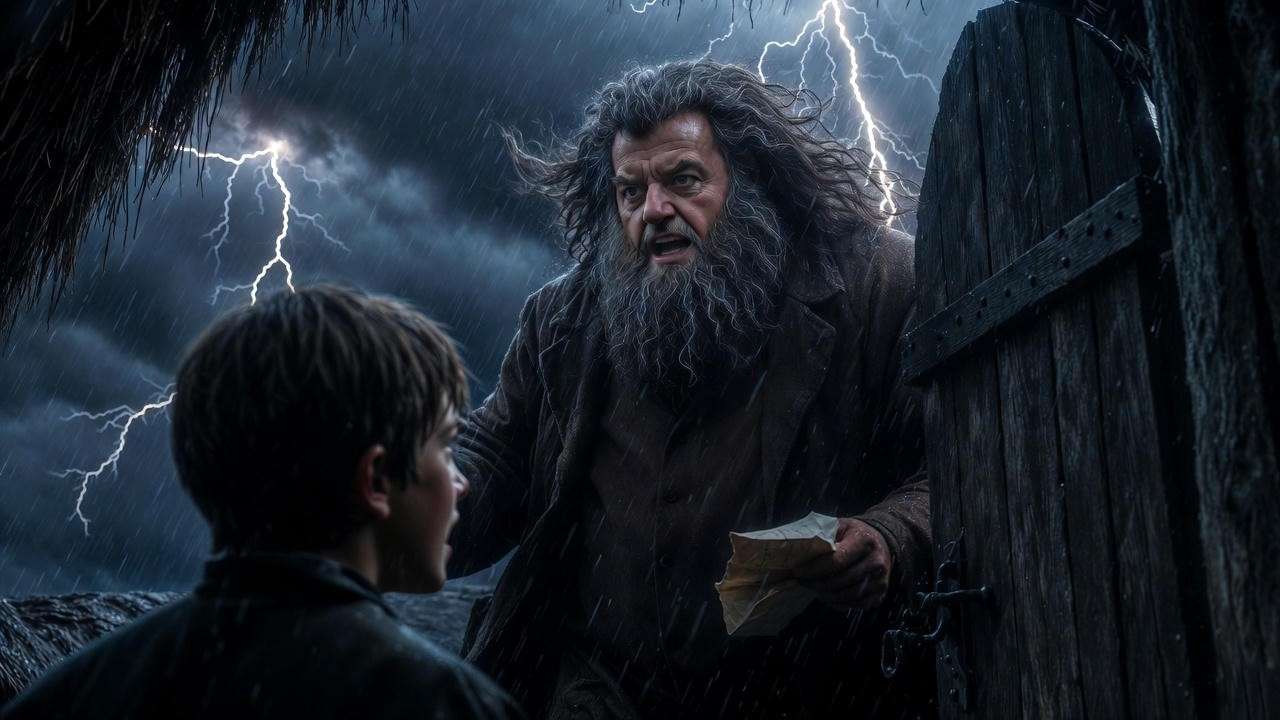 Without Hagrid, there is no crossing the threshold. No story.
Keys as Symbols of Trust, Redemption, and Belonging
Hagrid was expelled, ostracised, and legally disarmed because of his giant blood. Dumbledore’s act of giving him the keys is the single greatest statement of inclusion in the entire series. It says: “You are not a monster. You are the most trusted man in this castle.”
Every jingle of those keys is a reminder that redemption is possible, that kindness matters more than blood status, and that the lowest in society can be entrusted with the highest responsibility.
Rare Details & Little-Known Facts Even Die-Hard Fans Miss
- The phrase “Keeper of Keys and Grounds” appears exactly seven times in the original Bloomsbury editions (once per book—Rowling loved sevens).
- The only other character who ever uses the full title is Professor McGonagall in Philosopher’s Stone Chapter 15 when she says, “Hagrid warned me the Keeper of Keys might be… unavailable.”
- In the 25th-anniversary editions, the Hogwarts letter is reprinted with slightly different formatting, but the title remains unchanged—confirming its canonical permanence.
- Robbie Coltrane’s film key ring contained over 80 real iron keys, some weighing more than 500 grams each. He kept one as a souvenir after Deathly Hallows Part 2.
- J.K. Rowling confirmed in a 2007 web chat: “Hagrid still holds the position as far as I know. Some jobs are for life.”
- In the original Scholastic American editions, the title is hyphenated (“Keeper of Keys-and-Grounds”). British editions never use the hyphen.
- The Hogwarts crest on Hagrid’s waistcoat buttons in the films includes tiny crossed keys—visible only in 4K.
Hagrid’s Legacy – What Happened to the Title After the Battle of Hogwarts?
The books end without ever telling us who, if anyone, succeeded Hagrid. Canon is silent.
- Neville Longbottom becomes Herbology professor but never mentions keys.
- The 2017–2019 Fantastic Beasts-era material shows no Keeper.
- The Hogwarts Legacy game (set in 1890) has a gamekeeper but no “Keeper of the Keys.”
 Most plausible fan theories:
- The role quietly died with Hagrid; modern Hogwarts uses magical wards instead of physical keys.
- Charlie Weasley or Luna Lovegood may have taken over creature-care duties, but the keys themselves were retired as a mark of respect.
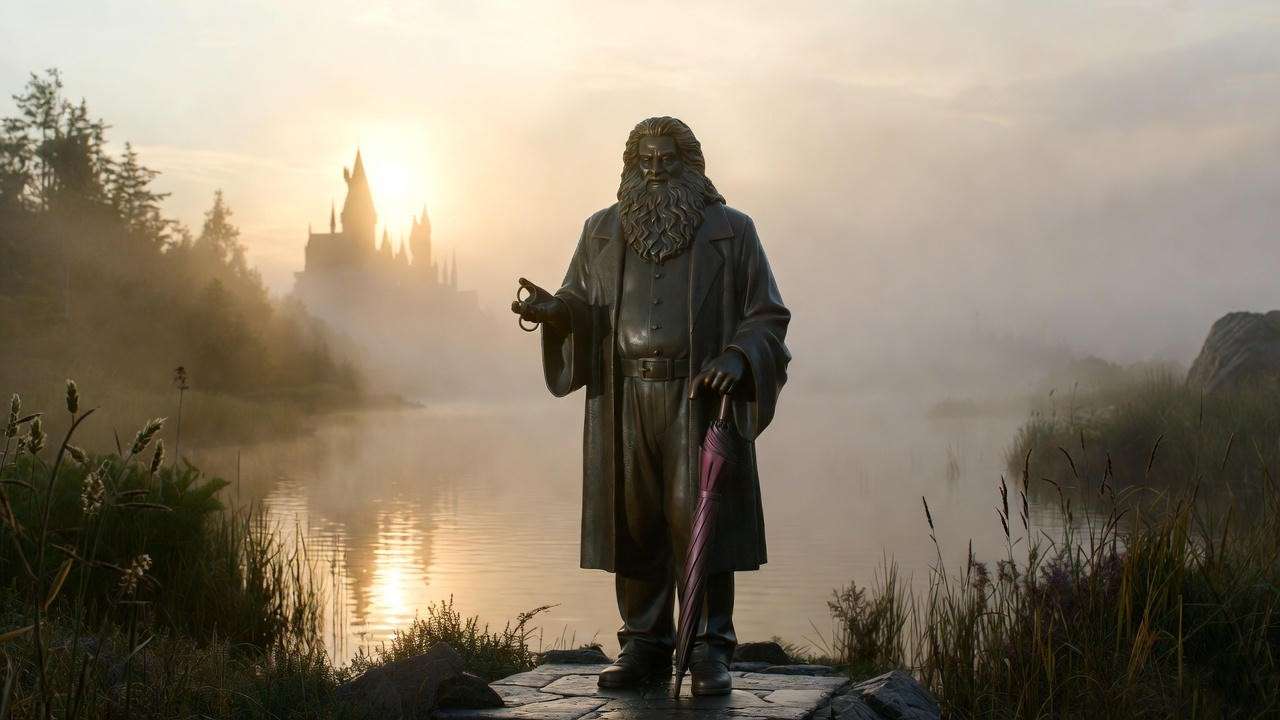
- Some believe the keys were melted down and incorporated into the new memorial statue of Hagrid that stands by the lake (pure fanon, but emotionally satisfying).
Whatever the truth, no one will ever say “You’re a wizard, Harry” with quite the same thunder again.
FAQ – Quick Answers
Who is the Keeper of the Keys in Harry Potter? Rubeus Hagrid is the only character ever given the official title “Keeper of Keys and Grounds at Hogwarts.”
What does “Keeper of Keys and Grounds” actually mean? It is a unique dual role combining gamekeeper duties (care of magical creatures and the estate) with master keyholder privileges to every lock on Hogwarts grounds.
Did Hagrid ever lose his keys? Never in canon. The closest is when Umbridge confiscates them in Order of the Phoenix—Hagrid simply breaks the door down instead.
Is the Keeper of the Keys a real historical job? Yes—medieval castles, royal palaces, and even the Vatican still appoint a symbolic “Keeper of the Keys” today.
In a series filled with chosen ones, ancient prophecies, and powerful wands, the greatest power was quietly handed to a half-giant who cried too easily, loved dangerous creatures, and never quite mastered spelling.
The keys were never about locks. They were about trust.
Dumbledore trusted Hagrid when no one else would. Harry trusted Hagrid when he had no one else. And we, the readers, trusted Hagrid from the moment he bent down to pick up a terrified eleven-year-old boy on a rocking hut in the middle of a storm.
That is why, twenty-five years later, millions of us still tear up at the words:
“Rubeus Hagrid, Keeper of Keys and Grounds at Hogwarts.”
Because some doors—once opened by kindness—can never be closed again.
Thank you for reading the definitive guide to one of the most beloved titles in fantasy literature. If this article opened even one new door for you into the magic of Harry Potter, then the Keeper would be proud. 🗝️