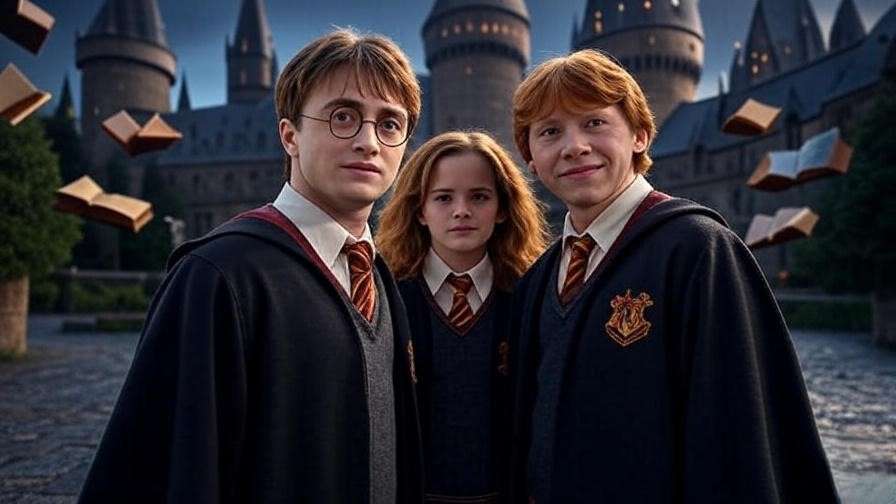
Consider the shock of the Professor Quirrell twist in The Sorcerer’s Stone or the slow, chilling realization of Barty Crouch Jr.’s true identity disguised as Mad-Eye Moody. Why did these narrative twists work so flawlessly, leaving millions of readers entirely blindsided? The answer lies directly in the author’s precise control over the narrative lens. If you are analyzing the mechanics of J.K. Rowling’s wizarding world, you must ask: what point of view is Harry Potter written in?
The Harry Potter series is predominantly written in the Third-Person Limited point of view, focusing almost exclusively on Harry Potter’s experiences, thoughts, and feelings.
This specific literary device is the foundational storytelling secret of the series. While a third-person narrator describes the events using pronouns like “he” and “they,” the narrative consciousness is firmly locked inside Harry’s mind. We do not know what Hermione is calculating in the library, nor do we immediately see the internal struggles of a character like Percy Weasley as his ambition slowly alienates him from his family—we only witness Percy’s actions through Harry’s immediate sense of betrayal and frustration.
The Core Perspective: Understanding Third-Person Limited
To understand why this perspective is so effective for fantasy world-building, we must contrast it with other common narrative voices.
-
First-Person (“I”): Places the reader directly inside the protagonist’s head, which can sometimes feel overly biased or restrict the author’s ability to describe the world cinematically.
-
Third-Person Omniscient: An all-knowing narrator who can jump between the minds of any character, revealing secrets, motives, and hidden dangers simultaneously.
-
Third-Person Limited: The “over-the-shoulder” camera angle. The narrator is outside the character but only has access to that single character’s internal landscape.
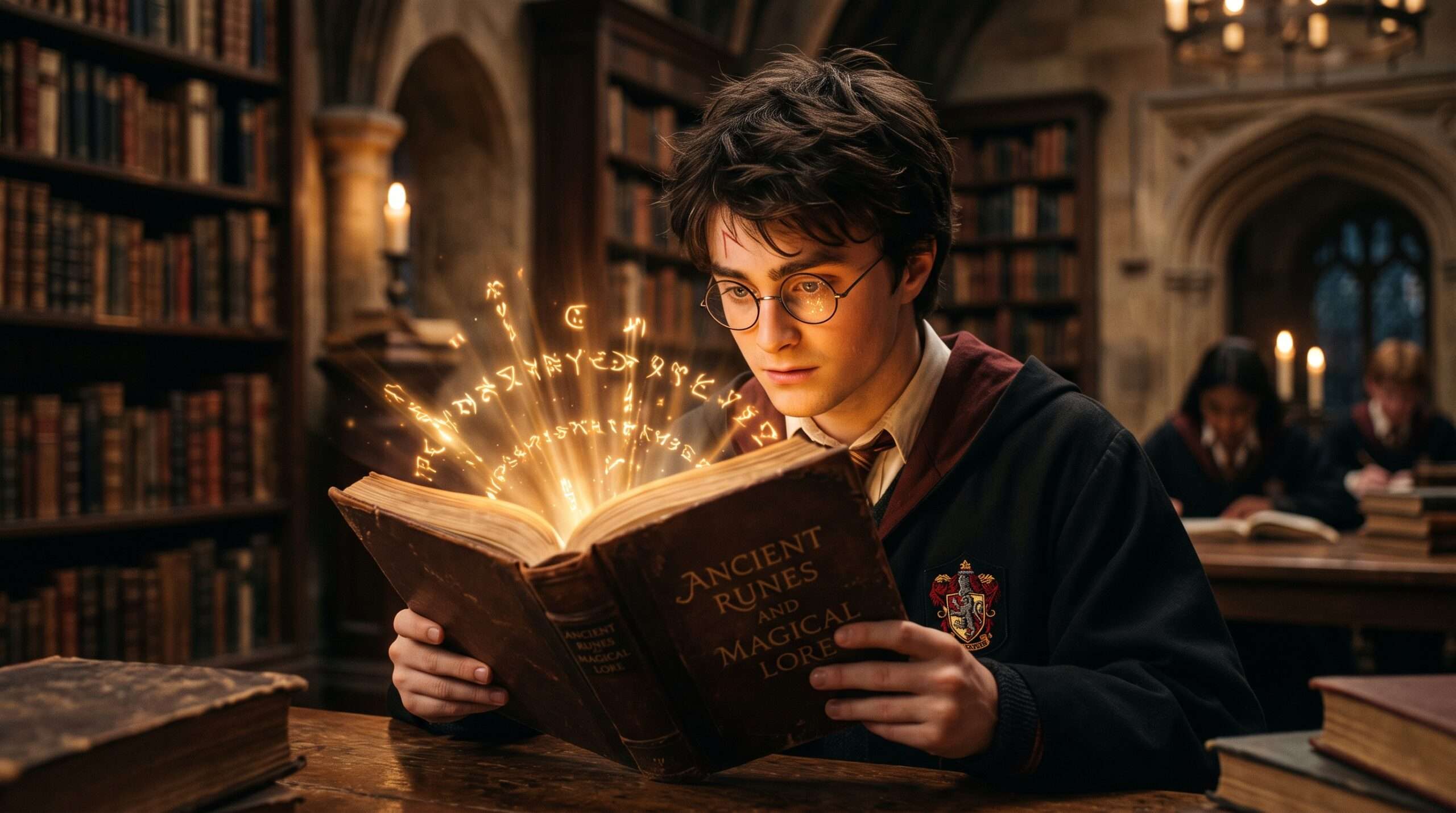 Harry as the Reader’s “Camera”
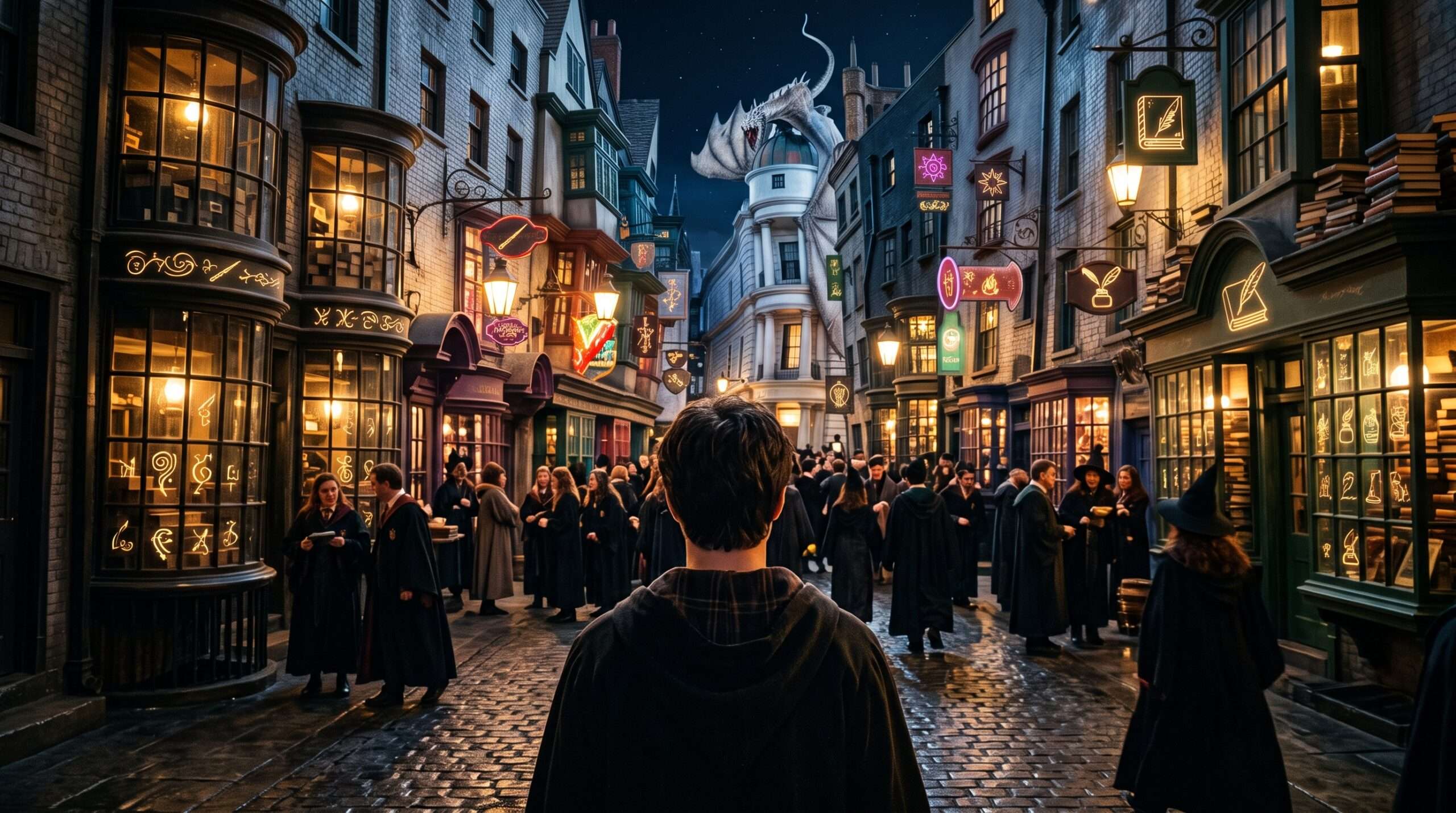
In a sprawling fantasy universe, exposition can quickly become overwhelming. Third-Person Limited elegantly solves the “info-dumping” problem. Harry enters the wizarding world entirely ignorant of its laws, politics, and history. Because the narrative is strictly bound to his consciousness, the reader learns the rules of magic exactly when he does. This creates a powerful surrogate experience; when Harry is bewildered by the shifting staircases of Hogwarts, the reader organically shares that exact disorientation.
 Why Third-Person Limited Was Crucial for the Series’ Success
While bookstores categorize the Harry Potter series as fantasy, structural analysis reveals that at their core, these books are intricately plotted mystery novels. From discovering what is hidden in the third-floor corridor to uncovering the true identity of the Half-Blood Prince, each installment relies on a central whodunit. This is where the chosen narrative voice proves its structural brilliance.
Preserving the Mystery (The “Fog of War”)
Third-person limited inherently creates a narrative “fog of war.” Because the reader only possesses the clues that Harry discovers, the author can successfully hide monumental plot twists right in plain sight.
Consider the climax of Harry Potter and the Prisoner of Azkaban. For the entire novel, the audience is led to believe that Sirius Black is a deranged murderer intent on hunting Harry down. We believe this unequivocally because Harry believes it. The protagonist’s bias becomes the reader’s blind spot. If J.K. Rowling had utilized a third-person omniscient perspective, the narrator would have had to artificially withhold information about Peter Pettigrew to preserve the twist, which often feels like a cheap trick to readers. Instead, by locking us behind Harry’s emerald-green eyes, the dramatic reveals feel earned. Harry’s misinterpretations—such as assuming Severus Snape was trying to steal the Sorcerer’s Stone—are organically passed on to the audience.
Maturing with the Protagonist
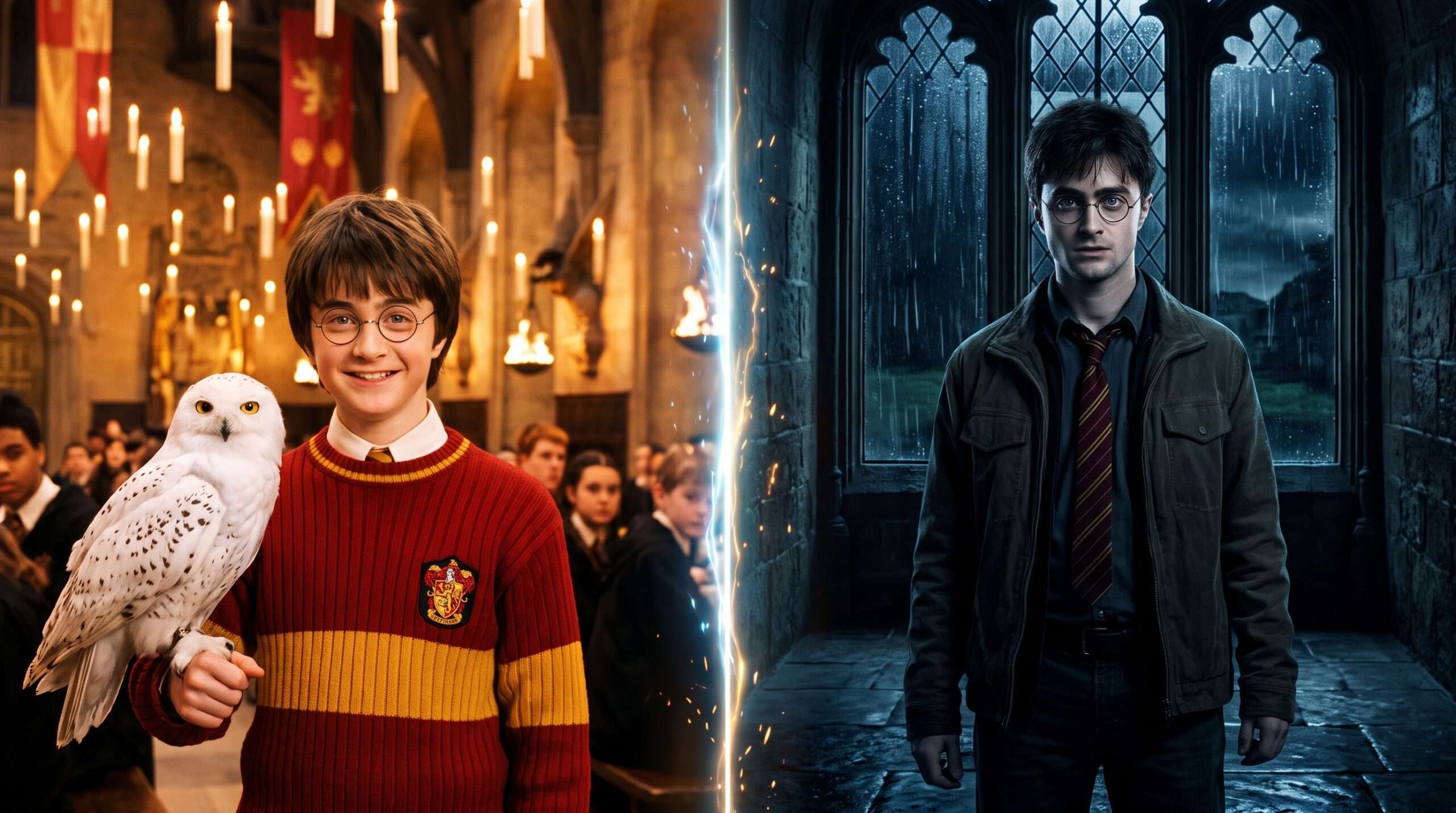
One of the most remarkable achievements of the series’ point of view is how the narrative voice evolves as the protagonist ages. The perspective remains third-person limited throughout the seven books, but the tone of that perspective shifts dramatically, mirroring human development.
In the early novels, the narrative voice reflects an eleven-year-old’s worldview. The prose is filled with a sense of whimsical wonder, focusing heavily on the marvels of the magical world, the abundance of food in the Great Hall, and clear-cut, black-and-white morality.
By the time we reach Harry Potter and the Order of the Phoenix, Harry is a traumatized fifteen-year-old suffering from PTSD after witnessing the death of Cedric Diggory. The narrative lens clouds accordingly. The prose becomes moodier, more cynical, and highly reactive. The famous moments of Harry shouting in all-caps at Ron and Hermione are not just teenage angst; they represent a deliberate narrowing of the narrative perspective to reflect a teenager’s overwhelming, internalized emotional state. This evolution transforms a simple magical adventure into a complex Bildungsroman (coming-of-age story), allowing a generation of readers to literally grow up alongside the Boy Who Lived.
 The Rule-Breakers: When Harry Potter Shifts Point of View
To truly master the answer to “what point of view is Harry Potter written in,” we must examine the exceptions. While 95% of the series is anchored to Harry, J.K. Rowling occasionally abandons her own rule. These perspective shifts are rare, highly calculated, and always serve to escalate the stakes of the overarching plot.
The Sorcerer’s Stone (Chapter 1: The Boy Who Lived)
The very first chapter of the entire series is not told from Harry’s perspective, but rather through the aggressively mundane eyes of his uncle, Vernon Dursley, alongside a briefly omniscient narrator.
Why start a magical fantasy series from the viewpoint of a magic-hating Muggle? The shift serves a brilliant literary purpose: contrast. By establishing the Dursleys’ obsession with normality first—viewing reading cats, strange owls, and people in cloaks as terrifying anomalies—Rowling grounds the reader in the ordinary world. When the magic finally arrives in full force, it feels earned and deeply extraordinary.
The Goblet of Fire (Chapter 1: The Riddle House)
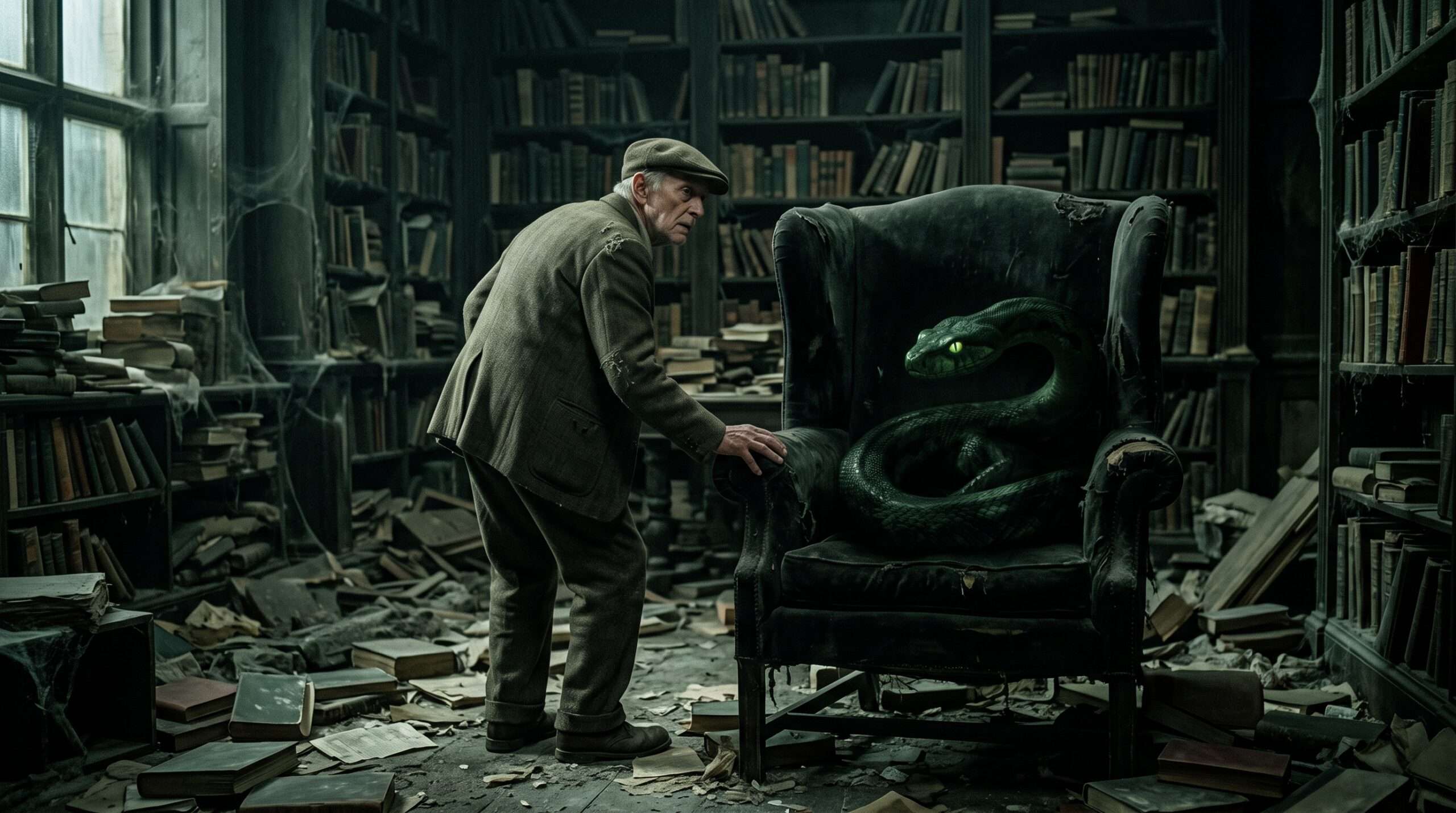
The fourth book marks the exact midpoint of the series, transitioning the narrative from middle-grade adventure to dark, young-adult fantasy. Rowling signals this tonal shift immediately by abandoning Harry’s perspective in chapter one and jumping into the mind of Frank Bryce, the elderly Muggle caretaker of the Riddle family home.
Through Frank’s eyes, we witness a frail but lethal Lord Voldemort and his servant, Peter Pettigrew, plotting murder. This shift accomplishes something crucial: it creates dramatic irony. For the first time, the reader is armed with terrifying knowledge that the protagonist does not have. We know the villain is active, plotting, and lethal before Harry even wakes up with a burning scar, casting a shadow of dread over the rest of the novel.
 The Half-Blood Prince (Chapters 1 & 2: The Other Minister & Spinner’s End)
In the sixth installment, Rowling breaks the rules for two consecutive chapters. First, the reader is placed in the office of the Muggle Prime Minister, who is receiving a horrifying briefing from the Minister for Magic regarding the escalation of the Second Wizarding War. This perspective shift serves to expand the world-building, demonstrating that Voldemort’s terror is no longer confined to the magical realm but is actively bleeding into the Muggle world, causing collapsed bridges and strange hurricanes.
Immediately following this, the perspective shifts again in chapter two, “Spinner’s End.” Here, the reader follows Narcissa Malfoy and Bellatrix Lestrange to a meeting with Severus Snape, where Snape makes the Unbreakable Vow to protect Draco Malfoy and kill Albus Dumbledore if Draco fails. This is perhaps the most critical POV shift in the entire series. By deliberately excluding Harry from this scene, Rowling masterfully manipulates the reader’s trust, setting up the most devastating betrayal in the franchise while once again utilizing dramatic irony to build unbearable tension.
The Deathly Hallows (Chapter 1: The Dark Lord Ascending)
The final book opens with a chilling shift to Malfoy Manor, where Voldemort and his Death Eaters are holding a grim council. We witness the murder of Charity Burbage through a detached, almost clinical omniscient lens. This cold, terrifying opening establishes the ultimate high stakes of the finale. The safety net of Hogwarts is gone, and the reader is thrust directly into the heart of the enemy’s camp before Harry even packs his trunk at Privet Drive.
What if Harry Potter Was Written in the First Person?
Given the intense focus on Harry’s internal life, a common question among aspiring authors and literary critics is why Rowling didn’t simply write the series in the first person (“I woke up in the cupboard under the stairs”).
The Limitations of “I, Harry”
Using the first person would have presented several structural problems for the series. First, Harry is a profoundly famous character within his own universe—the quintessential “Chosen One.” If the narrative were delivered through his own voice, it would have been incredibly difficult to balance his innate humility with the constant adoration and attention he receives without making him sound either falsely modest or arrogant.
Second, the third-person limited perspective provides just enough distance to describe the majestic world-building of Hogwarts in a slightly more elevated, cinematic prose style. A strict first-person narrative is limited entirely to the vocabulary and observational skills of the protagonist. By utilizing the third person, the narrator can describe the sweeping architecture of the Great Hall or the terrifying atmosphere of the Dementors in a way that an eleven-year-old boy might not be able to articulate perfectly himself.
 What Writers Can Learn from the Harry Potter POV
For authors and content creators building their own narrative universes, the structural framework of the wizarding world offers a masterclass in perspective control. If you are developing a deep, multi-book fantasy series, here are the core actionable takeaways:
-
Use Your Protagonist’s Ignorance to Your Advantage: Do not view your main character’s lack of knowledge as a hurdle; use it as a tool. A naive perspective allows you to slowly unveil the rules of your magic system and the lore of your world without resorting to clunky exposition or info-dumping. Let the reader discover the truth alongside the hero.
-
Let the Narrative Voice Age with the Character: Consistency does not mean stagnation. A middle-grade protagonist views the world differently than a young adult. Adjust your prose, the emotional reactivity of the lens, and the focus of the internal monologue to reflect the character’s psychological maturity.
-
Break the Rules Only When the Stakes Demand It: If you are going to violate your established third-person limited perspective, do it deliberately. Use prologues or opening chapters to establish dramatic irony, introduce a major villain, or expand the political scope of your world.
Frequently Asked Questions
Is Harry Potter an unreliable narrator?
Harry is not a deliberately deceptive unreliable narrator, but he is heavily biased. Because the story is locked in the third-person limited perspective, the narrative treats Harry’s assumptions as facts. He frequently misinterprets situations—such as assuming Draco Malfoy was the Heir of Slytherin or believing Sirius Black was trying to murder him. The reader is deceived because Harry is deceived.
Are there any parts of Harry Potter written in the first person?
No, the core narrative of the Harry Potter series never shifts into the first person (“I did this,” “I saw that”). While dialogue obviously uses first-person pronouns, the narrative prose relies entirely on the third person.
Does the narrator know everything in Harry Potter?
The narrator only possesses omniscient knowledge during very specific, isolated chapters, most notably the opening chapter of The Sorcerer’s Stone. For the vast majority of the series, the narrator knows absolutely nothing beyond what Harry Potter sees, hears, feels, and guesses.
Understanding what point of view Harry Potter is written in is the key to unlocking J.K. Rowling’s storytelling success. The rigid adherence to a Third-Person Limited perspective, punctuated by brilliant, tension-building omniscient prologues, created a perfect literary engine. It allowed readers to step directly into the shoes of the Boy Who Lived, experiencing every triumph, betrayal, and magical discovery as if it were happening to them.
Which perspective shift in the series caught you the most off guard? Did you prefer the chilling insight of the Frank Bryce prologue or the political expansion of the Muggle Prime Minister? Share your thoughts on your favorite narrative twist in the comments below!