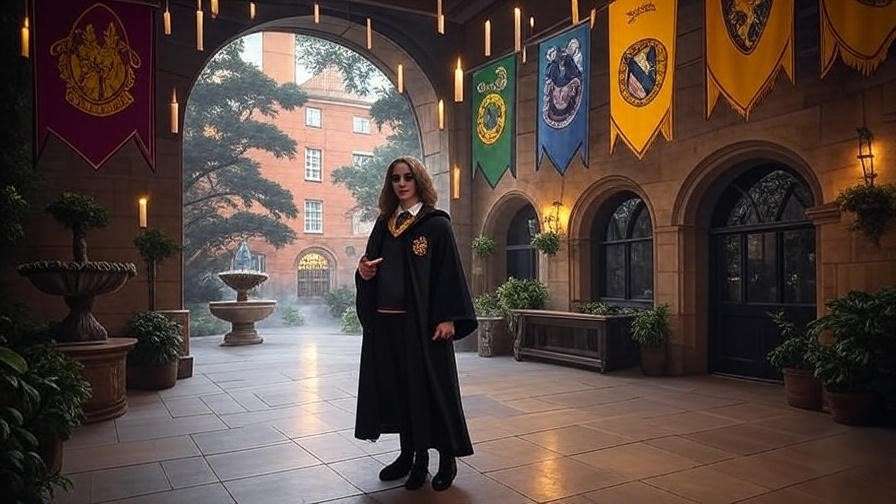
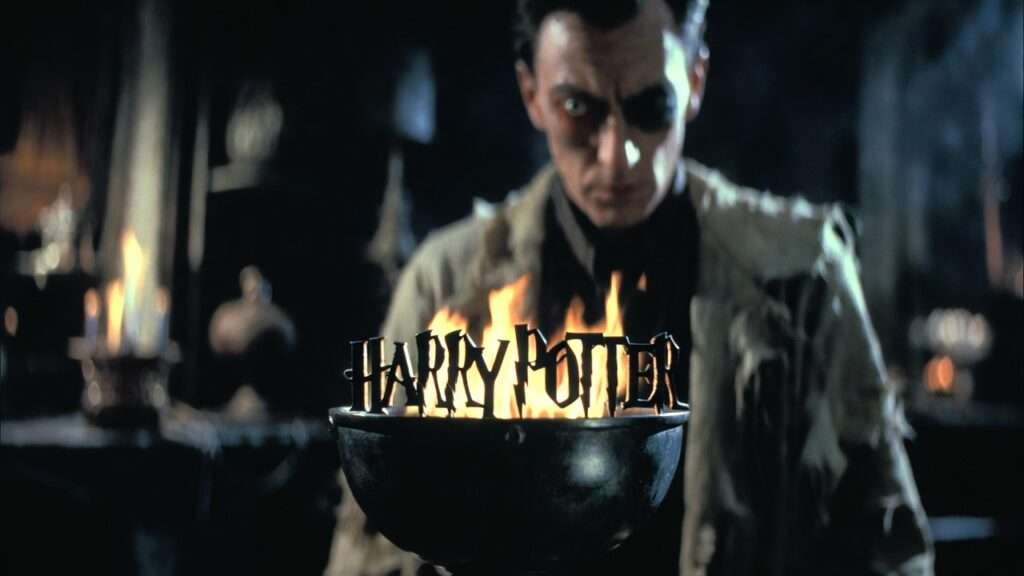
The Great Hall fell silent as the Goblet of Fire’s blue-white flames turned red once more. A charred slip of parchment shot out, fluttering to the floor before Albus Dumbledore. He picked it up, read the name aloud, and the words hung in the air like a curse: “Harry Potter.”
In that instant, the fourth year who had never entered his name became the unwilling fourth champion of the Triwizard Tournament—an ancient, dangerous competition designed for wizards of age and experience. Harry’s face drained of color as hundreds of eyes turned to him in shock, suspicion, and outright accusation. Who put Harry Potter’s name in the Goblet of Fire? This question has haunted fans since the release of Harry Potter and the Goblet of Fire in 2000, driving endless debates, theories, and re-reads.
The moment is one of the series’ most iconic twists. It thrusts an underage boy into mortal peril, fractures friendships (especially with Ron Weasley), and signals the darkening tone that defines the later books. Whether you’re revisiting the story, introducing it to someone new, or simply puzzling over the magical mechanics, this article delivers the full, definitive answer—along with how it was done, why it mattered, and what it reveals about the wizarding world’s dangers.
Spoiler warning: This piece discusses major plot points from Harry Potter and the Goblet of Fire (book and film), including the identity of the culprit and the mechanics of the deception. Proceed if you’re ready for the truth.
The Setup: The Triwizard Tournament and the Goblet’s Rules
To understand how Harry’s name ended up in the Goblet, we first need to grasp what the Goblet of Fire actually is and how the tournament was safeguarded against tampering.
The Triwizard Tournament, revived after centuries of dormancy due to its deadly history, pitted one champion from each of three major wizarding schools—Hogwarts, Beauxbatons, and Durmstrang—against one another in three perilous tasks. The Goblet of Fire served as the impartial judge and selector. Champions submitted their names on slips of parchment, which the Goblet consumed. On Halloween night, it would eject the names of the chosen three.
Albus Dumbledore implemented strict protections. He drew an Age Line—a glowing golden circle ten feet in radius around the Goblet—enchanted so that anyone under seventeen would be forced back with a dramatic beard of white hair (as poor Fred and George Weasley discovered in hilarious fashion). The Goblet was described as an “impartial selector,” bound by powerful, ancient magic. Once a name was chosen, a binding magical contract compelled the champion to compete; refusal meant severe consequences, possibly even death.
These safeguards made underage entry seem impossible. No simple Confundus Charm on a student could bypass the Age Line, and tampering with the Goblet itself would require extraordinary skill in Dark magic. Yet someone succeeded—someone who knew exactly how to exploit the Goblet’s logic.
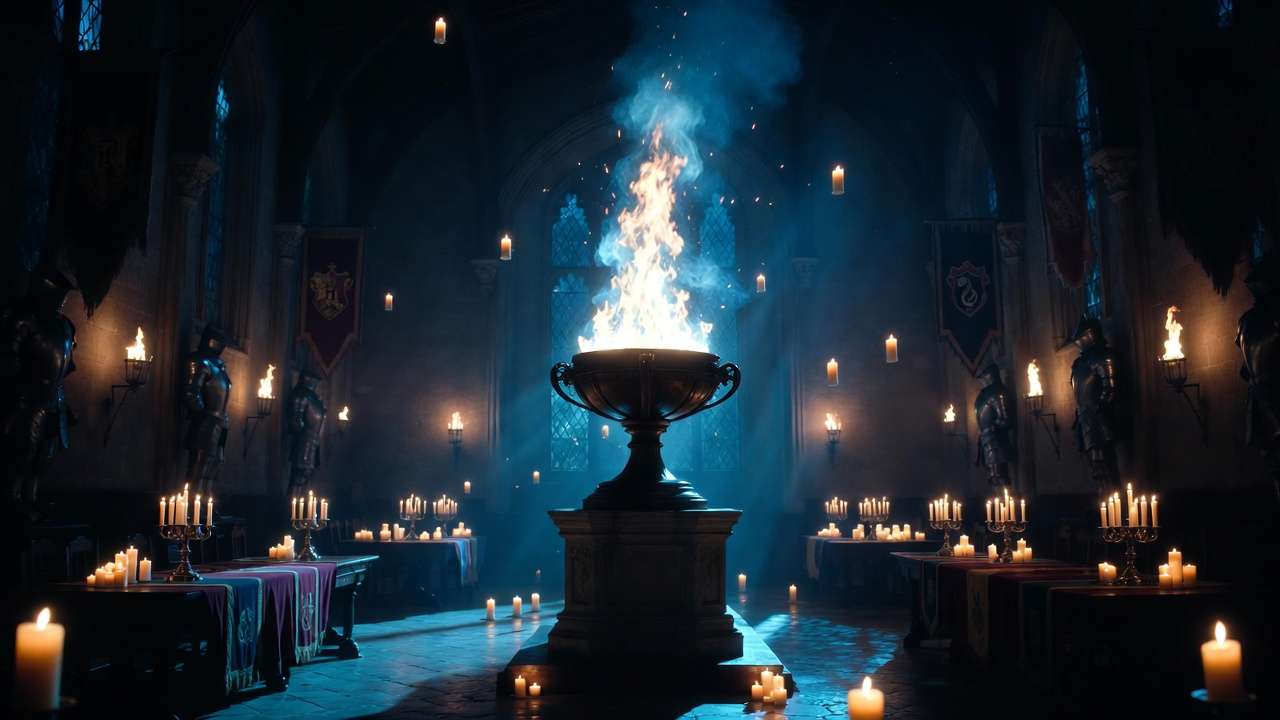 The Mystery Unfolds: Initial Suspicions and Red Herrings
In the days following Harry’s selection, suspicion fell on nearly everyone. Harry himself was accused of arrogance and glory-seeking, especially by Ron, whose jealousy strained their friendship to the breaking point. Hermione remained steadfast in her belief that Harry hadn’t entered, but even she couldn’t explain how it happened.
Other red herrings abounded:
- Ludo Bagman, the Ministry official overseeing the tournament, seemed overly enthusiastic about Harry’s participation and even tried to help him subtly.
- Igor Karkaroff, Durmstrang’s headmaster and a former Death Eater, bore a Dark Mark and harbored resentment toward Dumbledore.
- Some fans theorized Dumbledore himself orchestrated it as a test of Harry’s character or to protect him in plain sight.
- Severus Snape’s animosity toward Harry made him a perennial suspect in readers’ minds.
Meanwhile, the new Defense Against the Dark Arts professor, Alastor “Mad-Eye” Moody, emerged as Harry’s unlikely ally. With his magical eye, constant vigilance, and lessons on the Unforgivable Curses, Moody appeared to be the one person genuinely trying to keep Harry alive through the tasks—showing Hagrid the first dragon, hinting at the golden egg’s clue, and more.
These clues built masterful misdirection. J.K. Rowling wove suspicion so tightly that even on re-reads, the reveal feels earned rather than obvious.
 The Shocking Reveal: Who Really Did It?
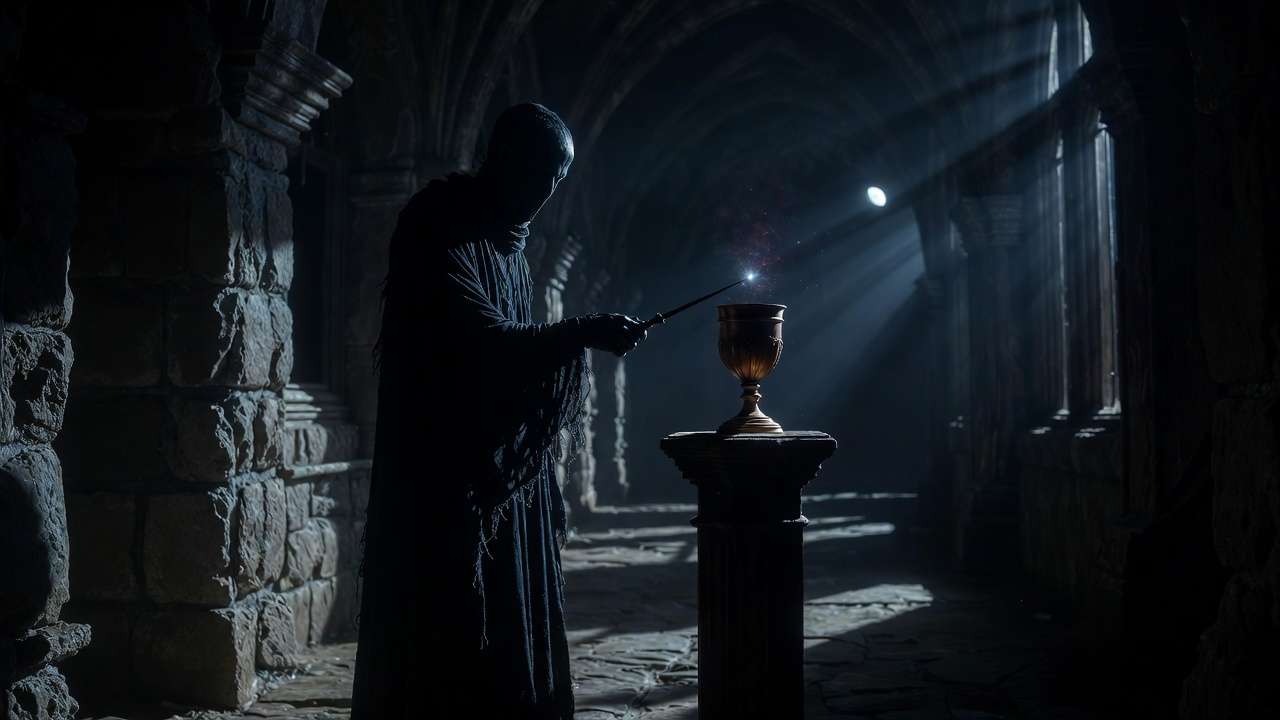
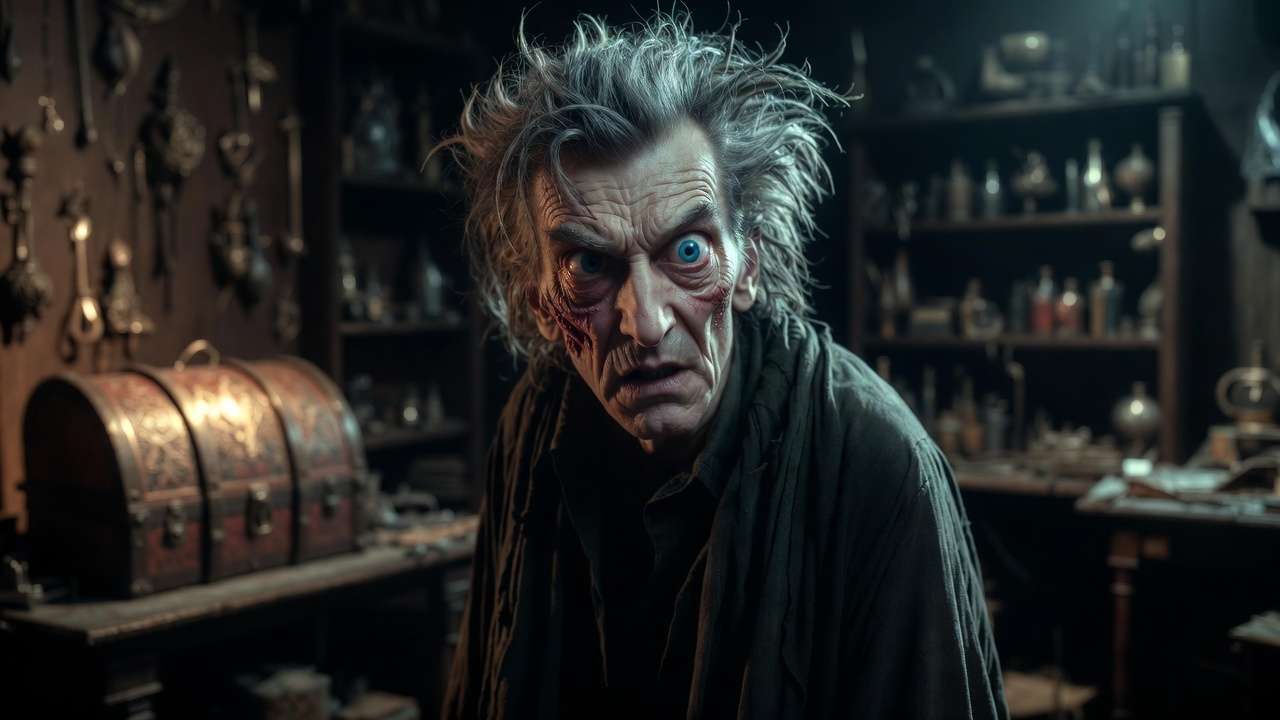
Barty Crouch Jr.—disguised as Mad-Eye Moody using Polyjuice Potion—put Harry Potter’s name in the Goblet of Fire.
The full confession comes in one of the book’s most intense scenes: after the Third Task, when the real Moody’s trunk is opened to reveal the imprisoned Alastor, and the impostor is subdued with Veritaserum (truth potion) by Dumbledore, Snape, and McGonagall.
Barty Crouch Jr., a fanatical Death Eater, had escaped Azkaban years earlier through a complex scheme involving his dying mother taking his place under Polyjuice, allowing him to be smuggled out by his father (Bartemius Crouch Sr.). Crouch Sr. then kept his son under the Imperius Curse at home, but Voldemort freed him during the Quidditch World Cup chaos. Barty Jr. then kidnapped the real Moody, imprisoned him in the magical trunk, and assumed his identity to infiltrate Hogwarts as the Defense professor.
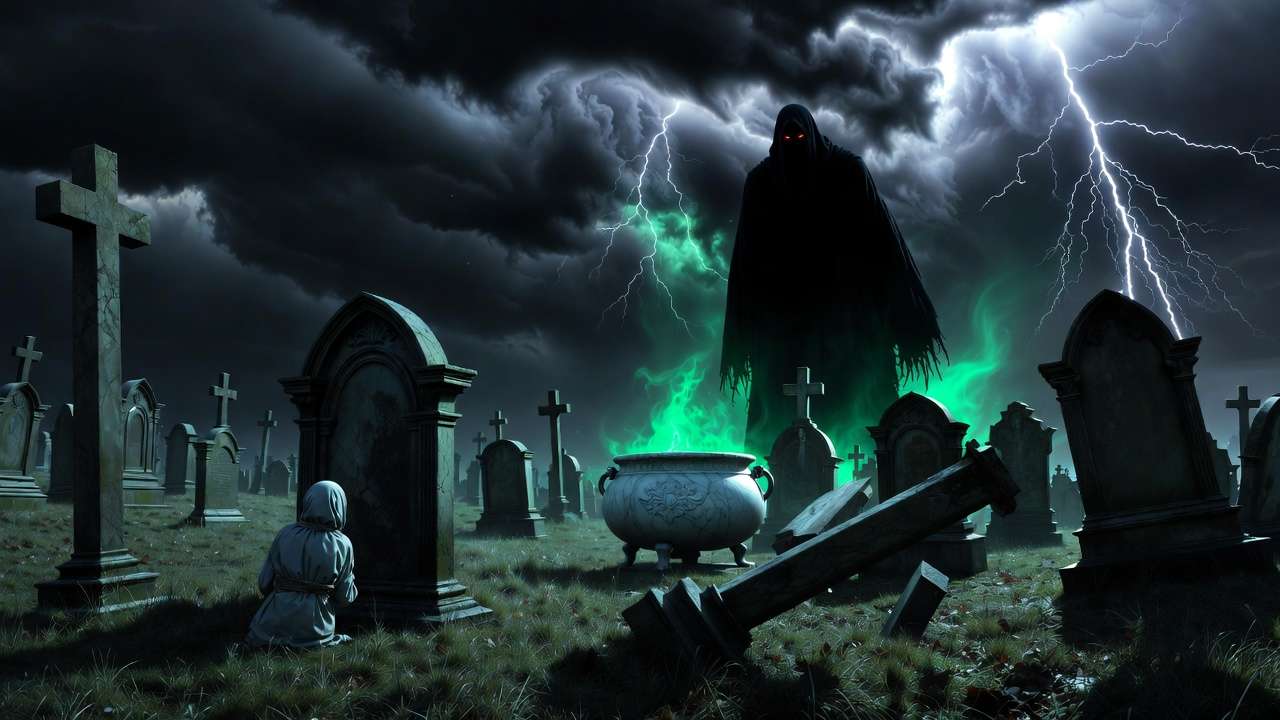
His mission, assigned by Lord Voldemort: ensure Harry Potter reached the Triwizard Cup, which had been turned into a Portkey to transport him to Little Hangleton graveyard for the Dark Lord’s resurrection ritual using Harry’s blood, bone from his father, and flesh from Wormtail.
 How He Did It
Barty Crouch Jr. cast a powerful Confundus Charm (Confundo) on the Goblet of Fire itself. This charm confuses and misdirects its target—even a powerful magical object like the Goblet, which required exceptional skill to hoodwink.
He confused the Goblet into believing there were four schools participating instead of three. Then, he submitted Harry’s name under the fictitious fourth school. Since Harry was the only entrant from that “school,” the Goblet—bound to select one champion per school—had no choice but to choose him as the fourth champion, overriding the Age Line because the entry technically came from another institution.
This explanation comes straight from Barty’s Veritaserum-induced confession in the book: he bewitched the Goblet to accept a fourth school and placed Harry’s name accordingly.
The plan was diabolically clever. It exploited the Goblet’s impartiality and the binding contract to force Harry into the tournament, while Barty (as Moody) subtly guided him through each task to ensure survival until the final Portkey.
Why Did Barty Crouch Jr. Do It? Motivations and Voldemort’s Master Plan
Barty Crouch Jr.’s actions were not random acts of chaos—they were the precise execution of Lord Voldemort’s long-term strategy to return to power. After his escape from Azkaban (facilitated by his mother’s deathbed Polyjuice sacrifice and his father’s subsequent imprisonment of him under Imperius), Barty Jr. remained one of Voldemort’s most devoted followers. His fanaticism was born from a twisted sense of justice: he believed the Dark Lord represented pure-blood supremacy and the rightful order of the wizarding world.
When Voldemort regained a rudimentary body after the events at the Quidditch World Cup (thanks to Peter Pettigrew/Wormtail), he needed a servant inside Hogwarts—someone with access to Harry Potter and the ability to manipulate events. Barty Jr. was perfect: intelligent, skilled in the Dark Arts, and utterly loyal. His assignment was clear—get Harry to the Triwizard Cup at the end of the Third Task, which Barty had enchanted into a Portkey.
The entire year was a carefully orchestrated manipulation:
- As “Moody,” he ensured Harry survived the First Task by tipping off Hagrid about the dragons (knowing Hagrid would share the information with Madame Maxime, who would tell Fleur, ensuring fairness—and Harry’s survival).
- He provided the golden egg clue hint in the Prefects’ Bathroom.
- He used the Imperius Curse on Viktor Krum during the Second Task to make him attack Fleur, clearing the path for Harry and Cedric.
- He subtly guided Harry toward the solution for each challenge while maintaining the façade of a gruff but helpful mentor.
Every “help” was calculated to keep Harry alive long enough to reach the graveyard, where Voldemort could use his blood in the resurrection ritual. The plan succeeded tragically: Cedric Diggory was killed, Harry escaped with the body, and Voldemort returned—marking the beginning of the Second Wizarding War.
This twist is pivotal because it shifts the series from schoolyard adventures to full-scale war. The deception shows how deeply Voldemort’s influence had penetrated even the most secure institutions, and how one man’s fanaticism could endanger an entire generation.
 Book vs. Movie Differences: How the Reveal Changes
While the core truth remains identical, J.K. Rowling’s book and Mike Newell’s 2005 film adaptation handle the reveal with noticeably different tones and details.
In the book:
- Dumbledore asks his famous question calmly: “Harry,” said Dumbledore quietly, “did you put your name in the Goblet of Fire?” The contrast between his serene tone and the chaos amplifies the drama.
- The confession scene is lengthy and detailed. Barty Crouch Jr. is subdued, given Veritaserum, and spills everything under Dumbledore’s questioning. We learn the full mechanics of the Confundus Charm, the fourth-school trick, and Barty’s backstory—including his mother’s sacrifice and his father’s abuse under Imperius.
- The emotional weight lands heavily on Harry, Ron, and Hermione, who witness the unmasking and hear the horrifying plan firsthand.
In the movie:
- Dumbledore’s question becomes aggressive and shouted: “DID YOU PUT YOUR NAME IN THE GOBLET OF FIRE?!”—a line that has since become one of the most memed and quoted moments in the franchise.
- David Tennant’s performance as Barty Crouch Jr. is electrifying. His twitching, manic energy and sudden shift from Moody’s gruff Scottish accent to a sneering, high-pitched voice make the reveal unforgettable.
- The confession is condensed for pacing. We lose some of the magical explanation (the fourth-school ploy is barely mentioned), but gain visual intensity—the trunk reveal, the tongue-flicking, and the dramatic Dementor’s Kiss execution ordered by Cornelius Fudge.
Pros and cons:
- The book offers richer world-building and a more satisfying explanation of the magic involved.
- The film trades depth for emotional immediacy and cinematic flair, making the twist more visceral for first-time viewers.
Both versions succeed in different ways, but the book’s version remains the definitive canon explanation for how the Goblet was tricked.
 Deeper Analysis: Magical Mechanics and Plot Implications
The Confundus Charm on the Goblet of Fire is one of the most impressive feats of magic in the series. Confundo is typically a simple charm used to confuse people (“You’re going to forget all about this”), but applying it to an ancient, sentient magical artifact required prodigious skill—especially to make it accept a fabricated fourth school and override its own safeguards.
This raises fascinating questions about the limits of magic in Rowling’s world:
- The Goblet is described as “impartial,” yet it was fooled. This suggests that even the most powerful enchanted objects can be subverted with sufficient Dark magic expertise.
- The binding magical contract is unbreakable once triggered—yet Barty exploited a loophole in the selection process itself.
- Polyjuice Potion maintenance for an entire school year (with Moody’s hair supply) demonstrates meticulous planning and access to rare ingredients.
Plot-wise, the event has massive ripple effects:
- Cedric’s death devastates Hogwarts and galvanizes the student body against Voldemort.
- Harry’s scar pain and visions confirm Voldemort’s return.
- The Ministry’s denial (led by Cornelius Fudge) leads to the formation of Dumbledore’s Army and the Order of the Phoenix’s reactivation.
- It permanently alters Harry’s relationships—Ron’s jealousy fades only after the graveyard horror, and Hermione’s loyalty is proven beyond doubt.
Fan theories that persist include:
- “Was it Snape?” — No; Snape’s hatred of Harry is real, but he never wavered in his ultimate loyalty to Dumbledore.
- “Did Karkaroff help?” — Unlikely; he was terrified of Voldemort’s return.
- “Could the Goblet have been confunded by someone else?” — Only Barty Jr. had both motive and opportunity as a full-time infiltrator.
Fun Facts, Easter Eggs, and Fan Reactions
- David Tennant’s portrayal of Barty Crouch Jr. was his breakout role before he became the Tenth Doctor in Doctor Who. His physicality (the twitching, the sudden accent shift) is frequently cited as one of the best villain performances in the film series.
- The “DID YOU PUT YOUR NAME IN THE GOBLET OF FIRE?!” line has spawned countless memes, reaction videos, and TikTok skits.
- In early script drafts for the film, the reveal was even more dramatic, with Barty laughing maniacally as he was dragged away.
- J.K. Rowling has said in interviews that writing Barty’s confession was one of the most satisfying moments because it allowed her to tie up so many threads at once.
Fans on forums and Reddit still debate whether the fourth-school trick was the most ingenious plot device in the series—many argue it rivals the time-turner or the Room of Requirement in cleverness.
FAQs
Did Harry ever suspect Moody earlier? Not seriously. Harry trusted Moody more than almost anyone that year—partly because Moody’s gruff demeanor felt authentic, and partly because he kept saving Harry’s life (or so it appeared).
Could anyone else have done it? Theoretically possible, but no other character had the combination of Dark Arts mastery, Polyjuice access, motive, and year-long presence at Hogwarts. Barty Jr. was uniquely positioned.
What happened to Barty Crouch Jr. afterward? After his confession, Cornelius Fudge refused to believe Voldemort had returned and ordered a Dementor to administer the Kiss—destroying Barty’s soul and leaving him a soulless shell. He was presumably sent to Azkaban or St. Mungo’s.
Is the fourth-school explanation only in the book? Yes—the film simplifies it to a generic “bewitchment” of the Goblet, without mentioning the fake school.
Who put Harry Potter’s name in the Goblet of Fire? Barty Crouch Jr., disguised as Mad-Eye Moody, using a masterful Confundus Charm and a fabricated fourth school to force Harry into Voldemort’s trap.
This single act of deception is one of the most brilliantly constructed twists in modern literature. It transforms a children’s tournament into a deadly game of manipulation, exposes the fragility of even the most powerful magical safeguards, and sets the stage for the darkest chapters of Harry’s journey.
Whether you’re rereading Goblet of Fire for the hundredth time or watching the film again, the reveal still lands with full force. It reminds us that in the wizarding world—as in our own—trust must be earned, appearances can deceive, and the greatest threats often hide in plain sight.
What was your initial theory when you first encountered the mystery? Drop it in the comments below—I’d love to hear whether you suspected Moody, Bagman, Karkaroff, or someone else entirely.