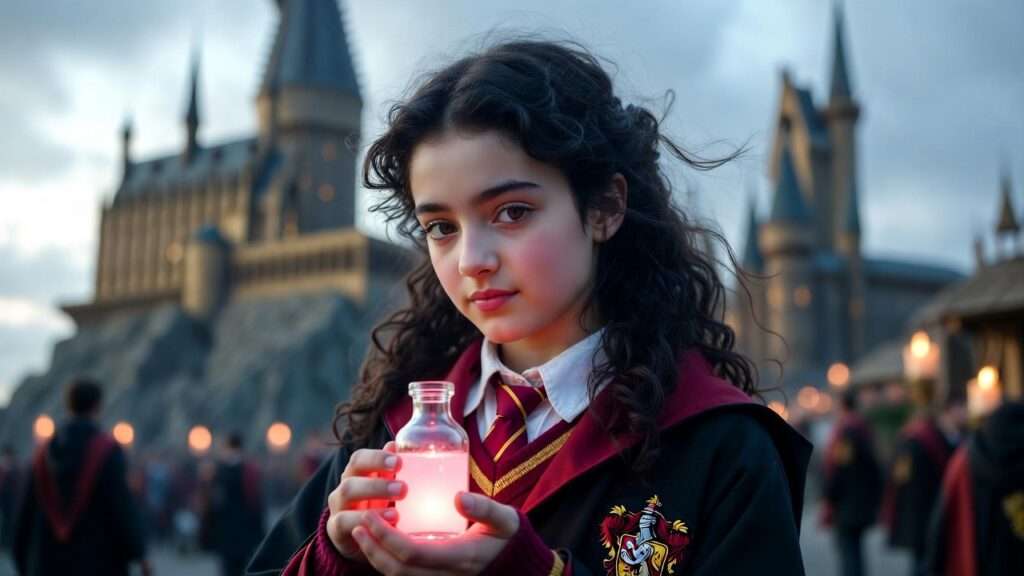
Imagine this: a teenage boy, already under enormous pressure as the Chosen One, suddenly finds himself madly, obsessively in love with a girl he barely knows — serenading her with poetry, begging to marry her, and even attempting to force-feed her love potion-laced chocolates. The scene is equal parts hilarious and horrifying, and it all stems from one bold Gryffindor girl’s desperate attempt to win Harry Potter’s heart.
That girl is Harry Potter Romilda Vane.
For most casual fans, Romilda Vane is remembered solely as the source of the infamous love potion fiasco in Harry Potter and the Half-Blood Prince. She’s the pushy, giggling sixth-year who tried to spike Harry’s chocolates and accidentally poisoned Ron Weasley instead. But reducing Romilda to this single, chaotic moment does her — and J.K. Rowling’s world-building — a disservice.
Beneath the surface-level fangirl antics lies a surprisingly layered character arc: one that begins with superficial teenage obsession, navigates the consequences of magical manipulation, and ultimately reveals genuine courage during the darkest days of the Second Wizarding War. Romilda Vane is more than a punchline; she’s an underrated example of how even seemingly shallow characters can grow into true Gryffindors when it matters most.
In this in-depth guide, we’ll explore everything you need to know about Romilda Vane — her background, the love potion incident dissected in full detail, her surprising redemption in Dumbledore’s Army and the Battle of Hogwarts, the stark differences between her book and film portrayals, and why she remains one of the most misunderstood minor characters in the entire Harry Potter series.
Whether you’re revisiting the books, analyzing side characters for fanfiction, or simply wondering “Who is Romilda Vane really?”, this comprehensive breakdown will give you the full picture — and perhaps change the way you see one of Hogwarts’ most memorable sixth-years.
Who Is Romilda Vane? Basic Profile and Background
Origins and Hogwarts Sorting
Romilda Vane was born sometime between September 1, 1981, and August 31, 1982, making her roughly the same age as Harry’s year but one year behind him academically. She began her Hogwarts education in September 1993, entering the school during the events of Harry Potter and the Prisoner of Azkaban — the same year as Draco Malfoy’s future wife, Astoria Greengrass.
Despite her later questionable behavior toward Harry, Romilda was Sorted into Gryffindor House. This placement is significant. Gryffindor values courage, chivalry, nerve, and determination — qualities that, on the surface, Romilda’s early actions seem to lack. Yet as we’ll see, the house’s emphasis on bravery manifests in her life in unexpected ways.
Being in the same house as Harry, Ginny Weasley, Neville Longbottom, and the majority of the Golden Trio gave Romilda a front-row seat to Harry’s rising celebrity status, especially after his name came out of the Goblet of Fire in 1994 and his dramatic survival of Voldemort’s return in 1995. For many Hogwarts students, Harry was no longer just a classmate — he was a living legend.
Physical Description and Name Etymology
J.K. Rowling describes Romilda as having “dark eyes” and “long dark hair,” with a “rather bold and confident” demeanor (Harry Potter and the Half-Blood Prince, Chapter 15). This physical description aligns with the stereotypical image of a self-assured, attractive teenage girl — someone who knows what she wants and isn’t afraid to go after it.
Her name is particularly interesting and carries subtle foreshadowing:
- Romilda is of Germanic origin, derived from the elements hrōd (“fame”) and hild (“battle”). Literally, “famous in battle” — an ironic but fitting name for a girl who will eventually fight in the Battle of Hogwarts.
- Vane is a clear play on the word “vain,” hinting at her initial superficiality and obsession with appearances and status. It may also be a literary nod to Sibyl Vane from Oscar Wilde’s The Picture of Dorian Gray — a tragic, beautiful young woman destroyed by obsessive love.
Taken together, Romilda Vane’s name encapsulates both her starting point (vanity and superficial desire) and her eventual destination (participation in a literal battle).
First Appearances in the Series
Romilda makes her first named appearance early in Harry Potter and the Half-Blood Prince on the Hogwarts Express. She is part of a giggling group of sixth-year Gryffindor girls who invite Harry to join their compartment — an invitation he politely declines. This brief moment already establishes her as one of Harry’s many admirers, setting the stage for the more dramatic events to come.
The Love Potion Drama – The Moment That Defined Her
The Setup – Obsessive Crush on the “Chosen One”
By the start of Harry Potter and the Half-Blood Prince (set in the 1996–1997 school year), Harry Potter’s celebrity status had reached fever pitch. Having survived Voldemort’s return, escaped death multiple times, and been publicly declared the “Chosen One” by the wizarding press, Harry was no longer just a fellow student — he was a living legend. For many Hogwarts teenagers, especially those in Gryffindor who shared common room space with him, this fame translated into intense, often superficial attraction.
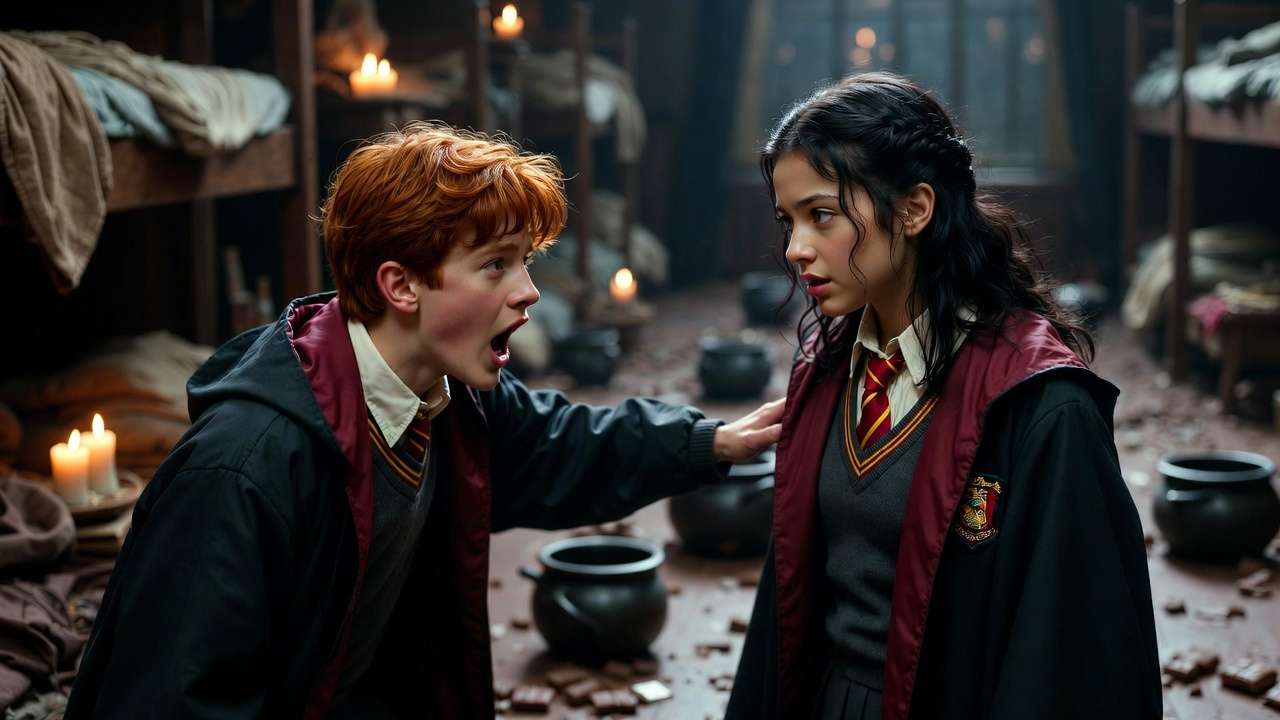 Romilda Vane, then a fourth-year (making her two years below Harry), became one of the most vocal and persistent of these admirers. She led a clique of giggling fourth-year Gryffindor girls who openly competed for Harry’s attention. On the Hogwarts Express at the beginning of term, Romilda boldly invited Harry to sit with them, dismissing his current company (Luna Lovegood and Neville Longbottom) with the line: “Why don’t you join us in our compartment? You don’t have to sit with them.” Harry’s cold refusal left her stunned, but it didn’t deter her.
Throughout the year, Romilda pursued Harry aggressively: inviting him repeatedly to Professor Slughorn’s Christmas party, trying out for the Gryffindor Quidditch team (more for proximity than skill), and bombarding him with questions through mutual friends. Her interest appeared driven less by genuine affection and more by the prestige of being associated with the Chosen One — a classic case of teenage celebrity worship in the wizarding world.
The Infamous Chocolate Cauldrons Incident
The defining moment came when Romilda escalated her efforts dramatically. She purchased a package of Chocolate Cauldrons spiked with love potion from Weasleys’ Wizard Wheezes (Fred and George’s joke shop in Diagon Alley). The plan was simple: slip the potion to Harry, make him fall obsessively in love with her, and secure an invitation to Slughorn’s exclusive Slug Club party.
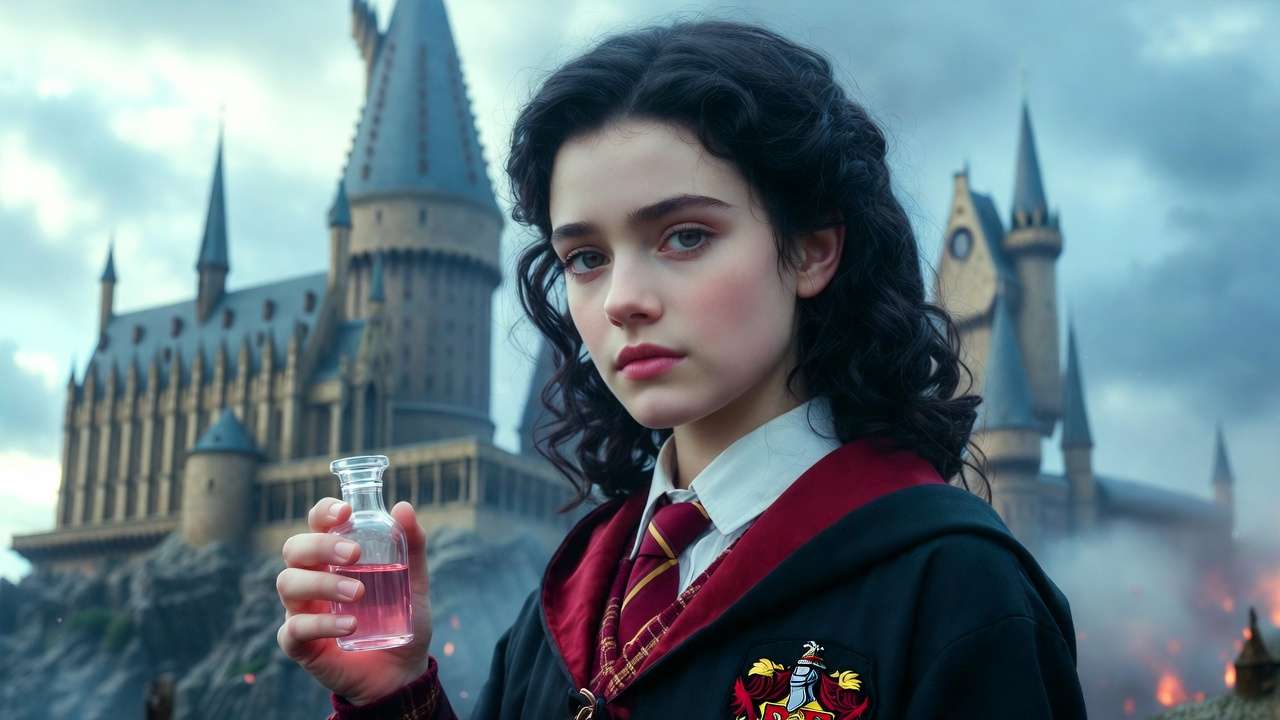 Hermione Granger overheard Romilda plotting with her friends in the girls’ bathroom and immediately warned Harry: “Well, just be careful what you drink, because Romilda Vane looked like she meant business.” Harry wisely avoided the trap — refusing gillywater she offered and ignoring her hints about the chocolates. He stowed the spiked Chocolate Cauldrons in his trunk.
Tragedy (and comedy) struck in March. While searching for the Marauder’s Map, Harry tossed the chocolates onto the floor. Ron Weasley, mistakenly believing they were one of his birthday presents, ate several. The effects were instantaneous and extreme.
Ron became wildly infatuated with Romilda, declaring his love for her in front of Harry, punching Harry when questioned, and attempting to force his way into Slughorn’s office (convinced Romilda was inside). The scene escalated into chaos: Ron’s obsession, Slughorn’s hasty antidote administration, and the unintended poisoning that followed (Ron drinking mead intended for Dumbledore, laced with a deadly toxin by Draco Malfoy).
The incident highlighted the darker side of magical love potions: they override free will, create artificial obsession, and can lead to dangerous consequences. Rowling herself has drawn parallels between Romilda’s actions and the tragic backstory of Merope Gaunt (Voldemort’s mother), who used a love potion to ensnare Tom Riddle Sr. — though crucially, Romilda eventually gave up her pursuit, while Merope did not.
Aftermath and Giving Up on Harry
After the love potion debacle, Romilda’s pursuit cooled. When Harry publicly kissed Ginny Weasley after Gryffindor’s Quidditch victory, Romilda reacted with visible jealousy — looking as though she might throw something — but she restrained herself. Once Harry and Ginny’s relationship became official, Romilda backed off completely.
She shifted her energy to gossip, repeatedly quizzing Ginny about Harry (famously asking if he had a hippogriff tattooed across his chest). Ginny’s exasperated response — “You’d think people had better things to gossip about. Three Dementor attacks in a week, and all Romilda Vane does is ask me if it’s true you’ve got a hippogriff tattooed across your chest.” — perfectly captures how trivial Romilda’s concerns seemed amid the rising war.
Yet this moment also shows maturity: Romilda respected the boundary of Harry’s relationship and moved on, unlike many obsessive admirers in fiction.
Beyond the Fangirl – Romilda’s Growth and Heroic Side
Joining Dumbledore’s Army in 1997–1998
The turning point for Romilda Vane comes during the darkest year Hogwarts had ever seen: the 1997–1998 school year, when Severus Snape was headmaster and the Carrows ruled with brutality.
After Voldemort’s takeover of the Ministry and the installation of Death Eater regime at Hogwarts, many students — particularly those from Gryffindor and other houses — formed or rejoined underground resistance movements. One of the most significant was the reformed Dumbledore’s Army.
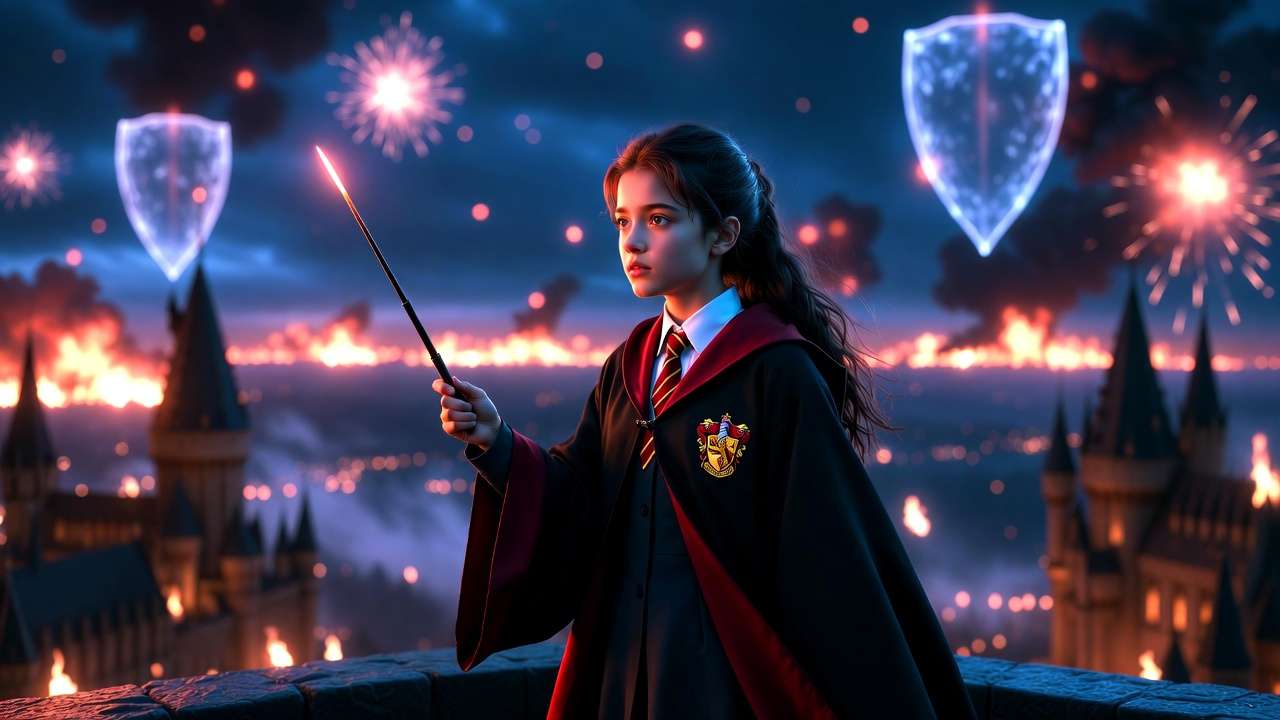 In the book Harry Potter and the Deathly Hallows, J.K. Rowling explicitly confirms that Romilda Vane was among the students who signed up for the new DA under Neville Longbottom, Ginny Weasley, and Luna Lovegood’s leadership. This is no small detail. Joining the DA meant risking torture, expulsion, imprisonment in the dungeons, or worse — yet Romilda chose to stand against the regime.
This decision marks a clear evolution. The girl who once used love potion to manipulate someone’s feelings for personal gain now willingly put herself in danger to protect the values Hogwarts stood for: freedom, equality, and resistance to tyranny. It’s a classic Gryffindor redemption arc hidden in plain sight.
Fighting in the Battle of Hogwarts
The ultimate proof of Romilda’s growth arrives during the Battle of Hogwarts on May 2, 1998.
When the castle is under siege and students are given the choice to flee or fight, Romilda stays. She actively participates in the defense of the school against Voldemort’s forces. The book notes that she is among the many Gryffindors who are “prominent” during the battle — she is specifically mentioned as fighting alongside other sixth- and seventh-years in the corridors and Great Hall.
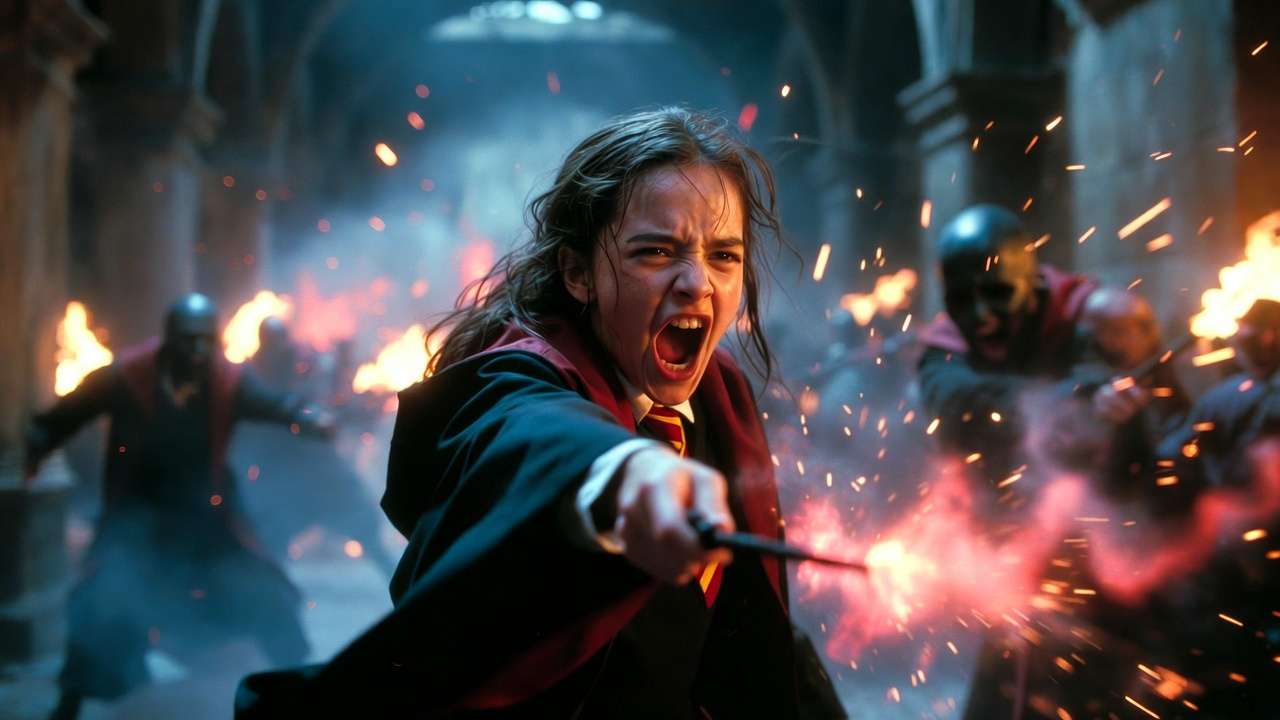 Unlike several more famous characters who receive detailed fight scenes (Neville, Ginny, Luna, etc.), Romilda’s contribution is quiet but undeniable. She survives the battle (she is not listed among the Fallen Fifty), which speaks to her competence in dueling and her ability to hold her own against trained Death Eaters.
This is the same girl who, two years earlier, had been more concerned with Quidditch tryouts and party invitations than with the rising threat of war. By the end, she had become a soldier in the fight for the wizarding world’s future.
Post-War Life and Legacy
Very little canonical information exists about Romilda after the Battle of Hogwarts. The epilogue (Nineteen Years Later) focuses almost exclusively on the Golden Trio and their immediate families, leaving most minor characters’ futures open.
However, one brief mention appears in the Harry Potter: Wizards Unite mobile game (now discontinued), which is considered semi-canonical Wizarding World material. During the “Foundables” Calamity storyline, Romilda Vane is referenced in connection with a music box that belonged to her — suggesting she survived the war and lived long enough to own personal items that could become displaced magical artifacts.
In the broader fan community, Romilda is frequently cited as one of the most underrated characters precisely because her arc is subtle. She starts as comic relief and a cautionary tale about magical manipulation, then quietly transforms into someone who chooses bravery when it counts most.
Book vs. Film Portrayal – How the Movies Changed Romilda
The Harry Potter films, while faithful to the overall spirit of the books, frequently condense, simplify, or alter minor characters to fit runtime constraints and maintain narrative momentum. Romilda Vane is a prime example of this adaptation process.
In the books, Romilda is introduced early and appears multiple times throughout Half-Blood Prince. She is described as bold, gossipy, and somewhat vain, leading a group of fourth-year girls who collectively fawn over Harry. Her pursuit feels relentless and at times uncomfortable — a deliberate portrayal of teenage obsession taken to an unhealthy extreme. The love potion incident is played for both laughs and unease, and her jealousy after Harry kisses Ginny is quite pronounced.
In the 2009 film adaptation Harry Potter and the Half-Blood Prince (directed by David Yates), Romilda’s role is significantly reduced and softened. She is played by British actress Anna Shaffer, who gives her a more subdued, almost sympathetic presence. The character retains the core love potion plotline, but many of the smaller moments — her repeated invitations, her bathroom plotting overheard by Hermione, her gossipy questions about Harry’s tattoo — are cut entirely.
The film also removes most of the darker implications of the love potion. Ron’s reaction is still comical, but the overall tone feels lighter, and Romilda herself appears less scheming and more like a typical lovesick teenager. This softening makes her more palatable to movie audiences who might have found the book version grating.
Interestingly, Anna Shaffer’s portrayal has aged well with fans. Many who first encountered Romilda through the films find her less annoying than book readers do, and some even argue that the movie version feels more “relatable.” Shaffer herself has spoken fondly of the role in later interviews, noting how much she enjoyed working on the franchise.
The end result is a classic case of book vs. film divergence: the novels present Romilda as a cautionary figure about superficiality and magical ethics, while the films present her as comic relief with fewer rough edges. Both versions contribute to her legacy, but they create noticeably different impressions among fans.
Why Romilda Vane Is More Important Than You Think
At first glance, Romilda Vane appears to be little more than a one-note side character — the butt of a joke about teenage hormones and poorly thought-out pranks. Yet when examined more closely, she serves several important narrative and thematic functions within J.K. Rowling’s world.
- Symbol of Celebrity Culture in the Wizarding World Romilda represents the flip side of Harry’s fame. While the books often show the positive or heroic consequences of being the Chosen One, Romilda (along with characters like Colin Creevey) illustrates the negative ones: shallow admiration, objectification, and the loss of personal boundaries. Her obsession with Harry as a celebrity rather than as a person highlights how isolating and dehumanizing fame can be.
- Contrast to Genuine Relationships Romilda’s artificial pursuit stands in stark opposition to the slow-burn, authentic romance between Harry and Ginny. Where Romilda tries to force feelings through magic, Ginny earns Harry’s affection naturally over years. This contrast underscores one of the series’ core messages: real love cannot be manufactured or coerced.
- Exploration of Consent and Magical Ethics The love potion subplot (both Romilda’s and the larger Merope Gaunt parallel) is one of the clearest explorations of consent in the entire series. Rowling uses Romilda’s actions to show how even “harmless” teenage mischief can cross serious ethical lines when magic is involved.
- Proof That Gryffindor Bravery Evolves Perhaps the most overlooked aspect is Romilda’s quiet redemption. Gryffindor is not about being perfect from the start — it’s about choosing courage when it matters. Romilda begins as self-centered and shallow, yet she ends up fighting in the Battle of Hogwarts. Her arc quietly demonstrates that growth is possible, even for characters who seem destined to remain comic relief.
 In fan communities, this complexity has led to a surprising amount of interest in Romilda. She appears frequently in fanfiction — often in redemption stories, “what-if” scenarios where Harry notices her differently, or post-war explorations of how survivors rebuilt their lives. Her journey from fangirl to fighter resonates with readers who appreciate characters who change and mature.
Expert Insights and Fun Facts
- Did Romilda brew the love potion herself? Almost certainly not. The potion came from Weasleys’ Wizard Wheezes, a commercial product. This actually makes her actions slightly less malicious — she purchased a ready-made item rather than crafting something dangerous herself. Still, the ethical questions remain.
- Literary parallel to Sibyl Vane The name “Vane” is widely believed to reference Sibyl Vane from Oscar Wilde’s The Picture of Dorian Gray — a young actress who falls tragically in love with Dorian and ultimately takes her own life after he cruelly rejects her. The parallel is subtle but poignant: both women are destroyed (or nearly destroyed) by obsessive love tied to fame.
- Romilda’s potential skill level While never explicitly stated, her participation in the Battle of Hogwarts (and survival) suggests she was at least competent with defensive magic. Some fans speculate she may have been stronger in Potions than most, given her access to the love potion — though again, it was store-bought.
- Modern relevance In today’s social media age, Romilda’s story feels more relevant than ever. Her pursuit of Harry mirrors the parasocial relationships many young people form with celebrities or influencers — a reminder that admiration can easily tip into unhealthy obsession.
Frequently Asked Questions (FAQ)
Here are the most common questions Harry Potter fans ask about Romilda Vane, answered with direct references to canon material and clear explanations.
1. Did Romilda Vane ever apologize for the love potion incident? No explicit apology appears in the books or any official Wizarding World material. After the incident, Romilda simply stops pursuing Harry and never directly addresses what happened to Ron (or Harry). This lack of apology contributes to why some readers continue to view her negatively, while others see it as typical teenage immaturity rather than malice.
2. Is Romilda Vane more likable in the movies than in the books? Yes, for most fans. The film version (played by Anna Shaffer) tones down her boldness and vanity, removes many of the gossipy moments, and gives her a softer, more sympathetic presence. The love potion scene remains comedic but feels less uncomfortable than in the book.
3. What happened to Romilda Vane after the Battle of Hogwarts? Canon is silent on her adult life. The epilogue in Deathly Hallows focuses only on Harry, Ginny, Ron, and Hermione’s families. A brief semi-canonical reference in the Harry Potter: Wizards Unite game mentions a music box that belonged to her, implying she survived into adulthood and owned personal magical items long after the war.
4. Why do many fans call Romilda Vane an underrated character? Because her growth arc is subtle and easily overlooked. She starts as comic relief and a symbol of shallow teenage behavior, yet ends up fighting in the Battle of Hogwarts — a quiet but meaningful redemption that shows even seemingly superficial characters can choose courage when it counts.
5. Was Romilda Vane in love with Harry or just obsessed with his fame? The books strongly suggest it was mostly the latter. Her pursuit begins after Harry’s fame peaks (post-Triwizard Tournament and Voldemort’s return), and she treats him more like a trophy than a person. Her interest fades quickly once he’s publicly taken, supporting the idea that celebrity status drove her actions more than genuine affection.
6. How old was Romilda Vane during the love potion incident? She was in her fourth year at Hogwarts in Half-Blood Prince (1996–1997), making her approximately 14–15 years old. Harry was in his sixth year (16–17). The age gap explains part of why her advances were so one-sided and inappropriate.
7. Did Romilda fight in the Battle of Hogwarts? Yes. Harry Potter and the Deathly Hallows (Chapter 31) explicitly lists her among the students who stayed to fight, and she is described as being “prominent” during the battle alongside other Gryffindors.
8. Is there any chance Romilda could appear in future Harry Potter projects? While unlikely to be a major character, minor characters like Romilda occasionally receive expanded roles in stage plays, video games, or new Wizarding World content. Her redemption arc would make her an interesting candidate for a cameo or reference in future stories set in the post-war era.
9. How does Romilda compare to other obsessive fans like Colin Creevey? Both represent the downside of Harry’s celebrity status, but they differ significantly. Colin is portrayed with innocent, childlike admiration, while Romilda’s actions cross ethical lines (using a love potion). Colin dies heroically in the Battle of Hogwarts; Romilda survives and shows quieter growth.
10. Should I feel sorry for Romilda Vane? That depends on your perspective. Some readers pity her as a teenager who made a foolish, ethically questionable mistake during a time of intense social pressure and celebrity culture. Others see her actions as selfish and potentially dangerous. Most agree that her eventual choice to fight for what’s right redeems her in the eyes of the narrative.
Romilda Vane begins her journey in the Harry Potter series as the quintessential teenage fangirl — bold, shallow, and dangerously willing to bend ethics for a shot at the spotlight. Yet by the final battle, she has quietly transformed into something far more substantial: a fighter willing to risk her life for the greater good.
Her arc is not loud or heroic in the traditional sense. There are no grand speeches, no legendary duels spotlighted on the page. Instead, Romilda represents a quieter, more realistic kind of courage — the courage to grow up, to recognize past mistakes, and to stand on the right side when it matters most.
In a series filled with once-in-a-generation prodigies, tragic anti-heroes, and larger-than-life legends, Romilda Vane reminds us that ordinary teenagers — even the annoying, superficial ones — can still find their way to bravery. She may never receive the same attention as Hermione, Ginny, or Luna, but her subtle evolution makes her one of the most satisfying minor character arcs in the entire wizarding world.
So the next time you reread Half-Blood Prince and roll your eyes at the giggling fourth-year spiking chocolates, remember this: that same girl will later stand shoulder-to-shoulder with the best of Gryffindor when Hogwarts itself is under siege.
Romilda Vane may have started as a punchline, but she ended as proof that even the most unlikely characters can surprise us — and that true Gryffindor spirit can develop in the most unexpected places.
Thank you for reading this deep dive into one of Hogwarts’ most misunderstood students. What are your thoughts on Romilda Vane? Heroic redemption, overhyped side character, or something in between? Share in the comments below — we’d love to hear your take!