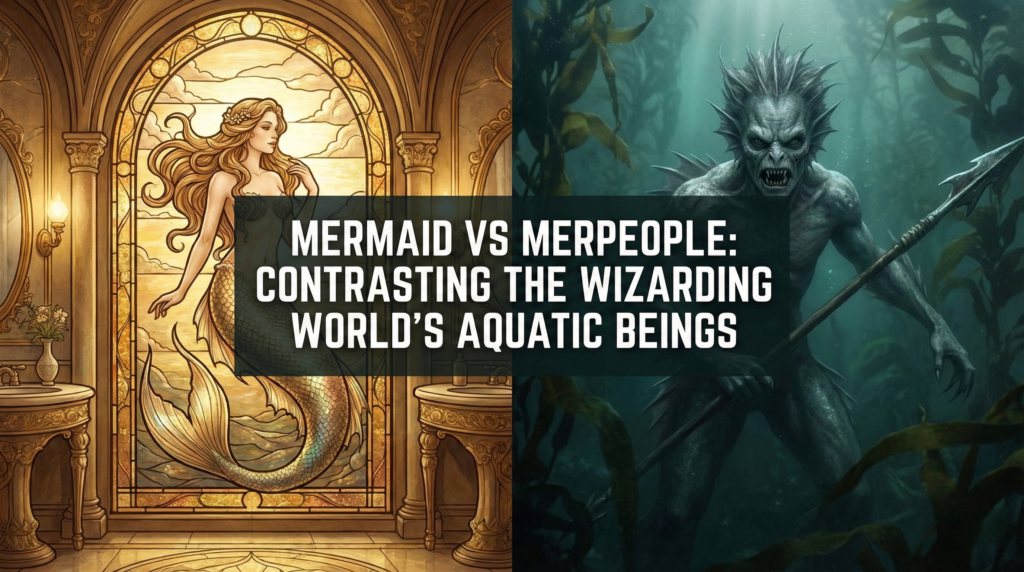
Imagine this: You’re Harry Potter, exhausted after the First Task, finally sneaking into the luxurious Prefects’ Bathroom for some peace. Bubbles everywhere, steaming water, and there she is — the stunning Harry Potter mermaid in the stained-glass window, with flowing golden hair, a captivating smile, and an almost hypnotic beauty that makes the whole scene feel like a fairy tale come to life. She even flirts a little as she helps solve the golden egg clue.
Fast-forward to the Second Task. You plunge into the icy depths of the Black Lake, and suddenly you’re surrounded by grey-skinned, yellow-eyed, spear-wielding creatures with wild green hair, broken teeth, and faces that look nothing like that enchanting bathroom portrait. Harry’s own words sum it up perfectly: the merpeople “bore no resemblance at all to the painting of the mermaid in the prefects’ bathroom.”
This stark contrast confuses many fans. Why does the famous Harry Potter mermaid look like a classic, beautiful siren from legends, while the “real” merpeople guarding the lake are downright terrifying? Is it a plot hole, a movie change, or something deeper in J.K. Rowling’s world-building?
The answer lies in the rich, detailed lore of the Wizarding World — and it’s one of the most brilliant examples of how environment shapes magical creatures. In this comprehensive guide, we’ll explore the canon explanations from the books, Fantastic Beasts and Where to Find Them, official Wizarding World writings, and more. We’ll break down the differences, compare book vs. movie depictions, dive into global merpeople variations, and answer the questions fans ask most. By the end, you’ll never look at the Black Lake the same way again.
Who Is the Famous “Harry Potter Mermaid” in the Prefects’ Bathroom?
The Harry Potter mermaid most fans picture is the one from the Prefects’ Bathroom — a luxurious, fifth-floor haven reserved for prefects and Quidditch captains. This private space features a massive tub, stained-glass windows, and an unforgettable magical portrait (or animated window in the films).
The Iconic Stained-Glass Scene in Goblet of Fire
In Harry Potter and the Goblet of Fire, Harry uses the bathroom to crack the golden egg’s clue, thanks to Moaning Myrtle’s guidance. Submerging the egg underwater reveals a haunting mermaid song — and there she is, the mermaid in the window, singing along and gesturing to help Harry understand.
In the book, it’s described as a “painting of the mermaid,” with her lounging elegantly. The film adaptation turns this into a dynamic stained-glass scene: the mermaid has long, golden hair, fair skin, and a graceful, human-like upper body with a shimmering tail. She appears alluring, almost seductive, perfectly matching the classic Muggle depictions of mermaids in art and literature.
This image has become iconic — it’s the one that pops up in fan art, merchandise, and searches for “Harry Potter mermaid.”
Here are some beautiful representations of the Prefects’ Bathroom mermaid that capture her enchanting, siren-like charm: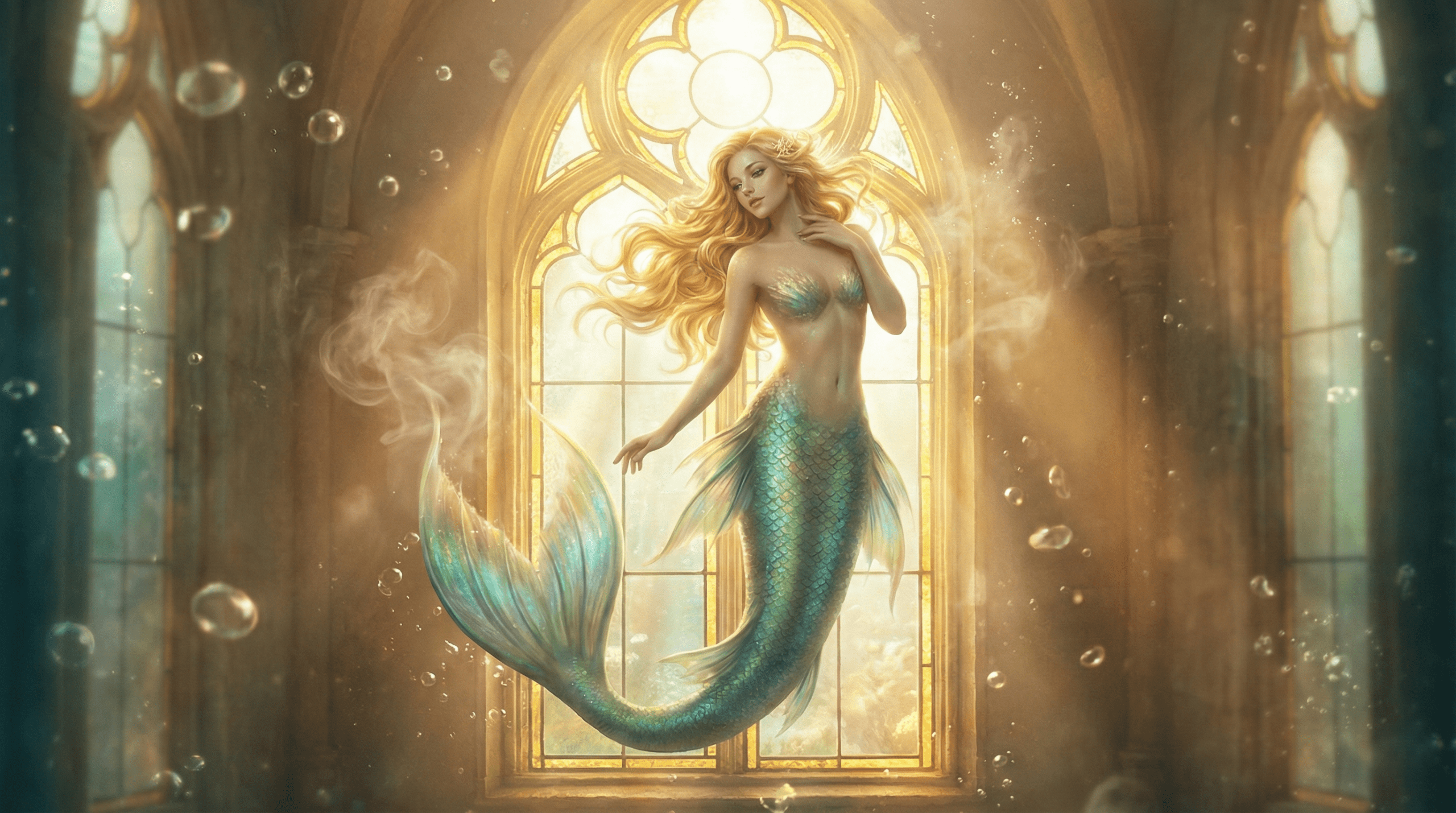
These visuals highlight why fans fall in love with her — she’s the idealized mermaid we’ve grown up with.
Why This Mermaid Looks So Beautiful
The key lies in Fantastic Beasts and Where to Find Them (the in-universe textbook by Newt Scamander). It states: “The oldest recorded merpeople were known as sirens (Greece) and it is in warmer waters that we find the beautiful mermaids so frequently depicted in Muggle literature and painting.”
Sirens, the ancient Greek variety, are the most beautiful subspecies of merpeople. Living in warm Mediterranean-like waters, they developed human-like features: fair skin, flowing hair, symmetrical faces — traits that align with what humans find attractive. This is why the Prefects’ Bathroom features one: it’s an artistic, idealized representation, likely inspired by warmer-water sirens rather than local Scottish varieties.
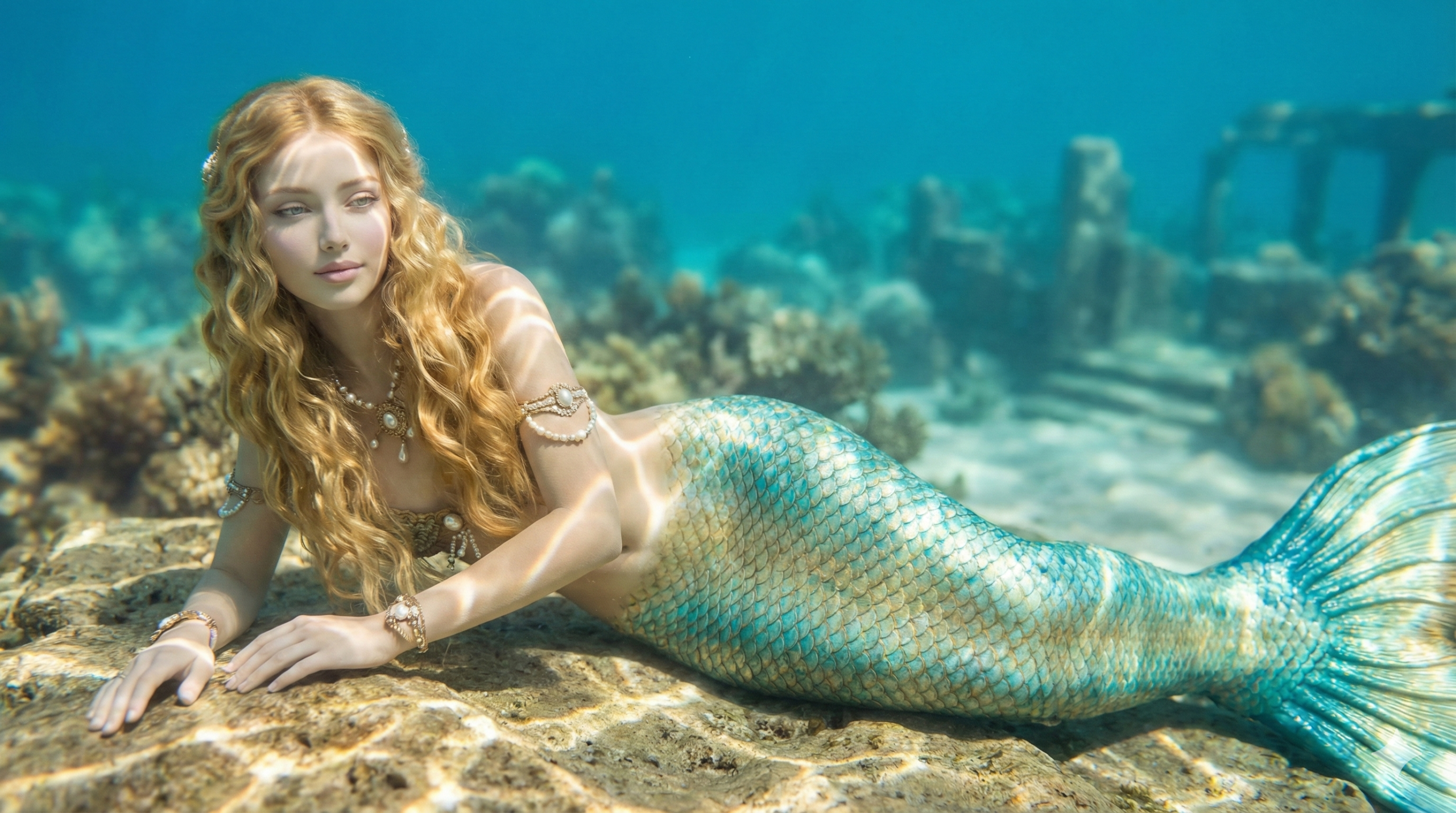 The bathroom’s mermaid isn’t meant to represent the Black Lake’s inhabitants; she’s decorative, luxurious, and aspirational — much like how human art often idealizes beauty.
Meet the Real Merpeople of the Black Lake: Terrifying Selkies Revealed
Now contrast that elegance with the actual merpeople Harry encounters during the Triwizard Tournament.
Descriptions from the Books vs. the Movies
J.K. Rowling paints a vivid, unsettling picture in Goblet of Fire (Chapter 26):
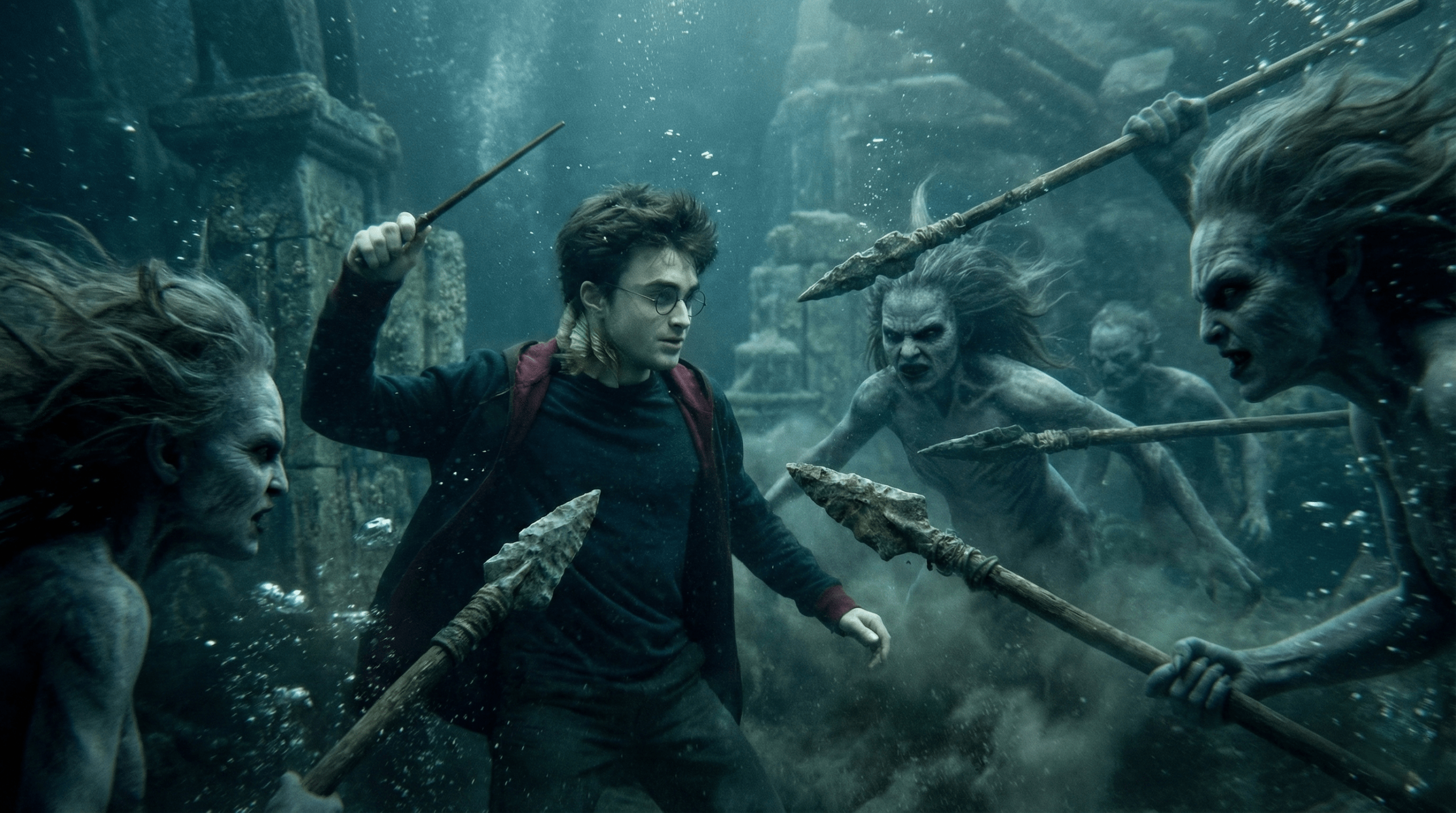
“Here and there at the dark windows, Harry saw faces… faces that bore no resemblance at all to the painting of the mermaid in the prefects’ bathroom… The merpeople had greyish skin and long, wild, dark green hair. Their eyes were yellow, as were their broken teeth, and they wore thick ropes of pebbles around their necks.”
They carry spears, live in crude stone villages stained with algae, and enforce rules with intimidating force. Harry explicitly notes the total lack of resemblance to the bathroom mermaid.
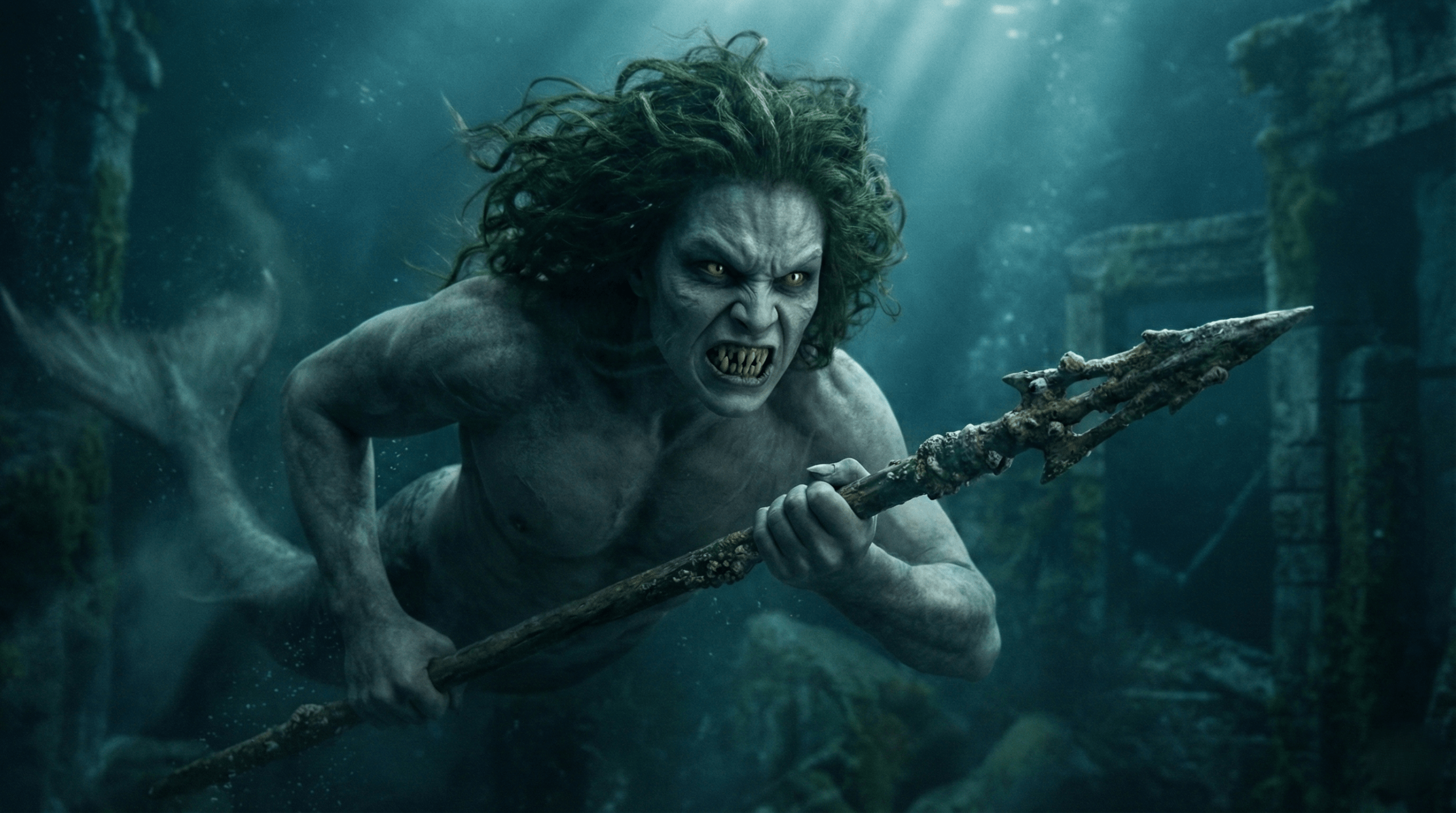 The films amplify this terror: the selkies have more pronounced fish-like features, sharper teeth, and menacing expressions, making the underwater sequence one of the most chilling in the series.
Here are some chilling depictions of the Black Lake merpeople that show just how frightening they truly are:
These images capture the raw, primal terror Harry felt — a far cry from the bathroom beauty.
Their Role in the Second Task
The Black Lake selkies serve as guardians, holding the “most precious” hostages underwater. They enforce the one-hour time limit strictly, using spears to prevent cheating. Despite their appearance, they’re intelligent: they have a village, music, and a complex society. Their screeching above water becomes understandable croaky speech below the surface.
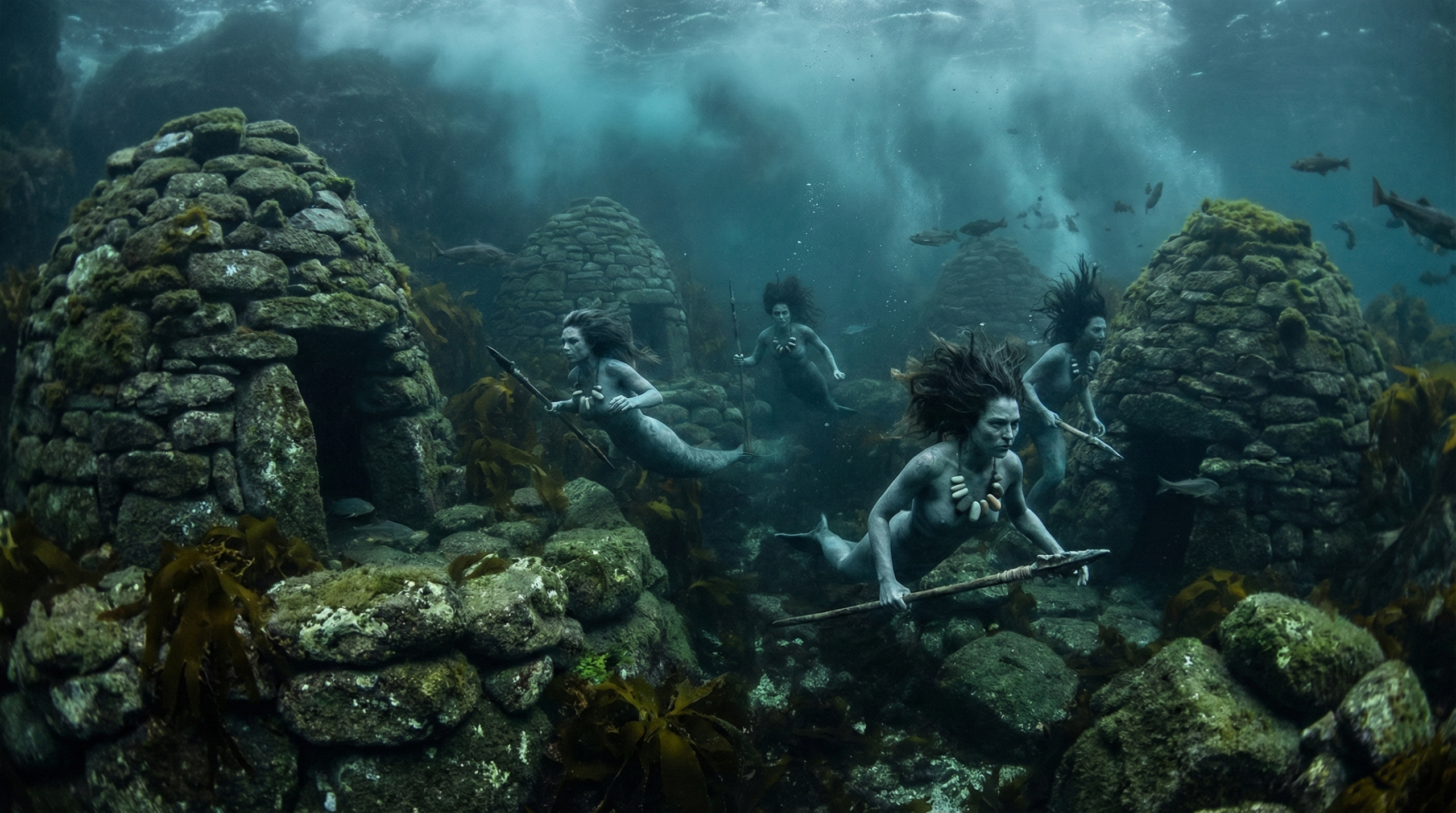 This intelligence makes them more than monsters — they’re a proud, warlike people who chose “beast” status over “being” to avoid association with darker creatures.
The Key Reason for the Difference: Environment Shapes Merpeople Appearance
The most satisfying and canon-supported explanation for why the Harry Potter mermaid in the Prefects’ Bathroom looks like a dream while the Black Lake selkies look like nightmares comes straight from J.K. Rowling’s own magical biology.
 Canon Lore from J.K. Rowling & Newt Scamander
In the 2017 edition of Fantastic Beasts and Where to Find Them (the textbook version), Newt Scamander writes:
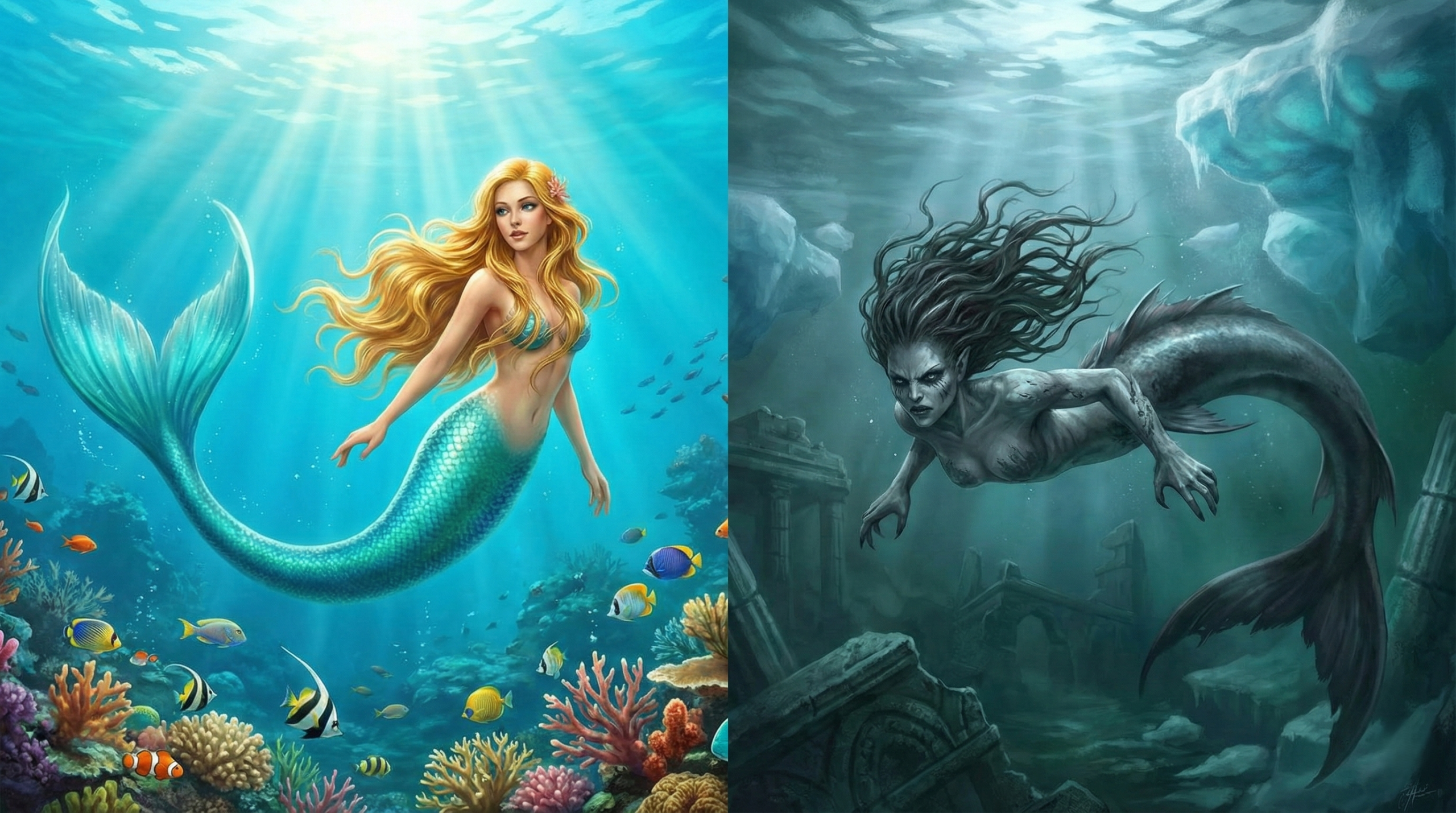
“The oldest recorded merpeople were known as sirens (Greece) and it is in warmer waters that we find the beautiful mermaids so frequently depicted in Muggle literature and painting. The colder waters of northern Europe are home to less attractive merpeople such as the selkies of Scotland and the merrows of Ireland.”
This single passage is the definitive answer.
Merpeople are not a single species with one fixed appearance — they are a diverse group of magical humanoids with multiple subspecies that have adapted to their environments over thousands of years, much like animals and even Muggle humans have done.
- Warm, temperate, or tropical waters (Mediterranean Sea, Caribbean, etc.) → Sirens → Develop symmetrical, human-like facial features, fair or golden-toned skin, long flowing hair, and a generally attractive appearance (at least to human standards). These are the mermaids immortalized in Muggle art, fairy tales, and — crucially — the decorative stained-glass window of Hogwarts’ Prefects’ Bathroom.
- Cold, northern waters (Scottish lochs, Irish coasts, northern seas) → Selkies and merrows → Develop thicker, greyish skin to withstand freezing temperatures, wild tangled hair, sharp broken teeth (possibly for tearing raw fish), and a more aggressive, primal appearance. The Black Lake, located in the cold, misty Scottish Highlands, is home to exactly this type: selkies.
The Prefects’ Bathroom mermaid is almost certainly not a representation of a local Scottish selkie. She is an artistic, idealized depiction of a warmer-water siren — chosen because she looks beautiful, elegant, and luxurious, perfectly suiting the indulgent atmosphere of the prefects’ private spa.
This environmental adaptation is one of J.K. Rowling’s most elegant pieces of world-building. It shows that magical creatures follow natural laws — even when those laws produce results that are startlingly different from human expectations.
Real-World Mythology Inspiration
Rowling drew heavily from real folklore:
- Greek sirens were originally beautiful, singing women (later bird-women) who lured sailors to their deaths.
- Scottish selkies are seal-people — often described as eerie, mournful, and dangerous when in human form.
- Irish merrows are similarly less glamorous, sometimes wearing red caps and known for their temper.
By grounding the differences in geography and climate, Rowling created a believable, internally consistent magical ecosystem — one that rewards close readers who pay attention to details scattered across multiple books.
Book vs. Movie Differences – How the Films Amplified the Terror
The films made several changes that heightened the contrast between the Harry Potter mermaid and the Black Lake merpeople — sometimes intentionally, sometimes as a side effect of visual storytelling.
 Key Changes in Depiction
- Prefects’ Bathroom Book: A static “painting of the mermaid.” Film: A beautifully animated stained-glass window with fluid movement, golden hair, and a clearly flirtatious, almost seductive performance. The movie version is arguably even more alluring than the book’s description, making the later contrast feel more shocking.
- Black Lake merpeople Book: Grey skin, yellow eyes, broken teeth, wild hair, spears, and an overall “leering” presence — frightening but still somewhat humanoid. Film: Much more monstrous. The selkies have exaggerated shark-like jaws, pale almost corpse-like skin, and a far more predatory design. Their movements are jerky and aggressive, and the underwater sequence is lit in cold, dark blues that amplify the horror.
Why the Change Works (and Sometimes Doesn’t)
The movie’s choice to make the selkies more terrifying was smart from a cinematic perspective: it creates stronger visual horror, heightens the stakes of the Second Task, and makes Harry’s fear more palpable for audiences who might not feel the same dread from book descriptions alone.
However, some fans argue the film version pushes the creatures too far into “monster” territory, losing some of the nuanced, proud society Rowling described (stone dwellings, music, intelligence). The book selkies feel like a different culture; the movie selkies feel like underwater zombies with spears.
Both versions serve their medium perfectly — and together they reinforce the central mystery: why the beautiful Harry Potter mermaid looks nothing like the terrifying guardians of the lake.
Other Merpeople Around the Wizarding World
Merpeople are far more diverse than most casual fans realize.
Global Variations and Rare Sightings
- Selkies of Scotland — The Black Lake variety. Cold-water adapted, warlike, proud.
- Merrows of Ireland — Similar to selkies but often wear red caps that grant them magical abilities on land.
- Sirens of Greece — The beautiful, warm-water type that inspired the Prefects’ Bathroom window.
- Mermaids of warmer waters — Mentioned in passing in Fantastic Beasts as the classic, attractive variety.
There are also hints of rarer subspecies in places like the Caribbean (mentioned in passing in Pottermore/Wizarding World archives) and even possible sightings near tropical wizarding schools.
Why Hogwarts Chose Selkies for the Task
The Triwizard Tournament was hosted at Hogwarts, so it makes perfect sense that the lake’s native selkies were used. Asking warmer-water sirens to travel to freezing Scotland for the task would be logistically difficult and ecologically stressful — another subtle nod to the environmental logic Rowling built into her world.
Fun fact: The merpeople’s underwater village is described as having “crude stone dwellings stained with algae.” This suggests a long-established community — they weren’t brought in just for the tournament.
Fan Theories and Common Questions Answered
Over the years, fans have proposed many explanations for the mermaid discrepancy. Here are the most popular — and why most of them don’t hold up against canon.
Theory 1: “The bathroom mermaid is a siren trying to lure students.” Unlikely. The bathroom is a secure, prefect-only space, and the mermaid only helps Harry solve the clue — no evidence of malicious intent.
Theory 2: “It’s just a movie change.” Partially true for the animation style, but the book already makes the same distinction.
Theory 3: “The Prefects’ Bathroom mermaid is fake / enchanted illusion.” No canon support. She is clearly a real portrait/representation of a siren, just not of the local variety.
Quick FAQ
- Are there any beautiful merpeople living in the Black Lake? No. The lake is far too cold for siren subspecies.
- Why isn’t there a mermaid in the Fountain of Magical Brethren statue? The statue depicts cooperation between wizards and other beings. Merpeople chose “beast” classification over “being” to avoid Ministry interference — so they’re not included.
- Could we see warmer-water merpeople in future stories or Fantastic Beasts projects? Possible — especially if stories ever take place in the Mediterranean or Caribbean wizarding communities.
The contrast between the enchanting Harry Potter mermaid in the Prefects’ Bathroom and the terrifying selkies of the Black Lake isn’t a mistake, inconsistency, or mere artistic choice — it’s one of the most elegant demonstrations of J.K. Rowling’s genius as a world-builder.
Through a single line in Fantastic Beasts and Where to Find Them and careful details scattered across Goblet of Fire, Rowling shows us that the magical world obeys natural rules: environment shapes appearance, just as it does in the Muggle world. Warm waters produce beautiful, alluring sirens that have inspired centuries of human art and legend. Cold, harsh northern waters produce rugged, intimidating selkies who are perfectly adapted to survive — and to protect — in the icy depths of places like the Black Lake.
The Prefects’ Bathroom mermaid isn’t lying to us. She’s simply a different branch of the same magical family tree — a decorative, idealized representation chosen for its beauty and elegance, not for biological accuracy to the local population. When Harry sees the real merpeople for the first time, his shock is our shock, and that moment becomes one of the series’ most memorable examples of how the Wizarding World is always bigger, deeper, and more complex than it first appears.
This environmental logic extends far beyond mermaids. It’s the same principle that gives us fire-dwelling salamanders, arctic-adapted yetis, and tropical blast-ended skrewts. Rowling didn’t just invent creatures — she created an entire believable ecosystem where biology, geography, and culture all intertwine.
So the next time you reread Goblet of Fire or rewatch the Second Task, pay attention to that split-second of Harry’s realization. It’s not just horror — it’s wonder at how richly layered the world really is.
Have you always noticed this difference between the beautiful Harry Potter mermaid and the frightening Black Lake selkies? Or did it only hit you after diving into the deeper lore? Which version do you personally find more captivating — the dreamy siren or the primal selkie? Drop your thoughts in the comments below — we love hearing from fellow Potterheads!
And if this deep dive into merpeople lore left you hungry for more, check out our other creature guides:
- The Giant Squid: Friend or Foe of Hogwarts?
- House-Elves vs Goblins: Power Dynamics in the Wizarding World
- Dragons of the First Task – A Complete Species Breakdown
Thanks for reading, and may your own adventures in the Wizarding World always lead to fascinating discoveries — even if they’re a little terrifying at first. 🧜♀️🌊✨