
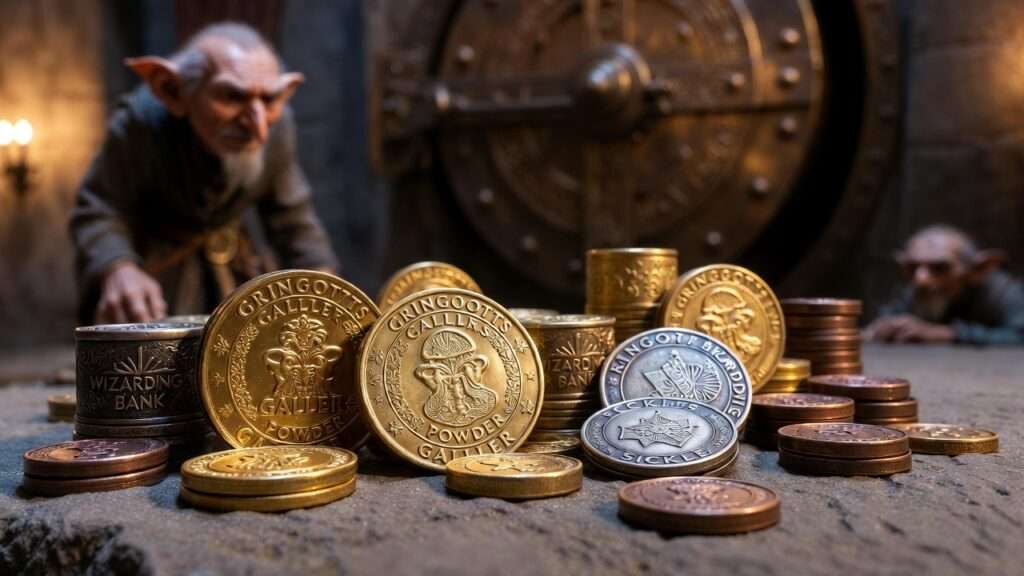
Picture this: You’re eleven years old, you’ve just received your Hogwarts acceptance letter, and Hagrid bursts through the door to whisk you away to Diagon Alley. Amid the wonder of moving staircases and talking portraits, you’re handed a pouch of strange coins—gleaming gold Galleons, shiny silver Sickles, and tiny bronze Knuts. Hagrid casually explains: “The gold ones are Galleons. Seventeen silver Sickles to a Galleon and twenty-nine Knuts to a Sickle, it’s easy enough.”
For many readers, especially those new to the series or Muggle-born in spirit, this moment sparks instant confusion. Galleon Harry Potter currency feels like a puzzle: Why such quirky conversion rates? How much is a Galleon actually worth in pounds, dollars, or euros? And what can you realistically buy with these coins in the magical world?
As a long-time Harry Potter enthusiast who’s pored over the books, J.K. Rowling’s interviews, Wizarding World updates, and fan analyses (including the Harry Potter Wiki and Harry Potter Lexicon), I’ve compiled this definitive guide. Drawing directly from canon sources—the seven novels, Rowling’s statements, and official materials—this article demystifies the wizarding economy. You’ll learn the exact conversions, real-world equivalents (with the latest context), practical examples from the books, and why the system reflects the wizarding world’s charming quirks. By the end, you’ll be ready to shop in Diagon Alley like a pro, calculate your own Hogwarts budget, or debate Galleon values with fellow fans.
Whether you’re rereading the series, planning a Wizarding World trip, or just curious about how Harry’s vault of “mounds” of gold translates to Muggle money, this comprehensive breakdown solves the common frustration: making sense of Galleon Harry Potter currency once and for all.
The Basics of Wizarding Currency in the UK
The British wizarding world operates on a three-tier coin system, managed exclusively by goblins at Gringotts Wizarding Bank. Unlike Muggle paper notes, wizarding money consists solely of coins—no bills, just heavy pouches worn under robes or belts.
Overview of the Three Denominations
- Galleons: The highest-value coin, made of gold (or gold-like alloy). These are the “big” ones fans picture when imagining wealth, like Harry’s inheritance or the Triwizard Tournament prize. Galleons handle major transactions, from school supplies to luxury brooms.
- Sickles: Silver coins of mid-level value. They bridge the gap between everyday small purchases and larger expenses.
- Knuts: The smallest bronze coins, used for tiny transactions. Despite their humble status, Knuts add up quickly in bulk.
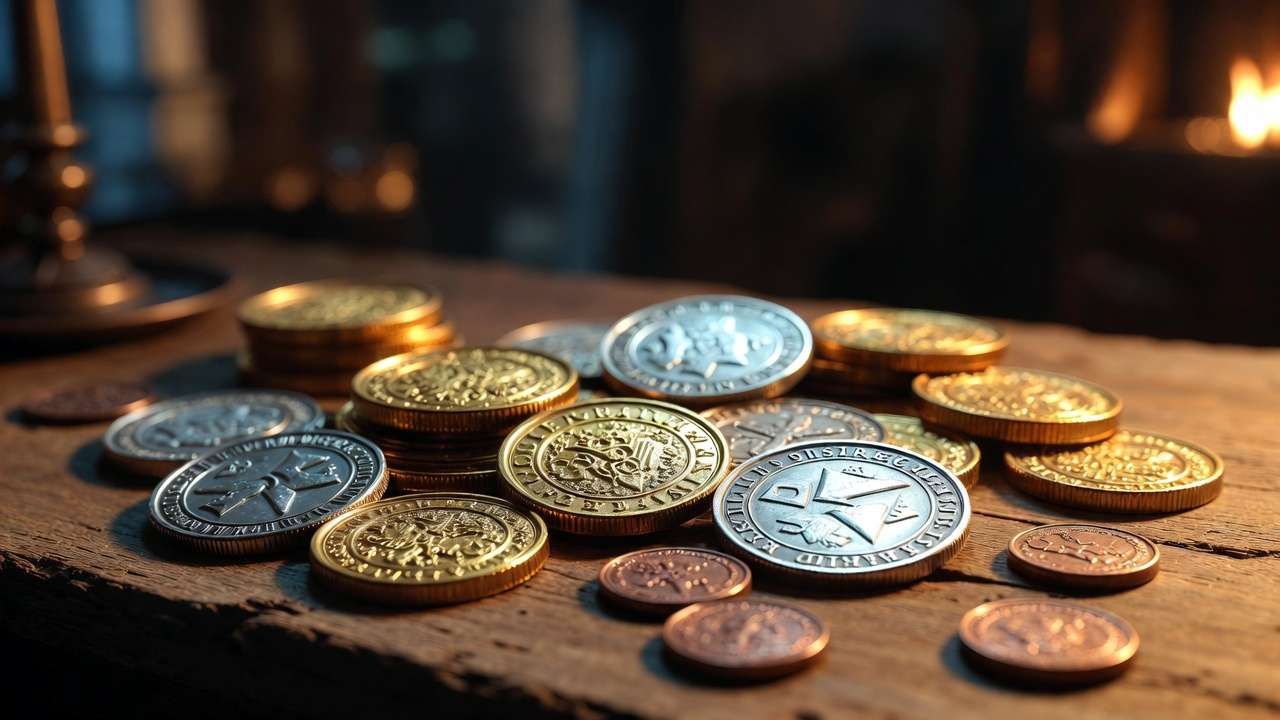 This system parodies pre-decimal British currency (pounds, shillings, pence), which used odd ratios before decimalization in 1971. Wizards, however, handle the math effortlessly—magic likely assists with calculations that would stump most Muggles.
Official Conversion Rates
Canon establishes these fixed rates clearly in Harry Potter and the Philosopher’s Stone (Chapter 5):
- 1 Galleon = 17 Sickles
- 1 Sickle = 29 Knuts
- Therefore, 1 Galleon = 17 × 29 = 493 Knuts
To illustrate with math:
- Example: Convert 3 Galleons, 12 Sickles, and 45 Knuts to total Knuts. 3 Galleons = 3 × 493 = 1,479 Knuts 12 Sickles = 12 × 29 = 348 Knuts Plus 45 Knuts = 1,872 Knuts total
Wizards rarely need manual math; a simple charm or goblin ledger does the work. These ratios appear consistent across the series, with no evidence of fluctuation within the British system.
Why the Odd Numbers?
The prime-number ratios (17 and 29) prevent easy division, mimicking historical British money’s complexity (20 shillings to a pound, 12 pence to a shilling). Rowling uses this to highlight wizarding tradition—wizards cling to old ways post-Statute of Secrecy (1692), even when inconvenient. Magic makes complexity trivial, so why simplify?
International currencies exist (e.g., Dragots in the USA from Fantastic Beasts), but British wizards stick to Galleons, Sickles, and Knuts.
How Much Is a Galleon Worth in Real Money?
The eternal fan question: What’s a Galleon in Muggle terms? J.K. Rowling provided the benchmark in interviews and charity materials.
J.K. Rowling’s Official Statement
Rowling stated that one Galleon is worth about five Great British pounds (£5), “though the exchange rate varies!” This comes from 2001 comments (e.g., Comic Relief) and ties into charity book sales for Fantastic Beasts and Where to Find Them and Quidditch Through the Ages, where £174 million equated to roughly 34 million Galleons—working out to approximately £5.12 per Galleon.
This £5 figure remains the closest to canon, though Rowling noted variability (perhaps reflecting wizarding economic whims or Gringotts policies).
Current Real-World Equivalents
Using Rowling’s £5 benchmark and adjusting for inflation/exchange rates:
- GBP: ~£5 (original estimate; inflation since 2001 pushes it slightly higher in purchasing power terms, but we stick to canon).
- USD: Around $6–$7 USD (based on recent GBP/USD rates ~1.25–1.30). Some fan converters (like Harry Potter Lexicon) use static £5 = current exchange for live updates.
- EUR: Roughly €6–€7.
Fan debates exist—some argue higher values (£50–£200+) based on item prices (e.g., a wand at 7 Galleons feeling too cheap for a lifelong tool). However, Rowling’s figure is the authoritative one. Coins aren’t pure precious metals (pure gold Galleons would be worth far more), so value is fiat-like, backed by Gringotts goblin authority.
Factors Affecting Value
- No direct metal value: Galleons are likely enchanted alloys, not meltable gold.
- Wizarding inflation? Minimal evidence, but goblin control keeps stability.
- Gringotts exchange: Muggle-born families swap pounds for Galleons (goblins recirculate Muggle money). Hypothetically, visit Gringotts for conversion—though rates might include goblin fees!
For practical use, treat 1 Galleon ≈ £5 / $6–7 as the go-to benchmark.
Practical Conversions and Tools
Converting wizarding money manually is straightforward with practice.
Step-by-step examples:
- 5 Galleons to Sickles: 5 × 17 = 85 Sickles.
- 2 Sickles, 15 Knuts to Knuts: (2 × 29) + 15 = 58 + 15 = 73 Knuts.
- 4 Galleons, 3 Sickles, 10 Knuts to GBP (using £5/Galleon): 4 Galleons = £20 3 Sickles = 3/17 Galleon ≈ £0.88 10 Knuts = 10/493 Galleon ≈ £0.10 Total ≈ £21.
Quick reference table:
| Galleons | Sickles | Knuts | Approx. GBP (£5/Galleon) | Approx. USD (~$6.50/Galleon) |
|---|---|---|---|---|
| 1 | 0 | 0 | £5 | $6.50 |
| 1 | 17 | 493 | £5 | $6.50 |
| 10 | 0 | 0 | £50 | $65 |
| 0 | 1 | 0 | ~£0.29 | ~$0.38 |
| 0 | 0 | 1 | ~£0.01 | ~$0.013 |
Fans use online tools like the Harry Potter Lexicon converter or Omni Calculator for quick math—perfect for role-playing or budgeting your fictional Diagon Alley trip.
What Can You Actually Buy with Galleons, Sickles, and Knuts?
Prices from the books provide context, showing everyday affordability vs. luxury.
Hogwarts School Supplies
First-year kit (from Philosopher’s Stone):
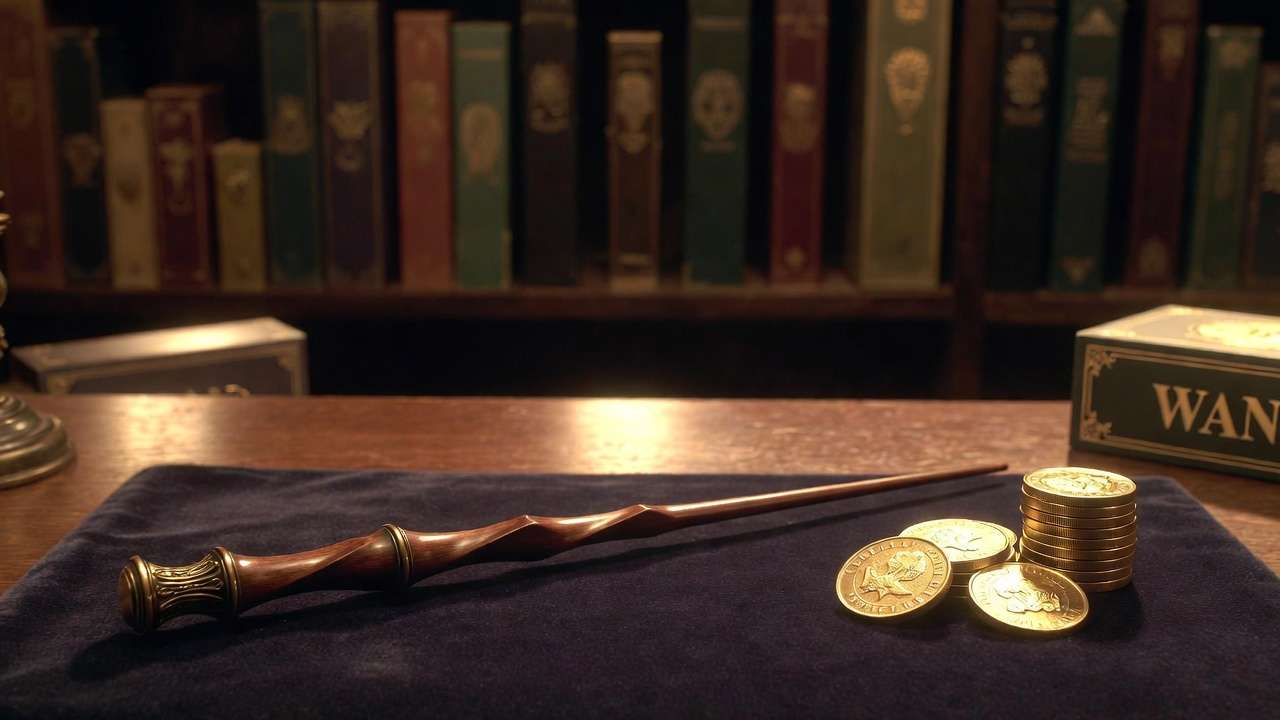
- Wand (Ollivanders): 7 Galleons (~£35 / $45)—a lifetime investment, surprisingly “cheap” given its power.
- Standard Hogwarts books, robes, cauldron, telescope, etc.: Roughly 10–15 Galleons total for basics.
- Owl (optional): 10–15 Galleons for a good one.
The Weasleys scrape by with one Galleon left in their vault some years, highlighting tight budgets for large families.
 Everyday Items and Treats
- Daily Prophet newspaper: 1 Knut (or 5 Knuts in some scenes)—cheap news.
- Butterbeer: ~2 Sickles (~£0.58 / $0.75)—a pint-like treat at the Three Broomsticks.
- Chocolate Frogs, Bertie Bott’s Every Flavour Beans: Few Sickles/Knuts—pocket money snacks.
These low prices make wizarding treats accessible, contrasting Muggle inflation.
 Luxury and Big Purchases
- Firebolt broom: Hundreds of Galleons (exact unknown, but “exorbitant”—Harry’s top-tier gift).
- Omnioculars (Quidditch World Cup): 10 Galleons (~£50 / $65).
- Triwizard Tournament prize: 1,000 Galleons (~£5,000 / $6,500)—life-changing sum.
Wealth Examples from the Books
- Harry’s vault: “Mounds” of Galleons (inherited fortune from parents—enough for luxury without worry).
- Weasleys: Often near-empty vault (poverty amid pride).
- Malfoys: Lavish spending (implied vast wealth).
Currency underscores class themes: magic doesn’t erase economic disparity.
 The Role of Gringotts and the Wizarding Economy
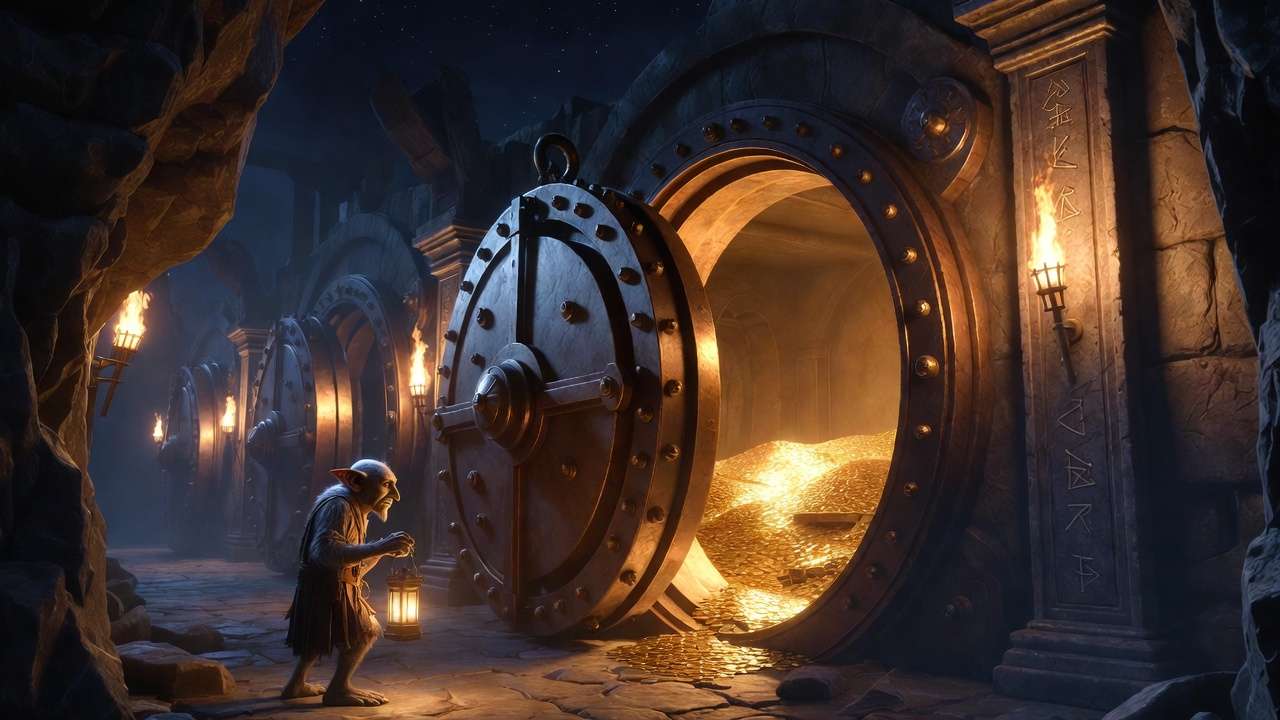
No discussion of Galleon Harry Potter currency would be complete without exploring the institution that controls it: Gringotts Wizarding Bank. Run entirely by goblins, Gringotts serves as the central financial authority of the British wizarding world, combining the functions of a commercial bank, mint, and ultra-secure vault complex.
Goblins are depicted as shrewd, proud, and fiercely independent. They mint the coins, set exchange rates for Muggle currency, and guard treasures with legendary security—dragons, spells, Thief’s Downfall, and unbreakable enchantments. The deep underground vaults, accessed via mine carts, symbolize both the immense wealth stored there and the inherent distrust between wizards and goblins.
 Key features of the wizarding banking system include:
- Coin-only economy — There is no paper money, cheques, or digital transactions. Wizards carry heavy leather pouches, and large sums require vault visits. This reinforces the old-fashioned, tactile nature of wizarding life.
- Muggle currency exchange — Gringotts accepts pounds, dollars, and other Muggle money, melting it down or recirculating it into the wizarding economy. Muggle-born families (such as Hermione’s parents) presumably visit Gringotts before each school year to convert funds. The exact exchange rate is never stated beyond Rowling’s ~£5 per Galleon benchmark, and goblin fees are implied but never detailed.
- No interest or modern banking products — There is no mention of savings accounts, loans, credit, or compound interest. Wealth is stored physically in vaults, suggesting a conservative, tradition-bound financial culture.
- International variations — While the British system uses Galleons, Sickles, and Knuts, other countries have their own currencies. The American wizarding world uses Dragots (mentioned in Fantastic Beasts), and the books hint at different goblin-run banks abroad. Cross-border trade presumably requires currency exchange, adding another layer of complexity.
Fun canon details that highlight the system’s quirks:
- Fake Galleons — In Order of the Phoenix, Hermione creates enchanted fake Galleons that heat up and change numbers to communicate with Dumbledore’s Army. The coins mimic real Galleons perfectly except for the serial number/date substitution.
- Leprechaun gold — During the Quidditch World Cup, Leprechauns shower the stands with fake gold coins that vanish after a few hours, causing financial chaos for unsuspecting wizards.
- Vault security — Harry’s vault (687) is relatively modest compared to deeper, higher-security vaults (e.g., Bellatrix Lestrange’s vault 713, protected by a dragon). This reflects social hierarchy even in banking.
Overall, the wizarding economy is deliberately anachronistic—rooted in pre-modern traditions, controlled by a non-human species, and resistant to Muggle-style innovation. Galleons, Sickles, and Knuts are not just money; they are symbols of a society that values magic, secrecy, and heritage over convenience.
Expert Insights and Common Fan Debates
Even after more than two decades, fans continue to analyze and debate the wizarding currency system. Here are some of the most insightful and recurring discussions among serious Potter scholars:
-
Price inconsistency paradox Why does a wand (a lifelong magical tool) cost only 7 Galleons (~£35), while a top-of-the-line Firebolt broom costs hundreds of Galleons and Omnioculars cost 10 Galleons? Possible explanations include:
- Wands are “standardized” production items with regulated pricing by the Ministry or wandmakers’ guild.
- Brooms and luxury magical items involve rare materials, complex enchantments, and limited production runs.
- Intrinsic magical value vs. market value — a wand chooses the wizard, so its price reflects craftsmanship rather than power.
-
Inflation and economic stability Prices appear remarkably stable across the seven books (1991–1998 in-universe). The Daily Prophet remains 1 Knut (or occasionally 5 Knuts), Butterbeer stays around 2 Sickles, and school supplies don’t show noticeable increases. This suggests either:
- Very low inflation in the wizarding world (possibly due to goblin control and lack of large-scale industrialization).
- Or deliberate narrative simplification by Rowling to avoid complicating the story with economic subplots.
-
Class commentary through currency The Weasleys’ perpetually near-empty vault versus the Malfoys’ implied opulence, Harry’s inherited fortune, and the poverty of characters like the Gaunts all use money (or lack thereof) to underscore social themes. Galleons become a shorthand for privilege, prejudice, and perseverance.
-
Real-world value creep theories Some fans argue that Rowling’s £5/Galleon figure feels too low given certain purchases. If a newspaper is 1 Knut (~1p), and chocolate frogs are a few Knuts, everyday items seem disproportionately cheap compared to Muggle prices. Alternative calculations (based on broom prices or Harry’s vault size) sometimes push estimates toward £50–£200 per Galleon, but these remain non-canon speculation.
The most authoritative stance remains: use Rowling’s ~£5 benchmark for consistency, while appreciating that the wizarding economy operates under different rules—magic distorts scarcity, value, and practicality in ways Muggle economics cannot fully explain.
FAQs
Here are answers to the questions most frequently asked by readers trying to understand Galleon Harry Potter currency:
1. How many Knuts are in a Galleon?
Answer: Exactly 493 Knuts (17 Sickles × 29 Knuts per Sickle).
2. How many Sickles are in a Galleon?
Answer: 17 Sickles.
3. Is a Galleon worth more today due to inflation?
Answer: Rowling gave the ~£5 figure around 2001. In real-world purchasing power terms, £5 in 2001 is worth roughly £8–£9 today (2025–2026), but there is no canon evidence of wizarding inflation, so most fans still use the original £5 benchmark.
4. Can Muggles exchange money at Gringotts?
Answer: Yes—implicitly. Muggle-born families convert pounds (or other currencies) into Galleons each year. The process is never shown on-page, but Gringotts must handle Muggle currency to keep the economy functioning.
5. What’s the most expensive item explicitly priced in the books?
Answer: The Triwizard Tournament prize of 1,000 Galleons (~£5,000). The Firebolt is described as extremely expensive but never given an exact figure.
6. Are Galleons made of real gold?
Answer: Probably not pure gold—otherwise their metal value would vastly exceed their face value. Most fans accept they are enchanted alloys with symbolic rather than intrinsic worth.
7. Do other countries use Galleons?
Answer: No. The UK uses Galleons, Sickles, and Knuts, but other nations have different currencies (e.g., Dragots in the USA).
8. How do wizards carry so much money?
Answer: Heavy leather pouches, often worn under robes. Large amounts stay in Gringotts vaults.
9. Did Rowling ever change the value of a Galleon?
Answer: She consistently referenced ~£5, with the caveat that “the exchange rate varies,” leaving slight flexibility.
Understanding Galleon Harry Potter currency unlocks a deeper appreciation of the wizarding world’s logic, humor, and hidden commentary. The system is deliberately quirky—17 Sickles to a Galleon, 29 Knuts to a Sickle—yet perfectly functional within a magical society that prioritizes tradition over convenience.
Key takeaways:
- Official conversions: 1 Galleon = 17 Sickles = 493 Knuts.
- Real-world benchmark: ~£5 GBP / $6–$7 USD per Galleon (per J.K. Rowling).
- Everyday prices are surprisingly low (Daily Prophet at 1 Knut, Butterbeer at ~2 Sickles), while luxury items and school supplies quickly add up.
- Gringotts and goblin control keep the economy stable, anachronistic, and secure.
Next time you reread a Diagon Alley scene or watch the first film, you’ll know exactly what those jingling coins represent—not just money, but an entire hidden economy shaped by magic, history, and goblin ingenuity.
Have you ever tried calculating your own Hogwarts shopping list in Galleons? Or worked out how many Galleons Harry’s vault might actually contain? Share your thoughts, conversions, or favorite money-related moments from the series in the comments—I’d love to hear them.
For more deep dives into the wizarding world, check out these related articles on the blog:
- The Ultimate Guide to Diagon Alley Shops Ranked
- Harry Potter Wealth: Who’s the Richest Character?
- How the Ministry of Magic Controls the Economy
Until next time—may your pouch always be heavy with Galleons!