
Imagine a crisp autumn day in Hogsmeade, the air filled with the chatter of Hogwarts students enjoying their weekend escape. Suddenly, a piercing scream cuts through the calm. Katie Bell, a familiar Gryffindor face, rises inexplicably into the air, her body convulsing as if lifted by an invisible force. She shrieks in agony before plummeting back to the ground, unconscious and gravely injured. Harry Potter, Ron Weasley, and Hermione Granger rush to her side, witnessing one of the most chilling moments in the entire series.
This terrifying scene from Harry Potter and the Half-Blood Prince is the moment many fans first truly notice Katie Bell beyond her role as a Quidditch teammate. Yet Katie Bell in Harry Potter is far more than a victim of dark magic—she’s a symbol of quiet resilience, unwavering team spirit, and the kind of everyday heroism that defines Gryffindor house. As a talented Chaser on the Gryffindor Quidditch team, a member of Dumbledore’s Army, and a survivor of one of Voldemort’s indirect assassination attempts, Katie’s story weaves through the books in subtle but impactful ways.
For fans searching for “Katie Bell Harry Potter,” questions abound: Who exactly is she? What happened during that cursed necklace incident? How does her loyalty to Harry and the fight against Voldemort shine through? This comprehensive guide dives deep into Katie’s background, her Quidditch prowess, the harrowing curse that nearly claimed her life, her role in the resistance, and why she remains one of the series’ most underrated characters. Drawing from J.K. Rowling’s original books, official Wizarding World sources, film adaptations, and careful analysis, we’ll explore every layer of her journey.
Who Is Katie Bell? Basic Profile and Background
Katie Bell (born circa 1978–1979) was a British witch who attended Hogwarts School of Witchcraft and Wizardry from 1990 to 1997. Sorted into Gryffindor, she was one year ahead of Harry Potter, placing her in the same year as characters like Cedric Diggory and the Weasley twins’ contemporaries.
Her blood status is not explicitly stated in canon, but context suggests she may be half-blood or pure-blood—common among Gryffindor Quidditch players of the era. What stands out most is her personality: Katie is consistently described as friendly, kind, gentle yet determined, and fiercely brave. She shows a strong sense of justice early on, reacting with visible anger when the term “Mudblood” is hurled at Hermione Granger during a Quidditch match in Prisoner of Azkaban. This anti-prejudice stance aligns her firmly with Gryffindor’s core values of courage and chivalry.
Relationships with Key Characters
Katie maintained close friendships with fellow Chasers Angelina Johnson and Alicia Spinnet, forming a tight-knit trio on the Quidditch pitch. She respected team captains like Oliver Wood and later supported Harry when he took over as captain. Her interactions with Harry are marked by loyalty—he’s her teammate, her DA instructor, and ultimately someone she fights alongside in the Battle of Hogwarts. Brief but telling moments, like her friendship with fellow sixth-year Leanne, highlight her approachable nature.
Katie’s understated presence makes her relatable. Unlike the “chosen ones” or spotlight heroes, she represents the ordinary students caught in extraordinary times—loyal, skilled, and willing to stand up when it counts.
Katie Bell’s Quidditch Journey – Gryffindor’s Reliable Chaser
Quidditch is where Katie Bell truly shines in the earlier books. She joined the Gryffindor team as a Chaser in her second year (1991–1992), Harry’s first at Hogwarts. Oliver Wood praised her alongside Angelina and Alicia as “superb,” a compliment that underscores her talent in a position requiring speed, accuracy, and teamwork.
Joining the Team and Early Years
Katie’s early matches showcase her skill amid rough play typical of Quidditch rivalries. In Philosopher’s Stone, she’s part of the team that secures the House Cup victory. By Chamber of Secrets and Prisoner of Azkaban, she’s enduring Bludger hits, elbow strikes from Marcus Flint, and even a near-unseating incident where a Slytherin player grabs her head instead of the Quaffle.
Memorable Matches and Injuries
Katie’s Quidditch career is punctuated by physical tolls—proof of her grit. She plays through pain, contributing to Gryffindor’s successes against Slytherin and other houses. Her determination mirrors the house’s spirit: never backing down, even when outnumbered or outmaneuvered.
 The Captaincy Near-Miss and Loyalty to Harry
In Order of the Phoenix, when the team needs a new captain after Angelina’s graduation, Katie is a natural contender. Yet when Harry is chosen, she insists on fair open trials rather than automatic reinstatement. “You mustn’t start off like that,” she tells Harry. “For all you know, there’s someone much better than me out there.” This moment reveals her selflessness and commitment to merit over favoritism—a rare display of maturity in the high-stakes world of teenage Quidditch.
Book vs. Film Depictions of Quidditch Scenes
The books offer richer detail on Katie’s plays and personality, while the films condense Quidditch sequences, reducing her visibility. Still, her presence in team shots and key moments keeps her recognizable to viewers.
Katie’s Quidditch arc establishes her as dependable and passionate, setting the stage for her later trials.
The Cursed Necklace Incident – Katie’s Darkest Moment
The cursed opal necklace scene remains one of the most haunting and pivotal moments in Harry Potter and the Half-Blood Prince. It marks a sharp escalation in the series’ tone, shifting from schoolyard rivalries and teenage drama toward the cold, calculated terror of Voldemort’s regime. For Katie Bell, this single event transforms her from a background Quidditch player into a tragic casualty of the brewing war.
Context in Half-Blood Prince
By September 1996, Draco Malfoy has been tasked by Voldemort with assassinating Albus Dumbledore. One of Draco’s chosen methods is a 100-year-old cursed opal necklace originally from Borgin and Burkes. The necklace carries a deadly Dark curse: anyone who touches it with bare skin faces almost certain death, as seen in its historical record of killing at least nineteen owners.
Draco’s plan relies on intermediaries under the Imperius Curse to deliver the necklace to Dumbledore. Enter Madam Rosmerta, the popular landlady of the Three Broomsticks, whom Draco places under Imperius to act as his unwitting agent in Hogsmeade.
 Step-by-Step Breakdown of the Attack
On the first Hogsmeade weekend of the school year, Katie Bell—accompanied by her friend Leanne—visits the village. Rosmerta, under Imperius, approaches Katie outside the Three Broomsticks and persuades her to deliver a mysterious package to Dumbledore, claiming it is an early Christmas present from her mother.
Katie, trusting and helpful by nature, agrees. She takes the wrapped package containing the necklace. As she and Leanne walk back toward the castle, an argument erupts: Leanne insists Katie should not carry an unknown package, especially given the rising dangers. In the scuffle, the wrapping tears, and Katie accidentally brushes the necklace through a small hole in her glove.
The curse activates instantly. Katie lets out a blood-curdling scream and is lifted several feet into the air, suspended as though hanging from an invisible hook. Her body convulses violently; her face contorts in agony. Moments later she falls heavily to the ground, unconscious.
Harry, Ron, and Hermione, who happen to be nearby, rush to the scene. Harry immediately recognizes the necklace from Borgin and Burkes (having seen it there with Draco the previous summer). He prevents anyone from touching it further, and Hagrid soon arrives to carry Katie to the school hospital wing. From there she is rushed to St. Mungo’s Hospital for Magical Maladies and Injuries.
Aftermath and Recovery
Katie spends six months in St. Mungo’s recovering. The curse did not kill her because contact was minimal—only the tip of one finger touched the necklace through a tiny gap in her glove. Had she gripped it fully, the outcome would almost certainly have been fatal.
Upon her eventual return to Hogwarts in spring 1997, Katie has partial memory loss regarding the incident. She cannot clearly recall how she came into possession of the necklace, which complicates the investigation but ultimately helps protect Draco’s secret (at least temporarily).
The event serves multiple narrative purposes: it reveals the depth of Draco’s desperation, demonstrates Voldemort’s willingness to use proxies and Dark artifacts, and heightens the sense of encroaching danger for everyone at Hogwarts—not just Harry.
Symbolism and Horror Element
The cursed necklace incident is deliberately horrifying. J.K. Rowling uses Katie’s levitation and screams to evoke visceral fear, a stark contrast to earlier, more whimsical magical dangers. Katie becomes collateral damage in a war she did not start, illustrating how Voldemort’s campaign of terror affects ordinary witches and wizards. Her survival, though, underscores resilience: even victims of near-fatal curses can return to fight another day.
Katie’s Role in the Resistance – Dumbledore’s Army and Beyond
Katie Bell is not merely a victim; she is an active participant in the fight against Voldemort.
Joining Dumbledore’s Army
In Order of the Phoenix (1995–1996), when Umbridge bans practical Defence Against the Dark Arts, Katie joins Dumbledore’s Army. Under Harry’s instruction, she learns essential defensive spells—Protego, Expelliarmus, Stupefy, and others—that prove invaluable later.
Her participation shows her commitment to standing against oppression, even when it means breaking school rules and risking expulsion.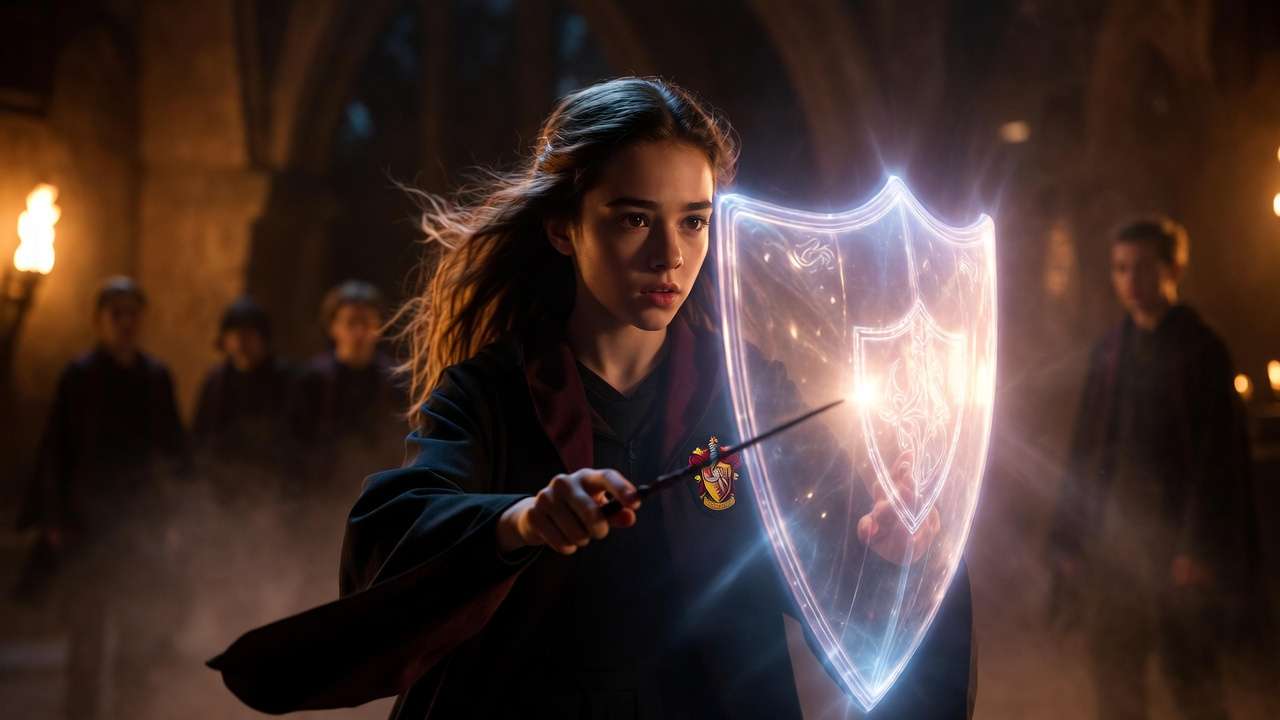
Return for the Battle of Hogwarts
Katie graduated from Hogwarts in summer 1997. Yet when the call goes out in May 1998 for the final stand against Voldemort, she returns to fight in the Battle of Hogwarts. Her presence among the defenders—alongside other former students like Angelina Johnson, Alicia Spinnet, and Lee Jordan—reinforces the theme that the resistance is built on the courage of many, not just the famous few.
Although her specific actions during the battle are not detailed in the text, her decision to return speaks volumes. Having survived a near-death curse meant for Dumbledore, Katie chooses to place herself once more in harm’s way.
Themes of Loyalty and Overlooked Heroism
Katie Bell embodies the “unsung heroes” of the Harry Potter series. She lacks Harry’s destiny, Hermione’s brilliance, or Ron’s comic relief, yet she consistently demonstrates loyalty—to her team, to her friends, to the cause. Her story illustrates that courage often looks quiet and steady rather than dramatic and spotlighted.
Compared to characters like Neville Longbottom (whose growth arc is central) or Luna Lovegood (whose eccentricity draws attention), Katie flies under the radar. Yet her arc—from dependable Chaser to cursed survivor to Battle participant—mirrors the broader journey of countless ordinary people caught in extraordinary conflict.
Katie Bell in the Harry Potter Films – Portrayal and Differences
While the Harry Potter books provide the richest, most detailed portrait of Katie Bell, the film adaptations bring her to visual life—though with noticeable changes in prominence and timeline.
Actresses and Casting Notes
In the early films, Katie appears briefly and is played by uncredited extras or minor actors. Emily Dale portrayed her in Harry Potter and the Philosopher’s Stone (2001) during Quidditch scenes, though her role was small and largely background.
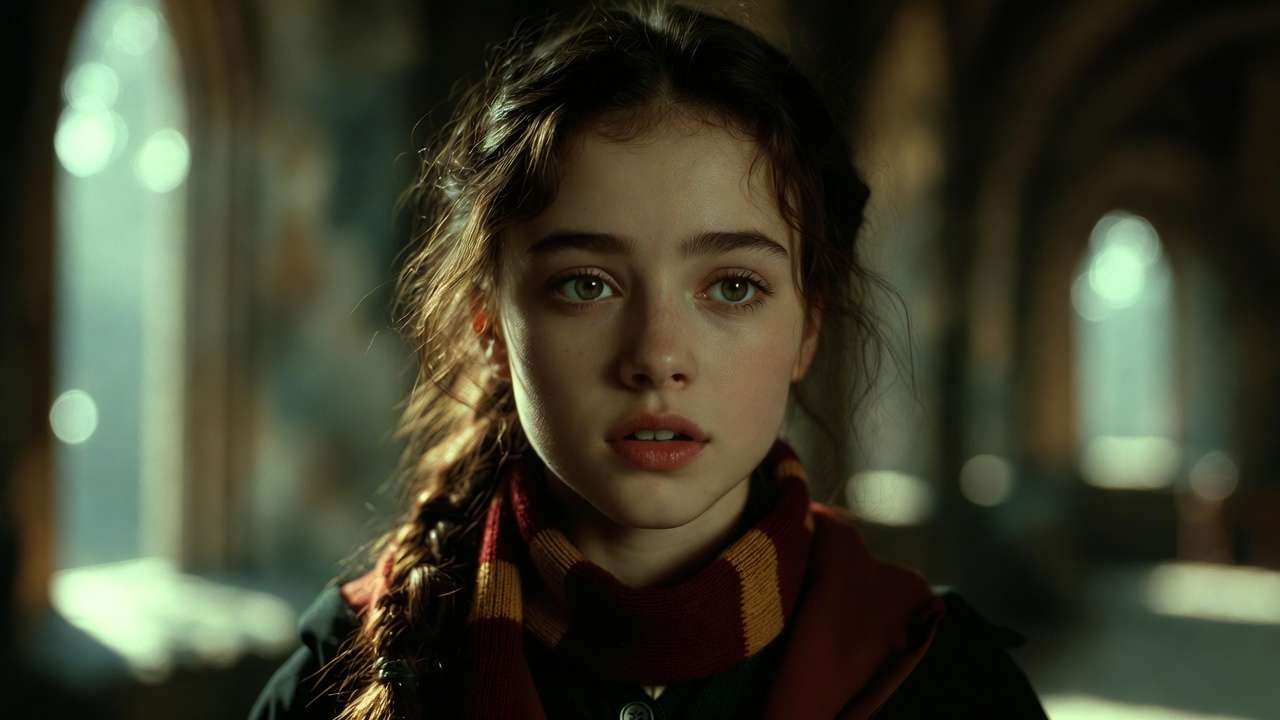
The character gains more visibility starting with Harry Potter and the Half-Blood Prince (2009), where she is played by British actress Georgina Leonidas. Leonidas, who was 24 at the time of filming, brought a poised yet vulnerable energy to Katie—particularly in the cursed necklace sequence. Her portrayal emphasizes Katie’s kindness and shock, making the horror of the curse feel immediate and personal.
Interestingly, the films age Katie down slightly to make her appear closer in age to the trio (Harry, Ron, and Hermione), even though canonically she is one year older. This adjustment helps maintain visual continuity and avoids introducing too many new older faces.
 Key Scenes and Changes
The films significantly condense Quidditch sequences compared to the books. Katie’s early career highlights—multiple matches, injuries, and team banter—are reduced to quick team shots and a handful of plays. Her most memorable cinematic moment is undoubtedly the cursed necklace attack.
In the film version:
- The Hogsmeade setting is faithfully recreated with snowy streets and festive atmosphere.
- The curse’s physical effects are amplified for dramatic impact: Katie’s levitation is slower and more eerie, her screams more drawn-out, and her fall more brutal.
- Harry’s quick recognition of the necklace and his protective instincts are emphasized, strengthening his heroic presence.
- The aftermath—Katie being carried away and the hospital transfer—is handled swiftly, with less focus on her six-month recovery.
These changes streamline the plot for a two-and-a-half-hour runtime but sacrifice some of the books’ nuance around Katie’s personality and team loyalty.
Fan Reception and Georgina Leonidas’ Performance
Fans generally praise Leonidas for making Katie feel real and sympathetic in limited screen time. Her wide-eyed terror during the curse scene is often cited as one of the film’s most effective horror beats. Post-Harry Potter, Leonidas has continued acting in British television (Shetland, Death in Paradise) and theatre, showing range beyond the franchise.
For many viewers who discovered Katie primarily through the films, she remains tied to that single, unforgettable moment of vulnerability—reinforcing her status as an underappreciated character.
Why Katie Bell Deserves More Recognition – Expert Insights
Katie Bell is a textbook example of an “unsung hero” in modern fantasy literature. In a series overflowing with destined saviors, prodigies, and comic relief characters, Katie represents the quiet backbone of any resistance movement: ordinary people who show up, do their part, and keep going even after suffering greatly.
Analysis: The Wider Impact of the War
Her story powerfully illustrates that Voldemort’s terror campaign did not only target Harry, Dumbledore, or prominent Order members. Innocent students, shopkeepers, and villagers became collateral damage. Katie’s near-death experience humanizes the rising stakes and reminds readers that every curse, every Death Eater action, leaves lasting scars on real people.
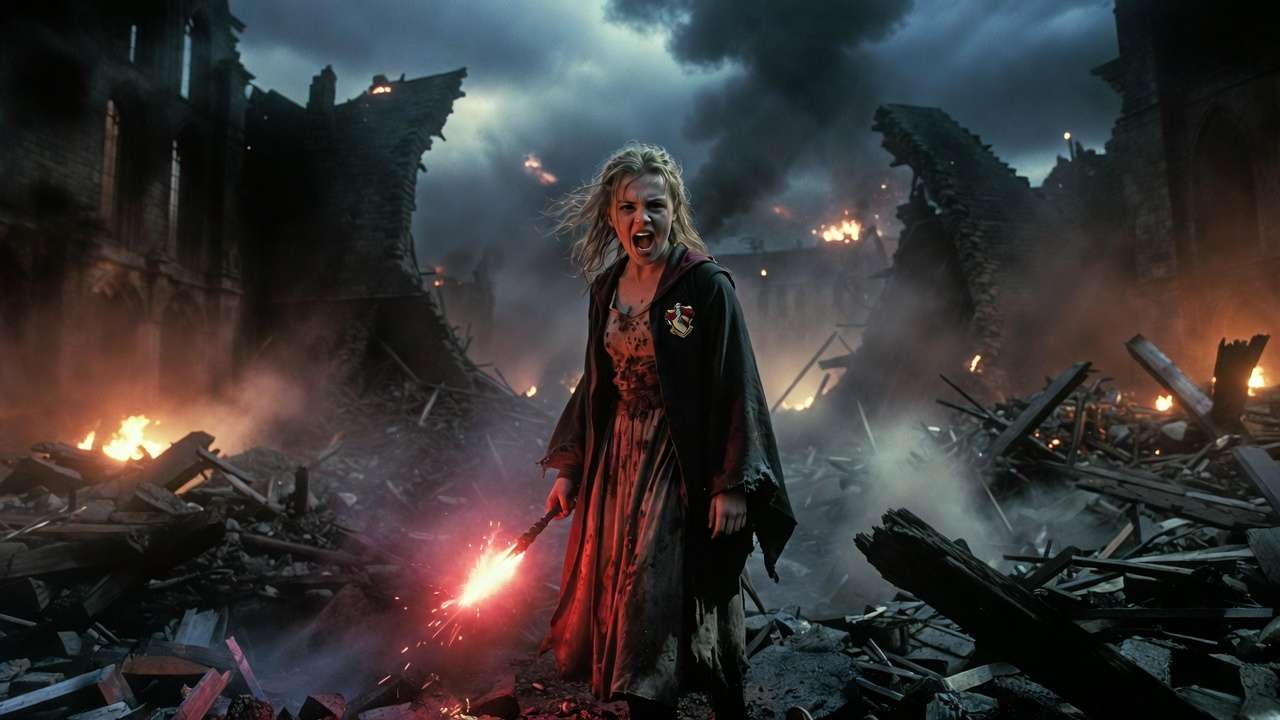 Lessons in Resilience After Trauma
Surviving a Dark curse that killed dozens before her, spending half a year in hospital, losing chunks of memory, and then choosing to return for the final battle—these elements make Katie a subtle but profound portrait of post-traumatic resilience. She doesn’t receive a dramatic “chosen one” arc or a spotlight speech. Instead, her heroism is understated, steady, and deeply Gryffindor.
Fan Theories and Community Discussions
Online communities (especially Reddit’s r/harrypotter, Pottermore-era forums, and Tumblr) frequently call Katie one of the most underrated characters. Common theories include:
- She may have become an Auror or joined the reformed Ministry post-war, given her DA training and proven bravery.
- Her partial memory loss could have long-term psychological effects, adding realism to magical trauma.
- Some fans wish she had received more Quidditch spotlight or a friendship arc with Harry beyond team dynamics.
These discussions highlight how Katie resonates with readers who identify with side characters rather than the central trio.
In short, Katie Bell deserves recognition because she embodies the central message of the series: courage is not reserved for the famous or the powerful. It belongs to anyone willing to stand up, even when the odds are terrifying.
FAQs About Katie Bell in Harry Potter
Who cursed Katie Bell and why? Madam Rosmerta, under the Imperius Curse placed by Draco Malfoy, gave Katie the cursed opal necklace. The ultimate goal was to assassinate Albus Dumbledore as part of Draco’s mission from Voldemort.
What happened to Katie after the series? J.K. Rowling has not provided canonical information about Katie’s life after the Battle of Hogwarts. She likely survived (she is not listed among the fallen) and went on to live a post-war life, possibly continuing in a magical career that values teamwork and bravery.
Is Katie Bell in all Harry Potter movies? No. She appears briefly in the first few films (mostly Quidditch scenes) but becomes prominent only in Half-Blood Prince. She is absent or background-only in Deathly Hallows – Part 1 and does not have a named role in Part 2.
How old was Katie Bell compared to Harry? Katie was born around 1978–1979, making her roughly one year older than Harry (born 1980). She started Hogwarts in 1990, while Harry began in 1991.
What house was Katie Bell in? Gryffindor. She embodied many of the house’s traits: courage, loyalty, chivalry, and nerve.
Katie Bell’s journey in the Harry Potter series is deceptively simple yet remarkably powerful. She begins as a talented Gryffindor Chaser—reliable, fair-minded, and passionate about her team. She endures one of the series’ darkest magical assaults, survives against terrible odds, recovers quietly, and ultimately returns to defend Hogwarts when the final battle arrives.
Her loyalty to Harry is never loud or showy; it is expressed through consistent support on the Quidditch pitch, through learning defensive magic in Dumbledore’s Army, and through the bravery to fight when many others fled. In a story filled with larger-than-life heroes, Katie reminds us that the war against darkness was won not only by the Boy Who Lived, but by countless others who chose courage over fear.
If you’ve overlooked Katie Bell until now, consider giving Half-Blood Prince another read (or re-watch) with fresh eyes. Pay attention to the Chaser in scarlet robes, the girl who rose screaming into the air and still came back to stand against Voldemort. She may not have a lightning scar or a famous wand, but she is every bit as much a hero.
The Wizarding World is richer because of characters like Katie—ordinary students who become extraordinary when it matters most.