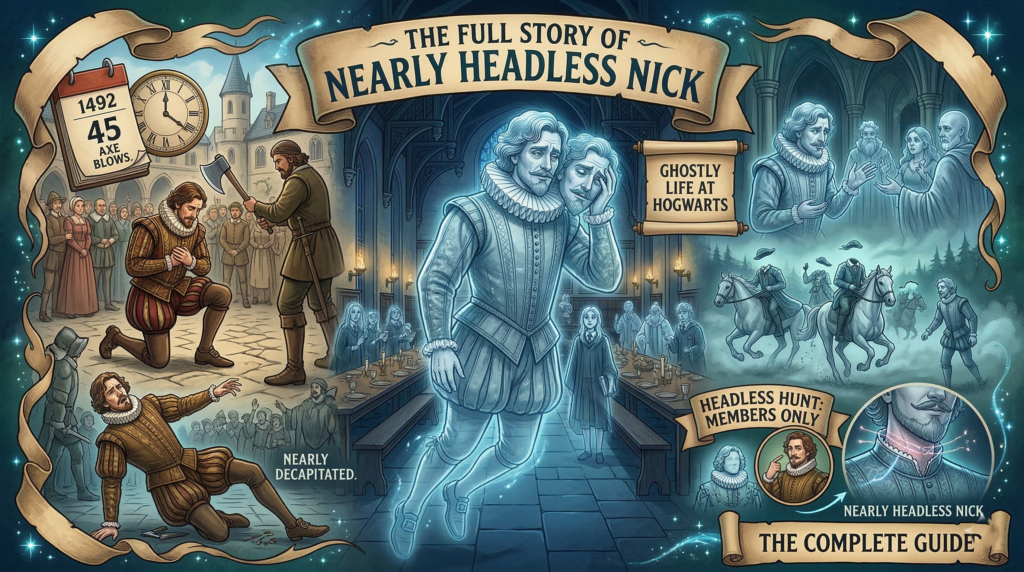
Imagine gliding through the stone corridors of Hogwarts Castle on a crisp October evening, only to encounter a translucent figure in elaborate Tudor robes. His head sits at an odd angle, barely attached, wobbling precariously as he offers a courteous bow and a warm, if slightly strained, smile. This is Sir Nicholas de Mimsy-Porpington—better known to generations of readers and fans as Nearly Headless Nick, the resident ghost of Gryffindor House.
Harry Potter Sir Nicholas has captivated fans since his first appearance in Harry Potter and the Philosopher’s Stone. He greets the new first-years with dignified charm, yet his nickname hints at a grim backstory filled with mishap, injustice, and quiet sorrow. While many know him for comic relief—his head dangling by “half an inch of skin and sinew”—his tale is far more poignant. It explores themes of fear, regret, bravery, and the wizarding world‘s complex relationship with death.
In this in-depth guide, we uncover the complete canonical story of Sir Nicholas: his noble origins, the magical blunder that sealed his fate, the horrifying details of his botched execution on October 31, 1492, his choice to become a ghost, his repeated rejection from the Headless Hunt, his key moments in the Harry Potter series, and the deeper lessons his centuries-long afterlife imparts. Whether you’re revisiting the books, exploring Wizarding World lore, or simply curious about one of Hogwarts’ most endearing spirits, this comprehensive exploration delivers the full picture—far beyond surface-level summaries.
Who Is Harry Potter Sir Nicholas? The Man Behind the Nickname
Sir Nicholas de Mimsy-Porpington was no ordinary wizard. Born in the late 15th century into a noble British family, he carried the weight of aristocratic heritage. His full name reflects this status: “de Mimsy-Porpington” suggests old wizarding lineage, with “Mimsy” possibly evoking whimsy or Lewis Carroll-inspired nonsense, and “Porpington” nodding to the archaic term “porpentine” (porcupine), hinting at a prickly or defensive personality beneath his polished exterior.
He attended Hogwarts School of Witchcraft and Wizardry and was Sorted into Gryffindor House—fitting for a man later known for his courtly manners and bravery, even in the face of death. After graduation, Sir Nicholas served as a wizard in the royal court during the turbulent pre-Statute of Secrecy era, when witches and wizards mingled more openly with Muggles. He was knighted (“Sir”), a title he cherishes deeply, and lived among nobility, showcasing the openness and courage characteristic of Gryffindors.
Yet, he prefers formal address. In Philosopher’s Stone, when students casually call him “Nearly Headless Nick,” he gently corrects them: “I prefer Sir Nicholas, if you don’t mind.” The nickname arose from his gruesome fate, but it underscores a deeper truth—Sir Nicholas clings to dignity and identity, even five centuries after death.
The Tragic Death of Sir Nicholas – What Really Happened in 1492
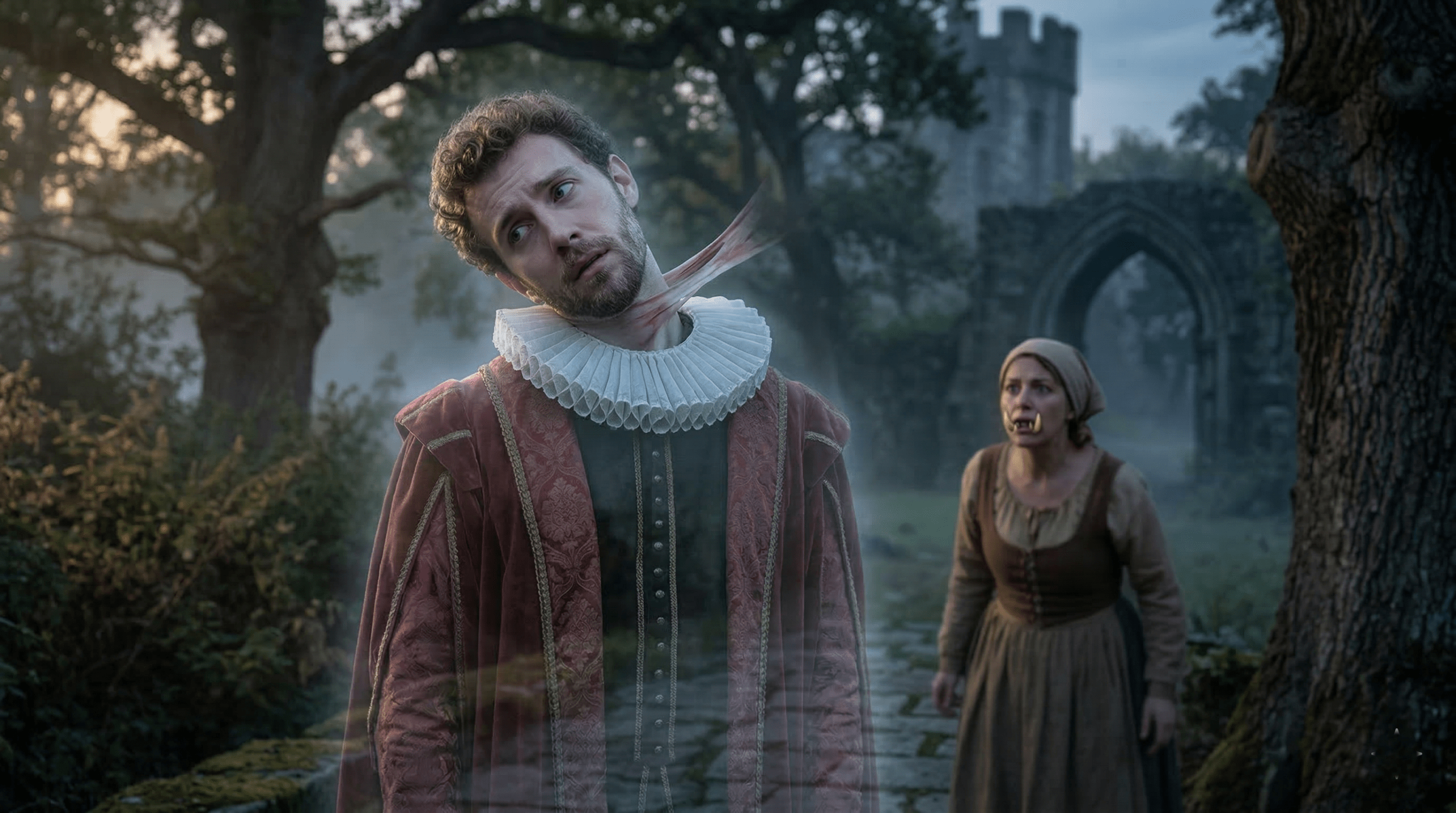
The events leading to Sir Nicholas’s death unfolded on October 30, 1492. While strolling in a park, he encountered Lady Grieve, a Muggle noblewoman with crooked teeth. Confident in his magical abilities, Sir Nicholas offered to straighten them—a kind but reckless gesture in an era when wizard-Muggle interactions carried risks.
The spell backfired spectacularly. Instead of perfect teeth, Lady Grieve sprouted tusks. Horrified, she raised the alarm. Wizards were not yet fully hidden from Muggles (the International Statute of Secrecy was enacted in 1692), but using magic on non-magical folk without permission was punishable. Sir Nicholas was arrested, his wand confiscated, and sentenced to execution by beheading.
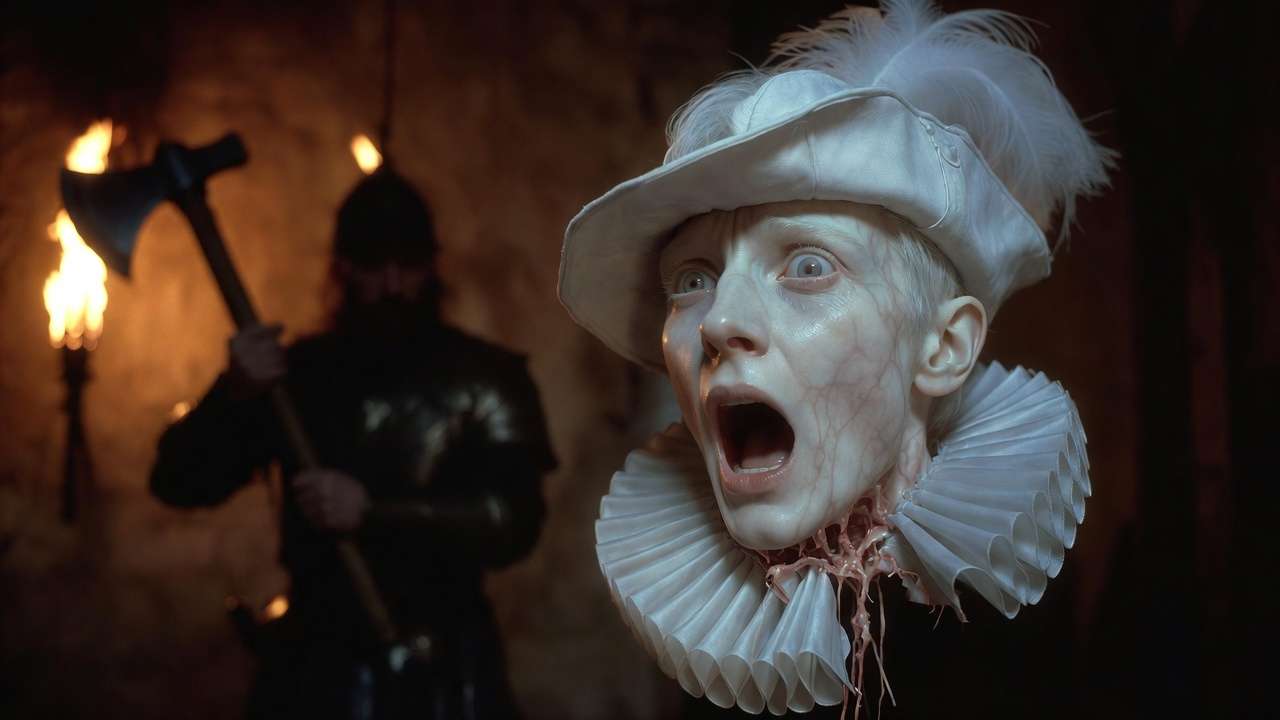 The execution took place the next day—October 31, 1492. The axe was blunt; the grindstone had been misplaced or forgotten. What should have been a swift end became prolonged agony. The executioner struck 45 times (some accounts say 47), hacking away until only a thin flap of skin and sinew remained connecting head to body. Sir Nicholas endured terror and pain, comforted briefly by a priest, yet unable to escape or repair the damage.
In his own words from a ballad he composed (mentioned in Chamber of Secrets lore): “It was a mistake any wizard could make / Who was tired and caught on the hop / One piffling error, and then, to my terror, / I found myself facing the chop.”
This botched beheading explains his “nearly headless” state. His head dangles, held by that fragile remnant, forcing him to carry himself with exaggerated care to avoid further indignity.
Why He Became a Ghost – Fear of Death
Death in the Harry Potter universe offers choices. Witches and wizards can “go on” to whatever lies beyond, or linger as ghosts—pale imitations of life, bound to the earth by unfinished business or fear.
Sir Nicholas chose the latter. In Order of the Phoenix, he confesses to Harry: “I was afraid of death… I know nothing of the secrets of death, for I chose my feeble imitation of life instead.”
Unlike brave souls like James and Lily Potter, who moved on, Sir Nicholas feared the unknown. His decision reflects human vulnerability—even courageous Gryffindors can falter when confronting mortality. This choice defines his ghostly existence: translucent, unable to taste or touch properly, yet present at Hogwarts for centuries.
 Nearly Headless Nick’s Ghostly Life at Hogwarts
After choosing to remain on Earth as a ghost, Sir Nicholas de Mimsy-Porpington found a new purpose—and a new home—at Hogwarts School of Witchcraft and Wizardry. Over the next five centuries, he became an integral part of Gryffindor House, serving as its official ghost and one of the castle’s most recognizable spirits.
Ghosts in the wizarding world are not mere echoes; they retain personality, memory, and a degree of agency. Sir Nicholas embraced his role with characteristic dignity. Dressed in his pearly-white ruff (carefully arranged to support his nearly severed head), plumed hat, and flowing Tudor-era doublet and hose, he floats gracefully through the common room, Great Hall, and corridors. His translucent form glows faintly silver, and he carries himself with the polished manners of a 15th-century courtier.
His primary duties include:
- Welcoming new Gryffindor first-years during the Sorting Ceremony feast
- Offering guidance and reassurance to anxious students
- Attending all major school events, from Quidditch matches to the Yule Ball
- Providing a sympathetic ear (and occasional comic relief) to generations of young witches and wizards
Despite his gruesome appearance, Sir Nicholas is unfailingly polite and kind-hearted. He never uses his spectral state to frighten or intimidate; instead, he strives to be a comforting, grandfatherly presence.
 Key Moments in the Harry Potter Series
Sir Nicholas appears in every book of the main series, though his most significant moments occur in the first, second, and fifth installments.
Philosopher’s Stone (1991–1992 school year)
On Harry’s very first night at Hogwarts, Nearly Headless Nick introduces himself to the new Gryffindors with theatrical flair: “I am Nearly Headless Nick… I would prefer you to call me Sir Nicholas de Mimsy-Porpington, if you don’t mind.” He then dramatically demonstrates his “nearly” headless condition by tilting his head at a gruesome angle. This scene instantly endears him to readers as both comical and oddly endearing.
Chamber of Secrets (1992–1993 school year)
This is Sir Nicholas’s most prominent book. Two major events define his arc here:
-
Petrification by the Basilisk: When the Basilisk begins petrifying students, Nearly Headless Nick is also attacked. Because he is already dead, he cannot die again—but he can still be affected by magical gaze. He appears “paler than usual, almost transparent,” and is described as having “a look of the utmost horror.” Madam Pomfrey later revives him using a draught of Mandrake restorative, proving that even ghosts can suffer magical injury and be healed.
-
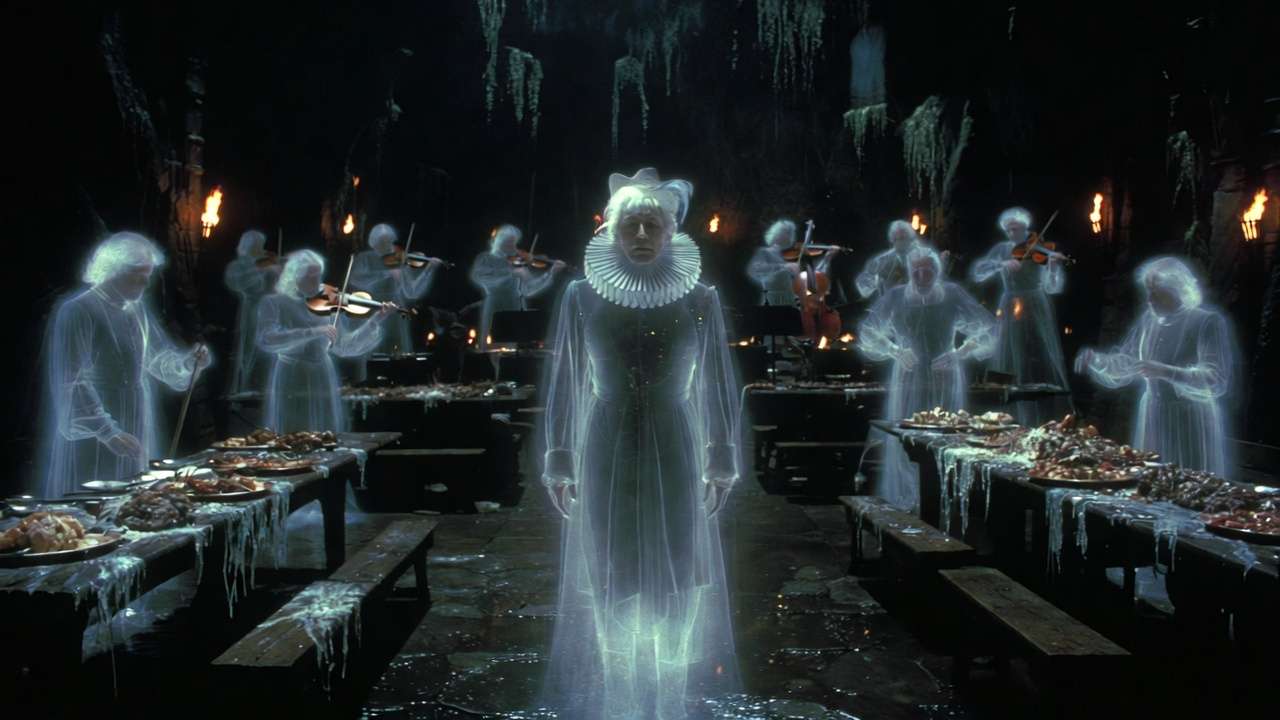
The 500th Deathday Party: On October 31, 1992—exactly 500 years after his execution—Sir Nicholas hosts a grand (and deeply macabre) celebration in one of Hogwarts’ dampest dungeons. Harry, Ron, and Hermione attend out of politeness. The event is unforgettable:
- Moldy, rotten food that ghosts can “taste” as ashes
- A ghostly orchestra playing a funeral march
- The Headless Hunt making a dramatic entrance on skeletal horses
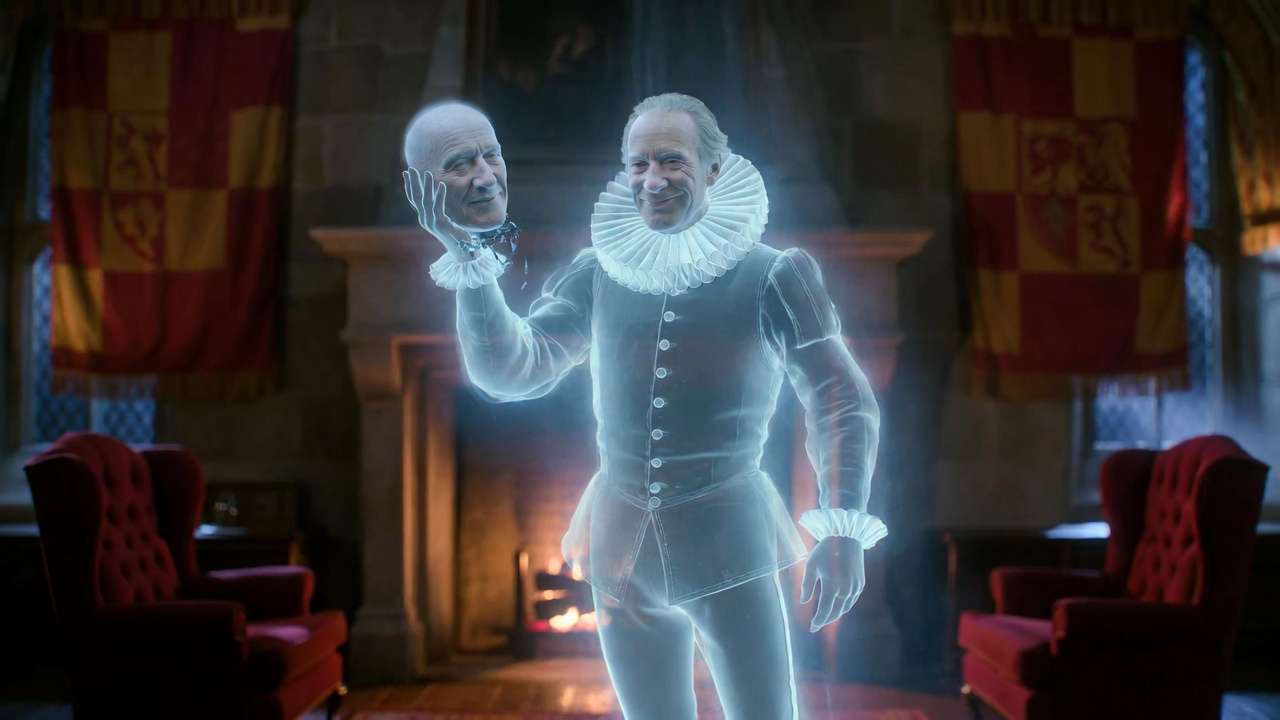
- Sir Nicholas reenacting his own beheading for entertainment
- A ghostly choir singing a mournful tune
The party is equal parts hilarious and heartbreaking. It reveals Sir Nicholas’s loneliness, his desire for acceptance among other ghosts, and the bittersweet nature of his eternal existence.
Order of the Phoenix (1995–1996 school year): Sir Nicholas delivers one of the series’ most philosophical moments about death. When Harry asks whether ghosts can see the dead, Nick replies: “Wizards can leave an imprint of themselves upon the earth… but very few wizards choose that path… I was afraid of death. I chose to remain.”
This conversation helps Harry process his grief over Sirius Black and deepens our understanding of the veil in the Department of Mysteries.
Friendship with Harry, Ron, and Hermione
Though not as close as Nearly Headless Nick’s bond with the entire Gryffindor house, he develops genuine fondness for the trio. He treats Harry with particular warmth—perhaps recognizing a kindred spirit in someone who has also faced death young. Nick offers advice, comic relief, and quiet support, embodying the loyal, brave spirit of Gryffindor even in death.
The Headless Hunt Rejection – A Lifelong (Afterlife) Sorrow
One of the most poignant and recurring elements of Sir Nicholas’s ghostly existence is his repeated — and always unsuccessful — attempts to join the Headless Hunt.
The Headless Hunt is an exclusive society of ghosts who were fully decapitated during their executions or deaths. Led by the boisterous Sir Patrick Delaney-Podmore, its members gallop through the skies on skeletal horses, play a violent game called Head Polo (using their own severed heads as balls), and generally revel in their complete separation from their bodies.
Sir Nicholas desperately wants to belong. He has applied to join the Hunt on numerous occasions — at least four times are explicitly mentioned or implied in canon — and has been rejected every single time.
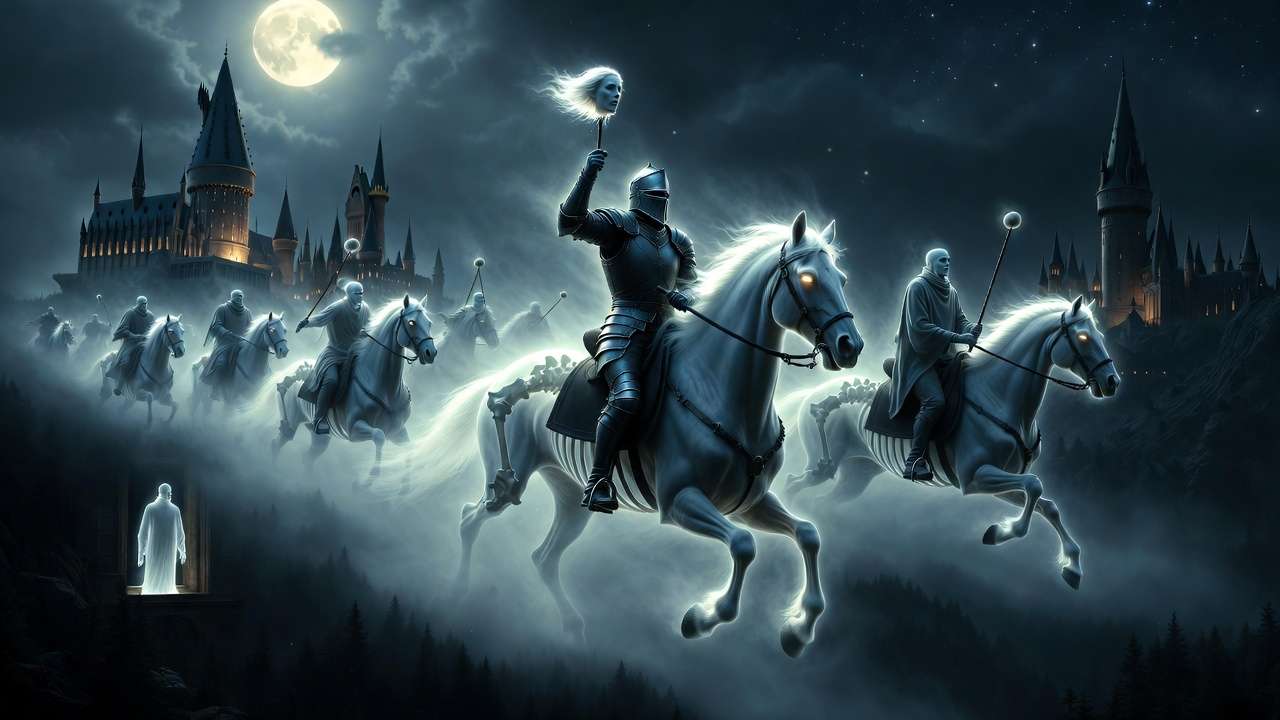 The reason is brutally simple: his head is not completely severed. There remains that stubborn flap of skin and sinew. As Sir Patrick explains during the 500th Deathday Party entrance in Chamber of Secrets:
“We’re only admitting fully headless ghosts this century… Sorry, old chap, but rules are rules.”
The rejection is delivered with cheerful callousness, underscoring the social hierarchy that exists even among the dead. For Sir Nicholas, this is not merely a club he’s been barred from; it represents the final, humiliating proof that his botched execution has left him forever incomplete — neither fully alive nor fully dead, neither part of the living world nor accepted by the fully departed.
This recurring rejection becomes one of the most quietly tragic threads in his character. Every time he is turned away, the wound (literal and emotional) is reopened. He masks the pain with polite smiles and dignified bearing, but the longing is unmistakable.
Why It Matters – Themes of Acceptance and Identity
The Headless Hunt subplot is far more than comic relief. It mirrors several core themes of the entire Harry Potter series:
- The pain of exclusion and the desperate human (and ghostly) need to belong
- The cruelty of arbitrary rules and social gatekeeping
- The lingering consequences of a single moment of failure or bad luck
- The difficulty of accepting oneself when society refuses to
Sir Nicholas’s inability to join the Hunt parallels other characters’ struggles: Neville Longbottom’s early insecurity, Luna Lovegood’s ostracism, even Severus Snape’s lifelong outsider status. In death, as in life, acceptance remains elusive for those who don’t quite fit the required mold.
Sir Nicholas in the Films – John Cleese’s Iconic Portrayal
In the film adaptations, Sir Nicholas is portrayed by comedy legend John Cleese, whose natural dry wit and aristocratic delivery brought a fresh layer of humor to the character.
While the movies reduce his screen time and emotional depth compared to the books, Cleese’s performance is memorable:
- His grand entrance in Philosopher’s Stone, tilting his head dramatically for the first-years
- The exasperated yet polite correction of his name
- The brief but effective appearance at the Deathday Party in Chamber of Secrets
Cleese leans into the absurdity of the situation — a dignified knight forever stuck in a grotesque half-state — making Sir Nicholas simultaneously funny and oddly sympathetic. The physical comedy of the head-wobble is played up more than in the books, which helps younger audiences connect with the character without needing the full tragic context.
Many fans credit Cleese’s casting with cementing Nearly Headless Nick as one of the most visually iconic ghosts in the franchise.
 Lesser-Known Facts and Lore About Sir Nicholas
Here are some fascinating details that even dedicated fans sometimes overlook:
- His death date (October 31, 1492) shares eerie symmetry with the murder of James and Lily Potter exactly 499 years later — both on Halloween night.
- He composed an entire ballad about his own beheading, which was performed (badly) by a ghostly orchestra at his 500th Deathday Party.
- He once tried to teach Peeves table manners — with predictable results.
- In early drafts of Philosopher’s Stone, J.K. Rowling considered making Nearly Headless Nick the ghost who first tells Harry about the Mirror of Erised.
- His favorite “hobby” in the afterlife appears to be reenacting his execution for other ghosts — a morbid form of performance art.
- He maintains a polite but distant relationship with the other house ghosts, especially the Bloody Baron, whose violent history he finds distasteful.
What Sir Nicholas Teaches Us About Life, Death, and Bravery
Nearly Headless Nick is not a hero in the traditional sense. He never defeats a Dark wizard or saves the school. Yet his story carries profound weight.
He shows us that bravery is not the absence of fear — it is the choice to face fear and still act with dignity. Sir Nicholas was afraid of death and chose to stay. That choice was not noble or courageous by Gryffindor standards, but it was honest. And in owning his fear, he becomes relatable to every reader who has ever hesitated before the unknown.
He also reminds us that imperfection does not disqualify us from love, purpose, or belonging. Despite being “nearly” headless, despite endless rejection, Sir Nicholas remains a valued member of the Hogwarts community for five centuries. Students confide in him. First-years laugh with him. Harry trusts him.
In a world obsessed with perfection and completion, Sir Nicholas stands as a quiet testament to the beauty — and the pain — of being forever unfinished.
FAQs
Who is Harry Potter Sir Nicholas de Mimsy-Porpington? He is the full name of Nearly Headless Nick, the Gryffindor house ghost at Hogwarts.
How did Nearly Headless Nick die exactly? On October 31, 1492, after a spell meant to fix a Muggle woman’s teeth caused tusks instead, he was sentenced to beheading. The axe was blunt, requiring 45 strikes, leaving his head attached by a thin strip of skin.
Why couldn’t Sir Nicholas join the Headless Hunt? His head is not fully severed, so he does not meet the society’s requirement of complete decapitation.
Is Nearly Headless Nick based on a real historical figure? No — he is entirely fictional, though his name and title evoke 15th-century English nobility.
How was he petrified in Chamber of Secrets if he’s already a ghost? Ghosts can be magically affected (but not killed). The Basilisk’s gaze petrified him, and he was later cured with Mandrake restorative draught.
Does Sir Nicholas ever move on after the series? Canon does not say. He remains at Hogwarts throughout the books and is still present in later Wizarding World material.
Sir Nicholas de Mimsy-Porpington — court wizard, knight, Gryffindor, ghost, and eternal outsider — is one of J.K. Rowling’s most layered minor characters. Beneath the humor of his wobbling head and polite protests lies a deeply human story of regret, resilience, and the search for acceptance.
He greets every new generation of Gryffindors with the same courteous bow he offered Harry, Ron, and Hermione. He floats through the castle, head held (literally) high, refusing to let his tragic fate rob him of grace.
In doing so, Nearly Headless Nick teaches us something essential: even when life — or death — leaves us incomplete, we can still choose kindness, dignity, and connection.
Next time you reread Chamber of Secrets or pass through the Gryffindor common room in your mind, spare a thought for Sir Nicholas. He’s still there, waiting to welcome you home.