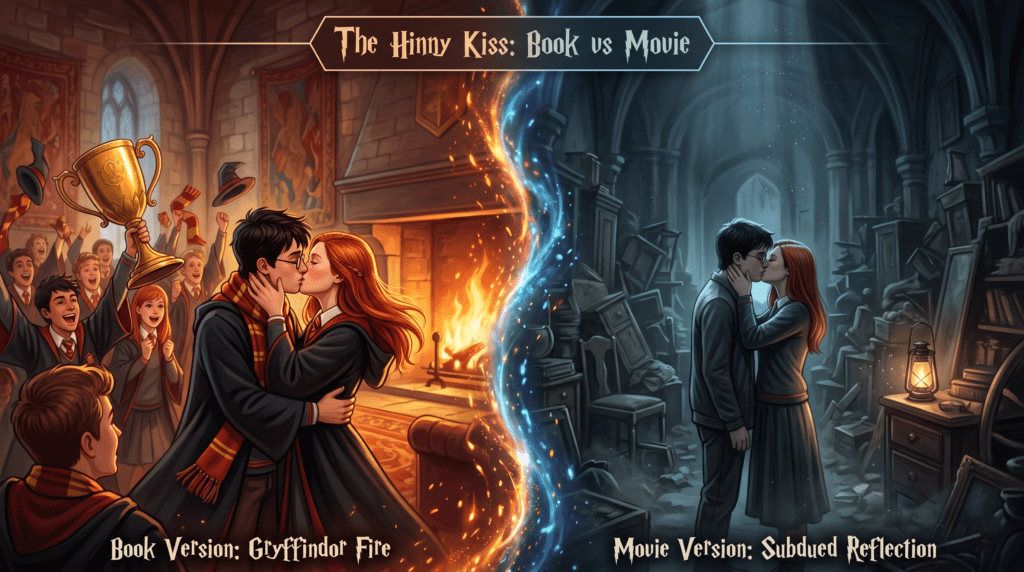
If you ask any die-hard fan about the most polarizing adaptations in the entire cinematic franchise, one specific scene will almost always dominate the conversation. For years, fans and critics alike have debated the on-screen execution of the Ginny Weasley and Harry Potter kiss, wondering why such a triumphant, emotionally charged literary payoff was transformed into a muted, awkward whisper.
When Harry Potter and the Half-Blood Prince hit theaters, audiences expecting a passionate culmination of a six-year slow burn were left scratching their heads. Instead of a roaring crowd and a fiercely confident protagonist, we were given a quiet, private moment in the Room of Requirement. Why did the filmmakers change a scene that fans universally considered perfect?
This comprehensive deep-dive explores the creative decisions behind the change, the character development that was sacrificed, and why the book version remains the definitive “Hinny” moment. Whether you are a longtime reader still mourning the loss of the Gryffindor common room celebration or a movie-watcher confused by the chemistry, here is the complete story behind the kiss that divided a fandom.
1. The Book Version: A Moment of Pure Gryffindor Fire (The Standard)
To understand the frustration surrounding the cinematic adaptation, we first have to look at the gold standard: Chapter 24 of the Half-Blood Prince novel, titled Sectumsempra. J.K. Rowling masterfully built the tension over hundreds of pages, utilizing Harry’s internal “chest monster” as a metaphor for his growing, undeniable jealousy and affection for his best friend’s sister.
The Context of the Quidditch Cup
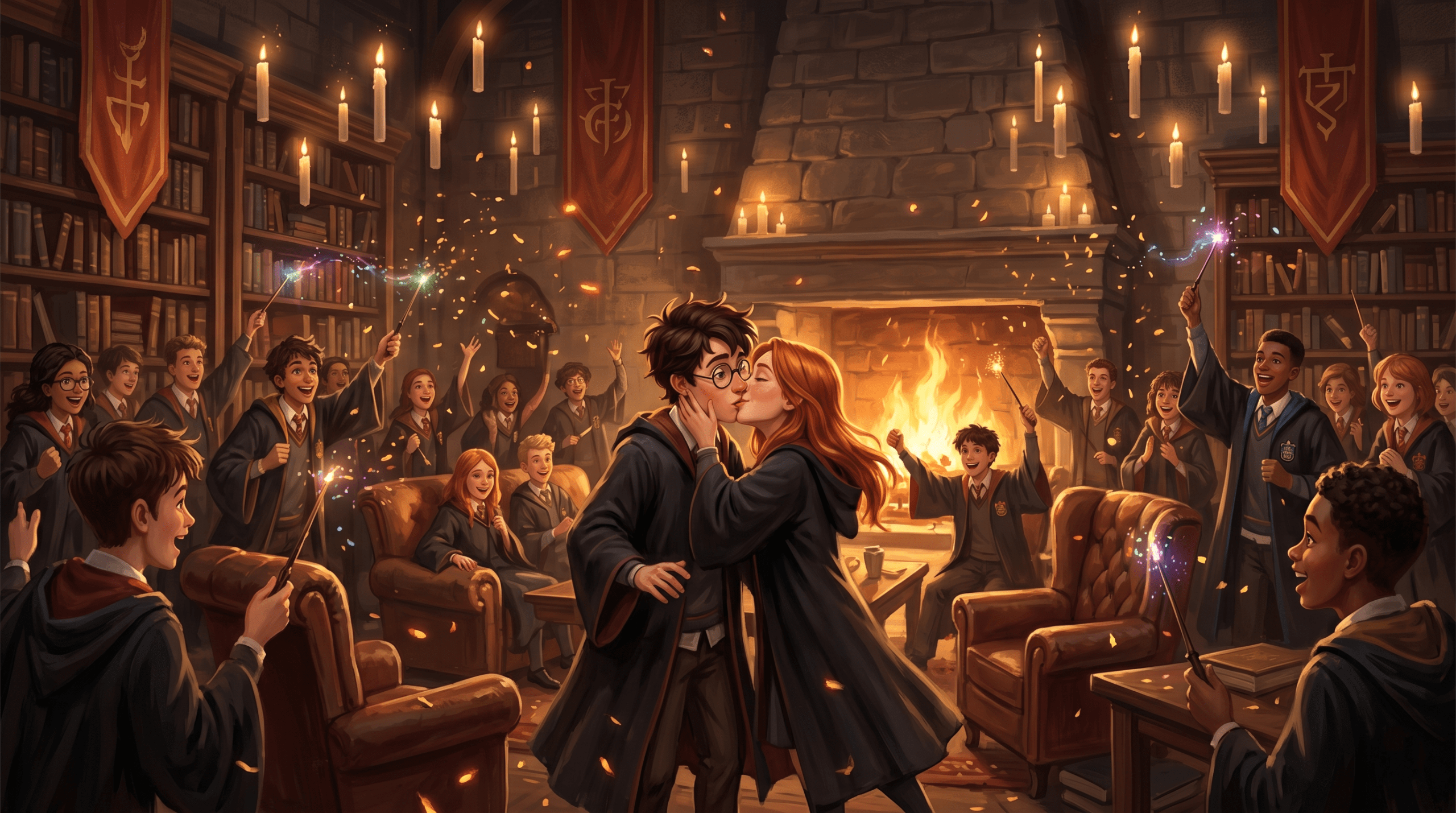
In the novel, Harry is barred from playing in the final Quidditch match that will decide the Cup, forced instead to serve detention with Severus Snape. When he finally returns to the Gryffindor common room, he has no idea if his team—led by Ginny as Seeker—has won or lost. He walks into a scene of absolute pandemonium. They won the Cup.
The Spontaneity Factor
What makes the literary version so spectacular is its sheer impulsivity. Ginny runs toward Harry, hard and fast, wrapping her arms around him. Harry doesn’t think, he doesn’t plan, and he certainly doesn’t ask permission from Ron first. Driven by pure adrenaline, joy, and months of suppressed longing, he simply kisses her. It is an instinctual reaction that perfectly encapsulates the boldness of a true Gryffindor.
 The Public Declaration
The kiss happens in front of dozens of witnesses. The reactions are a masterclass in world-building: Dean Thomas shatters a glass in shock, Romilda Vane looks murderous, and the rest of the room goes dead silent before erupting into cheers. Most importantly, it happens right in front of Ron Weasley. The subsequent silent exchange—Ron giving a reluctant but accepting jerk of the head, and Harry realizing he finally has his best friend’s blessing—solidifies the moment not just as a romantic triumph, but as a crucial milestone in their triad friendship. It is public, unashamed, and undeniably epic.
2. The Movie Version: A Quiet Reflection in the Room of Requirement
Contrast that fiery celebration with what audiences received in the 2009 film directed by David Yates. The setting, tone, and pacing are entirely rewritten, trading high-energy fantasy for subdued, teenage awkwardness.
Atmospheric Analysis
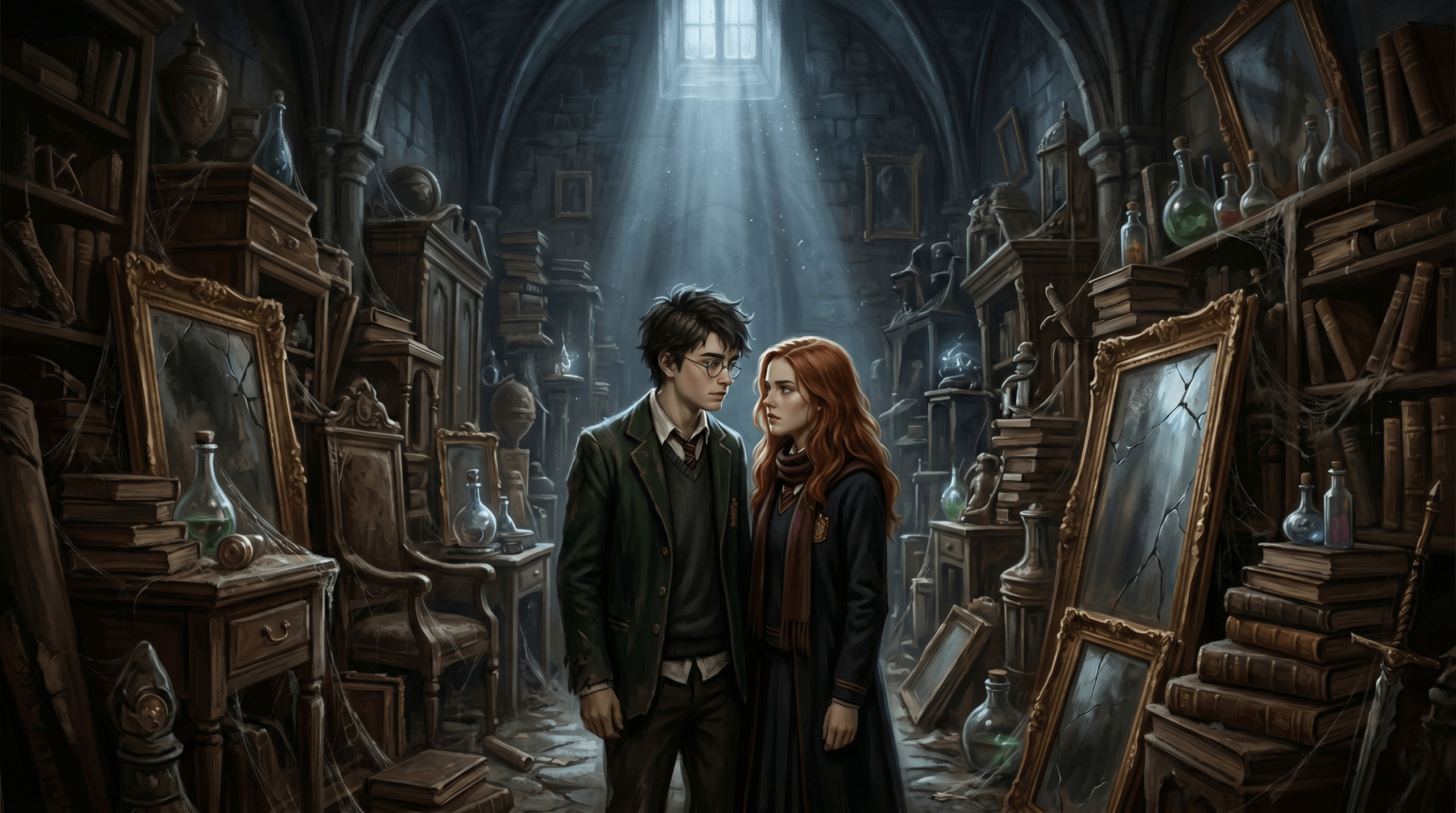
Instead of the bustling common room, the cinematic kiss takes place in total isolation. Harry and Ginny venture into the Room of Requirement to hide the Half-Blood Prince’s volatile Potions book. The atmosphere is quiet, tense, and heavy with unspoken anxiety. The room is dark, cluttered with centuries of Hogwarts secrets, creating a somber backdrop that feels more aligned with a thriller than a sweeping romance.
The Change in Dynamics
One of the most heavily criticized aspects of the film adaptation is the shift in character agency. In the movie, Ginny takes the lead in almost every interaction. It is Ginny who tells Harry to close his eyes (“That way you can’t be tempted”). It is Ginny who steps forward to initiate the kiss, while Harry stands relatively passive, eyes closed, waiting for it to happen.
Visual Aesthetics and Pacing
David Yates chose a hushed tone over a celebratory one. The cinematography relies heavily on muted grays and sepia tones, emphasizing the looming threat of Voldemort’s return rather than the triumph of teenage love. While the quiet intimacy makes sense for the overarching darker aesthetic of Yates’ final four films, it completely detaches the romantic subplot from the joyous, life-affirming energy it possessed in the source material.
 3. Side-by-Side Comparison: Book vs. Movie
To clearly see how drastically the narrative shifted, let’s break down the key differences between the two mediums:
| Feature | The Book Version (Half-Blood Prince, Chapter 24) | The Movie Version (Half-Blood Prince, 2009) |
| Location | The Gryffindor Common Room | The Room of Requirement |
| Audience | The entire Gryffindor house | Total privacy (just the two of them) |
| Initiator | Harry (driven by instinct) | Ginny (methodical and planned) |
| Emotional Tone | Triumphant, euphoric, and bold | Somber, secretive, and hesitant |
| Catalyst | Winning the Quidditch Cup | Hiding a dangerous magical book |
| Ron’s Reaction | Witnessed live; gives silent approval | Unaware of the event as it happens |
4. Why the Shift? Analyzing the Filmmakers’ Creative Choices
Why would screenwriter Steve Kloves and director David Yates intentionally dismantle one of the most beloved scenes in the franchise? The answer lies in the complexities of translating a sprawling, 600-page book into a cohesive two-and-a-half-hour film.
Tonal Consistency in a Darkening World
By the sixth film, the franchise was fully pivoting into war-movie territory. The overarching narrative was focused on Draco Malfoy’s assassination plot, Dumbledore’s weakening state, and the chilling introduction of Horcruxes. Yates likely felt that dropping a high-energy, teenage rom-com celebration into the middle of this rising dread would cause tonal whiplash. By moving the kiss to the Room of Requirement—the very place where Malfoy is constructing his Vanishing Cabinet—the filmmakers tethered the romance to the central, darker plotline.
The “Cinematic Pacing” Argument
In cinema, directors often prefer private moments for romantic climaxes to allow the camera to focus intimately on the actors’ micro-expressions. A crowded room requires complex blocking, reaction shots, and audio mixing that can dilute the focus between the two leads. Yates opted for closeness, attempting to manufacture intimacy through isolation rather than shared celebration.
The Scriptwriter’s Influence
It is a well-documented criticism within the fandom that screenwriter Steve Kloves favored Hermione Granger, often giving her Ron’s best lines and the most heroic moments. Consequently, Ginny Weasley’s character development was severely truncated. The script failed to build the necessary foundation for Ginny’s fierce, popular, and fiery personality, making the sudden, bold common room kiss feel unearned for the “movie version” of her character. The quiet, awkward kiss was, unfortunately, a logical conclusion to the quiet, awkward Ginny the films had inadvertently created.
5. The “Ginny Problem”: Why the Kiss Suffered from Character Erasure
To fully grasp why the cinematic Ginny Weasley and Harry Potter kiss felt underwhelming to so many viewers, we must address what the fandom collectively refers to as the “Ginny Problem.” The reality is that the lackluster kiss was merely a symptom of a much larger narrative issue: the systematic erasure of Ginny Weasley’s personality throughout the film series.
The Missing Feistiness
In J.K. Rowling’s novels, Ginny undergoes a radical transformation. By Order of the Phoenix and Half-Blood Prince, she is arguably one of the most popular, fiercely independent, and magically gifted students at Hogwarts. She is known for her devastating Bat-Bogey Hex, her sharp sense of humor, and her refusal to let anyone—even Harry—dictate her choices. The Gryffindor common room kiss worked in the books because it was the collision of two equals.
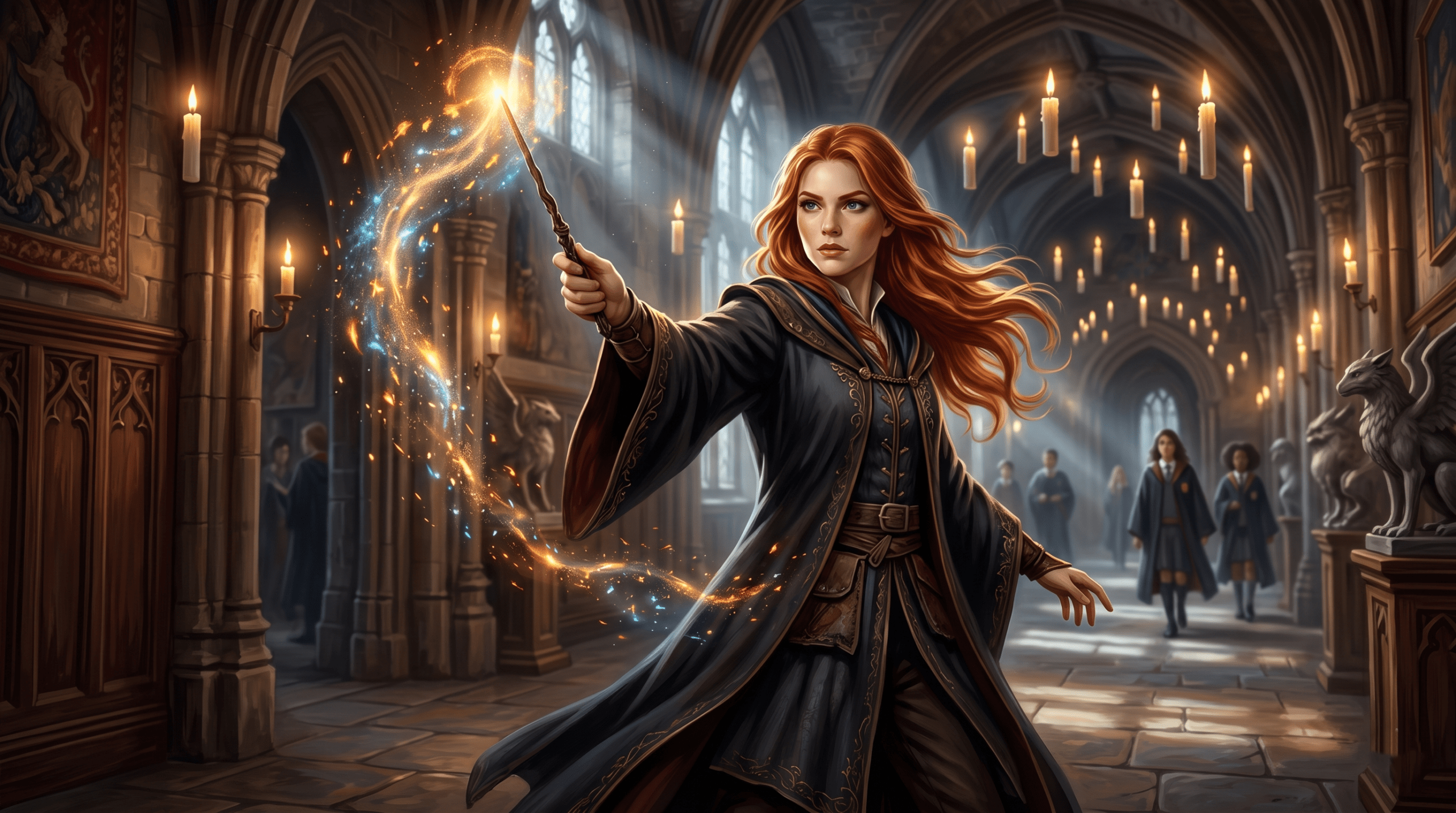
In the films, however, Ginny is stripped of this fiery independence. She is often relegated to the background, functioning more as a stoic observer than an active participant. Because the cinematic universe failed to establish her vibrant personality, a spontaneous, passionate public kiss would have felt completely out of character for the “movie version” of Ginny.
Chemistry vs. Writing
A common—and often unfair—critique is aimed at the on-screen chemistry between actors Daniel Radcliffe and Bonnie Wright. However, a deeper analysis reveals that the issue lies almost entirely within the script, not the performers. Wright was perfectly cast as the fierce book-Ginny, but she was given dialogue that forced a stiff, unnatural dynamic. The infamous “shoelace scene” at the Burrow, which preceded the Room of Requirement kiss, is a prime example of an attempted intimate moment that came across as painfully awkward due to poor conceptualization. The actors simply had no emotional foundation to build upon.
 6. Hidden Symbols & Easter Eggs in the Scene
Despite the controversy surrounding the adaptation, David Yates and the production team did weave several subtle thematic elements into the cinematic version of the kiss.
The Amortentia Connections
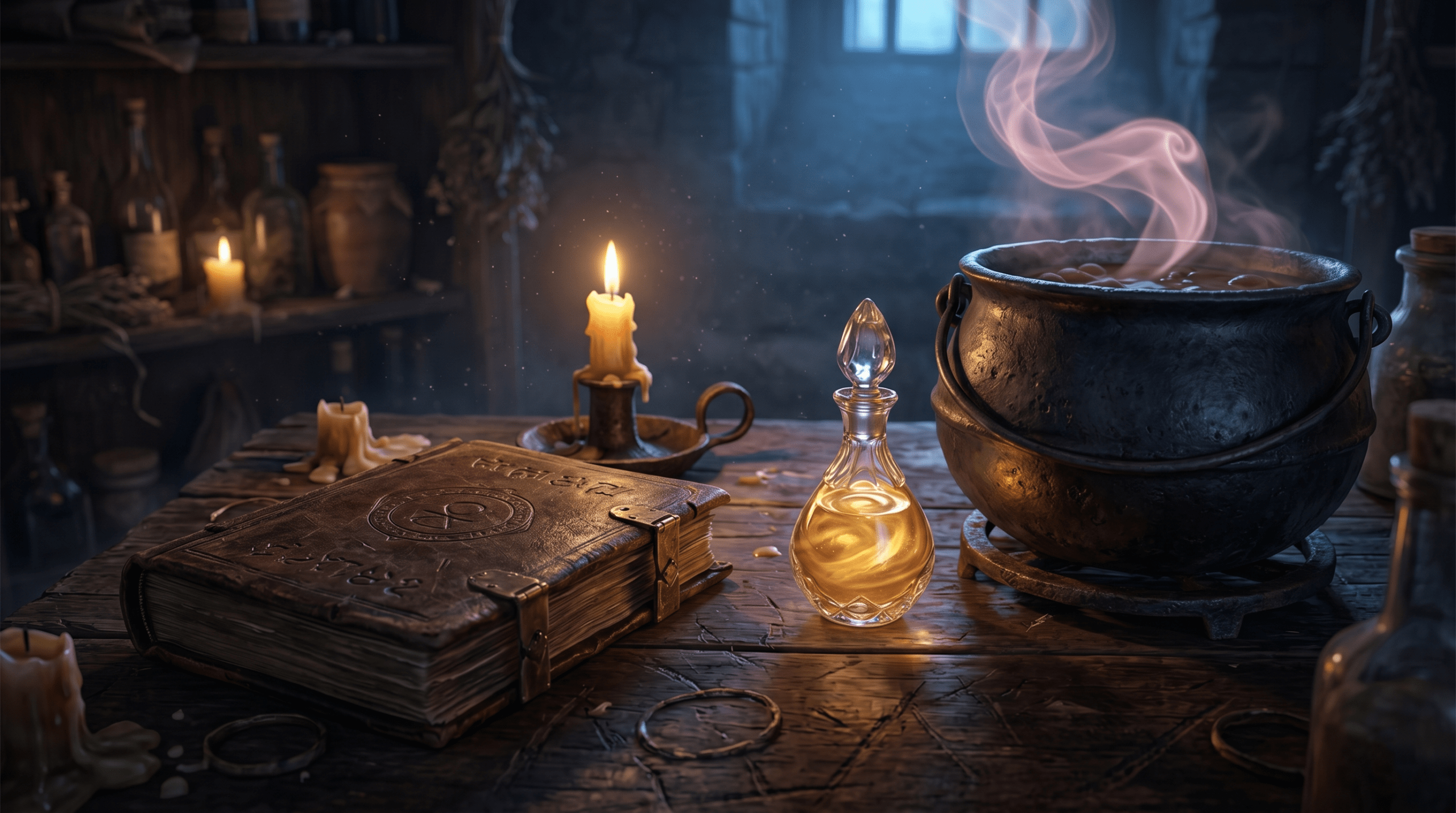
Earlier in the Half-Blood Prince story, Harry smells Amortentia (the most powerful love potion in the world) in Professor Slughorn’s dungeon. In the book, he notes the scent of treacle tart, the woody smell of a broomstick handle, and “something flowery that he thought he might have smelled at the Burrow.” This is a brilliant foreshadowing of his attraction to Ginny. While the film includes the Amortentia scene, the emotional payoff of that “flowery scent” is lost in the sterile, dusty environment of the Room of Requirement, creating a disconnect for viewers paying attention to the sensory clues.
The Felix Felicis Parallel
In the novel, there is a lingering debate among fans: did the remnants of Felix Felicis (Liquid Luck) give Harry the final push of confidence he needed to kiss Ginny? The book leaves this delightfully ambiguous, suggesting that true Gryffindor bravery requires no potion. By moving the kiss to the Room of Requirement and having Ginny initiate it, the film completely abandons this compelling psychological subtext.
The Room of Requirement Lore
Thematically, setting the kiss in the Room of Hidden Things is fascinating. The room is a graveyard of forgotten objects, secrets, and shame. Having Harry and Ginny share their first kiss while literally hiding a dark object (the Half-Blood Prince’s potion book) subconsciously frames their romance as something secretive, dangerous, and hidden from the light—a stark contrast to the brilliant, sunlit triumph of the book’s Quidditch pitch victory.
 7. Expert Insight: How the Kiss Impacted the “Deathly Hallows” Stakes
A successful romance arc isn’t just about the payoff; it’s about how that relationship impacts the broader narrative. The muted nature of the movie kiss had a ripple effect that severely weakened the emotional stakes of the final two films, Harry Potter and the Deathly Hallows Parts 1 & 2.
The Break-Up That Never Happened
In the literary version, the euphoric high of the common room kiss is violently juxtaposed against the devastating reality of Dumbledore’s funeral. Harry realizes he must hunt the Horcruxes alone and breaks up with Ginny to protect her from Voldemort. It is a moment of noble sacrifice, made all the more heartbreaking because J.K. Rowling had firmly established how happy they were together.
Because the cinematic kiss was so subdued and the relationship was barely explored on screen, the film completely skips this formal breakup. They simply share a solemn look on a balcony.
Motivation for the Horcrux Hunt
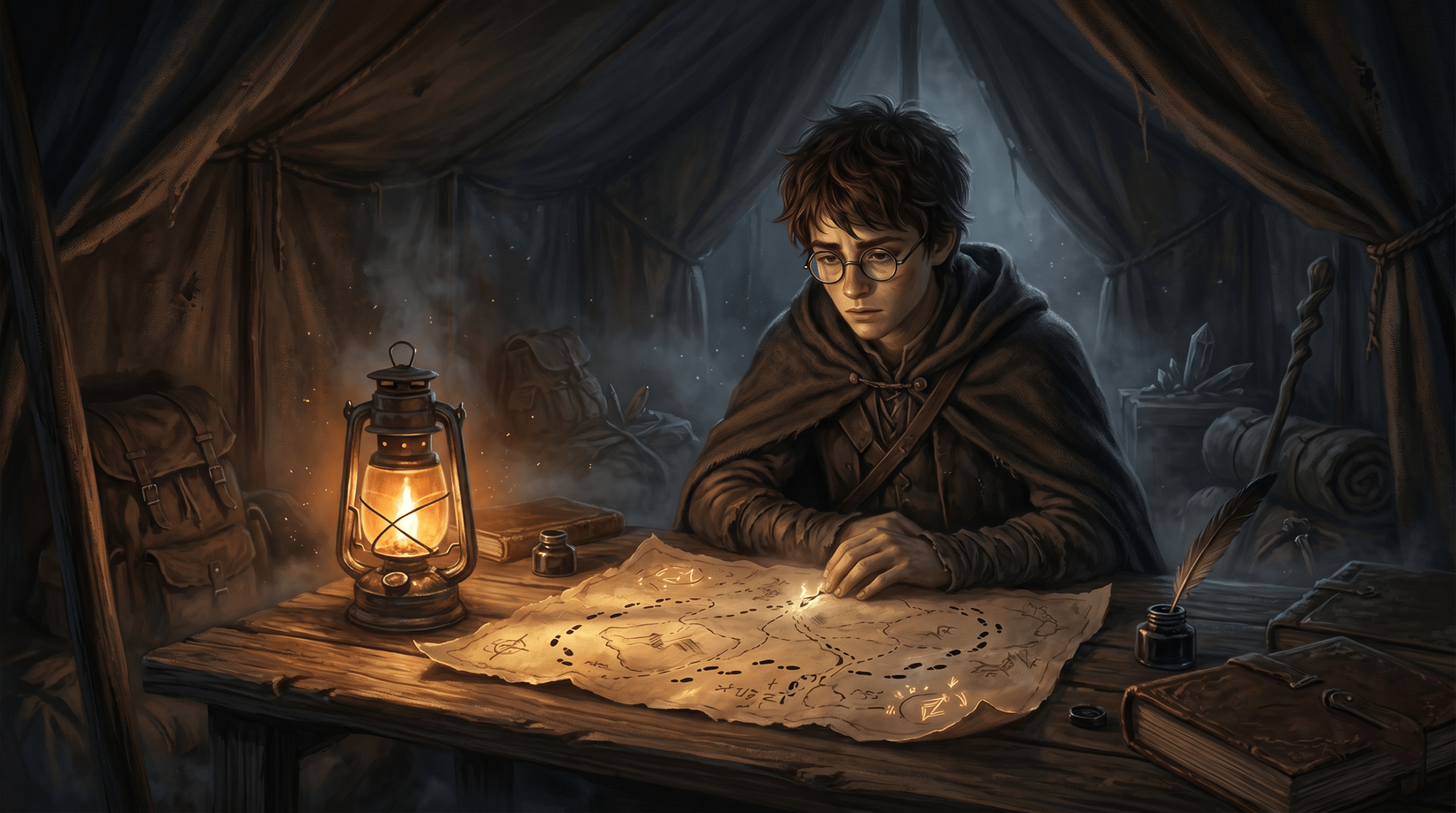
During the bleak months spent camping in Deathly Hallows, Harry’s primary tether to his humanity is staring at Ginny’s dot on the Marauder’s Map. In the books, this longing is visceral. He is fueled by the memory of their brief, blazing time together. In the cinematic universe, because the audience never witnessed the full spectrum of their joy, Harry’s longing feels less like a tragic loss and more like a standard trope of the “hero leaving the girl behind.”
(Note: Exploring alternate cinematic choices is a fascinating exercise. Much like exploring “What If” alternate histories within the wizarding world—such as how the timeline might have shifted if certain betrayals never occurred at Godric’s Hollow—we can clearly see how one directorial change fundamentally altered the emotional trajectory of the final films.)
8. Fandom Legacy: Why We Are Still Talking About It in 2026
It is a testament to the cultural impact of Harry Potter that in 2026, over a decade and a half since the film’s release, the Ginny Weasley and Harry Potter kiss remains a highly debated topic.
The Rise of “Fix-It” Fanfiction
The dissatisfaction with the cinematic adaptation became a massive catalyst for the fandom. Over the years, tens of thousands of “fix-it” fanfictions have been written, explicitly dedicated to rewriting the Half-Blood Prince romance. Fans have continually taken it upon themselves to restore Ginny’s fierce agency and give the couple the passionate, public triumph they were denied on screen.
The HBO Remake: A Chance for Redemption
As the fandom looks toward the highly anticipated HBO Harry Potter television series, the “Hinny” romance is consistently cited as the number one storyline that desperately needs a faithful adaptation. A long-form television format provides the exact structure needed to properly execute a slow-burn romance. Showrunners now have the unprecedented opportunity to right the cinematic wrongs, build Ginny’s character from season one, and finally give fans the roaring Gryffindor common room celebration that has been relegated to the pages since 2005.
 9. FAQ: Everything Fans Ask About the “Hinny” Kiss
To ensure we cover every angle of this iconic moment, here are the answers to the most frequently asked questions regarding Harry and Ginny’s first kiss.
In which book does Harry kiss Ginny for the first time?
Harry and Ginny share their first kiss in J.K. Rowling’s sixth novel, Harry Potter and the Half-Blood Prince, specifically in Chapter 24, titled Sectumsempra. It occurs in the Gryffindor common room immediately following a Quidditch Cup victory.
Why did they change the kiss in the Half-Blood Prince movie?
Director David Yates and screenwriter Steve Kloves opted to move the kiss to the Room of Requirement to match the darker, more somber tone of the film. They believed a private, quiet moment fit better amidst the impending threat of Voldemort and the overarching plot of hiding the Half-Blood Prince’s dangerous textbook.
Does Ron get mad when Harry kisses Ginny?
In the book, Ron’s reaction is a pivotal moment. While he is initially stunned (much like the rest of the common room), he quickly gives Harry a subtle, silent nod of approval, showing massive character growth and solidifying their friendship. In the movie, because the kiss happens in secret, Ron is completely oblivious to the event as it unfolds.
What was the “shoelace” scene, and why is it controversial?
The “shoelace scene” is an entirely movie-original addition where Ginny awkwardly bends down to tie Harry’s shoe at the Burrow before attempting to feed him a mince pie. It is highly controversial because it replaces the fiery, confident Ginny of the books with a bizarrely submissive and uncomfortable interaction, lacking any natural romantic chemistry.
Adapting a beloved literary masterpiece into a blockbuster film requires inevitable sacrifices. Timelines must be condensed, subplots must be trimmed, and sometimes, character arcs are collateral damage. However, the transformation of the Ginny Weasley and Harry Potter kiss remains a prime example of how altering the context of a single scene can unravel the emotional core of a relationship.
The movie gave us a visually striking, undeniably atmospheric moment in the Room of Requirement. It fit the brooding aesthetic of a world on the brink of war. Yet, J.K. Rowling’s original vision offered something much more essential: a brilliant flash of joy, defiance, and pure, unadulterated youth in the face of gathering darkness. The book provided the emotional soul of their partnership, proving that even as Voldemort gathered power, there was still room for a roaring Gryffindor triumph.
For those of us who grew up reading the pages until they were worn, that spontaneous collision in the center of the common room will always be the “true” kiss.
What do you think? Did the quiet intimacy of the movie version work for you, or are you still holding out hope that the upcoming television adaptation will finally deliver the Common Room roar we deserve? Let us know your thoughts, and share your favorite “What If” Harry Potter theories in the comments below!