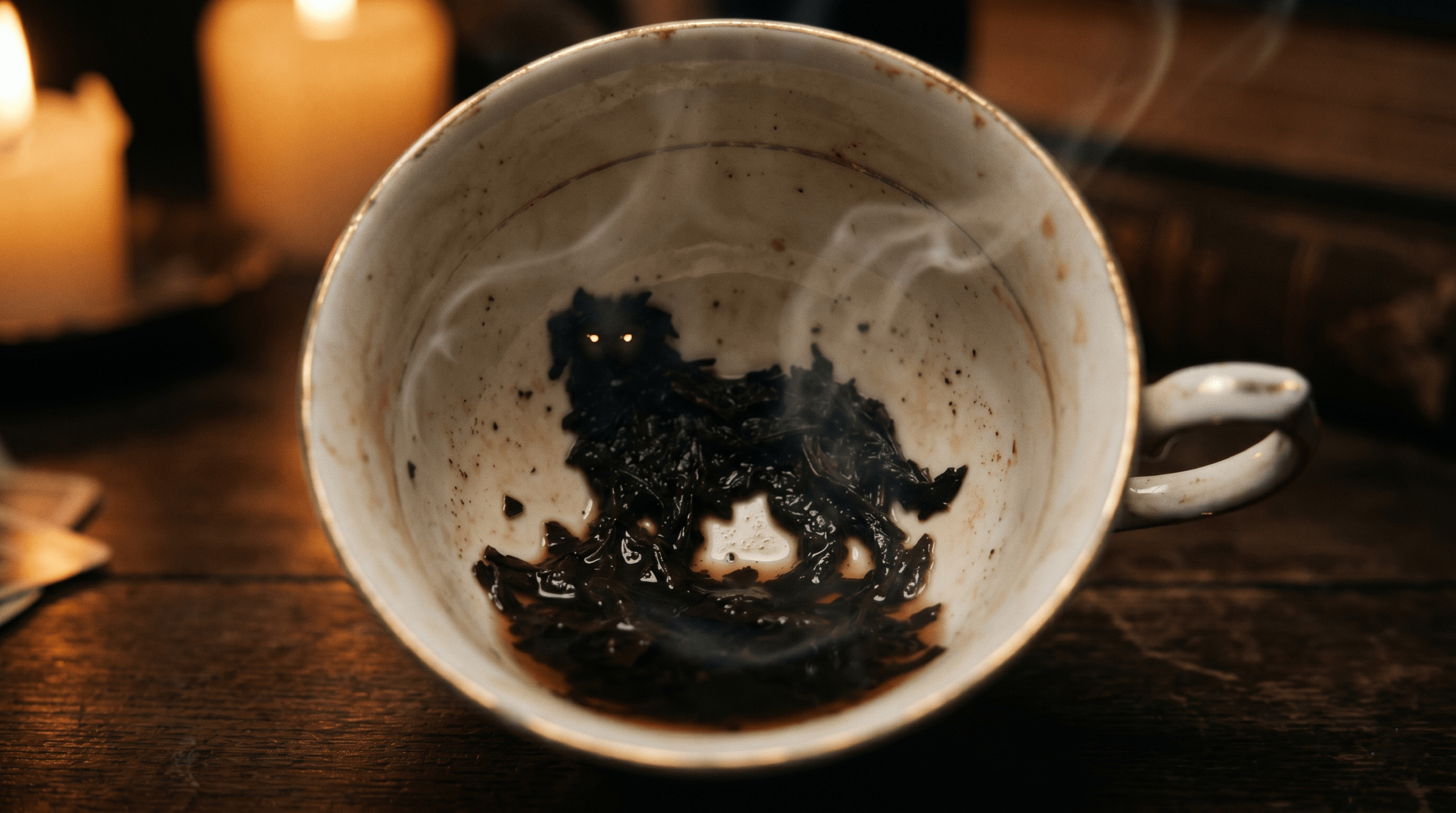
The air in the North Tower is stiflingly warm, thick with the cloying scent of heavily perfumed fire and incense. Harry Potter peers into a fragile teacup, expecting to see a harmless blob of soggy tea leaves. Instead, the dregs form a distinct, terrifying shape. Professor Sybill Trelawney gasps, her dramatically magnified eyes wide with terror. It is The Grim of Harry Potter lore—a spectral, giant black dog that stands as the ultimate, undisputed omen of death in the Wizarding World.
For fans diving into Harry Potter and the Prisoner of Azkaban, this moment serves as a masterclass in building suspense. J.K. Rowling introduces a mythological terror that haunts Harry’s every step throughout his third year at Hogwarts. Yet, decades after the book’s release, a massive point of confusion remains within the fandom: where does the mythological death omen end, and where does Sirius Black begin?
In this comprehensive guide, we are going to untangle the shadows. We will explore the chilling real-world folklore that inspired the creature, analyze the deep-lore differences between the actual omen and Sirius Black’s Animagus form, and dive into a compelling alternate timeline to explore what might have happened if Harry had encountered a true harbinger of doom.
Question for the readers: Did you believe the Grim was a real monster the first time you read or watched Prisoner of Azkaban, or did you suspect it was a misunderstanding? Let us know in the comments below!
What Exactly is “The Grim” in the Wizarding World?
To understand why the entire wizarding community shudders at the mere mention of this entity, we have to look at how magical society views divination and omens. In a world where dragons, boggarts, and Dementors are tangible threats, a spectral dog holds a unique psychological power.
A Giant, Spectral Dog
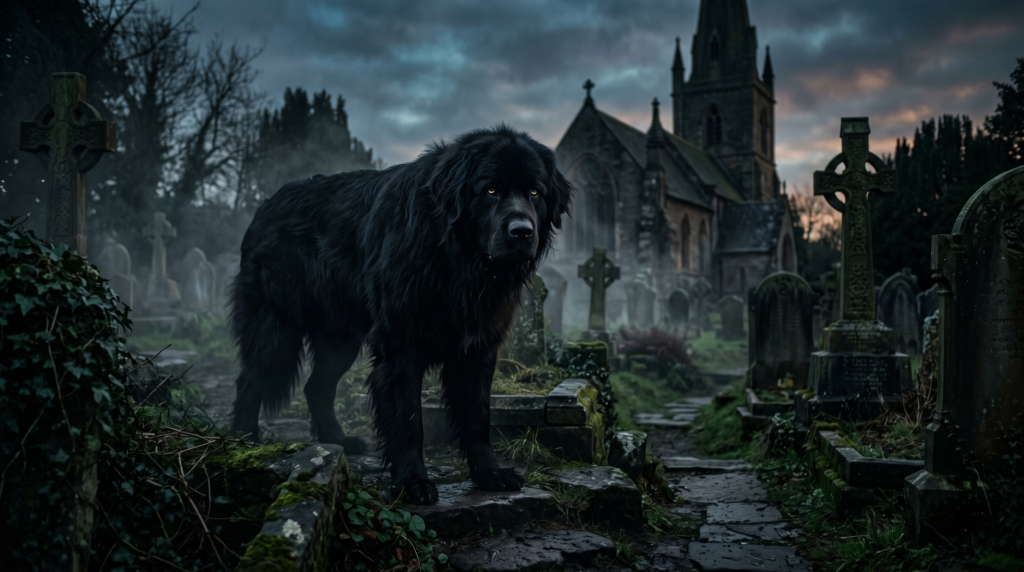
According to Wizarding lore, the Grim is not a physical beast you can fight with a standard Stunning Spell. It is described as an enormous, bear-sized, spectral dog with jet-black fur and glowing yellow eyes. It is known to haunt churchyards and lonely, desolate roads. The creature is not the cause of death itself; rather, it is a portent. Seeing it means that death is imminent and inescapable.
This is a crucial distinction. A wizard fighting a Lethifold or an Acromantula can defend themselves. But you cannot duel a prophecy. The sheer inevitability associated with the Grim is what makes it so profoundly terrifying to witches and wizards.
Professor Trelawney’s Divination Class
The concept is formally introduced to Harry through Tessomancy—the ancient art of reading tea leaves. Professor Trelawney, known for predicting the death of a student every year, finds the shape in Harry’s cup and famously declares, “The giant, spectral dog that haunts churchyards! My dear boy, it is an omen—the worst omen—of death!”
While much of Trelawney’s class is treated as a joke by pragmatic characters like Hermione Granger and Professor McGonagall, the visceral reaction from the rest of the class—particularly Ron Weasley, who grew up immersed in wizarding superstitions—proves that the legend is deeply ingrained in magical culture.
Divination Enthusiast Tip: For fans who love the mystical aesthetic of the North Tower, curating a divination-themed display is a fantastic way to celebrate this lore. A high-quality, authentic replica of Professor Trelawney’s Divination Tea Cup Set or a collector’s edition of Unfogging the Future makes a perfect addition to any magical library. (Check out the best-rated sets on Amazon to recreate your own Tessomancy sessions!)
 The Grim vs. Sirius Black: Untangling the Confusion
The central mystery of Harry’s third year relies heavily on misdirection. Because Harry is told that a giant black dog is a death omen, he naturally assumes the giant black dog stalking him is exactly that.
Padfoot: The Animagus Mistaken for a Monster
The reality, as readers discover in the Shrieking Shack, is far more tragic and grounded. The dog Harry keeps seeing is not a spectral harbinger of death, but Sirius Black. Sirius is an unregistered Animagus, a wizard who can transform into an animal at will. His chosen form, “Padfoot,” is a massive, bear-like black dog.
Why did Sirius choose this form? During his time at Hogwarts, Sirius, James Potter, and Peter Pettigrew became Animagi to support Remus Lupin during his painful werewolf transformations. A large dog was sturdy enough to keep a werewolf in check, but also deeply reflective of Sirius’s character: fiercely protective, profoundly loyal, and rough around the edges.
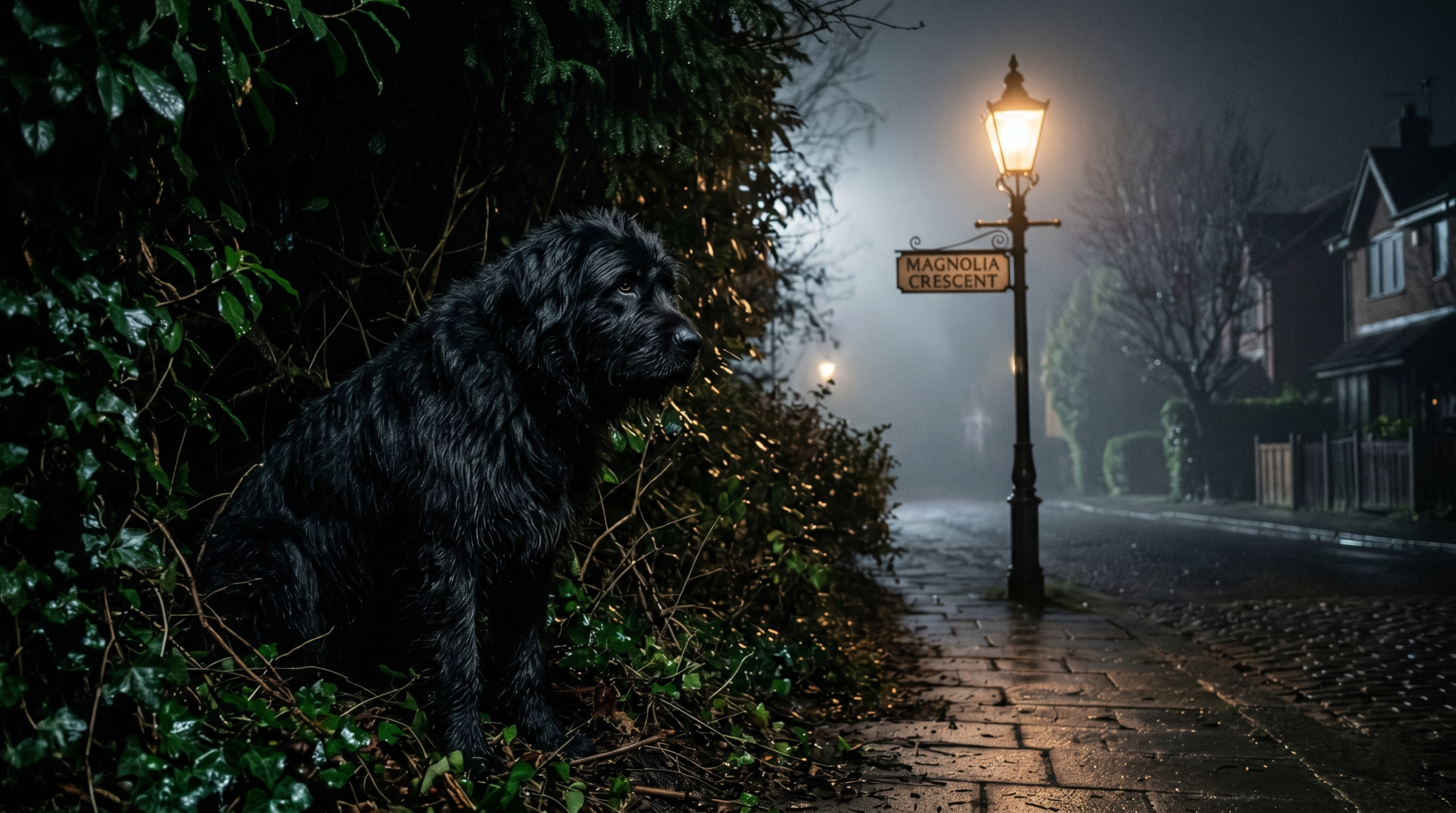 Did Harry Ever Actually See the Real Grim?
The definitive answer is no. Every single encounter Harry had with a large black dog in Prisoner of Azkaban was an encounter with his godfather, Sirius Black.
-
Magnolia Crescent: When Harry runs away from the Dursleys and collapses on the sidewalk, the massive silhouette he sees in the bushes is Sirius, who had just escaped Azkaban and wanted to catch a glimpse of his godson.
-
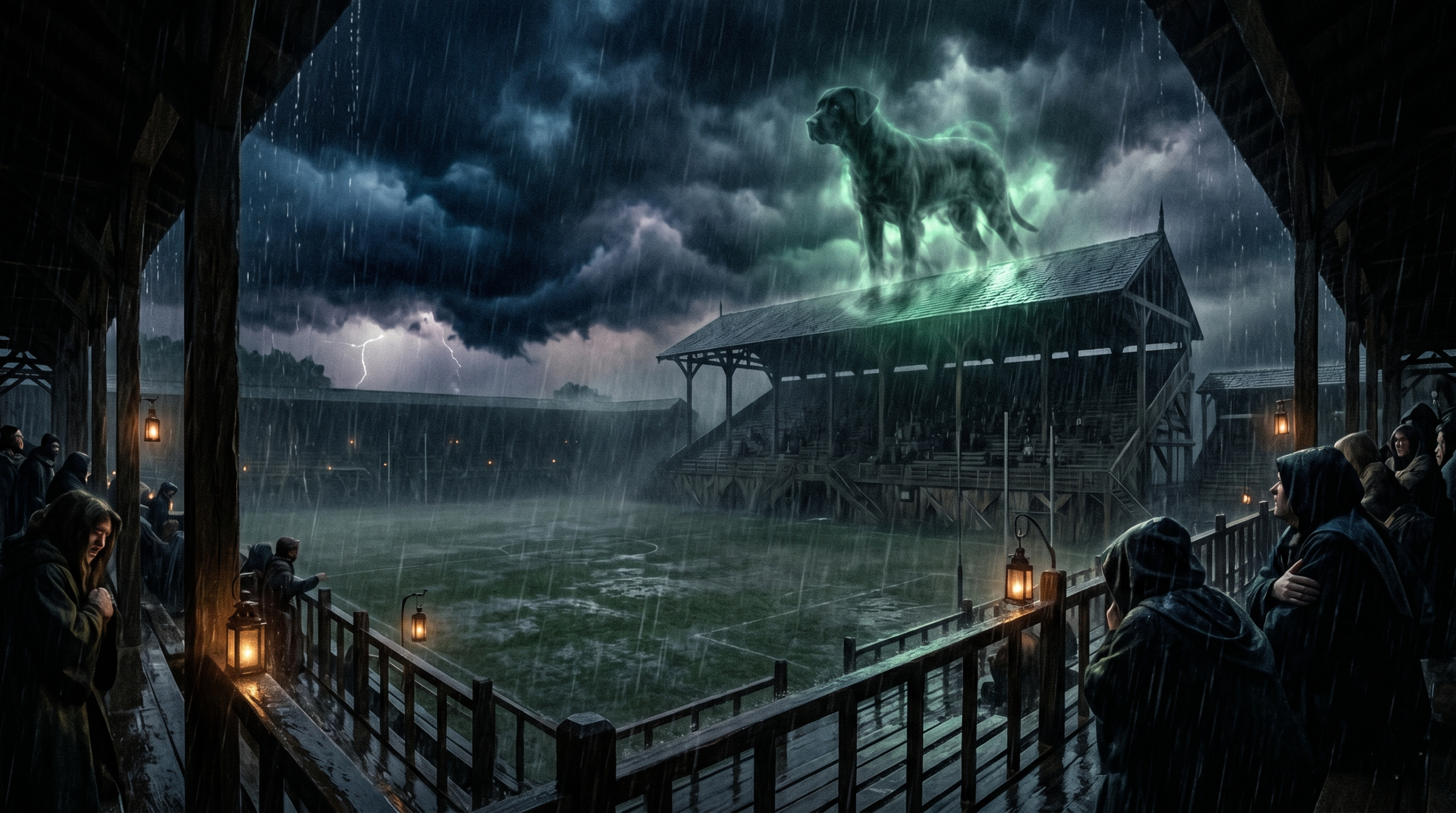
The Quidditch Match: The ominous shape Harry spots in the top bleachers during the storm, right before the Dementors attack, is Sirius watching Harry fly.
-
Outside the Shrieking Shack: The beast that drags Ron under the Whomping Willow is, again, Sirius acting out of desperation to capture Peter Pettigrew (Scabbers).
Harry’s perception was manipulated by a combination of Trelawney’s terrifying prophecy, Ron’s ingrained wizarding superstitions, and his own highly elevated state of anxiety due to the Dementors.
Real-World Mythology: The Folklore That Inspired the Fiction
To truly appreciate the depth of this magical lore, any dedicated Harry Potter insider knows you have to look beyond the books and into the real-world history that inspired J.K. Rowling. The Grim is not a wholly original creation; it is heavily rooted in centuries of chilling British and European folklore.
The Black Shuck and the Barghest
In English mythology, the archetype of the spectral black dog is prevalent across various regions, known by different names but sharing the same terrifying characteristics. In East Anglia, the legend of the Black Shuck speaks of a massive, shaggy black dog with fiery red or glowing yellow eyes. According to local lore dating back to the 12th century, encountering the Black Shuck on a lonely road at night was an absolute death sentence—a direct parallel to the wizarding omen.
Similarly, in Northern England, tales of the Barghest describe a monstrous black dog with huge teeth and claws that would appear as a portent of doom. The Barghest was said to stalk the narrow alleyways of towns like York, and anyone who heard its unearthly howl was destined to die soon after. Rowling brilliantly wove these regional myths together to create a universal boogeyman for the magical community.
The Church Grim (Kirk Grim)
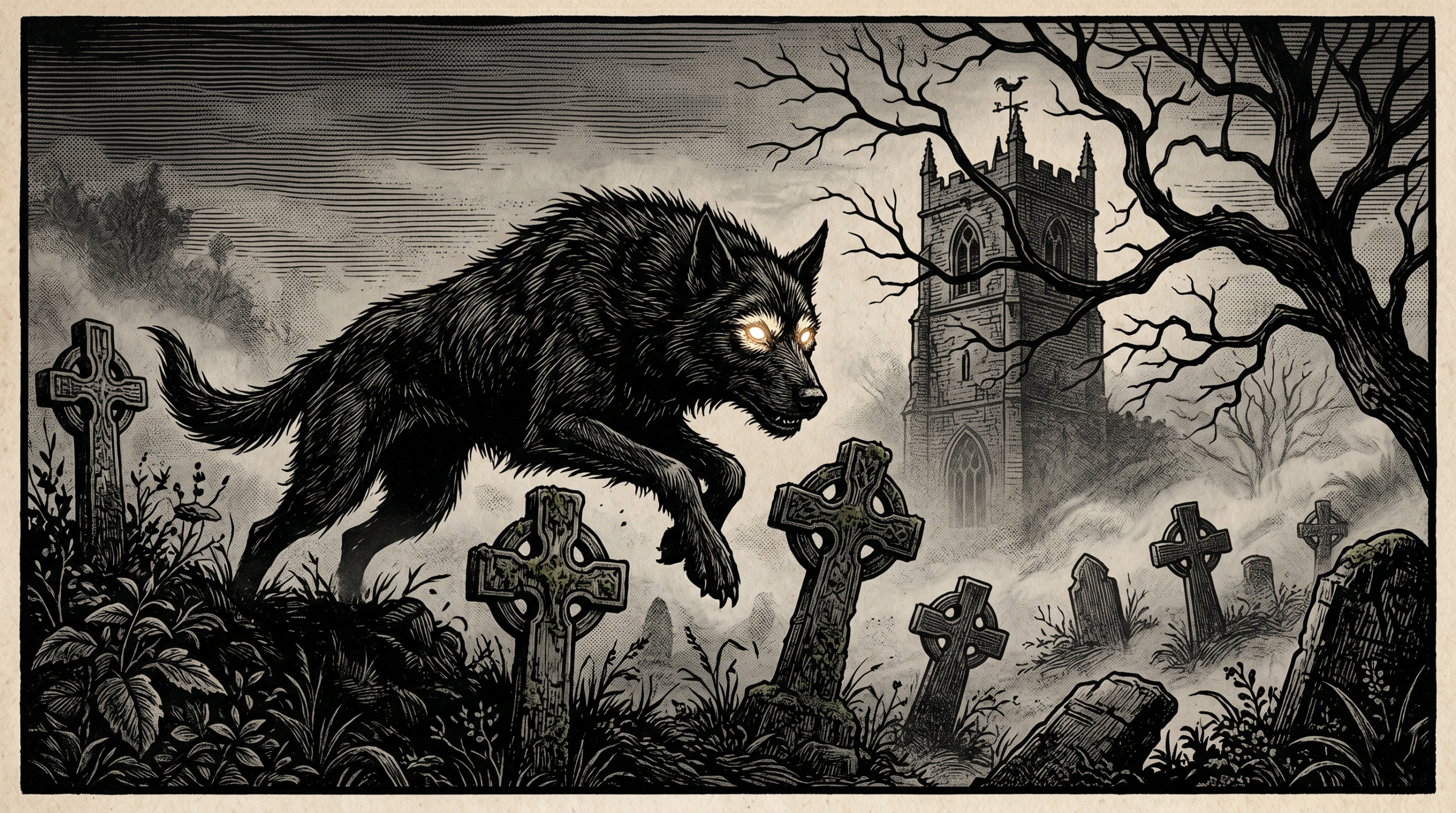
Perhaps the most fascinating real-world connection is the Scandinavian and English folklore of the Church Grim (or Kirk Grim). According to ancient architectural superstitions, the first living creature buried in a new churchyard would have its spirit bound to guard the sacred ground from the Devil. To spare a human from this fate, a completely black dog was often buried alive under the cornerstone of the church.
This spirit would then take the form of a giant black dog that haunted the graveyard. When Professor Trelawney specifically describes the beast as a “giant, spectral dog that haunts churchyards,” she is pulling directly from this specific, historical piece of folklore. This level of mythological accuracy is exactly what elevates the world-building of the Harry Potter universe.
 The Psychological Impact: Is The Omen a Self-Fulfilling Prophecy?
Understanding the real-world roots brings us to a fascinating psychological debate within the magical community: Does the omen actually kill people, or does the sheer terror of seeing it cause a fatal shock?
The Tragic Case of Uncle Bilius
Ron Weasley provides the most compelling in-universe evidence for the fatal power of the beast. In the Gryffindor common room, a terrified Ron recounts the story of his Uncle Bilius. According to Ron, Bilius spotted the omen and went completely mad with fear, dying just twenty-four hours later. For Ron, and much of the wizarding world, this is empirical proof of the curse.
Hermione Granger’s Skepticism
Hermione Granger, the voice of Muggle-born logic and reason, offers a counter-argument that grounds the superstition in psychology. She argues that the Grim does not possess a magical mechanism for murder. Instead, it relies on the nocebo effect (the negative counterpart to the placebo effect).
Hermione posits that people like Uncle Bilius do not die because they are cursed; they die because the intense psychological stress and sheer panic of believing they are doomed trigger a fatal physical reaction, such as a heart attack. If a wizard believes the omen is absolute, the fear becomes a self-fulfilling prophecy. This psychological tension highlights the divide between traditional, superstitious pure-blood upbringing and the analytical, modern approach to magic.
Exploring the Lore: A Magical “What If” Scenario
For digital creators and fans compiling a dedicated video playlist or deep-dive series exploring alternate Harry Potter timelines, analyzing “What If” scenarios is a fantastic way to engage with the lore. Let’s explore one of the most intriguing alternate concepts: What if the creature in the Quidditch stands hadn’t been Sirius Black, but a true, spectral Death Omen?
How a True Omen Would Have Changed Harry’s Third Year
If an actual harbinger of doom had fixated on Harry Potter, the entire tone of Prisoner of Azkaban would have shifted from a mystery about a fugitive to a race against an inevitable curse.
-
Dumbledore’s Reaction: Albus Dumbledore, who largely ignored Trelawney’s predictions, would have been forced to intervene. While Dumbledore is incredibly powerful, protecting a student from an inescapable manifestation of fate would require ancient, obscure magic—perhaps diving into the Department of Mysteries to understand how fate and death intertwine.
-
The Dementors’ Confusion: Dementors are blind; they navigate by sensing human emotion and souls. If a true spectral omen (which lacks a living soul) had been on the Hogwarts grounds, the Dementors would likely have ignored it completely, leaving the Ministry of Magic utterly defenseless against it.
 The Mechanics of Death Omens
In this alternate timeline, we would have to establish how true omens function. Unlike a Boggart, which feeds on fear and can be defeated with laughter (Riddikulus), or a Dementor, which feeds on despair and can be repelled by joy (Expecto Patronum), an omen cannot be fought. It is merely a messenger. If Harry had faced a real Grim, the narrative would have fundamentally changed the rules of J.K. Rowling’s universe, proving that divination is an absolute science rather than a subjective, often flawed art.
Frequently Asked Questions (FAQs)
To help clear up the last remaining shadows surrounding this dark lore, here are the most common questions fans ask:
Is the Grim related to a Boggart?
No. A Boggart is an amortal shape-shifting non-being that takes on the form of its victim’s worst fear. The Grim is a specific, cultural omen of death. If your greatest fear is death, a Boggart might take the shape of the omen, but it would not hold the actual prophetic power of a true harbinger.
Why couldn’t the Dementors tell the difference between Sirius and the omen?
Dementors do not have eyes; they sense the world through emotions. When Sirius transformed into Padfoot, his canine emotions were less complex than his human ones, allowing him to slip past them. The Dementors didn’t mistake him for an omen—they simply couldn’t register his animal mind as a human threat.
Are there other Death Omens in Harry Potter?
Yes, though they function differently. Thestrals, for example, are winged horses that can only be seen by those who have witnessed death. However, Thestrals are not omens of future death; they are merely creatures associated with past death. The Grim remains unique as an active predictor of doom.
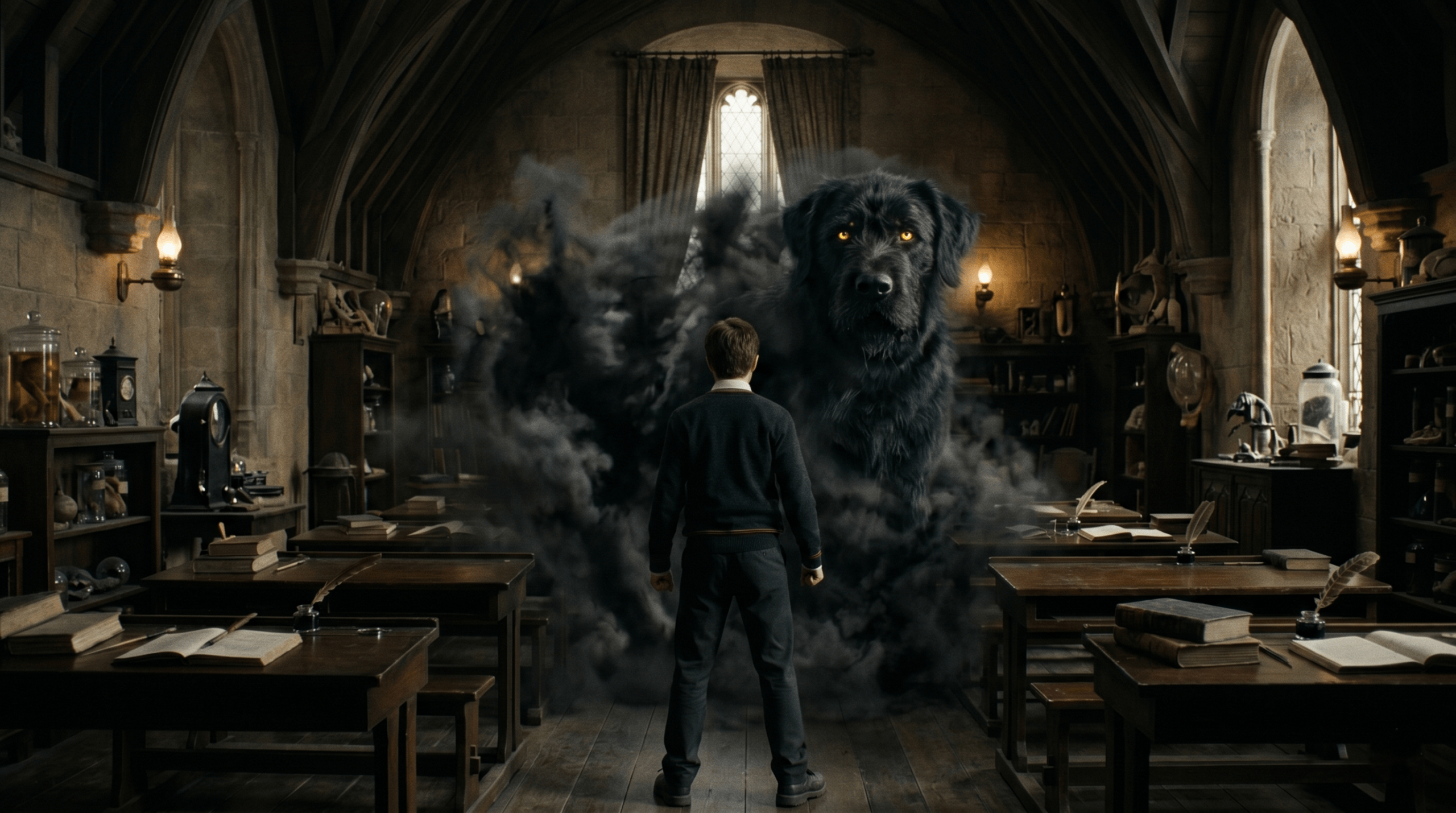
The Grim of Harry Potter stands as one of the most brilliantly executed pieces of world-building in the entire series. By tapping into genuine, terrifying British folklore—from the Black Shuck to the Church Grim—J.K. Rowling created a creature that feels historically grounded and psychologically complex.
While Harry Potter never actually crossed paths with the true spectral beast, the shadow of the omen served its purpose perfectly. It heightened the stakes of his third year, tested his resilience against fear, and expertly masked the true identity of Sirius Black until the final, breathless reveal. The real power of the beast was never in its bite, but in the profound fear it cast over the wizarding world.
What is your favorite piece of obscure wizarding lore? Are there other creatures or myths from the series you want us to decode next? Drop your thoughts in the comments below, and don’t forget to share this guide with your fellow Potterheads!