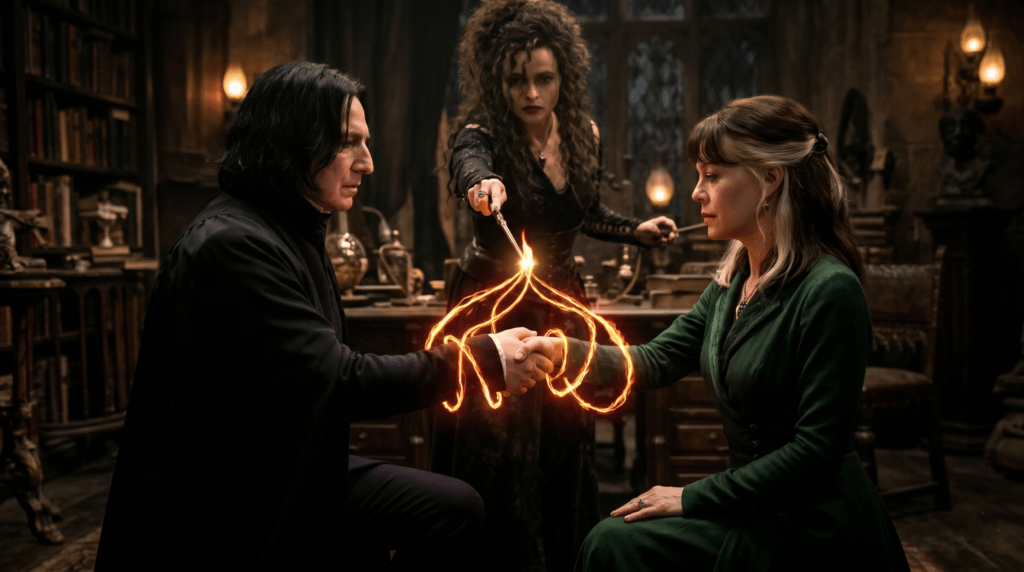
The wizarding world is famous for its whimsical charms, spectacular transfigurations, and life-saving potions. However, beneath this layer of everyday wonder lies a bedrock of ancient, uncompromising, and deeply dangerous magic. We see this starkly illustrated in Harry Potter and the Half-Blood Prince, within a dimly lit, neglected sitting room at Spinner’s End. Here, amidst the shadows, two kneeling figures join hands while a third binds them with a thin, brilliant tongue of flame. This is no ordinary wizarding promise. The Unbreakable Vow in Harry Potter is one of the most severe, permanent, and perilous magical contracts a witch or wizard can ever enter into.
While most fans understand the basic premise—that breaking this vow results in certain death—the intricate mechanics, the hidden rules, and the strict conditions that govern this spell are frequently misunderstood. How exactly does the magic enforce its lethal penalty? Are there loopholes in the phrasing? And what happens when complex wizarding law clashes with absolute, unbreakable magic?
This comprehensive guide breaks down the exact rules of the Unbreakable Vow, explores historical instances of its use across the lore, and dives deep into the “What If” scenarios that surround this dark and binding ritual.
What is the Unbreakable Vow? (The Core Mechanics)
In the canon established by J.K. Rowling, the Unbreakable Vow is a voluntary, legally and magically binding contract made between two witches or wizards, which must be sealed by a third magical practitioner. Unlike a standard enchanted contract (such as signing a parchment with a Blood Quill), the Vow is an active, living piece of magic that tethers the life force of the promiser directly to their word.
The Anatomy of the Ritual
The casting of the Unbreakable Vow is a highly formalized ritual that requires three distinct participants:
-
The Promiser: The individual committing to a set of actions or conditions.
-
The Receiver: The individual dictating the terms and receiving the pledge.
-
The Bonder: A neutral third party who physically and magically weaves the spell that connects the two.
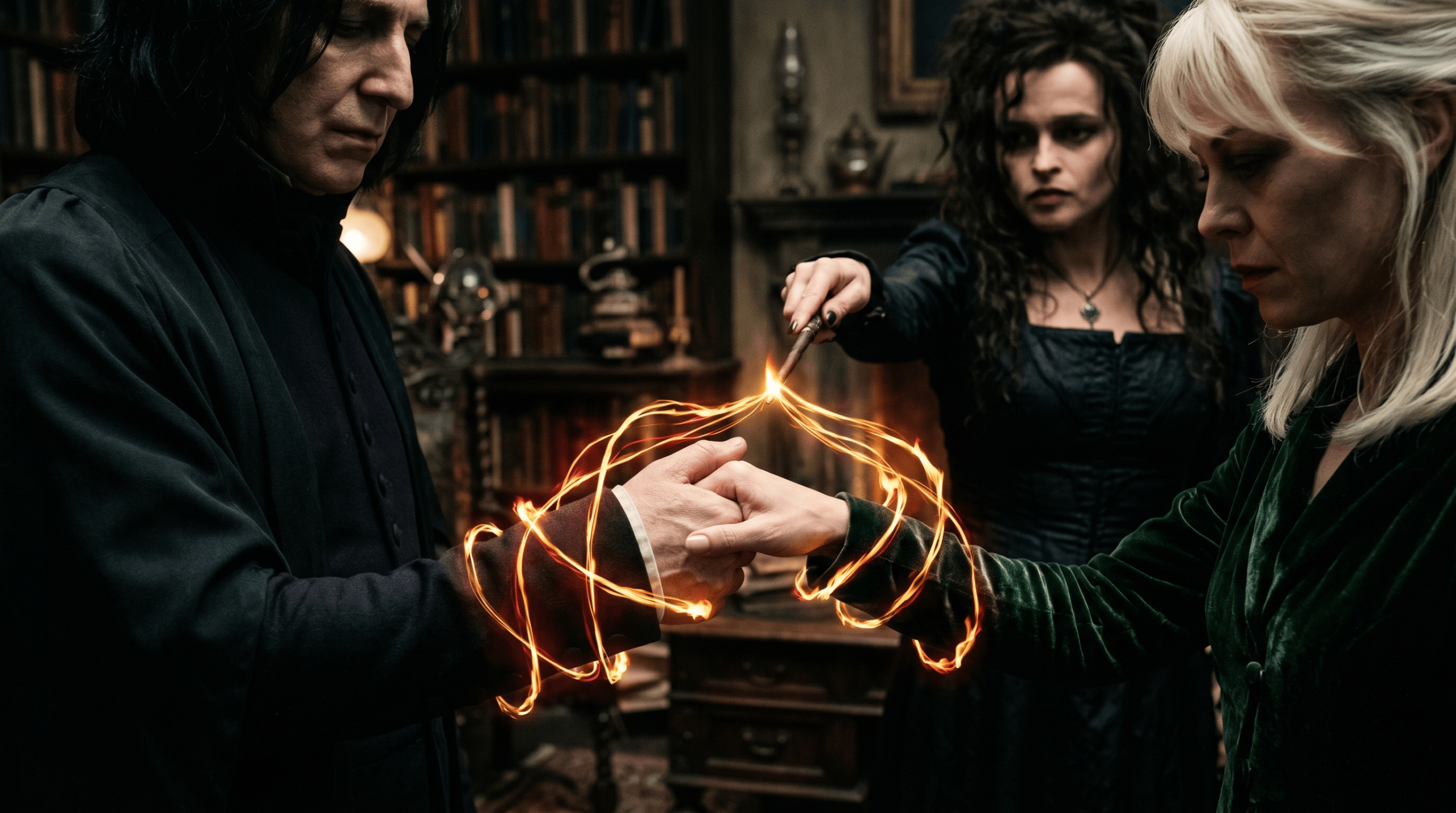
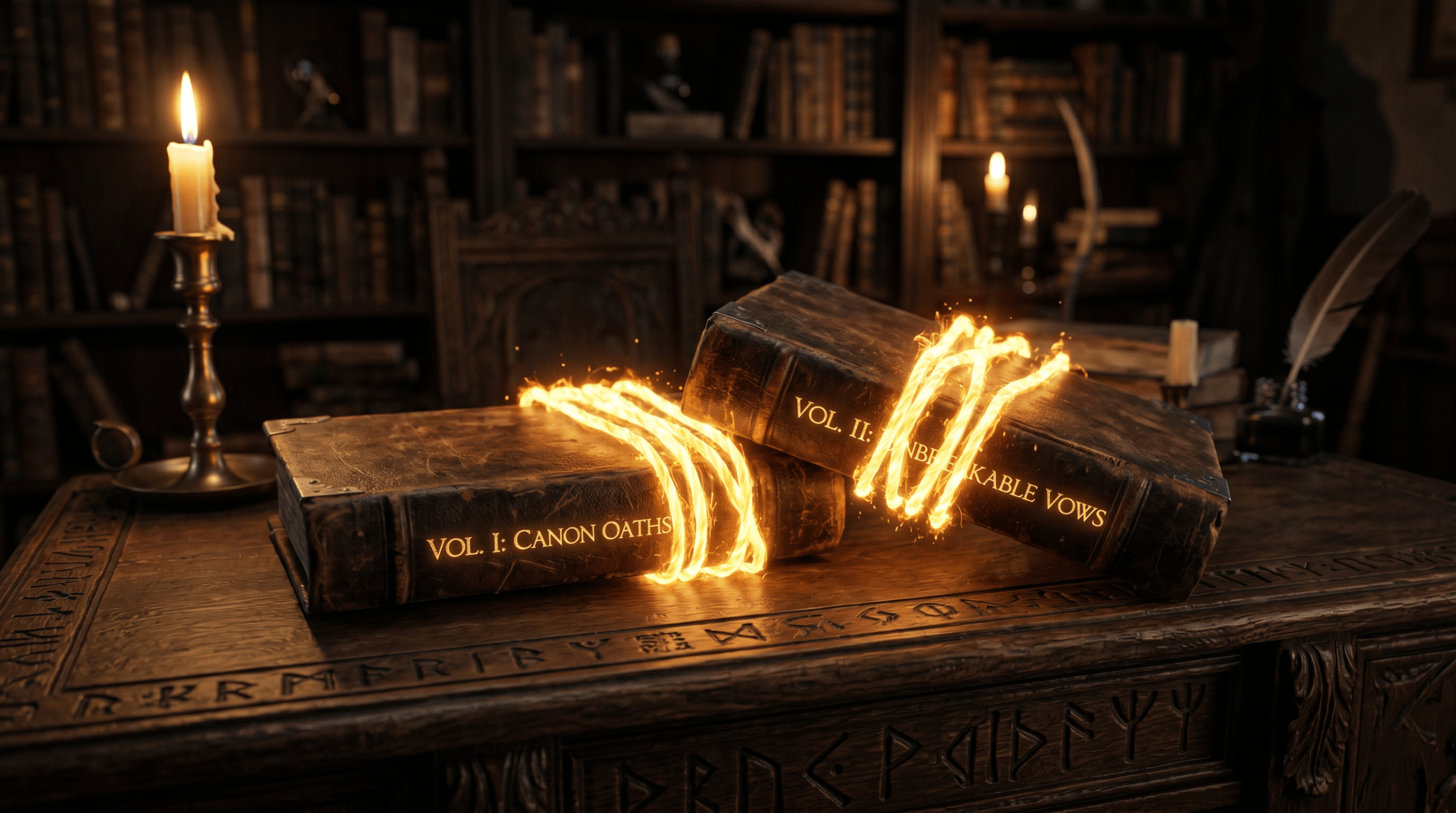
The physical manifestation of the spell is striking and highly specific. The Promiser and the Receiver must kneel facing one another and clasp their right hands. As the Receiver states each clause of the vow, the Promiser must agree. With each agreement, the Bonder—whose wand is pressed directly against the linked hands—draws forth a thick, brilliant flame. This flame wraps around the joined hands like a “red-hot wire,” physically layering the magical constraints onto the individuals. Each separate clause creates an additional binding wire of fire, tightening the magical snare.
 The Role of the Bonder
Why is a third person absolutely necessary for a promise between two people? In magical theory, a wizard’s magic is tied to their own intent and willpower. If two people simply swore an oath to one another, their own internal magic could theoretically be manipulated, reversed, or overpowered by a stronger counter-curse.
The Bonder acts as an external anchor. By using their wand to channel the spell, the Bonder acts as a conduit, locking the magic into place from an outside source.
Expert Insight: In wandlore and magical theory, the wand acts as a bridge between the physical and magical realms. By resting the tip of the wand on the clasped hands, the Bonder is essentially stitching the magic directly into the magical aura (and life force) of the Promiser. Without the Bonder’s external validation, the magic would lack the structural integrity required to make the vow truly “unbreakable.”
The Deadly Consequences of Breaking the Vow
The stakes of the Unbreakable Vow are absolute: if you break it, you die. But the mechanics of this lethal consequence are fascinating when viewed through the lens of deep wizarding lore.
How Exactly Does the Curse Kill?
The death resulting from a broken Vow is not heavily detailed in the books, which leaves room for profound magical analysis. Unlike the Avada Kedavra curse—which forcibly and instantly rips the soul from the body in a flash of green light—the Unbreakable Vow appears to work from the inside out.
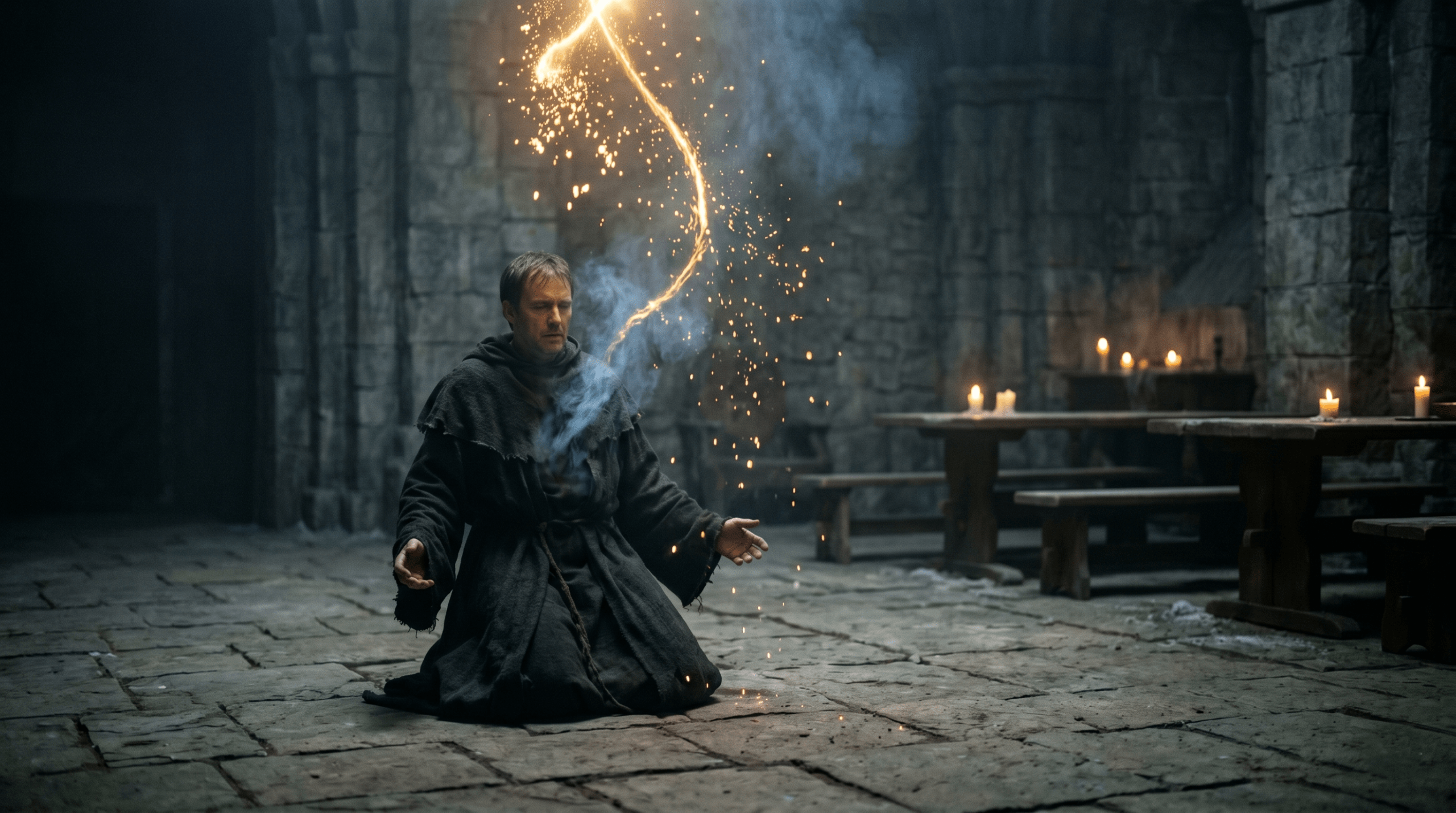
Because the magic of the Vow is tethered to the Promiser’s life force during the ritual, breaking the terms essentially commands the Promiser’s own magic to turn against them. It is widely theorized by magical scholars that the death is instantaneous and inevitable, triggered the very microsecond the terms of the vow are violated. There is no counter-curse, no healing potion, and no magical shield that can block it, because the fatal blow is delivered by the wizard’s own compromised life force.
 Can You Trick or Bypass the Vow?
When dealing with a contract of life and death, the natural human instinct is to look for loopholes. However, the Unbreakable Vow is famously resistant to trickery, largely because magic is deeply tied to intent.
Semantics play a massive role in the survival of the Promiser. The magic binds the Promiser to the exact phrasing dictated by the Receiver. If the terms are vague, the Promiser might find wiggle room. This is precisely why, during the most famous instance of the Vow, the phrasing is meticulously crafted.
If a Promiser vows to “try” to protect someone, the magic only requires genuine effort. If they vow to “ensure their absolute safety,” any harm that befalls the target—even by an unforeseeable accident—could trigger the lethal penalty. Precision in the phrasing is quite literally a matter of life and death.
Famous Unbreakable Vows in Wizarding World History
To truly understand the gravity of this magic, we must look at how it has been utilized—and nearly utilized—throughout canon wizarding history.
Severus Snape & Narcissa Malfoy (The Masterclass in Binding)
The most prominent example of the Vow occurs in The Half-Blood Prince, between Severus Snape and Narcissa Malfoy, with Bellatrix Lestrange acting as the Bonder. Driven to desperation by Voldemort’s impossible task for her son Draco, Narcissa seeks an ironclad guarantee from Snape.
Narcissa is highly strategic, demanding three specific, escalating clauses:
-
To watch over Draco as he attempts to fulfill the Dark Lord’s wishes.
-
To protect him from harm to the best of his ability.
-
To carry out the deed that the Dark Lord ordered Draco to perform, should Draco fail.
Snape’s agreement to these terms is a masterclass in psychological and magical fortitude. As a master of Occlumency and a double agent, Snape understood the absolute finality of the Vow. He agreed not just to placate Narcissa and maintain his cover with Bellatrix, but because the Vow perfectly aligned with the secret instructions he had already received from Albus Dumbledore.
Yusuf Kama’s Tragic Mission (Fantastic Beasts Era)
In Fantastic Beasts: The Crimes of Grindelwald, we witness the long-term physical and psychological toll of an unfulfilled Unbreakable Vow. Yusuf Kama was forced by his dying father to take a Vow to kill the person Corvus Lestrange loved most (which they believed to be Corvus Lestrange V).
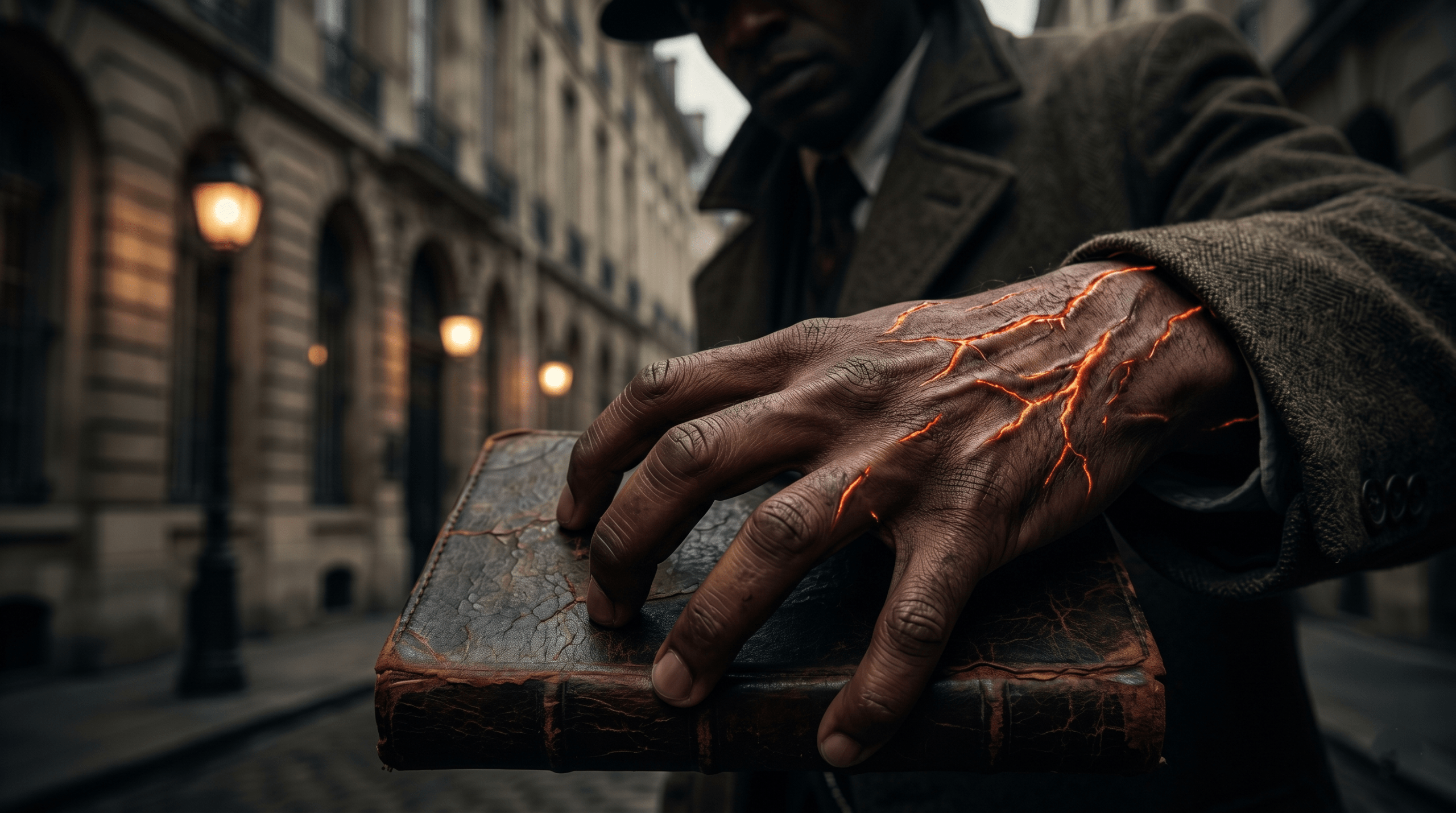
Yusuf’s narrative reveals a crucial detail about the Vow: the physical toll of carrying it. Across decades of searching, the unfulfilled magic physically manifested as deep, glowing scars on his hand. This suggests that the Vow acts almost like a magical parasite. The longer a Promiser takes to fulfill the terms—especially if they are actively struggling against them or failing to find a resolution—the more the binding magic strains their physical body.
 The Weasley Twins & Ron (The Near-Miss)
To highlight how seriously the wizarding world treats this magic, J.K. Rowling provides a terrifying anecdote regarding the Weasley family. When Ron was just a young boy, his older brothers, Fred and George, attempted to trick him into making an Unbreakable Vow.
Arthur Weasley caught them in the act just as they were clasping hands. According to Ron, his father went absolutely berserk—a rare reaction for the usually mild-mannered Arthur Weasley. This incident underscores that the Vow is considered deeply taboo, bordering on the Dark Arts, and is universally recognized as a lethal danger even among children playing pranks.
Deep Lore & Alternate Scenarios (The “What If” Analysis)
The strict rules of the Unbreakable Vow open the door to fascinating alternate history theories and edge-case scenarios. Let’s explore some of the most highly debated “What Ifs” in Harry Potter lore.
What If the Bonder Dies Before the Vow is Fulfilled?
If Bellatrix Lestrange had died shortly after binding Snape and Narcissa, would the Vow have broken? The consensus in magical theory is no.
The Bonder is required to act as the catalyst and the conduit to weave the magic. However, once the “red-hot wire” of flame sinks into the skin and binds the life force of the Promiser, the Bonder’s role is entirely complete. The magic becomes self-sustaining, fueled by the life force of the Promiser and the terms set by the Receiver. The death of the Bonder has no retroactive effect on a completed spell.
What If Someone is Forced Under the Imperius Curse?
The Imperius Curse (Imperio) strips a victim of their free will, forcing them to obey the caster’s commands. What happens if a wizard is placed under the Imperius Curse and forced to make an Unbreakable Vow?
Magic in the Harry Potter universe relies heavily on conscious intent and emotional willpower. If a victim lacks the free will to genuinely “agree” to the terms, it is highly likely that the Unbreakable Vow would simply fail to bind. The flame might sputter and die before sinking into the skin, as the magic requires a genuine soul-level commitment that the Imperius Curse artificially suppresses. Alternatively, if the Vow did take hold, the paradox of forced magic might instantly shatter the mind of the victim.
What If the Task Becomes Literally Impossible?
Consider a scenario where a wizard vows to “protect John Doe from being murdered by Dark Wizards.” What if John Doe later dies of a perfectly natural heart attack? Does the Promiser die for failing to keep John Doe alive?
This comes down to the exact phrasing and the intent behind the magic. The magic of the Vow is literal, but it is not irrational. If the Vow specifically dictated protection from Dark Wizards, a natural death falls outside the parameters of the contract. The Promiser would be released from the Vow because the condition of the threat (Dark Wizards) was never triggered. However, if the Vow was simply “Keep John Doe alive at all costs,” the Promiser’s life would be instantly forfeit the moment John Doe’s heart stopped.
The Unbreakable Vow vs. Other Magical Contracts
The wizarding world utilizes several forms of binding magic. Here is how the Unbreakable Vow compares to other notable magical contracts:
| Feature | The Unbreakable Vow | The Goblet of Fire | The Blood Pact (Grindelwald/Dumbledore) | The Fidelius Charm |
| Primary Function | A fatal promise to perform or refrain from an action. | A binding contract to participate in a specific tournament. | A mutual agreement not to fight or harm one another. | Concealing a secret within a living soul. |
| Physical Component | Clasping hands, bound by magical fire. | Placing a name on parchment into a magical artifact. | Mixing blood in a physical magical vial/pendant. | None (purely charm-based). |
| Penalty for Breaking | Instant, unavoidable death. | Severe, but unconfirmed (likely loss of magic or heavy curse). | Lethal magical retaliation from the physical object. | The secret is instantly revealed to all. |
| Can it be undone? | No. Once fulfilled, it ends. If broken, you die. | No, but it ends when the tournament concludes. | Yes, if the physical pendant is destroyed. | Yes, by the Secret Keeper willingly revealing it. |
 What If Dumbledore and Grindelwald Had Used an Unbreakable Vow?
We know from the Fantastic Beasts series that Albus Dumbledore and Gellert Grindelwald forged a Blood Pact to ensure they would never fight each other. But what if, in their youthful, passionate pursuit of the “Greater Good,” they had chosen the Unbreakable Vow instead? Even more dangerously, what if Dumbledore had been forced to make an Unbreakable Vow to permanently join forces with Gellert Grindelwald?
Unlike the Blood Pact, which was housed in a physical vial that could eventually be destroyed, the Unbreakable Vow has no physical off-switch. If Dumbledore had been magically bound to Grindelwald’s side through a Vow, his eventual change of heart following the tragic death of his sister, Ariana, would have triggered an impossible paradox. To turn away from Grindelwald would have meant instant death. This single change in magical contracts would have either killed Albus Dumbledore in 1899 or plunged the entire wizarding world into darkness, with Dumbledore serving as Grindelwald’s legally and magically bound enforcer. The legendary 1945 duel would never have happened.
What If the Marauders Bound Peter Pettigrew?
The tragedy of the Potter family is rooted in misplaced trust. James Potter chose Peter Pettigrew as the Secret Keeper for the Fidelius Charm, believing his friend would rather die than betray them.
However, if Sirius Black and James Potter had possessed a darker, more pragmatic streak, they could have utilized the Unbreakable Vow. If James had forced Pettigrew to take an Unbreakable Vow to “never reveal the location of the Potter family to Lord Voldemort or his followers,” with Sirius acting as the Bonder, the First Wizarding War would have ended very differently. The moment Pettigrew formulated the intent to tell Voldemort, or the moment the words left his lips, the magic would have killed him instantly. The Potters would have survived, and the boy who lived would have simply been a boy who grew up with his parents.
Why Didn’t Lord Voldemort Use the Unbreakable Vow on His Death Eaters?
A frequently asked question among fans is why Lord Voldemort—a wizard obsessed with loyalty, control, and absolute power—did not simply force every Death Eater to take an Unbreakable Vow of loyalty.
The answer lies in Voldemort’s profound psychological flaws and his deep misunderstanding of magic.
-
The Need for a Bonder: The Vow requires a third person. Voldemort was notoriously paranoid and solitary; he trusted no one. To involve a third party in binding a servant to him would require placing trust in that Bonder’s magical integrity, something Voldemort fundamentally refused to do.
-
Fear vs. Magic: Voldemort believed that fear was a stronger motivator than magical law. He preferred the Dark Mark—a brand that allowed him to inflict pain, summon his followers, and maintain a constant psychological grip.
-
The Risk of Vague Phrasing: Voldemort frequently required his followers to act autonomously and interpret his wishes. If a Vow was too rigidly phrased, a Death Eater might fail on a technicality and die, robbing Voldemort of a useful servant. He preferred to be the sole arbiter of who lived and who died.
How to Survive an Unbreakable Vow: The Ultimate Defense
While canon states that the Vow is lethal if broken, magical theorists have long debated the absolute limits of this magic. If a wizard finds themselves trapped in a Vow they cannot fulfill, are there any highly theoretical avenues for survival?
1. The “Draught of Living Death” Loophole
If a wizard cannot fulfill a Vow and the deadline (if one was set) is approaching, they could theoretically consume the Draught of Living Death. This potion puts the drinker into an indefinite, death-like slumber. Because the wizard’s bodily functions are essentially halted, the magic of the Vow might recognize the host as “deceased” or suspended, preventing the lethal curse from activating until they are awakened.
2. Obliviation of the Receiver
What happens if the Receiver of the Vow has their memory entirely wiped via a severe Memory Charm (Obliviate)? The magic of the Vow is tied to the contract made between the two minds. If the person who dictated the terms no longer remembers or desires the outcome, does the magic lose its anchor? While incredibly risky, erasing the Receiver’s knowledge of the Vow might theoretically destabilize the contract enough to render it null.
3. The Horcrux Exception
If a Promiser has created a Horcrux prior to breaking the Vow, the lethal consequence becomes complicated. The Unbreakable Vow destroys the physical body and life force. However, the soul fragment housed in the Horcrux would remain intact. The wizard’s body would die violently, but their spirit would be ripped from the physical form, leaving them as a spectral entity—just like Voldemort after his rebounding curse in Godric’s Hollow.
 Frequently Asked Questions
Did Dumbledore know about Snape’s Unbreakable Vow?
Yes. Snape informed Dumbledore about the Vow shortly after making it. Dumbledore used this to his advantage, as it perfectly aligned with his preexisting plan to have Snape be the one to kill him, thereby saving Draco’s soul and cementing Snape’s loyalty in Voldemort’s eyes.
Can the Unbreakable Vow be broken without dying?
No. According to strict canon, there is no known counter-curse, loophole, or magical intervention that can save a person from death if they violate the exact terms of an Unbreakable Vow.
Who was the Bonder for Snape and Narcissa?
Bellatrix Lestrange acted as the Bonder for Severus Snape and Narcissa Malfoy at Spinner’s End. She was initially skeptical of Snape’s loyalty and was shocked when he agreed to the lethal terms.
Can a Muggle make an Unbreakable Vow?
No. The Unbreakable Vow requires the active life force and magical aura of a witch or wizard to sustain the binding magic. A Muggle lacks the inherent magical signature required for the spell to latch onto.
The Unbreakable Vow in Harry Potter remains one of the most fascinating and terrifying pieces of world-building in modern fantasy literature. It serves as a stark reminder that magic is not just a tool for convenience or combat; it is an elemental force that demands absolute respect. By tying a person’s physical survival directly to the integrity of their word, the Vow elevates a simple promise into a matter of ultimate consequence.
Whether it is Snape using it as a masterful chess move to outwit Voldemort, or Yusuf Kama bearing the physical scars of a lifelong burden, the Unbreakable Vow proves that in the wizarding world, words possess a power far greater than any standard curse. They are, quite literally, binding.