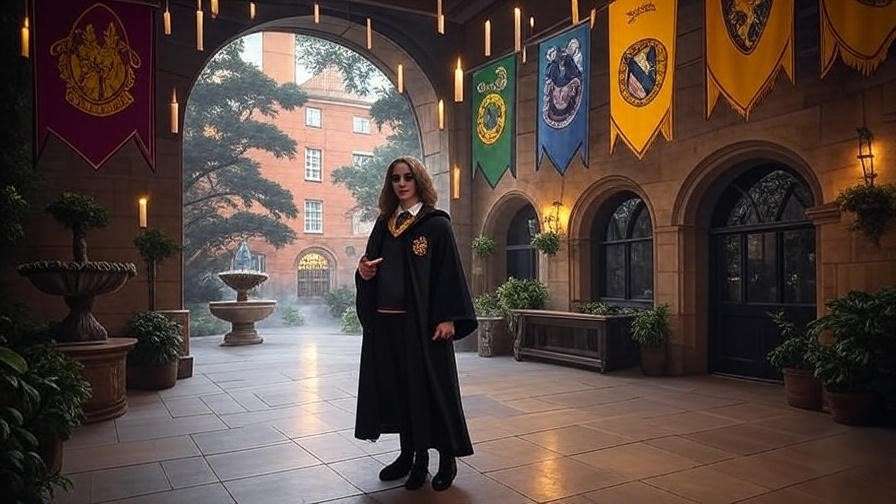

The wizarding world believed that Lord Voldemort’s reign of terror ended definitively on May 2, 1998, leaving behind nothing but ruined Horcruxes and fading scars. However, shadows run notoriously deep in J.K. Rowling’s magical universe. For both casual readers and dedicated fans navigating the complex lore of The Cursed Child, the sudden appearance of Delphini Diggory of Harry Potter fame remains one of the franchise’s most shocking, controversial, and highly debated twists.
How did Amos Diggory suddenly acquire a niece? More importantly, how did the Dark Lord—a being who despised human connection and feared mortality—manage to leave behind a living, breathing heir?
If you find yourself confused by the tangled timelines, canon discrepancies, and dark origins surrounding Delphi, you are not alone. This comprehensive guide will completely unravel the mystery of the “unseen child.” From dismantling her fabricated identity to exploring her terrifying magical prowess, her tragic upbringing, and her ultimate fate, we will unmask the true legacy of the last Slytherin heir.
Who is Delphini Diggory? The False Identity Explained
Before we can understand the dark reality of her origins, we must first examine the brilliant, albeit chilling, deception she used to infiltrate the lives of Harry Potter and his family. The name “Delphini Diggory” is entirely fabricated—a carefully constructed alias designed to manipulate a grieving father and exploit the guilt of a famous Auror.
The St. Oswald’s Deception
Delphini first appears in the narrative of Harry Potter and the Cursed Child as a young, silver-haired woman in her early twenties, working as a devoted caretaker and self-proclaimed “niece” to the elderly Amos Diggory. Amos, residing at St. Oswald’s Home for Old Witches and Wizards, is still consumed by grief over the tragic death of his son, Cedric, who was murdered by Peter Pettigrew on Voldemort’s orders during the Triwizard Tournament in 1995.
Delphi positions herself as Amos’s only remaining family and his primary source of comfort. By feigning innocent devotion, she establishes an undeniable aura of trustworthiness. When Harry Potter, now the Head of the Department of Magical Law Enforcement, comes to visit Amos, Delphi is there—playing the part of the fiercely protective relative perfectly.
 A Masterclass in Manipulation
To the trained eye of a wizarding world lore expert, the “niece” story immediately raises red flags. Amos Diggory and his wife were both only children; biologically and genealogically, it is impossible for Amos to have a niece. Delphi bypassed this glaring plot hole by performing an exceptionally powerful Confundus Charm on Amos.
This charm planted false memories in the grieving man’s fragile mind, convincing him that Delphi was family. The deception was a masterstroke of psychological manipulation. By adopting the surname “Diggory,” Delphi weaponized Cedric’s memory. She knew that the name would instantly trigger Albus Potter (Harry’s son), who struggled with his father’s legacy, and Scorpius Malfoy, who was desperate to prove he wasn’t a dark wizard. The false identity was the perfect Trojan Horse to gain access to the Experimental Time-Turner.
The True Bloodline: Lord Voldemort and Bellatrix Lestrange
The revelation that shatters the plot of The Cursed Child is that Delphini is not a Diggory at all. Her true name is simply Delphini, and she is the biological daughter of Tom Marvolo Riddle (Lord Voldemort) and his most fanatical, devoted lieutenant, Bellatrix Lestrange.
The Timeline of Delphi’s Birth
For many fans, the immediate question is: When did this happen? Integrating Delphi’s birth into the established timeline of Harry Potter and the Deathly Hallows requires a close reading of the text.
Delphi was born in secret at Malfoy Manor, the temporary headquarters for the Death Eaters, sometime around March 1998. This perfectly aligns with a notable gap in Bellatrix Lestrange’s active appearances during the Seventh Book. During the winter of 1997 and the early spring of 1998, Bellatrix is largely absent from the front lines of the Second Wizarding War. When Harry, Ron, and Hermione are captured and brought to Malfoy Manor, Bellatrix is present, but her hyper-aggressive, slightly altered demeanor (and her strict confinement to the Manor) retroactively supports the narrative that she had recently given birth.
 Raised in the Shadows: The Rowle Family
Delphi’s parents did not live to raise her. Just weeks after her birth, both Lord Voldemort and Bellatrix Lestrange were killed at the Battle of Hogwarts on May 2, 1998. Delphi was suddenly an orphan, carrying the darkest bloodline in modern wizarding history.
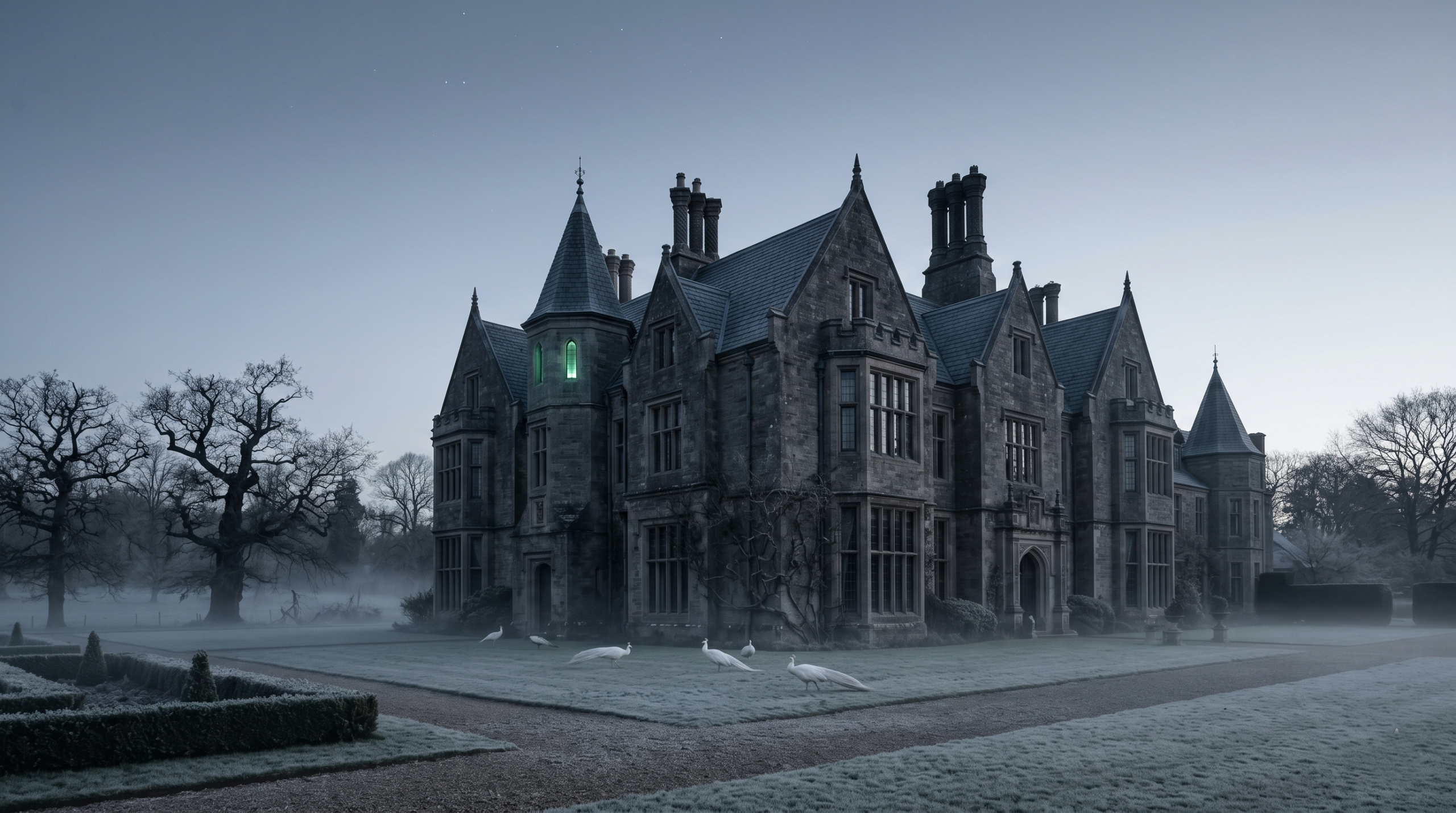
She was not raised by the Malfoys, nor was she placed in the wizarding foster system. Instead, the infant was handed over to Euphemia Rowle, a member of a prominent Death Eater family. However, Euphemia did not take Delphi in out of loyalty to the Dark Lord or love for the child; she did it for a substantial bribe of gold.
Delphi’s childhood was utterly devoid of affection. She was kept hidden from the world, isolated in a loveless home. The psychological damage was severe. She had no friends, substituting human connection with an imaginary companion, and later, a pet Augurey. Most tragically for a witch of her lineage, she was never allowed to attend Hogwarts School of Witchcraft and Wizardry. She was a ghost, a secret kept even from the remnants of Voldemort’s inner circle.
The Azkaban Revelation
Delphi lived her entire adolescence ignorant of her true, terrifying heritage. The turning point in her life occurred when Rodolphus Lestrange—Bellatrix’s husband, who survived the Battle of Hogwarts and was imprisoned—was eventually released (or escaped) from Azkaban.
Rodolphus tracked Delphi down and revealed the monumental truth: she was the daughter of the Dark Lord. He didn’t just give her an identity; he gave her a dark, crushing purpose. Rodolphus informed her of a prophecy, setting Delphi on a fanatic path to rewrite history, save her father, and claim her birthright.
The Powers of the Last Slytherin Heir
As the direct descendant of both Salazar Slytherin (through her father) and the Noble and Most Ancient House of Black (through her mother), Delphi inherited an astonishing array of magical abilities. Her raw power frequently rivaled, and occasionally surpassed, the elite Aurors who eventually tracked her down.
The Return of Parseltongue
The ability to speak to snakes is an exceptionally rare, hereditary magical trait almost exclusively tied to the bloodline of Salazar Slytherin. When Voldemort’s killing curse rebounded in 1981, he accidentally transferred a fragment of his soul to Harry Potter, temporarily granting Harry the ability to speak Parseltongue. When the Horcrux inside Harry was destroyed, he lost this ability.
Delphi, however, possessed Parseltongue naturally by birthright. She utilized this dark, hissing language to conceal her true room and her sinister plans within St. Oswald’s Home. The presence of Parseltongue was the ultimate, irrefutable proof of her dark lineage.
 Wandless Magic and Unsupported Flight
Perhaps the most terrifying display of Delphi’s magical pedigree is her ability to fly without the use of a broomstick, Thestral, or any other magical enchantment.
In the entire Harry Potter canon, unsupported flight was a feat of dark magic invented exclusively by Lord Voldemort. He famously used it during the Battle of the Seven Potters, shocking the Order of the Phoenix. He later taught this highly advanced technique to only one person: Severus Snape. The fact that Delphi was able to master unsupported flight highlights her innate, almost instinctual connection to her father’s unique brand of dark magic, executing it effortlessly to intimidate and overpower her enemies.
Mastery of the Dark Arts
Despite never receiving a formal magical education at Hogwarts, Delphi’s proficiency in dueling and the Dark Arts is staggering. She clearly spent years studying in secret, honing her abilities to lethal perfection.
Throughout the events of The Cursed Child, she demonstrates wandless magic with devastating effect. She casts the Unforgivable Curses with the same casual cruelty as her mother, effortlessly hitting Scorpius Malfoy with the Cruciatus Curse and murdering the innocent Hogwarts student Craig Bowker Jr. with the Avada Kedavra curse. During the climax in a 1981 church, she holds her own in a high-stakes duel against four highly skilled adult wizards—Harry Potter, Hermione Granger, Ron Weasley, and Draco Malfoy—simultaneously. It took the combined might of the wizarding world’s greatest heroes just to disarm her.
Please reply with “Continue generating” to read the rest of the article, where we will uncover the mystery of the Augurey, explore the intense fan controversy surrounding Voldemort’s desire for an heir, and detail her ultimate defeat in Godric’s Hollow.
The Augurey and the “Unseen Child” Prophecy
To understand Delphini’s motivations, one must look beyond her bloodline and examine the psychological anchor of her identity: the Augurey. Delphi’s overarching goal in Harry Potter and the Cursed Child is not simply a blind quest for power; it is an obsessive, desperate crusade to fulfill a prophecy and finally meet the father she never knew.
What is the Augurey?
In wizarding world lore, the Augurey (also known as the Irish Phoenix) is a mournful-looking bird whose cry is believed by many to foretell death, though Magizoologists like Newt Scamander later proved it merely predicts rain. For Delphi, the Augurey became a symbol of her miserable, isolated upbringing. Her guardian, Euphemia Rowle, kept an Augurey as a pet, and the bird’s constant, weeping cries were the soundtrack to Delphi’s childhood.
In a dark act of reclamation, Delphi adopted the bird as her personal symbol, even branding herself with a large Augurey tattoo on her back. In the nightmarish alternate timeline created when Albus and Scorpius tamper with the Time-Turner, Voldemort won the Battle of Hogwarts. In this dark reality, Delphi operates as a brutal dictator known only as “The Augurey,” enforcing her father’s will and stamping out the remnants of Dumbledore’s Army.
 The Prophecy That Drove Her
Rodolphus Lestrange didn’t just reveal her parentage; he imparted a newly discovered prophecy that became Delphi’s dark gospel. The prophecy dictated the exact conditions required to bring Voldemort back:
“When spares are spared, when time is turned, when unseen children murder their fathers: then will the Dark Lord return.”
Delphi meticulously deconstructed this prophecy. The “spare” referred to Cedric Diggory, whom Voldemort had dismissed as a “spare” before ordering his death in the Little Hangleton graveyard. “Time is turned” explicitly referenced the use of an illegal Experimental Time-Turner. The “unseen children” represented the neglected, overshadowed offspring of famous men—namely herself, Albus Potter, and Scorpius Malfoy.
Weaponizing Albus and Scorpius
Delphi lacked the political connections to steal a Time-Turner herself, so she targeted the vulnerabilities of two teenage boys struggling with their own fathers’ legacies. Albus Severus Potter felt suffocated by the legendary shadow of the “Boy Who Lived,” while Scorpius Malfoy was tormented by vicious rumors that he was secretly Voldemort’s son.
By playing the role of the sympathetic “Delphini Diggory,” she weaponized their emotional insecurities. She convinced Albus that saving Cedric Diggory was a noble act of rebellion against Harry’s flawed legacy. The tragic irony is profound: Voldemort’s daughter successfully manipulated the sons of Harry Potter and Draco Malfoy into doing the very thing that would resurrect her father.
The Grand Fan Controversy: Why Would Voldemort Want an Heir?
The introduction of Delphi into the Harry Potter canon sparked one of the most intense debates in the history of the fandom. For many purists, the existence of a biological child fundamentally contradicts Lord Voldemort’s established character profile. Exploring this controversy elevates our understanding of the narrative beyond surface-level plot points.
The “Immortality” Paradox
The core criticism from fans centers around Voldemort’s defining psychological trait: his absolute, paralyzing fear of death. He split his soul into seven Horcruxes specifically to achieve true immortality. If a dark wizard believes he is going to live forever and rule eternally, why would he ever feel the need to produce an heir to carry on his legacy? An heir implies succession, and succession implies that the ruler will eventually pass away—a concept Voldemort violently rejected.
Furthermore, Voldemort viewed attachments as weaknesses. He sneered at love, friendship, and familial bonds. The idea of him engaging in a romantic, physical relationship with Bellatrix Lestrange feels, to some readers, jarringly out of character.
Love vs. Calculation
How do we reconcile Delphi’s existence with Voldemort’s psychology? Lore experts suggest two highly plausible explanations that keep her character grounded in canon:
-
The Ultimate Servant, Not an Heir: Voldemort never intended for Delphi to replace him. Instead, he recognized that Bellatrix was his most powerful and loyal lieutenant. By breeding with her, he wasn’t creating a successor; he was attempting to engineer the ultimate, magically superior servant. He wanted a fanatically loyal general who shared his Slytherin blood, someone who could never be turned by Dumbledore or the Order of the Phoenix.
-
Bellatrix’s Obsession: It is heavily implied throughout the original books that Bellatrix’s devotion to Voldemort bordered on dangerous, romantic obsession. It is entirely possible that Delphi’s conception was driven entirely by Bellatrix’s fanaticism. To bear the Dark Lord’s child would be the ultimate honor, and Voldemort—arrogant and appreciative of her unwavering loyalty—may have simply allowed it to happen without viewing it as a threat to his immortality.
The Final Stand in 1981: Delphi’s Ultimate Defeat
When her plans to alter the Triwizard Tournament fail, Delphi takes a desperate, final gamble. She captures Albus and Scorpius and forces them to travel back to the most pivotal night in wizarding history: Halloween, October 31, 1981, in Godric’s Hollow.
 Luring the Dark Lord in Godric’s Hollow
Delphi’s plan was brilliant in its simplicity. She didn’t want to kill baby Harry Potter herself. Instead, she intended to intercept Voldemort before he entered the Potter house. Her goal was to warn him that his killing curse would rebound, that the mother’s love protection would destroy his physical body, and that he should simply walk away, ensuring his continuous reign of terror.
The Transfiguration Trap
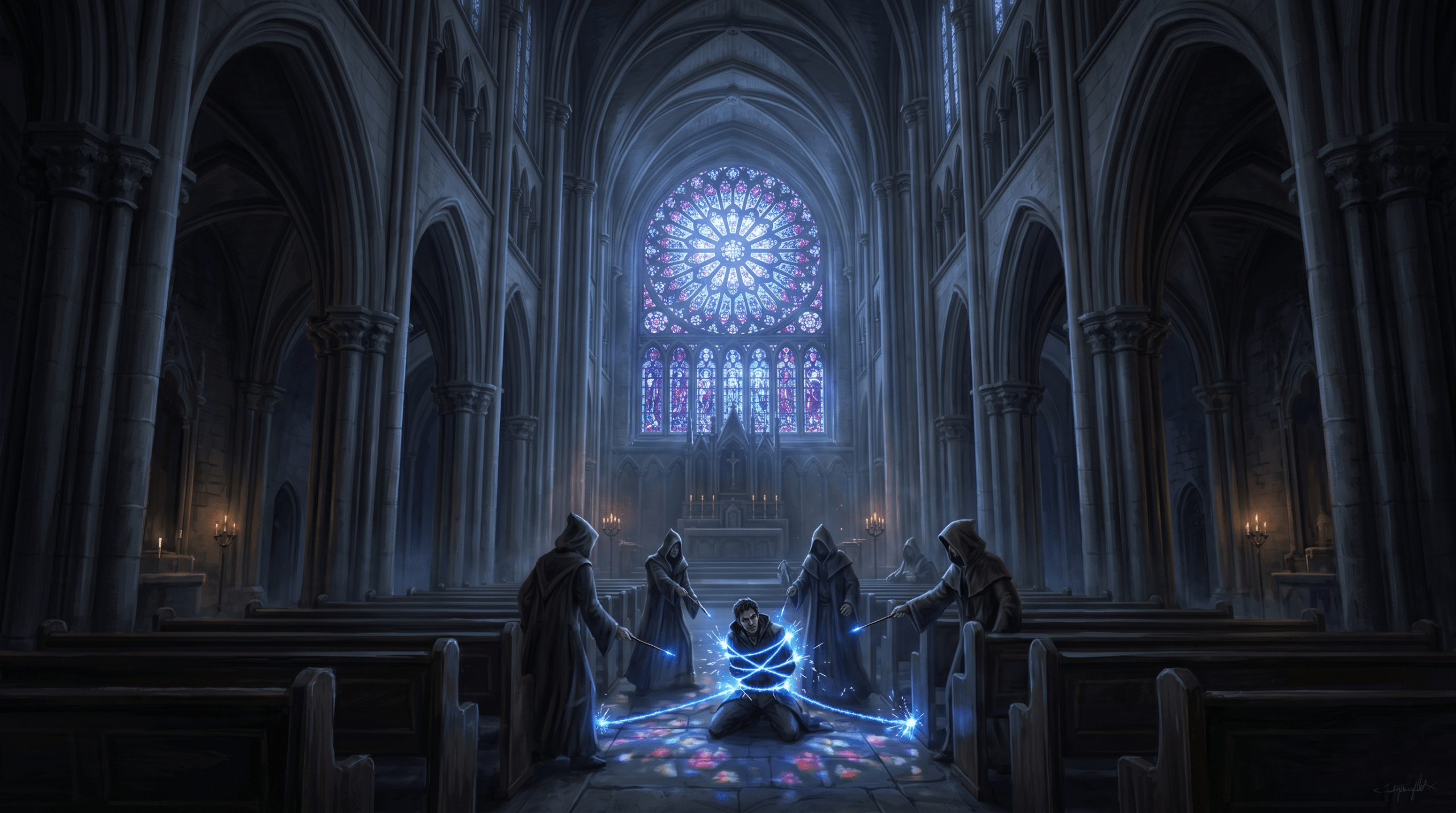
Realizing they cannot fight Delphi head-on due to her raw, unhinged power, the golden trio (Harry, Ron, and Hermione) join forces with Draco Malfoy and their children to set a trap inside St. Jerome’s Church.
Because Delphi has never actually seen her father in person, Harry Potter undergoes a complex, agonizing transfiguration to disguise himself as Lord Voldemort. When Delphi approaches “Voldemort,” she drops to her knees, begging for his recognition and affection. She pleads not for power, but for the one thing she lacked her entire life: parental love.
When the transfiguration wears off and Harry’s true face is revealed, Delphi unleashes a storm of dark magic. In the epic, multi-wizard duel that follows, Delphi battles Harry, Hermione, Ron, and Draco simultaneously. It is a stunning display of her inherited magical prowess, but she is ultimately overwhelmed and disarmed by the combined force of the seasoned veterans.
Azkaban and the End of the Line
Defeated and broken, Delphi tearfully begs Harry to either kill her or wipe her memory so she can forget who she is. Harry, showing the mercy that separates him from Voldemort, refuses. He states that she must live with the consequences of her actions, just as everyone else must.
Delphini is arrested and sentenced to life in Azkaban prison for her crimes, including the murder of Craig Bowker Jr. and her catastrophic violations of magical time laws. With her imprisonment, the bloodline of Salazar Slytherin and Lord Voldemort is finally, truly extinguished behind the cold iron bars of the wizarding world’s darkest fortress.
Frequently Asked Questions (FAQ) About Delphini Diggory
To ensure you have a complete grasp of the lore surrounding Voldemort’s secret daughter, here are expert answers to the most common questions searched by fans.
Is Delphini Diggory canon in Harry Potter?
Yes. Despite the debates and controversy within the fandom, Harry Potter and the Cursed Child was developed from an original new story by J.K. Rowling, Jack Thorne, and John Tiffany. J.K. Rowling has officially stated that the events of the play are canon, meaning Delphi’s existence is a factual part of the official wizarding world timeline.
Who played Delphini in the stage play?
In the original 2016 West End production of The Cursed Child, the role of Delphi was originated by actress Esther Smith. The role has since been played by various talented actresses across Broadway and international productions, capturing her chilling transition from an innocent caretaker to a dark, tragic villain.
Why didn’t Delphi go to Hogwarts?
Delphi was deliberately kept hidden by her guardian, Euphemia Rowle. Because of her highly sensitive, dangerous parentage, sending her to Hogwarts would have exposed her existence to the Ministry of Magic and to Harry Potter. Consequently, she was entirely self-taught in the magical arts.
Will Delphini be in the new Harry Potter HBO reboot?
The upcoming Harry Potter television series, currently slated by HBO, is billed as a faithful, decade-long adaptation of the original seven books. Because Delphi’s story takes place after the events of The Deathly Hallows and she does not appear in the original text, it is highly unlikely she will feature in the reboot unless the network decides to adapt The Cursed Child in later seasons.
The character of Delphini Diggory of Harry Potter lore represents one of the most fascinating psychological studies in the entire franchise. She is a terrifying paradox: a dark witch capable of mastering Voldemort’s most lethal magics, yet ultimately driven by the very thing her father despised—a desperate, very human need for family and love.
Her fabricated identity as Amos Diggory’s niece was a brilliant tactical deception, but it was the tragic reality of her true bloodline that sealed her fate in Azkaban. Whether you view Delphini as a cold-blooded villain who rivaled her father’s cruelty, or a tragic victim cursed by a legacy she never asked for, her impact on the wizarding world timeline is undeniable.
What are your thoughts on Delphi? Do you believe Voldemort always planned for her to be his ultimate dark servant, or was she simply the tragic result of Bellatrix’s devotion? Let us know your theories in the comments below!