One Word. One Moment. An Entire Fandom in Tears.
You probably remember exactly where you were when you first read it.
Maybe you were curled up in bed at midnight, racing through the final chapters of Harry Potter and the Deathly Hallows, heart pounding, pages flying. Or maybe you were sitting in a darkened cinema, watching Alan Rickman‘s face do something so quietly devastating that the entire theater forgot to breathe. Either way, when Dumbledore asked Severus Snape — “After all this time?” — and Snape replied with a single, unhesitating word, something inside you broke open.
That word was “Always.”
And in the universe of Harry Potter, no other word has carried more weight, sparked more tears, or permanently changed the way an entire generation understands love, loyalty, and sacrifice. Since its publication in 2007, the “always” in Harry Potter has transcended the page to become one of the most emotionally resonant words in modern fiction — immortalized in tattoos, tribute posts, fan art, and a global outpouring of grief when Alan Rickman passed away in January 2016.
But why? Why does one seven-letter word, spoken in a single exchange between two fictional characters, hold so much power?
This article unpacks everything — the scene itself, the love story behind it, the literary brilliance that made it possible, and why, nearly two decades later, “always” still makes millions of people cry.
The Exact Scene Where “Always” Changed Everything
The Chapter, the Book, and the Setup
The word appears in Harry Potter and the Deathly Hallows — the seventh and final book in J.K. Rowling’s series — in Chapter 33, titled “The Prince’s Tale.” It is, by almost universal agreement among fans and literary critics alike, one of the most masterfully constructed chapters in the entire series.
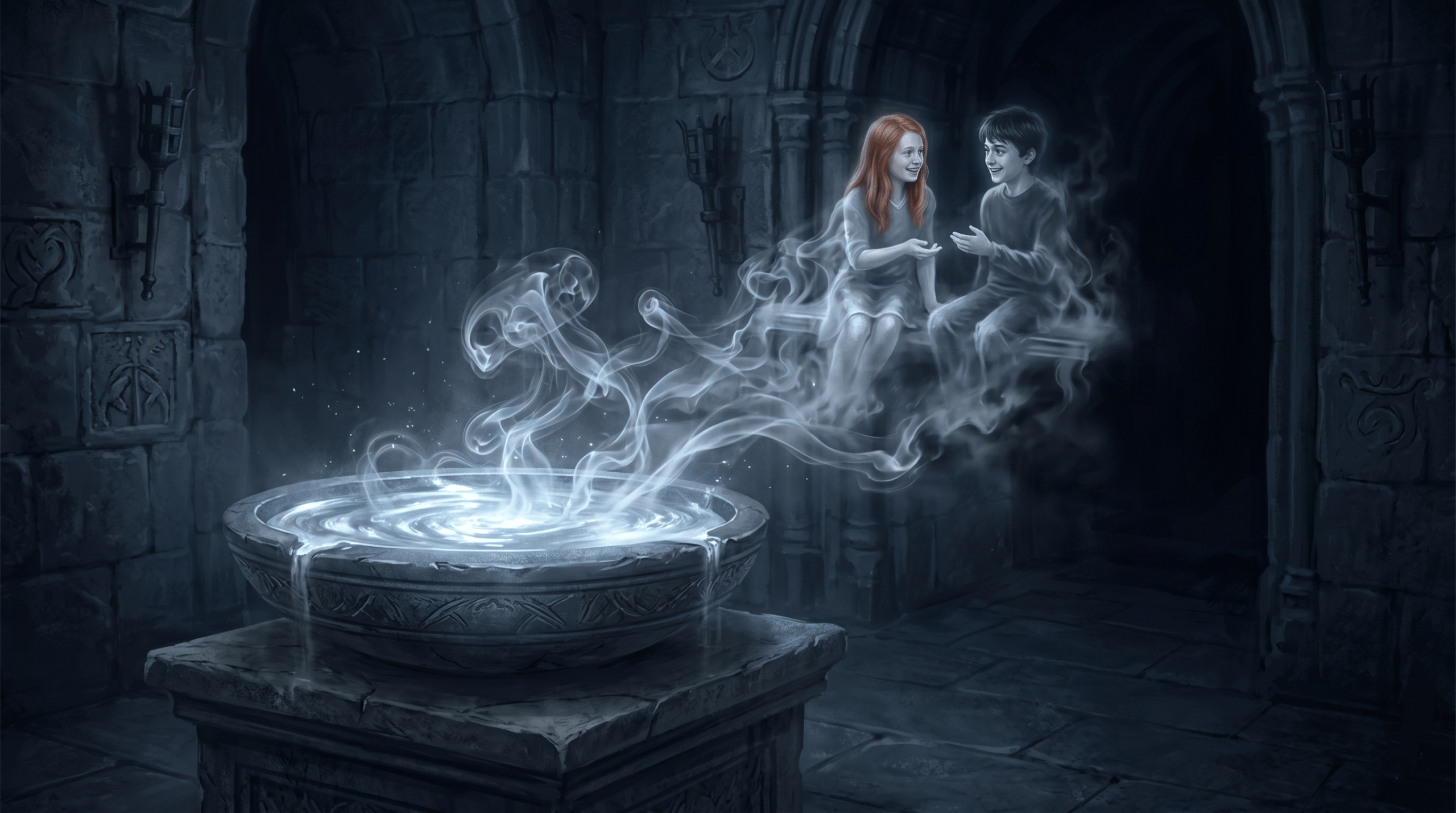
By the time readers reach this chapter, Severus Snape is dead. He has been killed by Voldemort, who mistakenly believed that murdering Snape would transfer the allegiance of the Elder Wand. As Snape lies dying on the floor of the Shrieking Shack, he does something unexpected: he gives Harry Potter his tears — or more precisely, his memories.
Harry collects those silvery threads and pours them into the Hogwarts pensieve. What he witnesses there — what readers witness alongside him — is nothing less than the complete and hidden truth of Severus Snape’s life.
And at the center of that truth is Lily Evans. Harry’s mother. The woman Snape loved from childhood. The woman he never stopped loving, even after her death, even after years of war, even after everything.
Dumbledore, in the memory, asks Snape whether his feelings for Lily have truly endured — whether, after all the years of serving as a double agent, of protecting Harry while resenting him, of carrying the unbearable weight of a secret no one else knew, he still loves her.
Snape’s answer is not a speech. It is not an explanation or a justification. It is simply this:
“Always.”
 The Power of Restraint in Emotional Writing
What makes this moment so extraordinarily effective is precisely what it doesn’t do. J.K. Rowling does not have Snape deliver a monologue about his feelings. She does not explain or over-justify. She trusts — correctly — that by Chapter 33 of the seventh book, she has laid enough groundwork that a single word can carry the full emotional weight of everything that came before it.
This is the literary technique of restraint, and it is among the hardest things for any writer to execute. The impact of “always” depends entirely on the reader’s accumulated emotional investment across thousands of pages. It is the payoff of long-form storytelling at its most pure.
In the hands of a lesser writer, this moment might have been over-written. In Rowling’s hands, it becomes unforgettable.
The Film Adaptation of the Scene
For millions of fans, the “always” moment is equally — sometimes more — associated with the film version, specifically Alan Rickman’s delivery of the line in Harry Potter and the Deathly Hallows – Part 2 (2011).
What many fans did not know until after Rickman’s passing is that he had been told by J.K. Rowling herself — years before the final book was published — a crucial piece of information about Snape’s backstory. Rowling revealed the essential nature of Snape’s love for Lily to help Rickman make informed choices about how to portray the character throughout the entire film series.
This means that every cold glance, every sneer, every seemingly cruel act Rickman performed as Snape was layered with a knowledge that neither his co-stars nor the audience yet possessed. His performance of “always” was not a single moment — it was the culmination of over a decade of quietly, carefully carrying a secret. The word, when Rickman finally spoke it, carried the weight of all those years.
It remains one of the most celebrated single-word performances in cinematic history.
Snape and Lily — The Tragic Love Story You Need to Fully Understand
To truly appreciate why “always” hits as hard as it does, you have to go back to the beginning — not to Hogwarts, but to a street in Cokeworth, where two children first found each other.
How Snape and Lily’s Friendship Began
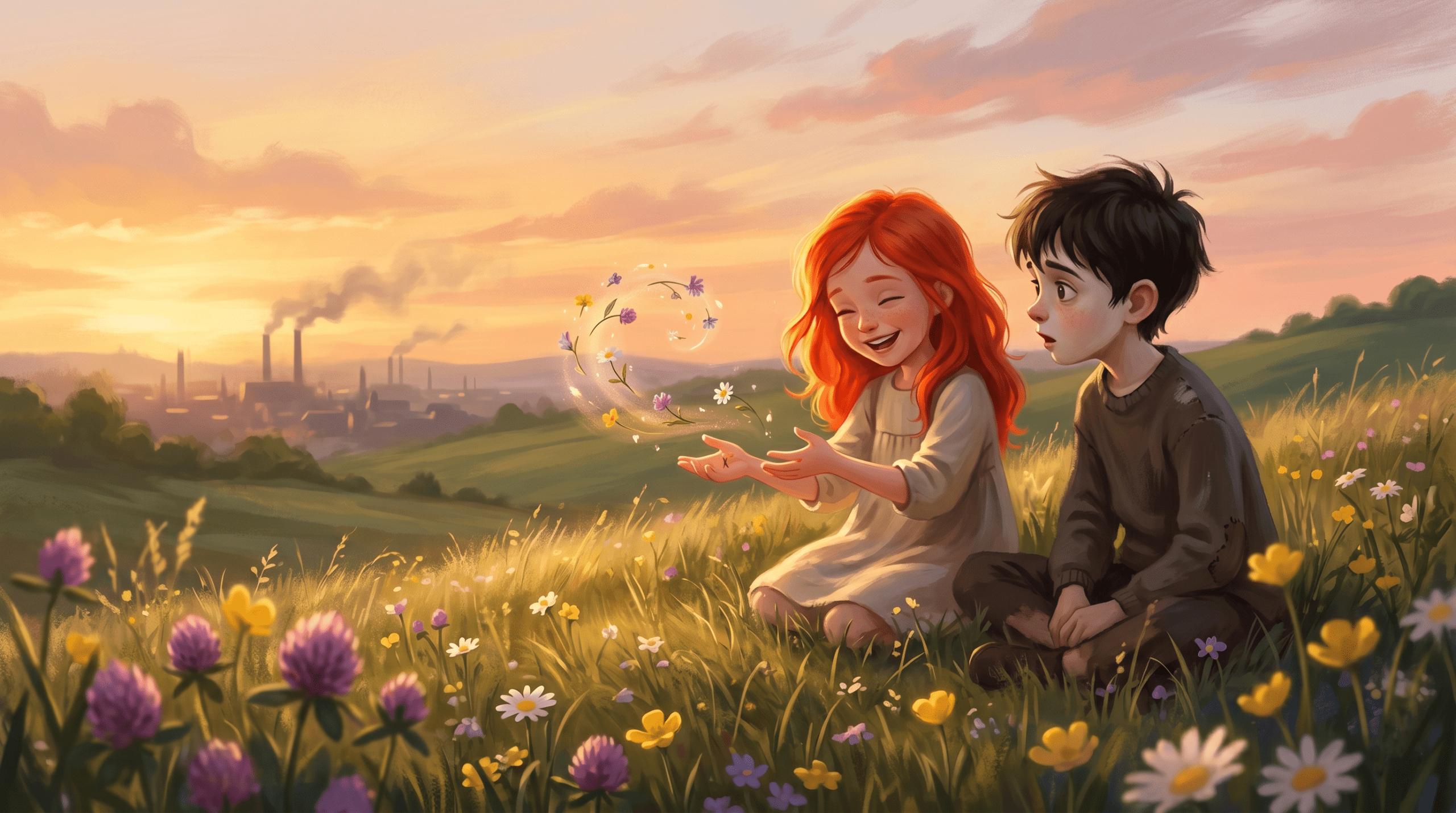
Severus Snape grew up in a neglected, unhappy home on Spinner’s End — the son of a Muggle father who resented magic and a witch mother who had, by all appearances, given up. He was lonely, poorly dressed, and largely invisible to the world around him.
Lily Evans lived nearby. She was warm, curious, bright-eyed, and possessed of a natural magic she didn’t yet understand. When a young Snape first observed her making flowers dance in the air, he didn’t run or recoil. He was transfixed. He recognized her — not just as a witch, but as something rare and luminous in what was otherwise a grey world.
Their friendship began there, in the awkward earnestness of two misfit children, and it deepened at Hogwarts. For Snape, whose home life offered little warmth and whose Slytherin peers valued cunning over kindness, Lily was an anchor. She was the person who saw something worth saving in him — and for a boy who had never been told he was worth anything, that mattered more than he could say.
 The Moment Their Friendship Broke
The destruction of their friendship is one of the most quietly heartbreaking subplots in the entire series, and Rowling reveals it with devastating economy in Harry Potter and the Order of the Phoenix.
During one of Snape’s worst memories — the one he tries desperately to hide when Harry breaches his mind during Occlumency lessons — we see a teenage Snape humiliated by James Potter and his friends. Strung up by his ankle in front of a crowd, mocked and helpless, Snape lashes out at the one person who tries to help him.
He calls Lily a Mudblood.
It is a word loaded with hatred and contempt — a slur against Muggle-born witches and wizards. And the tragedy is that Snape almost certainly didn’t mean it in his heart. It was a word of shame, hurled outward in a moment of humiliation, aimed at someone close because close targets are the ones we strike when we are in pain.
But Lily heard it. And Lily, who had already watched Snape drift toward darker companions and darker ideologies, made the only decision she could: she walked away.
Snape’s worst memory, Rowling tells us, was not any act of Voldemort’s. It was not battle or torture or loss. It was this — the moment his own words ended the one friendship that had made his world bearable.
Why Snape Never Stopped Loving Her
Here the article must pause for honesty, because the fandom has long and passionately debated what Snape’s love for Lily actually was.
Some readers argue that what Snape felt was less romantic love than obsession — an idealized attachment to a person he had placed on a pedestal, who represented everything good that his own life lacked. There is validity to this reading. Snape’s love did not make him kind. It did not prevent him from joining the Death Eaters, from participating in a movement that would ultimately contribute to Lily’s murder. It did not stop him from bullying Lily’s son for years.
Others argue that Snape’s love — however complicated, however imperfect — was genuine and enduring in a way that ultimately redeemed him. That it was the engine of his most heroic choices. That without it, Voldemort would have succeeded.
Both readings can coexist. What “always” gives us is not a simple love story. It gives us a portrait of how love, in the absence of wisdom and goodness, can become something harmful — and yet, how that same love, redirected and refined through sacrifice, can become something that saves the world.
Why Snape’s Patronus Is the Most Powerful Symbol in Harry Potter
What a Patronus Reveals About a Person
In J.K. Rowling’s wizarding world, a Patronus is among the most personal pieces of magic a witch or wizard can produce. It is conjured from the caster’s happiest memories and takes the form of an animal that reflects something essential about their soul. Patronuses can change — most notably when a person falls deeply in love — but they almost never do so lightly.
Snape’s Doe and Lily’s Doe — The Mirror That Broke Hearts
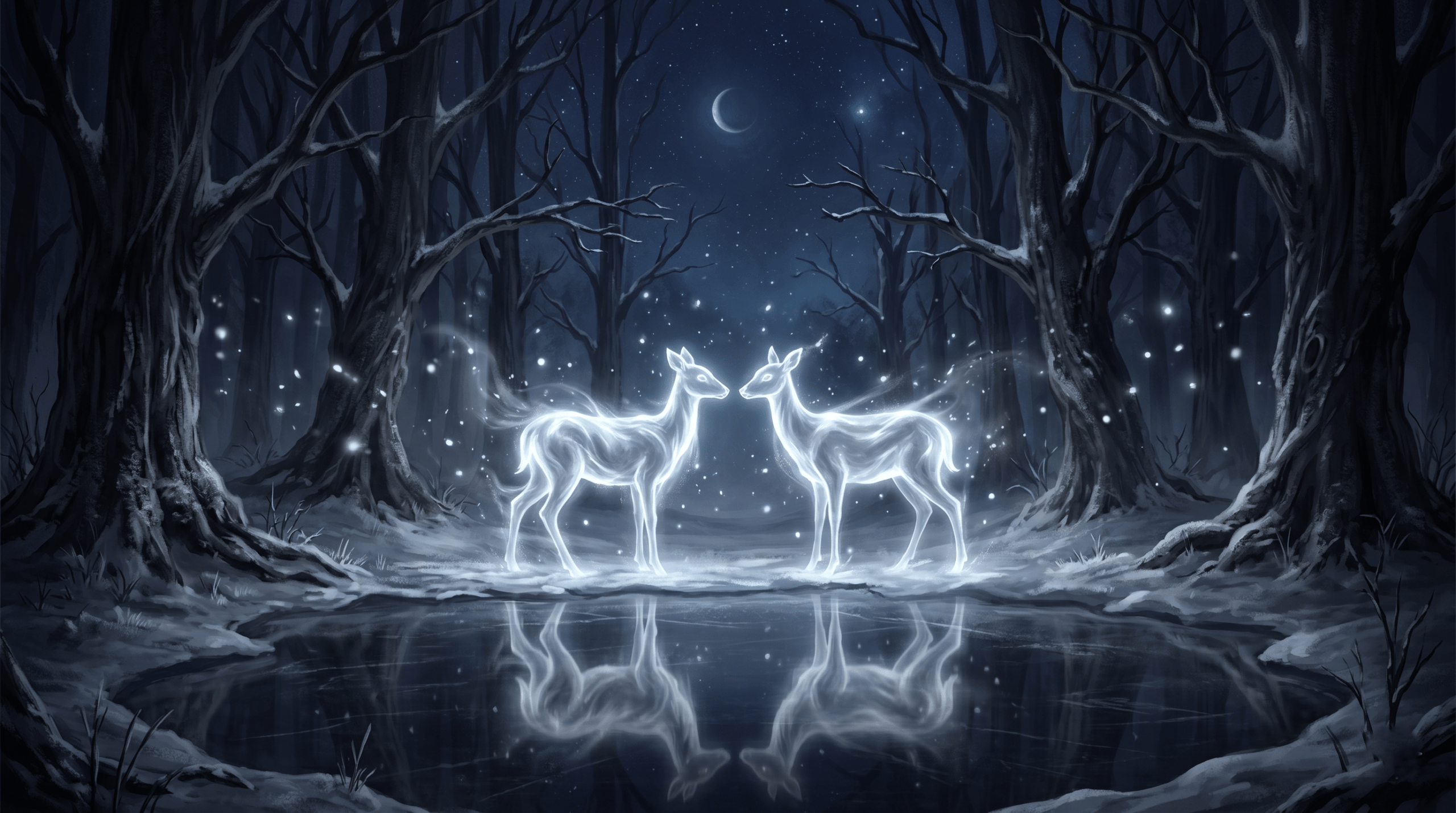
Lily Potter’s Patronus was a doe. Her husband James’s was a stag — and their matching Patronuses spoke to the depth of their bond.
Severus Snape’s Patronus was also a doe.
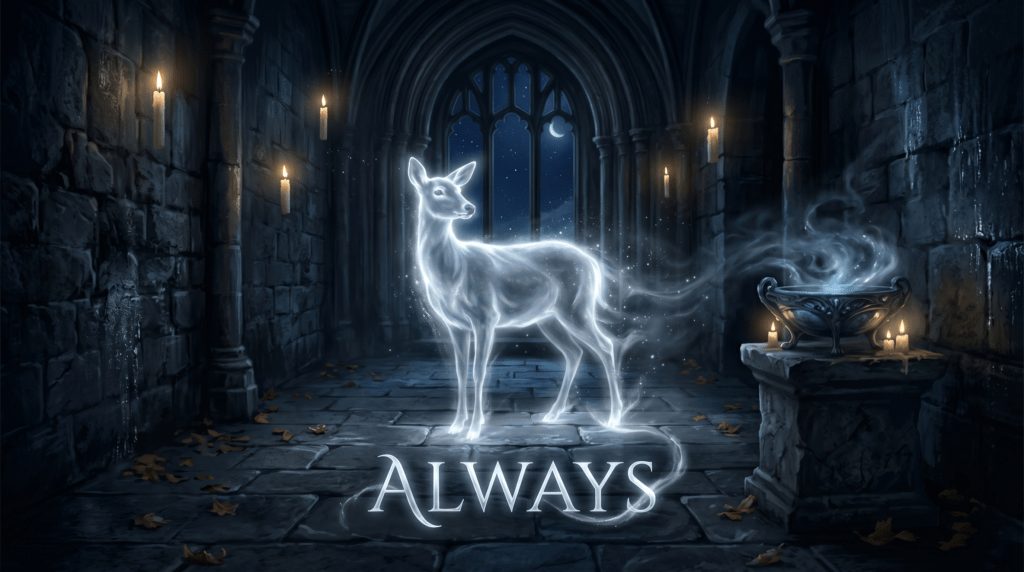
When Dumbledore witnesses this in the pensieve — when Snape wordlessly conjures his silver doe and Dumbledore understands what it means — the old headmaster is moved to something approaching awe. His question, “After all this time?”, is not really a question at all. It is the recognition of something almost incomprehensible: that Snape has loved Lily so completely, so lastingly, that his very soul still carries her shape.
It is the visual equivalent of “always,” rendered in light and magic.
 The Doe Leading Harry to the Sword of Gryffindor
What makes this symbol even more powerful is that Snape’s Patronus doesn’t just represent his love — it acts on it. In Deathly Hallows, it is Snape’s silver doe that leads Harry through the frozen Forest of Dean to the pool where the Sword of Gryffindor lies hidden. Harry follows the doe without knowing whose it is. He retrieves the sword, which will ultimately be used to destroy Horcruxes and bring down Voldemort.
Snape saved Harry’s mission — and therefore the wizarding world — through an act Harry never knew about, using a symbol of love Harry never understood, at a moment when Snape himself was still officially loyal to the enemy.
This is quiet heroism at its most extraordinary. And it is all downstream of “always.”
How “Always” Reframes Every Single Snape Scene in the Series
One of the most remarkable things about the “always” moment is what it does retroactively to the reading experience. For fans who go back and re-read the series after finishing Deathly Hallows, the entire character of Snape transforms.
The Double Agent in a New Light
Every scene of Snape’s apparent cruelty toward Harry becomes, in retrospect, achingly complicated. When Snape mocks Harry in Potions class, when he gives him detention, when he seems to take pleasure in Harry’s failures — is it contempt? Certainly there is contempt. Snape resented James Potter deeply, and Harry’s physical resemblance to his father was a constant, unavoidable reminder.
But layered beneath that resentment, newly visible on re-reading, is something else entirely: the pain of a man who must look every day at the child of the woman he loved, born to the man who tormented him, and protect that child with his life — without ever being able to say why.
Every sharp word Snape speaks to Harry can now be read as the voice of a man who is suffering more than anyone around him knows.
 Was Snape a Hero or a Complicated Man?
It would be easy — and dishonest — to declare Snape a straightforward hero on the basis of “always.” He was not. He was a bully. He made choices early in his life that contributed to Lily’s death, a fact he carried as the deepest wound of his existence. He was unkind to students who did nothing to deserve it. His love for Lily did not make him a good person — it made him a complicated one who ultimately chose to do good.
That distinction matters. J.K. Rowling herself has been nuanced about Snape, acknowledging both his heroism and his moral failings. Alan Rickman, in interviews, spoke of Snape as a man who made terrible choices but was ultimately motivated by the most human of emotions.
“Always” does not ask us to excuse Snape. It asks us to understand him. And in doing so, it asks us to consider how many real people we might misread — how many difficult, prickly, seemingly cold human beings are carrying griefs we cannot see.
Harry Naming His Son — The Ultimate Validation
The final word on Snape’s legacy belongs not to Dumbledore, not to the fandom, but to Harry Potter himself.
In the epilogue of Deathly Hallows, nineteen years after the Battle of Hogwarts, Harry tells his son: “Albus Severus Potter — you were named after two headmasters of Hogwarts. One of them was a Slytherin, and he was probably the bravest man I ever knew.”
For a boy who spent six years hating Snape, who watched him murder Dumbledore with his own eyes, who called him a coward as he fled — this is a staggering act of revision. It is Harry’s definitive verdict: whatever Snape was, whatever he did, the courage it took to love someone for a lifetime in secret, to sacrifice and serve and protect without recognition or reward, was the kind of bravery that demands acknowledgment.
Albus Severus Potter carries Snape’s name into the future. “Always” made that possible.
Why “Always” Became One of the Most Iconic Words in Modern Fiction
The Writing Craft Behind the Moment
The genius of “always” as a literary moment is inseparable from its position in the narrative. Rowling spent six books and thousands of pages making readers distrust Snape. She planted every clue in plain sight, but arranged them so that the most natural reading consistently pointed toward his guilt. The misdirection was masterful and entirely fair — every piece of evidence for Snape’s heroism was always there, always available to the attentive reader.
The payoff, when it comes, is proportional to the investment. “Always” lands as hard as it does because the reader has earned it — through seven books, through years of uncertainty, through every moment of frustration at Snape’s apparent cruelty. The revelation doesn’t just change Snape; it changes the reader’s relationship to the entire story they thought they understood.
This is skyscraper storytelling — architecture built across thousands of pages, with a single word as its apex.
“Always” in Pop Culture
Since 2007, the word “always” — in the context of Harry Potter — has taken on a life entirely its own. It appears in tattoos on the wrists and forearms of fans across the world. It fills tribute posts every January 9th, the anniversary of Alan Rickman’s passing. It is the most common Harry Potter reference in memorial posts, in wedding vows, in dedications to loved ones lost too soon.
The word has become a shorthand for a particular kind of love — quiet, enduring, unglamorous, and unconditional. It requires no explanation among anyone who has read the books. It is a shared language.
When Alan Rickman died, the internet did not fill with quotes or film clips. It filled with a single word. Celebrities, fans, fellow actors, writers — all of them responded the same way.
Always.
What “Always” Teaches Us About Love and Loss
At its deepest level, the “always” moment resonates because it speaks to something universal — the experience of loving someone you cannot have, of carrying that love long past the point where anyone else would have let go, of having that love shape who you are and what you do even when it brings you no happiness.
Most people have loved someone they could not be with. Most people understand, in some private corner of their lives, what it means to answer “after all this time?” with something that sounds like “always.” J.K. Rowling took that experience — messy, impractical, not always admirable — and gave it dignity. She showed that even a love as complicated and flawed as Snape’s could, in the right circumstances, become the thing that saves the world.
That is what great fiction does. It takes the private, unnamed experiences of the human heart and gives them shape and meaning. “Always” is not just a Harry Potter moment. It is a mirror.
 What Fans and Scholars Are Still Saying About “Always”
Was Snape’s Love Truly Pure?
The debate has never really settled, and that is part of what keeps it alive. Scholars of children’s literature and popular fiction have written extensively about Snape as a figure who complicates traditional hero narratives — who is neither a clean villain nor a straightforward redeemed protagonist, but something messier and more interesting than either.
Those who argue Snape’s love was unhealthy point to his inability to let go, his transfer of devotion from Lily to a mission of protection for her son, and his continued cruelty toward people Lily presumably would have wanted him to treat kindly. Those who argue his love was genuine and beautiful point to its constancy, its selflessness in action (if not always in affect), and its ultimate cost — a life lived in the shadows, without credit, without comfort, without hope of reunion.
The honest answer is that Snape’s love was both things simultaneously. It was the love of a flawed human being — which is to say, it was recognizable.
Did Dumbledore Manipulate Snape’s Love?
One of the most troubling threads in Snape’s story, visible more clearly on re-reading, is the degree to which Albus Dumbledore leveraged Snape’s love for Lily as an instrument of war.
Dumbledore needed a spy inside Voldemort’s inner circle. Snape’s grief and guilt over Lily’s death made him uniquely vulnerable to Dumbledore’s influence — and uniquely motivated to serve the cause. Dumbledore accepted Snape’s devotion, directed it, and ultimately asked Snape to make an almost unbearable sacrifice: to kill Dumbledore himself, to maintain his cover, and to guide Harry toward a death that Dumbledore believed was necessary.
This reading does not diminish “always.” But it adds a layer of tragedy that many readers find even more affecting than the love story itself: Snape’s most beautiful quality became, in Dumbledore’s hands, a strategic asset. Love, in this reading, is not just the most powerful force in the wizarding world — it is also the most easily exploited.
Hidden “Always” Foreshadowing Most Readers Missed
For those who return to the series after the revelation, the foreshadowing is everywhere. Snape’s silver doe, glimpsed briefly and without explanation in Deathly Hallows, is the most obvious — but attentive readers have noted subtler signals across the earlier books.
Snape’s decision to teach Harry Occlumency — a task Dumbledore specifically requested and that clearly causes Snape personal anguish — takes on new meaning when you understand that Harry’s mind contains memories of Lily that Snape would be forced to witness. The potions textbook Snape wrote as a student, passed down to Harry in Half-Blood Prince, is filled with helpful annotations that, in retrospect, read like the work of a young man trying to make himself indispensable and admirable — trying, in the way of lonely clever teenagers everywhere, to be noticed and valued.
Even his teaching style — demanding, exacting, apparently unkind — reflects, on re-reading, the pedagogy of someone who genuinely wants students to be competent enough to survive a dangerous world, even if he cannot bring himself to be warm about it.
The seeds of “always” were planted on page one. Most readers simply didn’t know where to look.
Frequently Asked Questions About “Always” in Harry Potter
What does “Always” mean in Harry Potter? “Always” is Severus Snape’s answer when Dumbledore asks him, in a pensieve memory, whether he still loves Lily Potter after all this time. It reveals that Snape’s loyalty to Dumbledore and his protection of Harry were driven entirely by his enduring, lifelong love for Lily Evans — a love that never wavered, even after her death.
Who says “Always” in Harry Potter? The word is spoken by Severus Snape, in response to Dumbledore’s question “After all this time?” The scene appears in Chapter 33 of Harry Potter and the Deathly Hallows, titled “The Prince’s Tale.”
In which book and chapter does the “Always” scene appear? The scene appears in Harry Potter and the Deathly Hallows (Book 7), Chapter 33: “The Prince’s Tale.” Harry witnesses the memory in Dumbledore’s pensieve after Snape’s death.
Why is “Always” so emotional for Harry Potter fans? Because it recontextualizes everything. After six books of ambiguity, readers discover that Snape’s every action — his apparent cruelty, his mysterious protectiveness, his silver doe Patronus — was rooted in a lifelong, unrequited love. The revelation is simultaneously heartbreaking and beautiful.
Did Alan Rickman know about the “Always” scene before filming? Yes. J.K. Rowling shared key details about Snape’s backstory with Alan Rickman before the final book was published, so that he could inform his performance throughout the film series. Every choice Rickman made as Snape was shaped by this knowledge.
What is the significance of Snape’s doe Patronus? Snape’s Patronus takes the form of a silver doe — the same as Lily Potter’s Patronus. This reveals the depth of his love for Lily, which was so profound it shaped his very soul. It is one of the most significant symbols in the entire series.
Is “Always” in the Harry Potter movies? Yes. The “Always” exchange between Snape and Dumbledore appears in Harry Potter and the Deathly Hallows – Part 2 (2011), delivered by Alan Rickman and Michael Gambon. Rickman’s performance of the single word is widely considered one of the most powerful moments in the entire film series.
“Always” — A Word That Will Outlive the Page
There are moments in fiction that transcend the stories that contain them. Moments that cease to belong only to their characters and begin to belong to everyone who has ever felt what those characters feel. Moments that become, in the truest sense of the word, timeless.
“Always” is one of those moments.
It works because J.K. Rowling spent seven books earning it. It works because Alan Rickman spent a decade embodying it. It works because every person who has ever loved someone they couldn’t have — every person who has carried a quiet devotion through years of silence — recognizes something of themselves in Severus Snape’s single, unhesitating answer.
The Harry Potter series is full of extraordinary moments: the first sight of Diagon Alley, the Sorting Hat’s song, Dumbledore’s death, the Battle of Hogwarts, Harry walking into the forest. But “always” stands apart. It is the series at its most human, its most honest, and its most quietly devastating.
If you have never re-read the Harry Potter books as an adult — with the full weight of “always” in your heart — you have not yet read them completely. Go back. Read Snape’s every scene with new eyes. Watch how Rowling laid her breadcrumbs. Notice the silver doe. Notice the potions book. Notice the way he says Harry’s mother’s name.
And when you reach Chapter 33, and Dumbledore asks his question, you will find that the answer hits even harder the second time.
Because it always does.
Which Harry Potter moment moved you the most? Was it “always,” or is there another scene that stays with you? Share your thoughts in the comments — and if this article brought back the feeling of reading that chapter for the first time, you’re in very good company.