Imagine the sheer terror of surviving an aerial ambush by Lord Voldemort, crashing into a muddy pond, and then looking up to see the Dark Lord’s most sadistic lieutenant, Bellatrix Lestrange, walking toward you. This is the exact, heart-stopping moment Harry Potter experiences in Harry Potter and the Deathly Hallows. But as his wand shakes, he realizes the woman standing before him is not a Death Eater. She has softer eyes, a kinder demeanor, and lighter brown hair. She is the forgotten sister. Understanding the full lore of Andromeda Tonks in Harry Potter is essential to unlocking one of the most powerful, yet criminally underexplored, story arcs in the entire wizarding world.
While millions of movie-only fans might scratch their heads wondering about Nymphadora Tonks’s mother, book readers know the truth. Andromeda is the ultimate symbol of quiet rebellion. She is the third sister of the Noble and Most Ancient House of Black—the one who defected, the one who chose love over blood status, and the one whose quiet courage fundamentally shaped the outcome of the Second Wizarding War.
In this comprehensive skyscraper guide, we will explore the complete, untold story of Andromeda Tonks. Drawing directly from J.K. Rowling’s original texts, official family tree records, and deeply rooted wizarding lore, we will uncover why her legacy is just as vital as any soldier who fought at the Battle of Hogwarts.
The Noble and Most Ancient House of Black
Who is Andromeda Tonks in the Harry Potter Lore?
Born in the early-to-mid 1950s to Cygnus Black III and Druella Rosier, Andromeda grew up in a world of extreme privilege, dark magic, and toxic prejudice. The Black family motto, Toujours Pur (Always Pure), was not just an aristocratic catchphrase; it was a militant doctrine enforced ruthlessly at Number 12, Grimmauld Place and throughout the British wizarding upper class.
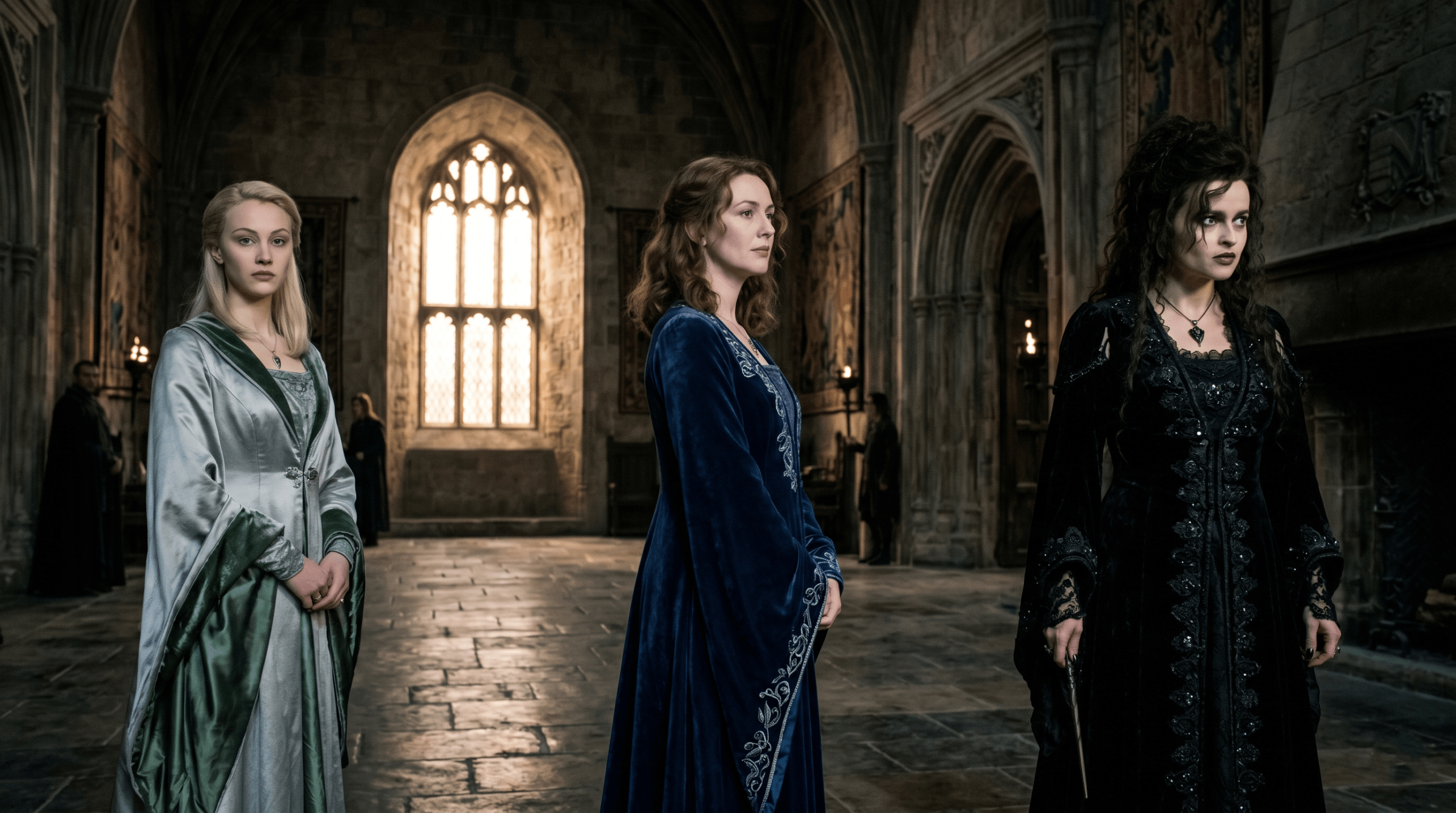
To understand Andromeda’s character, you must first understand the trinity of the Black sisters, who each represented a different response to their extremist upbringing:
-
Bellatrix (The Fanatic): The eldest sister, whose devotion to pure-blood supremacy mutated into a sociopathic obsession with Lord Voldemort and the Dark Arts.
-
Narcissa (The Survivalist): The youngest sister, who bought into the family’s ideology but ultimately prioritized the survival of her own immediate family (the Malfoys) over the Dark Lord’s grand cause.
-
Andromeda (The Defector): The middle child, who possessed the aristocratic beauty and formidable magical talent of her bloodline, but utterly rejected its cruelty and bigotry.
“Sirius told me all about you. He said you were his favorite cousin.” — Harry Potter, acknowledging the rare, shared bond of defecting from the Black family’s toxicity.
 Was Andromeda Tonks in Slytherin?
A frequent search query among the fandom is whether Andromeda broke the mold early by being sorted into a different Hogwarts House, perhaps Gryffindor or Hufflepuff. According to her cousin, Sirius Black, his placement in Gryffindor was a historic, scandalous anomaly. “The whole family was in Slytherin,” he famously noted. Therefore, canonical context makes it an absolute certainty that Andromeda was a Slytherin.
This fact makes her character arc exponentially more compelling. It shatters the pervasive stereotype that Slytherin House produces only dark wizards and Death Eaters. Andromeda possessed the classic Slytherin traits—resourcefulness, ambition, and a strong sense of self-preservation—but she channeled them toward protecting the innocent rather than subjugating them. She proved that one can wear the emerald and silver without harboring darkness in their heart.
The Ultimate Rebellion
Love Over Blood: Marrying Ted Tonks
The true test of Andromeda’s character came during her time at Hogwarts School of Witchcraft and Wizardry, where she fell deeply in love with Edward “Ted” Tonks. Ted was a Muggle-born wizard, known for his fair hair, cheerful disposition, and undeniable bravery. In the eyes of the Black family, a Muggle-born was an abomination, an individual who had “stolen” magic, and entirely unworthy of breathing the same air as the “Sacred Twenty-Eight.”
Her choice to marry Ted was an act of profound, life-altering courage. Contrast this with Sirius Black’s rebellion. Sirius’s defection was loud, fiery, and deeply rooted in a rebellious anger against his parents. He wanted to burn the establishment down. Andromeda’s rebellion, however, was fundamentally rooted in love. She did not set out to destroy her family’s legacy; she simply refused to let a bigoted ideology dictate her heart. She chose a life of genuine affection over the cold, calculated, pure-blood arranged marriages expected of her (such as Narcissa’s strategic marriage to Lucius Malfoy or Bellatrix’s loveless union with Rodolphus Lestrange).
 Blasted Off the Black Family Tree
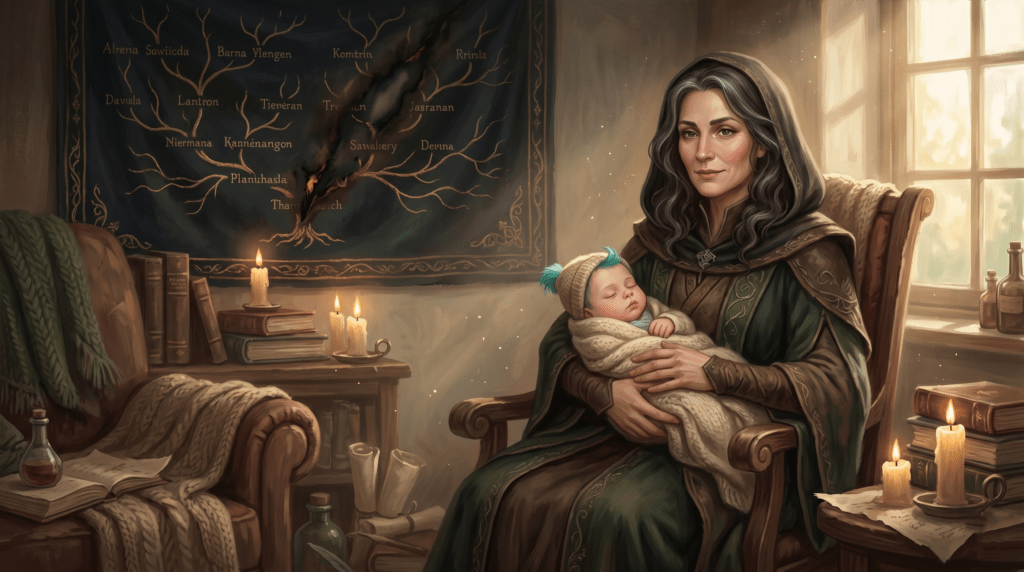
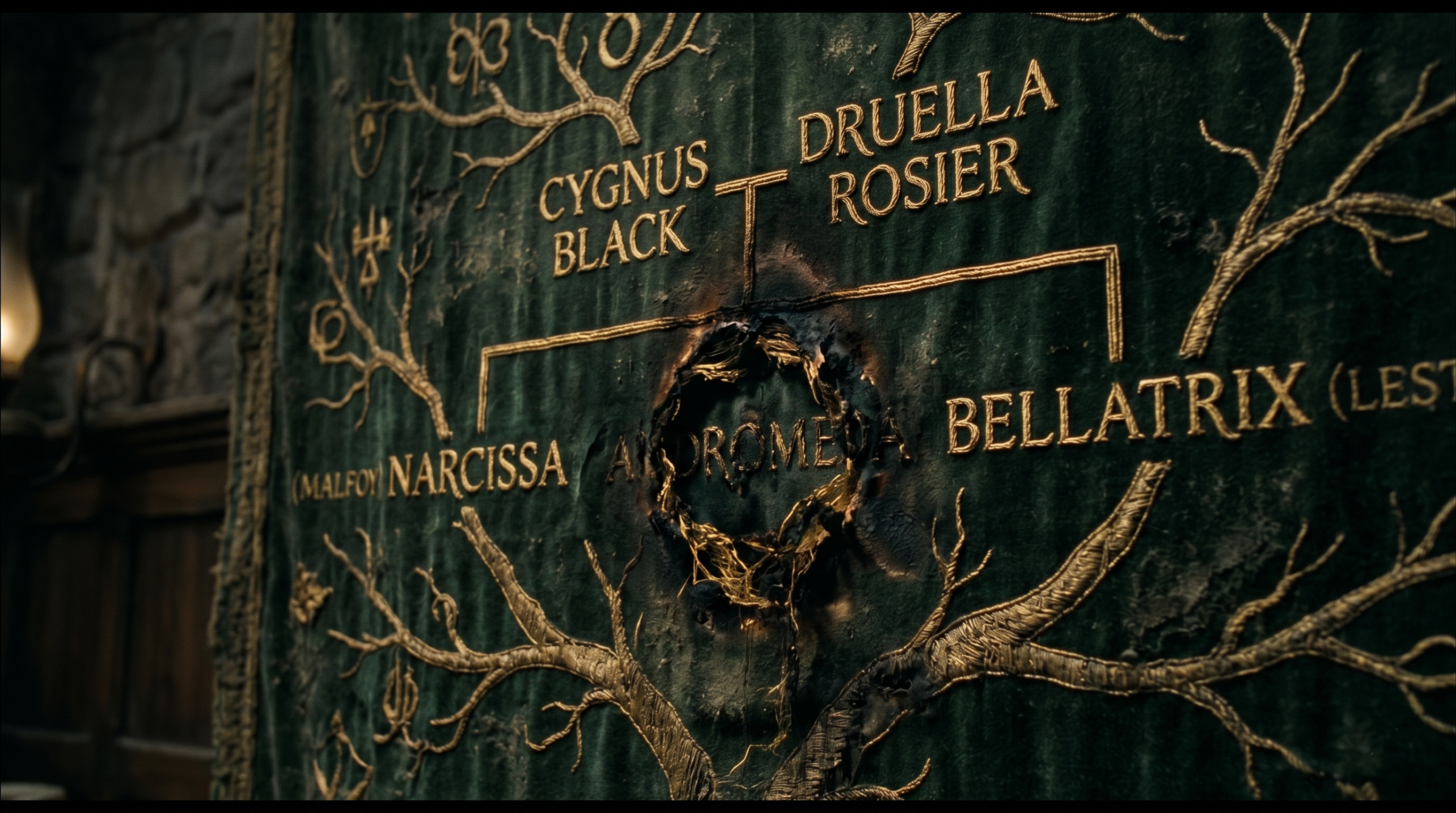
The consequences of her marriage to a Muggle-born were swift, absolute, and brutal. In the tapestry room at Number 12, Grimmauld Place, where the Noble and Most Ancient House of Black proudly displayed centuries of pure-blood lineage, Andromeda’s existence was literally scorched from history.
Walburga Black (Sirius’s mother and Andromeda’s aunt) or perhaps her own father, Cygnus, took a wand and blasted her face off the magical tapestry, leaving behind nothing but a raw, cigarette-like burn mark. She was formally disowned, disinherited, and entirely cut off from the wizarding elite. Bellatrix and Narcissa were forbidden from ever speaking to or of her again—a mandate they seemingly followed with zealous obedience, viewing her as a blood traitor who had shamed their noble house.
Andromeda’s Critical Role in the Second Wizarding War
The Safe House and The Battle of the Seven Potters
While she was not an official, card-carrying member of the Order of the Phoenix like her daughter, Nymphadora, or her son-in-law, Remus Lupin, Andromeda’s contribution to the war effort was indispensable. By the time of the Second Wizarding War, her home had become a heavily fortified sanctuary for the resistance.
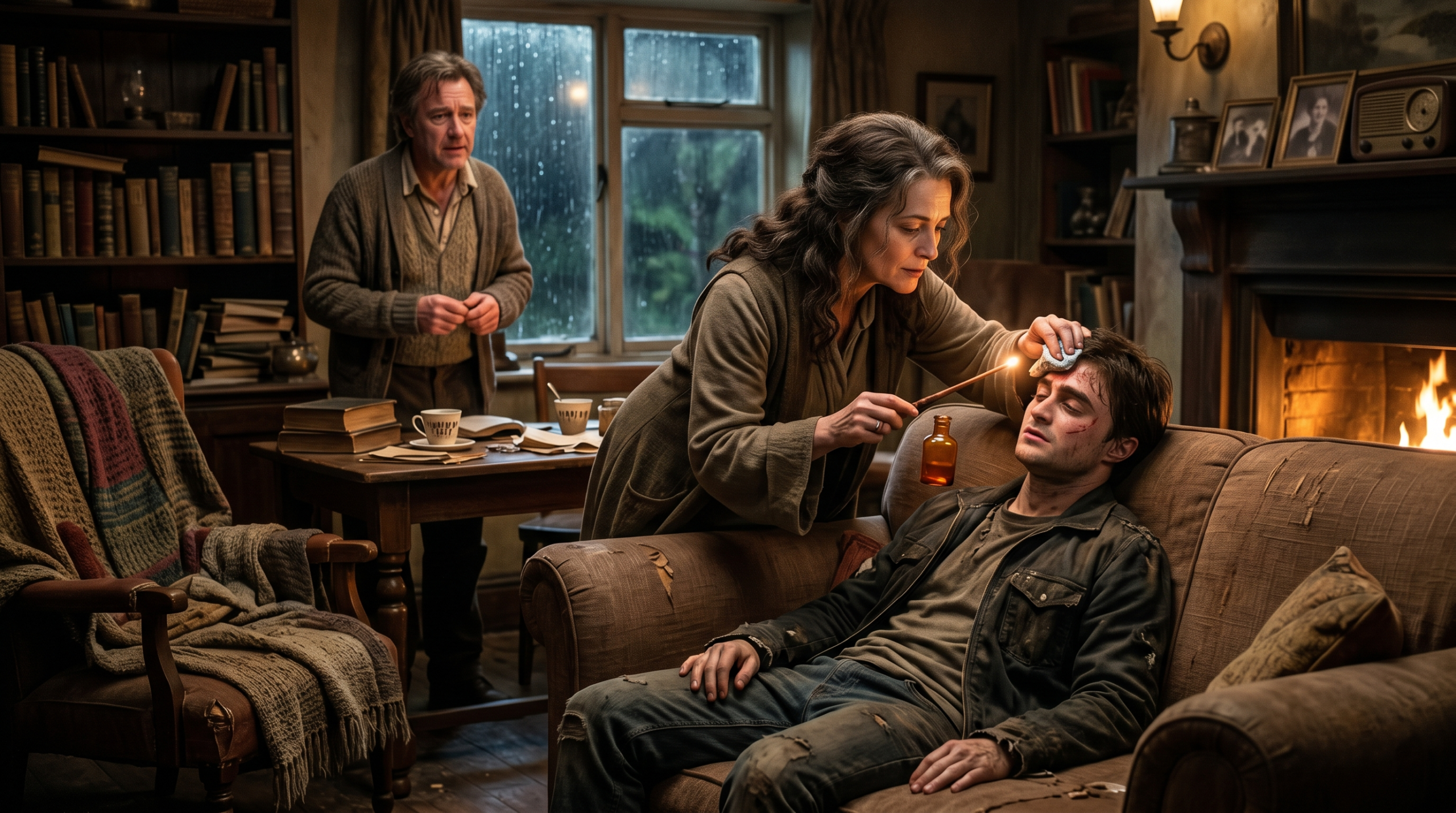
Her defining on-page moment occurs in the tense early chapters of The Deathly Hallows. During the disastrous Battle of the Seven Potters—when the Order attempts to move Harry from Privet Drive to the Burrow—the plan goes horribly wrong. Harry and Hagrid are ambushed in the skies over Little Whinging. After surviving a harrowing mid-air duel with Voldemort himself, and with Hedwig tragically killed, they crash-land fiercely into the muddy backyard of the Tonks residence.
It is Andromeda and Ted who pull a battered, bleeding Harry from the wreckage. They provide the crucial first safe haven, applying healing charms to his injuries and offering him the Portkey that transports him to the Burrow. Without the powerful protective enchantments Andromeda cast over her home, the Boy Who Lived might not have survived the night.
 The Tragic Resemblance to Bellatrix Lestrange
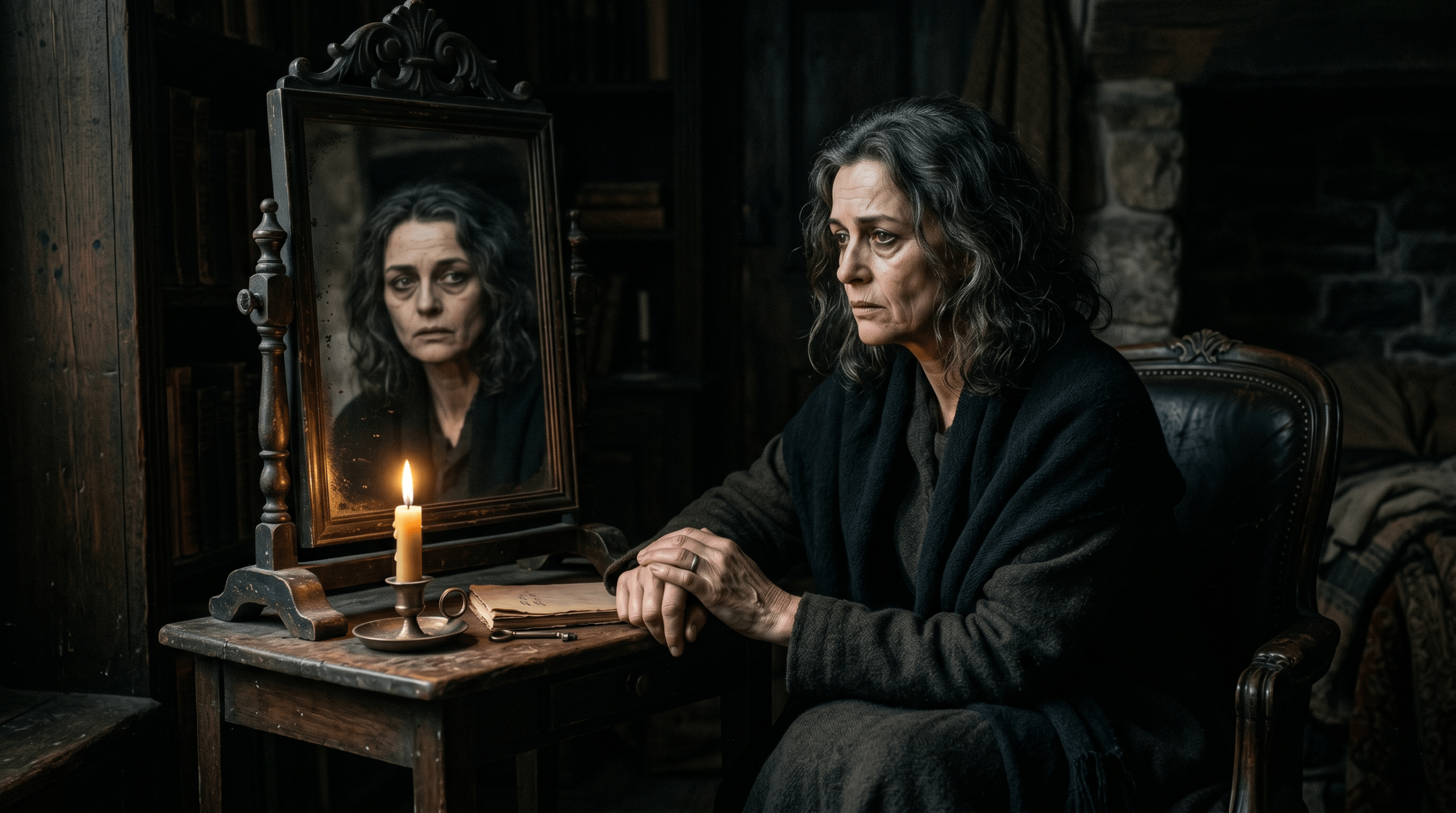
Living as Andromeda meant carrying a ghost in the mirror. J.K. Rowling painstakingly describes her profound physical resemblance to Bellatrix Lestrange. The dark hair, the heavy-lidded eyes, the aristocratic, haughty jawline—it was all there. The only physical difference was in the expression; Andromeda’s face lacked the cruel, arrogant sneer that permanently etched itself onto Bellatrix’s features over years of dark magic usage and imprisonment in Azkaban.
This resemblance was a heavy psychological and physical burden. It nearly got her cursed by Harry the moment he laid eyes on her, and it undoubtedly caused suspicion and unease among members of the resistance who were constantly looking over their shoulders for the Dark Lord’s deadliest enforcer. To look exactly like the monster terrorizing your community is a uniquely agonizing fate.
 The Ultimate Price: Losing Ted and Nymphadora
The toll the Second Wizarding War took on Andromeda is almost incomprehensible in its tragedy. Following the fall of the Ministry of Magic in the summer of 1997, the Death Eaters established the Muggle-Born Registration Commission under Dolores Umbridge. As a Muggle-born, Ted Tonks was forced into hiding, leaving Andromeda behind. During this time, she faced grueling interrogations from Death Eaters who stormed her home. She was tortured for information regarding Harry’s whereabouts, yet she never broke, displaying the formidable mental fortitude characteristic of the Black family.
In the spring of 1998, her worst nightmares became reality. Ted was caught and murdered by Snatchers. The grief was still fresh when, only a few short months later, the climactic Battle of Hogwarts commenced. Her only child, Nymphadora, and her son-in-law, Remus, were both killed in action. In a cruel twist of dark irony, Nymphadora fell in a duel against Andromeda’s own sister, Bellatrix Lestrange. In the span of a single year, Andromeda lost her entire immediate family to the very dark forces she had spent her life rejecting.
The Aftermath and Legacy
Raising Teddy Lupin: A Grandmother’s Resilience
The narrative of the Harry Potter series is deeply woven with the theme of orphans and generational trauma. From Harry himself to Neville Longbottom, the devastating impact of war on children is a central pillar of the story. Yet, it is Andromeda Tonks who steps up to prevent history from repeating itself in the darkest way possible.
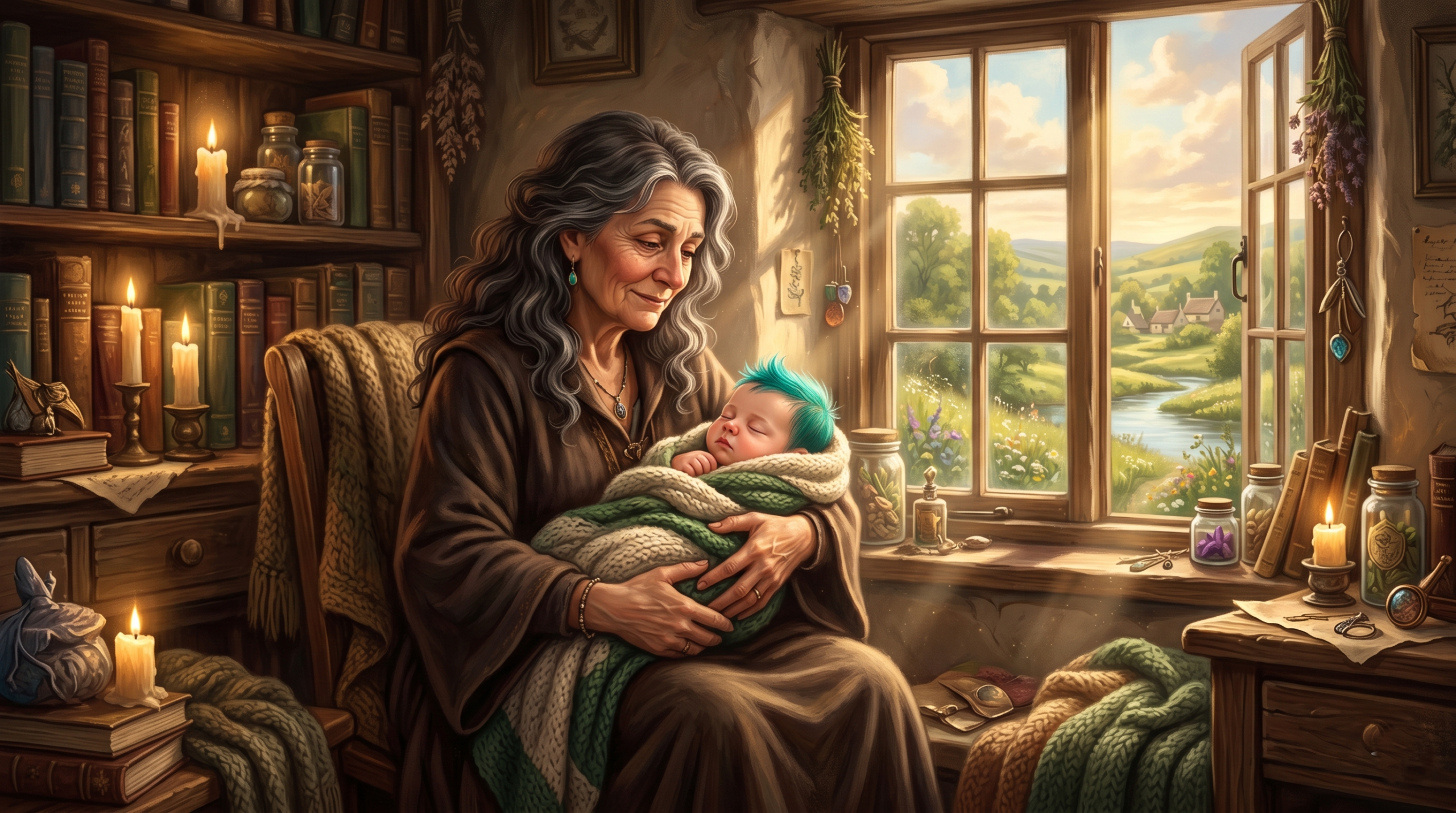
Left entirely alone, a widow and a grieving mother, Andromeda took on the monumental task of raising her infant grandson, Edward Remus “Teddy” Lupin. Instead of letting the bitterness of her staggering losses consume her—a path so easily taken by her ancestors—she poured her remaining strength into providing a loving, stable environment for Teddy. She ensured that the orphaned boy grew up knowing exactly who his parents were, that they were not defined by werewolf prejudice, and that they died as heroic martyrs for a better world.
 Parallels with Harry Potter and Neville Longbottom
Teddy Lupin’s upbringing stands in stark, beautiful contrast to Harry’s years of abuse in the cupboard under the stairs, or Neville’s strict, anxiety-inducing rearing by his formidable grandmother, Augusta Longbottom. Andromeda, supported heavily by Harry (Teddy’s godfather) and the sprawling Weasley clan, created a village for her grandson. This represents her ultimate triumph over the Black family legacy: she successfully ended the cycle of pure-blood supremacy and generational abuse, raising a child in an environment defined exclusively by warmth, inclusivity, and love.
The Cinematic Omission
Why Was Andromeda Tonks Cut from the Harry Potter Movies?
For fans who strictly consume the cinematic universe, Andromeda is a complete phantom. She, along with Ted Tonks, was entirely excised from the movie adaptation of Harry Potter and the Deathly Hallows – Part 1. From a strict filmmaking perspective, the omission is logical. The directors (David Yates) and screenwriters (Steve Kloves) faced a gargantuan task of compressing a massive, lore-heavy, 700-page book into a digestible runtime. To streamline the complex pacing of the “Seven Potters” sequence, the film bypassed the network of safe houses entirely, having the surviving members of the Order simply arrive directly at the Burrow.
What the Films Lost Without Her
However, logical pacing does not negate the profound loss to the visual narrative. By cutting Andromeda, the films lost a critical layer of nuance regarding the Black family. The cinematic universe paints the House of Black in broad, exclusively dark strokes. Seeing Helena Bonham Carter—who naturally would have played the dual roles of Bellatrix and Andromeda, utilizing the same split-screen technology used for the seven Harrys—portraying a warm, nurturing woman healing the protagonist would have been visually and emotionally striking.
Furthermore, the omission severely weakened Nymphadora Tonks’s on-screen arc. In the books, Tonks’s bubbly, fiercely loyal, and rebellious personality makes perfect sense when you realize she was raised by a woman who sacrificed her entire high-society life for love. Without Andromeda grounding her backstory, the cinematic Tonks lacks a vital piece of her emotional foundation.
High-Value FAQ Section About Andromeda Tonks
Did Andromeda ever forgive Narcissa or Bellatrix?
There is no canonical evidence in the text or subsequent lore to suggest Andromeda ever reconciled with her sisters. Bellatrix actively hunted Andromeda’s family, tortured her allies, and ultimately murdered her daughter. While Narcissa survived the war and defected from Voldemort at the very end, the ideological divide and the sheer amount of blood spilled made any family reunion highly improbable, if not impossible.
Who played Andromeda Tonks in the Harry Potter movies?
Andromeda never appeared on screen in any of the eight cinematic adaptations. However, given that J.K. Rowling specifically wrote her as looking nearly identical to Bellatrix Lestrange, she would have logically been portrayed by acclaimed actress Helena Bonham Carter in a dual role.
What happened to Andromeda Tonks after the Second Wizarding War?
Following the Battle of Hogwarts, Andromeda lived a relatively quiet life away from wizarding politics, dedicating herself entirely to raising her grandson, Teddy Lupin. She maintained extremely close ties with Harry Potter, Ginny Weasley, and the rest of the surviving Order members, ensuring Teddy grew up surrounded by a massive, loving extended family. Teddy spent so much time at the Potter household that Harry noted he practically lived there.
What was Andromeda Tonks’s Patronus or Wand core?
J.K. Rowling has never officially revealed the specifics of Andromeda’s wand wood, core, or her Patronus form in Pottermore (now Wizarding World) updates. However, given her Black family lineage, her ability to successfully cast intricate protective enchantments over her home to hide from Voldemort, and her sheer resilience under Death Eater torture, she was undeniably a witch of extraordinary magical caliber.
Andromeda Tonks is the definitive proof that one’s bloodline does not dictate their destiny, their morality, or their capacity for love. She looked exactly like a monster, was raised by pure-blood zealots, and suffered unimaginable heartbreak, yet she chose the light at every single crossroad she faced. Her story is a quiet, tragic, and ultimately beautiful cornerstone of the wizarding world’s history—a reminder that the most powerful magic is the choice to be kind in a cruel world.
What do you think?
If you enjoy diving into alternate timeline theories, consider this profound “What If”: If Andromeda Tonks had been present at the Battle of Hogwarts and confronted Bellatrix Lestrange instead of Molly Weasley, how do you think that deeply personal, emotionally charged duel between the estranged Black sisters would have played out? Let us know your alternate history theories, and be sure to explore our other deep-dives into unexplored wizarding lore!