
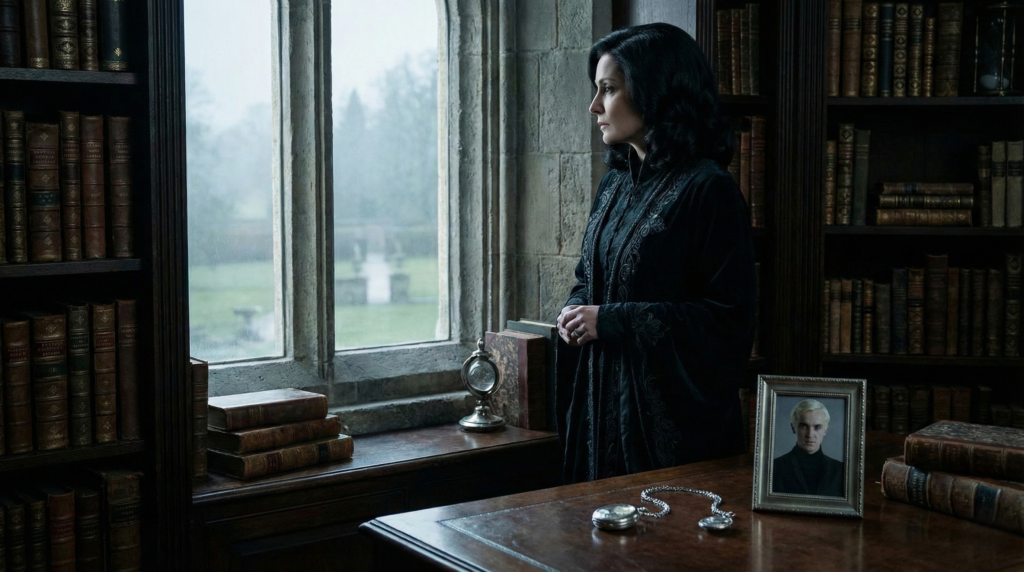
In the final pages of Harry Potter and the Deathly Hallows, readers catch a fleeting glimpse of Draco Malfoy standing on Platform 9¾ with a woman and a young boy—his wife and son. While Harry Potter, Ron Weasley, and Hermione Granger exchange polite nods with their former rival, the identity of the woman beside Draco sparks curiosity for many fans. Who is she? How did Draco Malfoy, once the embodiment of pure-blood prejudice, end up married to her? And what tragic secret shaped their family?
That woman is Astoria Greengrass, a character whose name appears only in passing in the main series yet carries profound significance in the extended Wizarding World. Astoria Greengrass in Harry Potter represents themes of redemption, quiet defiance, and the lingering shadows of ancestral curses. Though she never speaks a line in the seven core books, her story—revealed through J.K. Rowling’s post-publication comments, the official Wizarding World website (formerly Pottermore), and Harry Potter and the Cursed Child—adds emotional depth to Draco’s arc and explores how love and progressive values can reshape even the most entrenched families.
Many fans first encounter Astoria when revisiting the epilogue or diving into The Cursed Child. Questions quickly follow: What is the blood curse that claimed her life? Why did Draco’s parents disapprove of her? How did she influence Scorpius Malfoy and the Malfoy legacy? This comprehensive guide answers those questions and more, drawing directly from canon sources including the books, the stage play script, Rowling’s interviews, and official Wizarding World entries. Whether you’re a longtime Potterhead seeking deeper insight or a reader puzzled by her brief mentions, this article delivers the full, authoritative picture of Astoria Greengrass—far beyond surface-level summaries.
Who Is Astoria Greengrass? Basic Profile and Canon Appearances
Astoria Greengrass (later Astoria Malfoy) was a British pure-blood witch born around 1982, making her two years younger than Draco Malfoy and part of the generation that attended Hogwarts during the height of the Second Wizarding War. She belonged to the Greengrass family, an ancient pure-blood line listed among the Sacred Twenty-Eight—families J.K. Rowling identified as still “truly pure-blood” by the 1930s.
Early Life and Family Background
Astoria grew up in a privileged pure-blood household that valued tradition, much like the Malfoys. Her older sister, Daphne Greengrass, attended Hogwarts in the same year as Draco (1980–1998) and was sorted into Slytherin House. Daphne receives a handful of mentions in Harry Potter and the Half-Blood Prince as one of Pansy Parkinson’s friends, but Astoria herself remains in the background during the main series. She began her own Hogwarts education in September 1993, sorted into Slytherin as well, and remained there through the turbulent years of Voldemort’s return and the Battle of Hogwarts.
Despite the war’s chaos, Astoria’s school years overlapped with the rise and fall of the Death Eater regime at Hogwarts. While the books focus on Harry and his friends, Astoria would have witnessed the same oppressive atmosphere—though her pure-blood status likely afforded her some protection from the harshest measures.
Canon Mentions
Astoria’s presence in the core seven books is minimal to nonexistent by name. She is never directly referenced during the series events. Her first “appearance” comes in the epilogue of Harry Potter and the Deathly Hallows (2007), where Draco stands with “his wife and son.” J.K. Rowling later confirmed the wife’s identity as Astoria Greengrass in interviews and on Pottermore/Wizarding World.
In the films, a non-speaking extra portrays Draco’s wife in Harry Potter and the Deathly Hallows: Part 2 during the Platform 9¾ scene. The most substantial canon details emerge from:
- J.K. Rowling’s 2007 statements and later clarifications.
- Wizarding World character profiles and family entries.
- Harry Potter and the Cursed Child (2016 stage play and script), where Astoria is deceased but frequently referenced through Draco’s grief and Scorpius’s backstory.
These sources transform Astoria from a mere footnote into a pivotal figure in Draco’s post-war life.
The Greengrass Family: Pure-Blood Legacy and Hidden Secrets
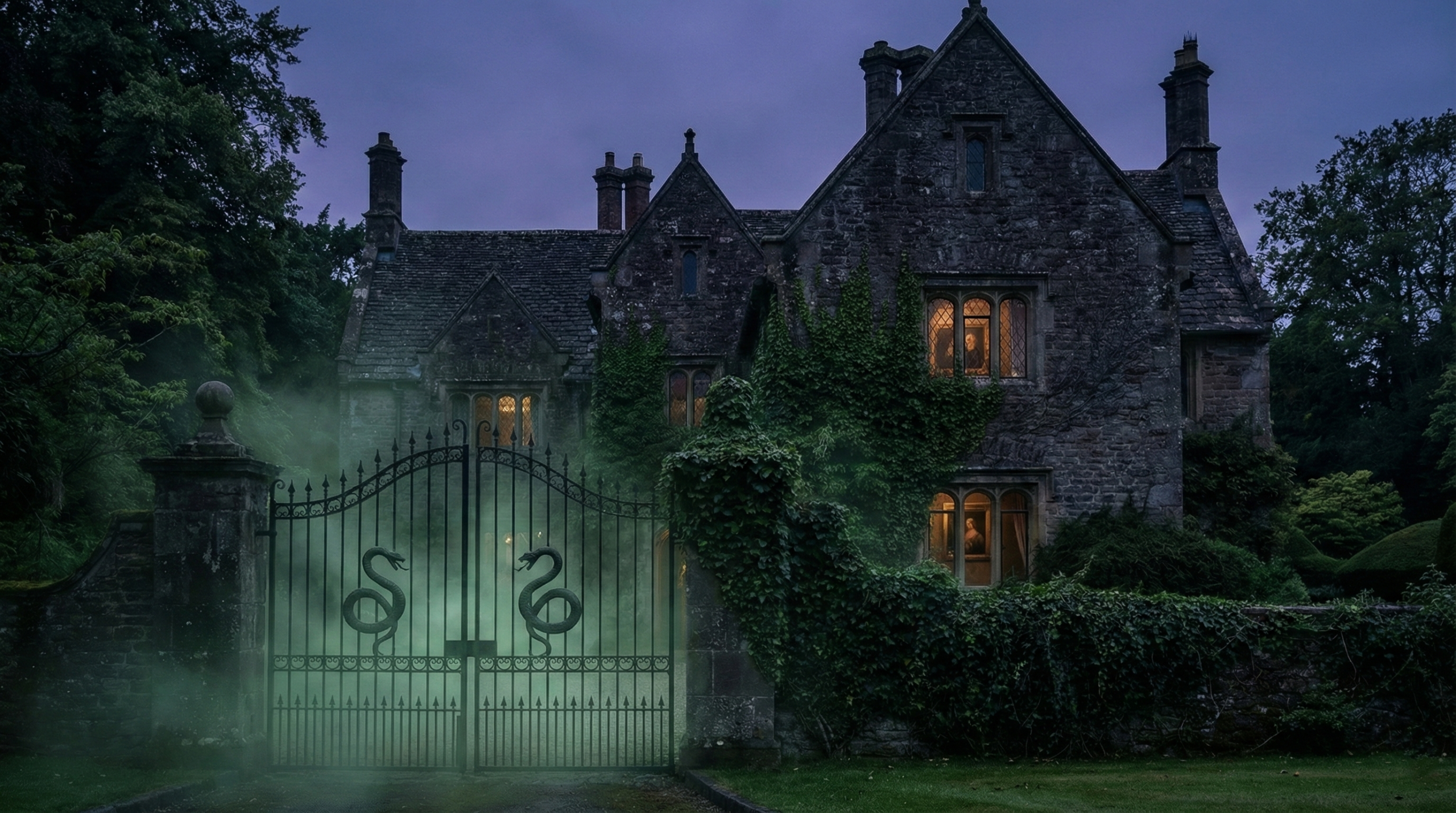
The Greengrass family traces its lineage back centuries as one of the Sacred Twenty-Eight, a list compiled in the early 20th century to catalog “truly pure-blood” wizarding families. This status placed them among the elite, with connections to other notable lines (though no direct Black family ties are confirmed in canon).
Sacred Twenty-Eight Status and Reputation
Like the Malfoys, Notts, and Parkinsons, the Greengrasses maintained a reputation for blood purity and traditional values. However, Rowling has suggested subtle differences: Astoria herself held more tolerant views toward Muggle-borns and half-bloods than many in her circle, a progressive stance that clashed with older generations.
 Daphne Greengrass: The Known Sister
Daphne, Astoria’s elder sister, appears briefly in the books as part of the Slytherin social group. She is described as one of the girls who mock Harry during his early years, yet she never joins the Inquisitorial Squad or openly supports Voldemort. Some fans interpret this as quiet neutrality. In contrast, Astoria’s later choices suggest an even stronger rejection of pure-blood supremacy, perhaps influenced by the war’s aftermath.
The Blood Malediction: Origins and Impact
The defining tragedy of Astoria’s life is the blood malediction (also called a blood curse), a hereditary affliction passed down through the Greengrass line. According to J.K. Rowling via Wizarding World, an ancestor was cursed long ago, and the malediction resurfaced generations later in Astoria. This “serious” blood-borne condition caused her body to become increasingly frail, ultimately leading to her premature death.
Unlike the Maledictus curse seen in Fantastic Beasts (which transforms women into beasts, as with Nagini), Astoria’s blood malediction is described as a debilitating, fatal illness without animal transformation. It weakened her physically over time, making everyday life difficult and preventing her from having multiple children for fear of passing it on.
This curse adds layers to her character: a woman born into privilege yet burdened by an inescapable family legacy, much like how the Malfoys carry the weight of their Dark Mark associations.
Astoria and Draco: A Love Story of Redemption and Defiance
One of the most compelling aspects of Astoria Greengrass’s story is how she became the catalyst for Draco Malfoy’s genuine post-war redemption. Their relationship stands as a quiet counterpoint to the toxic dynamics of the Malfoy family during the Voldemort years, illustrating that change is possible even for those deeply entangled in prejudice.
How They Met and Fell in Love
Astoria and Draco likely first crossed paths through the narrow social circles of pure-blood Slytherin society—shared family events, Ministry functions, or mutual acquaintances during their overlapping time at Hogwarts. Draco was two years ahead, already a prominent (and often notorious) figure by the time Astoria arrived in 1993. Their romantic connection, however, developed after the war.
 The Second Wizarding War left both families scarred. The Malfoys narrowly escaped imprisonment thanks to Narcissa’s lie to Voldemort, but their reputation was shattered. Astoria, having witnessed the regime’s brutality from within Slytherin, emerged with markedly different views from many of her peers. J.K. Rowling has explicitly stated that Astoria “held very different views about blood purity than the rest of her family,” and she refused to raise Scorpius with the same supremacist ideology that had defined the older generation.
This ideological alignment drew them together. Draco, disillusioned and seeking a path away from his father’s shadow, found in Astoria someone who challenged him without condemnation. Their relationship represented mutual growth: Astoria’s progressive outlook encouraged Draco’s slow but steady rejection of pure-blood elitism, while Draco offered her stability amid her worsening health.
Their Marriage and Family Life
The couple married sometime in the early 2000s, after the dust of the war had settled but while wizarding society was still rebuilding. The union was not without resistance—Lucius and Narcissa Malfoy disapproved of Astoria, viewing her progressive beliefs and the risk of the blood malediction as threats to the Malfoy name and lineage. Rowling has described Draco’s decision to marry Astoria despite parental opposition as “one of the bravest things” he ever did, a powerful statement given Draco’s history of cowardice under pressure.
Their son, Scorpius Hyperion Malfoy, was born several years before 2017 (the year The Cursed Child begins). The name “Scorpius” nods to the constellation (continuing the Malfoy tradition of celestial names), while “Hyperion” evokes Greek mythology and perhaps a hope for a brighter future. Astoria and Draco deliberately chose to have only one child. Knowing the blood malediction could be passed down, they refused to risk bringing another child into the world who might suffer the same fate.
In the years leading up to her death, Astoria’s declining health shaped their family life. Draco became her primary caregiver, a role that further distanced him from his father’s lingering influence and deepened his commitment to a kinder, more empathetic way of living.
Key Moments from The Cursed Child
Harry Potter and the Cursed Child (Parts One and Two) provides the richest insight into Astoria’s legacy, even though she never appears onstage—she had already passed away by the time the story unfolds in 2017–2020.
Draco is portrayed as a grieving widower and a fiercely protective father. Several poignant lines reveal the depth of his love for Astoria:
- He describes her as the person who “made him better,” crediting her with helping him break free from the cycle of hatred.
- When rumors spread that Scorpius might be the child of Voldemort (due to time-turner speculation), Draco endures the pain of public scrutiny alone, never wavering in his loyalty to Astoria’s memory.
- In a particularly emotional scene, Draco admits to Harry that Astoria’s illness forced them to confront mortality early, making every moment with Scorpius precious.
These moments underscore Astoria’s enduring influence: she did not merely marry Draco—she reshaped his worldview and ensured that the next Malfoy generation would grow up without the poison of pure-blood supremacy.
The Blood Curse Explained: What It Means for Astoria and the Malfoys
The blood malediction is one of the most tragic and least-explored elements of Astoria’s story, yet it carries significant weight in understanding her choices and legacy.
Mechanics of a Blood Malediction
In the Wizarding World, a blood malediction is a dark, hereditary curse transmitted through bloodlines rather than cast directly on an individual. Unlike spell-based curses (such as the Imperius Curse or Cruciatus), a blood malediction is generational—it can lie dormant for decades or centuries before manifesting in a descendant. J.K. Rowling confirmed via Wizarding World that an ancient Greengrass ancestor was cursed, and the malediction “resurfaced” in Astoria.
 The curse is described as serious and ultimately fatal, progressively weakening the victim’s body through a blood-borne affliction. Symptoms likely included chronic fatigue, physical frailty, susceptibility to illness, and gradual organ failure—though exact details remain sparse, preserving the mystery. Importantly, it differs from the Maledictus condition (seen with Nagini), which involves permanent animal transformation; Astoria’s curse was purely debilitating and lethal.
Impact on Astoria’s Life and Death
Astoria lived with the knowledge of her condition from a relatively young age, a fact that shaped every major decision. She and Draco limited their family to one child to minimize the risk of transmission. Her health deteriorated steadily in the 2010s, and she died in August 2019—leaving Draco and Scorpius to face the 2020 events of The Cursed Child without her.
Her death at approximately age 37 is heartbreakingly young, especially for a witch who might otherwise have lived well over a century. It underscores the cruelty of hereditary curses: no amount of wealth, privilege, or love could break the chain.
Legacy for Scorpius
A lingering question among fans is whether the blood malediction could affect Scorpius. Canon does not confirm transmission to him—either because it spares male heirs, remains dormant in his generation, or was not passed on at all. Scorpius shows no signs of illness in The Cursed Child, and his arc focuses instead on identity, friendship, and overcoming rumors rather than physical frailty.
Emotionally, however, the curse’s shadow looms large. Scorpius grows up knowing his mother sacrificed potential siblings to protect him and that her death was directly tied to an ancient family wrong. This knowledge fuels his empathy and his determination to be better than the generations before him.
Astoria’s Untold Story: Why She Matters in the Wizarding World
Astoria Greengrass may never have fought in a duel, cast a memorable spell, or delivered a single line of dialogue in the main series, yet her quiet presence reverberates through the later chapters of the Wizarding World. She represents the possibility of change in the most unlikely places—and the cost that sometimes accompanies it.
Themes of Redemption and Change
Draco Malfoy’s journey from schoolyard bully to a man capable of genuine love and sacrifice is one of the most satisfying arcs in the extended canon. Astoria is the linchpin of that transformation. Without her influence, it’s entirely plausible that Draco would have remained trapped in bitterness, resentment, and the lingering expectations of his family. Instead, he chose a partner who rejected the ideology he had once embraced, and together they raised Scorpius to be kind, curious, and free of prejudice.
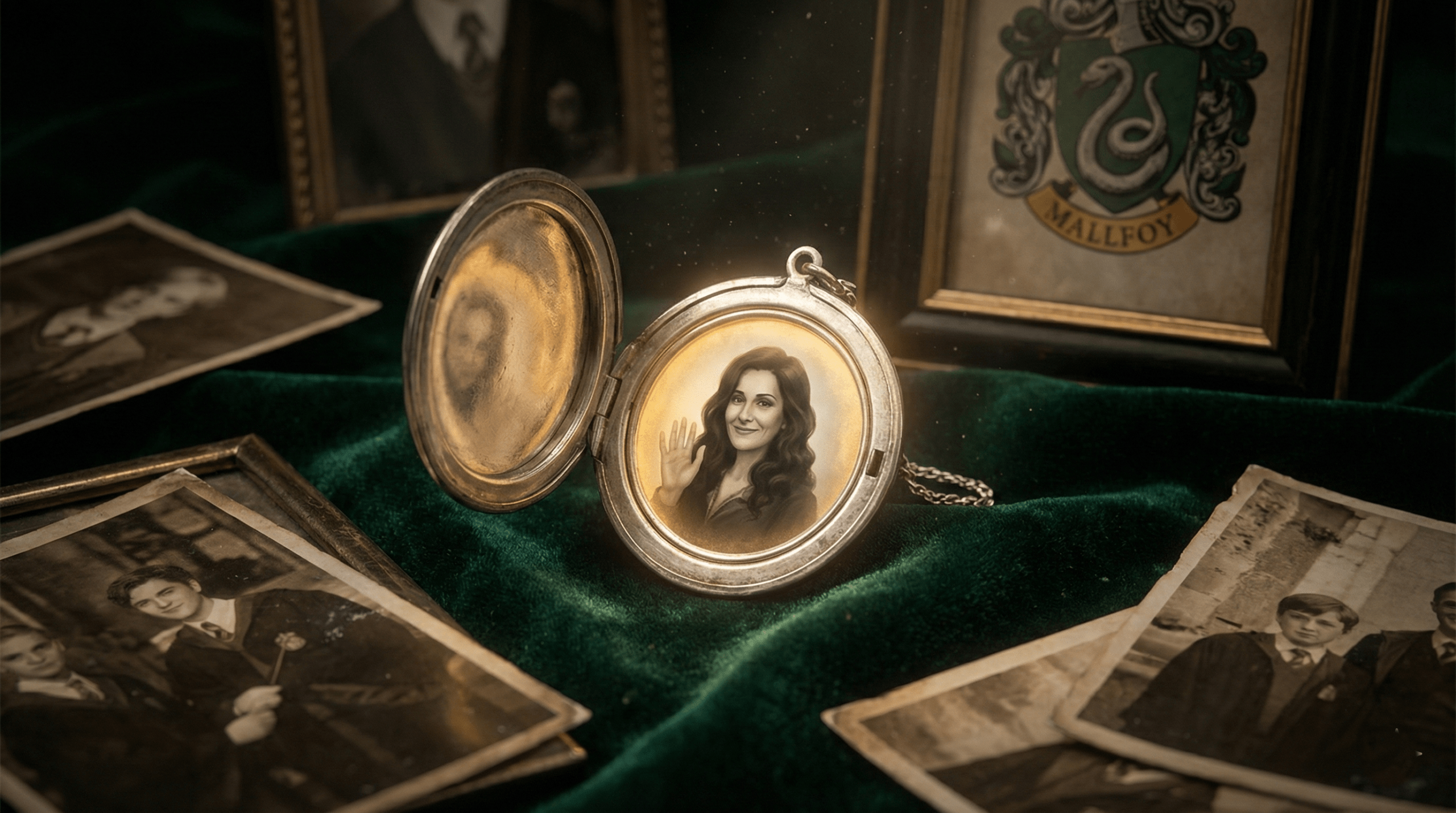 This arc mirrors broader post-war themes in J.K. Rowling’s work: not everyone who fought on the wrong side is irredeemable, and healing often comes through personal relationships rather than public gestures. Astoria’s progressive stance within a traditionally conservative pure-blood family shows that ideological shifts can happen quietly, behind closed doors, long after the battles have ended.
Her story also contrasts sharply with other pure-blood families’ fates. The Blacks are nearly extinct, the Malfoys are socially diminished, and many other Sacred Twenty-Eight lines either faded or clung stubbornly to old ways. The Greengrasses, through Astoria, represent a different path—one of adaptation and quiet moral courage.
Fan Theories, Debates, and Headcanons
Astoria has become a surprisingly popular character in fan communities despite her minimal canon footprint. The ship name “Drastoria” (Draco + Astoria) enjoys a dedicated following, often portrayed as a slow-burn romance built on mutual understanding rather than dramatic passion. Fans frequently imagine her personality as gentle yet fiercely principled, artistic, bookish, or quietly rebellious—traits that complement Draco’s sharper edges.
Debates continue about the blood malediction: Was it deliberately passed down as punishment for past Greengrass misdeeds? Could modern healing magic or experimental treatments have prolonged her life? Some fans even speculate on alternate timelines where Astoria survives, allowing the Malfoy family to grow larger and more visibly reformed.
These discussions keep Astoria relevant long after the books ended, proving that even minor characters can inspire rich imaginative exploration when given a meaningful backstory.
Expert Insight: Rowling’s Intentions
J.K. Rowling has spoken sparingly but deliberately about Astoria. In Wizarding World entries and interviews, she emphasized that giving Draco a wife who challenged his upbringing was essential to his redemption. Rowling noted that Astoria’s progressive views were intentional—she wanted to show that not every Slytherin or pure-blood family remained static after the war.
The decision to make Astoria’s death part of the Cursed Child backstory also serves a narrative purpose: it gives Draco a personal stake in protecting Scorpius that goes beyond mere parental instinct. It adds emotional weight to his interactions with Harry, Albus, and the next generation, reminding readers that peace came at a cost—not just in lives lost during the battles, but in the years of quiet suffering that followed.
Visual Timeline: Astoria Greengrass’s Life in the Wizarding World
- c. 1982 — Astoria Greengrass is born to the Greengrass family, younger sister of Daphne.
- 1 September 1993 — Begins her education at Hogwarts School of Witchcraft and Wizardry; sorted into Slytherin House.
- 1995–1998 — Attends Hogwarts during the return of Voldemort, the rise of the Inquisitorial Squad, the Battle of the Astronomy Tower, and the final occupation of the school by Death Eaters.
- 2 May 1998 — Survives the Battle of Hogwarts (though not mentioned directly in the books).
- Early 2000s — Marries Draco Malfoy despite Lucius and Narcissa’s disapproval.
- c. 2005–2006 — Gives birth to Scorpius Hyperion Malfoy, their only child.
- 2010s — Health gradually declines due to the blood malediction.
- August 2019 — Astoria Malfoy dies at approximately age 37, leaving Draco a widower and Scorpius motherless.
- 2017–2020 — Events of Harry Potter and the Cursed Child unfold; Astoria is frequently remembered and referenced by Draco and Scorpius.
(This timeline can be turned into an infographic or visual aid on your blog for increased reader engagement and time-on-page.)
 FAQs About Astoria Greengrass
Is Astoria Greengrass actually in the Harry Potter books? She is not named in the main seven books. Her only indirect presence is in the Deathly Hallows epilogue, where Draco appears with “his wife and son.” J.K. Rowling later confirmed her identity.
What happened to Astoria Greengrass? She died in August 2019 from complications of a hereditary blood malediction, a serious and ultimately fatal curse passed down through the Greengrass family.
Did Draco love Astoria? Yes—profoundly. Draco defied his parents to marry her, credited her with making him a better person, and remained deeply affected by her death years later.
Is the blood curse real canon? Yes. J.K. Rowling confirmed the existence of the blood malediction in Wizarding World entries and interviews, describing it as a serious, inherited condition that led to Astoria’s early death.
Who played Astoria in the movies? In Harry Potter and the Deathly Hallows: Part 2 (2011), Draco’s wife appears briefly in the Platform 9¾ epilogue scene as a non-speaking extra. No official casting name was ever released for the role.
Was Astoria a Death Eater or supporter of Voldemort? No evidence exists in canon to suggest she supported Voldemort. Given her progressive views on blood purity (confirmed by Rowling), it is unlikely she aligned with the Death Eater cause.
Why is Astoria so popular in fanfiction? Her minimal canon presence gives writers freedom to develop her personality, while her relationship with Draco offers rich potential for redemption stories, slow-burn romance, and exploration of post-war healing.
Astoria Greengrass may have lived and died in the margins of the Harry Potter saga, but her influence is anything but marginal. Through her love for Draco, her quiet rebellion against pure-blood dogma, and the tragic sacrifice demanded by an ancient curse, she helped complete one of the series’ most important character arcs. She reminds us that redemption is rarely loud or dramatic—it often arrives in private moments, through personal choices, and at great personal cost.
For fans who finish The Cursed Child feeling a pang of sorrow for the absent mother who shaped Scorpius and Draco, Astoria offers a bittersweet kind of closure. She never sought the spotlight, yet she changed the trajectory of one of the most infamous families in the Wizarding World.
If you’re hungry for more deep dives into overlooked characters, family legacies, or the post-war era, explore the Wizarding World archives, read (or re-read) The Cursed Child script, or join Potter communities where Drastoria fans continue to keep her memory alive. Who knows—perhaps Astoria’s story still has more secrets waiting to be told.