
Imagine the roar of 100,000 wizards and witches at the 1994 Quidditch World Cup, the sky ablaze with fireworks, leprechauns showering gold, and a larger-than-life commentator booming over the chaos: “Bagman here, folks!” That voice belongs to Ludovic “Ludo” Bagman, a former Quidditch star turned Ministry official whose infectious enthusiasm masks a deeply flawed character. Yet, when millions watched Harry Potter and the Goblet of Fire on screen, this pivotal figure was nowhere to be found. Bagman Harry Potter fans often ask: Who exactly is this charismatic, gambling-obsessed wizard, and why did the films erase him entirely?
As a longtime Harry Potter enthusiast and analyst who’s pored over J.K. Rowling’s texts, Wizarding World supplementary materials, and fan discussions for years, I’ve seen how Ludo Bagman represents one of the series’ sharpest examples of overlooked depth. He’s not just comic relief—he’s a red herring, a cautionary tale of privilege and addiction, and a key driver of subplots that shape major characters like Fred and George Weasley. In this in-depth guide, we’ll explore his full backstory, his critical role in Harry Potter and the Goblet of Fire, the real reasons for his movie omission, and why he remains essential for understanding the richer layers of the books. Whether you’re a book purist puzzled by the adaptation differences or a movie fan discovering the canon gaps, this article delivers the comprehensive answers you’ve been searching for.
Who Is Ludo Bagman? The Basics of a Forgotten Wizard
Ludovic “Ludo” Bagman—often simply called Ludo—is a quintessential example of a wizard riding the wave of past glory. His name itself is a clever nod: “Ludo” derives from Latin roots meaning “to play,” perfectly suiting his lifelong obsession with games, bets, and risk.
 Early Life and Quidditch Stardom
Bagman rose to fame as a celebrated Beater for the Wimbourne Wasps and later the English National Quidditch team during the late 1970s and early 1980s. Beaters, tasked with protecting teammates by batting Bludgers, require strength, agility, and boldness—qualities Bagman possessed in abundance during his prime. Described as once having a “powerful build,” he was a household name, the kind of sports hero whose posters likely adorned young wizards’ walls. His athletic prowess earned him celebrity status, which later propelled him into Ministry politics despite lacking the typical bureaucratic temperament.
Rise at the Ministry
After retiring from professional Quidditch, Bagman joined the Ministry of Magic’s Department of Magical Games and Sports, eventually becoming its Head. This role suited his personality: organizing high-profile events like the Quidditch World Cup and the Triwizard Tournament allowed him to stay in the spotlight while indulging his love for spectacle. However, his appointment highlighted the Ministry’s occasional favoritism toward fame over competence—Percy Weasley dismisses him as “likeable enough” but questions how he secured such a senior post.
Appearance and Traits
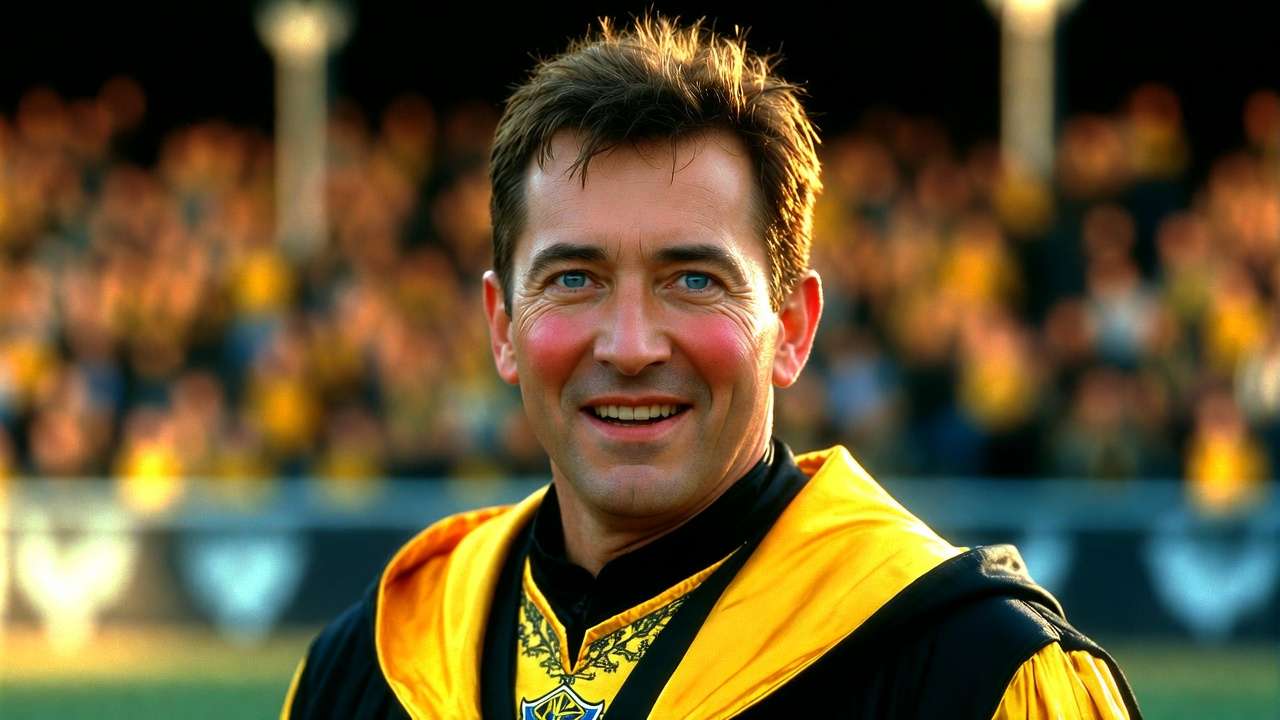
Physically, Bagman is portrayed as an “overgrown schoolboy”: once-muscular frame now softened by age and excess, bright blue eyes, rosy cheeks, and a perpetual bounce in his step. He favors garish robes—often bright yellow and black, echoing his Wasps days—and exudes relentless cheerfulness. Yet beneath the jovial exterior lies a serious flaw: compulsive gambling. This addiction drives much of his arc, turning his charm into recklessness. He’s genuinely likable in small doses—warm, enthusiastic, and quick with a laugh—but his irresponsibility repeatedly harms those around him.
In many ways, Bagman embodies the “eternal adolescent” archetype in Rowling’s world: a man who never fully grew up, shielded by privilege and past achievements.
Ludo Bagman’s Major Role in Harry Potter and the Goblet of Fire
Bagman’s presence permeates Goblet of Fire, making his absence in the film adaptation all the more noticeable. He serves multiple narrative functions: event organizer, commentator, judge, red herring, and symbol of Ministry flaws.
At the 1994 Quidditch World Cup
As Head of Magical Games and Sports, Bagman coordinates the massive event. We first meet him in the Top Box, where he greets the Weasleys enthusiastically and takes bets from Fred and George. The twins wager their life savings that Ireland will win but Viktor Krum will catch the Snitch—a correct prediction that should net them a fortune. Bagman pays them in leprechaun gold, which vanishes, foreshadowing his dishonesty and setting up a long-running debt subplot.
 The Triwizard Tournament Judge and Commentator
Bagman helps revive the Triwizard Tournament and serves as one of its five judges (alongside Dumbledore, Crouch Sr., Maxime, and Karkaroff). He announces each task with bombastic flair, providing commentary that heightens tension. Notably, he shows unusual favoritism toward Harry Potter—pulling him aside before the First Task to offer “a few pointers” against the Hungarian Horntail, and later hinting at gillyweed for the Second Task. His enthusiasm makes Harry (and readers) suspect him as the one who placed Harry’s name in the Goblet of Fire.
 The Gambling Addiction Revealed
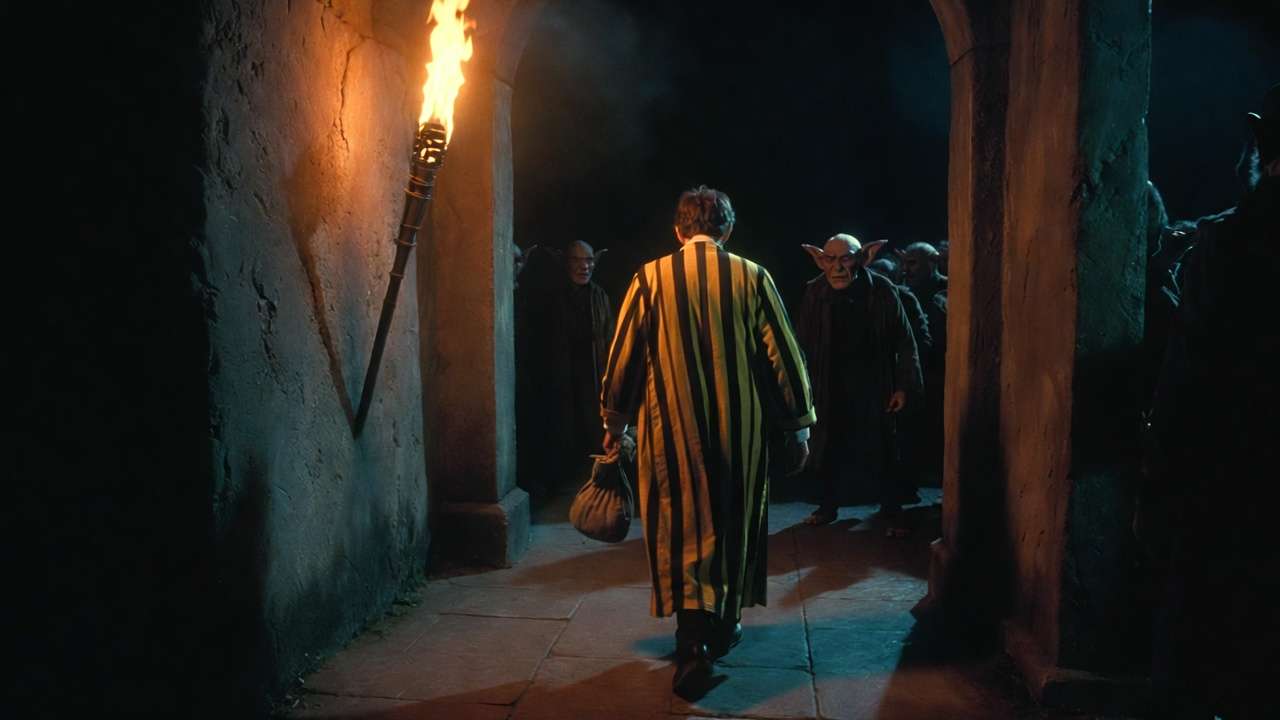
The truth emerges late: Bagman’s helpfulness stems from desperation. Deep in debt to goblins after bad World Cup bets, he wagers heavily on Harry to win the Tournament outright. A tie (Harry and Cedric sharing victory) means he loses again, prompting his flight. This revelation reframes his actions—not malice, but self-preservation through unethical influence.
 Connections to Larger Plot
Bagman’s past includes a trial during the First Wizarding War, where he passed information to Augustus Rookwood (a Death Eater spy) but was acquitted as “foolish” rather than treacherous. Mad-Eye Moody calls him “dim,” underscoring how his charm excuses incompetence. Winky labels him a “bad wizard,” and his actions highlight Ministry corruption, contrasting sharply with strict figures like Barty Crouch Sr.
Why Was Ludo Bagman Completely Cut from the Harry Potter Movies?
The film’s decision to omit Bagman is one of the most debated book-to-screen changes in the series.
Practical Filmmaking Reasons
Goblet of Fire is the longest book, clocking in at over 700 pages. Director Mike Newell and screenwriter Steve Kloves faced intense time constraints (the film runs 157 minutes). Including Bagman would require additional scenes: his World Cup commentary (given to Cornelius Fudge instead), task explanations (shifted to Dumbledore and Crouch Sr.), and interactions with the Weasleys. Cutting him streamlined pacing without losing core plot.
 Narrative Impact of the Cut
Bagman’s removal simplifies subplots. The Weasleys’ Wizard Wheezes origin loses context—Fred and George’s joke shop funding comes directly from Harry’s Triwizard winnings in the film, but in the book, it’s repayment for the cheated bet plus Harry’s prize to help them avoid more Bagman-like exploitation. The mystery of Harry’s Goblet entry loses a strong red herring; movie audiences never suspect a jovial Ministry official. Ministry incompetence feels less pronounced without his bumbling presence.
What the Films Replaced Him With
Fudge handles World Cup duties, while Crouch Sr. and Dumbledore cover tournament logistics. This consolidation tightens focus on the main trio and Voldemort’s return.
Fan Reactions and Legacy
Book fans frequently lament the cut, noting it diminishes Fred and George’s arc and removes a layer of humor and misdirection. On re-reads, Bagman’s scenes add richness; rewatches feel streamlined but shallower.
Deeper Analysis: What Ludo Bagman Represents in the Wizarding World
Ludo Bagman is far more than a quirky side character tossed in for comic relief or convenient plot movement. J.K. Rowling uses him masterfully to explore several recurring themes in the Harry Potter series, particularly in the later books where the wizarding world’s institutions come under intense scrutiny.
First and foremost, Bagman is a portrait of privilege without responsibility. His Quidditch fame and Ministry connections grant him a level of protection and leniency that few others enjoy. During the First Wizarding War, he was caught passing classified information to Death Eater Augustus Rookwood. Yet unlike Barty Crouch Jr., who received a life sentence in Azkaban, Bagman walked free after the Wizengamot deemed his actions the product of foolishness rather than malice. The acquittal—described in detail during Moody’s lesson on the Imperius Curse—illustrates how celebrity and social capital can shield individuals from serious consequences, a theme that echoes loudly in the Ministry’s handling of Lucius Malfoy and other pure-blood elites.
Second, Bagman serves as a metaphor for gambling addiction and its destructive ripple effects. His compulsive betting isn’t played for laughs alone; it ruins lives. The leprechaun gold fiasco cheats Fred and George out of their rightful winnings, forcing them to rely on Harry’s Triwizard prize money to launch their joke shop. Had Bagman paid honestly, the twins might have started Weasleys’ Wizard Wheezes earlier and under better circumstances. Later, his desperate wagers on Harry to cover goblin debts nearly compromise the Tournament’s integrity. Rowling, who has spoken openly about the destructive power of addiction in interviews and her own life, crafts Bagman’s arc with subtlety but unmistakable seriousness.
Third, he embodies Ministry incompetence and cronyism. The Department of Magical Games and Sports is portrayed as a relatively frivolous arm of government, yet someone as irresponsible as Bagman rises to lead it. His boyish enthusiasm and inability to manage money contrast sharply with the authoritarian rigidity of Barty Crouch Sr., highlighting different but equally dangerous forms of institutional failure. Where Crouch Sr. sacrifices family and ethics for control, Bagman sacrifices ethics and others’ money for personal gratification.
Finally, Bagman functions as an effective red herring in a book already packed with misdirection. Readers suspect him because he’s overly helpful to Harry, has a shady past, and stands to gain financially from Harry’s victory. Rowling plants these clues so skillfully that many first-time readers genuinely believe he might be working for Voldemort—only to discover his motives are purely selfish and small-scale. Removing this layer in the film flattens the mystery and reduces the sense of a sprawling, morally gray adult world encroaching on the teenage protagonists.
In short, Bagman is one of Rowling’s quiet masterstrokes: a seemingly minor figure who quietly reinforces the series’ most important messages about power, accountability, and human weakness.
What Happened to Ludo Bagman After Goblet of Fire?
After the Third Task ends in tragedy and Harry and Cedric share the victory, Bagman’s final appearance in the series is brief but telling. He attempts to pay Fred and George with yet more vanishing leprechaun gold, then vanishes himself when the goblins come calling to collect on his enormous debts.
Canon never shows Bagman again. In Order of the Phoenix and beyond, he is conspicuously absent from Ministry rosters, Quidditch commentary, and wartime events. J.K. Rowling later confirmed (via Pottermore/Wizarding World archives) that Bagman fled the country to escape his goblin creditors. Goblins, already distrustful of wizards after centuries of mistreatment, reportedly cited Bagman’s unpaid debts as one reason they refused to aid the Order of the Phoenix during the Second Wizarding War.
A tiny 2014 update appeared in the “History of the Quidditch World Cup” section on Pottermore, hinting that Bagman may have resurfaced briefly to commentate on that year’s tournament. However, no further details were provided, leaving his ultimate fate deliberately ambiguous—a fitting end for a man who spent his life dodging consequences.
This open-ended conclusion reinforces one of the series’ darker truths: not every wrongdoer receives dramatic punishment. Some simply disappear, leaving damage in their wake.
FAQs About Bagman Harry Potter
Is Ludo Bagman a Death Eater?
No. He was cleared of intentional wrongdoing during his trial in the 1980s. His information leak to Rookwood was attributed to being under the Imperius Curse (or extreme gullibility), and the Wizengamot accepted this defense. He is never depicted as supporting Voldemort ideologically.
Why do book fans wish he had been included in the movies?
Bagman adds humor, misdirection, and emotional weight to Fred and George’s subplot. His absence makes their shop funding feel like a convenient plot device rather than a clever payoff to an earlier injustice. Many readers also miss the extra texture he gives to the Ministry and the Tournament.
How does his absence change Fred and George’s story?
In the book, Harry gives them his Triwizard winnings specifically to repay the debt Bagman cheated them out of and to help them launch their business. The film removes this context, so the money appears to be purely Harry’s generous gift. The change is subtle but reduces the twins’ agency and the narrative payoff.
Are there any hints of Bagman in later books or Wizarding World content?
Very few. He is never mentioned by name after Goblet of Fire except in passing references to the 1994 World Cup. The 2014 Pottermore snippet is the only post-series nod, and even that is vague.
Would Bagman have been recast or recut if the films had kept him?
Speculation among fans often points to actors like Mark Williams (already playing Arthur Weasley) or comic performers such as Hugh Dennis or Stephen Fry for the role. Ultimately, the character’s removal was likely a pragmatic choice rather than a casting issue.
Ludo Bagman may never have carried a wand into battle or uttered a memorable prophecy, but he remains one of the most quietly impactful characters in the Harry Potter series. Through his charm, his flaws, and his spectacular fall from grace, he exposes the cracks in the wizarding world’s social and institutional foundations—cracks that widen dramatically in the years that follow.
For movie-only fans, discovering Bagman through the books is often a revelation: suddenly the Quidditch World Cup feels more chaotic, the Triwizard Tournament more morally complicated, and Fred and George’s entrepreneurial journey more earned. For longtime readers, revisiting his chapters brings fresh appreciation for Rowling’s skill at weaving seemingly minor figures into the larger tapestry.
So the next time you watch Goblet of Fire and notice the conspicuous lack of a certain loud, yellow-robed commentator, remember: sometimes the characters who don’t make the final cut are the ones who reveal the most about the story that was left on the page.
If you’ve enjoyed this deep dive into one of Hogwarts’ most underrated figures, consider exploring our other character analyses, book-vs-movie comparisons, and deep dives into the Ministry of Magic. The wizarding world is vast—and Bagman Harry Potter fans know that even the side players deserve their spotlight.