Everyone remembers the terrifying, snake-like, hairless visage of Lord Voldemort. It is, without a doubt, one of the most iconic villain designs in cinematic and literary history. His pale, vein-mapped skull and lack of a nose made him the literal face of dark magic for an entire generation. But because the Dark Lord commands so much attention, many fans completely overlook the fact that he was far from the only notable hairless magic-user in the wizarding world. If you look closely at the lore and the films, you will find a fascinating lineup of bald wizards in Harry Potter who rocked the look for entirely different reasons—whether by choice, by age, or by the corrupting influence of the Dark Arts.
This comprehensive guide dives deep into the wizarding world to explore the hidden lore, behind-the-scenes cinematic trivia, and a definitive breakdown of the most powerful bald characters in the Harry Potter universe. We are stepping far beyond He-Who-Must-Not-Be-Named to uncover the heroes, the frauds, and the legendary figures who prove that you do not need a magnificent mane of hair to yield magnificent magical power.
Why Voldemort’s Baldness is So Iconic (The Baseline)
To understand the impact of the other characters on this list, we must first establish the baseline: Tom Marvolo Riddle, better known as Lord Voldemort. Voldemort’s baldness is not a natural byproduct of aging or genetics; it is a physical manifestation of his mutilated soul.
The Lore Reason:
In his youth at Hogwarts School of Witchcraft and Wizardry, Tom Riddle was described as strikingly handsome, possessing dark hair, pale skin, and dark eyes. He used this charismatic appearance to charm his professors—most notably Horace Slughorn—and manipulate those around him. However, his descent into the darkest of magic fundamentally altered his biology. By committing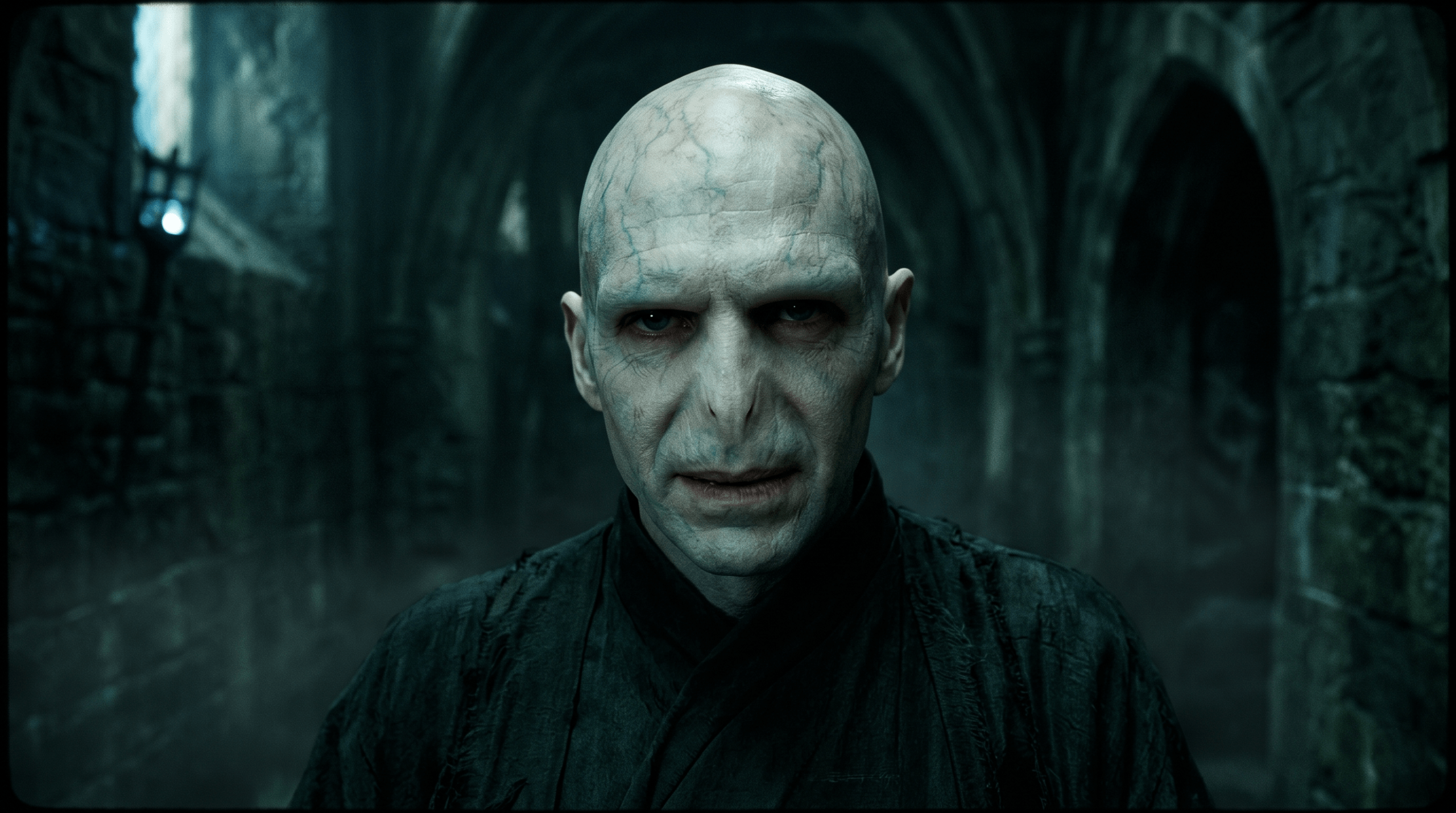 murder and splitting his soul to create Horcruxes, Riddle stripped away his own humanity piece by piece.
When he is resurrected in Harry Potter and the Goblet of Fire, the transformation is complete. The handsome boy is gone, replaced by a skeletal, hairless, snake-like entity. His baldness in this context represents a complete detachment from human nature. He has shed his human hair just as a snake sheds its skin, leaving behind a cold, reptilian exterior.
The Cinematic Choice:
When bringing this monstrosity to the silver screen, the filmmakers and actor Ralph Fiennes made deliberate choices to maximize the uncanny valley effect. The makeup and CGI teams designed his bald, noseless look to make him appear distinctly unnatural and predatory. Veins were painted onto Fiennes’ shaved head to make his skin look translucent, highlighting the fact that Voldemort is a creature barely clinging to life through unnatural means.
But while Voldemort’s lack of hair is a symbol of dark corruption, the other wizards in the Harry Potter universe show us that baldness can also symbolize discipline, age, tragedy, and even vanity.
5 Powerful Bald Wizards in Harry Potter (Beyond the Dark Lord)
While the Dark Lord sets a terrifying standard, there are other incredibly powerful—and sometimes secretly bald—characters in the franchise. Here are five major magic-users who share this physical trait, along with the deep lore and behind-the-scenes trivia that makes them so memorable.
1. Kingsley Shacklebolt: The Badass Bald Auror
If Voldemort’s baldness represents a loss of humanity, Kingsley Shacklebolt’s baldness represents absolute discipline, strength, and tactical precision. Kingsley is arguably the most powerful heroic bald wizard in the entire Harry Potter series, serving as a beacon of calm authority in a chaotic world.
Why He Stands Out:
Kingsley is a top-tier Ministry of Magic Auror, a trusted member of the reborn Order of the Phoenix, and the man tasked with protecting the Muggle Prime Minister. During the Battle of Hogwarts, Kingsley is one of the few wizards powerful enough to duel Lord Voldemort directly. Following the Second Wizarding War, he is rightfully appointed as the Minister for Magic, successfully rooting out corruption and leading the magical community into a new era of peace.
Aesthetic & Lore:
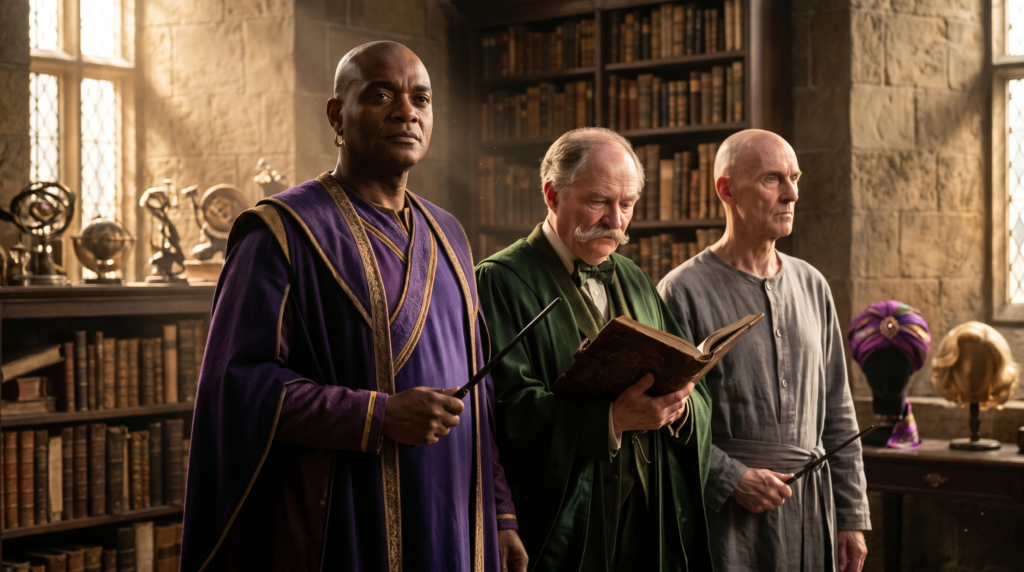
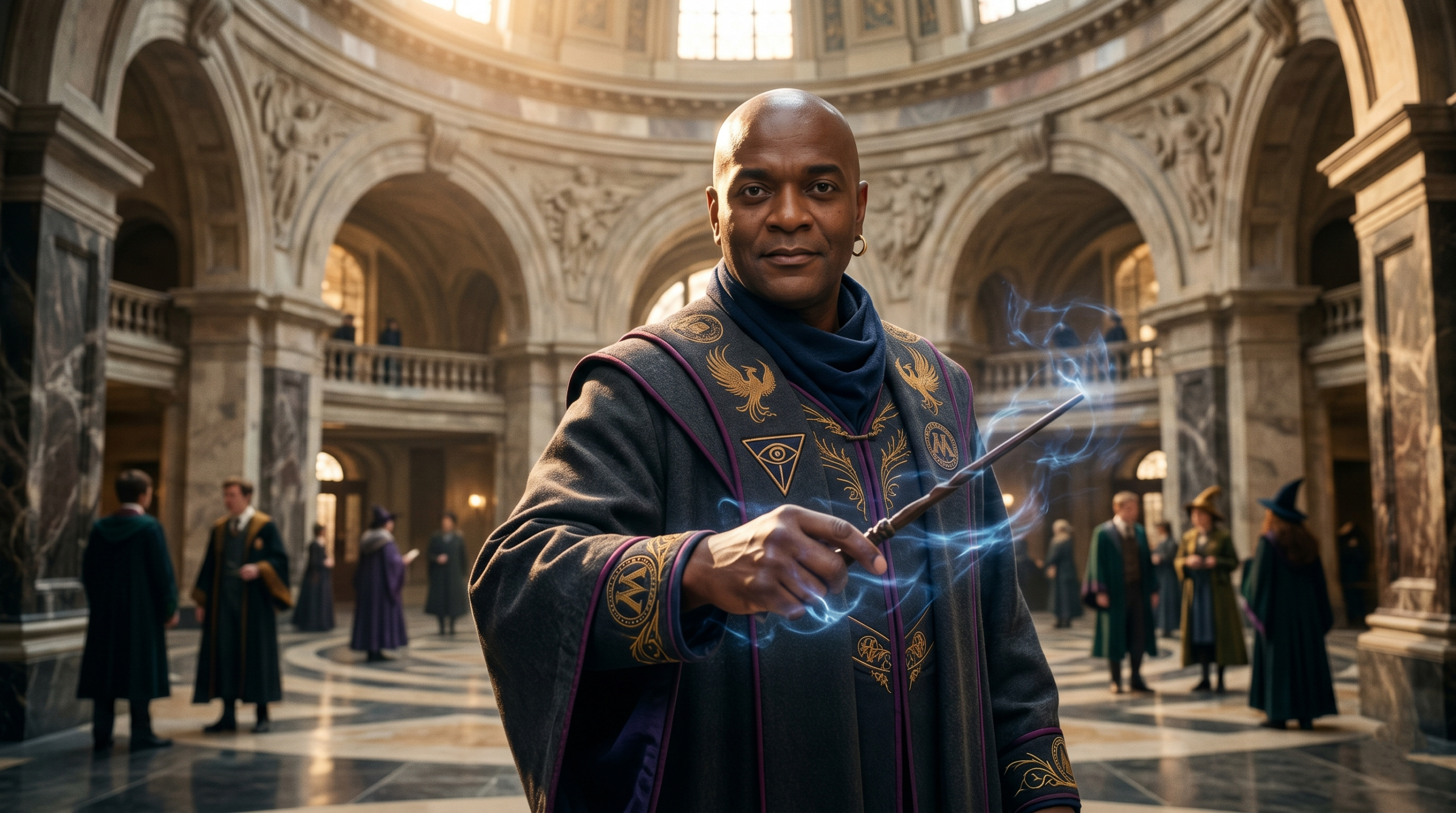
Kingsley’s visual design is strikingly unique. In both J.K. Rowling’s books and actor George Harris’s portrayal in the films, Kingsley boasts a completely shaven head, paired with a single gold hoop earring and vibrant, culturally rich robes. His baldness feels like a deliberate, tactical choice. For an Auror who engages in deadly magical combat, having no hair means having one less physical vulnerability for a Death Eater to grab or curse. It adds to his imposing, warrior-like presence, proving that an Auror does not need wild, unkempt hair (like Mad-Eye Moody or Sirius Black) to look dangerous.
 2. Horace Slughorn: The Potions Master with a Gleaming Pate
Horace Slughorn, the eccentric and incredibly talented former Head of Slytherin House, represents a completely different side of the wizarding world: the comfortable, aging academic.
Why He Stands Out:
Do not let his jovial, grandfatherly demeanor fool you; Slughorn is a wizard of immense magical power and intellect. He possesses a masterful understanding of Potions, is an accomplished Occlumens (able to alter his own memories to hide them from Albus Dumbledore), and ultimately demonstrates immense bravery by dueling his former student, Voldemort, alongside Kingsley and Professor McGonagall.
Aesthetic & Lore:
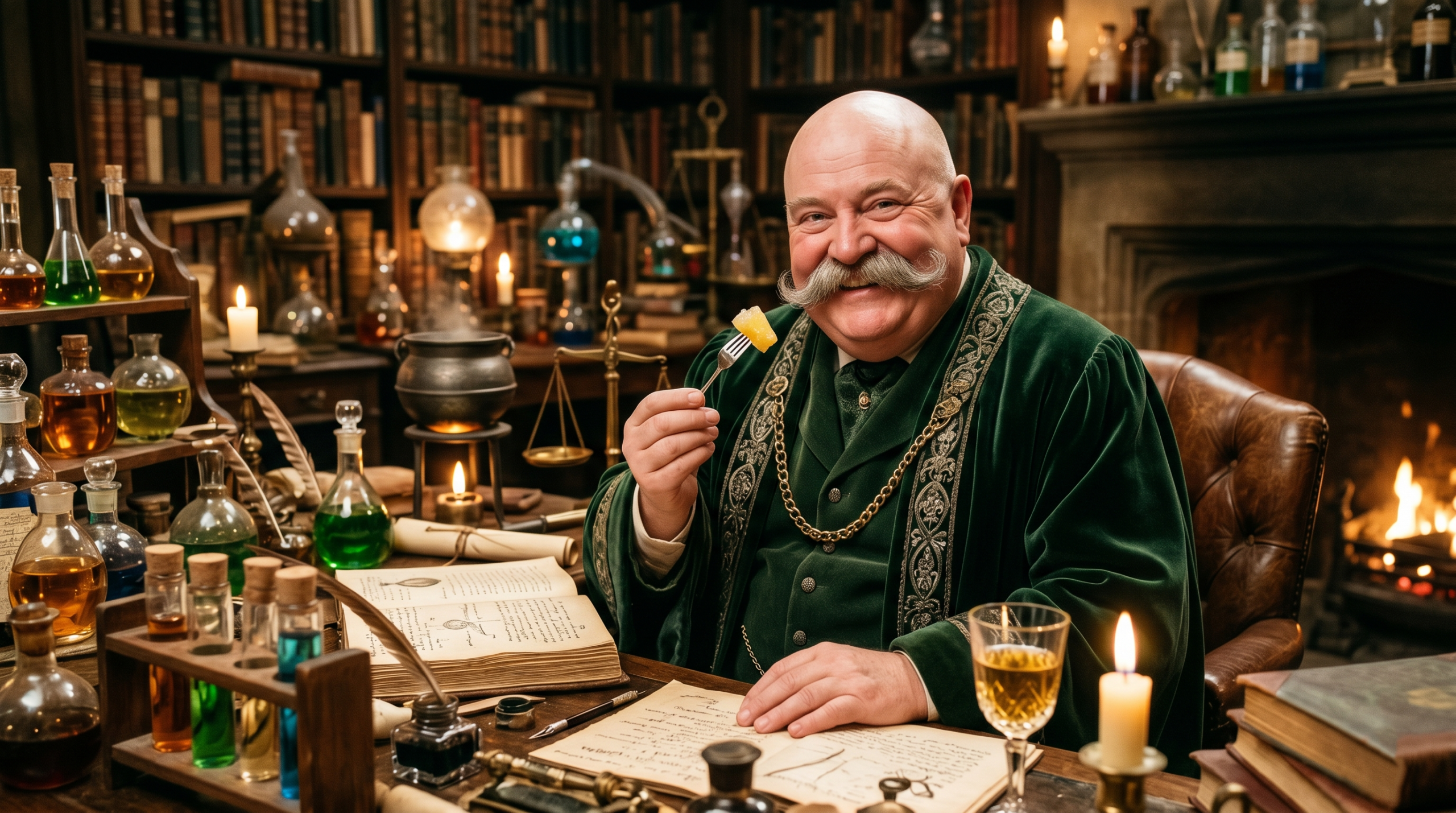
There is a notable difference between Slughorn’s appearance in the novels and the films. In the books, J.K. Rowling explicitly describes Slughorn as an enormously fat man with a massive, gleaming bald head, protruding eyes, and an enormous silver walrus mustache. His baldness here is a natural sign of aging, fitting perfectly with his love for crystallized pineapple, comfortable armchairs, and the finer things in life.
While actor Jim Broadbent (who played Slughorn in the films) retained a thin layer of wispy hair, the canonical book version of the character is proudly and magnificently bald. This physical description acts as a brilliant contrast to the dark secrets he hides; his shiny, harmless appearance masks the heavy guilt he carries for inadvertently teaching Tom Riddle about Horcruxes.
 3. Quirinus Quirrell: The Wizard Who Shaved His Head for Dark Magic
Professor Quirinus Quirrell, the stuttering, seemingly harmless Defense Against the Dark Arts teacher from Harry Potter and the Sorcerer’s Stone, holds one of the darkest secrets in the franchise—and his hair (or lack thereof) is central to the plot.
The Secret Lore:
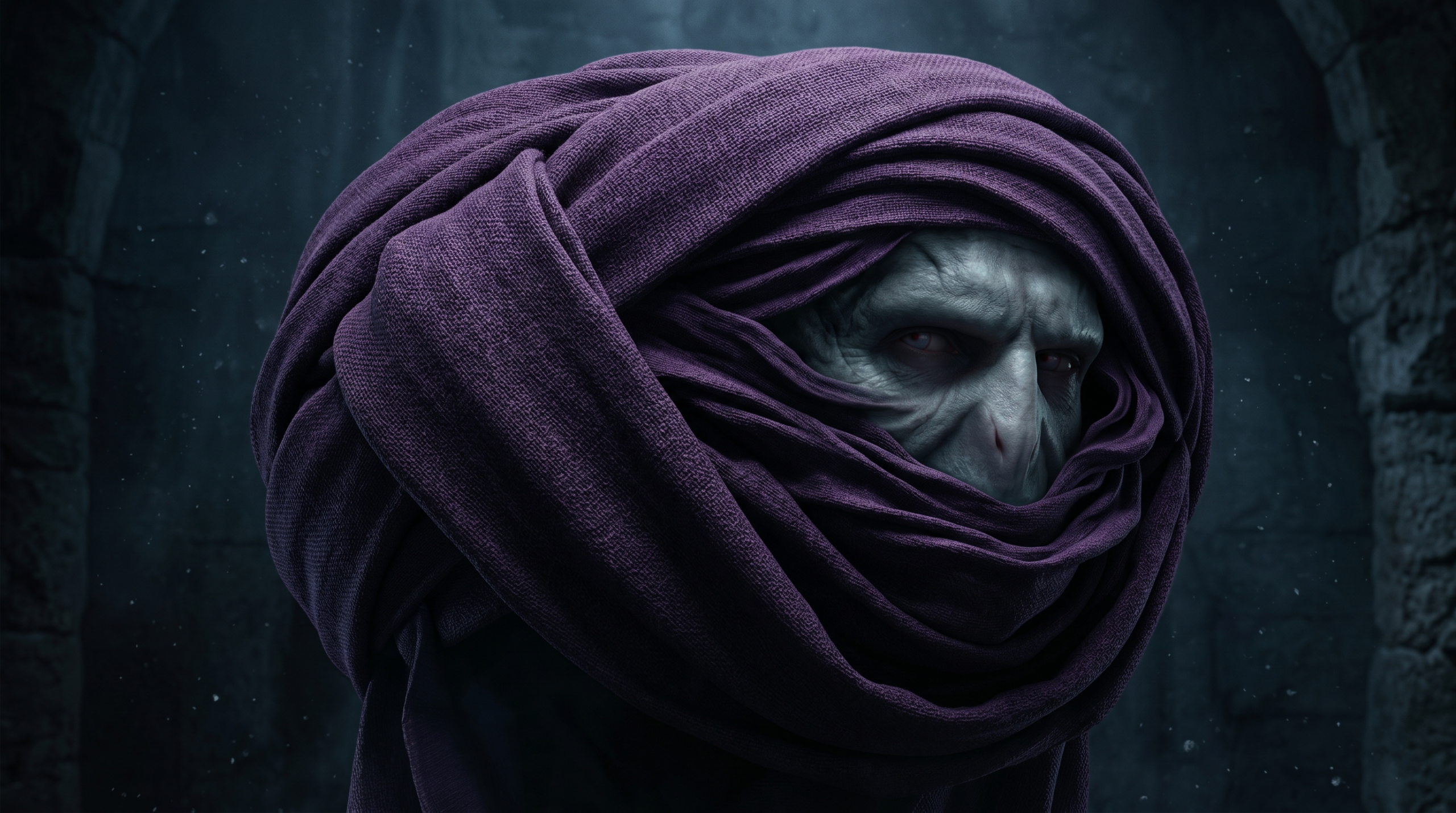
Quirrell was not naturally bald. As a brilliant but timid academic, he traveled to Albania to gain firsthand experience with dark creatures, hoping to rid himself of his cowardly reputation. Instead, he encountered the disembodied spirit of Lord Voldemort. To allow the Dark Lord to share his body, Quirrell had to make a drastic physical sacrifice: he shaved his head so that Voldemort’s monstrous face could seamlessly attach to the back of his skull. He then wore his iconic purple turban to conceal this terrifying secret from the staff and students of Hogwarts.
Movie Trivia:
The cinematic translation of this lore is a fantastic piece of behind-the-scenes trivia. British actor Ian Hart actually shaved his head completely bald for the role. His smooth, hairless skull was then used as the literal CGI canvas for Voldemort’s first terrifying on-screen appearance. Quirrell’s baldness was not a fashion statement; it was a physical testament to his complete submission to dark magic.
 4. Gellert Grindelwald: The Bald Prisoner of Nurmengard
Before Voldemort’s reign of terror, Gellert Grindelwald was the most dangerous Dark Wizard in history. A master manipulator, a visionary, and Albus Dumbledore’s greatest regret, Grindelwald’s story is one of spectacular rise and tragic fall.
Aesthetic & Lore:
Throughout his youth and the height of his power (as seen in the Fantastic Beasts film series, portrayed by Jamie Campbell Bower, Johnny Depp, and Mads Mikkelsen), Grindelwald is known for his striking features and wild, charismatic hair. He is a rockstar of the wizarding world.
However, by the time Lord Voldemort breaches the walls of Nurmengard in Harry Potter and the Deathly Hallows searching for the Elder Wand, Grindelwald has been locked away for over fifty years. The books describe him as a frail, skeletal, and completely bald old man.
Thematic Contrast:
Grindelwald’s baldness in his final moments is a masterclass in poetic justice. Stripped of his glamorous, charismatic youth, his followers, and his magic, he is left entirely hairless and powerless in a prison of his own making. Yet, despite his frail, bald appearance, he shows a final spark of redemption by laughing in Voldemort’s face and refusing to yield the wand’s location, proving that true power lies within, not in outward appearances.
5. Gilderoy Lockhart: The Secretly Bald Fraud (Movie Trivia Revealed)
Gilderoy Lockhart, the immensely vain, five-time winner of Witch Weekly’s Most-Charming-Smile Award, built his entire career on stealing the achievements of braver wizards and erasing their memories. Everything about Lockhart is a meticulously crafted lie—including, perhaps, his iconic golden hair.
The Hidden Secret:
Here is a massive piece of movie trivia that will change how you watch Harry Potter and the Chamber of Secrets. The filmmakers hid a brilliant visual Easter egg that suggests Gilderoy Lockhart might actually be bald, or at least severely balding.
The Proof:
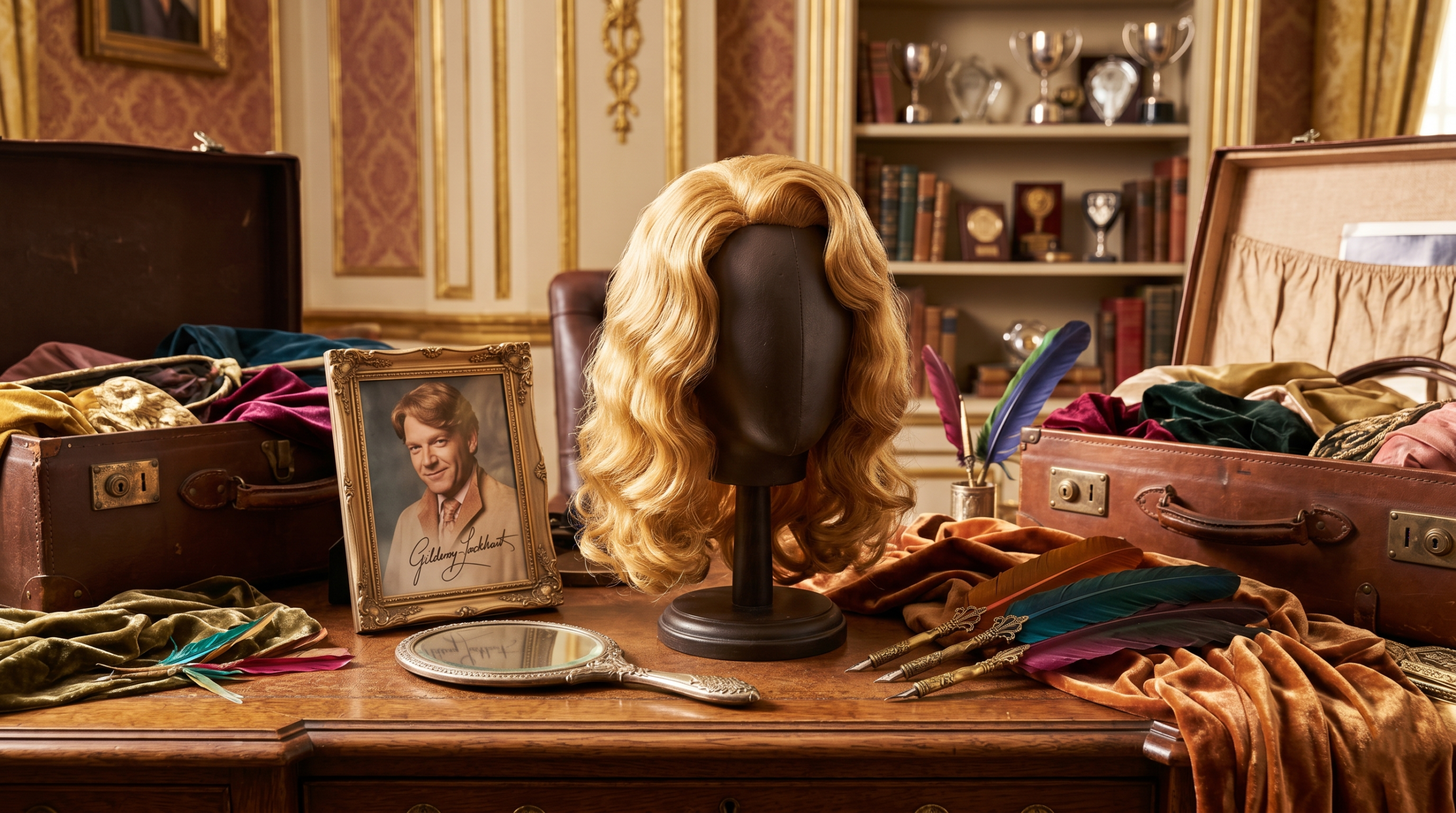
During the scene where Harry and Ron force Lockhart at wand-point to help them enter the Chamber of Secrets, Lockhart is frantically packing his office to flee Hogwarts. If you look closely at his desk during the packing frenzy, you can see a second, perfectly styled golden wig sitting on a mannequin head.
This implies that Lockhart’s perfect, wavy, golden hair is entirely fake. It is a delightfully hilarious physical trait for a man whose entire life, personality, and magical prowess is a complete fabrication. A secretly bald Lockhart wearing an enchanted wig perfectly encapsulates his obsessive vanity and fraudulent nature.
 Honorable Mentions: Other Noticeably Hairless Characters
While the five wizards above hold significant narrative weight, the wizarding world is populated with other noticeably hairless or balding figures who bring flavor and realism to the universe.
-
Tom the Innkeeper: The landlord of the Leaky Cauldron undergoes a massive redesign between the first and third films. In Harry Potter and the Prisoner of Azkaban, director Alfonso Cuarón reimagines Tom as a hunchbacked, completely bald, grinning eccentric, making the magical world feel wonderfully weird and slightly unhinged.
-
Argus Filch: While technically a Squib (a non-magical person born to magical parents) and not a wizard, Hogwarts’ bitter caretaker is famously balding. His unkempt, wispy hair perfectly mirrors his miserable, resentful personality and his desperate grasp on whatever little authority he has.
-
Elphias Doge: A member of the Order of the Phoenix and a lifelong friend of Albus Dumbledore, Doge is depicted in the films with a wispy, balding pate. His appearance underscores the vast age and long history of Dumbledore’s most loyal confidants.
Fan Theory Deep-Dive: Why Don’t Wizards Use Magic to Cure Baldness?
A question frequently pops up in Harry Potter fan communities and Reddit threads: If wizards can magically regrow missing bones overnight using Skele-Gro, why do characters like Arthur Weasley, Horace Slughorn, or even Voldemort stay bald or balding?
The Rules of Magical Healing:
J.K. Rowling has established very specific rules regarding magical healing within her universe. Wizards and witches can easily cure mundane, Muggle ailments. A broken arm can be mended in seconds with Episkey; common colds are eradicated with Pepperup Potion. However, magic has its limits.
The primary rule is that magic cannot reverse genetics or natural biological traits. Just as Harry Potter cannot magically fix his poor eyesight and must wear glasses, and Hermione Granger initially has natural buck teeth (until she cleverly lets Madame Pomfrey shrink them slightly more than necessary after a jinx), a wizard who is genetically predisposed to male pattern baldness cannot permanently alter their DNA with a spell.
Furthermore, damage caused by powerful Dark Magic is permanent. George Weasley cannot magically regrow his ear after it is severed by Snape’s Sectumsempra curse, and Alastor Moody cannot regrow his leg or eye. Therefore, Voldemort’s baldness—a result of the darkest magic imaginable—is entirely irreversible.
The Question of Vanity:
There are certainly cosmetic potions in the wizarding world. Sleekeazy’s Hair Potion (invented by Harry’s grandfather, Fleamont Potter) can tame wild hair, as Hermione demonstrates at the Yule Ball. It stands to reason there might be temporary hair-growth tonics. However, most wizards simply do not care about mundane Muggle vanity. Characters like Kingsley Shacklebolt and Horace Slughorn are supremely confident in their abilities and see no need to hide their natural aging or tactical styling. Unless, of course, you are Gilderoy Lockhart, who circumvents the limits of magical genetics by simply buying a wig.
Frequently Asked Questions (FAQs) About Bald Wizards in Harry Potter
Q: Was Lord Voldemort always bald?
No. Before his physical resurrection, and before he split his soul to the point of severe mutilation, Tom Riddle was a conventionally attractive young man with dark, neat hair. He only lost his hair (and his nose) after his body was destroyed in Godric’s Hollow and later recreated through dark magic in The Goblet of Fire.
Q: Did actor Ian Hart really shave his head to play Professor Quirrell?
Yes. To achieve the practical effect of Quirrell’s smooth head, which would later serve as the green-screen canvas for Voldemort’s CGI face, Ian Hart shaved his head completely bald.
Q: Can Polyjuice Potion successfully replicate a bald wizard?
Yes, but with a catch. Polyjuice Potion requires a piece of the person you are trying to turn into—usually a hair. Because completely bald wizards like Kingsley Shacklebolt do not leave stray hairs behind, an imposter would have to procure a different piece of DNA (like a fingernail clipping or skin cells), which is arguably much harder and grosser to obtain, making bald wizards slightly more secure against identity theft!
Q: Did the books ever mention Kingsley Shacklebolt being bald?
Yes. In Harry Potter and the Order of the Phoenix, Kingsley is introduced explicitly as a tall, bald black wizard who wears a single gold hoop in his ear, a description that the casting of George Harris nailed perfectly in the films.
The Harry Potter universe is defined by its incredibly detailed character designs, where physical appearances often reflect internal truths. While Lord Voldemort’s terrifying, hairless skull is the most famous example of a bald wizard in the franchise, looking beyond the Dark Lord reveals a rich tapestry of characters.
From the commanding, tactical brilliance of Minister for Magic Kingsley Shacklebolt, to the aged intellect of Horace Slughorn, and the hilarious, wig-wearing vanity of Gilderoy Lockhart, the wizarding world proves that power comes in all forms. Baldness in Harry Potter is rarely just an aesthetic choice; it is deeply tied to a character’s lore, their relationship with magic, and the life they have chosen to lead.