
Have you ever closed a Harry Potter book feeling like the entire world had shifted under your feet? For millions of readers, that moment arrived with Harry Potter and the Half-Blood Prince—the sixth installment in J.K. Rowling’s groundbreaking series. Often simply searched as book 6 Harry Potter, this novel stands apart as the pivotal, heart-wrenching bridge between the youthful adventures of the earlier books and the all-out war of the finale. It’s the moment when innocence gives way to irreversible loss, when mysteries unravel into devastating truths, and when the stakes become painfully, inescapably real.
Published on July 16, 2005, Harry Potter and the Half-Blood Prince (Book 6) marked a deliberate tonal evolution that Rowling had been building toward. While the first five books balanced wonder, humor, and growing danger, this one plunges readers into a darker, more mature narrative. The wizarding world is no longer just threatened—it’s fracturing. Voldemort’s return is no longer a rumor but a terrifying reality, with Death Eater attacks, disappearances, and fear gripping both the magical and Muggle communities. What makes book 6 Harry Potter the series’ darkest turning point isn’t just one event (though one moment in particular shatters everything); it’s the cumulative weight of revelations, betrayals, moral ambiguity, and emotional maturity that redefines the story.
Spoiler Warning: This article contains major spoilers for Harry Potter and the Half-Blood Prince and references to the broader series. If you haven’t read the book yet, proceed with caution—or better yet, grab a copy and experience it firsthand before continuing.
In the pages ahead, we’ll explore exactly why this book feels so profoundly different: the atmospheric shift from wonder to dread, the game-changing revelations about Voldemort’s past and immortality, the peak of character development, the heartbreaking climax, the deep thematic resonance, comparisons to the film adaptation, and why so many fans consider it the emotional core—or even the best—of the entire saga. Whether you’re revisiting the series, introducing it to a new reader, or simply searching for deeper insight into book 6 Harry Potter, this comprehensive guide aims to deliver the kind of in-depth analysis that goes beyond surface summaries.
A Quick Refresher on Harry Potter and the Half-Blood Prince (No Spoilers)
Harry Potter and the Half-Blood Prince was released amid unprecedented anticipation, selling millions of copies in its first 24 hours and earning critical acclaim for its maturity and craftsmanship. Clocking in at around 652 pages (depending on the edition), it won several awards and solidified Rowling’s reputation as a master of long-form storytelling that grows with its audience.
The tone shifts noticeably from the preceding Order of the Phoenix. Where Book 5 was angry, bureaucratic, and rebellious, Book 6 feels more intimate yet more ominous. The wizarding war escalates, but much of the action remains at Hogwarts, creating a claustrophobic sense of impending doom amid familiar halls. Fans frequently search for “book 6 Harry Potter” because it’s the novel that forces readers to confront the series’ inevitable endgame—Voldemort’s full backstory, the mechanics of his power, and Harry’s growing role as the chosen one.
The Shift in Tone – From Wonder to Dread
One of the most striking aspects of book 6 Harry Potter is how swiftly and effectively Rowling transitions the series into darker territory.
How the Opening Chapters Set a Darker Atmosphere
The novel opens not with Harry at the Dursleys or on the Hogwarts Express, but with the Muggle Prime Minister receiving an unexpected visit from Cornelius Fudge. This Muggle-world framing immediately establishes that the wizarding war has spilled over into the non-magical realm—bridges collapsing, murders disguised as accidents, widespread fear. It’s a chilling reminder that no one is truly safe.
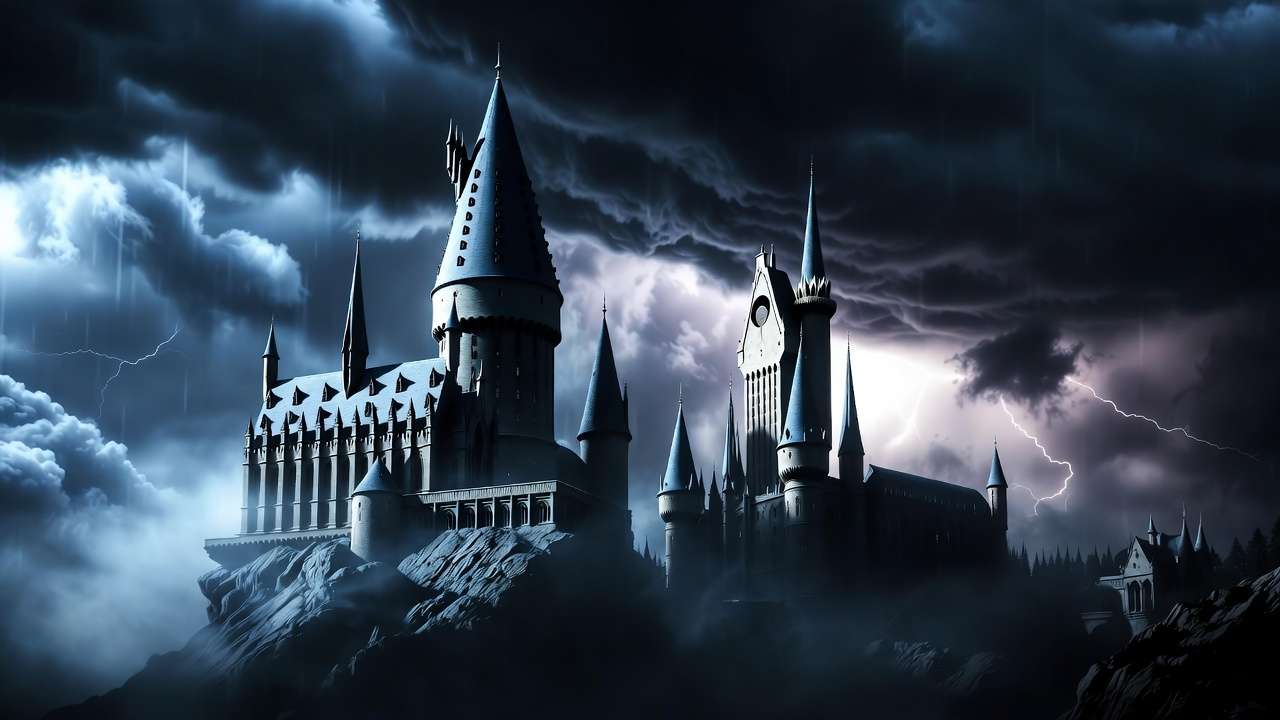
Rowling uses weather, shadows, and subtle dread to build unease. Fog, storms, and dim lighting dominate descriptions, contrasting sharply with the bright, whimsical openings of earlier books.
 The Growing Sense of Inevitability and Loss
As the story progresses, a pervasive sense of inevitability settles in. Characters speak in hushed tones about disappearances; funerals are referenced; hope feels fragile. Even moments of levity—such as teenage romance or Quidditch—carry an undercurrent of desperation, as if everyone knows time is running out.
Comparison to Previous Books – Why Book 6 Feels So Different
Books 1–3 emphasize discovery and friendship against emerging threats. Book 4 introduces large-scale danger with the Triwizard Tournament and Voldemort’s return. Book 5 focuses on institutional corruption and isolation. Book 6, however, combines personal growth with existential horror. The humor is still there (Slughorn’s parties, Ron’s mishaps), but it serves as relief rather than the dominant mood. Rowling herself has noted in interviews around the time of release that she intended the book to reflect the maturing perspective of its characters and readers, preparing them for the sacrifices ahead.
This tonal pivot makes book 6 Harry Potter the true hinge of the series—the point where childhood magic yields to the grim realities of war.
Major Revelations That Change Everything
The heart of what elevates Half-Blood Prince to the series’ darkest turning point lies in its revelations, which fundamentally reframe the entire narrative.
The Truth About Voldemort’s Past and Immortality
Through private lessons with Dumbledore, Harry delves into Tom Riddle’s childhood and youth via the Pensieve. These memory sequences are among Rowling’s most masterful writing—haunting, psychologically layered portraits of how a bright, damaged boy becomes a monster. We see abuse, rejection, cruelty, and the first deliberate acts of evil. These aren’t abstract villain monologues; they’re intimate, tragic glimpses that humanize Voldemort while making him more terrifying.
 The Introduction of Horcruxes – The Ultimate Game-Changer
The concept of Horcruxes—objects in which a wizard hides pieces of their soul to achieve immortality—represents the darkest magic imaginable. Murder as a tool for self-preservation shatters any lingering notion of redeemable evil. Harry learns that Voldemort has created multiple Horcruxes, turning the war into a desperate hunt for hidden artifacts. This revelation transforms the conflict from a straightforward battle into a complex, almost archaeological quest, raising the stakes to cosmic levels.
Dumbledore’s Private Lessons with Harry
These sessions are the emotional core of the book. Dumbledore treats Harry not as a student but as an equal, sharing secrets he’s withheld for years. The trust built here—and the devastating questions it leaves unanswered—marks Harry’s full transition into adulthood. Dumbledore’s vulnerability (his damaged hand, his regrets) humanizes the once-invincible headmaster, adding layers of sorrow.
These revelations don’t just advance the plot; they retroactively deepen every prior book, forcing readers to reevaluate events through a lens of profound tragedy.
Character Development at Its Peak
If the revelations provide the intellectual weight of book 6 Harry Potter, the character arcs deliver its emotional devastation. Rowling uses this installment to push every major player to new depths, stripping away illusions and forcing growth through pain.
Harry’s Emotional Maturity and Anger
Harry enters his sixth year more battle-hardened than ever. The events of Order of the Phoenix—Sirius’s death, the prophecy, the Ministry battle—have left him grieving, angry, and increasingly isolated. In Half-Blood Prince, we see that anger manifest in explosive ways: his use of the Sectumsempra curse on Draco is one of the most shocking moments in the entire series. Yet alongside the rage comes profound maturity. Harry’s willingness to trust Dumbledore’s plan, his protectiveness toward his friends, and his growing awareness of the war’s personal cost mark him as someone no longer playing at being a hero—he is becoming one.
Snape’s Ambiguity Reaches New Heights
No character in the series benefits more from book 6 Harry Potter than Severus Snape. For five books, readers have been fed conflicting signals: cruel teacher, possible traitor, reluctant Order member. This novel intensifies every contradiction. We see Snape’s biting sarcasm, his apparent loyalty to the Dark Lord, and shocking moments of apparent betrayal—yet also fleeting glimpses of something deeper (his vow to Narcissa, his furious reaction to certain events). The book deliberately keeps Snape enigmatic, building unbearable tension that only resolves in the final volume.
The Half-Blood Prince Identity Reveal and Its Implications
The mysterious potions textbook annotated by the “Half-Blood Prince” serves as both plot device and character study. Harry’s admiration for the Prince’s brilliance, his use of the advanced spells, and the eventual revelation of the Prince’s identity deliver one of the series’ most layered twists. It forces readers to confront uncomfortable questions: Can genius and cruelty coexist? Can someone brilliant enough to invent new magic also be capable of profound betrayal?
 Supporting Characters – Draco, Ginny, and the Changing Dynamics
Draco Malfoy receives his most humanizing portrayal yet. Tasked with an impossible mission, we witness his fear, isolation, and near-breakdown. His arc humanizes the “villainous” side of the wizarding world, showing that not every Death Eater is a fanatic—some are terrified teenagers trapped by family legacy.
Meanwhile, Ginny Weasley emerges as a fully realized romantic partner for Harry. Their relationship develops organically, built on shared humor, mutual respect, and quiet understanding—providing rare moments of light amid the darkness. Ron and Hermione’s budding romance adds relatable teenage awkwardness, grounding the larger tragedy in everyday emotion.
These character journeys make book 6 Harry Potter feel less like a fantasy adventure and more like a coming-of-age tragedy set against apocalyptic stakes.
The Heartbreaking Climax and Its Lasting Impact
Everything in Half-Blood Prince builds toward one devastating night on the Astronomy Tower.
The Night That Changed the Wizarding World Forever
Without recounting every detail (for those rare readers still avoiding spoilers), the climax combines betrayal, sacrifice, rage, and irreversible loss. The moment when Harry is forced to remain frozen under Dumbledore’s spell—powerless to act—captures the book’s central theme: sometimes the greatest pain comes from being unable to save someone you love.
 Immediate Aftermath and Harry’s Resolve
The aftermath is merciless. Harry’s grief is raw and unfiltered; his determination to continue Dumbledore’s mission becomes absolute. The final pages strip away any lingering hope of a “happy ending” without enormous cost. Harry’s declaration that he will not return to Hogwarts marks the definitive end of childhood.
Why This Moment Is the True Point of No Return
This sequence is the series’ darkest turning point because it destroys the protective bubble Hogwarts had provided. Safety is gone. Mentorship is gone. Certainty is gone. From this point forward, the story becomes a relentless march toward sacrifice and resolution.
Readers often report feeling physically shaken after finishing these chapters—a testament to Rowling’s skill in blending emotional realism with fantastical stakes.
Themes That Make Book 6 the Emotional Core of the Series
Several recurring themes reach their most powerful expression in book 6 Harry Potter.
Love as the Ultimate Power
While introduced in Book 1, the idea that love is the force Voldemort cannot understand reaches maturity here. Lily’s sacrifice, Snape’s hidden motivations, Dumbledore’s regrets—all circle back to love’s ability to both protect and destroy.
 Trust, Betrayal, and Moral Gray Areas
Rowling refuses to offer easy answers. Characters make morally complex choices; loyalty is tested; betrayal comes from unexpected places. The book forces readers to question their own judgments.
The Cost of War and Growing Up
War is no longer distant—it claims lives, shatters families, and accelerates maturity. Harry, Ron, Hermione, and their peers are no longer children playing hero; they are young adults facing adult horrors.
These themes give the book lasting resonance, making it speak to readers long after the final page.
Book vs. Movie – What the Film Adaptation Changed and Why It Matters
The 2009 film adaptation, directed by David Yates, is widely regarded as one of the more faithful yet also one of the most streamlined. Key changes include:
- Significant reduction of the Pensieve memories (Voldemort’s childhood receives far less screen time, weakening the psychological depth).
- Omission of crucial character moments (Kreacher’s full backstory, much of Slughorn’s role).
- Softening of the tower sequence’s brutality to maintain a PG-13 rating.
- Greater emphasis on teenage romance, sometimes at the expense of the war’s looming dread.
While visually stunning and emotionally affecting, the film cannot replicate the book’s slow-burn tension and interiority. Reading book 6 Harry Potter remains essential for understanding the full weight of its turning-point status.
Why Fans Consider Half-Blood Prince the Best (or Most Underrated) Book
In fan polls (Reddit, Goodreads, Leaky Cauldron archives), Half-Blood Prince frequently ranks in the top two alongside Prisoner of Azkaban or Deathly Hallows. Common praise includes:
- Its perfect balance of humor, romance, mystery, and tragedy.
- The richest character work in the series.
- The most satisfying mystery resolution (the Prince’s identity).
- Its role as the emotional bridge to the finale.
Critics sometimes call it “underrated” because its quieter, character-driven moments get overshadowed by the more action-heavy books—but many longtime fans argue it’s the series’ true masterpiece.
Frequently Asked Questions (FAQ)
What is Book 6 of Harry Potter called? Harry Potter and the Half-Blood Prince.
Why is Harry Potter and the Half-Blood Prince so sad? It combines massive revelations about evil’s origins, moral complexity, and one of the most devastating character losses in the series, shifting the tone irreversibly toward tragedy.
Is Half-Blood Prince the darkest Harry Potter book? Yes, for most readers. While Deathly Hallows has higher body count and despair, Half-Blood Prince feels darkest due to its intimate portrayal of betrayal, grief, and the stripping away of hope.
Who is the Half-Blood Prince in Book 6? Severus Snape—revealed through the annotated potions book and confirmed in the climax.
Should I read Book 6 before watching the movie? Absolutely. The film omits key context (especially Voldemort’s past and certain character motivations) that dramatically changes how you interpret events.
How does Book 6 set up Deathly Hallows? It establishes the Horcrux hunt as the central quest, solidifies Harry’s mission after losing his greatest guide, and removes any remaining illusions of safety.
Harry Potter and the Half-Blood Prince remains unforgettable because it dares to let the series grow up alongside its readers. It trades easy wonder for hard-earned wisdom, light-hearted adventure for wrenching tragedy, and simple good-vs-evil for painful moral complexity. That transformation—from the boy who lived under the stairs to the young man who must finish what was started—makes book 6 Harry Potter the series’ darkest, most necessary turning point.
Whether this is your tenth reread or your first, the book’s power endures. It reminds us that true courage isn’t just fighting darkness—it’s continuing after the light has gone out.
What moment in Half-Blood Prince hit you hardest? Share in the comments below—I’d love to hear your thoughts. And if you enjoyed this deep dive, subscribe for more in-depth Harry Potter analysis.