Estimated Read Time: 11 minutes | Category: Harry Potter Films
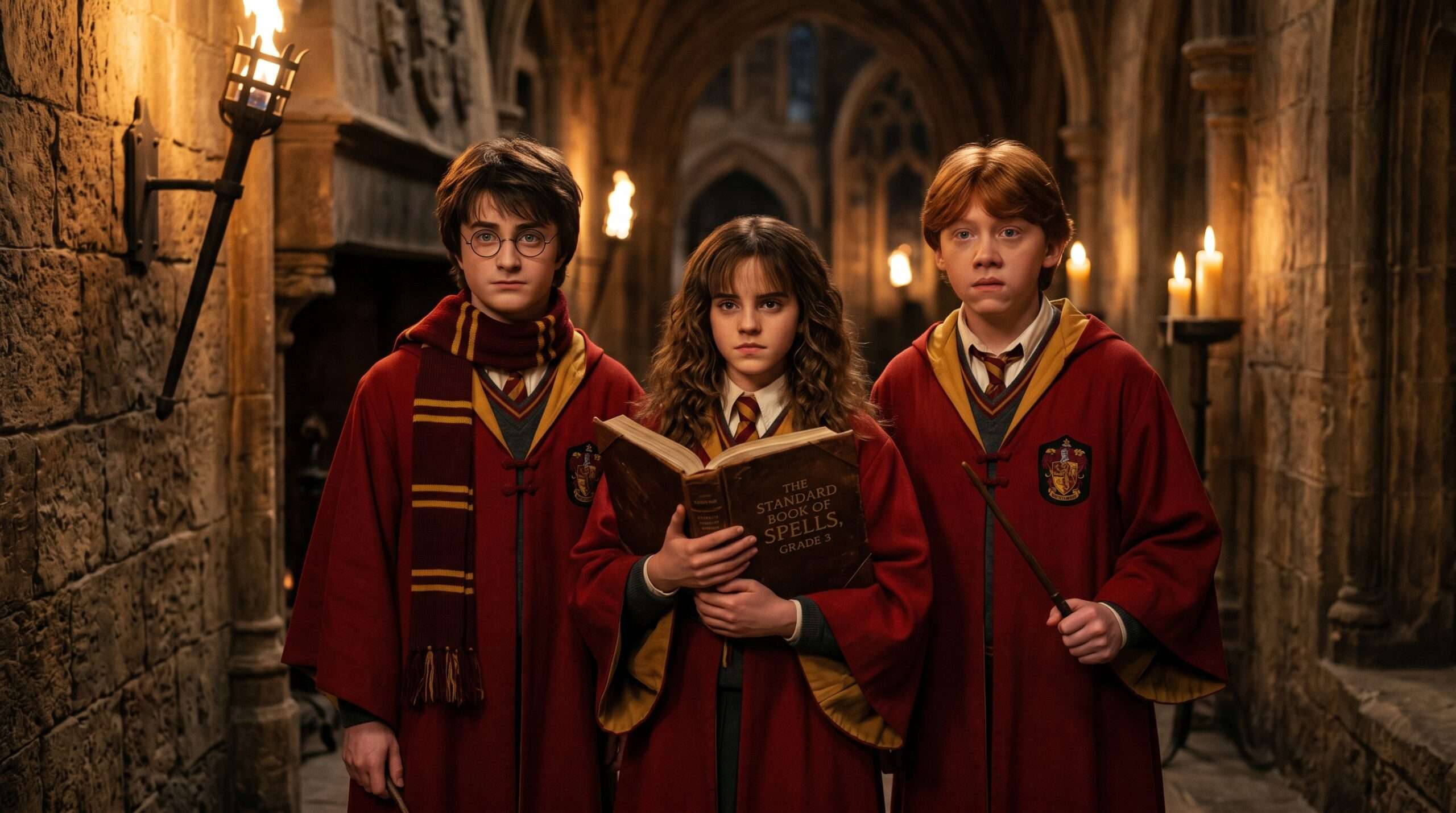
There are moments in cinema history that stop the world — and on November 4, 2001, one of those moments arrived. The lights dimmed, John Williams’ now-iconic score floated through the air, and for the very first time, audiences watched a young boy with round glasses and a lightning-bolt scar step into a world of magic, wonder, and destiny. The cast of Harry Potter and the Philosopher’s Stone didn’t just bring characters to life. They became them — so completely, so convincingly, that it is nearly impossible today to imagine anyone else in those roles.
More than two decades later, the film remains a cultural touchstone. It earned over $974 million at the worldwide box office, launched one of the most successful film franchises in history, and introduced the world to a group of actors — many of them children — who would grow up before our eyes across eight extraordinary films. But who were those actors? How were they chosen? And where are they today?
This is your complete, definitive guide to the Philosopher’s Stone cast — every major role, the story behind the casting, and a full update on where each actor is now.
The Making of a Legendary Cast — How Were They Chosen?
The Casting Process Behind the Film
Long before a single frame was shot, the casting of Harry Potter and the Philosopher’s Stone became one of the most closely watched events in modern entertainment. Fans around the world had fierce opinions about who should play Harry, Hermione, and Ron — and the pressure on producers David Heyman and casting director Janet Hirshenson was immense.
Director Chris Columbus, best known at the time for Home Alone and Mrs. Doubtfire, was determined to get it right. Working closely with J.K. Rowling — who had significant creative input in the early films — Columbus established one of the most important ground rules of the entire production: all cast members had to be British or Irish. This was non-negotiable. Rowling was fiercely protective of her story’s cultural roots, and that authenticity had to be reflected on screen.
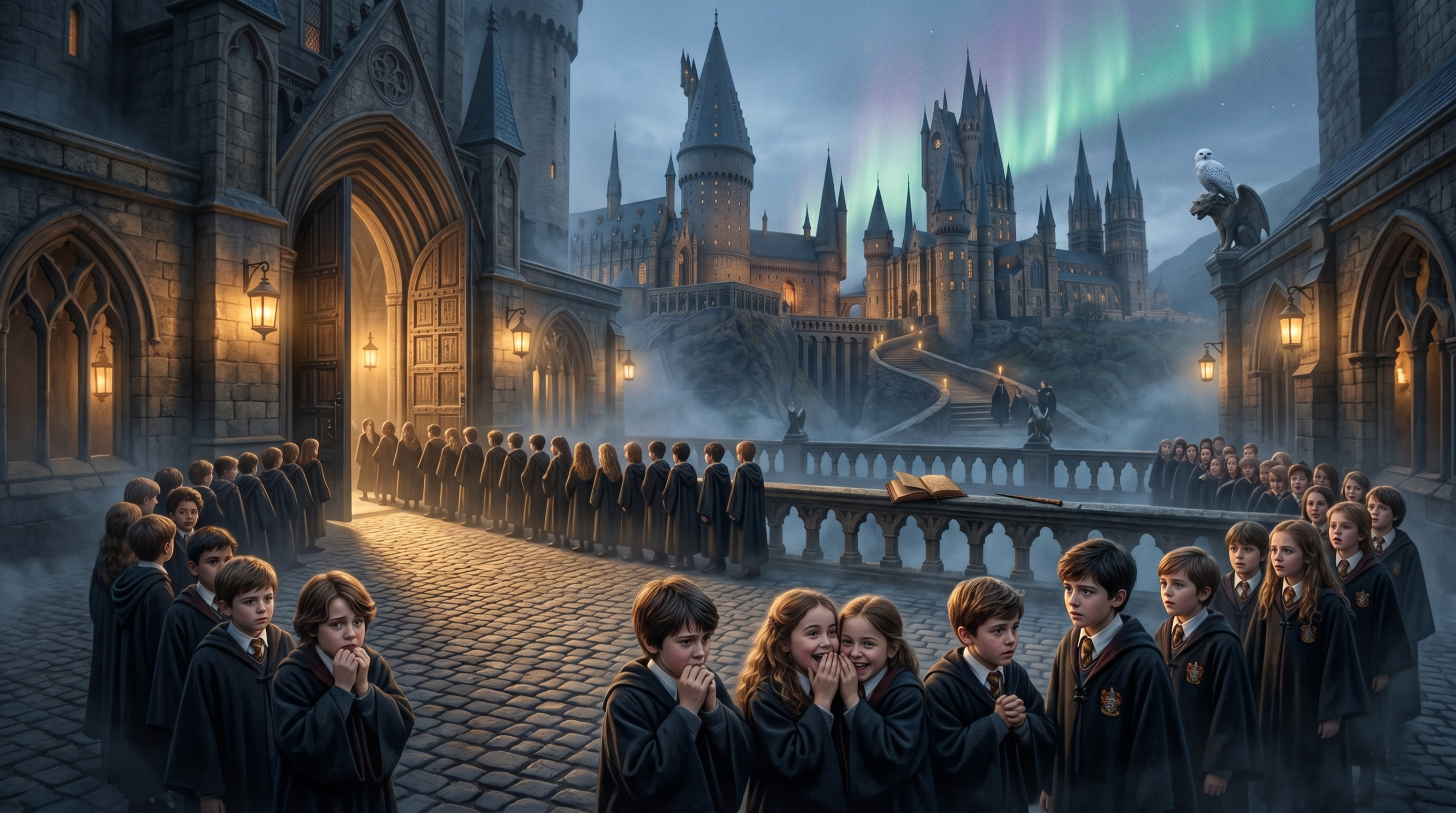
The open casting call for the three lead roles was staggering in scale. Over 16,000 children auditioned for the parts of Harry, Hermione, and Ron — an almost unimaginable number that speaks to the cultural weight the books already carried. Children were seen in church halls, community centers, and studios across the United Kingdom. Most had never acted professionally. Many were simply fans who dreamed of being part of the magic.
 Why the Casting Still Holds Up 20+ Years Later
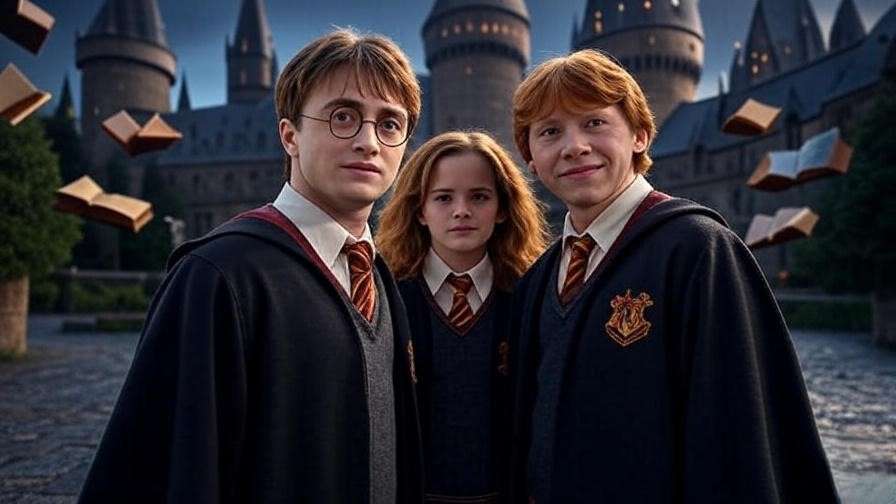
What makes the casting of this film remarkable — even by today’s standards — is not just how well each actor fit their role physically, but how naturally they embodied the emotional core of each character. Daniel Radcliffe brought a quiet resilience to Harry. Emma Watson gave Hermione an earnestness that never tipped into arrogance. Rupert Grint made Ron’s warmth and humor feel completely effortless.
Casting directors often speak about the inexplicable quality of screen presence — something that cannot be taught or manufactured. The Philosopher’s Stone trio had it in abundance, which is why, two decades on, no recast or reimagining has ever felt truly necessary to fans of the original series.
Main Cast of Harry Potter and the Philosopher’s Stone
Daniel Radcliffe as Harry Potter
When producer David Heyman saw Daniel Radcliffe at a theatre production of Stones in His Pockets in London, he knew he had found his Harry Potter. Radcliffe was just ten years old at the time, and though he had appeared in the BBC television film David Copperfield (2000), he was largely unknown. His parents were initially reluctant to let him take the role, concerned about the pressures of global fame on a young child — a concern that, in hindsight, was entirely reasonable.
Radcliffe’s Harry Potter is defined by a sense of wide-eyed wonder balanced with an innate moral seriousness. In the Philosopher’s Stone, Harry is an orphan, raised in a cupboard under the stairs by his cold and cruel relatives, who discovers on his eleventh birthday that he is a wizard — and a famous one at that. Radcliffe navigated the emotional complexity of that journey with impressive naturalism for a child actor, grounding the film’s most fantastical moments in genuine human feeling.
Where is Daniel Radcliffe now? After the Potter series concluded in 2011, Radcliffe made a series of bold, deliberately unconventional career choices — a clear and conscious effort to step outside the enormous shadow of Harry Potter. He appeared on Broadway in Equus and How to Succeed in Business Without Really Trying, starred in the horror film The Woman in Black (2012), and earned widespread critical admiration for his performance in the wildly original Swiss Army Man (2016). His portrayal of “Weird Al” Yankovic in the biographical film Weird: The Al Yankovic Story (2022) was praised as a fearless and genuinely funny performance. Most recently, he starred in the Broadway revival of Merrily We Roll Along. Radcliffe has spoken openly about his relationship with alcohol during his Potter years and has been sober since 2010 — a testament to his personal resilience. In 2024, he and long-term partner Erin Darke welcomed their first child.
Emma Watson as Hermione Granger
Of all the casting decisions made for the Philosopher’s Stone, Emma Watson’s selection as Hermione Granger may be the most universally celebrated. Watson had never acted professionally before her audition. She was a student at the Dragon School in Oxford when her teacher encouraged her to try out, and from her very first screen test, the production team knew they had found Hermione.
Hermione Granger is, in many ways, the intellectual and moral engine of the trio — fiercely intelligent, deeply principled, and initially a little insufferable, before her friendship with Harry and Ron softens her edges. Watson understood that balance instinctively. Her Hermione is never a caricature of the over-eager student; she is a young girl driven by a genuine love of learning and a deep-seated need to prove herself in a world she is still navigating.
Where is Emma Watson now? Watson completed her studies at Brown University in the United States — a decision that required temporarily stepping back from acting and one that she has said was essential to her sense of self. She became a UN Women Goodwill Ambassador in 2014, delivering a landmark speech launching the HeForShe campaign on gender equality that was viewed tens of millions of times worldwide. In recent years, Watson has been notably selective about acting roles, stepping away largely from the public eye. She has spoken about finding peace in private life and has been involved in ethical fashion and sustainability causes. In 2024, she appeared publicly at several events, and fans remain hopeful about a potential return to screens.
Rupert Grint as Ron Weasley
If Daniel Radcliffe was discovered by a producer and Emma Watson by a teacher, Rupert Grint found his way to Ron Weasley through sheer audacity. The red-haired, freckle-faced eleven-year-old from Hertfordshire submitted a home video audition in which he rapped about why he should be cast as Ron — then pulled off a wig he had been wearing to disguise himself as his drama teacher. It was exactly the kind of spontaneous, warm, slightly chaotic energy that Ron Weasley required, and it won over the casting team entirely.
Ron is the soul of the trio in ways that are sometimes underestimated. He is brave not because bravery comes naturally to him — it does not — but because he chooses it anyway, again and again, even when he is terrified. He is Harry’s first real friend, the person who makes the wizarding world feel like home rather than a stage. Grint captured that quality beautifully throughout the series, and in the Philosopher’s Stone, his comedic timing and natural warmth are evident from his very first scene on the Hogwarts Express.
Where is Rupert Grint now? Grint has built a diverse post-Potter career in both television and film. He appeared in the darkly comedic series Sick Note (2016), starred alongside Steven Spielberg’s producing credits in Guillermo del Toro’s Cabinet of Curiosities (2022), and took on the role of Charlie Cavendish in the Apple TV+ thriller series Guillermo del Toro’s production slate. He is also a father — his daughter Wednesday G. Grint was born in 2020 with his partner, actress Georgia Groome. Grint has spoken warmly about fatherhood and has expressed that his priorities have shifted significantly since becoming a parent.
Supporting Cast — The Adult Wizards Who Brought Hogwarts to Life
Richard Harris as Professor Albus Dumbledore
J.K. Rowling had one name in mind for Albus Dumbledore: Richard Harris. The legendary Irish actor, known for films such as Camelot (1967) and This Sporting Life (1963), was reportedly reluctant to take the role initially — but according to accounts, his granddaughter threatened never to speak to him again if he declined. He accepted.
Harris’s Dumbledore is a man of immense age and wisdom, gentle and unhurried in a way that suggests a deep confidence in the universe’s unfolding. Where later portrayals of the character would emphasize his complexity and moral ambiguity, Harris’s Dumbledore is, above all, a source of warmth and reassurance. For a film aimed primarily at children, that was exactly right.
Richard Harris passed away on October 25, 2002, following a diagnosis of Hodgkin’s disease — between the filming of Chamber of Secrets and the start of Prisoner of Azkaban. He was 72 years old. His passing necessitated the recast of Dumbledore, with Michael Gambon assuming the role from the third film onward. Harris remains irreplaceable in the memories of fans who grew up with the first two films, and his performance is widely regarded as one of the great pieces of classical acting in the franchise’s history.
 Maggie Smith as Professor Minerva McGonagall
If Richard Harris brought warmth to Hogwarts, Dame Maggie Smith brought steel. Her Professor McGonagall is precise, exacting, and seemingly devoid of sentiment — until the moments when her deep, fiercely protected love for her students breaks through the surface. It is a masterclass in restraint from one of the finest stage and screen actresses Britain has ever produced.
Smith was already a two-time Academy Award winner when she was cast — having won for The Prime of Miss Jean Brodie (1969) and California Suite (1978) — and her presence in the film lent the entire production an air of serious artistic legitimacy. She appeared in all eight Harry Potter films, a remarkable commitment to a franchise that spanned over a decade.
Where is Maggie Smith now? Dame Maggie Smith continued acting at an extraordinary level well into her eighties. She starred as Violet Crawley, the Dowager Countess of Grantham, in Downton Abbey (2010–2015) and its subsequent film continuations — a role that earned her a new generation of devoted admirers. She also appeared in The Lady in the Van (2015) to significant critical acclaim. Smith passed away on September 27, 2024, at the age of 89, leaving behind one of the most celebrated bodies of work in the history of British cinema.
Alan Rickman as Professor Severus Snape
There is, arguably, no casting decision in the entire Harry Potter series more perfect than Alan Rickman as Severus Snape. With his slow, deliberate delivery, his capacity to load a single word with entire worlds of contempt or concealed grief, and his commanding physical presence, Rickman created one of cinema’s most complex villains — who was, of course, ultimately not a villain at all.
What made Rickman’s performance particularly extraordinary was a secret he carried throughout the entire franchise. J.K. Rowling personally told him Snape’s full story — including the revelation of his love for Lily Potter and his ultimate sacrifice — before filming began. This knowledge informed every look, every pause, every barely perceptible flicker of emotion across eight films. Rickman was playing the end of the story from the very beginning.
Alan Rickman passed away on January 14, 2016, from pancreatic cancer. He was 69 years old. The outpouring of grief from fans, colleagues, and the broader film community was testament to the indelible mark he had left — not just on Harry Potter, but on cinema itself. His Snape remains one of the most beloved characters in the franchise, and his portrayal is discussed and celebrated to this day.
Robbie Coltrane as Rubeus Hagrid
No character in the Harry Potter series serves a more important emotional function in the opening film than Hagrid. He is Harry’s first true guide — the one who arrives on a stormy island, breaks down the door, hands over a slightly squashed birthday cake, and changes a young boy’s life forever. Robbie Coltrane, the Scottish actor best known in the UK for his role as criminal psychologist Fitz in the television series Cracker, brought enormous tenderness to the role.
Hagrid is a giant in every sense — physically, emotionally, and in terms of his capacity for loyalty and love. Coltrane understood that the character’s power lay not in his size but in his heart, and his performance in the Philosopher’s Stone is full of quiet, beautiful moments of genuine feeling. His delivery of “You’re a wizard, Harry” may be the most quoted line in the entire franchise for good reason.
Robbie Coltrane passed away on October 14, 2022, at the age of 72. J.K. Rowling paid tribute to him by saying he had made Hagrid “his” in a way that was “funny, and warm, and human.” He is deeply missed by fans and colleagues alike.
The Young Ensemble — Hogwarts Students and Classmates
Tom Felton as Draco Malfoy
Every great hero needs a great antagonist, and in the Philosopher’s Stone, that role belongs to Draco Malfoy — the privileged, contemptuous Slytherin who becomes Harry’s first real enemy within the walls of Hogwarts. Tom Felton, a young actor from Surrey who had previously appeared in Anna and the King (1999) and The Borrowers (1997), auditioned originally for the roles of Harry and Ron before the casting team recognized that his natural charisma and sharp delivery made him perfect for Draco.
Felton’s Malfoy is not a one-dimensional bully. Even in the first film, there are flickers of insecurity beneath the arrogance — a boy performing the confidence his family name demands rather than genuinely possessing it. That layered quality deepened significantly across the series, culminating in some of the most emotionally complex scenes of the later films. The foundation of that arc was laid right here, in the Philosopher’s Stone, in Felton’s very first scenes.
Where is Tom Felton now? Felton has remained one of the most engaged and visible members of the Potter alumni community. He published his candid and widely praised memoir Beyond the Wand: The Magic and Mayhem of Growing Up a Wizard in 2022, in which he wrote openly about his struggles with substance abuse, his complicated feelings about fame, and his deep, enduring bond with Emma Watson — a friendship he describes with great warmth and honesty. Felton suffered a cardiac episode during a celebrity golf tournament in September 2021 and has spoken publicly about prioritizing his health and wellbeing since. He continues to act, and his willingness to engage honestly with his Potter experience has made him one of the franchise’s most respected voices.
 Matthew Lewis as Neville Longbottom
In a film filled with memorable characters, Neville Longbottom occupies a special place in the hearts of fans. Clumsy, forgetful, and seemingly destined to be the butt of every joke, Neville is introduced in the Philosopher’s Stone as a boy who appears to have no particular gifts — and yet possesses something rarer and more valuable than talent: courage in the face of genuine fear.
Matthew Lewis, a young actor from Leeds with no major credits to his name, was cast largely on the strength of his ability to convey that vulnerability without self-pity. His Neville is not played for cheap laughs. Even in the earliest scenes, Lewis gives the character a dignity that hints at the extraordinary journey ahead. The moment at the end of the film — when Neville attempts to stand up to his own friends to protect what he believes is right — is one of the most quietly powerful moments in the entire movie, and Lewis delivers it beautifully.
Where is Matthew Lewis now? Lewis’s post-Potter career has been varied and interesting. He appeared in the ITV drama series Bluestone 42 and in the film Me Before You (2016). He has also become one of the more outspoken members of the Potter cast on social media and in interviews, frequently engaging with fan discussions and offering thoughtful commentary on the franchise’s legacy. Lewis married Angela Jones in 2018 and has spoken warmly about family life. He remains a beloved figure in the Potter fan community, where Neville Longbottom’s arc — from overlooked underdog to genuine hero — is frequently cited as one of the series’ greatest storytelling achievements.
Bonnie Wright as Ginny Weasley
Ginny Weasley’s role in the Philosopher’s Stone is intentionally small — a shy, red-faced glimpse of a girl watching Harry Potter disappear onto the Hogwarts Express from Platform Nine and Three-Quarters, her mother’s hand on her shoulder. It is a blink-and-you-miss-it introduction, and yet it plants a seed that will grow significantly across the subsequent films.
Bonnie Wright was just nine years old when she was cast, selected after her brother suggested she audition. There was an authenticity to her shyness in those early scenes that required no performance at all — she was, in many ways, simply being a child in an overwhelming situation, which is exactly what Ginny needed to be in that moment.
Where is Bonnie Wright now? Wright has developed a compelling identity entirely independent of her Potter fame. She studied film at the London College of Communication and has worked as a director, producer, and screenwriter. She is also a prominent climate activist and sustainability advocate, having sailed across the Atlantic to raise awareness about environmental issues. She published her book Go Gently: Actionable Steps to Nurture Yourself and the World in 2022. Wright’s post-Potter journey is perhaps the most thoroughly reinvented of the young ensemble cast, and her commitment to environmental causes has earned her genuine respect beyond the world of entertainment.
Other Hogwarts Students Worth Mentioning
The world of Hogwarts is populated by a rich ensemble of young actors who, while not in leading roles, contributed enormously to the film’s sense of a living, breathing school community.
Devon Murray as Seamus Finnigan brought infectious energy to the Irish Gryffindor student best remembered for his tendency to accidentally set things on fire. Murray remained part of the franchise through all eight films and has since built a life away from the spotlight, becoming a father and speaking openly about mental health challenges he faced in his post-Potter years.
Alfred Enoch as Dean Thomas had relatively limited screen time in the earlier films, but Enoch went on to achieve significant international recognition through his role as Wes Gibbins in the long-running American legal drama How to Get Away with Murder (2014–2020) — demonstrating a dramatic range that the Potter films only partially revealed.
Josh Herdman as Gregory Goyle was a fixture in the Slytherin scenes throughout the series. In the years following Potter, Herdman dedicated himself to mixed martial arts and has competed professionally — one of the more unexpected post-Hogwarts career pivots in the cast’s collective story.
Jamie Waylett as Vincent Crabbe appeared in the first six Harry Potter films before his involvement in the franchise ended. It is important to note, in the interest of editorial transparency and accuracy, that Waylett was convicted of cannabis cultivation in 2009 and later received a sentence related to his participation in the 2011 London riots. He did not appear in the final two films, with his character’s role redistributed accordingly.
Memorable Minor Roles That Left a Lasting Impression
John Cleese as Nearly Headless Nick
The casting of John Cleese — legendary co-founder of Monty Python and the star of Fawlty Towers — as Sir Nicholas de Mimsy-Porpington, better known as Nearly Headless Nick, was a masterstroke of comic casting. Cleese brought exactly the right combination of pomposity and melancholy to the role of Gryffindor’s resident ghost, a spirit perpetually aggrieved that his botched beheading left him ineligible for the Headless Hunt. His scenes in the Philosopher’s Stone are brief but wonderfully observed, and his presence added a layer of distinctly British comic tradition to the film’s already rich texture.
Warwick Davis as Professor Flitwick and Griphook
Warwick Davis holds a unique distinction in the Harry Potter franchise: he played two entirely different characters across the series. In the Philosopher’s Stone, he appears as both the diminutive Charms professor Filius Flitwick — perched atop a pile of books at the front of his classroom — and as Griphook, the Gringotts bank goblin who escorts Harry to his vault in one of the film’s most visually spectacular sequences.
Davis had a long and distinguished history with fantasy cinema before Potter, having played Willow in Ron Howard’s 1988 film of the same name and, most famously, the Ewok Wicket in Star Wars: Return of the Jedi (1983). His involvement in the Potter franchise felt, in many ways, like a passing of the torch between generations of beloved fantasy films.
Ian Hart as Professor Quirrell
In a film that asks its audience to look past the obvious, Ian Hart’s Professor Quirrell is the perfect misdirection. Timid, stuttering, and apparently terrified of his own shadow, Quirrell is designed to be overlooked — which makes the revelation of his true nature all the more effective. Hart, a highly regarded British stage and screen actor, brought a quiet, unsettling quality to the role that rewards closer inspection on repeat viewings. The nervous energy that seems like weakness is, in fact, something far darker.
Hart’s career both before and after Potter has been extensive and critically respected, spanning theatre, television, and film. His Quirrell remains one of the more underappreciated performances in the franchise — a subtle, carefully constructed piece of character work that underpins the entire dramatic engine of the first film.
Richard Griffiths and Fiona Shaw as Vernon and Petunia Dursley
Before Harry Potter can be a wizard, he must first be a victim — and the Dursleys are the instruments of that suffering. Richard Griffiths as the blustering, furiously ordinary Vernon Dursley and Fiona Shaw as the thin-lipped, coldly resentful Petunia Dursley established the oppressive domestic world from which Harry escapes with absolute conviction.
Griffiths, who was also renowned for his stage work and his role in The History Boys, brought a physicality and volcanic comic energy to Vernon that made the character simultaneously funny and genuinely threatening. Shaw, one of Ireland’s most celebrated stage actresses, played Petunia’s cruelty with a wounded quality that hinted at the complicated backstory the later books would eventually reveal.
Richard Griffiths passed away on March 28, 2013, following complications from heart surgery. He was 65 years old. Daniel Radcliffe delivered a moving tribute, describing Griffiths as one of the finest actors he had ever worked with.
Quick-Reference Cast Table
For readers looking for a fast overview of the full Philosopher’s Stone cast and their current status, the following table provides a concise summary of every major actor, their role, and their most notable recent work or legacy.
| Actor | Role | Status / Notable Recent Work |
|---|---|---|
| Daniel Radcliffe | Harry Potter | Broadway; Weird: The Al Yankovic Story (2022) |
| Emma Watson | Hermione Granger | UN Ambassador; sustainability activism |
| Rupert Grint | Ron Weasley | Cabinet of Curiosities; fatherhood |
| Tom Felton | Draco Malfoy | Memoir: Beyond the Wand (2022) |
| Richard Harris | Albus Dumbledore | Passed away October 2002 |
| Maggie Smith | Minerva McGonagall | Passed away September 2024 |
| Alan Rickman | Severus Snape | Passed away January 2016 |
| Robbie Coltrane | Rubeus Hagrid | Passed away October 2022 |
| Matthew Lewis | Neville Longbottom | Me Before You (2016); fan engagement |
| Bonnie Wright | Ginny Weasley | Director; Go Gently (2022); activism |
| Tom Felton | Draco Malfoy | Memoir; ongoing acting career |
| John Cleese | Nearly Headless Nick | Continued comedy and film work |
| Warwick Davis | Flitwick / Griphook | Continued franchise and fantasy work |
| Ian Hart | Professor Quirrell | Stage and screen acting |
| Richard Griffiths | Vernon Dursley | Passed away March 2013 |
| Fiona Shaw | Petunia Dursley | Killing Eve; continued stage work |
| Devon Murray | Seamus Finnigan | Mental health advocacy |
| Alfred Enoch | Dean Thomas | How to Get Away with Murder |
| Josh Herdman | Gregory Goyle | Professional MMA fighter |
Fun Facts and Behind-the-Scenes Casting Trivia
The story of how the Philosopher’s Stone cast came together is filled with fascinating near-misses and surprising details that even dedicated fans may not know.
Robin Williams wanted to play Hagrid. The beloved American comedian and actor was reportedly enthusiastic about joining the franchise, but J.K. Rowling’s firm insistence on a British and Irish cast meant his involvement was never a possibility. It is an intriguing alternate reality to consider — but most fans would agree that Robbie Coltrane was irreplaceable in the role.
Haley Joel Osment was considered for Harry. Fresh off his acclaimed performance in The Sixth Sense (1999), the American child actor was reportedly among those discussed for the lead role before the British-only casting rule firmly closed the door.
Steven Spielberg turned down the director’s chair. The legendary filmmaker was approached to direct the Philosopher’s Stone and declined, reportedly because he felt the project was a “slam dunk” — meaning its success was so assured that it held little artistic challenge for him. He also reportedly envisioned a more Americanized adaptation, which conflicted with Rowling’s vision. Chris Columbus, ultimately, was the right choice.
The child actors attended real classes on set. To comply with British child labor laws and educational requirements, a schoolroom was constructed on the Warner Bros. Leavesden Studios set, and all child cast members were required to complete a minimum number of hours of formal education each week between filming. The tutor became, by all accounts, a significant figure in the young actors’ lives during production.
Alan Rickman was the only cast member who knew Snape’s full story. As noted earlier, J.K. Rowling personally shared the arc of Severus Snape’s character with Rickman before filming began — information she withheld from virtually everyone else, including other cast members and the screenwriters. Rickman has said in interviews that this knowledge was essential to his ability to play the role with the depth it required.
J.K. Rowling rejected major Hollywood names. Several high-profile American actors reportedly expressed interest in roles within the franchise. Rowling’s commitment to authentic British casting was unwavering, and that decision — widely praised in retrospect — is a significant reason the films feel so distinctly, properly rooted in their source material.
 Frequently Asked Questions
Q1: Who played Harry Potter in the Philosopher’s Stone? Harry Potter was played by Daniel Radcliffe, who was eleven years old at the time of filming. Radcliffe had previously appeared in the BBC television film David Copperfield (2000) but was relatively unknown before being cast. He went on to play Harry Potter across all eight films in the franchise, from 2001 to 2011.
Q2: How old were the main cast members during filming? Principal photography on Harry Potter and the Philosopher’s Stone took place from September 2000 to March 2001. During filming, Daniel Radcliffe was ten to eleven years old, Emma Watson was nine to ten, and Rupert Grint was eleven to twelve. The adult cast varied widely in age, with Richard Harris being the oldest principal cast member at around 70 years old during production.
Q3: Did any cast members pass away after the Philosopher’s Stone? Sadly, yes. Several beloved members of the cast have passed away in the years since the film’s release. Richard Harris, who played Dumbledore, died in October 2002. Richard Griffiths, who played Uncle Vernon, died in March 2013. Alan Rickman, who played Severus Snape, died in January 2016. Robbie Coltrane, who played Hagrid, died in October 2022. And Dame Maggie Smith, who played Professor McGonagall, passed away in September 2024. Each loss has been deeply felt by fans and the film community worldwide.
Q4: Who was almost cast in Harry Potter and the Philosopher’s Stone? Several notable names were associated with the film before final casting decisions were made. Robin Williams expressed interest in playing Hagrid but was ruled out by the British-only casting policy. Steven Spielberg, had he directed, reportedly envisioned a different approach to casting altogether. Among the child roles, thousands of young actors were seen before the final trio was selected, and it has been reported that the search was genuinely open — there was no predetermined outcome.
Q5: Is the original Philosopher’s Stone cast reuniting? The cast came together for a landmark reunion special titled Harry Potter 20th Anniversary: Return to Hogwarts, which premiered on HBO Max on January 1, 2022. The special brought together Daniel Radcliffe, Emma Watson, Rupert Grint, and dozens of other cast and crew members for an emotional retrospective that was widely praised by fans and critics. As of 2026, a new HBO television series reimagining the Harry Potter story is in development, though it features an entirely new cast.
Q6: What is the difference between the Philosopher’s Stone and Sorcerer’s Stone cast? There is no difference in the cast. The film was released under two different titles in different markets — Harry Potter and the Philosopher’s Stone in the United Kingdom and most international markets, and Harry Potter and the Sorcerer’s Stone in the United States — but it is the same film, featuring the identical cast. The title change was made by the American publisher and studio, who felt that “Sorcerer’s Stone” would resonate more strongly with American audiences.
There is something almost miraculous about what the cast of Harry Potter and the Philosopher’s Stone achieved in the autumn of 2001. A group of children who had never carried a major film, supported by some of the greatest classical actors Britain had ever produced, stepped into the most beloved fictional world of their generation — and made it real. They did not simply perform the story. They inhabited it with such complete conviction that the boundary between fiction and reality, for millions of viewers, temporarily dissolved.
More than twenty years on, the losses are real and deeply felt. Richard Harris, Alan Rickman, Robbie Coltrane, Richard Griffiths, and Maggie Smith — five pillars of that original ensemble — are no longer with us, and the space they leave behind is not one that can be filled. Their performances, preserved on film, remain as vivid and as vital as the day they were captured.
But the legacy of the Philosopher’s Stone cast is not defined by loss. It is defined by the extraordinary journeys its members have taken — from a young woman addressing the United Nations on gender equality, to a young man writing honestly about addiction and recovery, to a girl who once watched a train leave a platform growing into a filmmaker and climate advocate. The cast of the Philosopher’s Stone grew up, in every sense of the phrase. They became themselves. And in doing so, they gave fans who grew up alongside them something even more valuable than the films — they gave them proof that magic, of a kind, is real.
If you enjoyed this complete guide to the Philosopher’s Stone cast, explore more of our Harry Potter content — including our full series cast breakdowns, film location guides, and deep dives into the making of each chapter of the franchise. The wizarding world, as any true fan knows, always has more to reveal.