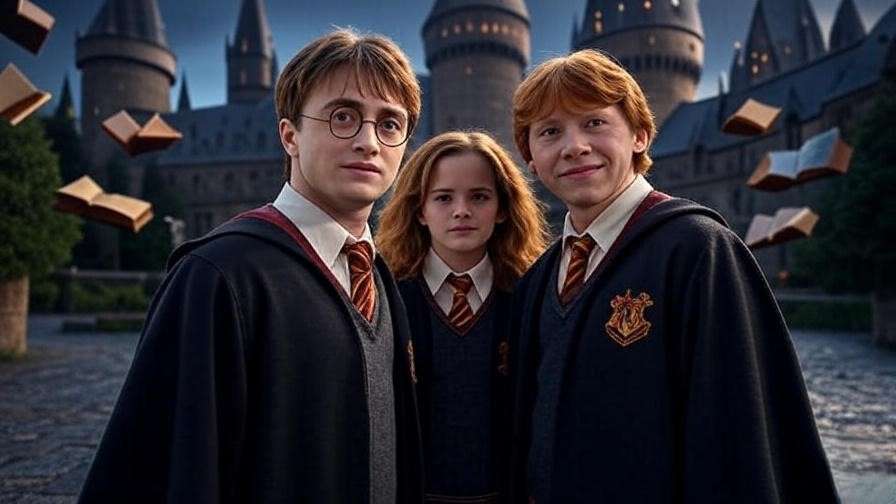
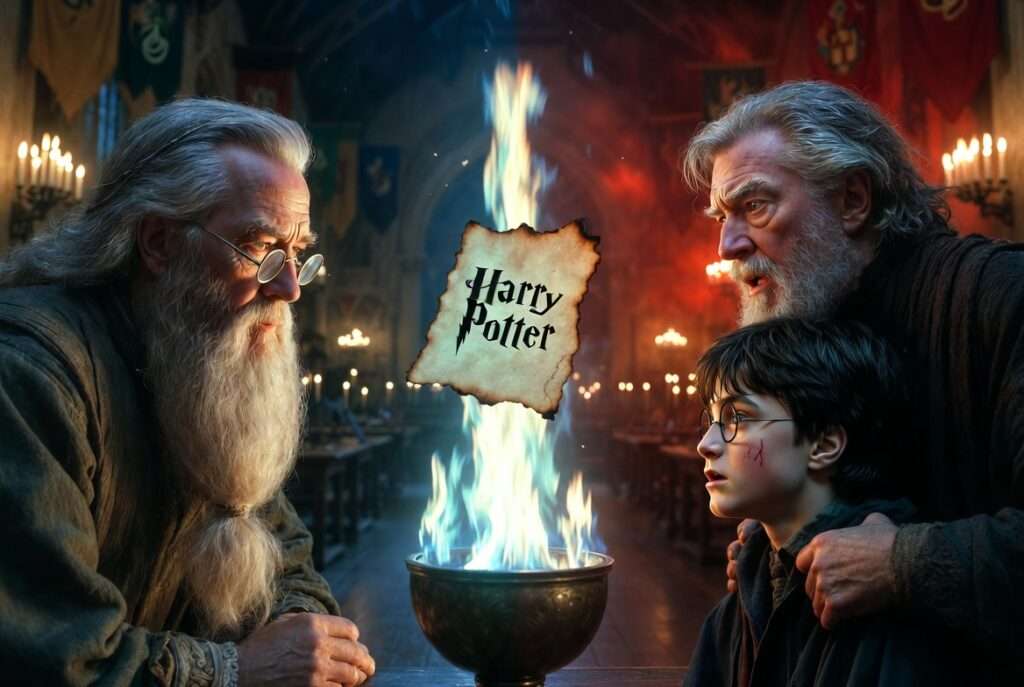
The Great Hall falls silent. Four pieces of parchment have already shot from the enchanted Goblet of Fire — but then, impossibly, a fourth name emerges from the blue-white flames. The name reads: Harry Potter. And moments later, an older man with a long silver beard storms toward a fourteen-year-old boy and demands, “Did you put your name in the Goblet of Fire?”
That single line — did you put your name in the Goblet of Fire — has echoed across fandom for over two decades. It has sparked debates, inspired countless memes, and become one of the most dissected moments in the entire Harry Potter series. But why? What makes this one question so powerful, so controversial, and so endlessly fascinating?
Whether you’re a lifelong Potterhead who has re-read Goblet of Fire a dozen times, or someone who first encountered this scene through a viral meme, this article covers everything — the original book scene, the film’s controversial adaptation, the magical logic behind Harry’s impossible situation, and why this moment became a cultural landmark far beyond the world of wizardry.
The Scene That Started It All — Context Inside Goblet of Fire
What Is the Goblet of Fire and Why Does It Matter?
To fully appreciate why Dumbledore’s question hit so hard — both in the story and in real life — you first need to understand what the Goblet of Fire actually is, and just how serious its selection truly was.
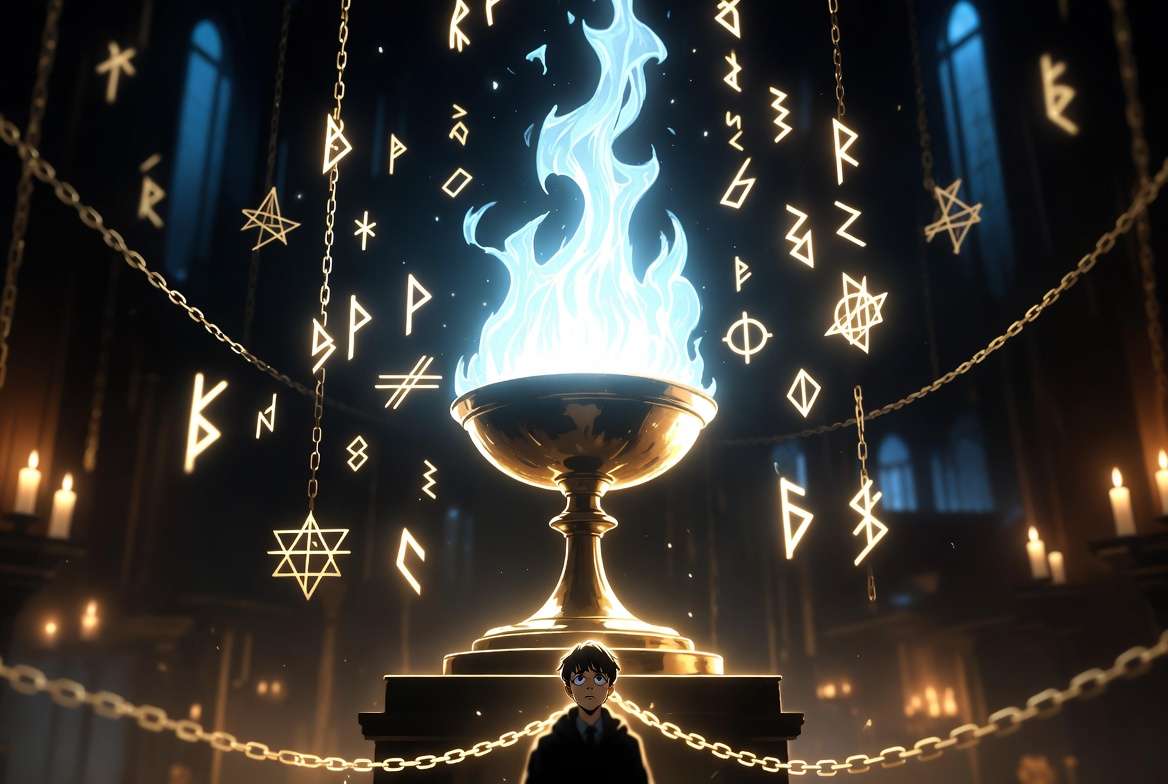
The Goblet of Fire is an extraordinarily powerful magical artifact, described in J.K. Rowling’s fourth novel as an impartial judge used to select champions for the Triwizard Tournament. The tournament itself is a prestigious, dangerous inter-school magical competition held between Hogwarts, Beauxbatons Academy, and Durmstrang Institute. Students who wished to compete had to submit their names on a piece of parchment and drop it into the Goblet, which would then select one worthy champion from each school.
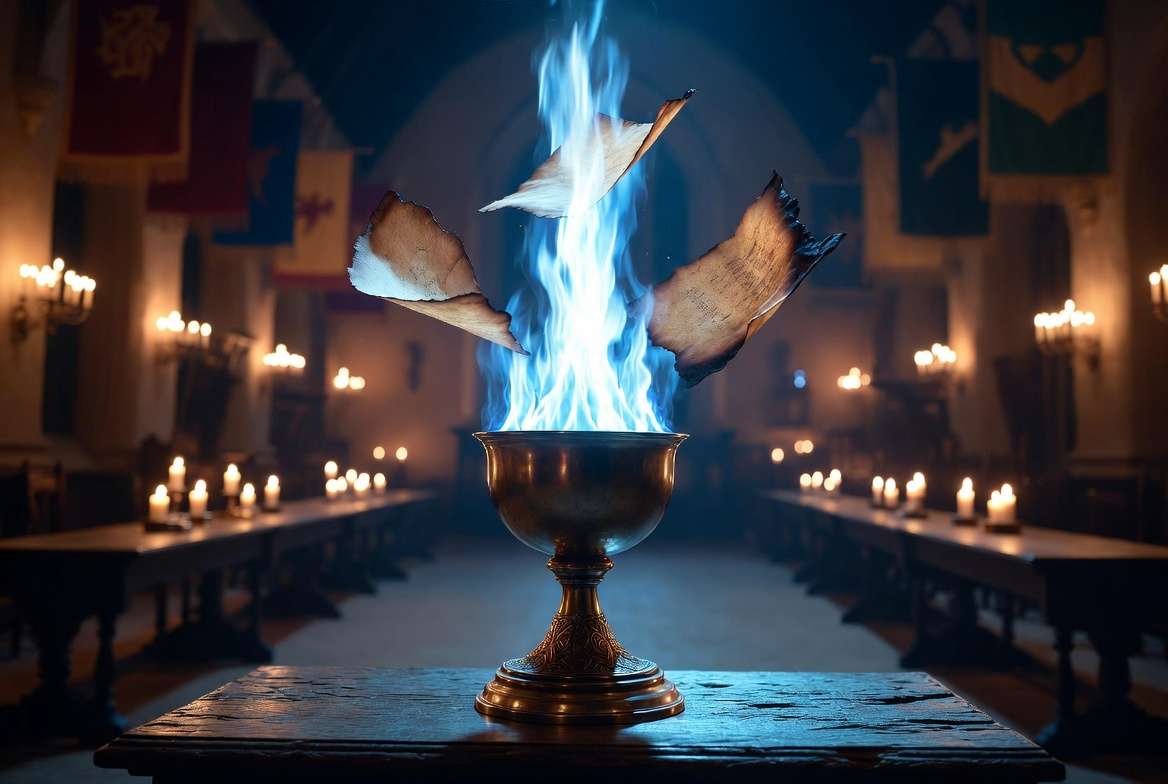 Because the tournament was notoriously dangerous — previous editions had resulted in deaths — Albus Dumbledore drew an Age Line around the Goblet to prevent underage students from entering. Anyone under seventeen years of age would be magically repelled from crossing the line. Harry, Ron, and Hermione were only fourteen. They were never supposed to be involved.
What makes the Goblet’s selection so consequential is not merely the honor involved. The Goblet of Fire acts as a binding magical contract. Once a champion’s name is drawn from the flame, that person is magically obligated to compete. There is no withdrawal, no appeal, no exit. To refuse would mean losing one’s magic — a fate arguably worse than competing in the deadly tasks ahead. This is the trap that makes Harry’s situation so dire, and Dumbledore’s question so loaded.
The Exact Moment Harry’s Name Appears
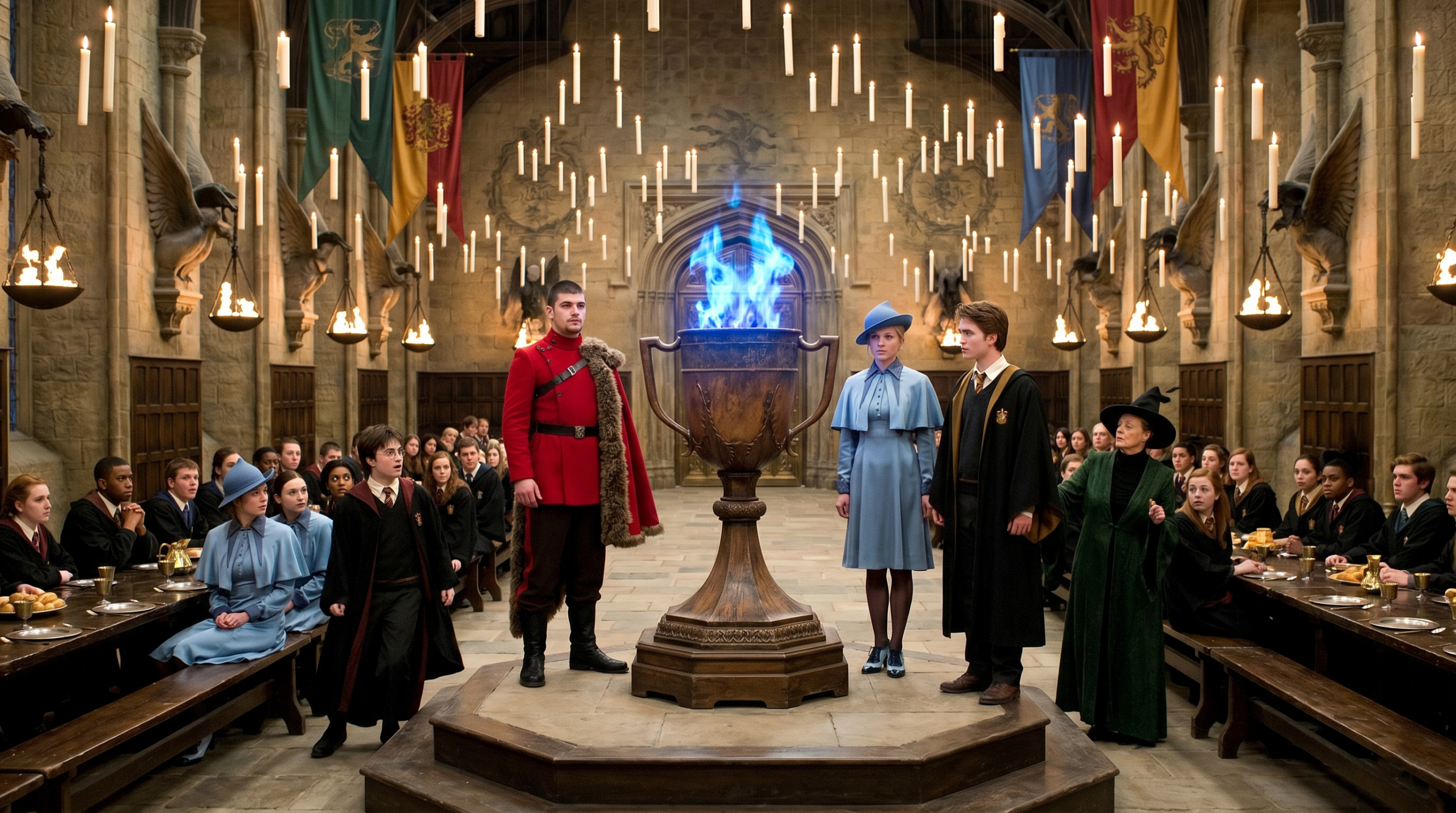
Picture the scene: the Triwizard champions have already been named. Cedric Diggory for Hogwarts. Fleur Delacour for Beauxbatons. Viktor Krum for Durmstrang. The tournament was supposed to be complete. Three champions, three schools, one winner.
Then the Goblet flares back to life.
A charred piece of parchment drifts out of the flames. Professor Dumbledore catches it. He reads the name once in his head. Then he reads it aloud, quietly, almost disbelievingly: Harry Potter.
The reaction in the Great Hall is immediate. Shock. Confusion. Whispered outrage from older students who had wanted to compete themselves. Ron’s expression shifts in a way Harry can’t quite read. Hermione looks horrified. The other champions — particularly Fleur and Krum — react with visible displeasure at sharing the stage with an uninvited fourth contender.
Harry himself is stunned, paralyzed by a mixture of fear and confusion. He did not enter. He did not want this. He is fourteen years old, two years too young to have even tried. Yet here he is, being ushered toward a side chamber where the three chosen champions are already waiting, under the bewildered and suspicious stares of nearly the entire school.
 What Dumbledore Actually Said — The Book Quote vs. The Movie Line
And this is where everything becomes interesting — and controversial.
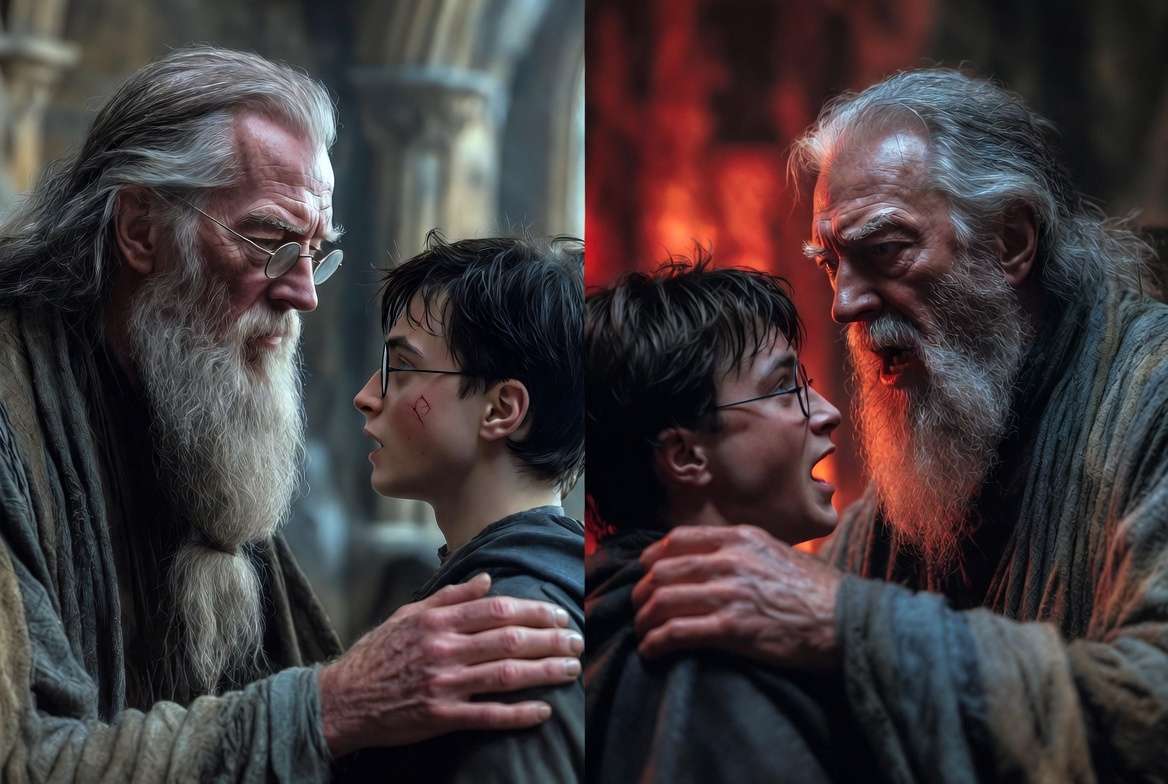
In J.K. Rowling’s novel, Harry Potter and the Goblet of Fire, the moment Dumbledore confronts Harry is described with startling specificity about tone. Rowling writes that Dumbledore crouched down before Harry and asked, “Did you put your name into the Goblet of Fire, Harry?” — and then she adds two of the most debated words in Harry Potter literary history: “he asked calmly.”
Calmly. A man whose student has just been thrust into a death-defying tournament against his will and against all magical law — and he asks the question calmly. That choice by Rowling is deeply intentional. It tells us everything about book-Dumbledore’s character: measured, wise, emotionally controlled even in moments of crisis. His calm is not indifference — it is mastery.
Now contrast that with what audiences saw in the 2005 film adaptation directed by Mike Newell.
Michael Gambon, who took over the role of Dumbledore following the tragic passing of Richard Harris, delivered the line with furrowed brows, an urgent pace, and a physical intensity that saw him grabbing Harry by the collar and shaking him. The question was not asked calmly. It was barked. It was demanded. It felt, to millions of book readers watching in cinemas around the world, like an entirely different character had walked onto the screen.
Here is a direct comparison of the two interpretations:
| Element | Book Version | Movie Version |
|---|---|---|
| Tone | Calm, measured, controlled | Urgent, intense, confrontational |
| Physical action | Crouches to Harry’s level | Grabs and shakes Harry |
| Emotional register | Quiet authority | Visible agitation |
| Character consistency | Fully aligned with book-Dumbledore | Widely seen as out of character |
| Fan reaction | Beloved | Controversial |
This contrast became the spark for one of the most enduring memes in internet fandom history.
The “Calmly” Meme — Why the Internet Never Let This Go
Origins of the Dumbledore “Calmly” Meme
The internet has an extraordinary ability to identify the exact point where an adaptation betrayed its source material — and then repeat that observation until it becomes legend. The Dumbledore “calmly” meme is perhaps the clearest example of this phenomenon in all of pop culture.
The meme format is deceptively simple. It typically reproduces the book’s original line — “Did you put your name into the Goblet of Fire, Harry?” Dumbledore asked calmly — and then immediately cuts to a still image or GIF of Gambon’s frantic, aggressive movie delivery. The comedic and critical contrast between the word “calmly” and the visual reality is instantaneous and devastating.
While the meme circulated in Harry Potter fan communities on LiveJournal, forums, and early Tumblr as far back as the mid-2000s, it exploded into mainstream internet culture in the 2010s when platforms like Reddit, Twitter/X, and later TikTok gave it fresh audiences. Each new generation of Harry Potter fans discovering the books for the first time encountered the meme as a rite of passage — a knowing initiation into the great book-versus-film debate.
 Why This Meme Has Remarkable Staying Power
Most memes have a shelf life measured in weeks. This one has survived for nearly two decades. Why?
The answer lies in how precisely the meme captures something true — a genuine, legitimate criticism of a beloved adaptation — while also being universally relatable. Every fan of every book series has, at some point, watched a film adaptation get something fundamentally wrong about a character they love. The Dumbledore “calmly” meme became the universal symbol for that specific frustration.
It also operates on multiple levels simultaneously. On the surface, it’s funny. Underneath, it’s a serious critique of character adaptation. And on a deeper level still, it raises questions about authorial intent, directorial interpretation, and what we lose when stories move between mediums. That richness is exactly why it never gets old.
The meme has appeared across virtually every major platform:
- Reddit (r/harrypotter, r/memes): Regularly resurfaces with thousands of upvotes
- Twitter/X: Used as shorthand for any situation where someone’s calm written words are contrasted with frantic real-life behavior
- Tumblr: Where many of the earliest and most elaborate versions were crafted
- TikTok: Where younger fans rediscover it through “Did you know?” and book-vs-movie comparison videos
What J.K. Rowling Actually Intended With Dumbledore in This Scene
Rowling’s Dumbledore is one of literature’s most carefully constructed mentor figures. Throughout the first three books, he is established as someone who operates with an almost supernatural composure. He smiles when others panic. He speaks quietly when others shout. His power is not in volume or aggression — it is in the uncanny sense that he always knows more than he reveals.
In the context of the Goblet of Fire scene, his calmness serves a very specific narrative purpose. Dumbledore asking the question quietly signals to the reader — and to Harry — that Dumbledore does not actually believe Harry entered himself. A guilty man thunders and accuses. An innocent man receives the benefit of the doubt, delivered in a low, considered voice. Rowling uses Dumbledore’s tone to tell us, subliminally, that he trusts Harry — even if others in the room do not.
The movie, by making Dumbledore’s delivery aggressive and accusatory, accidentally implies the opposite: that Dumbledore suspects Harry of wrongdoing. It inverts the emotional meaning of the scene entirely.
Book Dumbledore vs. Movie Dumbledore — A Deeper Divide
Richard Harris vs. Michael Gambon — Two Very Different Portrayals
No analysis of the “Goblet of Fire” scene would be complete without addressing the broader divide between the two actors who portrayed Albus Dumbledore on screen.
Richard Harris, who played Dumbledore in The Philosopher’s Stone (2001) and The Chamber of Secrets (2002), brought a gentle, almost ethereal quality to the role. His Dumbledore was soft-spoken, warm, and carried an air of serene omniscience. Many fans — and Rowling herself — expressed deep admiration for Harris’s interpretation. His Dumbledore felt like the one in the books.
Harris passed away in October 2002, before Prisoner of Azkaban entered production. Michael Gambon inherited one of the most beloved characters in modern fiction, a role already defined in the public imagination by both the novels and his predecessor. It was, by any measure, an extraordinarily difficult position.
Gambon’s Dumbledore was a different creation altogether. More energetic, more volatile, more willing to show fear and urgency. Some fans argue this interpretation had real merits — a Dumbledore who was more human, more flawed, more visibly burdened by the weight of the war against Voldemort. Others felt it fundamentally misunderstood who Dumbledore was.
The Goblet of Fire confrontation became the flashpoint for this debate — but it was far from the only moment of contention.
Other Scenes Where Movie Dumbledore Missed the Mark
For book readers, the Goblet of Fire scene is merely the most meme-able example of a broader pattern. Several other moments in the film series drew similar criticism:
The cave scene in Half-Blood Prince: When Dumbledore is forced to drink the cursed potion in Voldemort’s cave, Gambon plays the scene with thrashing, almost feverish anguish. Book readers recall that Rowling wrote Dumbledore’s suffering as something he forced Harry not to acknowledge — he continued giving instructions even while in agony, maintaining his dignity until the very end. The film version, while visually striking, arguably robs the scene of its quiet devastation.
Dumbledore’s reaction to Harry and Ginny’s relationship: In Half-Blood Prince, Dumbledore offers Harry a knowing, almost playful smile when discussing Ginny — a moment of warmth entirely consistent with the books. Gambon handled this well, and fans largely appreciated it. It’s worth noting that not every Gambon scene missed its mark.
The Battle of the Astronomy Tower: In the books, Dumbledore silently immobilizes Harry under the Invisibility Cloak before Draco arrives, protecting him from having to witness what follows. This quiet, selfless act of protection is absent from the film — and its absence diminishes a key element of Dumbledore’s character in his final moments.
In Defense of Gambon — What the Movie Got Right
Intellectual honesty — and good E-E-A-T practice — demands a balanced perspective.
Michael Gambon faced an impossible task, and he brought genuine moments of brilliance to the role. His delivery of “It is the unknown we fear when we look upon death and darkness, nothing more” in Order of the Phoenix is measured and wise in precisely the way book fans would hope. His quiet dignity in Deathly Hallows flashback scenes captures something true about Rowling’s Dumbledore.
Gambon also worked largely without the benefit of the books as guidance — he famously stated in interviews that he did not read them, a decision that was widely criticized but is worth contextualizing. He was an actor working from a screenplay, trusting his director’s interpretation. The responsibility for the Goblet of Fire scene’s tone lay at least as much with director Mike Newell and the screenwriter Steve Kloves as it did with Gambon himself.
The Magical Logic Behind the Scene — Why Couldn’t Harry Just Say No?
Understanding the Magical Contract of the Goblet
One of the most common questions readers and viewers ask after encountering this scene is deceptively simple: why couldn’t Harry just refuse?
The answer reveals one of the most sophisticated pieces of world-building in the entire Harry Potter series. The Goblet of Fire does not merely select a champion — it binds one. As Dumbledore explains in the novel, the Goblet creates a magical contract between the selected champion and the three schools. That contract is ironclad. Breaking it would result in the loss of the champion’s magical abilities — effectively stripping a witch or wizard of everything that defines them in the magical world.
Even Dumbledore, arguably the most powerful wizard alive at the time, cannot override this contract. Neither can the Ministry of Magic. The magical law underpinning the Goblet predates any living authority. Harry is trapped not by human decision but by ancient magic itself — and this is precisely what makes his situation so terrifying and so unfair.
Fan Theories — Who Actually Put Harry’s Name In?
The canon answer, revealed in the novel’s climax, is Bartemius Crouch Jr. — a devoted Death Eater who had escaped from Azkaban and was hiding at Hogwarts in disguise, masquerading as the new Defense Against the Dark Arts teacher, Alastor “Mad-Eye” Moody, through the use of Polyjuice Potion.
Crouch Jr.’s motive was to use the Triwizard Tournament as a mechanism to transport Harry to Voldemort. By engineering Harry’s selection as a fourth champion and then manipulating the tournament’s final task, he could turn the Triwizard Cup into a Portkey that would deliver Harry directly into Voldemort’s hands — which is precisely what happened.
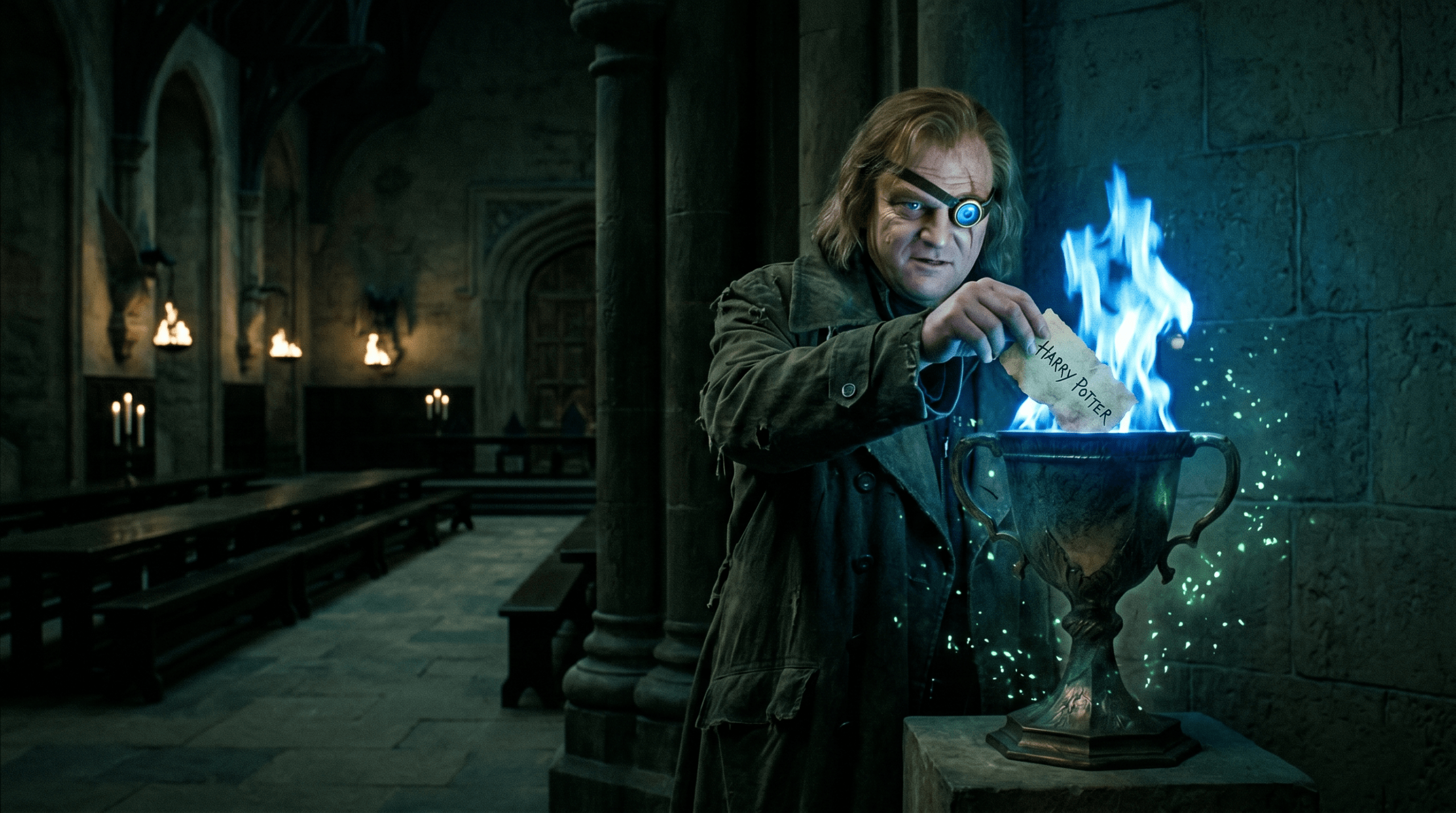 The methodology Crouch Jr. used is also significant. He placed Harry’s name into the Goblet using a powerful Confundus Charm, which confused the Goblet into treating Hogwarts as having two competing schools — thereby generating a second Hogwarts champion. This is why the Goblet selected Harry despite the Age Line: it was deceived, not bypassed.
Some popular fan theories over the years have proposed alternatives — including the idea that Dumbledore himself orchestrated Harry’s entry as part of a deeper plan — but these largely contradict the textual evidence. Rowling’s resolution of this mystery is thorough and satisfying.
Could Dumbledore Have Done More to Protect Harry?
This is one of the more morally complex questions raised by Goblet of Fire, and it is one that serious readers of the series continue to debate.
Throughout the novel, Dumbledore is aware that someone powerful entered Harry into the tournament deliberately. He knows Harry is in danger. Yet he allows the tournament to proceed. He counsels Harry, offers cryptic encouragement, and places subtle protections — but he does not withdraw Harry from the competition, does not publicly name his suspicions, and does not prevent the final task that leads to Cedric Diggory’s murder.
Rowling suggests, through Dumbledore’s later admissions in Order of the Phoenix and Half-Blood Prince, that he carries deep guilt about his handling of Harry’s safety throughout this period. He acknowledges that his great strategic mind sometimes obscured his obligation to simply protect a child. It is one of Rowling’s most effective and human critiques of even her most beloved character — and it adds enormous moral texture to the Goblet of Fire scene when re-read with this knowledge.
Why This Line Became a Cultural Touchstone Beyond Harry Potter
Its Place in the Broader Harry Potter Legacy
To understand why “did you put your name in the Goblet of Fire” resonates so deeply beyond its immediate narrative context, you first need to appreciate where Goblet of Fire sits within the larger arc of the Harry Potter series.
The first three books, while not without darkness, carry the energy of adventure and discovery. Hogwarts feels safe. Dumbledore feels invincible. Evil is present but ultimately defeatable without catastrophic cost. Harry survives each year battered but essentially intact, returning to the Dursleys with his world still fundamentally ordered.
Goblet of Fire is where all of that changes.
It is the book in which Rowling first kills a genuinely innocent, named, beloved character in Cedric Diggory. It is the book in which Voldemort returns not as a memory or a parasite or a diary, but as a fully embodied, terrifyingly powerful dark wizard standing in a graveyard. It is the book in which Harry is tortured with the Cruciatus Curse. And it is the book in which Dumbledore’s protective authority is revealed to have real, painful limits.
The moment Harry’s name flies out of the Goblet is the precise hinge point of the entire series — the moment childhood ends and the true war begins. Dumbledore’s question, “Did you put your name in the Goblet of Fire?”, is not simply a plot point. It is the sound of that door slamming shut behind Harry forever. That is why it carries so much emotional weight. That is why readers and viewers remember it so vividly decades later. It is the moment everything got real.
“Did You Put Your Name in the Goblet of Fire?” in Pop Culture
Few lines from a children’s fantasy novel have achieved the kind of multi-generational pop culture penetration that this question has managed. Its reach extends far beyond Harry Potter fan communities into mainstream internet culture, television, and everyday conversational shorthand.
On YouTube, the clip of Gambon’s delivery has accumulated millions of views across dozens of compilation and reaction videos. Channels dedicated to book-versus-film comparisons consistently cite it as their primary example. New reaction videos still generate hundreds of thousands of views annually, as younger audiences encounter the controversy for the first time.
On TikTok, the format has evolved creatively. Creators use the “calmly” contrast as a template for their own scenarios — overlaying Gambon’s frantic delivery onto situations where someone is clearly not calm, generating fresh humor for audiences who may have never read a word of Rowling’s novel. In this way, the meme has entirely transcended its origin. You do not need to be a Harry Potter fan to understand and laugh at the joke. That universality is the hallmark of genuine cultural saturation.
The line has also been referenced — directly or obliquely — in television shows, stand-up comedy specials, podcasts, and even academic media studies papers examining adaptation fidelity and fan culture. It has become a lingua franca for a specific type of shared frustration: the feeling of watching something you love be misunderstood by someone with the power to define it for a mass audience.
Perhaps most tellingly, the phrase has entered everyday usage as a kind of rhetorical device. When someone describes being accused of something they didn’t do — particularly by an authority figure who should know better — invoking the Goblet of Fire scene requires no further explanation in most online spaces. The cultural encoding is complete.
What This Moment Teaches Us About Storytelling
Beyond its place in Harry Potter lore and internet culture, the Goblet of Fire scene — and specifically the controversy around its adaptation — offers some genuinely instructive lessons about the craft of storytelling.
Tone is not decoration — it is meaning. Rowling’s decision to write “he asked calmly” was not a throwaway adverb. It was a deliberate characterization choice that communicated Dumbledore’s trust in Harry, his emotional mastery, and his fundamental decency — all in two words. When the film stripped away that tone, it did not simply change the mood of the scene. It changed its meaning. The lesson for writers is profound: how a character says something is often more revealing than what they say.
Subverted expectations create lasting impact. The reason readers remember Dumbledore’s calm is precisely because it subverts what we expect in that moment. Logic tells us an authority figure would be alarmed, accusatory, or at least visibly shaken. Rowling denies us that expected reaction, and in doing so, she tells us something extraordinary about who Dumbledore is. The unexpected choice is almost always the more memorable one.
Adaptation is interpretation, not transcription. The Gambon controversy is a useful reminder that no film adaptation is a neutral transfer of text to screen. Every adaptation is a series of interpretive choices made by directors, screenwriters, and actors — and each choice either honors or distorts the emotional architecture of the source material. For content creators, educators, and storytellers working in any medium, this is a critical principle. Fidelity to the spirit of a story matters more than fidelity to its surface details.
A single moment can define a character forever. For better or worse, Gambon’s Goblet of Fire scene became the defining image of his Dumbledore for a significant portion of the fanbase. A character’s most high-pressure moment is where their true nature is revealed — or, in the case of an adaptation, revealed to be misunderstood. Writers should treat these pressure-point scenes with particular care, because audiences remember them longest.
 Frequently Asked Questions
Did Harry Actually Put His Name in the Goblet of Fire?
No. Harry Potter did not enter himself into the Triwizard Tournament. At the time of the selection, Harry was fourteen years old — three years below the minimum age requirement of seventeen. He had neither the means nor the motive to bypass Dumbledore’s Age Line, and throughout the novel he consistently and truthfully maintains that he did not enter.
The person responsible for placing Harry’s name in the Goblet was Bartemius Crouch Jr., a Death Eater operating under a disguise, whose plan was to use the tournament as a vehicle to deliver Harry to the resurrected Lord Voldemort.
Who Put Harry’s Name in the Goblet of Fire?
Bartemius Crouch Jr. — also known as Barty Crouch Jr. — placed Harry’s name in the Goblet of Fire. He accomplished this by using a powerful Confundus Charm to deceive the magical artifact into registering a false fourth school, allowing it to produce a second champion from Hogwarts. Crouch Jr. had been living at Hogwarts in disguise, having used Polyjuice Potion to impersonate the real Alastor “Mad-Eye” Moody, the newly appointed Defense Against the Dark Arts professor.
His motive was to serve Lord Voldemort’s plan to return to full power. The Triwizard Cup — the tournament’s ultimate prize — had been turned into a Portkey, designed to transport whoever touched it directly to the graveyard where Voldemort’s resurrection ritual was waiting.
Why Did Dumbledore Ask Harry So Calmly in the Book?
Rowling’s characterization of Dumbledore throughout the novel series is consistent: he is a man of extraordinary emotional control, particularly in moments of crisis. His calmness in this scene is intentional on multiple levels.
First, it signals his trust in Harry. A man who believed Harry guilty of deliberately flouting tournament rules would not ask calmly — he would demand, accuse, or at minimum display visible anger. Dumbledore’s measured tone communicates, subtly but unmistakably, that he does not believe Harry is responsible.
Second, it demonstrates his strategic mind at work. Even in a moment of shock, Dumbledore is already analyzing the situation — who could have done this, how, and why. His calm is the calm of a chess player seeing a move he did not anticipate, not the calm of someone who does not care about the outcome.
Third, it protects Harry emotionally. In a room full of suspicious and hostile adults, Dumbledore’s composure provides Harry with a small but vital anchor of dignity.
What Does the Goblet of Fire Actually Do in Harry Potter?
The Goblet of Fire is an ancient magical artifact that serves as an impartial selection mechanism for the Triwizard Tournament. Students wishing to compete write their names and school on a piece of parchment and submit it to the Goblet. Over the course of a set period, the Goblet evaluates all submissions and selects the most worthy candidate from each participating school, indicated when it expels the chosen parchment from its blue-white flames.
Critically, the Goblet does not merely recommend champions — it binds them. Its selection constitutes a magically enforceable contract. A chosen champion who refuses to compete risks permanent loss of their magical abilities. Not even Dumbledore, as Headmaster of Hogwarts or as one of the most powerful wizards alive, has the authority to override this ancient magical obligation once the selection has been made. This is precisely why Harry — despite being underage and unwilling — is forced to compete.
Is the “Calmly” Meme Accurate to the Book?
Yes, entirely. The meme is based on a direct and accurate quotation from J.K. Rowling’s novel. The book text reads: “Did you put your name into the Goblet of Fire, Harry?” — and Rowling explicitly describes Dumbledore’s manner as calm. This is not a fan misremembering or a creative reinterpretation. The adverb is there, in print, in the original text.
What makes the meme so durable is precisely this accuracy. It is not an exaggeration or a distortion — it is a factual contrast between what Rowling wrote and what audiences saw on screen. The humor and the criticism both derive from that factual gap, which is why the meme holds up under scrutiny in a way that many internet phenomena do not.
Why Was Michael Gambon’s Delivery So Different From the Book?
There are several contributing factors, none of which place sole responsibility on Gambon himself.
Gambon has stated publicly that he did not read the Harry Potter novels before or during filming. This means he was working entirely from Steve Kloves’s screenplay and Mike Newell’s direction — without access to the tonal and characterization context that the books provide. A reader of the novel would immediately understand that Dumbledore’s calm is essential to the scene’s meaning. An actor working only from a screenplay might reasonably interpret the moment as calling for urgency and alarm.
Director Mike Newell, known primarily for his work on films like Four Weddings and a Funeral, brought a different sensibility to Goblet of Fire than Alfonso Cuarón had brought to Prisoner of Azkaban. Newell’s instinct toward dramatic, kinetic confrontation shaped many of the film’s high-tension scenes — and the Goblet confrontation appears to have been directed with more emphasis on dramatic impact than on character fidelity.
The combination of an uninformed performance and a directorial choice that prioritized spectacle over subtlety produced the scene that millions of fans have been critiquing ever since.
Expert Insight and Fan Perspectives
Within the Harry Potter fan community — one of the largest, most active, and most analytically rigorous fandoms in the world — the Goblet of Fire scene occupies a unique position. It is simultaneously a grievance, a joke, a litmus test, and a touchstone.
Established fan sites such as MuggleNet and The Leaky Cauldron, which have been analyzing Rowling’s work since the early 2000s, have repeatedly cited the scene in discussions about adaptation fidelity and Dumbledore’s characterization. The consensus among serious literary fans of the series is consistent: Gambon’s delivery represents one of the most significant single departures from Rowling’s established characterization in the entire eight-film run.
From a literary analysis standpoint, scholars who study children’s and young adult fantasy fiction have noted that Dumbledore functions as what is known in narrative theory as a “wise mentor archetype” — a figure whose defining characteristic is not power alone but the application of wisdom and composure under pressure. The Goblet of Fire confrontation is, in the books, a textbook example of this archetype functioning at its highest level. The film’s version, by contrast, edges Dumbledore uncomfortably close to what theorists call the “flawed authority” archetype — the adult figure whose reactions are governed by emotion rather than wisdom.
It is worth noting that fan response to Gambon’s overall portrayal is more nuanced than the “calmly” debate alone might suggest. In fan polls conducted across Reddit’s r/harrypotter community — which boasts millions of members — opinions on Gambon versus Harris are consistently split, with a significant portion of fans acknowledging that Gambon brought real emotional depth to later films, particularly the more vulnerable, aging Dumbledore of Half-Blood Prince and Deathly Hallows. The Goblet of Fire scene is widely acknowledged as his lowest point, but it is not considered representative of his entire contribution to the role.
What fans across all camps tend to agree on is this: the “calmly” moment is not a minor quibble. It reflects a fundamental misunderstanding of one of literature’s most carefully constructed characters — and that misunderstanding had ripple effects on how Dumbledore was portrayed throughout the remaining four films.
More than twenty years after Harry Potter’s name first shot from those blue-white flames, the question — “Did you put your name in the Goblet of Fire?” — remains one of the most loaded, most discussed, and most beloved moments in the entire history of the series.
On the surface, it is a simple question asked by a headmaster to a student. Beneath the surface, it is a masterclass in character writing, a flashpoint in the eternal book-versus-film debate, an internet meme that transcended its own origin, and the precise moment in which the Harry Potter series permanently shed its innocence and became something darker, richer, and more real.
Rowling’s decision to write those two devastating words — “he asked calmly” — gave us a Dumbledore who trusted, who measured, who protected even in his questioning. The film’s decision to abandon that calm gave us a meme that will likely outlast us all.
But beyond the debate, beyond the meme, and beyond the fandom arguments, what this moment ultimately illustrates is the extraordinary power of a single line delivered — or misdelivered — at the right moment. Great storytelling lives in these details. The difference between a line asked calmly and a line barked in panic is not stylistic preference. It is the difference between a character who knows and a character who fears. It is the difference between the Dumbledore we loved in the books and the stranger who occasionally appeared on our screens.
Harry Potter did not put his name in the Goblet of Fire. But whoever did gave us one of fiction’s most enduring scenes — and one of the internet’s most enduring arguments.
Which version of the scene resonates more with you — Rowling’s quiet, trusting Dumbledore, or Gambon’s urgent, confrontational one? Share your thoughts in the comments below.