
Imagine this: a twelve-year-old boy stands in the Chamber of Secrets, facing a sixty-foot basilisk, poisoned, dying, and completely alone. Then, from nowhere, a burst of crimson and gold flames erupts. A magnificent phoenix appears, drops a tattered hat onto the boy’s head, blinds the monster with its beak, and weeps healing tears onto the deadly wound. That phoenix was Fawkes — and in that single, breathtaking moment, he didn’t just save Harry Potter’s life; he became one of the most unforgettable symbols of loyalty, hope, and quiet power in the entire Harry Potter series.
If you’ve ever wondered who Fawkes really is, why Dumbledore trusted him so completely, or how a “bird” managed to change the course of several major battles, you’re in the right place. In this in-depth guide, we explore Fawkes Harry Potter — his origins, extraordinary powers, pivotal moments, hidden secrets, and lasting legacy — with more detail and insight than you’ll find in most summaries or fan wikis.
Who Is Fawkes? Dumbledore’s Loyal Companion
Fawkes is a phoenix, a rare and magical creature classified by the Ministry of Magic as XXXX (dangerous, but only to those who deserve it). Unlike most magical creatures, phoenixes cannot be truly “owned.” They choose their wizard, and once the bond is formed, it is unbreakable until the wizard’s death — or, in rare cases, until the phoenix decides to move on.
Albus Dumbledore was Fawkes’ only known master in the series. Their partnership dated back at least to the late 1930s, meaning Fawkes had been with Dumbledore for nearly sixty years by the time Harry first met him in 1992. This extraordinary length of service speaks volumes about the mutual trust and respect between the two.
In the wizarding world, phoenixes are symbols of renewal, immortality, and purity. They are one of the few creatures that can look a basilisk in the eye without turning to stone, and their tears possess miraculous healing properties. Fawkes’ unwavering loyalty to Dumbledore — and later, by extension, to Harry — makes him one of the purest expressions of the theme that runs throughout J.K. Rowling’s books: love is the most powerful magic of all.
Fawkes’ Stunning Appearance and Magical Traits

Physically, Fawkes is breathtaking. In the books, he is described as swan-sized, with scarlet feathers that shimmer like fire, a golden beak and talons, and a long, sweeping golden tail. His eyes are large, bright black, and full of ancient wisdom. When he bursts into flame during his Burning Day, the sight is both terrifying and beautiful — a living embodiment of destruction and rebirth.
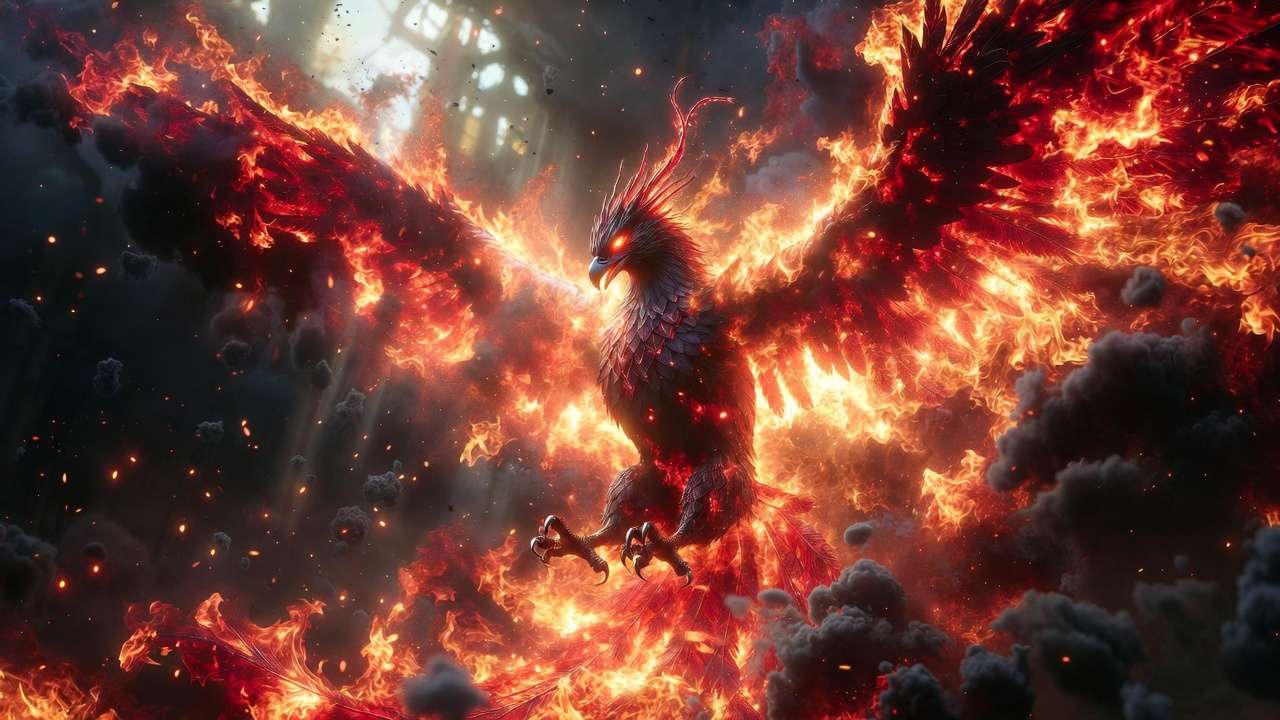
Phoenix biology is unlike anything else in the magical world:
- Immortality through rebirth — Every few hundred years (or earlier under extreme stress), a phoenix bursts into flame and is reborn from its own ashes as a chick. This cycle can repeat indefinitely.
- Healing tears — Phoenix tears are the only known cure for basilisk venom, one of the deadliest poisons in the wizarding world.
- Phoenix song — Their music has profound emotional effects. To those of pure heart, it brings courage, hope, and comfort; to those consumed by darkness, it inspires terror.
- Flame Apparition — Fawkes can appear and disappear in bursts of fire, bypassing even powerful anti-Apparition charms.
- Immense strength — Despite his graceful appearance, Fawkes can carry several full-grown people at once without apparent effort.
- Immunity — Phoenixes are immune to the basilisk’s deadly gaze and many other forms of dark magic.
These abilities make Fawkes not just a companion, but a formidable ally — one who chooses when and how to intervene.
How Fawkes Saved Harry Potter: The Chamber of Secrets Heroics

No discussion of Fawkes is complete without revisiting his defining moment in Harry Potter and the Chamber of Secrets.
In the spring of 1993, Harry, Ginny, Ron, and Professor Lockhart are trapped in the Chamber. Harry has been bitten by the basilisk, and the venom is spreading quickly. At the moment of greatest despair, Fawkes arrives — summoned, as Dumbledore later explains, by Harry’s deep loyalty and faith in his headmaster.

What follows is one of the most cinematic sequences in the entire series:
- Fawkes drops the Sorting Hat at Harry’s feet, revealing Godric Gryffindor’s sword hidden inside.
- When the basilisk attacks, Fawkes launches himself at the monster, gouging out both of its enormous yellow eyes — permanently blinding it and protecting Harry from the fatal stare.
- After Harry destroys Tom Riddle’s diary and the basilisk is slain, Fawkes weeps onto Harry’s wounded arm. The tears close the wound instantly, neutralizing the venom and saving his life.
- Finally, with Harry, an unconscious Ginny, Ron, and a memory-less Lockhart clinging to him, Fawkes carries all four of them out of the Chamber and up through the pipe to safety — a feat of strength that still amazes readers decades later.

This sequence is more than just dramatic action. It is the moment when Fawkes embodies the core message of the series: true loyalty and love will always find a way to protect those who deserve it.
Fawkes in Later Books: From Protector to Grief-Stricken Farewell
While Fawkes’ most famous moment remains his heroic intervention in the Chamber of Secrets, he continued to play subtle but crucial roles throughout the rest of the series.

In Harry Potter and the Goblet of Fire, Fawkes makes only a brief appearance when he heals a small wound on Harry’s arm after the Third Task — a quiet reminder of his healing abilities even in less dramatic circumstances.
His next major contribution comes in Harry Potter and the Order of the Phoenix. During Dumbledore’s dramatic duel with Voldemort in the Ministry of Magic atrium, Fawkes once again proves his worth. When Voldemort attempts to strike Dumbledore with the Killing Curse, Fawkes swoops in front of the green jet of light and swallows it whole. The phoenix is momentarily engulfed in the curse’s deadly power, but phoenixes cannot be permanently killed by such means — he simply bursts into flame and is reborn seconds later, completely unharmed.
This moment is often overlooked by casual readers, but it demonstrates Fawkes’ willingness to sacrifice himself (however temporarily) to protect Dumbledore. It also reinforces the phoenix’s symbolic role as an unstoppable force of renewal in the face of death.
Fawkes’ final and most heartbreaking appearance occurs in Harry Potter and the Half-Blood Prince. After Severus Snape kills Dumbledore atop the Astronomy Tower, Fawkes flies to the top of the tower and begins to sing. His song is described as a lament — a haunting, sorrowful melody that echoes across the grounds of Hogwarts and brings tears to the eyes of everyone who hears it.
This is the only time in the series that we see Fawkes grieve so openly. Shortly after Dumbledore’s funeral, Fawkes leaves Hogwarts forever, never to return. J.K. Rowling has never explicitly confirmed Fawkes’ final fate, but the implication is clear: his bond was with Dumbledore personally, not with the school. Once his wizard was gone, the phoenix chose to move on — perhaps to find a new companion worthy of his loyalty, or perhaps to live out the rest of his immortal life in solitude.
Secrets & Lesser-Known Facts About Fawkes
Beyond the major plot points, Fawkes is filled with fascinating details that even dedicated fans sometimes miss:
- The Twin Wand Cores Fawkes donated two tail feathers to Ollivander’s wand shop. One became the core of Harry Potter’s wand; the other became the core of Tom Riddle’s (Voldemort’s) wand. This rare connection between the two wands is what caused Priori Incantatem — the “reverse spell effect” — during their duel in the Little Hangleton graveyard in Goblet of Fire. The twin cores refused to kill each other, forcing the wands to regurgitate echoes of past spells (including the shadow of Harry’s parents). This seemingly minor detail is actually one of the most important pieces of wand lore in the entire series.
- Mechanical Bird on Set Behind the scenes of the Chamber of Secrets film, the production team built a fully mechanical animatronic Fawkes to fool even the actors. Richard Harris (who played Dumbledore) reportedly believed the bird was real for several days during filming.
- Symbolic Connections Fawkes is heavily tied to the themes of death and rebirth that run through the later books. His Patronus — a phoenix — is one of the few confirmed Patronuses that matches its owner’s form, emphasizing the deep bond between Dumbledore and his companion. Some fans also speculate that Fawkes’ presence in the series foreshadows the Resurrection Stone and the overall message that death is not the end.
- Phoenix Song in Priori Incantatem During the graveyard duel, Harry hears phoenix song — not just from Fawkes himself, but as part of the magical effect caused by the twin cores. This suggests that Fawkes’ essence is somehow embedded in the wands, even after the feathers were removed.
These hidden details elevate Fawkes from a supporting character to one of the most symbolically rich creatures in the wizarding world.
What Fawkes Teaches Us: Loyalty, Rebirth, and Hope in Harry Potter
Fawkes is far more than a magical creature or a plot device. He is one of J.K. Rowling’s most elegant embodiments of the central philosophical messages woven throughout the Harry Potter series.
At his core, Fawkes represents unconditional loyalty. Unlike house-elves, who are bound by magic, or even wands, which can be won or lost, a phoenix chooses its companion freely — and once chosen, remains loyal until the very end. Fawkes didn’t serve Dumbledore because he had to; he served because he wanted to. That same loyalty extended to Harry in his darkest hour, responding not to a spell or command, but to the boy’s pure-hearted devotion to truth and friendship.
Then there is the theme of rebirth and renewal. Every time Fawkes bursts into flame and rises again from his ashes, he visually and symbolically reinforces one of the series’ most comforting truths: death is not the end, and good things can emerge even from the darkest moments. This idea reaches its emotional peak in Dumbledore’s own words in The Deathly Hallows: “To the well-organized mind, death is but the next great adventure.” Fawkes lives that philosophy every few centuries.
Finally, Fawkes stands for quiet, hopeful strength. He rarely speaks (phoenixes don’t use human language), yet his song, his tears, and his mere presence bring courage to the frightened and despair to the wicked. In a story filled with loud battles, dramatic duels, and explosive magic, Fawkes reminds us that some of the greatest acts of heroism happen in silence — a single tear, a single song, a single loyal choice.
For many readers, Fawkes remains one of the most emotionally resonant characters precisely because he never seeks the spotlight. He simply does what is right, time and time again.
FAQs About Fawkes Harry Potter
Here are the questions fans ask most often about this legendary phoenix:
What happened to Fawkes after Dumbledore died? After singing his lament at Dumbledore’s death and attending the funeral, Fawkes left Hogwarts and was never seen again in the series. Given phoenix nature, he likely continued his immortal existence elsewhere — possibly seeking a new wizard to bond with or simply living freely. J.K. Rowling has left his fate open-ended, which many fans find fittingly poetic.
Can phoenixes die permanently? No. The only known way a phoenix can truly “die” is if it chooses to stop rebirthing (a theoretical possibility mentioned in Fantastic Beasts lore). Otherwise, they are functionally immortal, always rising anew from their ashes.
Why did Fawkes’ feathers become the cores of both Harry’s and Voldemort’s wands? Ollivander kept two tail feathers from Fawkes in his shop for many years. One chose Harry (1991), the other had already chosen Tom Riddle (1940s). The twin cores created a rare magical resonance, leading to Priori Incantatem — a key moment that protected Harry and foreshadowed the final battle.
Are there any major differences between book Fawkes and movie Fawkes? Yes. The books describe Fawkes as longer-necked and more swan-like, with a deeply mythical appearance. In the films, he has a more eagle-like look and somewhat less graceful movements. The mechanical prop used in Chamber of Secrets was impressive but noticeably less lifelike than the CGI creatures in later films.
Did Fawkes ever help anyone besides Dumbledore and Harry? Directly, no — his major actions are tied to those two. However, his tears and song indirectly benefit others (e.g., the entire school hears his lament after Dumbledore’s death).
Fawkes Harry Potter is not just a phoenix — he is the living, breathing embodiment of everything the series stands for: loyalty that endures beyond death, hope that rises from ashes, and quiet power that triumphs when all seems lost. From blinding a basilisk to swallowing a Killing Curse, from healing deadly venom to singing a song that broke hearts across Hogwarts, Fawkes truly did save the day — multiple times — without ever asking for recognition.
Whether you’re rereading Chamber of Secrets, watching the films again, or simply reflecting on what makes the wizarding world so magical, Fawkes remains one of its most unforgettable treasures. His story reminds us that even in the darkest times, a spark of loyalty and love can ignite something extraordinary.
What’s your favorite Fawkes moment? Drop a comment below — we’d love to hear which scene still gives you chills after all these years.