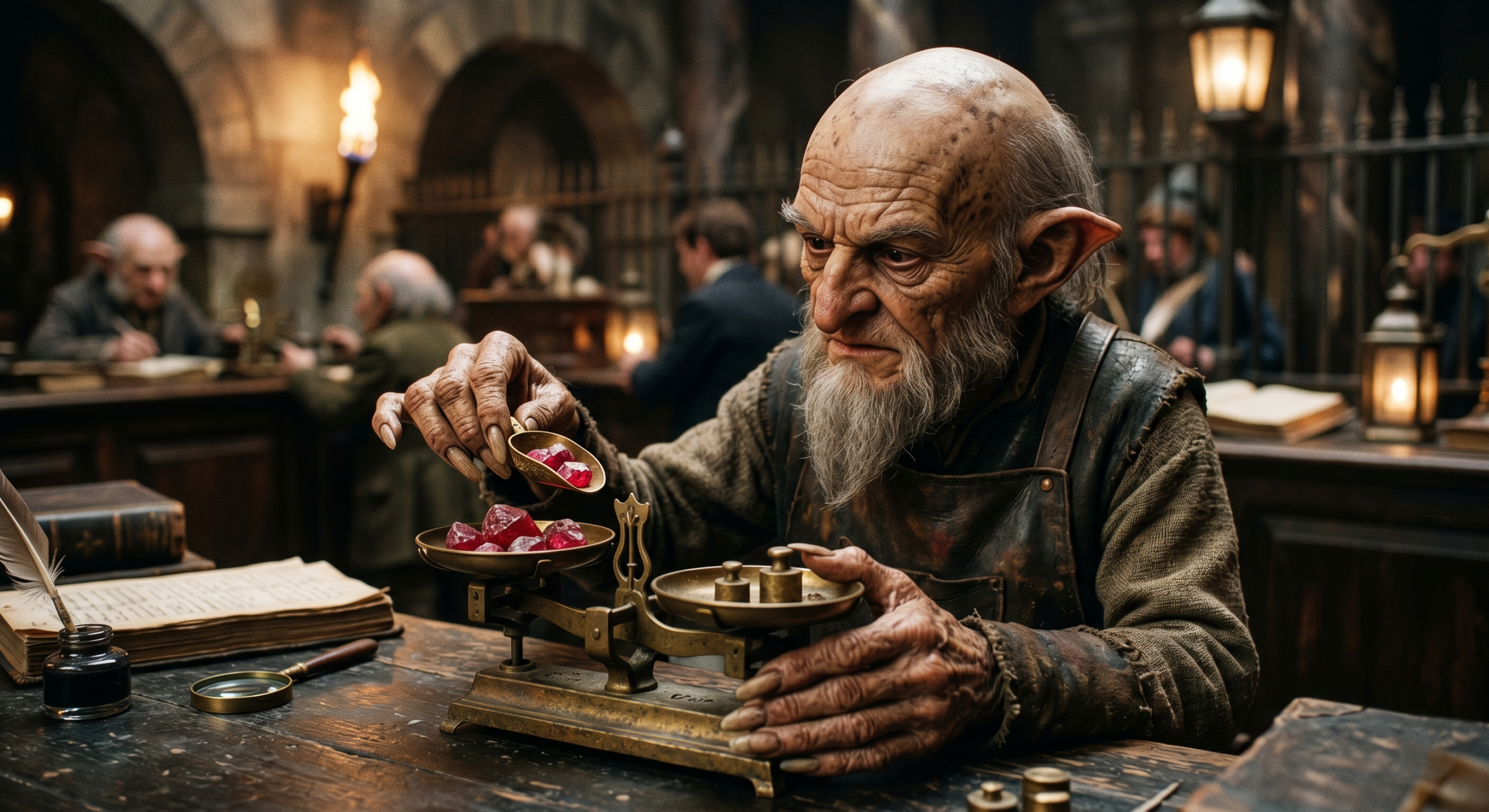
When most fans think of Goblins in Harry Potter, they immediately picture the scowling, sharp-featured tellers stamping parchment and weighing rubies behind the grand counters of Gringotts Wizarding Bank. In the cinematic adaptations, they are largely relegated to the background—eccentric, untrustworthy gatekeepers of wizarding wealth. However, behind those heavy brass doors lies one of the most dangerous, intelligent, and historically oppressed magical species in the entire wizarding world.
The true lore of the goblins is deeply fragmented across the books, historical appendices, and extended media. For readers and fans looking to truly understand the political landscape of the wizarding world, decoding this history is absolutely essential. This comprehensive guide will take you far beyond the vaults of Gringotts, diving deep into goblin biology, their unique brand of wandless magic, the bloody rebellions that shaped magical history, and the ancient grudges that still dictate the wizarding economy today.
The Unique Biology and Culture of Goblins
To understand the political friction between wizards and goblins, one must first understand the fundamental differences in how they exist and perceive the world around them. Goblins are not merely “short wizards”; they are a completely distinct hominid species with their own deep-rooted culture.
Physical Traits and Characteristics
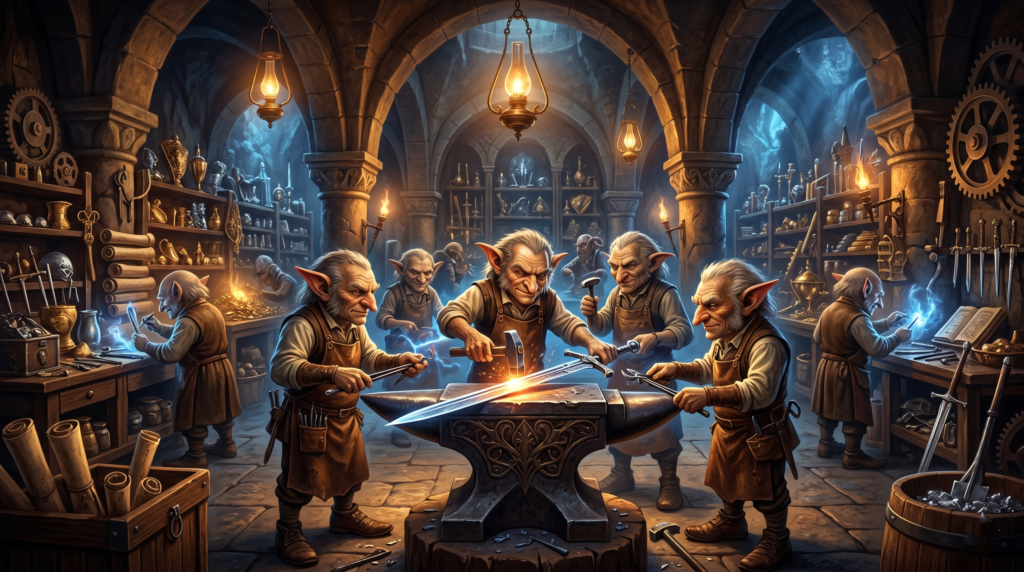
Canonically, goblins are described as diminutive in stature, typically standing around a head shorter than the average human. They possess distinct physiological features: swarthy faces, pointed beards, exceptionally long fingers and feet, domed heads, and dark, slanted eyes. Their physical design makes them incredibly dexterous, a trait that lends itself perfectly to their mastery of metalwork and curse-breaking.
They are naturally subterranean creatures, comfortable in the deep, winding, torch-lit caverns beneath London. Their diet is vastly different from humans, consisting heavily of raw meat, earthy roots, and various subterranean fungi.
 Gobbledegook: The Complex Language of Goblins
Goblins possess their own highly complex, native tongue known as Gobbledegook. To the human ear, it sounds guttural, harsh, and entirely incomprehensible. The language barrier serves as a significant cultural divide. While goblins are fluent in human languages (allowing them to conduct international banking and trade), very few wizards ever bother to learn Gobbledegook.
This linguistic ignorance on the part of wizards is a subtle but profound display of wizarding arrogance. Throughout the series, Bartemius Crouch Sr. is highlighted as one of the extremely rare wizards who mastered the language, a fact that made him exceptionally valuable in the Department of International Magical Cooperation.
The Goblin Concept of Ownership (Crucial Lore)
If there is one piece of lore that defines the ongoing strife between the two races, it is the goblin concept of ownership. This cultural philosophy is entirely incompatible with wizarding law.
To a goblin, the maker of an item is its permanent, rightful owner. When a wizard purchases a goblin-wrought sword or piece of jewelry, the goblin considers this transaction a “rental” for the duration of the wizard’s life. Upon the purchaser’s death, the item is meant to be returned to the goblins.
When wizards pass these items down to their heirs—as is standard human practice—goblins view it as blatant theft. This irreconcilable difference in property rights has sparked centuries of bloodshed, mistrust, and accusations of thievery from both sides.
The Magic of the Goblins: Power Without a Wand
One of the greatest misconceptions in the wizarding world is that creatures without wands are magically inferior. Goblins shatter this myth entirely.
How Goblin Magic Differs from Wizard Magic
Goblins possess their own innate, highly potent brand of magic. Unlike wizards, who generally require a wand to focus and channel their spells, goblins can perform complex magic entirely wandlessly. This magic is uniquely suited to earth-working, metal-charming, and curse-breaking.
The enchantments placed on the subterranean vaults of Gringotts—which include dragons, cascading magical waterfalls (the Thief’s Downfall), and duplicating curses (Gemino Curse)—are largely products of goblin magic. Goblins guard their magical secrets fiercely, refusing to teach their enchantments to wizards, just as wizards refuse to share wandlore.
 The Wand Ban: A Millennia-Old Injustice
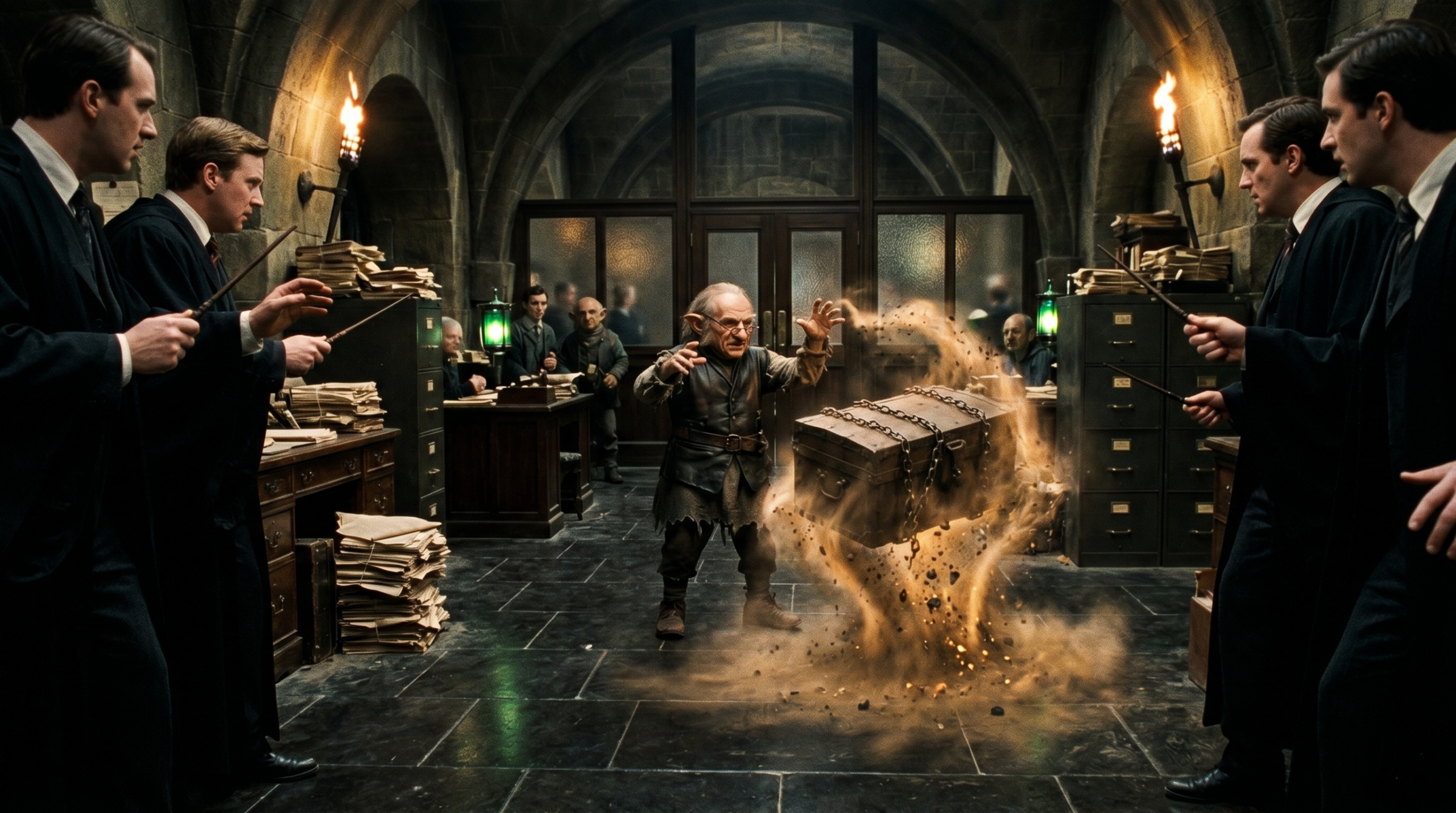
The core of the historical animosity between the two species lies in legislation. Under the Ministry of Magic’s Clause 3 of the Code of Wand Use, it is strictly forbidden for any non-human magical being to carry, possess, or use a wand.
Wizards justify this law under the guise of “magical regulation,” but the truth is far more sinister: it is born of absolute fear. Wizards know that if goblins—who already possess immense intelligence and physical dexterity—were allowed to channel their magic through wands, they could easily rival or overthrow wizarding dominance. This systemic legislative oppression is the primary fuel for the historical hatred goblins harbor toward wizardkind.
Master Craftsmen: The Secrets of Goblin-Wrought Silver
Goblins are universally recognized as the greatest metalsmiths in the magical world. Their creations are priceless, fiercely coveted, and entirely unique in their properties.
What Makes Goblin Metal Indestructible?
Goblin-wrought silver defies the normal laws of metallurgy. It possesses innate magical properties that make it incredibly resilient and low-maintenance.
-
Dirt Repellent: Goblin silver never requires cleaning; it naturally repels dirt, rust, and tarnish.
-
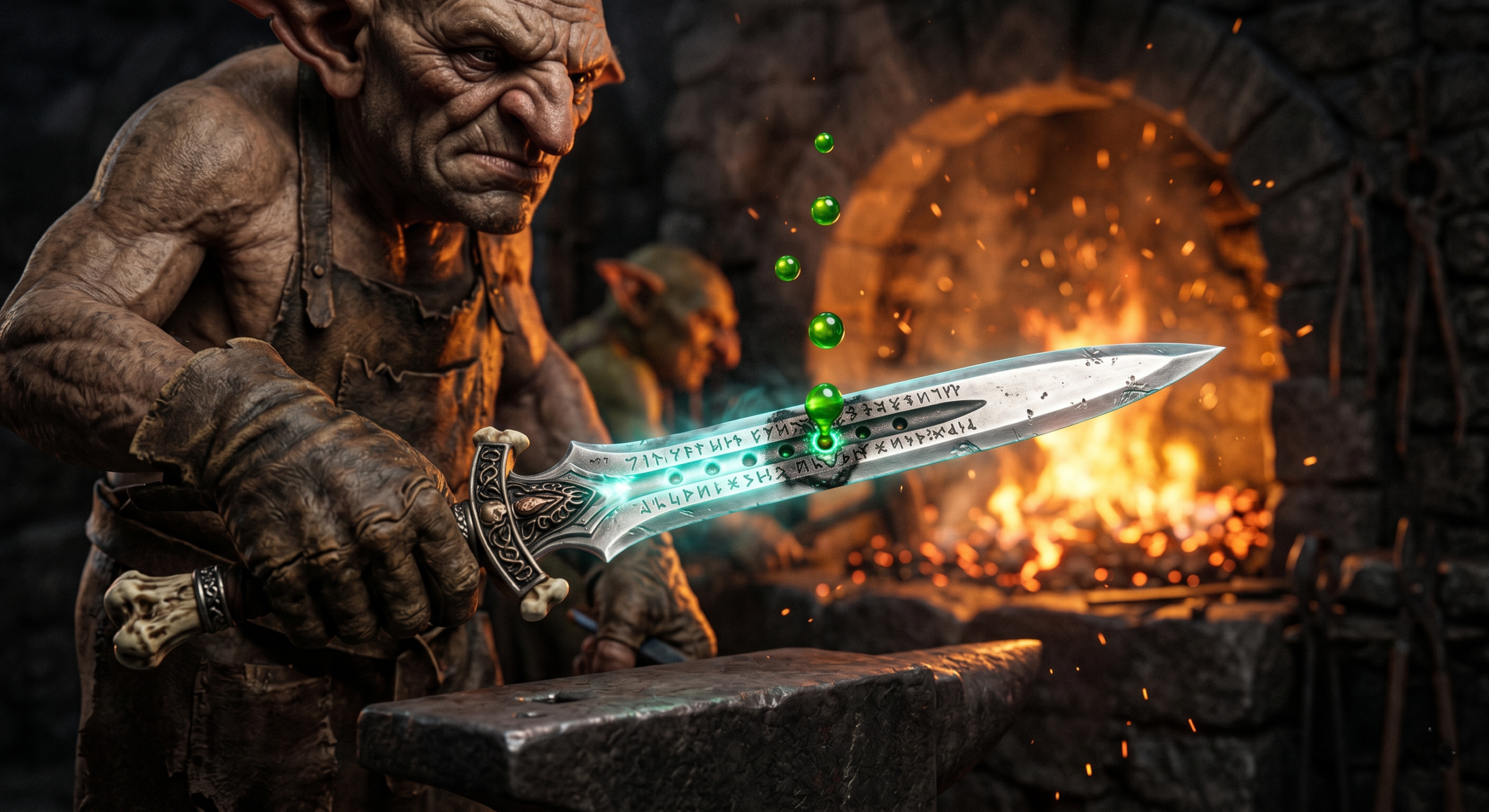
Adaptive Strength: The most famous property of goblin metal is that it only imbibes (absorbs) that which makes it stronger. If exposed to a deadly substance, rather than being destroyed, it absorbs the substance’s properties.
This is exactly why the Sword of Gryffindor was able to destroy Horcruxes; after Harry used it to slay the Basilisk in the Chamber of Secrets, the goblin silver absorbed the incredibly potent Basilisk venom.
 Ragnuk the First and the Sword of Gryffindor
The most famous goblin artifact in the series is the Sword of Gryffindor. According to historical records, Godric Gryffindor commissioned the sword from the finest silversmith of the age, King Ragnuk the First.
Because of the goblin concept of ownership, Ragnuk deeply regretted letting the magnificent sword go. He fabricated a lie that Gryffindor had stolen it from him, sending goblin thugs to “reclaim” it. Gryffindor defeated the thugs and sent them back with a threat, but the legend persisted. To this day, goblins firmly believe that the Sword of Gryffindor is stolen goblin property, highlighting how differing cultural narratives can rewrite history.
Other Notable Goblin Artefacts
Beyond the famous sword, several other goblin-wrought items appear in the lore:
-
The Black Family Silver: Sirius Black’s ancestral home was filled with 15th-century goblin-wrought silver dishes.
-
Hagrid’s Gift: When Hagrid acted as an envoy to the giants, Dumbledore provided him with an indestructible goblin-wrought helmet to offer as a peace offering to the Gurg (the giant leader).
-
Muriel’s Tiara: A goblin-made tiara owned by Aunt Muriel, which she lent to Fleur Delacour for her wedding.
The Bloody History of the Goblin Rebellions
In the Harry Potter books, Harry, Ron, and Hermione frequently sleep through Professor Binns’s incredibly dull History of Magic classes. However, J.K. Rowling used these background lectures to build a deeply flawed, prejudiced society. The constant drone about “Goblin Rebellions” wasn’t just filler—it was context for the deep racial divides in the magical world.
A Timeline of Uprisings
| Century | Rebellion Details | Key Figures & Outcomes |
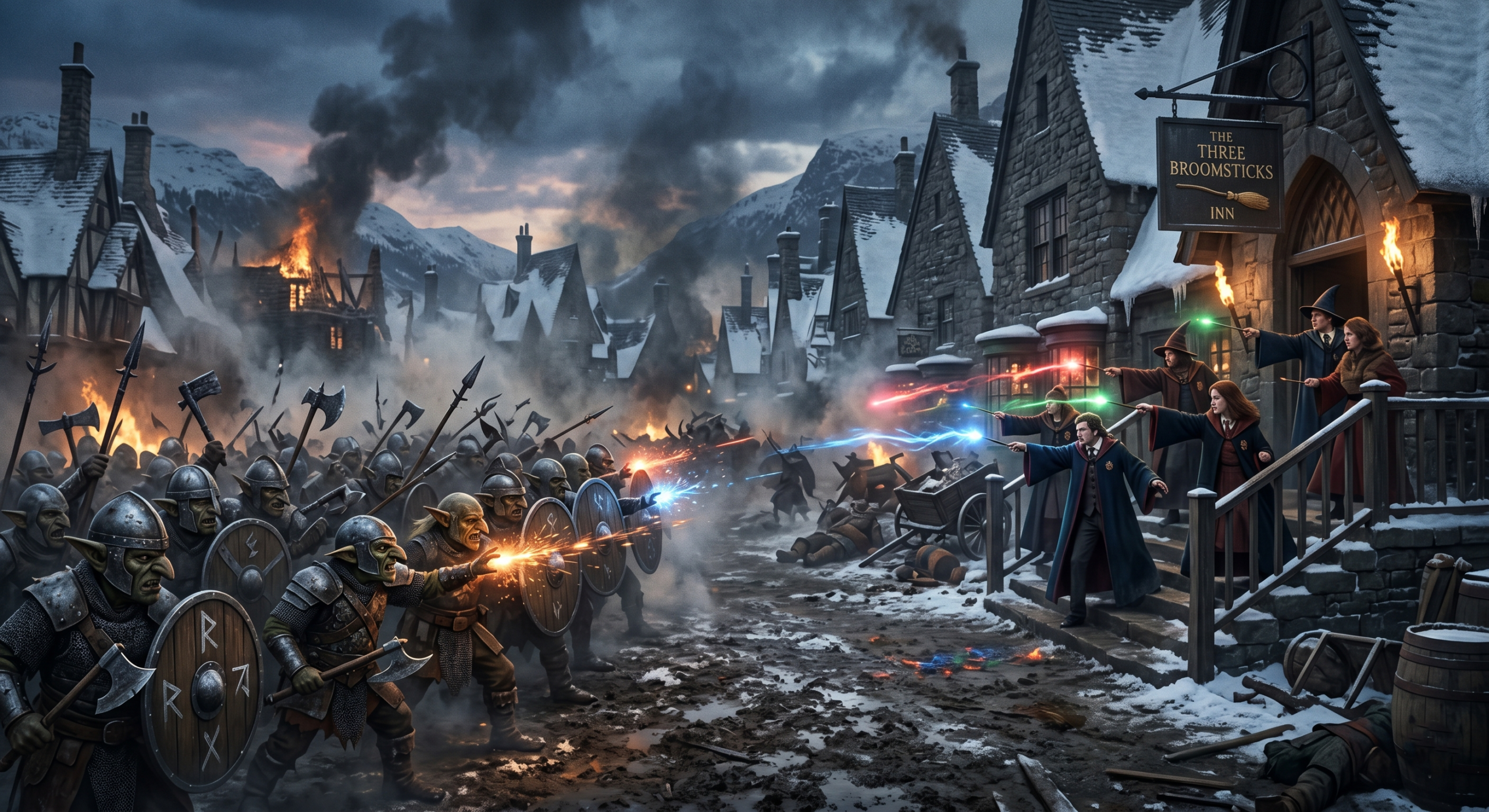
| 17th Century | The 1612 Hogsmeade Rebellion was one of the most violent uprisings. The goblins used the village of Hogsmeade as their staging ground. | The local inn, the Three Broomsticks, was famously commandeered and used as the wizarding headquarters to suppress the revolt. |
| 18th Century | The 1752 Rebellions were highly disruptive, causing widespread chaos across Great Britain. | The unrest was so severe that two Ministers for Magic (Albert Boot and Basil Flack) resigned in a single year. Notable rebels included Vargot and Urg the Unclean. |
| 19th Century | Various localized skirmishes and protests regarding banking rights and wand legislation. | Goblins gained more autonomy over Gringotts but were still denied wand rights, resulting in a tense, cold-war-like peace. |
 The Wizards’ Bankers: The Paradox of Gringotts
One of the most fascinating aspects of the Harry Potter universe is the paradoxical relationship surrounding Gringotts Wizarding Bank. If wizards and goblins historically despise each other, why do wizards trust them with all their gold?
The Founding of Gringotts
Gringotts was founded in the late 1400s by a goblin appropriately named Gringott. Over the centuries, it grew into a sprawling, subterranean fortress beneath Diagon Alley, heavily guarded by enchantments, Sphinxes, and even dragons.
A Fragile Truce Between Two Powers
The relationship between wizards and goblins is a fragile truce born of sheer pragmatism. Wizards utilize Gringotts because they recognize and respect goblin ruthlessness, security measures, and unmatched curse-breaking abilities. They know their gold is safer with beings who will violently defend their vaults against any intruder.
Conversely, the goblins tolerate wizards because banking gives them the ultimate economic leverage. By controlling the flow of galleons, sickles, and knuts, the goblins hold the entire wizarding economy hostage. It is a mutually beneficial cold war; neither side truly likes the other, but neither can afford to sever the tie.
Notable Goblins in the Harry Potter Universe
While the species is often spoken of as a monolith, several individual goblins play critical roles in the narrative, showcasing diverse motivations and moral compasses.
Griphook: The Pragmatist, Not a Villain
Griphook is the most prominent goblin in the series. He first escorts Harry to his vault in The Sorcerer’s Stone and later plays a pivotal role in the Gringotts break-in during The Deathly Hallows.
Many fans view Griphook’s decision to take the Sword of Gryffindor and abandon Harry, Ron, and Hermione in the Lestrange vault as an act of pure evil or betrayal. However, analyzing this through the lens of goblin lore reveals a different truth. Griphook was merely acting as a pragmatist. Under goblin law, the sword belonged to his people. He did not view taking it as stealing; he viewed it as reclaiming stolen property from wizards who had oppressed his kind for centuries. His allegiance was to his race, not to the boy wizard.
Bogrod and Gornuk
-
Bogrod: An older teller at Gringotts who fell under Harry’s Imperius Curse during the vault heist. His forced compliance highlights the physical and magical vulnerabilities goblins still face against wand-wielding humans.
-
Gornuk: A goblin who chose to go on the run rather than submit to Lord Voldemort’s regime. He hid in the wilderness alongside Dean Thomas and Ted Tonks, demonstrating that goblins, while disliking wizards, recognized that pure-blood supremacy would be devastating for all non-humans. Gornuk was tragically killed by Snatchers.
Expert Insight: Goblins vs. House-Elves
To truly grasp the authoritative E-E-A-T (Experience, Expertise, Authoritativeness, and Trustworthiness) of Harry Potter lore, one must compare the sociological treatment of the two primary non-human species: Goblins and House-elves.
While both are subjected to the Wand Ban, their societal standing is vastly different. House-elves have been magically and psychologically conditioned over centuries to love their own enslavement. They are viewed by wizards as property, pets, or background scenery.
Goblins, on the other hand, retained their autonomy. They are not enslaved; they are economically independent and deeply feared. The Ministry of Magic even maintains a Goblin Liaison Office (within the Department for the Regulation and Control of Magical Creatures) specifically to negotiate treaties and monitor subversive goblin groups. The very existence of this office proves that wizards view goblins not as pets, but as a perpetual, lingering threat that must be carefully managed.
Frequently Asked Questions (FAQs)
Q: Can goblins do magic without a wand?
Yes. Goblins possess powerful, innate magic that does not require a wand. They are particularly skilled in metal-charming, earth magic, and complex curse-breaking, which they use to secure Gringotts Bank.
Q: Why did Griphook betray Harry in the Deathly Hallows?
Griphook did not view his actions as a betrayal. Because of the goblin concept of ownership—which dictates that the maker of an object is its true owner—Griphook believed he was rightfully reclaiming the Sword of Gryffindor for his people, rather than stealing it.
Q: What is the goblin language called?
The native language of the goblins is called Gobbledegook. It is described as a harsh, guttural language. Very few human wizards, such as Barty Crouch Sr., have ever taken the time to learn it.
Q: Did goblins side with Voldemort during the Wizarding Wars?
No. Goblins officially remained strictly neutral during both Wizarding Wars. They understood that while they despised the current Ministry of Magic, Lord Voldemort’s ideology of pure-blood human supremacy would result in even harsher oppression for non-human magical creatures.
The story of the Goblins in Harry Potter is far darker, richer, and more complex than a simple tale of magical bankers. They are a proud, incredibly intelligent, and fiercely independent race forced to coexist in a society fundamentally built to suppress them. From their indestructible silver craftsmanship to their brutal rebellions, goblins represent the consequences of prejudice and the danger of suppressing a powerful people.
When we look back at the history of the Wand Ban, the cultural misunderstandings of ownership, and the centuries of bloodshed, it begs a fascinating, thought-provoking question for any fan: Knowing what we know now, were the goblins actually justified in their rebellions against wizardkind?