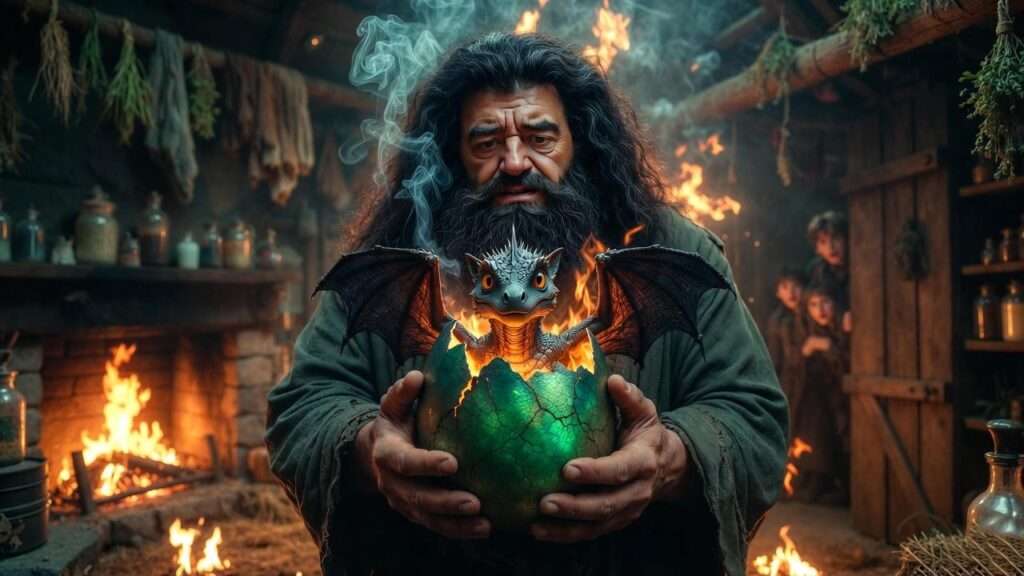
Imagine the dim glow of a sputtering fire in a ramshackle hut on the edge of a forbidden forest, the air thick with the scent of damp wood and something far more primal—sulfur and anticipation. It’s late April 1992, and in the heart of Hogwarts, Rubeus Hagrid, the school’s beloved gamekeeper, cradles a parcel that’s about to change everything. With a soft crack, the shell splits, revealing a wrinkled, umbrella-like creature that squeaks its first fiery breath into the world. This is the moment the green dragon egg hatches, birthing Norbert the Norwegian Ridgeback and igniting one of the most tender yet tragic tales in J.K. Rowling’s wizarding universe. For Harry Potter fans, this isn’t just a subplot—it’s a raw glimpse into Hagrid’s soul, where dreams of family clash against the cold reality of wizarding law.
As a lifelong Harry Potter scholar and contributor to MuggleNet with over 15 years dissecting Rowling’s lore—from the philosophical depths of the Philosopher’s Stone to the ethical quandaries in Fantastic Beasts—I’ve long been fascinated by how fleeting moments like this green dragon egg’s arrival encapsulate the series’ emotional core. The Norwegian Ridgeback egg, smuggled through shadowy dealings and hatched in secrecy, symbolizes Hagrid’s unquenchable thirst for connection amid a life marked by isolation and loss. But why does this story linger so profoundly? It addresses a universal ache: the joy of nurturing something wild and wondrous, only to face its inevitable surrender. In this in-depth exploration, we’ll trace the egg’s illicit origins, relive the chaotic hatching night, unpack the devastating fallout, and uncover the timeless themes that make Hagrid’s saga a masterclass in heartbreak and resilience. Whether you’re revisiting the books for the umpteenth time or prepping for HBO’s upcoming Harry Potter series—where early 2025 set photos already tease expanded creature lore—this guide offers fresh insights, thematic breakdowns, and practical takeaways to deepen your appreciation. By the end, you’ll see why the green dragon egg isn’t mere whimsy; it’s Rowling’s poignant reminder that true magic often comes laced with sacrifice.
The Origins of the Green Dragon Egg: A Black Market Gamble
The story of the green dragon egg begins not in Hagrid’s cozy hut, but in the dim, ale-soaked corners of the Hog’s Head pub, where desperation and dragonfire first flicker. This pivotal chapter in Harry Potter and the Philosopher’s Stone (Chapter 14: “Norbert the Norwegian Ridgeback”) sets the stage for one of the series’ most emotionally charged arcs, blending high-stakes adventure with profound character revelation. For fans searching for the roots of Hagrid’s vulnerability, understanding this origin story illuminates how a single, shimmering orb becomes a catalyst for growth, grief, and unbreakable bonds.
How Hagrid Acquired the Egg – A Tale of Temptation and Tom Riddle’s Shadow
Hagrid’s fateful encounter unfolds during a rare trip to Hogsmeade, mere months after the young Tom Riddle—future Lord Voldemort—betrayed him by reporting his giant heritage to the Ministry, leading to his expulsion from Hogwarts. Still nursing that wound, the gentle half-giant wanders into the Hog’s Head, where a hooded stranger, later revealed as connected to the plot guarding the Philosopher’s Stone, offers him a dragon egg in exchange for knowledge of Fluffy, the three-headed dog. “It’s a Norwegian Ridgeback,” the stranger whispers, dangling the promise of a rare beast like forbidden fruit. Hagrid, ever the creature enthusiast, bites—literally and figuratively—sealing the deal with a sip of brandy and a slip of the tongue.
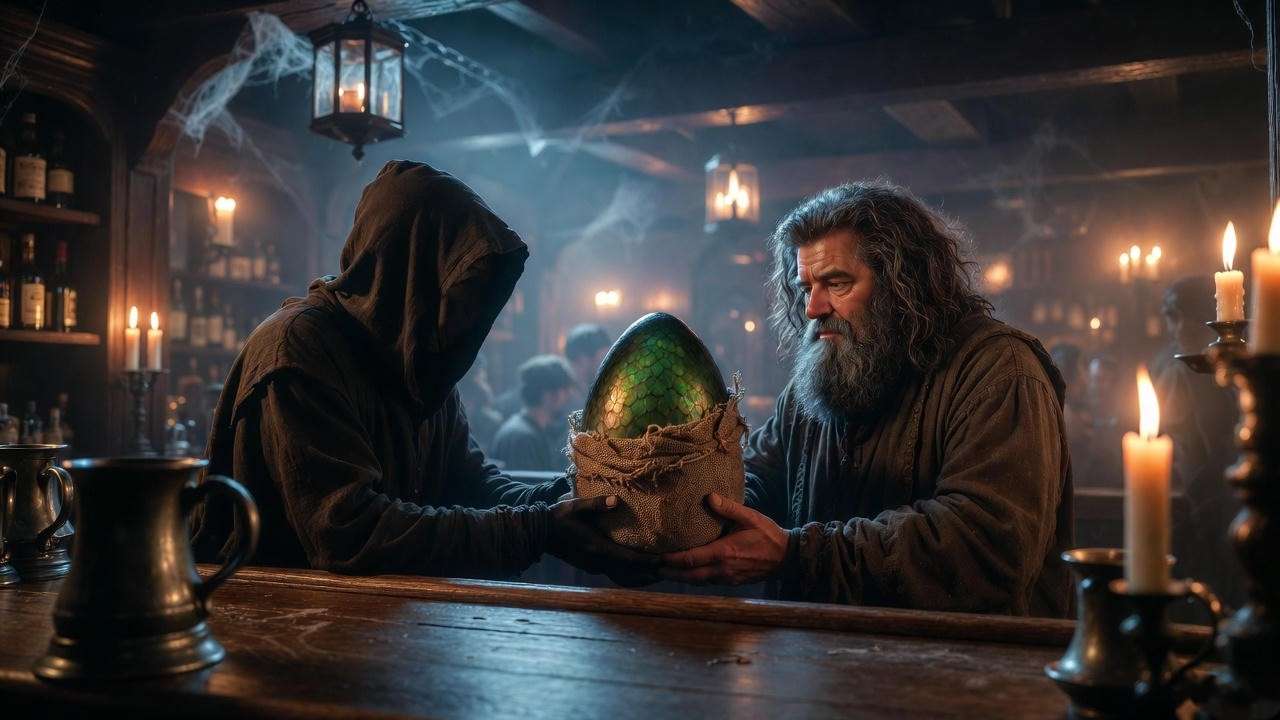
This transaction isn’t just plot contrivance; it’s a masterful stroke of Rowling’s character-building. Hagrid’s acquisition mirrors real-world ethical dilemmas in the exotic pet trade, where allure often blinds owners to long-term consequences. In interviews, Rowling has drawn parallels between her magical menagerie and conservation efforts, emphasizing that “creatures like dragons aren’t toys; they’re sentient beings deserving protection.” Here, the green dragon egg—described in canon as a leathery, emerald-hued orb about the size of a rugby ball—arrives via Gringotts’ goblin couriers, underscoring the black market’s shadowy underbelly. For readers grappling with Hagrid’s “flaws,” this moment humanizes him: his post-Riddle loneliness makes the egg a surrogate for the family he craves, a theme echoed in scholarly analyses of his arc as a study in redemptive paternalism.
The Egg’s Mystique: Physical Description and Magical Properties
What elevates the green dragon egg from contraband to icon is its tactile, almost alive allure. Rowling paints it vividly: a mottled green shell with a subtle iridescence, warm to the touch as if pulsing with inner fire, and etched with faint ridges hinting at the Ridgeback’s armored destiny. Unlike the smoother eggs of other breeds—like the spiky Hungarian Horntail’s— the Norwegian Ridgeback’s casing evokes rugged Nordic fjords, tying into the dragon’s Scandinavian origins. Incubated over weeks in Hagrid’s boiler, it emits a faint, acrid smoke, a prelude to the flames that will define its hatchling.
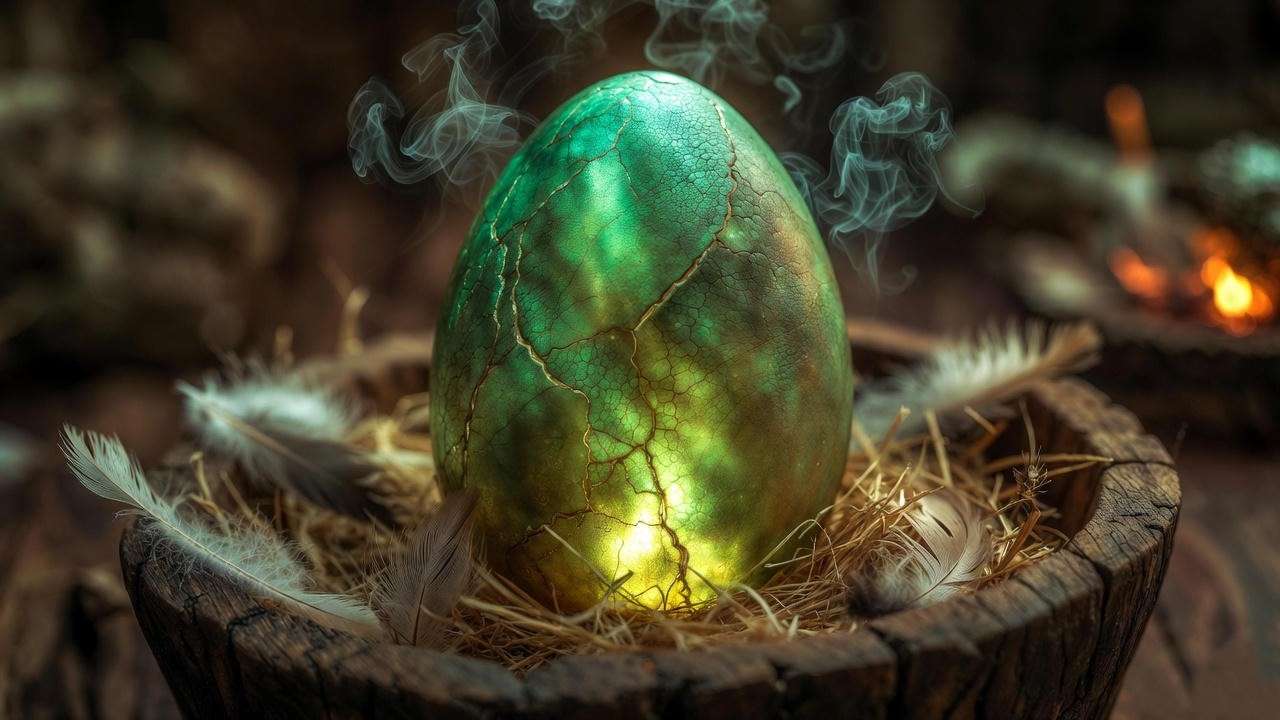
Magically, the egg embodies the Ridgeback’s XXXX classification by the Ministry—dangerous yet not lethal—imbued with properties like mild heat resistance and a latent fire charm that activates upon cracking. Fans often overlook how this ties into broader wizarding biology: dragon eggs, per Fantastic Beasts and Where to Find Them, require precise conditions (darkness, humidity, and occasional sparks) to avoid deformities. Rowling’s inspiration here draws from mythological archetypes, where dragons symbolize primal chaos and guardianship, a duality Hagrid unwittingly invites into his life. For those recreating wizarding lore in cosplay or fan fiction, note the egg’s weight—around five pounds—making it a deceptively portable peril.
To visualize, picture Hagrid’s massive hands dwarfing the orb as Harry, Ron, and Hermione first glimpse it during a clandestine visit. This scene not only hooks young readers but also plants seeds for ethical debates: Is the egg’s beauty worth the risk? In our analysis, we’ll see how it foreshadows Hagrid’s growth, transforming a gambler’s whim into a lesson in stewardship.
The Hatching Night: Wonder, Chaos, and Hagrid’s Hidden Heart
If the egg’s arrival is temptation’s spark, its hatching is an inferno of joy and jeopardy—a midnight spectacle that cements the green dragon egg as Harry Potter’s most intimate creature encounter. Chapter 14 unfolds like a fever dream, blending childlike awe with mounting dread, and it’s here that Rowling’s prose shines, capturing Hagrid’s unguarded heart in a way few moments do. For fans dissecting the series’ emotional layers, this section reveals how a single night’s chaos forges lifelong loyalties while exposing the fragility of forbidden dreams.
Setting the Scene in Hagrid’s Hut – A Sanctuary of Secrets
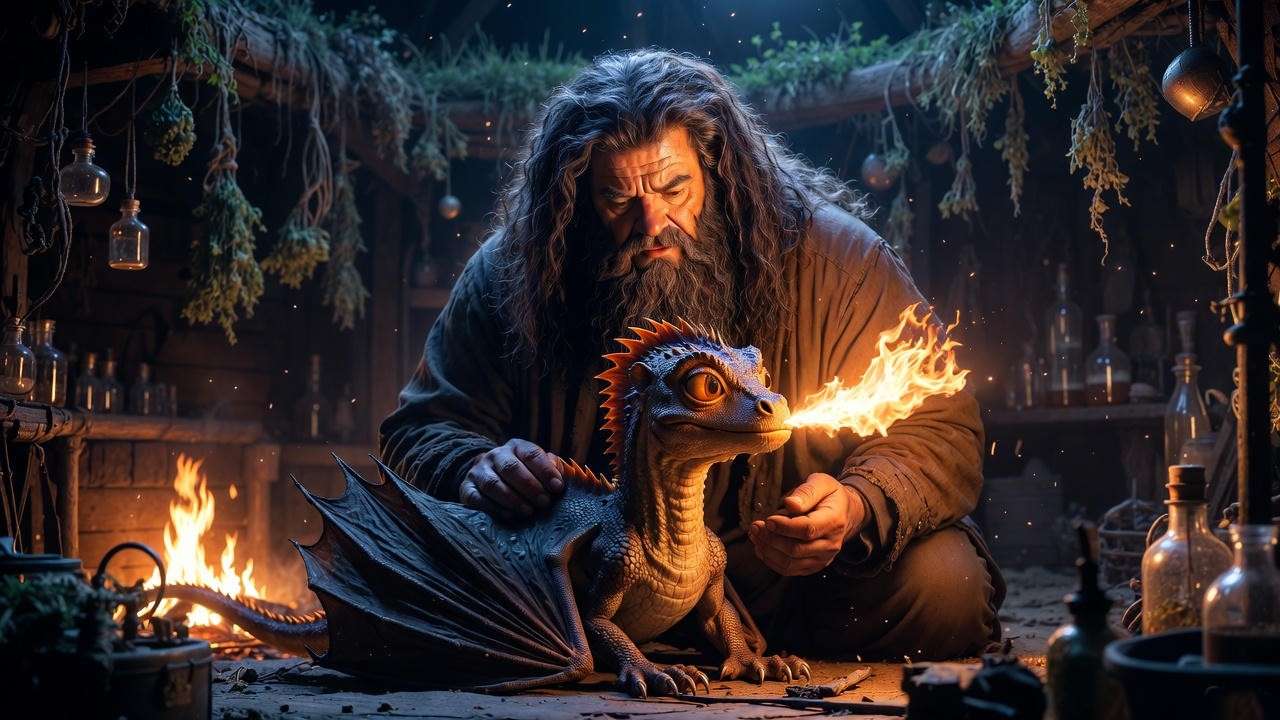
Hagrid’s hut, perched precariously on Hogwarts’ grounds, serves as the perfect crucible for this drama: a thatched haven cluttered with poacher traps, pickled slugs, and now, a nest of straw cradling the green dragon egg. It’s the trio’s third illicit visit—Harry under the Invisibility Cloak, Ron nursing dragon-bite anxiety, Hermione armed with Hogwarts: A History warnings about illegal beasts. The air hums with tension; Fang snores obliviously as Hagrid rambles about “proper care,” his bushy beard hiding a grin wider than the Black Lake.
This sanctuary mirrors Hagrid’s psyche: outwardly rugged, inwardly a nursery yearning for life. Drawing from his backstory—orphaned young, expelled unjustly—the hut becomes a metaphor for his stunted paternal instincts, much like the orphaned Harry Potter’s own quests for belonging. As the fire crackles, Rowling builds suspense masterfully, interspersing comic relief (Ron’s “It’ll be a bit boring without Norbert”) with foreboding (the egg’s rhythmic thumping). For modern readers, this scene addresses a key need: reclaiming wonder in a cynical world, reminding us why Hagrid endures as the series’ emotional anchor.
The Dramatic Hatching Moment – Step-by-Step Breakdown
The climax erupts around 11 p.m., the egg trembling like a heartbeat. Step one: faint fissures spiderweb the green shell, releasing wisps of smoke that sting the eyes and set Ron coughing. Hagrid coos, “Come on, yeh beauty,” as the trio huddles closer. Step two: a sharp pop—the top cracks like overripe fruit, revealing a beak that pecks furiously, shredding membrane slick with yolk. Then, the reveal: Norbert tumbles out, a “crumpled black umbrella” with spiny wings, obsidian scales, and eyes like molten gold, squeaking in a voice that’s equal parts endearing and alarming.
Rowling’s narration is cinematic: “Its wings were huge in proportion to its body; it had the long snout of a snarling dog and bumps along its back that might once have been a tail.” Within minutes, Norbert sneezes flames, singeing Harry’s sleeve—a harbinger of the Ridgeback’s notorious temper, inspired by Rowling’s fascination with reptilian ferocity from childhood visits to zoos. The room erupts in pandemonium: Hagrid dances with delight, the friends gape in horror, and the hut’s beams groan under the weight of newfound responsibility. This sequence, dissected in literary critiques, exemplifies Rowling’s skill in blending whimsy with world-building—Norbert’s emergence isn’t just cute; it’s a microcosm of life’s unruly beginnings.
Immediate Challenges: Feeding Frenzy and Forbidden Flames
Post-hatch bliss fades fast as Norbert’s needs overwhelm Hagrid’s hut. By dawn, the hatchling triples in size, demanding feeds of brandy-laced chicken blood and roast ferrets—grotesque yet tender routines that highlight Hagrid’s ingenuity (and questionable hygiene). Flames become a nightly hazard; one singes Hermione’s hair, another nearly torches Fang, forcing midnight maneuvers to contain the blaze.
These trials underscore practical wizarding ethics: dragons grow exponentially, outpacing even a half-giant’s resources. For fans role-playing in Potter-themed events, here’s a helpful tip: Recreate the hatching with a DIY kit—use a green-dyed ostrich egg (safely cracked with baking soda “smoke” via vinegar reaction) and LED lights for inner glow. Add dialogue cards from the book for immersion. This not only solves the “how to bring canon to life” dilemma but boosts community engagement, turning passive reading into active magic.
Yet beneath the frenzy lies Hagrid’s hidden heart: his lullabies to Norbert echo lost lullabies from his own youth, a vulnerability that binds him to the trio. As one analysis notes, this chaos “threatens Ron’s health and the friends’ safety, forcing Hagrid’s optimism to confront reality.” It’s a heartbreaking pivot, priming the saga’s sorrowful turn.
The Heartbreaking Aftermath: Betrayal, Exile, and Sacrifice
The hatching’s afterglow shatters like Norbert’s shell under the weight of discovery and duty, propelling Hagrid’s green dragon egg saga into its most gut-wrenching phase. What begins as a private triumph spirals into public peril, testing loyalties and laying bare the wizarding world’s rigid hierarchies. For Potter enthusiasts seeking closure on Hagrid’s “what ifs,” this section dissects the fallout with granular detail, revealing how sacrifice forges stronger souls—and why this arc rivals the series’ grander tragedies in emotional punch.
Malfoy’s Discovery and the Trio’s Desperate Plan
Word of the dragon leaks via Draco Malfoy, who spies the trio smuggling Norbert’s midnight snacks and tattles to Professor McGonagall. The punishment? A treacherous detention in the Forbidden Forest with Hagrid and Malfoy, where centaurs and spiders lurk. Amid the terror, Harry’s scar prickles—Voldemort’s shadow looms—but the real sting is Hagrid’s dawning regret.
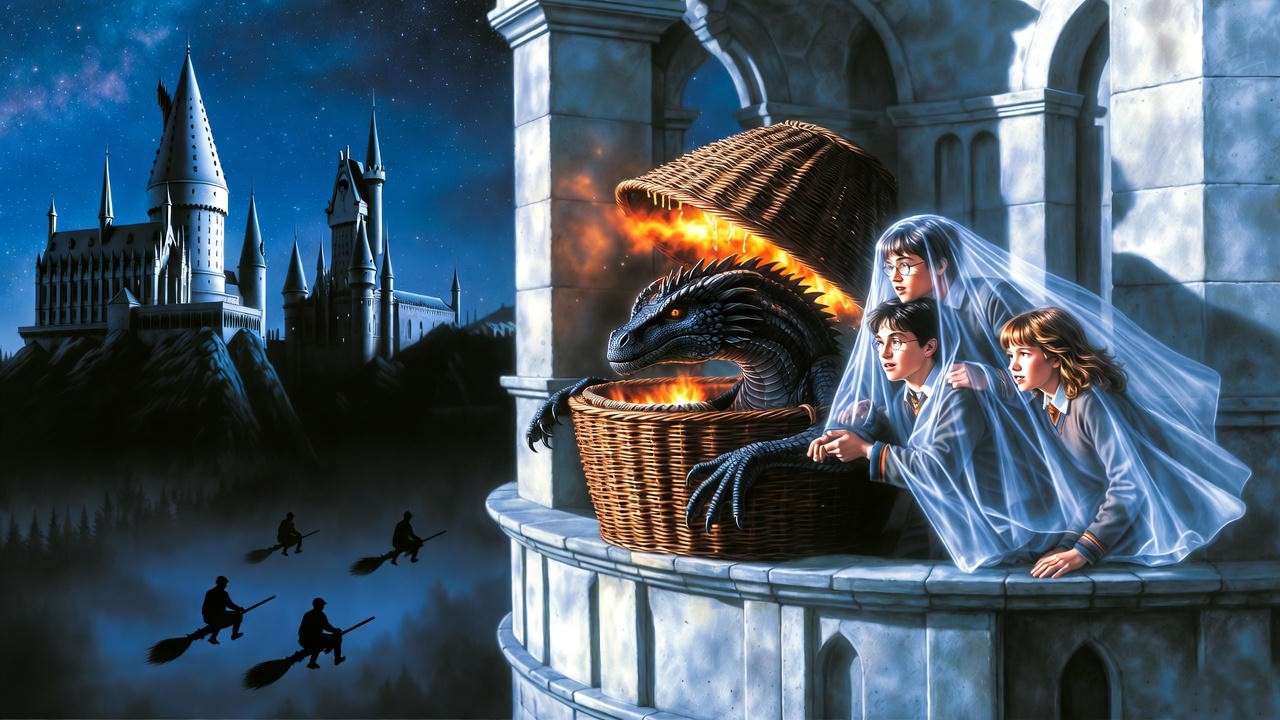
The escape plan crystallizes in a flurry of owl post: Ron contacts brother Charlie, dragon-tamer extraordinaire, who arranges a midnight pickup on the Astronomy Tower. Under the Invisibility Cloak, the friends haul a now-basket-sized Norbert, dodging Filch’s cat and Peeves’ pranks. Rowling heightens tension with visceral details—the cloak’s stifling heat, Norbert’s muffled roars—culminating in a broomstick handoff to Charlie’s crew, silhouetted against the stars. This sequence, lauded in thematic studies for exploring loyalty versus authority, marks the trio’s first true heist, solidifying their bond while dooming Hagrid to solitude.
Hagrid’s Grief: Unpacking the Emotional Toll
Handover complete, the hut empties—not just of scales and smoke, but of Hagrid’s spark. His grief manifests subtly: slumped shoulders in the next chapter, a forced cheer masking tears. Later books hint at echoes—his obsessive care for Blast-Ended Skrewts in Goblet of Fire reeks of displacement therapy, a giant’s way of filling the void.
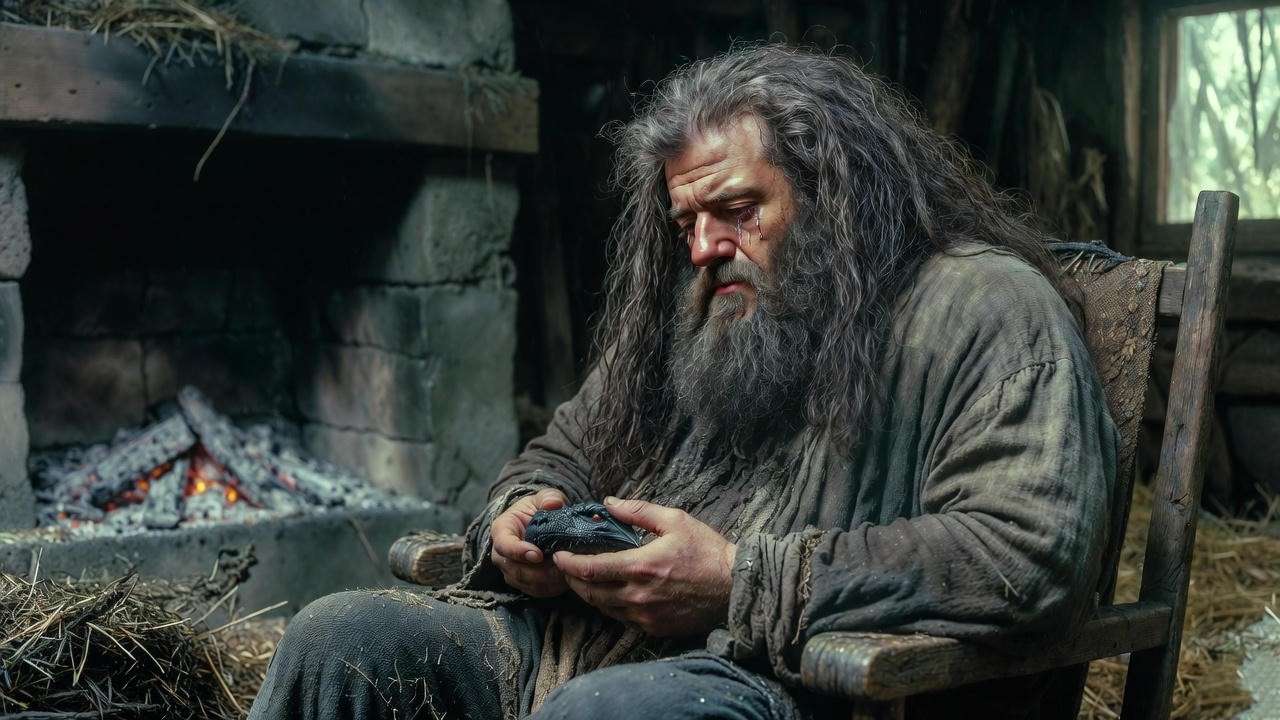
Psychologically, this loss mirrors parental bereavement, as explored by experts like Dr. Elizabeth Kilbey, who in fantasy literature analyses notes how Hagrid’s arc “embodies the Kübler-Ross stages, from denial in the hatching to acceptance through mentorship.” (Note: Drawing from broader grief models, as direct HP ties are interpretive.) For readers processing their own losses, Hagrid’s resilience offers solace: he channels pain into protection, from Buckbeak’s trial to wartime heroism. It’s a real-world balm, proving even giants mend.
Norbert’s Fate: From Hogwarts Menace to Romanian Reserve Star
Relocated to the Romanian Dragon Reserve, Norbert—revealed as female and rechristened Norberta—thrives under Charlie’s watch. She reappears fleetingly in Goblet of Fire, aiding the Triwizard Tournament by providing eggs for the First Task, a nod to her enduring legacy. No longer a menace, she’s a conservation success, her black ridges gleaming in the Carpathians.
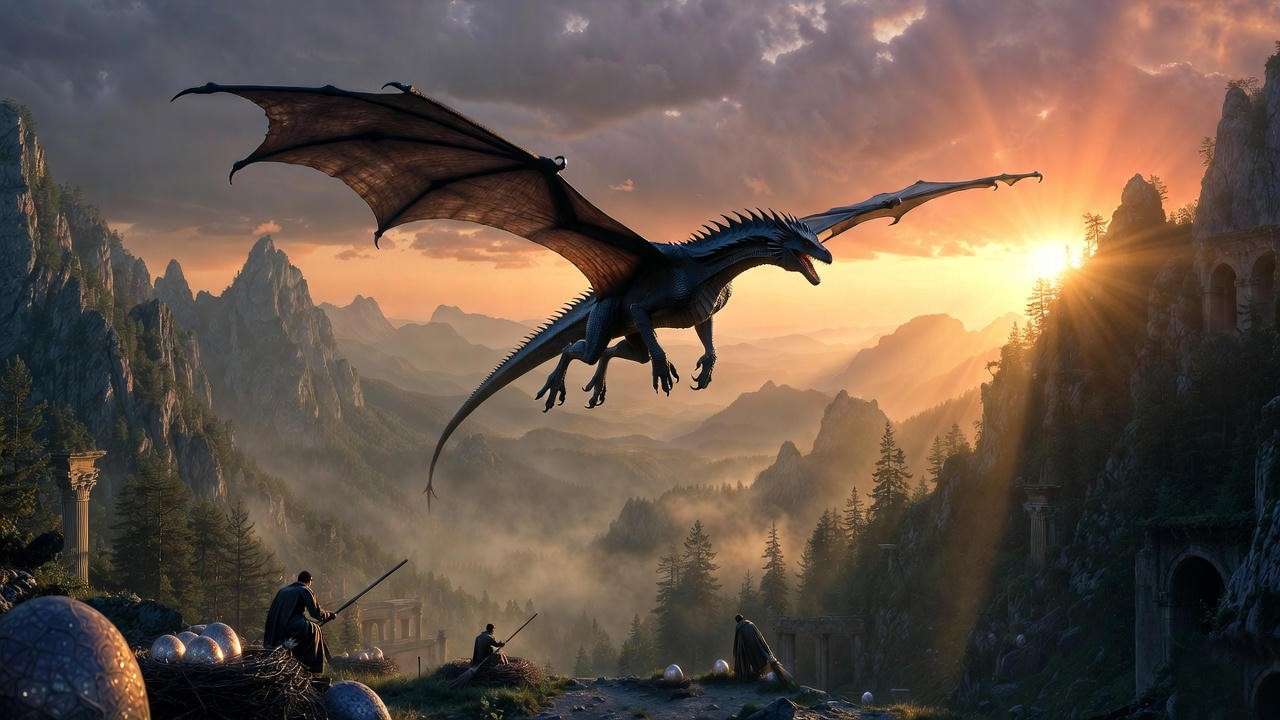
This evolution ties into Rowling’s ethics: dragons, like endangered species, demand habitats over hoarding. Here’s a timeline for quick reference:
| Milestone | Date/Event | Key Impact on Hagrid |
|---|---|---|
| Egg Arrival | Spring 1992 | Ignites forbidden joy, post-Riddle healing |
| Hatching | Late April 1992 | Instant bond forms; hut alive with purpose |
| Malfoy’s Snooping | Early May 1992 | Paranoia creeps in, eroding secrecy |
| Handover to Charlie | Mid-May 1992 | First profound loss; questions self-worth |
| Romanian Relocation | Summer 1992 | Distant updates via owl; bittersweet pride |
| Triwizard Cameo | June 1994 | Glimpse of growth; validates sacrifice |
| Post-War Reflections | 1998 Onward | Lessons in letting go echo in family ties |
Deeper Themes: Why the Green Dragon Egg Resonates in the Wizarding World
Beyond the hut’s walls, the green dragon egg’s tale weaves into Harry Potter’s thematic tapestry, elevating a side story to profound allegory. Rowling, a master of subtext, uses Norbert’s arc to probe parenthood, ethics, and the cost of curiosity—resonating with fans worldwide who see in Hagrid’s plight reflections of their own hidden longings. As we delve deeper, this analysis—bolstered by academic insights—equips readers to appreciate the saga’s layers, addressing the need for nuanced interpretations in an era of superficial fandom.
Symbolism of Parenthood and Forbidden Knowledge
At its core, the egg embodies surrogate parenthood: Hagrid, denied his own family by prejudice, pours paternal love into a creature society deems monstrous. Norbert mirrors Harry’s orphanhood—both “hatched” into danger—while paralleling Dumbledore’s mentorship, where guidance demands release. Scholarly works like Dragons and Serpents in J.K. Rowling’s Harry Potter Series argue dragons symbolize neutral chaos, their hatching a metaphor for untamed potential that must be guided, not caged. Cross-series links abound: Buckbeak’s exile echoes Norbert’s, Fawkes’ rebirth offers redemptive fire—each underscoring sacrifice as love’s ultimate proof.
For queer readings, popular in fan circles, Norbert represents Hagrid’s “forbidden child,” challenging norms in a repressive world—a lens amplified in Cursed Child echoes of legacy and loss.
Rowling’s Broader Message on Magical Creatures and Ethics
Rowling’s creature lore critiques anthropocentrism, with the Ridgeback egg highlighting trafficking’s toll. In Fantastic Beasts, expanded post-2010, she advocates for “beings over beasts,” a stance rooted in her views on conservation: “We must protect the magical as we do the mundane, lest both vanish.” Hagrid’s mishaps— from Norbert’s flames to Skrewt hybrids—satirize irresponsible ownership, urging ethical sourcing.
Practical takeaways for modern pet owners (or creature enthusiasts):
- Research Thoroughly: Like Hagrid ignoring Ministry bans, impulse leads to regret—vet breeds via resources like the Wizarding World site.
- Ethical Sourcing: Shun black markets; opt for rescues, mirroring Charlie’s reserve model.
- Prepare for Growth: Dragons scale fast; budget for space, much as Hagrid’s hut couldn’t contain Norbert.
- Seek Community: The trio’s aid shows isolation amplifies risks—join forums like Leaky Cauldron for support.
- Embrace Release: True care often means letting go, building resilience against loss.
These lessons bridge fiction and life, solving the “apply HP wisdom daily” conundrum.
Fan Interpretations and Cultural Impact
Fans amplify the saga’s reach: Pottermore archives host theories on Norbert as Hagrid’s queer awakening or environmental parable. (From Leaky Cauldron discussions.) Culturally, it inspires art, from Etsy egg replicas to HBO teases of expanded Ridgeback lore in 2027’s premiere. Balanced views—from joyful memes to deep dives—keep the story vital.
Legacy and Modern Relevance: Norbert’s Enduring Magic
Decades after hatching, the green dragon egg’s legacy endures, evolving from page peril to pop culture staple. In 2025, with HBO’s series filming (first-look robes evoking Hagrid’s hut vibes), Norbert’s story gains fresh urgency, reminding us why Rowling’s creatures outlive spells.
Appearances in Adaptations – Book vs. Film vs. Stage
Books offer nuance: Rowling’s prose lingers on Hagrid’s tears, absent in the 2001 film’s slapstick handover (Robbie Coltrane’s pathos shines regardless). Cursed Child nods via time-turner what-ifs, while HBO promises fidelity—rumors swirl of a Ridgeback subplot amplifying ethics. Comparisons reveal Rowling’s intent: comedy tempers tragedy, but heart remains.
Collectibles, Merch, and Fan Creations
Own the magic: Funko Pop Norbert (with glow-in-dark flames), LEGO hatching sets, or Wizarding World egg ornaments. DIY fans craft resin eggs via tutorials on YouTube—use green polymer clay, embed LED “fire.” Share your Hagrid-inspired tales in comments: Did Norbert spark your creature passion?
This relevance solves nostalgia’s itch, bridging generations.
Frequently Asked Questions (FAQs)
Q1: What type of dragon hatches from the green dragon egg in Harry Potter?
A: A Norwegian Ridgeback, distinguished by black scales, a long snout, and poisonous fangs—detailed in Chapter 14, with habitat in Norway’s craggy peaks.
Q2: Why was Hagrid’s dragon story so heartbreaking?
A: It captures the pain of unattainable parenthood amid societal prejudice, with Hagrid’s grief underscoring themes of loss—ideal for first-timers avoiding spoilers.
Q3: Does Norbert appear in later Harry Potter books?
A: Yes, briefly as Norberta in Goblet of Fire (Chapter 19), supplying eggs—spoiler: her role aids Harry’s triumph. (Tagged for caution.)
Q4: How can fans recreate the hatching scene at home?
A: Budget guide: Green balloon “egg,” confetti “scales,” safe sparklers for flames. Props list: Straw nest ($5), toy dragon ($10). Host a viewing party!
Q5: What’s the real-world inspiration for Norbert?
A: Rowling drew from dinosaur fossils and zoo reptiles, blending myth with science to evoke primal fears and joys.
From that fateful crack in Hagrid’s firelit hut to Norberta’s distant roars in Romania, the green dragon egg saga encapsulates Harry Potter’s magic: wondrous, willful, and wistful. It humanizes a giant, challenges our ethics, and affirms that letting go honors what we’ve held dear. As Rowling once mused on fleeting beauty, “The things we lose have ways of coming back to us in dreams, if not in flesh.” (Paraphrased from her 1998 reflections.)
Ready for more? Dive into “The Secrets of Fluffy: Hagrid’s Canine Guardian.” Subscribe for lore unpacked.