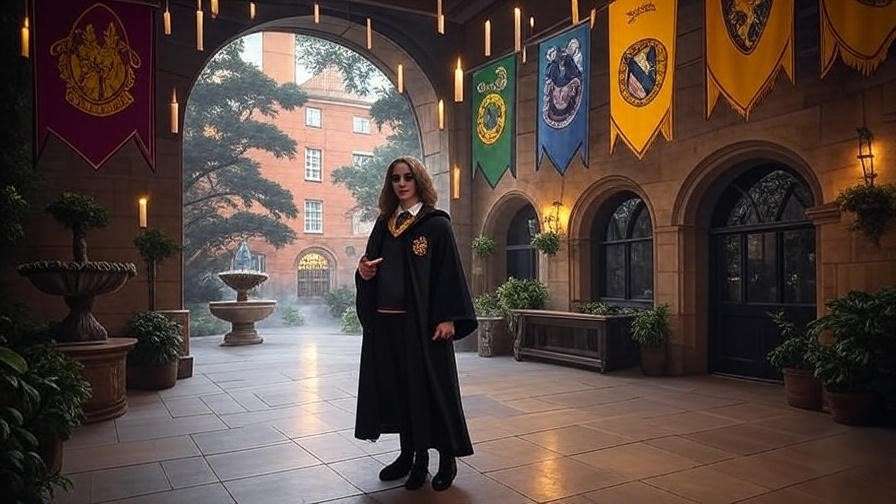
Imagine standing alone in a damp, abandoned lavatory. The dim, volumetric lighting of the castle casts long, dramatic shadows against cold stone, while a shallow depth of field keeps your focus entirely on a single, unremarkable copper tap. If you listen closely, you might hear a faint, metallic hissing. This is the entrance to the legendary Harry Potter Chamber of Secrets Door, an architectural mystery that continues to captivate millions of fans, theorists, and gamers worldwide.
Whether you are navigating the intricate corridors of Hogwarts Legacy, planning a pilgrimage to see the authentic movie props, or diving into deep-lore debates about how Ron Weasley managed to bypass an ancient magical lock without being a true Parselmouth, you have arrived at the definitive guide.
The Chamber of Secrets is not just a room; it is a masterclass in magical concealment. For centuries, its entrance remained perfectly hidden in plain sight, surviving shifting architectures, inquisitive headmasters, and the passing of generations. By cross-referencing J.K. Rowling’s original texts, Warner Bros. cinematic production archives, and expanded Wizarding World canon from Pottermore, this comprehensive skyscraper guide will unlock every secret behind Salazar Slytherin’s most infamous creation. We are going to explore its exact physical location, the mechanical brilliance of its cinematic design, the obscure ancestry that kept it hidden, and compelling alternate timelines that could have changed wizarding history forever.
The Exact Location: Where is the Chamber of Secrets Door?
For fans looking to pinpoint the exact location of the entrance—whether on a marauder’s map of the castle, within a video game, or in the real world—the trail begins on the second floor of Hogwarts School of Witchcraft and Wizardry.
The Book & Movie Canon Location
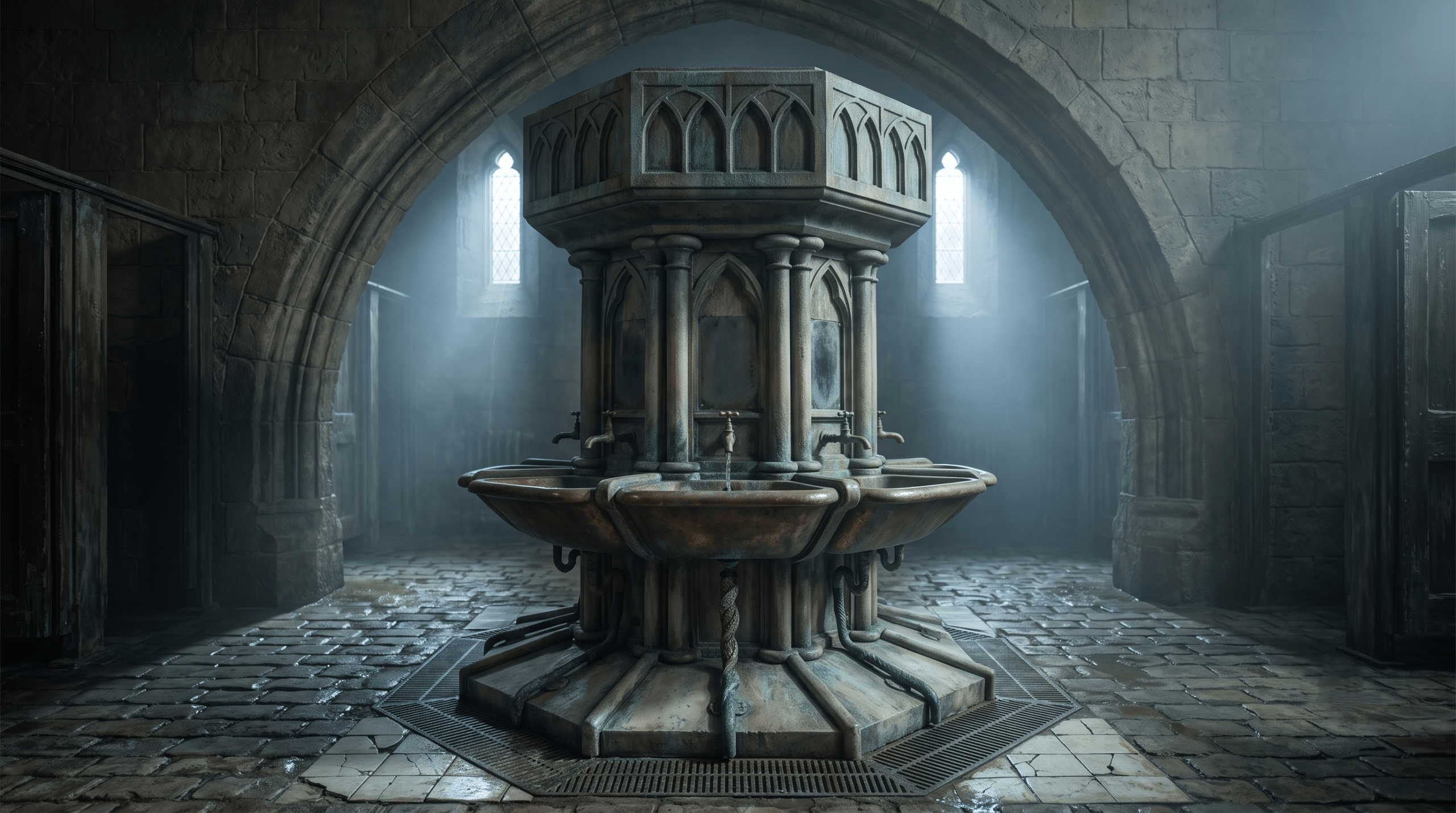
According to official canon, the entrance to the Chamber of Secrets is located in the second-floor girls’ lavatory, a space famously haunted by the ghost of Moaning Myrtle (Myrtle Warren). Because Myrtle’s constant wailing and habit of flooding the floor made the bathroom highly unpleasant, students and staff actively avoided it. This isolation provided the perfect cover for the dark magic hidden within.
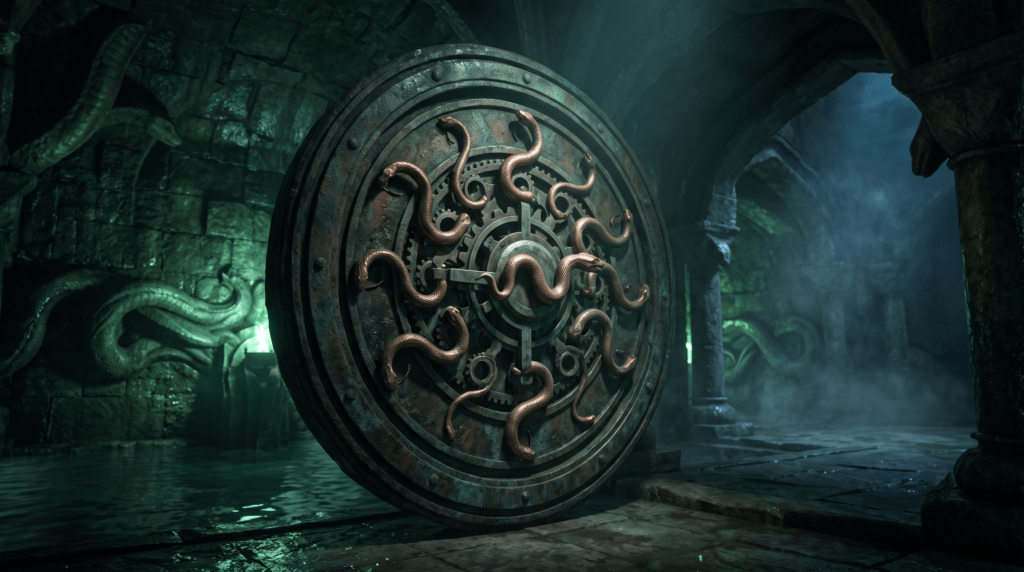
The actual trigger for the door is surprisingly subtle. It is not a grand, imposing gateway, but rather a specific sink in the center of the room. The tap on this sink has a tiny, scratched engraving of a snake on its side. It never works for running water. When the correct command is spoken, the entire sink column mechanically shifts, sinking into the floor and separating to reveal a large, dark pipe wide enough for a human to slide down. This pipe plunges miles beneath the school, leading directly to the antechamber where the iconic interlacing snake door resides.
 Finding the Door in Hogwarts Legacy
With the massive success of Hogwarts Legacy, one of the most common questions players ask is whether they can find the Chamber of Secrets in the late 1800s. While you cannot open the chamber (as your character is not a Parselmouth and opening it would break the established canon timeline), the developers at Avalanche Software included the entrance as a brilliantly detailed Easter egg.
To find it in the game:
-
Open your Field Guide map and fast-travel to the Lower Grand Staircase Floo Flame.
-
Walk down the stairs and head toward the Slytherin Dungeon area.
-
Locate the girls’ bathroom (you will hear a student complaining about a ghost outside, referencing Myrtle’s predecessor or Myrtle herself depending on the timeline).
-
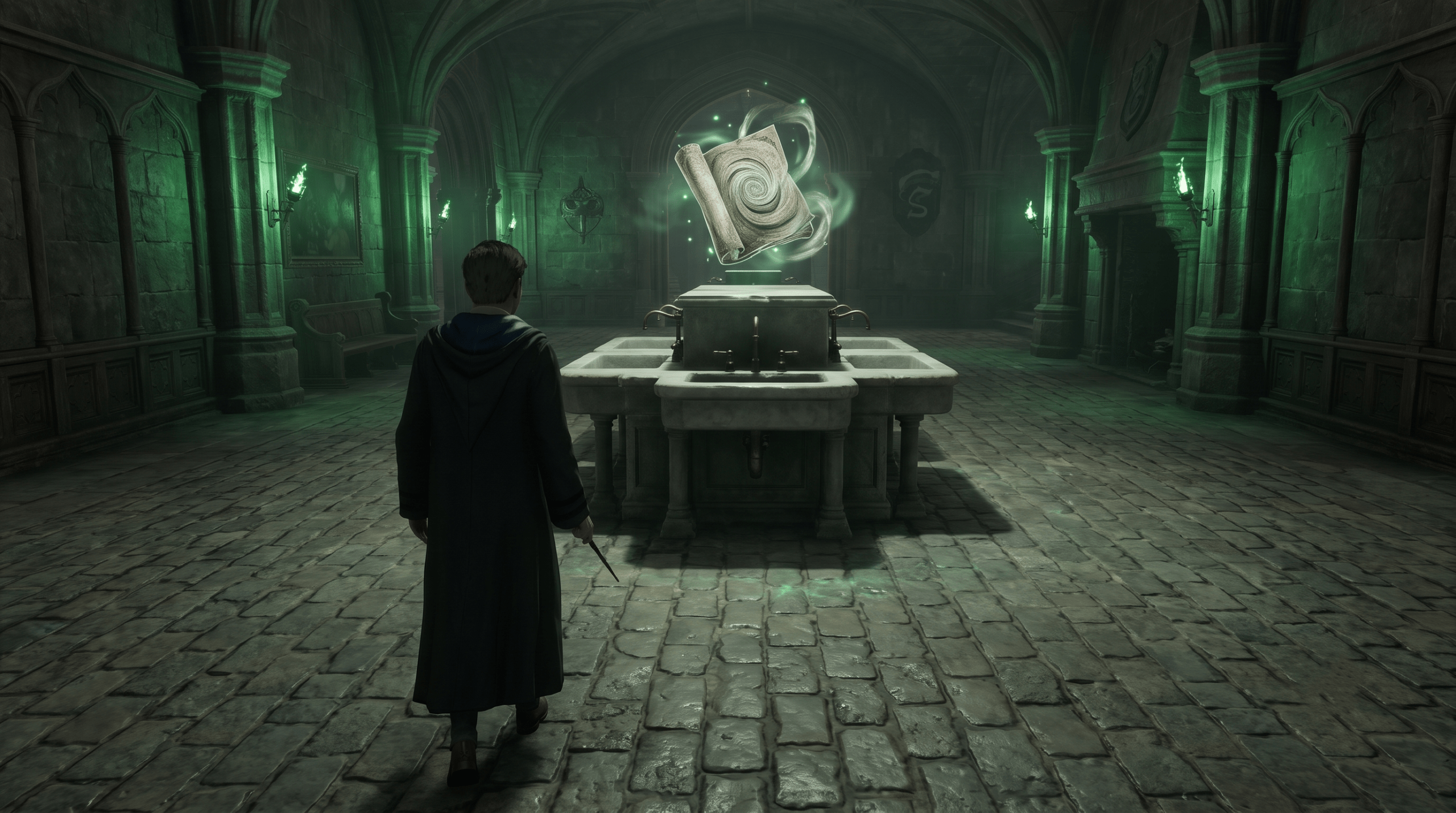
Approach the sinks in the center of the room. Use Revelio.
-
One specific sink will glow, and you will collect a Field Guide Page titled “Slytherin’s Sink,” which notes the scratched snake on the tap.
 The Real-Life Filming Location
If you want to stand face-to-face with the cinematic prestige of the Chamber’s entrance, you don’t need a Hogwarts letter—you just need a ticket to the Warner Bros. Studio Tour in London.
The physical door used in Harry Potter and the Chamber of Secrets (2002) is permanently displayed in the prop department section of the tour. Seeing it in person reveals the high-contrast, cinematic color grading and dramatic textures that made the films visually spectacular. It is a stunning piece of craftsmanship that looks entirely magical, though its origins belong purely to Muggle ingenuity.
The Mechanics of the Door: How Does It Actually Work?
The door guarding the Basilisk’s lair is a marvel of both ancient magical engineering and modern practical effects. Understanding how it operates requires looking at both the lore of the books and the behind-the-scenes magic of the film industry.
The Parseltongue Password Explained
Salazar Slytherin was highly protective of his legacy. He designed the entrance so that it could only be opened by his true heir. To achieve this, the locking mechanism does not respond to standard physical keys, magical wands, or traditional incantations like Alohomora.
The door is biologically and magically keyed to Parseltongue, the rare, genetic ability to speak to snakes. Specifically, the speaker must command the door to “Open” in the hissing, breathy dialect of serpents. This foundational founder’s magic is so deep and ancient that it actively overrides any other spell. Because the ability to speak Parseltongue is almost exclusively hereditary and tied to Slytherin’s bloodline, the creator ensured that no standard wizard—no matter how powerful—could easily bypass the lock.
How Did Ron Weasley Open It Without Being a Parselmouth?
This brings us to one of the most hotly debated moments in the franchise’s lore. In Harry Potter and the Deathly Hallows, Ron Weasley and Hermione Granger desperately need Basilisk fangs to destroy a Horcrux. With Harry elsewhere, Ron manages to open the Chamber of Secrets door. How is this possible if Ron is not a Parselmouth?
The answer lies in mimicry and memory. Over their years together, Ron had heard Harry speak Parseltongue on several critical occasions—most notably when Harry opened the locket Horcrux in the forest, and when Harry muttered in his sleep. Ron did not suddenly gain the magical ability to converse with snakes; instead, he carefully replicated the exact phonetic hissing sound he had heard Harry use to say “Open.”
It took him several attempts to get the inflection perfectly right. The lock on the door functions somewhat like a magical voice-recognition system. It doesn’t scan the soul of the speaker for Slytherin’s blood; it only requires the exact acoustic frequency and magical resonance of the Parseltongue word. Ron’s flawless auditory memory effectively “hacked” Salazar Slytherin’s ancient security system.
Cinematic Masterpiece: The Practical Effects of the Chamber Door
When the films were produced, the aesthetic directive was to create a prestige, highly detailed visual world. Viewers often assume the magnificent door—with its metallic snakes independently sliding along tracks, locking into place, and drawing back the final bolt—was entirely computer-generated (CGI).
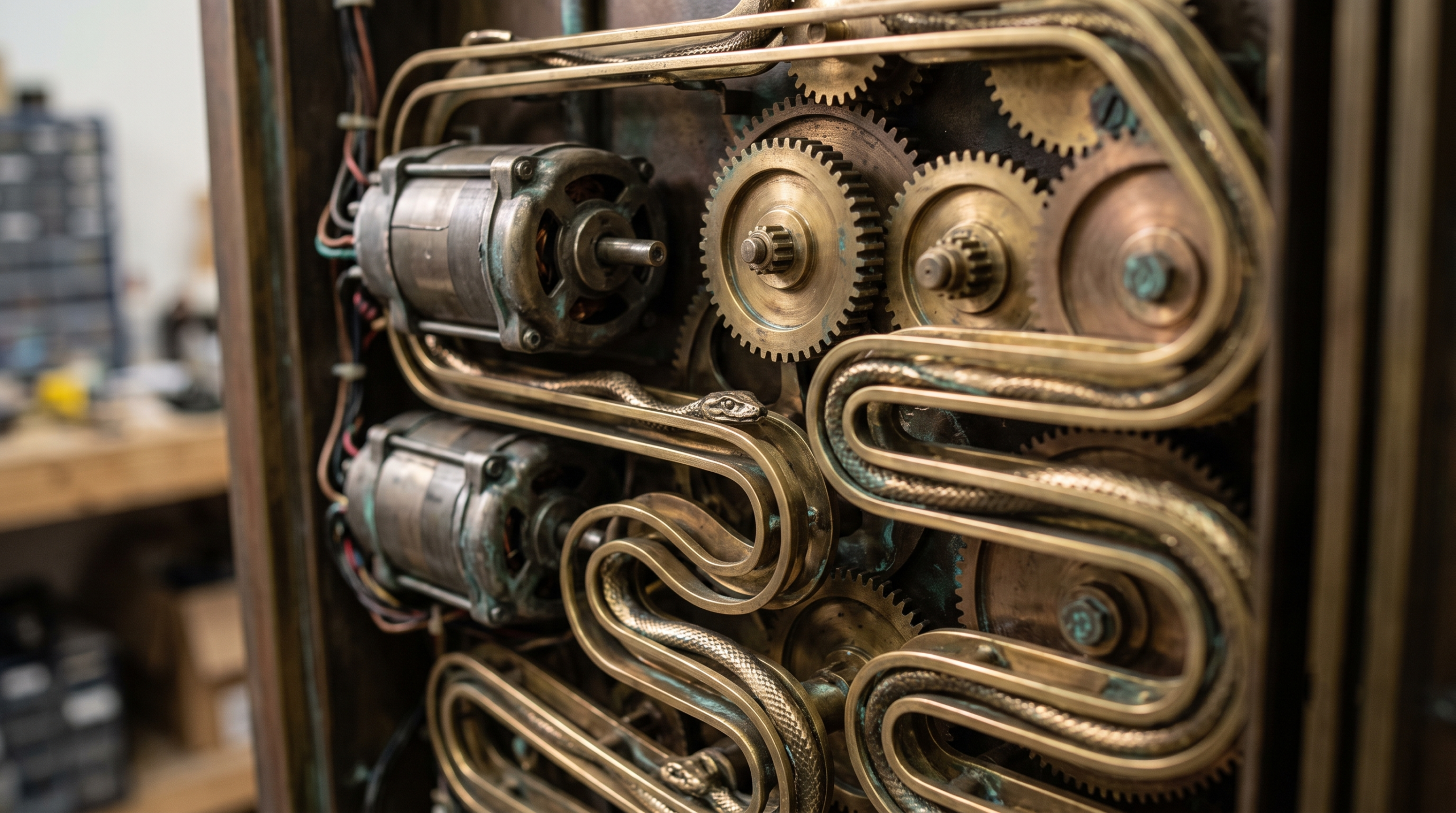
In reality, the door is a masterpiece of practical mechanical effects. The creature effects team, led by Nick Dudman, built a fully functional, real-world mechanical door. Powered by an intricate system of electric motors and gears hidden behind the casing, the physical prop actually moves exactly as it does on screen. The fluid, serpentine movement of the metal snakes was achieved through meticulous engineering, adding a layer of tangible weight, cinematic lighting, and realistic shadow-play that CGI of the early 2000s simply could not replicate. It remains one of the most celebrated practical props in cinema history.
 Deep Lore: The Secret History of the Chamber’s Entrance
To truly master Harry Potter lore, one must look beyond the Golden Trio’s era and delve into the architectural and genealogical history of Hogwarts itself. The Harry Potter Chamber of Secrets Door was not always hidden behind a modern bathroom sink. Its evolution is a fascinating tale of adaptation, bloodline supremacy, and near-discovery.
Salazar Slytherin’s Original Design
When Salazar Slytherin first constructed his hidden lair over a thousand years ago, Hogwarts did not possess modern indoor plumbing. The castle was a medieval fortress. Originally, the entrance to the Chamber of Secrets was accessed via a concealed trapdoor and a series of magical tunnels.
Slytherin designed this primitive entrance to be heavily warded by foundational magic, responding only to the hissing syllables of Parseltongue. His intent was clear: to leave behind a creature capable of purging the school of Muggle-borns, accessible only by a wizard who shared his exact ideological and magical pedigree. For centuries after Slytherin’s departure, the trapdoor remained undisturbed, its location passed down purely through whispers within his dark lineage.
Corvinus Gaunt: The Wizard Who Hid the Door
The greatest threat to the Chamber of Secrets was not a heroic wizard wielding a magical wand, but rather the march of Muggle progress. In the 18th century, Hogwarts decided to modernize its facilities by installing an elaborate indoor plumbing system, mirroring the advancements of the Muggle world.
This construction project posed a massive risk. The proposed site for the new second-floor girls’ lavatory sat directly on top of Slytherin’s ancient trapdoor. If the workers dug too deep, the Basilisk would be exposed, and Slytherin’s legacy would be destroyed.
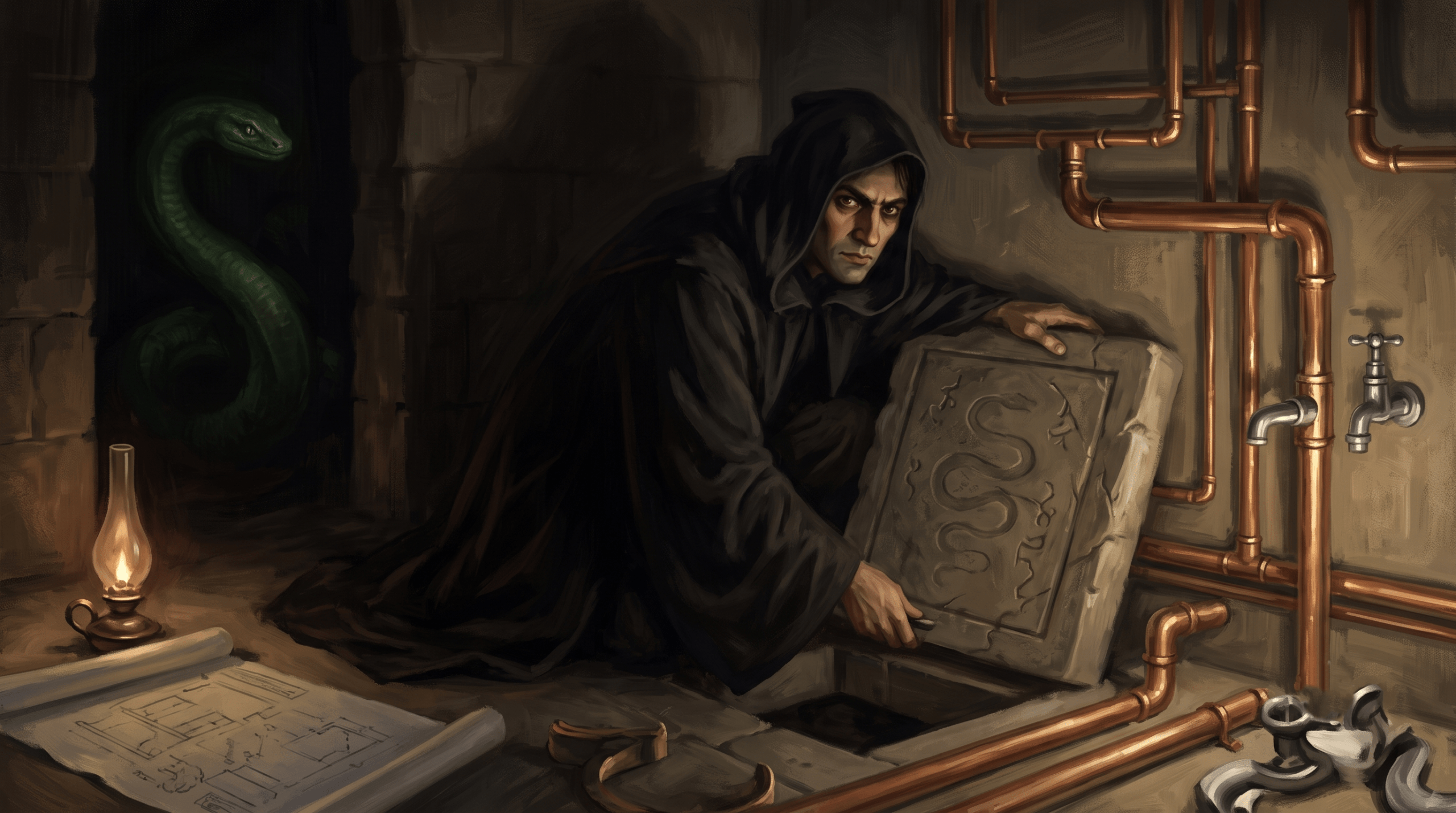
Enter Corvinus Gaunt, a direct descendant of Salazar Slytherin and a student at Hogwarts during this renovation. Recognizing the impending disaster, Gaunt took it upon himself to protect the beast. Using his status as a Parselmouth and his deep knowledge of dark, ancient magic, he secretly integrated the trapdoor into the newly installed pipework. He enchanted one specific copper tap to serve as the new locking mechanism, effectively concealing a millennium-old gateway behind a thoroughly modern disguise. Thanks to Gaunt’s quick thinking, the Chamber remained safely hidden for another two centuries until Tom Riddle arrived.
 What If… The Chamber of Secrets Door Was Discovered Earlier?
Exploring alternative timelines provides a thrilling perspective on wizarding history. The timeline we know was almost disrupted several times. What would have happened if the Harry Potter Chamber of Secrets Door had been breached before 1943 or 1992?
The Marauders’ Era
Consider the era of the Marauders. James Potter, Sirius Black, Remus Lupin, and Peter Pettigrew spent years meticulously mapping every hidden corridor, trick step, and secret passage of the castle to create the Marauder’s Map. They spent countless hours exploring the castle under the cloak of invisibility.
What if Sirius and James had investigated Moaning Myrtle’s bathroom more closely?
Because Myrtle was famously temperamental, the Marauders likely avoided her territory to prevent drawing attention to their mischief. However, even if they had inspected the sink with the scratched snake, they would have hit a dead end. The Marauders were brilliant, but none of them possessed the genetic trait of Parseltongue. Without a Parselmouth to command the mechanism, the sink was just a sink. It is a chilling thought, however, to imagine a young Sirius Black or James Potter coming face-to-face with a Basilisk while simply trying to map a shortcut to the dungeons.
Why Dumbledore Couldn’t Find It
Albus Dumbledore is widely considered the most powerful wizard of his age. When the Chamber was opened in 1943 by Tom Riddle, resulting in the tragic death of Myrtle Warren, Dumbledore suspected Riddle but could not prove it. More importantly, he could not find the Chamber itself. Why?
Dumbledore’s inability to locate the entrance highlights a critical rule of the magical universe: foundational magic commands ultimate respect. Dumbledore possessed unrivaled magical prowess and wielded the Elder Wand, yet he was not a Parselmouth natively. He understood that Slytherin’s enchantments were woven into the very bedrock of the castle. Finding a hidden magical signature among thousands of overlapping ancient spells in a thousand-year-old castle is like finding a needle in a haystack. Furthermore, Dumbledore likely assumed the entrance would be grand and dark—fitting for Slytherin’s ego—rather than cleverly hidden behind mundane 18th-century plumbing by a resourceful descendant.
Frequently Asked Questions (FAQ)
Can the Chamber of Secrets door be opened with standard unlocking spells like Alohomora?
No. Standard unlocking charms, even powerful variations, are entirely ineffective. The door is guarded by ancient, foundational magic implemented by Salazar Slytherin himself. It bypasses conventional wand-lore and responds exclusively to the exact acoustic frequency of the Parseltongue command for “Open.”
Are there other hidden entrances to the Chamber of Secrets?
According to established canon, the sink in the second-floor girls’ lavatory is the only known point of entry for humans. While the Basilisk was able to use the school’s vast plumbing network to travel unseen through the walls and petrify students, these pipes were not designed for human traversal, making the Moaning Myrtle’s bathroom the sole gateway.
Did Voldemort use this exact same door?
Yes. When Tom Marvolo Riddle (the wizard who would become Lord Voldemort) opened the Chamber of Secrets in 1943 during his fifth year at Hogwarts, he used the exact same copper tap in the second-floor bathroom. His actions led to the death of Myrtle Warren, who ironically remained tied to that very bathroom as a ghost for decades, unaware that her killer’s secret entrance was merely feet away.
Is the door still functional after the Battle of Hogwarts?
While the canon texts do not explicitly state the fate of the sink after the Second Wizarding War, it is presumed to still exist. However, with the Basilisk slain by Harry Potter in his second year, and all remaining Horcruxes (including the diary that possessed Ginny Weasley) destroyed, the Chamber is effectively an empty tomb. It is highly likely the Hogwarts faculty left the door sealed to preserve the castle’s structural integrity.
The Harry Potter Chamber of Secrets Door is far more than a simple plot device; it is a masterclass in magical world-building. From Salazar Slytherin’s dark, medieval trapdoor to Corvinus Gaunt’s brilliant 18th-century plumbing disguise, and finally to the breathtaking, fully mechanical practical effects achieved by the cinematic creature team, the door represents a perfect blend of rich lore and movie magic.
It stands as a testament to how secrets can be perfectly preserved in plain sight, waiting only for the right whisper in the dark to awaken them.
Now it’s your turn to join the debate: Do you think the current Hogwarts Headmaster should completely dismantle the Chamber of Secrets entrance to prevent future dark wizards from accessing the catacombs, or should it be preserved as a dangerous but vital piece of wizarding history? Let us know your thoughts in the comments below, and don’t forget to share this ultimate lore guide with your fellow Potterheads!