
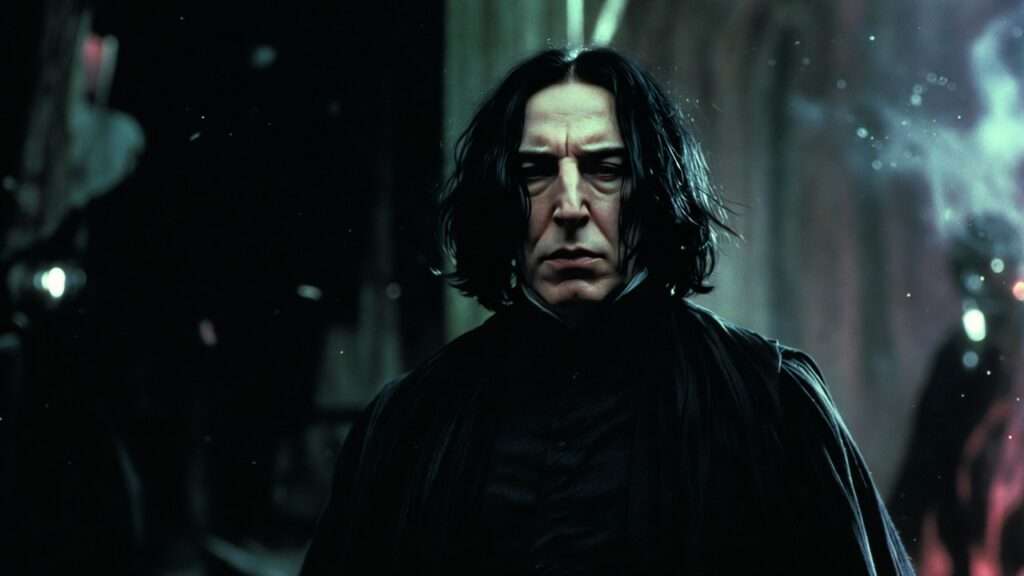
In the final moments of Harry Potter and the Deathly Hallows, as Severus Snape lies dying in the Shrieking Shack, he utters one word that has echoed through the wizarding world ever since: “Always.” With his last breath, he gazes into Harry Potter’s green eyes—the same eyes as Lily Potter’s—and reveals the truth that reshapes everything we thought we knew about him. Harry Potter characters like Professor Snape stand out as one of the most complex and debated figures in J.K. Rowling’s series. On the surface, he is a cold, vindictive Potions Master who bullies students and seems to harbor an inexplicable hatred for Harry. Yet beneath that greasy hair and billowing black robes lies a man driven by profound love, crushing guilt, unmatched bravery, and a lifelong quest for redemption.
Snape’s journey from a lonely, abused child in Spinner’s End to Voldemort’s most trusted lieutenant—and ultimately Dumbledore’s greatest spy—captivates fans because it forces us to confront uncomfortable truths: that people are rarely purely good or evil, that love can be both redemptive and destructive, and that true courage often hides behind cruelty. Decades after the books’ publication, debates rage on forums, Reddit threads, and fan communities: Was Snape a hero? A villain? An anti-hero whose loyalty to one woman overshadowed everything else? This comprehensive exploration delves into his hidden depths, tracing his formative traumas, pivotal choices, subtle acts of protection, double life as a spy, and tragic end. By examining canonical details from the books, Rowling’s own insights, and the thematic layers she wove into his arc, we uncover why Severus Snape remains one of the most polarizing yet unforgettable Harry Potter characters.
Early Life and Formative Influences – The Roots of Bitterness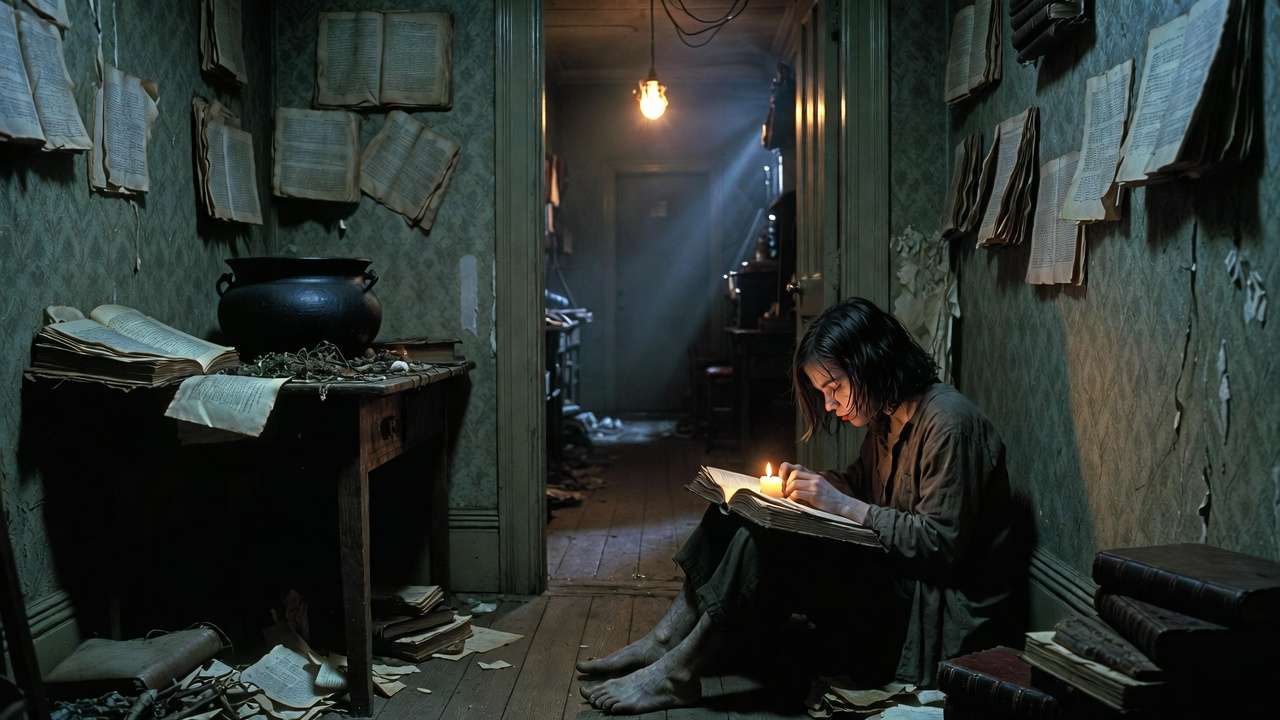
Severus Snape’s story begins not at Hogwarts, but in the grim industrial town of Cokeworth, specifically the dingy house on Spinner’s End. Born to Tobias Snape, a neglectful and possibly abusive Muggle father, and Eileen Prince, a witch from a once-proud but fallen pure-blood family, young Severus grew up in poverty and emotional neglect. His home was marked by arguments, worn clothing, and a sense of otherness—traits that made him an easy target for ridicule even before he discovered his magical abilities.
This childhood environment fostered deep insecurities and a yearning for control. Snape’s early fascination with the Dark Arts wasn’t mere rebellion; it was a desperate grasp for power in a world that had shown him none. He taught himself spells from his mother’s old books, inventing his own hexes as a way to reclaim agency.
A Childhood in Spinner’s End – Neglect, Abuse, and Isolation
The Prince family name offered little prestige by the time Severus was born. Eileen, once promising, had married beneath her station, and Tobias’s bitterness permeated their home. Young Severus witnessed domestic strife that left emotional scars, teaching him early that vulnerability invited pain. This isolation pushed him toward books and magic as escapes, but also bred resentment toward Muggles—personified by his father—and a hunger for belonging among those who valued power.
Meeting Lily Evans – The Spark of Light in Darkness
Everything changed the day Severus met Lily Evans in their shared Cokeworth neighborhood. As children, they bonded over magic; Lily’s kindness offered Severus his first taste of genuine acceptance. She didn’t mock his worn clothes or odd demeanor; instead, she shared his wonder at the wizarding world. This friendship became the brightest part of his early life, igniting an intense, lifelong attachment. Lily represented hope, purity, and the possibility of something better—qualities Severus clung to even as his path darkened.
Hogwarts Years – Bullying, Prejudice, and the Path to Darkness
Sorted into Slytherin, Severus found a house that prized ambition and cunning, aligning with his desires. But Hogwarts brought new torment: relentless bullying from James Potter, Sirius Black, Remus Lupin, and Peter Pettigrew—the self-styled Marauders. The infamous “Worst Memory” in Order of the Phoenix captures the cruelty: James suspending Severus upside down, exposing his underwear, while a crowd jeered. In desperation and humiliation, Severus called Lily a “Mudblood”—the word that shattered their friendship forever.
Rejected by the one person who mattered, Severus drifted toward aspiring Death Eaters like Lucius Malfoy. His talent for potions, spell invention (including Sectumsempra), and Dark Arts made him valuable. By adulthood, he had fully embraced Voldemort’s cause, driven by ambition, bitterness, and a desire for belonging.
The Turning Point – Love, Betrayal, and the Cost of Choices
Snape’s life changed irrevocably the night he overheard Sybill Trelawney’s prophecy in a Hogsmeade pub. Reporting it to Voldemort, he didn’t realize it pointed to Lily’s son. When Voldemort targeted the Potters, Severus begged for Lily’s life—offering James and Harry in exchange. This selfish plea exposed his priorities: love for Lily trumped ideology or loyalty to the Dark Lord.
Lily’s death devastated him. Collapsing at Godric’s Hollow, he begged Dumbledore for protection—not for himself, but to make amends. Dumbledore’s response was pragmatic: protect Harry, Lily’s son, as penance. From that moment, Severus became a double agent, his life defined by guilt and an unyielding vow.
Overhearing the Prophecy and the Irreversible Mistake
The prophecy’s partial delivery sealed the Potters’ fate. Snape’s regret was immediate and consuming; he never forgave himself for enabling Lily’s murder.
The Vow to Dumbledore – From Despair to Double Agent
In one of the series’ most poignant moments, a broken Snape pledges himself to Dumbledore. His Patronus—a doe, identical to Lily’s—proves his love remained unchanged “after all this time.” As Rowling explained, this shape symbolized enduring devotion, never fading despite years of pain.
Unrequited Love as Motivation – “Always” Explained
Snape’s love wasn’t romantic fulfillment; it was obsessive, sacrificial, and unchanging. The doe Patronus never wavered, representing how Lily’s memory fueled every protective act toward Harry. “Always” wasn’t mere sentiment—it was his core motivation, the reason he endured a life of deception and danger.
Hidden Depths – Subtle Clues to Loyalty Throughout the Series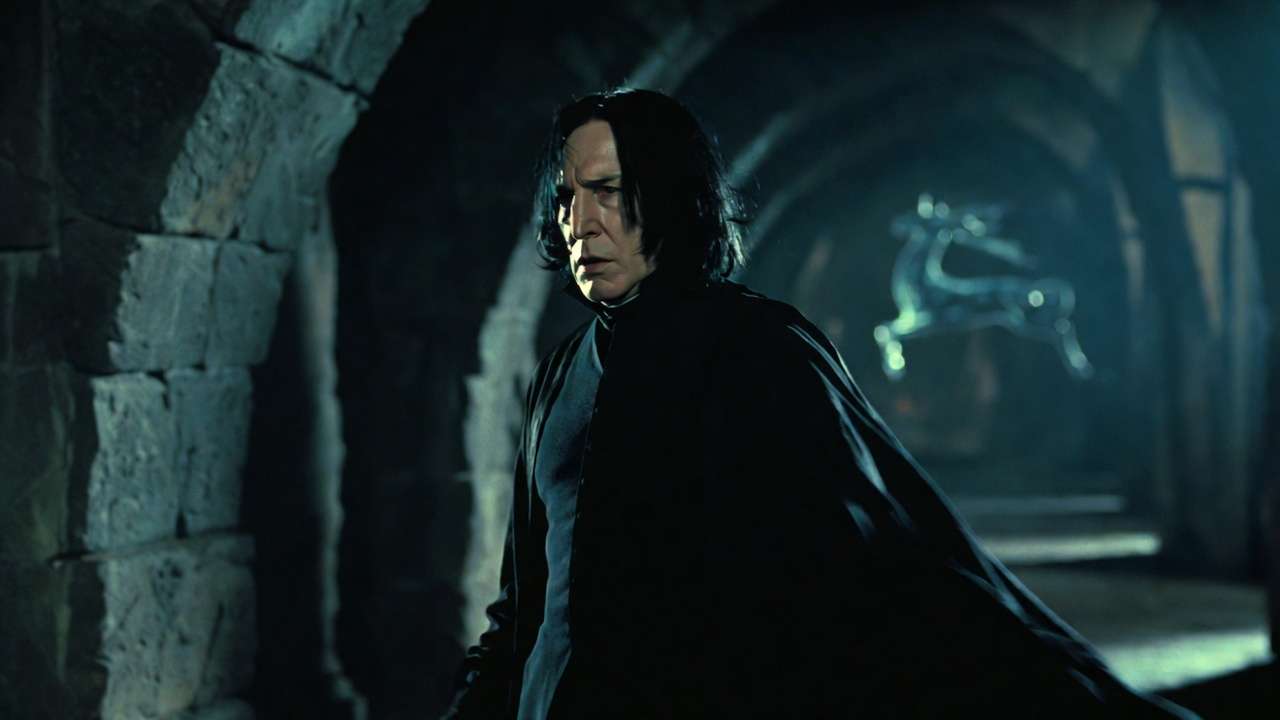
One of the reasons Severus Snape endures as such a fascinating Harry Potter character is the masterful way J.K. Rowling planted clues to his true allegiance years before the full revelation. These breadcrumbs are so subtle that many readers missed them on first read-throughs, only to experience the shock of re-reading and recognizing the signs. Snape was never a straightforward villain; his actions were layered with contradictions that only made sense once his loyalty to Lily—and by extension to her son—was understood.
Foreshadowing Moments Fans Often Miss
In Harry Potter and the Philosopher’s Stone, during Harry’s first Quidditch match, his broom jerks violently as though cursed. Hermione notices Snape staring intently and muttering under his breath—seemingly the source of the jinx. Yet when she sets Snape’s robes on fire as a distraction, the counter-curse is broken and Harry regains control. Years later we learn Snape was actually countering Quirrell’s curse; his fixed stare and incantation were protective, not malevolent.
Similar protective acts recur quietly:
- In Chamber of Secrets, Snape brews a complex antidote to save Hermione after she is petrified—despite his open disdain for her.
- In Prisoner of Azkaban, he brews Wolfsbane Potion monthly for Remus Lupin, a man he despises, ensuring no students are endangered during full moons.
- In Goblet of Fire, he alerts Dumbledore immediately after seeing the Dark Mark, showing his vigilance against Voldemort’s return.
These moments demonstrate that Snape’s surface-level antagonism masked a deeper, consistent mission: keeping Harry alive.
Contradictions in Behavior – Cruel Teacher vs. Secret Guardian
Snape’s treatment of students—particularly Harry, Neville Longbottom, and Hermione Granger—remains one of the most difficult aspects of his character to reconcile. He mocks Neville relentlessly, calling him an “idiot boy” and threatening to feed Trevor to Nagini. He belittles Hermione’s intelligence with cutting sarcasm and punishes Harry disproportionately for minor infractions.
Psychologically, these behaviors stem from projection and unresolved trauma. Harry’s face is a living reminder of James Potter—the man who tormented him and won Lily’s love. Neville represents the child who could have fulfilled the prophecy instead of Harry, meaning Lily might still be alive had Neville been targeted. Every time Snape sees these boys, old wounds reopen.
Yet the same man who torments them also saves them repeatedly, often at great personal risk. This duality is what makes Snape so human: capable of both petty cruelty and extraordinary self-sacrifice.
Master of Occlumency and Legilimency – The Key to His Survival
Snape’s extraordinary skill in Occlumency (closing the mind against intrusion) and Legilimency (mind-reading) was not merely academic talent; it was the foundation of his survival as a double agent. Voldemort was a master Legilimens, yet Snape successfully concealed his true allegiance for nearly two decades.
His lessons with Harry in Order of the Phoenix—though conducted with hostility—were intended to teach Harry the same skill. Snape’s frustration with Harry’s failure stemmed partly from fear: if Harry could not protect his mind, Voldemort would learn of the connection between them and exploit it, endangering the entire war effort.
Loyalty Under Fire – The Double Life of a Spy
Living as a double agent required constant performance, emotional suppression, and moral compromise. Snape attended Death Eater meetings, carried out orders, and maintained Voldemort’s trust—all while passing critical intelligence to Dumbledore and protecting members of the Order.
Serving Two Masters – The Psychological Toll
The strain of this existence is almost unimaginable. Snape had to witness atrocities committed by Death Eaters, participate in some himself, and still maintain the façade of loyalty. Every murder, every act of cruelty he witnessed or enabled deepened his guilt and self-loathing.
Yet he never wavered. When Dumbledore asked him to kill him in Half-Blood Prince—both to spare Draco Malfoy and to complete the plan—Snape carried out the act despite the personal cost. To the world, he became a murderer; to Dumbledore, he remained the most faithful servant.
The Prince’s Tale – The Chapter That Changes Everything
Chapter 33 of Deathly Hallows, “The Prince’s Tale,” stands as one of the most emotionally devastating sequences in modern literature.
Through Snape’s memories, we witness:
- His childhood friendship with Lily
- The moment he calls her “Mudblood”
- His desperate plea to Voldemort to spare her
- His collapse beside her body at Godric’s Hollow
- His anguished agreement to protect Harry
- The revelation of his doe Patronus
- His final, tear-filled request to Harry: “Look… at… me”
This chapter forces readers to re-evaluate every interaction with Snape. What appeared as hatred was grief; what seemed like malice was protection.
Was His Loyalty to Dumbledore, Lily, or Redemption?
Ultimately, Snape’s loyalty was to Lily’s memory above all else. Dumbledore became the instrument through which he could honor that love—by protecting her son and defeating the man who killed her. Redemption was not his primary goal; atonement was. He sought to balance the scales of his greatest mistake, even if it meant living in misery.
Tragic Redemption – Heroism, Flaws, and Legacy
Severus Snape’s death is deliberately unglamorous: bitten by Nagini in the filthy Shrieking Shack, bleeding out on the floor while Harry Potter watches in confusion and horror. There are no sweeping speeches, no heroic last stand—just a dying man pressing vials of memories into Harry’s hands and whispering one final plea: “Look… at… me.”
In that moment, everything shifts. The man Harry had hated for seven years is revealed to be the person who loved his mother most fiercely, who protected him at every turn, and who carried the unbearable weight of guilt for sixteen years. Snape dies not as a celebrated hero, but as a man who finally laid down the mask he had worn so long.
The Ultimate Sacrifice – Death and Revelation
Snape’s final act is both practical and profoundly symbolic. By giving Harry his memories, he ensures the boy understands the full plan: that Harry must die (or appear to) for Voldemort to be defeated, and that the Elder Wand’s allegiance had already transferred. More importantly, he allows Harry—and the reader—to see the truth unfiltered.
The memories culminate in the devastating sequence at Godric’s Hollow: Snape cradling Lily’s body, begging Dumbledore to hide her, and later watching Harry grow up from afar while never once receiving thanks or recognition. His last words to Harry—“Look… at… me”—are a desperate, dying wish to see Lily’s eyes one final time. It is the most vulnerable moment of his entire life.
Moral Ambiguity – Why Snape Isn’t Simply “Good” or “Evil”
Snape is not redeemed in the conventional sense. He never apologizes to the people he bullied. He never expresses remorse to Neville for terrorizing him, nor to Harry for years of cruelty. His heroism is not born of kindness or moral awakening; it is born of love for one woman and hatred for the man who killed her.
This refusal to sanitize him is one of Rowling’s boldest choices. Snape remains petty, vindictive, and unforgiving to the end. Yet he also performs acts of courage that few others could have sustained: spying on Voldemort for years, killing Dumbledore on command, protecting students during the Battle of Hogwarts while maintaining his cover until the very last moment.
Comparisons are often drawn to other morally grey characters:
- Regulus Black, who died to destroy a Horcrux but never had to live with the consequences.
- Draco Malfoy, who ultimately chose not to identify Harry but never reached Snape’s level of sustained sacrifice.
- Even Dumbledore, whose youthful mistakes cost lives and who manipulated Snape into a lifetime of service.
Snape stands apart because his redemption is incomplete—and therefore more realistic.
Snape’s Enduring Impact on Harry Potter Fans
Snape’s arc reshapes how readers interpret the entire series. Themes of choice (“It is our choices, Harry, that show what we truly are”), love as the ultimate power, and the possibility of change even after terrible mistakes all find their fullest expression in him.
He forces fans to ask difficult questions: Can someone do unforgivable things and still be worthy of sympathy? Can love justify cruelty? Is redemption earned through actions or through intent?
Alan Rickman’s portrayal amplified this complexity. His silky voice, wounded eyes, and barely contained pain gave physical form to the tragedy Rowling wrote. Many fans credit Rickman’s performance with making Snape’s final revelation so emotionally shattering on screen.
Expert Insights and Fan Perspectives
J.K. Rowling has described Snape as “a hero with feet of clay” and “an anti-hero.” In interviews and on Pottermore (now WizardingWorld.com), she emphasized that his love for Lily was “the redeeming quality that made him a double agent,” but never excused his behavior.
She has also said: “Snape is all grey. You can’t make him a saint: he was vindictive & bullying. You can’t make him a devil: he died to save the wizarding world.”
Fan opinions remain sharply divided:
- Some view him as an incel archetype whose “love” was obsessive possession.
- Others see him as a tragic figure whose capacity for love survived decades of pain and self-hatred.
- A growing consensus appreciates him as one of literature’s most realistic portrayals of trauma, guilt, and morally compromised heroism.
FAQs About Professor Snape
Is Severus Snape a hero or villain? Neither—and both. He is an anti-hero whose actions save countless lives but whose personal behavior causes real harm. His heroism is situational and motivated by love rather than virtue.
Why did Snape hate Harry so much? Harry was the living embodiment of two painful truths: James Potter (his bully) and Lily’s death (his greatest failure). Every glance at Harry reopened those wounds.
What does “Always” really mean? It is Snape’s answer to Dumbledore’s question, “After all this time?” Meaning his love for Lily never faded, never wavered, and remained the driving force behind every protective act toward her son.
Did Snape ever care about anyone besides Lily? Evidence suggests no deep personal attachments beyond Lily. He respected Dumbledore, tolerated certain Slytherins, and showed flickers of concern for Draco—but none approached the intensity of his feeling for Lily.
How does Snape compare to other complex characters in literature? He shares DNA with characters like Jaime Lannister (redemption through sustained sacrifice), Sydney Carton (A Tale of Two Cities—dying for love), and Severus himself stands as one of the most psychologically layered figures in children’s/YA literature. Severus Snape begins as a lonely, abused boy desperate for power and belonging. He becomes a Death Eater, makes the mistake that costs Lily her life, and spends the rest of his days atoning through secrecy, suffering, and unrelenting duty. He dies alone, reviled by most of the world, yet having played the decisive role in Voldemort’s downfall.
His story is not one of tidy redemption or easy forgiveness. It is a reminder that love can be selfish and destructive even as it inspires the greatest bravery; that people can do terrible things and still do good; and that true courage often wears the face of someone you least expect.
In a series filled with clear-cut heroes and unambiguous villains, Snape remains defiantly grey—and that is precisely why he lingers in readers’ minds long after the final page. He asks us to look beyond the surface, to question our snap judgments, and to recognize that even the most broken people can still choose to protect what matters most.