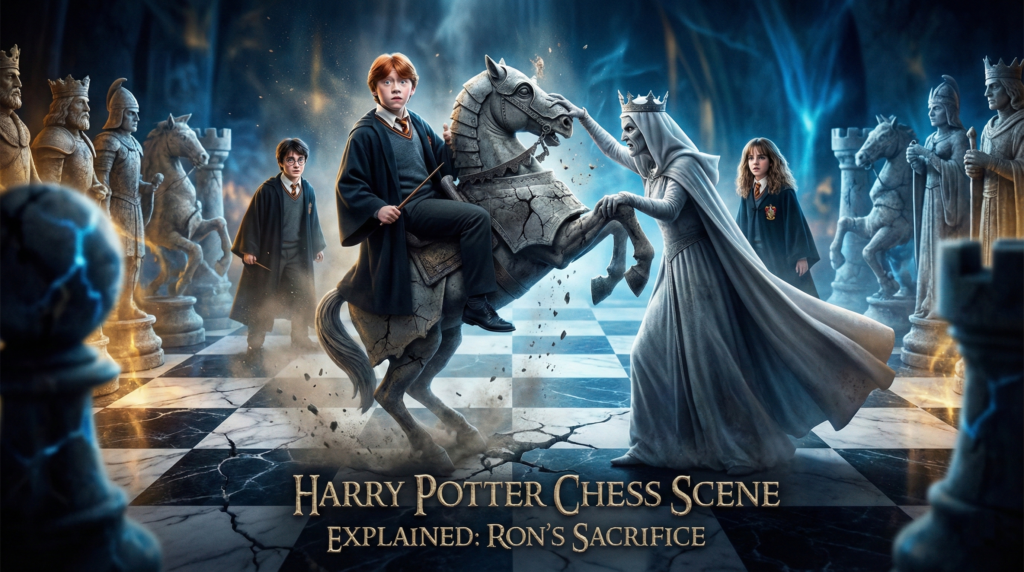
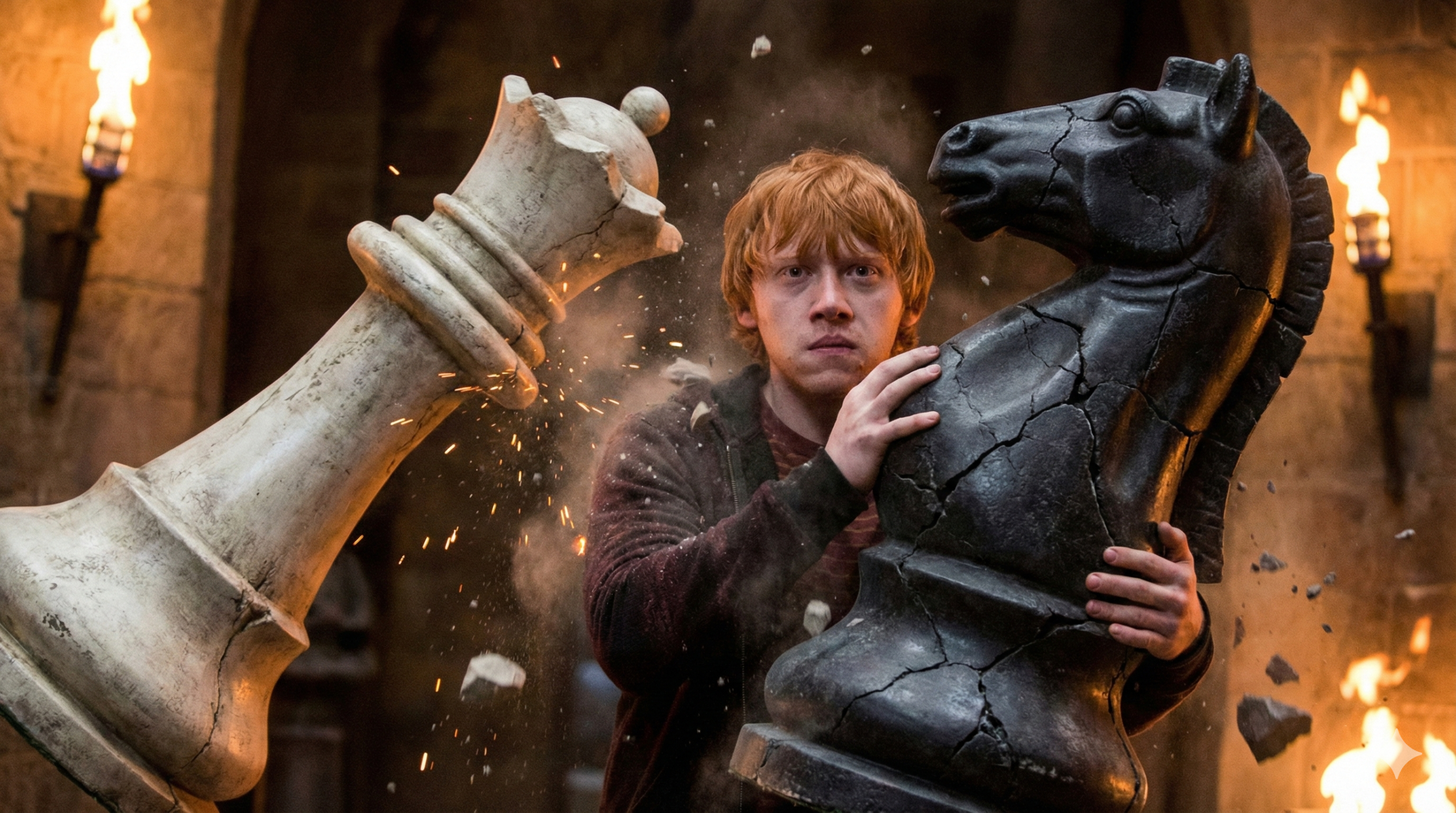
Imagine the echoing stone chamber deep beneath Hogwarts, the air thick with tension as massive chess pieces tower like ancient guardians. Giant stone knights, rooks, and queens clash with thunderous force, shattering into rubble when captured. In the center of it all stands Ron Weasley, pale but resolute, commanding the black pieces with the confidence of someone who’s spent years mastering wizard’s chess. Then comes the moment that has haunted fans for decades: Ron announces his plan, rides forward on his knight, and deliberately positions himself to be taken by the merciless white queen.
“That’s chess!” he declares. “You’ve got to make some sacrifices!” The queen charges, smashing his piece and sending Ron crashing to the floor unconscious. Harry and Hermione watch in horror as their friend takes the brutal hit—so Harry can deliver the final blow and secure victory.
This is the iconic Harry Potter chess scene from Harry Potter and the Sorcerer’s Stone (or Philosopher’s Stone in some regions), one of the most thrilling and emotionally charged sequences in the entire series. For millions of readers and viewers, it’s more than just a game—it’s a pivotal test of friendship, strategy, and bravery. But why exactly did Ron have to sacrifice himself? Is the chess legitimate, or just Hollywood magic? And what makes this moment so unforgettable?
As a dedicated Harry Potter analyst and chess enthusiast who’s pored over J.K. Rowling’s original text, the film’s production details, and the expert insights from International Master Jeremy Silman (the uncredited chess consultant who designed the position), this in-depth guide answers those questions and more. We’ll break down the scene step by step, explore book vs. movie differences, analyze the real chess strategy, uncover the deeper symbolism, and explain why this sequence continues to captivate fans—from nostalgic rewatches to viral TikTok memes. If you’ve ever wondered about the true genius behind Ron’s epic sacrifice, keep reading.
The Setup – Entering the Chessboard Chamber
The chess challenge is the fourth obstacle protecting the Sorcerer’s Stone, set by Professor McGonagall. After navigating Fluffy, the Devil’s Snare, flying keys, and the troll (already defeated), Harry, Ron, and Hermione enter a vast room dominated by an enormous chessboard.
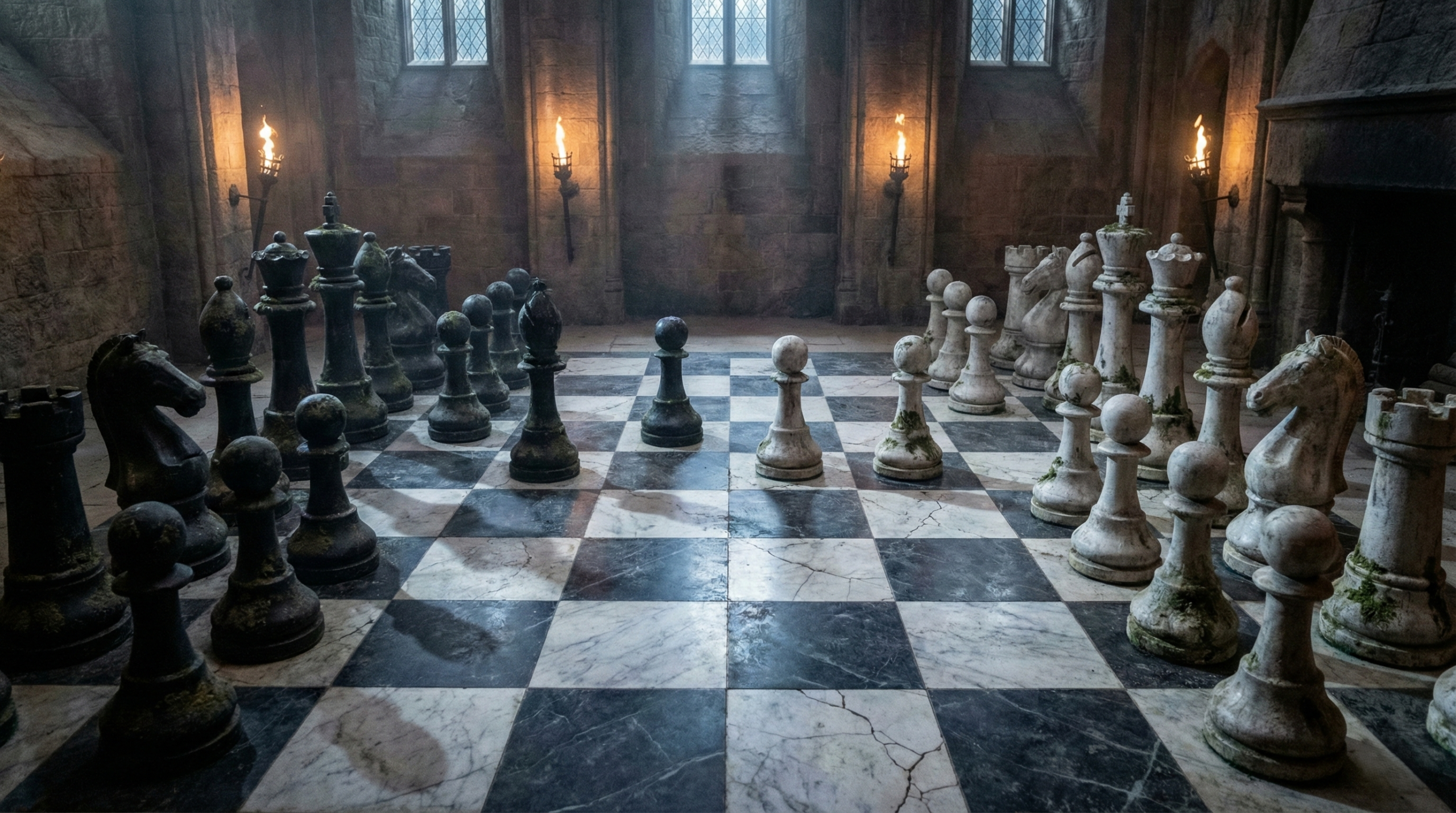 In the book, the pieces are life-sized stone statues, and three black pieces—a knight, bishop, and rook—step aside, allowing the trio to take their places. Ron naturally claims the knight (his favorite piece), Harry becomes a bishop, and Hermione a rook. The white pieces are already positioned, ready for battle.
Wizard’s chess differs from regular chess in its high stakes and violence. Captured pieces are smashed violently, and in this magical version, the human players risk serious injury—or worse—if their piece is taken. Ron’s expertise shines here; he’s been playing wizard’s chess since childhood, often beating his brothers, which makes him the obvious leader.
The trio’s entry sets up the drama perfectly: three young friends facing a deadly game where strategy and sacrifice are inevitable.
The Game Unfolds – Key Moments and Tension
From the opening moves, the brutality is clear. Pieces charge and collide with earth-shaking force. Ron directs the black army like a seasoned general, calling out commands while Harry and Hermione follow his lead.
The white queen emerges as the scene’s true antagonist—aggressive, powerful, and relentless. She personally captures multiple black pieces, her movements accompanied by dramatic music and explosive effects in the film.
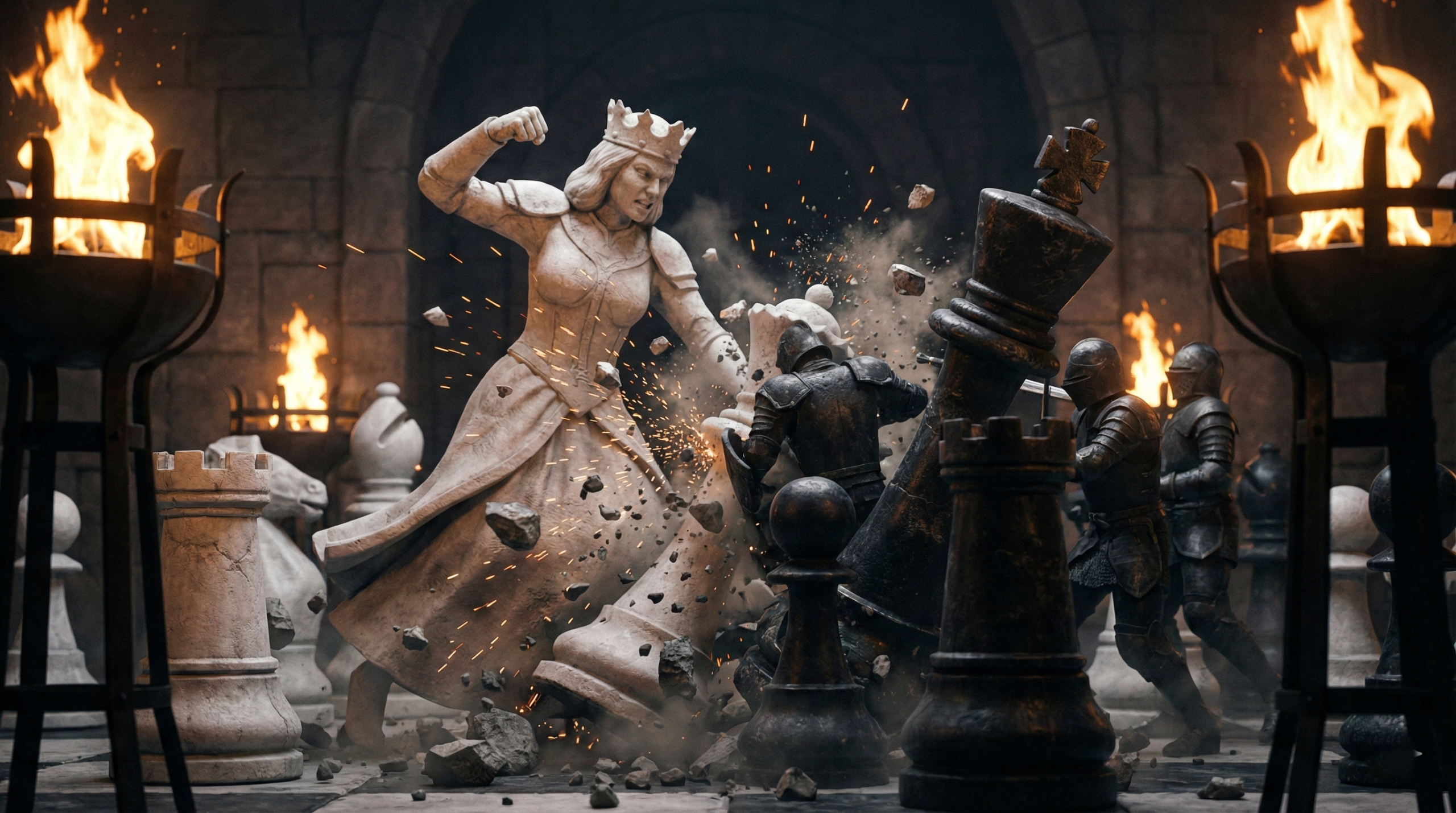 Ron keeps calm under pressure, sacrificing pawns and other pieces to maneuver into a winning position. The tension builds as the board thins, and the stakes become personal: one wrong move could end their quest—or their lives.
In the movie, the violence is amplified with crashing stone and Ron’s increasingly intense directions. The book emphasizes Ron’s strategic mind more subtly, but both versions showcase wizard’s chess as far more dangerous than any Muggle game.
Ron’s Epic Sacrifice – Breaking Down the Final Moves
This is where the Harry Potter chess scene reaches its climax—and where most fans want the deepest explanation.
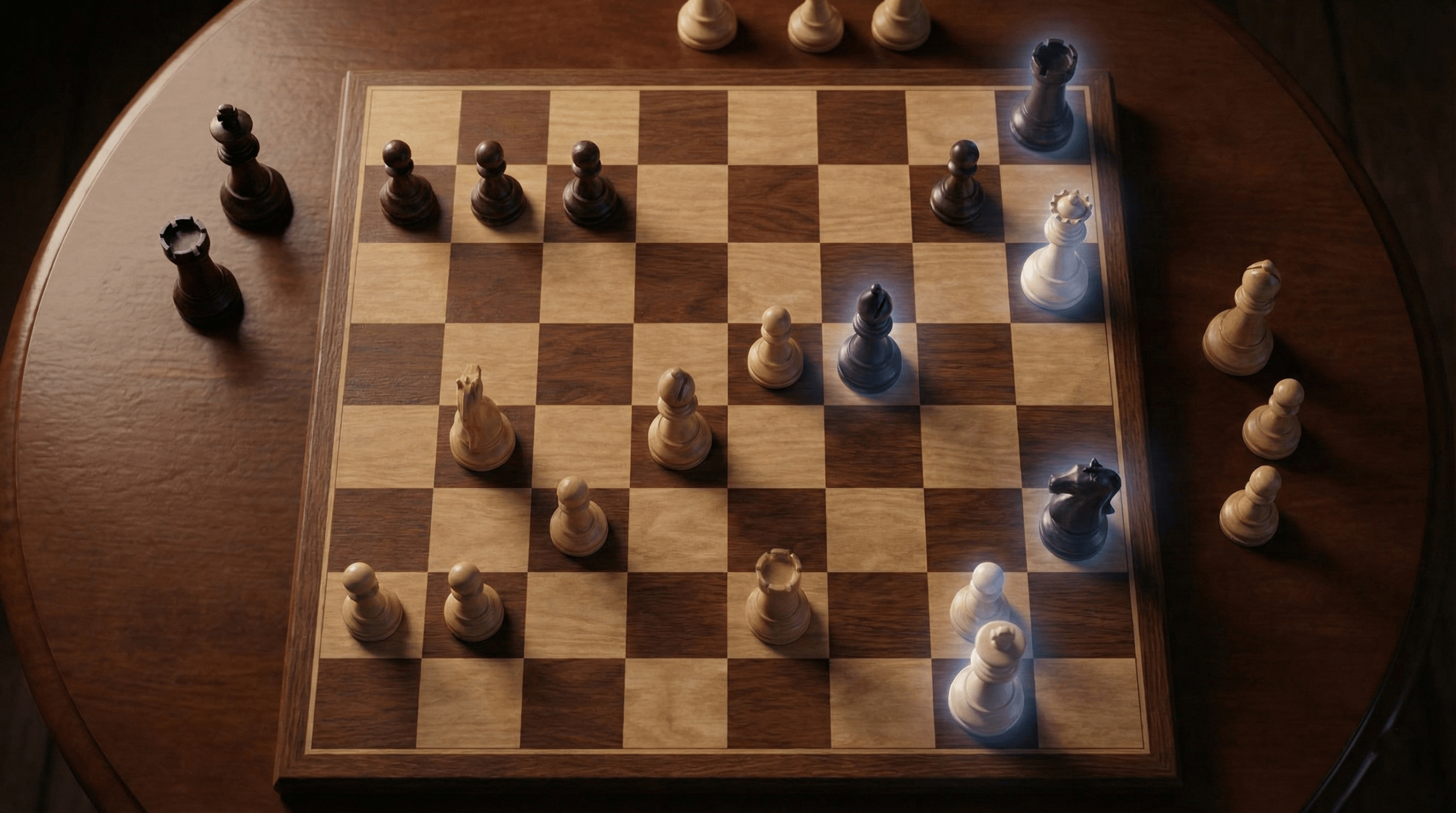
The endgame position (as designed by Jeremy Silman for the film) features black with a strong attacking force despite material disadvantages. Harry (bishop on a3), Hermione (rook on f8), and Ron (knight on g5 or similar in diagrams) face a white king vulnerable but guarded by the dominant queen.
 Key sequence (simplified from Silman’s full composition, using standard chess notation for clarity):
- White captures a pawn or piece, threatening Harry’s bishop.
- Ron plays Rc3 (rook sacrifice): This protects Harry and opens the c5 square for attack while forcing the white queen to respond.
- White queen takes the rook: Qxc3.
- Ron then plays Nh3+ (knight check): Ron’s knight delivers check to the white king, forcing the queen to capture it—Qxh3.
- With the queen deflected from c5, Harry (bishop) moves to c5 check: Bc5+, delivering checkmate (or forcing the queen into a fatal position in the intended full sequence).
In the movie, the final checkmate is shown dramatically: Harry moves forward, the white king surrenders by dropping his sword, and Harry declares “Checkmate!” (with Harry positioned near the fallen white queen in the frame, hinting at the original intent).
Why Ron’s sacrifice was essential: Without it, the white queen controls c5, blocking Harry’s mating move. Ron’s knight check forces deflection, clearing the path. It’s a classic tactic—sacrifice to deflect a key defender.
Book vs. movie differences: The book keeps it simpler and more dramatic—Ron sees the winning move but realizes it requires his knight’s sacrifice. He tells Harry, “Once I make my move, you’re free to check the king,” and proceeds without the full tactical display. The film adds Silman’s puzzle for authenticity and visual excitement, though some details were trimmed for pacing.
Ron’s line—”Not me, not Hermione, you”—underscores the logic: Harry must survive to face Voldemort/Quirrell. Ron’s choice is selfless, strategic, and heroic.
The Real Chess Genius – Jeremy Silman’s Design and Validity
Few know that the chess wasn’t improvised—the endgame was crafted by International Master Jeremy Silman, a renowned chess author and coach (who sadly passed away in 2023).
Silman was hired to make the game legitimate while fitting cinematic needs: start with captures for excitement, villainize the white queen (threatening Harry), ensure Harry and Hermione survive, and justify Ron’s sacrifice dramatically.
 Silman composed a sound position from the Scandinavian Defense opening (1.e4 d5), leading to an endgame where black’s attack compensates for lost material. The tactics are real: deflection, discovered check threats, and forced sacrifices.
Is the chess “real”? Yes—Silman’s puzzle is tactically sound, though the movie simplified it (e.g., skipping some moves for time). Fans can recreate it on chess platforms using approximate FEN positions from analyses (like 5r1k/1pN1R1PP/1Pb5/n1r1P1n1/7N/b2p4/7P/1R1Q2K1).
Silman’s work elevates the scene from spectacle to genuine chess puzzle, proving wizard’s chess can follow real rules while serving the story.
Deeper Meaning – Symbolism and Character Growth
Beyond tactics, the Harry Potter chess scene is rich in symbolism.
Ron’s sacrifice marks his growth from insecure, comic-relief sidekick to true hero. Often overshadowed by Harry’s destiny and Hermione’s intellect, Ron proves his worth through strategy and selflessness. He understands the bigger picture: Harry must reach the Stone.
Themes of friendship shine—Ron’s act mirrors the series’ core message that love and sacrifice defeat evil. It foreshadows Ron’s later arcs (loyalty in the face of jealousy, bravery in the final battles).
The white queen as “villain” parallels Voldemort’s threats, while the board represents life’s choices: sometimes victory requires painful losses.
Behind the Scenes – Production, Effects, and Cultural Impact
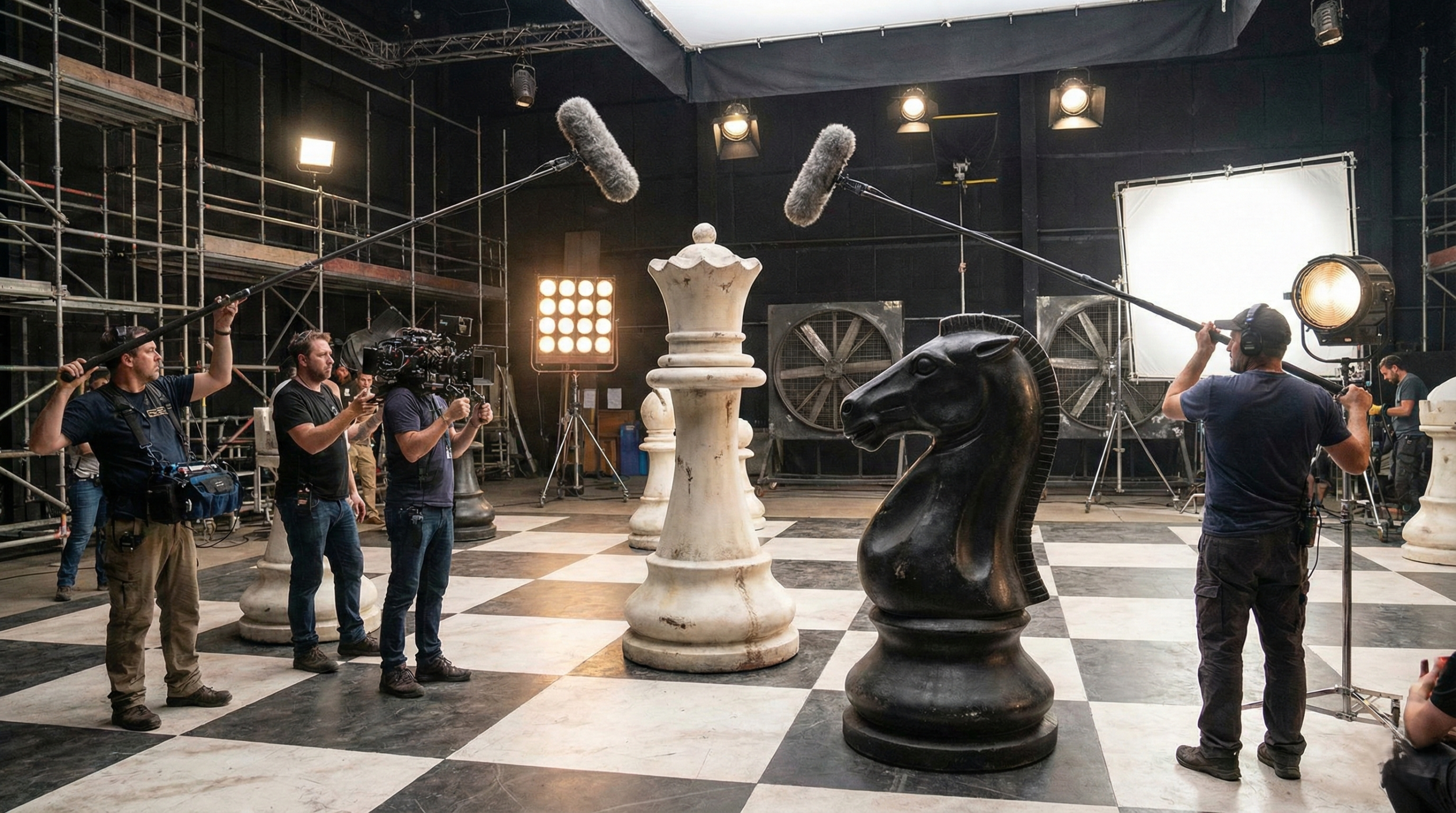
Filming used a massive practical set with stunt performers and CGI enhancements for smashing pieces. Rupert Grint’s performance—pale, determined Ron—adds emotional weight.
The scene’s legacy endures: memes like “He’s going to sacrifice himself!” flood social media, TikTok remixes go viral, and it’s a staple in “best Harry Potter moments” lists. Nostalgia keeps it fresh for new generations discovering the series.
 Tips for Fans – Recreate or Analyze the Scene Yourself
- Replay the position on chess.com or Lichess using Silman-inspired setups.
- Compare book (dramatic choice) and movie (tactical puzzle) versions.
- Discuss in Potter or chess communities—what would you sacrifice?
The Harry Potter chess scene endures because it blends heart-pounding action, legitimate strategy, and profound character growth. Ron’s epic sacrifice isn’t just a plot device—it’s a testament to friendship, bravery, and the power of smart choices under pressure. Next time you rewatch Sorcerer’s Stone, pay attention to the board: you’ll see genius at work.
What’s your favorite part of this scene? Share in the comments—Ron’s line, the smashing pieces, or the chess tactics?
FAQ
Why did Ron sacrifice himself in the Harry Potter chess scene? Ron sacrificed his knight to check the white king, forcing the queen to capture him and move off the critical c5 square. This allowed Harry (bishop) to deliver checkmate. It was the only way to win without losing Harry.
Is the chess game in Harry Potter real? Yes—the endgame was designed by IM Jeremy Silman as a legitimate tactical puzzle, though simplified in the final film cut.
Who created the chess moves for the Harry Potter movie? International Master Jeremy Silman, uncredited but confirmed in interviews and analyses.
What happens after Ron’s sacrifice in Sorcerer’s Stone? Harry checkmates the king, the trio proceeds (with Ron unconscious but safe), and they reach Quirrell/Voldemort for the final confrontation.
Book vs. movie differences in the chess scene? The book focuses on Ron’s quick realization and dramatic choice without detailed notation. The movie adds Silman’s full puzzle for visual/tactical depth, with more emphasis on the white queen’s menace.